
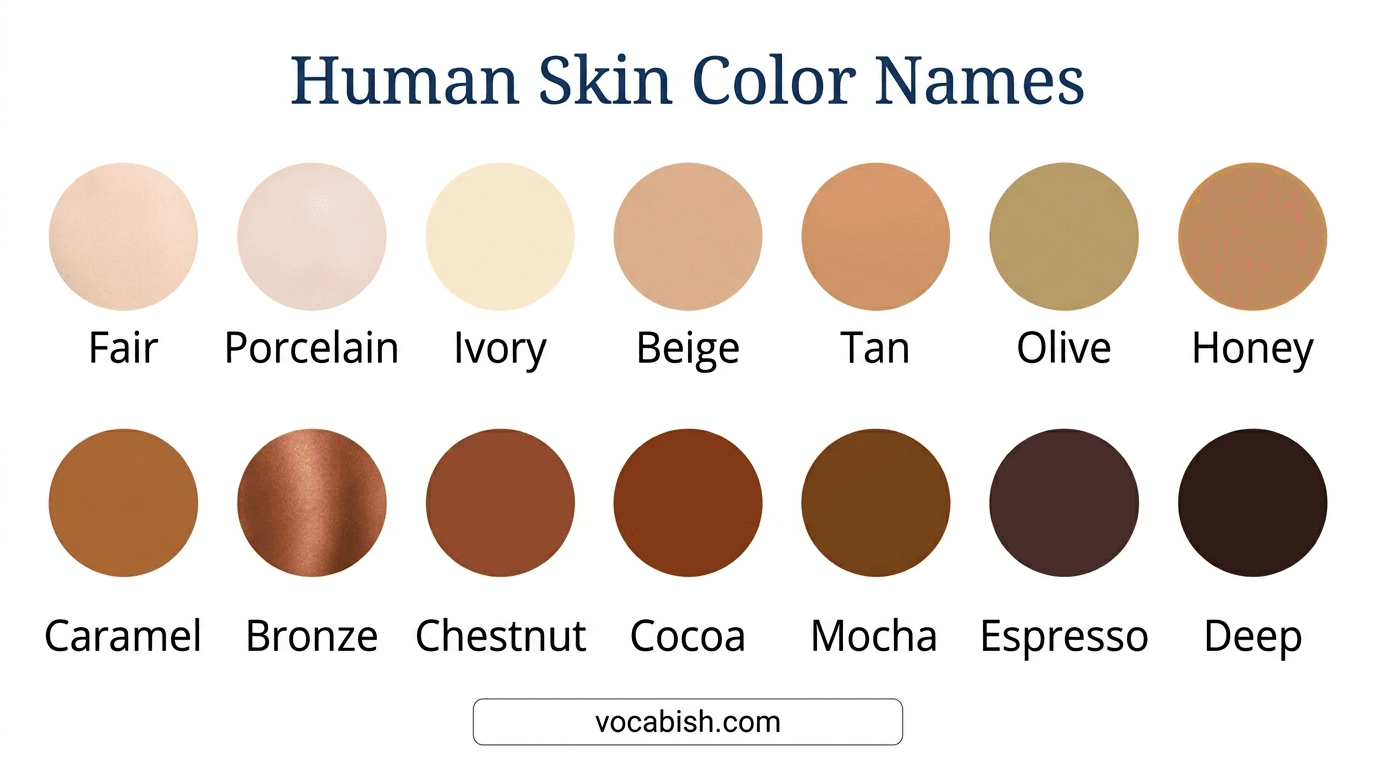
In this blog post, you will learn human skin color names and understand the many shades people have. These words help learners describe people accurately and respectfully in English. Instead of only saying “light” or “dark,” you can use words like fair, tan, olive, or deep brown. Knowing these names improves your ability to speak about people, read descriptions in books, write detailed sentences, and understand conversations better. As you continue reading, you will explore different skin shades, their real-life uses, and a helpful human skin color chart to recognize and remember each tone.
What Are Human Skin Color Names?
Human skin color names are words used to describe the color or tone of a person’s skin. Each word represents a shade or undertone that helps people describe appearances more accurately.
For example:
- Fair – Light skin with pink or pale undertones.
- Olive – Medium skin with green or yellow undertones.
- Deep Brown – Dark skin with rich tones.
Using proper skin color vocabulary shows respect and improves communication in English.
Why Learning Skin Color Vocabulary Is Important
Skin color words are important in everyday English because they:
- Help describe people accurately in conversation or writing.
- Improve reading comprehension in books or articles.
- Enhance listening skills in discussions about appearance.
- Build respectful and precise vocabulary for social and professional use.
For example:
- Basic: “She has dark skin.”
- Improved: “She has warm olive skin with golden undertones.”
Common Human Skin Color Names
Here are widely used human skin color names:
- Fair – Very light skin with pink undertones.
- Porcelain – Extremely pale skin, often used in beauty descriptions.
- Ivory – Light skin with yellow undertones.
- Beige – Light-medium skin, neutral tone.
- Tan – Medium skin with warm golden undertones.
- Olive – Medium skin with green or yellow undertones.
- Honey – Light brown skin with warm tones.
- Caramel – Medium-dark skin with golden undertones.
- Bronze – Medium-dark skin with warm, metallic tones.
- Chestnut – Dark brown with reddish undertones.
- Cocoa – Deep brown skin, often rich and warm.
- Mocha – Dark brown skin with subtle reddish or golden tones.
- Espresso – Very dark brown, almost black.
- Deep – Dark skin, rich in tone and intensity.
Popular Shades of Human Skin
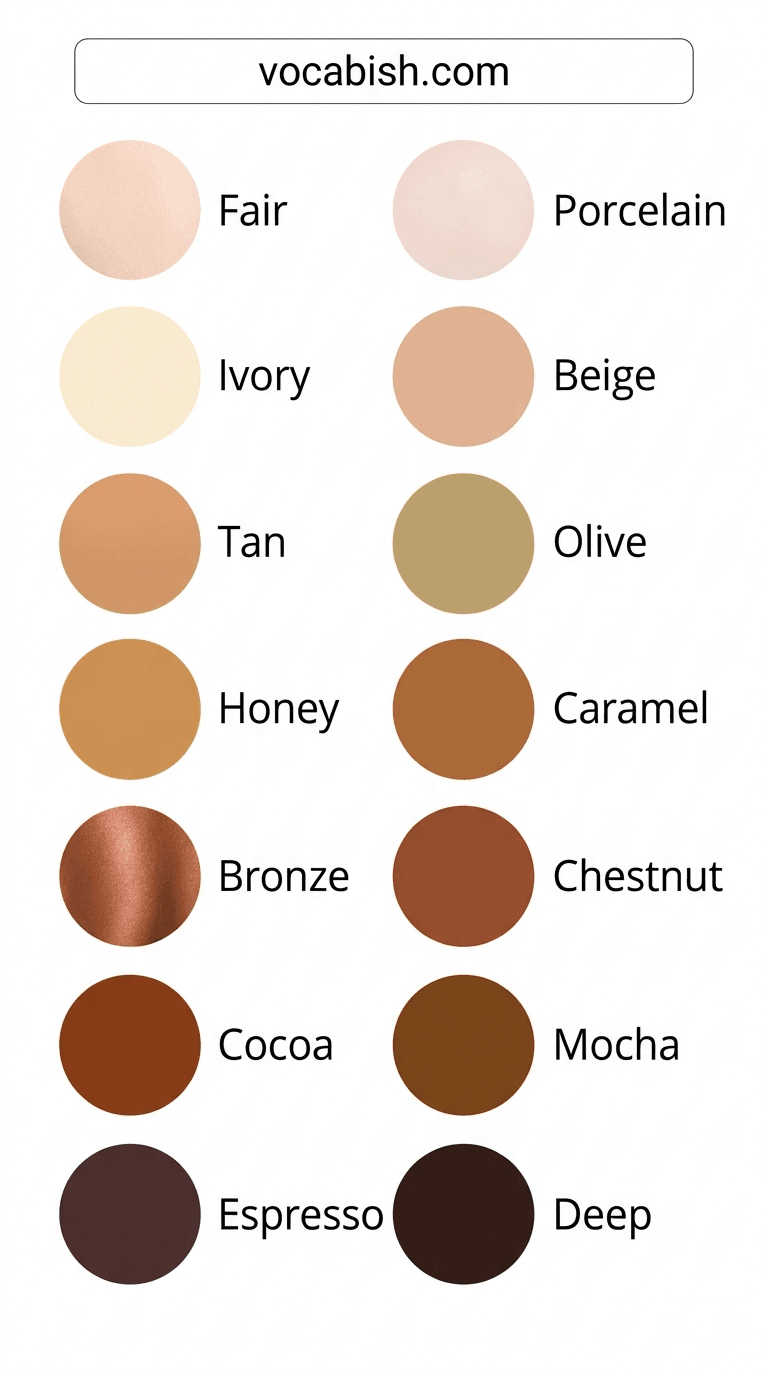
Human skin comes in different shades:
Light Shades
- Fair
- Porcelain
- Ivory
- Beige
These shades often appear in descriptions of people with lighter complexions.
Medium Shades
- Tan
- Olive
- Honey
- Caramel
- Bronze
These shades cover a wide range of warm or neutral tones often seen in many populations.
Dark Shades
- Chestnut
- Cocoa
- Mocha
- Espresso
- Deep
These shades represent darker complexions with rich undertones.
Uses of Human Skin Color Words in Daily Life
Human skin color vocabulary is used in many situations:
- Conversation: Describing people politely and accurately.
- Writing: Books, articles, or essays often describe characters’ appearances.
- Fashion and Beauty: Matching makeup, clothing, or skin care products.
- Health and Medicine: Doctors and health professionals use skin descriptions for diagnosis or care.
- Art and Design: Artists use precise skin color terms for paintings, illustrations, or digital art.
List of Human Skin Color Names
- Fair
- Porcelain
- Ivory
- Beige
- Tan
- Olive
- Honey
- Caramel
- Bronze
- Chestnut
- Cocoa
- Mocha
- Espresso
- Deep
Codes of the Human Skin Colors
| Skin Color Name | HEX Code | RGB Code | CMYK Code |
|---|---|---|---|
| Fair | #FFECE6 | (255, 236, 230) | 0, 8, 10, 0 |
| Porcelain | #FBE8EB | (251, 232, 235) | 0, 8, 6, 2 |
| Ivory | #FFF1E0 | (255, 241, 224) | 0, 5, 12, 0 |
| Beige | #F5E0C3 | (245, 224, 195) | 0, 9, 20, 4 |
| Tan | #D2A679 | (210, 166, 121) | 0, 21, 42, 18 |
| Olive | #C6A664 | (198, 166, 100) | 0, 16, 49, 22 |
| Honey | #B58C6E | (181, 140, 110) | 0, 23, 39, 29 |
| Caramel | #A8754F | (168, 117, 79) | 0, 30, 53, 34 |
| Bronze | #8C5E3C | (140, 94, 60) | 0, 33, 57, 45 |
| Chestnut | #7B4F36 | (123, 79, 54) | 0, 36, 56, 52 |
| Cocoa | #6D3F2F | (109, 63, 47) | 0, 42, 57, 57 |
| Mocha | #5C3224 | (92, 50, 36) | 0, 46, 61, 64 |
| Espresso | #432A1F | (67, 42, 31) | 0, 37, 54, 74 |
| Deep | #321E15 | (50, 30, 21) | 0, 40, 58, 80 |
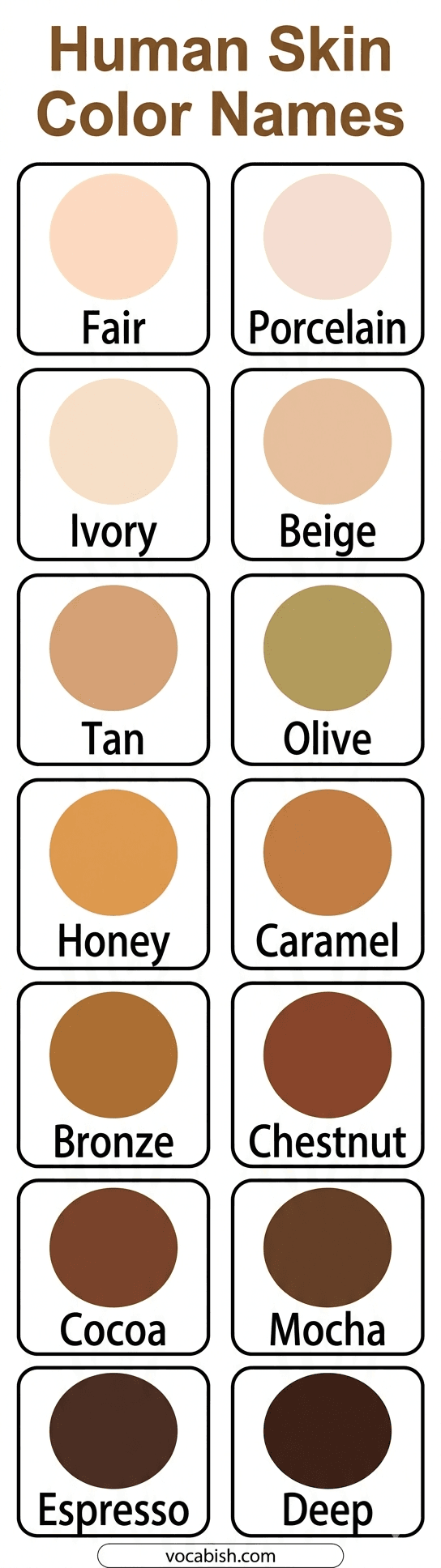
Human Skin Color Names Chart
Related Articles:
- 100 A to Z List of Color Names with Colors
- 12 Main Colors Name in English
- 30 Easy Colors Names and Chart
FAQs
Human skin color names are words used to describe different skin tones. Examples include fair, tan, olive, caramel, and deep brown. These words help learners describe people accurately.
Common human skin color names include fair, porcelain, ivory, beige, tan, olive, honey, caramel, bronze, chestnut, cocoa, mocha, and deep brown.
Human skin color names for males describe the different tones of men’s skin. Examples include fair, tan, olive, honey, caramel, cocoa, and deep brown. These words help learners describe men accurately.
Human skin color names for females describe the range of women’s skin shades. Examples include porcelain, ivory, beige, honey, caramel, bronze, and mocha. These words improve vocabulary for respectful and precise descriptions.
Human skin has many shades ranging from very light, such as porcelain, to medium tones like olive or caramel, and deep tones like cocoa, mocha, and espresso.
Conclusion
Learning human skin color names helps English learners describe people accurately and respectfully. From fair and ivory to deep brown and espresso, each word represents a unique skin shade. Practicing these words strengthens speaking, reading, writing, and listening skills, and builds confidence in daily communication and professional contexts.