
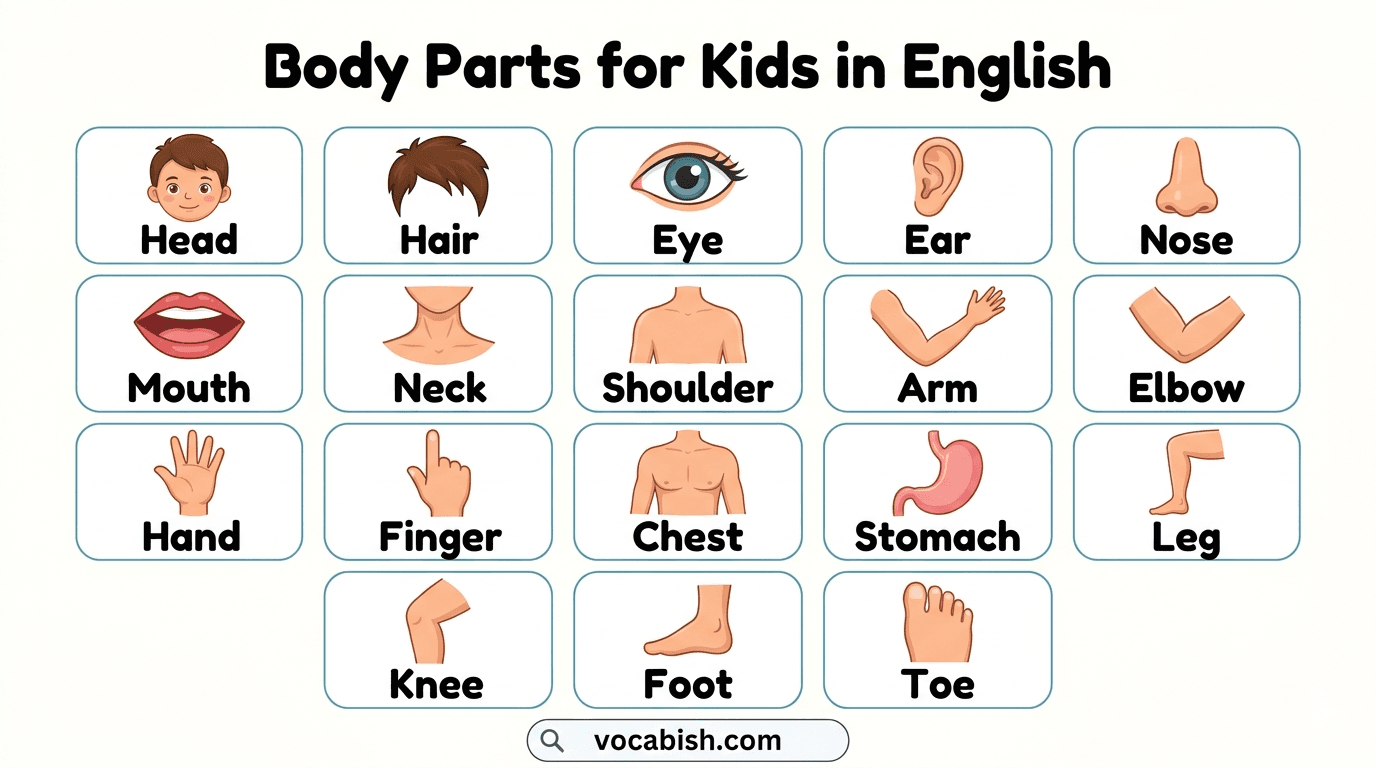
In this blog post, you will learn the names of body parts in English with a labelled diagram. Body parts vocabulary includes words such as head, eyes, ears, hands, legs, and feet. These are basic words children use when they talk about health, daily actions, and school activities. When learners understand these words, they can describe their body and follow instructions more easily. Knowing body parts vocabulary also helps students improve speaking, reading, writing, and listening skills because these words appear often in books, lessons, and everyday conversations. As you read, you will understand how each part of the body works and how to use these words correctly in sentences. By the end of this post, young learners can master important English words for body parts and use them with more confidence in daily communication.
What Are Body Parts?
Body parts are the different sections of the human body. Each part has a specific function. Some parts help us move, while others help us see, hear, think, and breathe.
For example:
- Eyes help us see.
- Legs help us walk.
- Hands help us hold things.
When children learn these words, they improve both English vocabulary and general knowledge about the human body.
Why Kids Should Learn Body Parts Vocabulary
Learning body vocabulary helps children in many daily situations.
Key benefits include:
- Improves basic English communication
- Helps children describe pain or health problems
- Builds strong beginner vocabulary
- Makes classroom learning easier
- Supports reading and listening skills
Because these words appear in books, school lessons, and conversations, they are essential vocabulary for young learners.
Main Body Parts for Kids with Diagram
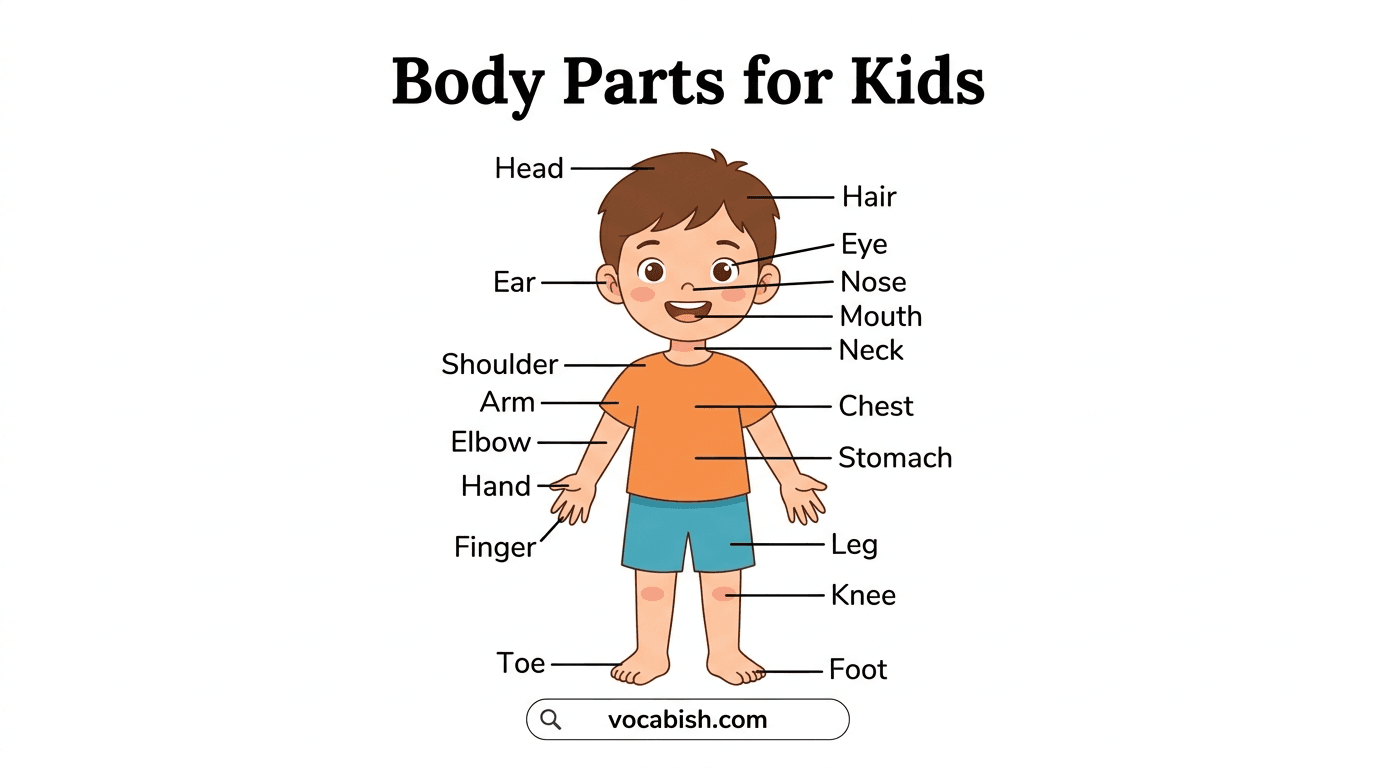
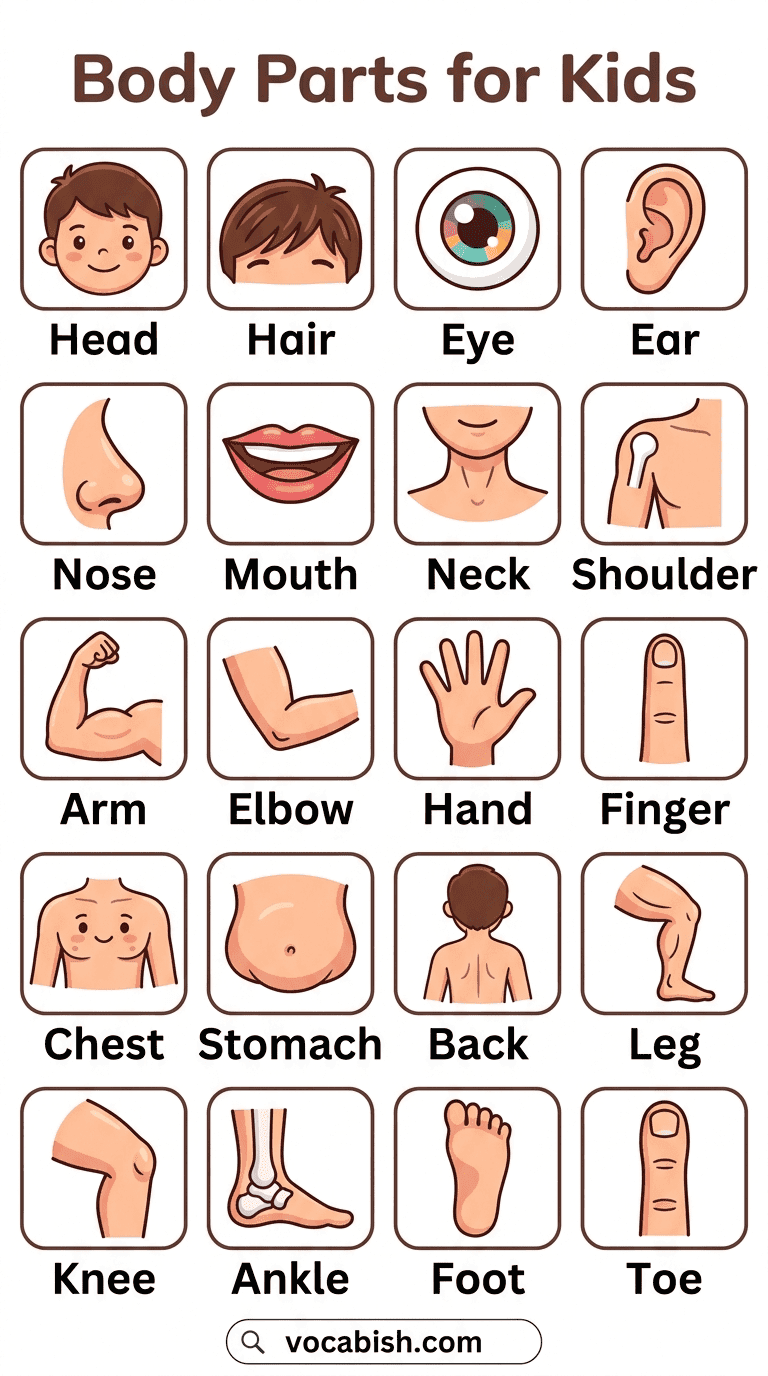
Below are important body parts vocabulary words with meanings and diagram.
- Head – The top part of the body that holds the brain, eyes, nose, and mouth.
- Eye – The body part we use to see.
- Ear – The part that helps us hear sounds.
- Nose – The organ used for smelling and breathing.
- Mouth – The opening used for speaking and eating.
- Neck – The part that connects the head to the body.
- Shoulder – The joint where the arm connects to the body.
- Arm – The long part used for lifting and holding things.
- Elbow – The middle joint of the arm that allows bending.
- Hand – The body part used to hold, write, and touch objects.
- Finger – One of the small parts at the end of the hand.
- Chest – The front upper part of the body that protects the heart and lungs.
- Stomach – The part of the body where food is digested.
- Back – The rear side of the body.
- Leg – The body part used for standing and walking.
- Knee – The joint in the middle of the leg.
- Foot – The body part at the end of the leg used for walking.
- Toe – One of the small parts on the foot.
Parts of the Head
The head contains many important organs that help us sense the world.
- Hair – The strands that grow on the head.
- Forehead – The area above the eyes.
- Eyebrow – Hair above the eyes that protects them from sweat.
- Eyelid – The skin that covers and protects the eye.
- Cheek – The soft side part of the face.
- Chin – The bottom part of the face under the mouth.
Parts of the Upper Body
The upper body supports movement and daily tasks.
- Shoulder – Connects the arm to the body.
- Arm – Helps with lifting, pushing, and pulling.
- Elbow – Allows the arm to bend.
- Wrist – Connects the hand to the arm.
- Hand – Used to grab, write, and touch.
- Finger – Helps with fine movements like typing or drawing.
Parts of the Lower Body
The lower body supports balance and movement.
Important words include:
- Hip – The joint connecting the legs to the body.
- Leg – Helps us stand and move.
- Knee – The joint that allows the leg to bend.
- Ankle – Connects the foot to the leg.
- Foot – Helps us stand and walk.
- Toe – Helps balance the body.
Internal Body Parts Kids Should Know
Some body parts are inside the body. We cannot see them, but they are very important.
- Brain – Controls thinking, memory, and movement.
- Heart – Pumps blood through the body.
- Lungs – Help us breathe.
- Stomach – Breaks down food.
- Bones – Give the body structure and support.
Tips to Remember Body Parts Words
Children learn vocabulary faster with simple techniques.
Helpful learning tips:
- Point to each body part while saying the word.
- Use pictures or flashcards.
- Practice with songs about body parts.
- Repeat the words during daily activities.
- Use the words in short sentences.
Example sentence:
- I wash my hands before eating.
This method helps children connect words with real-life actions.
Related Articles:
FAQs about Body Parts for Kids
Body parts for kids are the basic names of different parts of the human body that children learn in English, such as head, eyes, hands, legs, and feet.
Common body parts for kids include head, eyes, ears, nose, mouth, neck, arms, hands, fingers, legs, knees, feet, and toes. These are everyday words used in simple English communication.
The main body parts for kids include the head, torso, arms, hands, legs, and feet. These sections help the body move, balance, see, hear, and perform everyday actions.
Common parts of the head for kids include hair, eyes, ears, nose, mouth, cheeks, chin, and forehead. These parts help with seeing, hearing, smelling, eating, and speaking.
Teachers usually teach body parts for kids using pictures, flashcards, songs, and simple actions. This method helps children connect the vocabulary word with the correct body part.
Body parts vocabulary helps kids talk about their body, explain pain or injuries, follow instructions, and understand basic science and health topics in school and daily life.
Conclusion
Understanding body parts vocabulary for kids builds a strong foundation for English learning. These words appear in daily conversations, school lessons, and health discussions.
When children learn the names and meanings of body parts, they improve their communication skills, vocabulary, and confidence in English.