
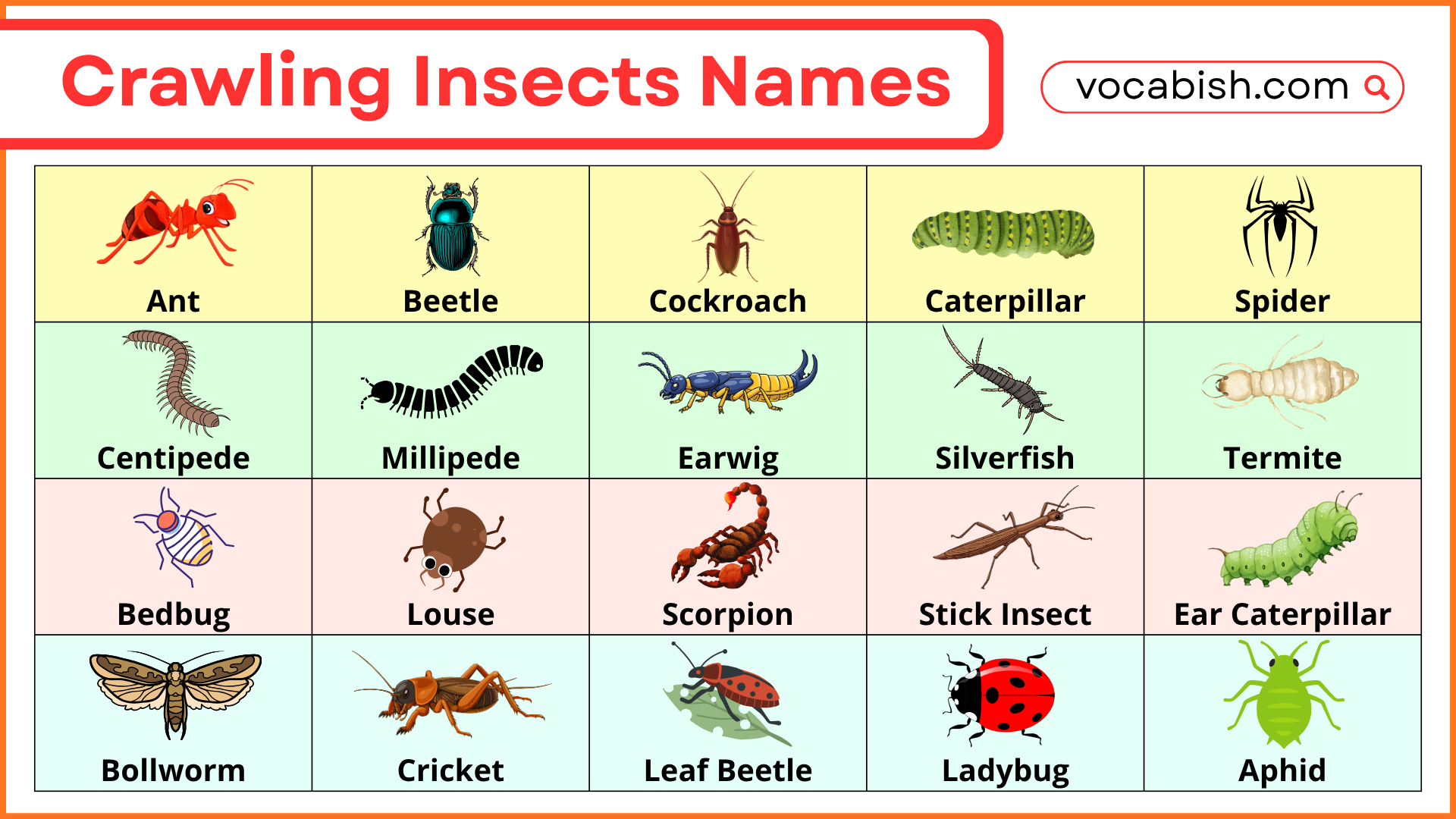
In this blog post, you will learn the names of 30 common crawling insects in English, complete with pictures to help you remember them easily. Knowing these words is important because it helps you understand conversations, books, and videos about nature, gardens, or science. By studying these insect names, you can improve your speaking, reading, writing, and listening skills at the same time. Learning vocabulary with pictures makes it easier to remember, so you can confidently use these words in daily life and English lessons.
What Are Crawling Insects?
Crawling insects are small animals that move using their legs instead of wings. Most of them live close to the ground or on plants. They can have six legs, a hard body, and antennae. Some are helpful for the environment, while others may harm plants or food.
Example: A cockroach, ant, or beetle is a common crawling insect found around us.
Popular Crawling Insects Names
Ant
Small social insects that live in colonies and work together to collect food; known for their strength and teamwork.
Beetle
Hard-bodied insect with protective wing covers; found in soil, plants, and wood; helps recycle dead materials.
Cockroach
Fast-moving insect that lives in warm, dark places; known for surviving in difficult conditions.
Caterpillar
The larval stage of butterflies and moths; eats leaves and later transforms into a butterfly or moth.
Spider
Eight-legged crawler that spins silk webs to catch prey; helps control harmful insect populations.
Centipede
Long-bodied insect-like creature with many legs; moves quickly and hunts small insects.
Millipede
Slow-moving crawler with many legs; feeds on decaying leaves and helps keep soil healthy.
Earwig
Small brown insect with pincers at the end of its abdomen; hides in dark, damp places.
Silverfish
Wingless insect with a shiny, silver body; often found in bathrooms, kitchens, and paper materials.
Termite
Small pale insect that lives in colonies and eats wood; can damage furniture and wooden buildings.
Bedbug
Tiny brownish insect that feeds on human blood; hides in beds and furniture cracks.
Ladybird (Ladybug)
Brightly coloured beetle with spots; eats harmful plant insects like aphids.
Louse
Tiny parasitic insect that lives on the hair or skin of humans and animals.
Scorpion
Night crawler with a curved tail and sting; glows under UV light and lives in dry areas.
Stick Insect
Long and thin crawler that looks like a twig; uses camouflage to hide from predators.
Ear Caterpillar
Crawling pest that damages plants and crops by eating leaves and flowers.
Bollworm
Crop pest that damages cotton, corn, and vegetables by feeding on seeds and fruits.
Cricket
Small brown insect that makes chirping sounds at night by rubbing its wings together.
Aphid
Soft-bodied insect that sucks sap from plants; often found on leaves and stems.
Leaf Beetle
Small colourful beetle that feeds on plant leaves; some species harm crops.
Armyworm
Crawling larva that moves in groups, feeding on grass and crops.
Assassin Bug
Predatory insect that hunts other insects by piercing them with its sharp mouth.
Black Bug
Small crawling insect found in rice fields; feeds on plant juices and reduces crop yield.
Ground Beetle
Fast-moving beetle that lives under stones or leaves; feeds on pests and small insects.
Woodlouse
Small grey crawler that lives in damp, dark places; feeds on dead plants and keeps soil clean.

Types of Crawling Insects
Crawling insects come in different types based on their shape, movement, and lifestyle. Below are the main types of crawling insects with important information.
1. Ground Crawling Insects
These insects move and live mainly on the ground or under leaves and stones.
Ant
Ants live in large colonies, work in groups, and collect food to feed the entire nest.
Example: An ant carried a crumb back to the colony, working with others.
Beetle
Beetles are insects with hard outer shells that live in soil, plants, or decaying material.
Example: A beetle crawled across the garden soil, searching for food.
Cockroach
Cockroaches are fast-moving insects found in dark, warm places like kitchens and basements.
Example: A cockroach ran along the floor and hid under the cupboard.
Cricket
Crickets are brown insects that produce chirping sounds at night to attract mates.
Example: The cricket’s chirping filled the garden during the quiet summer night.
Termite
Termites are small insects that eat wood and build nests underground or inside walls.
Example: A termite crawled along the wooden beam, slowly eating through it.
2. Crawling Insects in House
These insects are commonly seen inside homes, kitchens, and bathrooms.
Silverfish
Silverfish are shiny, wingless insects that live in damp, dark areas like bathrooms or basements.
Example: A silverfish scuttled across the bathroom floor, hiding under the tiles.
Bedbug
Bedbugs are small insects that hide in furniture, mattresses, and bite humans at night for blood.
Example: A bedbug crawled along the mattress seam, leaving a tiny red mark.
Ant
Ants often enter homes searching for food, sweets, or crumbs left on tables and floors.
Example: A line of ants marched into the kitchen, attracted by spilled sugar.
Cockroach
Cockroaches live in kitchen corners, cupboards, and dark places, feeding on leftover food or scraps.
Example: A cockroach darted under the fridge during the night.
Louse
Lice are tiny parasites that live on human hair or skin, feeding on blood to survive.
Example: The louse crawled through the child’s hair unnoticed.
3. Plant Crawling Insects
These insects live on plants, leaves, or soil and feed on plant parts.
Caterpillar
Caterpillars are leaf-eating larvae that eventually transform into butterflies or moths through metamorphosis.
Example: A caterpillar munched on the cabbage leaves before forming its cocoon.
Aphid
Aphids are small insects that suck sap from plants, often damaging leaves and slowing growth.
Example: Aphids covered the rose stems, causing the leaves to curl and yellow.
Leaf Beetle
Leaf beetles feed on green leaves and crops, sometimes becoming harmful to gardens and farms.
Example: A leaf beetle chewed holes in the lettuce leaves.
Bollworm
Bollworms are caterpillar-like insects that damage seeds, flowers, and fruits of crops like cotton.
Example: The bollworm ate through the cotton bolls, harming the harvest.
Armyworm
Armyworms move in groups across fields, feeding on grass and crops, often causing large damage.
Example: An armyworm spread through the wheat field, eating every green shoot.
4. Desert and Outdoor Crawling Insects
These insects are found in dry or open places like sand, stones, and grasslands.
Scorpion
Scorpions are arachnids with curved tails and stingers, often glowing under UV light at night.
Example: A scorpion hid under a rock, its tail poised to sting.
Centipede
Centipedes have long segmented bodies with many legs, moving quickly while hunting insects and small prey.
Example: A centipede crawled rapidly across the garden soil searching for food.
Millipede
Millipedes are slow-moving arthropods with many legs that feed on decaying plants and organic matter.
Example: A millipede rolled through the damp leaves in the forest.
Ground Beetle
Ground beetles crawl under rocks or soil and help control populations of harmful insects.
Example: A ground beetle scuttled beneath a stone in the vegetable garden.
Stick Insect
Stick insects resemble twigs or branches, hiding in plants to avoid predators and remain camouflaged.
Example: A stick insect rested on a branch, blending perfectly with the tree.
5. Helpful Crawling Insects
Some crawling insects are useful for plants, soil, and humans.
Ladybird (Ladybug)
Ladybirds are small beetles that eat plant pests like aphids, helping protect gardens and crops naturally.
Example: A ladybird crawled across the rose leaves, consuming harmful aphids.
Beetle
Beetles help recycle waste, break down organic matter, and keep soil clean and fertile for plants.
Example: A beetle crawled through the compost, aiding decomposition of leaves.
Ant
Ants clean food remains, aerate soil, and improve soil quality while working in large colonies.
Example: Ants carried crumbs into their nest, simultaneously aerating the garden soil.
Millipede
Millipedes feed on decaying leaves and organic matter, breaking it down to help plants grow.
Example: A millipede crawled slowly over fallen leaves, recycling nutrients into the soil.
Ground Beetle
Ground beetles eat harmful insects, reducing crop pests and helping protect garden plants naturally.
Example: A ground beetle scurried under the vegetable leaves, hunting small pests.
6. Harmful Crawling Insects
Some insects can cause damage to food, crops, or health.
Cockroach
Cockroaches are fast-moving insects that spread germs in kitchens, cupboards, and food storage areas.
Example: A cockroach scuttled across the countertop, contaminating the leftover food.
Bedbug
Bedbugs are small parasitic insects that bite humans at night, causing itching and skin irritation.
Example: A bedbug crawled along the mattress seam, leaving red marks on the skin.
Termite
Termites are insects that eat wood, damaging furniture, houses, and wooden structures over time.
Example: A termite colony slowly destroyed the wooden beams of the old house.
Aphid
Aphids are small insects that suck sap from plants, weakening them and causing leaf damage.
Example: Aphids covered the rose stems, curling and yellowing the leaves.
Bollworm
Bollworms are caterpillar-like insects that damage seeds, flowers, and fruits of crops like cotton and corn.
Example: The bollworm ate through the cotton bolls, reducing the harvest yield.
A to Z List of Crawling Insects Names
Here is the complete A to Z list of crawling insects that you can find in homes, gardens, and natural places. These names will help you build your insect vocabulary easily.
| A Insects | B Insects | C Insects |
|---|---|---|
| Ant | Beetle | Caterpillar |
| Aphid | Bedbug | Centipede |
| Armyworm | Black Bug | Cockroach |
| Assassin Bug | Bollworm | Cricket |
| E Insects | F Insects | G Insects |
| Earwig | Flea | Ground Beetle |
| Ear Caterpillar | Firebug | — |
| L Insects | M Insects | S Insects |
| Ladybird (Ladybug) | Millipede | Spider |
| Leaf Beetle | Mite | Silverfish |
| Louse | Maggot | Stick Insect |
| T Insects | W Insects | Z Insects |
| Termite | Woodlouse | — |
| Tick | Weevil | — |
| — | — | — |
Where Crawling Insects Are Found?
Crawling insects are found:
- In gardens and fields
- Inside homes and kitchens
- Under stones or leaves
- On trees and plants
Importance of Crawling Insects
Some crawling insects are helpful, while some are harmful.
Helpful insects:
- Beetles and ants clean waste from the soil.
- Caterpillars are part of the food chain.
Harmful insects:
- Cockroaches carry germs.
- Bedbugs bite humans and animals.
Interesting Facts about Crawling Insects
- Ants can carry things up to 50 times heavier than their own body weight.
- Cockroaches can live for a week without a head because they breathe through holes in their body.
- Caterpillars eat a lot of leaves before changing into butterflies.
- Spiders, though not true insects, spin silk webs to catch their food.
- Scorpions can glow under ultraviolet light due to special chemicals in their body shell.
Crawling insects are small but important creatures in our daily life. Knowing their names and uses helps you understand more about nature and English vocabulary. Start observing your surroundings, and you’ll find many of these tiny crawlers nearby!
FAQs
What is a crawling insect?
A crawling insect is a small creature that moves using its legs instead of wings. They live on the ground, plants, or inside homes — such as ants, beetles, cockroaches, and spiders.
Do ants crawl or walk?
Ants crawl using their six legs. They move fast on the ground and can climb walls or trees while carrying food or small objects.
What is bugs crawling?
Bugs crawling means insects that move or travel along a surface using their legs. It usually refers to small insects like cockroaches, beetles, or ants moving on the floor, wall, or plants.
Is a spider a crawling insect?
A spider is not a true insect — it belongs to the arachnid family. However, it’s often called a crawling insect because it moves on the ground and has similar behaviour.
What are helpful and harmful crawling insects?
Helpful crawling insects like ladybirds, beetles, and ants protect plants and clean the soil. Harmful crawling insects such as cockroaches, termites, and bedbugs spread germs or damage crops and wood.
Read More