
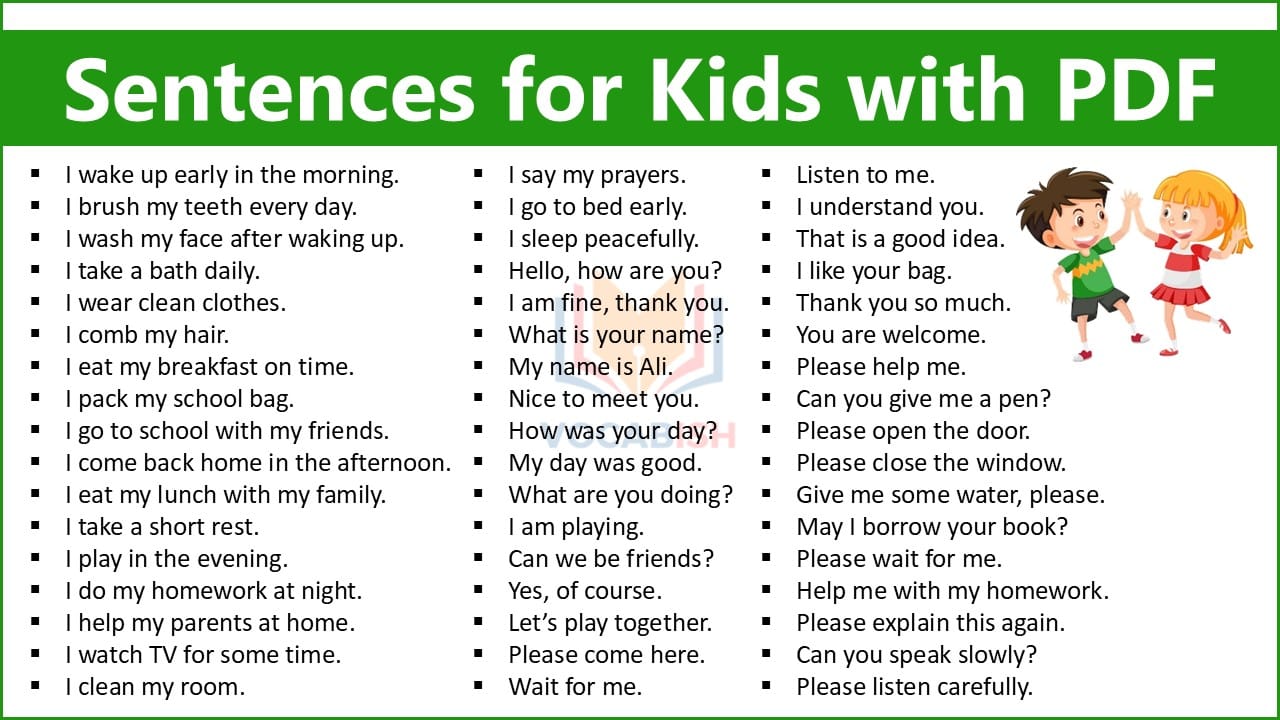
Sentences for kids are short and meaningful groups of words that help children express their ideas in English. They show how words work together to share thoughts, ask questions, and give information. Learning sentences is important because it helps learners understand meaning, learn correct structure, and speak with confidence. When children practice sentences, they improve their speaking, reading, writing, and listening skills step by step. In this blog post, you will learn how to use sentences in daily life, see helpful examples, and build strong language skills that make English easier to use and enjoy.
What Are Simple Sentences for Kids?
Simple sentences are short and easy statements. They use basic words and clear ideas. For example:
- I wake up early.
- She likes apples.
These sentences help kids understand meaning quickly and speak with confidence.
Why Learning Sentences Is Important
Learning sentences helps children:
- Speak English in daily life
- Understand conversations easily
- Improve reading skills
- Build strong vocabulary
- Write correct and clear sentences
As a result, kids become more confident in using English.
Common Daily Use Vocabulary Words for Kids
Here are some important words kids should know:
- School – A place to learn
- Teacher – A person who teaches
- Book – Something you read
- Friend – A person you like
- Family – People at home
- Food – Things we eat
- Water – A drink we need
- Play – To have fun
- Run – To move fast
- Eat – To take food
- Sleep – To rest at night
- Happy – Feeling good
- Sad – Feeling unhappy
- Clean – Not dirty
- Help – To assist someone
These words appear often in the sentences below.
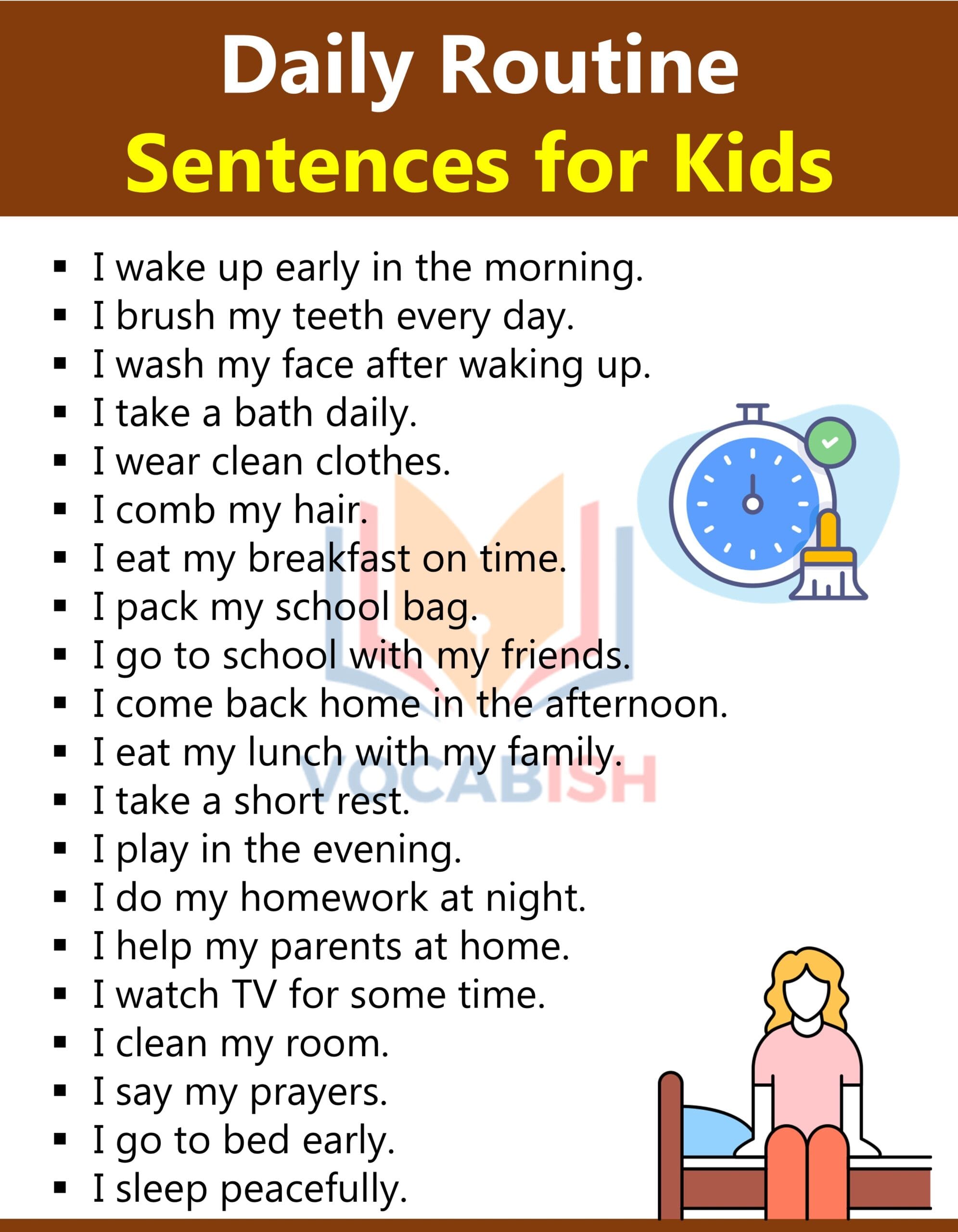
Daily Routine Sentences for Kids
- I wake up early in the morning.
- I brush my teeth every day.
- I wash my face after waking up.
- I take a bath daily.
- I wear clean clothes.
- I comb my hair.
- I eat my breakfast on time.
- I pack my school bag.
- I go to school with my friends.
- I come back home in the afternoon.
- I eat my lunch with my family.
- I take a short rest.
- I play in the evening.
- I do my homework at night.
- I help my parents at home.
- I watch TV for some time.
- I clean my room.
- I say my prayers.
- I go to bed early.
- I sleep peacefully.
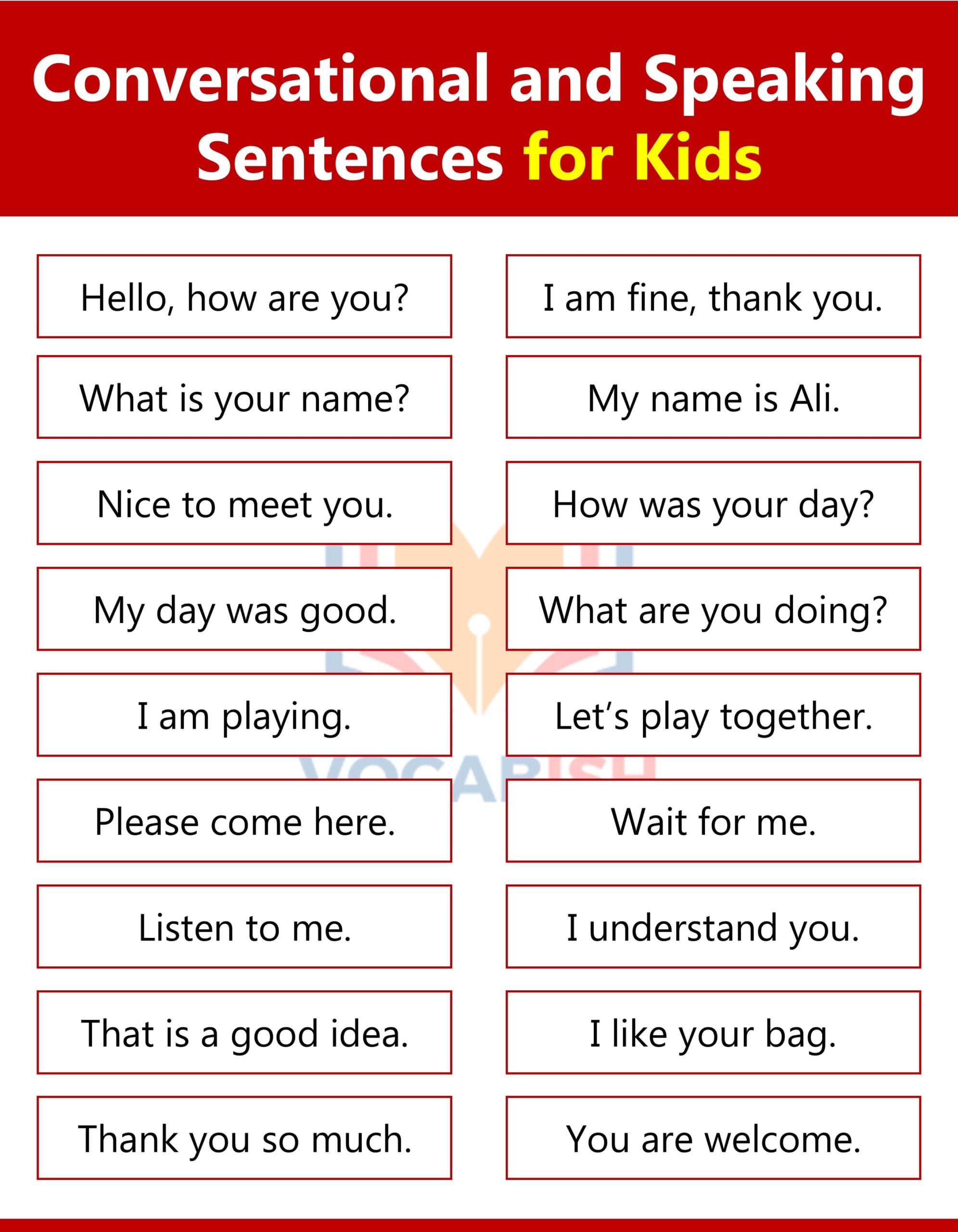
Conversational and Speaking Sentences for Kids
- Hello, how are you?
- I am fine, thank you.
- What is your name?
- My name is Ali.
- Nice to meet you.
- How was your day?
- My day was good.
- What are you doing?
- I am playing.
- Can we be friends?
- Yes, of course.
- Let’s play together.
- Please come here.
- Wait for me.
- Listen to me.
- I understand you.
- That is a good idea.
- I like your bag.
- Thank you so much.
- You are welcome.
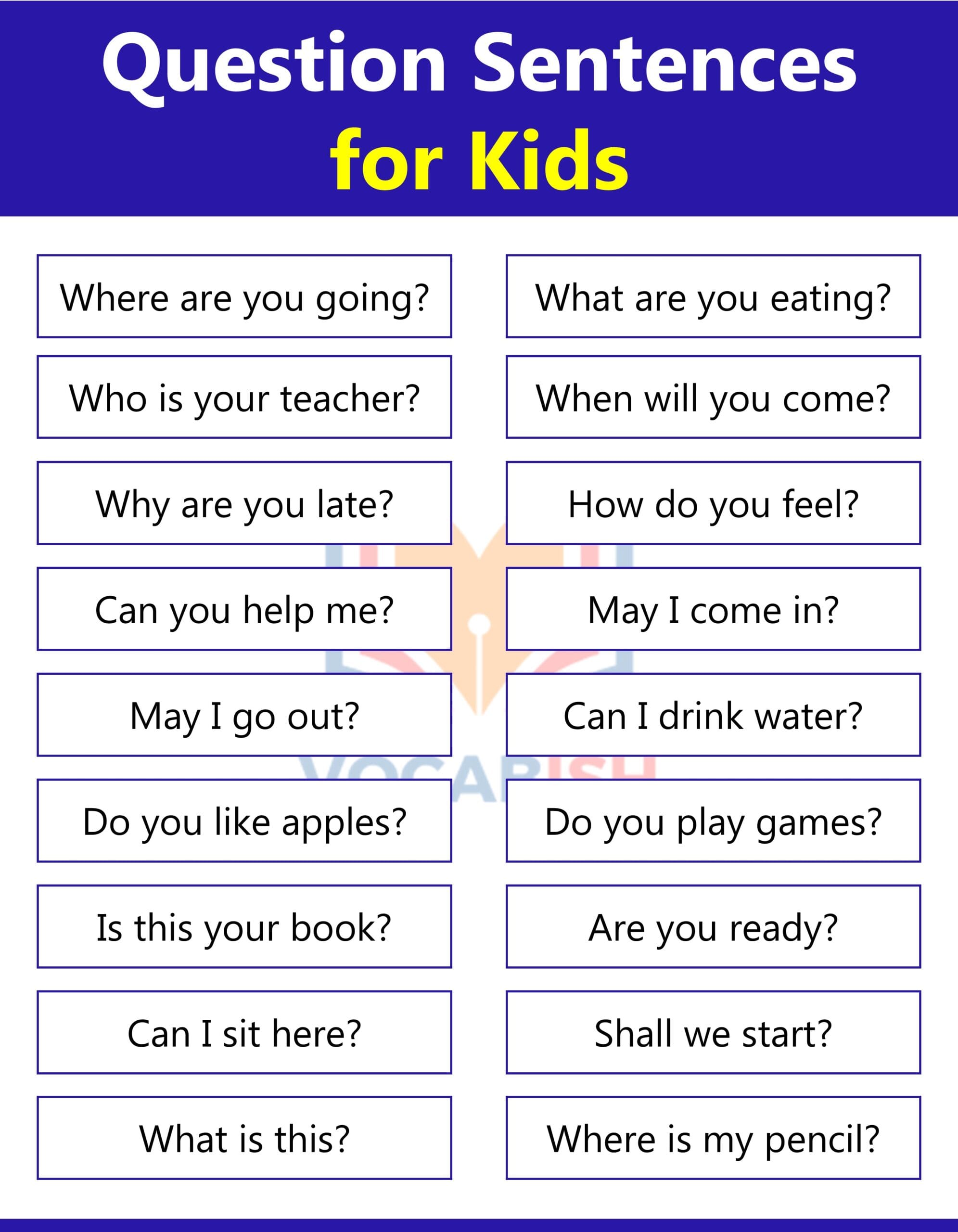
Question Sentences for Kids
- Where are you going?
- What are you eating?
- Who is your teacher?
- When will you come?
- Why are you late?
- How do you feel?
- Can you help me?
- May I come in?
- May I go out?
- Can I drink water?
- Do you like apples?
- Do you play games?
- Is this your book?
- Are you ready?
- Did you finish your work?
- Can I sit here?
- Shall we start?
- What is this?
- Who is your best friend?
- Where is my pencil?
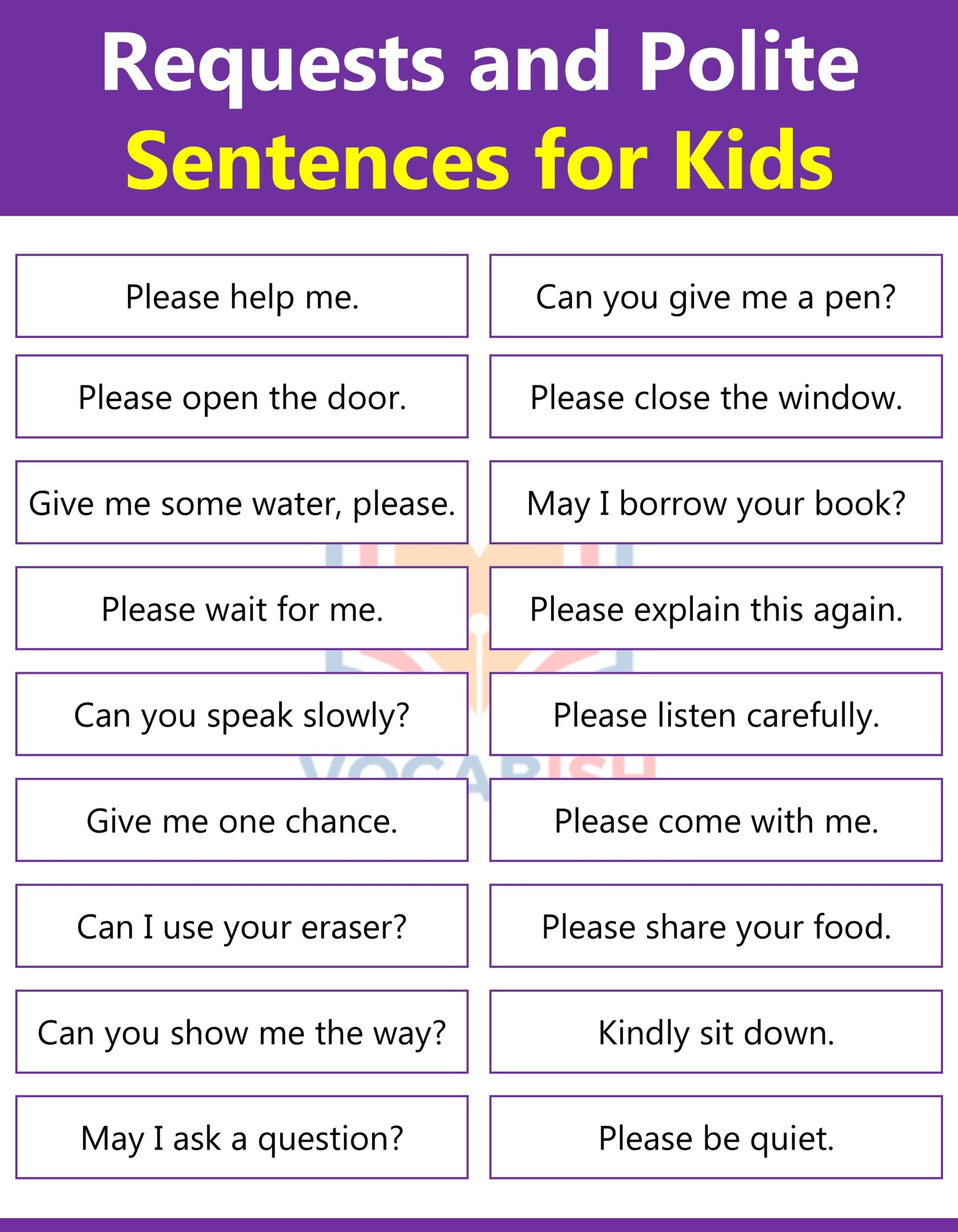
Requests and Polite Sentences for Kids
- Please help me.
- Can you give me a pen?
- Please open the door.
- Please close the window.
- Give me some water, please.
- May I borrow your book?
- Please wait for me.
- Help me with my homework.
- Please explain this again.
- Can you speak slowly?
- Please listen carefully.
- Give me one chance.
- Please come with me.
- Can I use your eraser?
- Please share your food.
- Can you show me the way?
- Please be quiet.
- Kindly sit down.
- Please tell me the answer.
- May I ask a question?
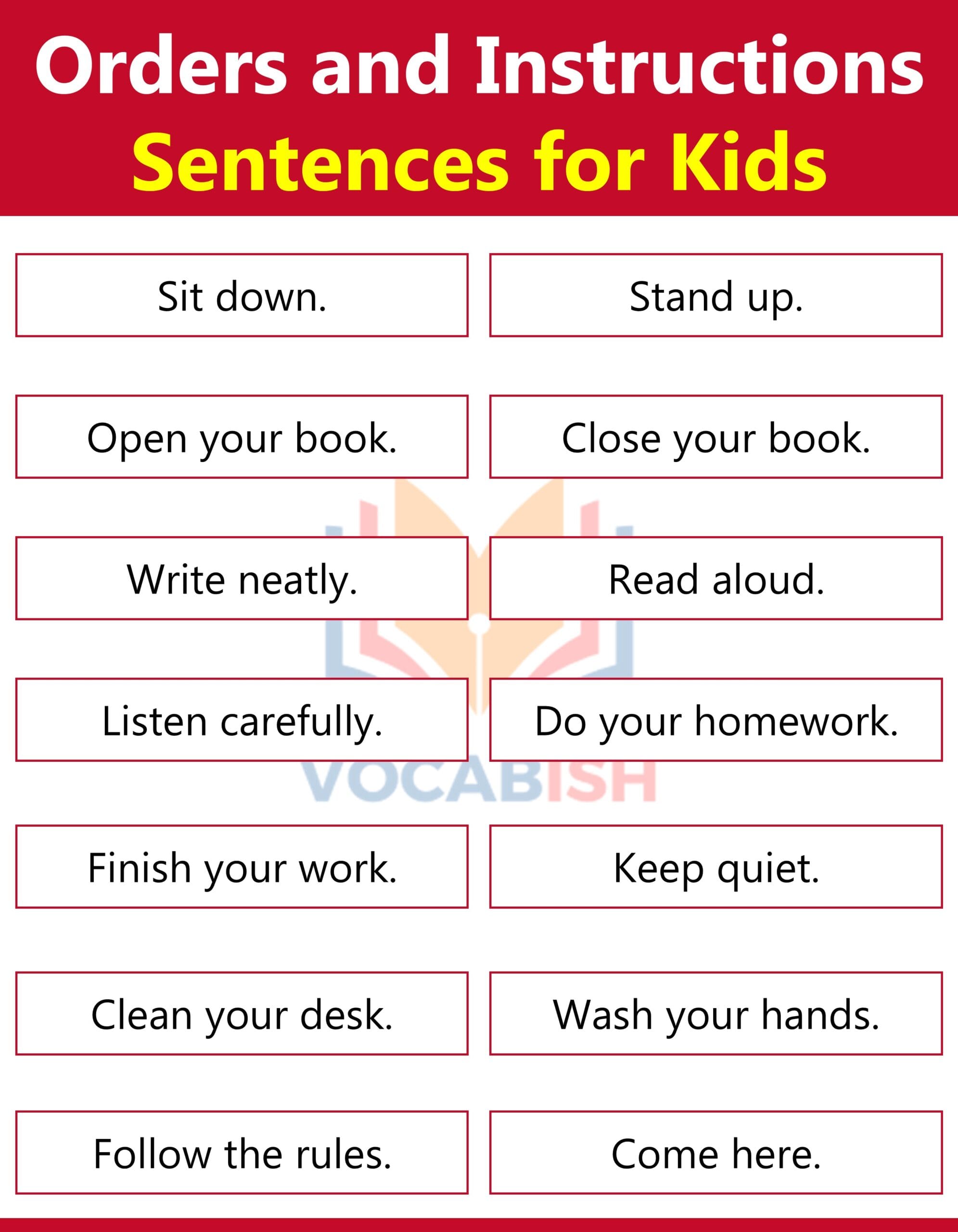
Orders and Instructions Sentences for Kids
- Sit down.
- Stand up.
- Open your book.
- Close your book.
- Write neatly.
- Read aloud.
- Listen carefully.
- Do your homework.
- Finish your work.
- Keep quiet.
- Clean your desk.
- Wash your hands.
- Follow the rules.
- Come here.
- Go there.
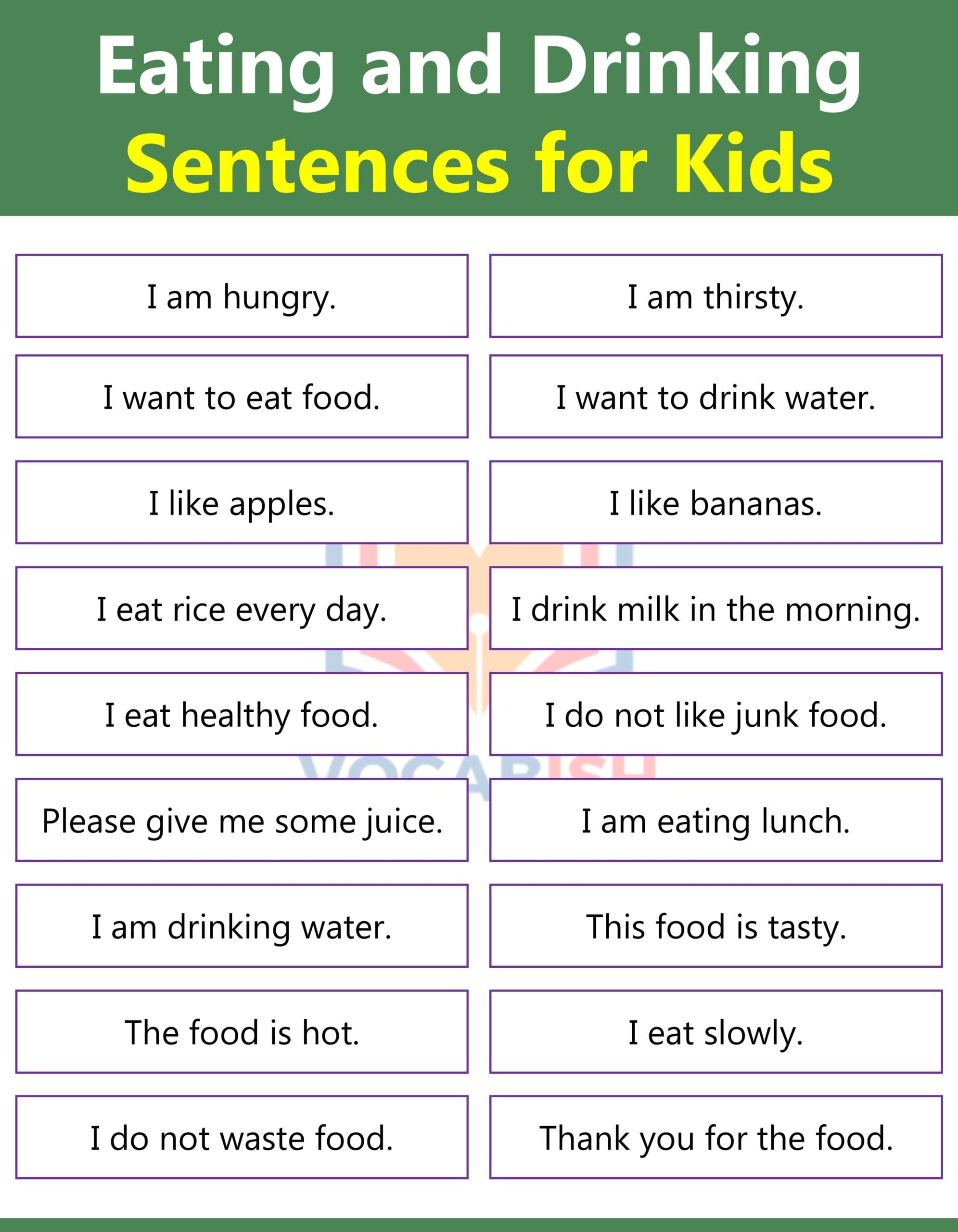
Eating and Drinking Sentences for Kids
- I am hungry.
- I am thirsty.
- I want to eat food.
- I want to drink water.
- I like apples.
- I like bananas.
- I eat rice every day.
- I drink milk in the morning.
- I eat healthy food.
- I do not like junk food.
- Please give me some juice.
- I am eating lunch.
- I am drinking water.
- This food is tasty.
- The food is hot.
- I eat slowly.
- I wash my hands before eating.
- I sit properly while eating.
- I do not waste food.
- Thank you for the food.
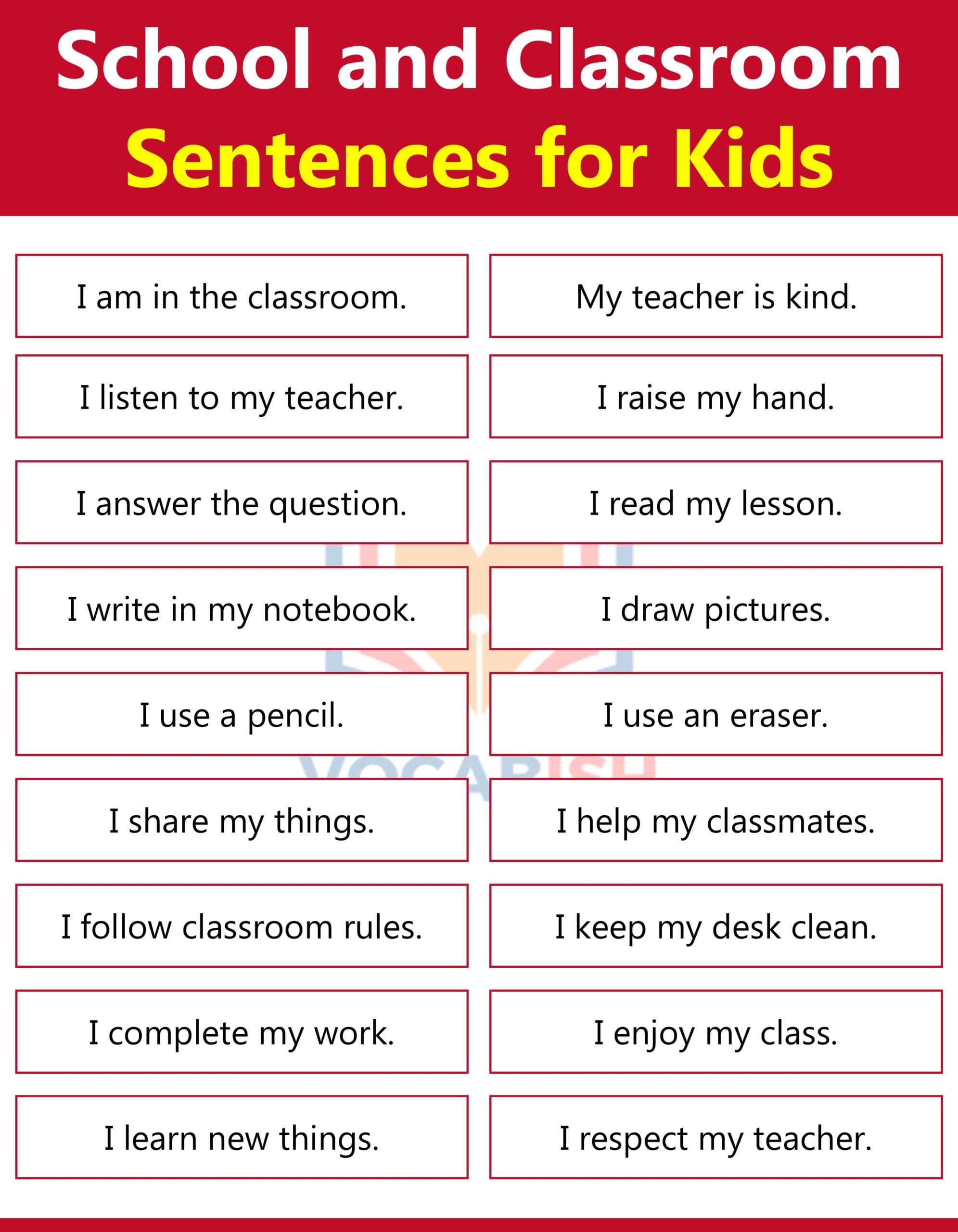
School and Classroom Sentences for Kids
- I am in the classroom.
- My teacher is kind.
- I listen to my teacher.
- I raise my hand.
- I answer the question.
- I read my lesson.
- I write in my notebook.
- I draw pictures.
- I use a pencil.
- I use an eraser.
- I share my things.
- I help my classmates.
- I follow classroom rules.
- I keep my desk clean.
- I complete my work.
- I enjoy my class.
- I learn new things.
- I ask questions.
- I respect my teacher.
- I go home after school.
Real Life and Good Habits Sentences for Kids
- I speak politely.
- I respect others.
- I help my friends.
- I say thank you.
- I say sorry.
- I tell the truth.
- I keep my room clean.
- I throw trash in the bin.
- I save water.
- I plant trees.
- I love my family.
- I obey my parents.
- I share my toys.
- I stay happy.
- I always try my best.
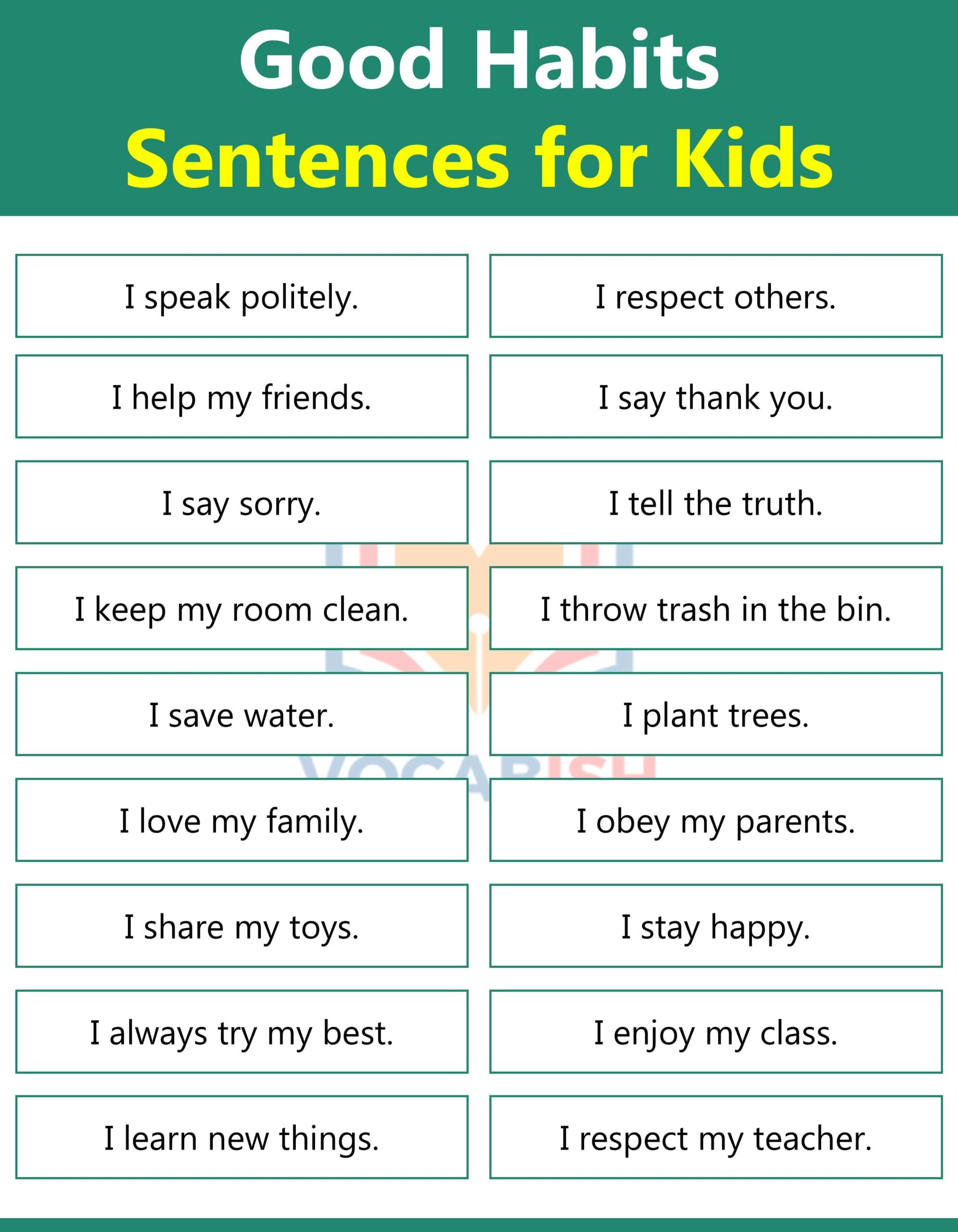
Sentences for Kids PDF
FAQs
Kids can learn by reading, repeating, and using sentences daily. Practice with real-life situations like school, home, and play. Regular use builds confidence and improves memory naturally.
Common sentences include simple expressions like “I am hungry,” “Please help me,” and “I am going to school.” These help kids communicate their needs and daily activities clearly.
These sentences give children ready-made phrases to speak in real situations. By practicing them, kids improve pronunciation, fluency, and confidence while speaking English with others.
Practice by speaking sentences aloud, writing them in a notebook, and using them in daily conversation. Parents can ask questions and encourage kids to respond in complete sentences.
A child should practice 5 to 10 sentences daily. Consistent practice helps build strong habits, improves retention, and gradually increases confidence in speaking and understanding English.
Related Articles:
Conclusion
Learning sentences helps you speak English clearly and confidently. These simple sentences teach you how to talk about your daily life, school, food, and friends. Practice them every day, speak aloud, and use them in real situations. With regular practice, you will improve your speaking, reading, writing, and understanding skills step by step.