
In this blog post, you will learn wild, animals, and names that children often use in English. These words describe animals that live in forests, jungles, deserts, and other natural places. Knowing wild animal vocabulary helps English learners talk about nature, school topics, and everyday conversations. When students learn these words, they begin to understand stories, classroom lessons, and videos about animals more easily. It also helps them describe animals while speaking and write short sentences with correct words. As you continue reading, you will learn many wild animal names and understand how to recognize and use them in English.
What Are Wild Animals?
Wild animals are animals that live in nature without human care. They find their own food and shelter.
Most wild animals live in places such as:
- Forests
- Jungles
- Mountains
- Deserts
- Rivers and oceans
For example, a lion lives in the wild, not in a house like a pet cat.
Learning these words helps children talk about nature, animals, and the environment in English.
Why Kids Should Learn Wild Animal Names
Learning animal vocabulary offers several benefits for young learners.
- Improves basic English vocabulary
- Builds speaking confidence
- Helps with school lessons and reading
- Encourages curiosity about nature and wildlife
- Makes English learning more fun and visual
Children often remember words faster when they connect them with animals they see in books, cartoons, or zoos.
Common Wild Animals Name for Kids with Pictures
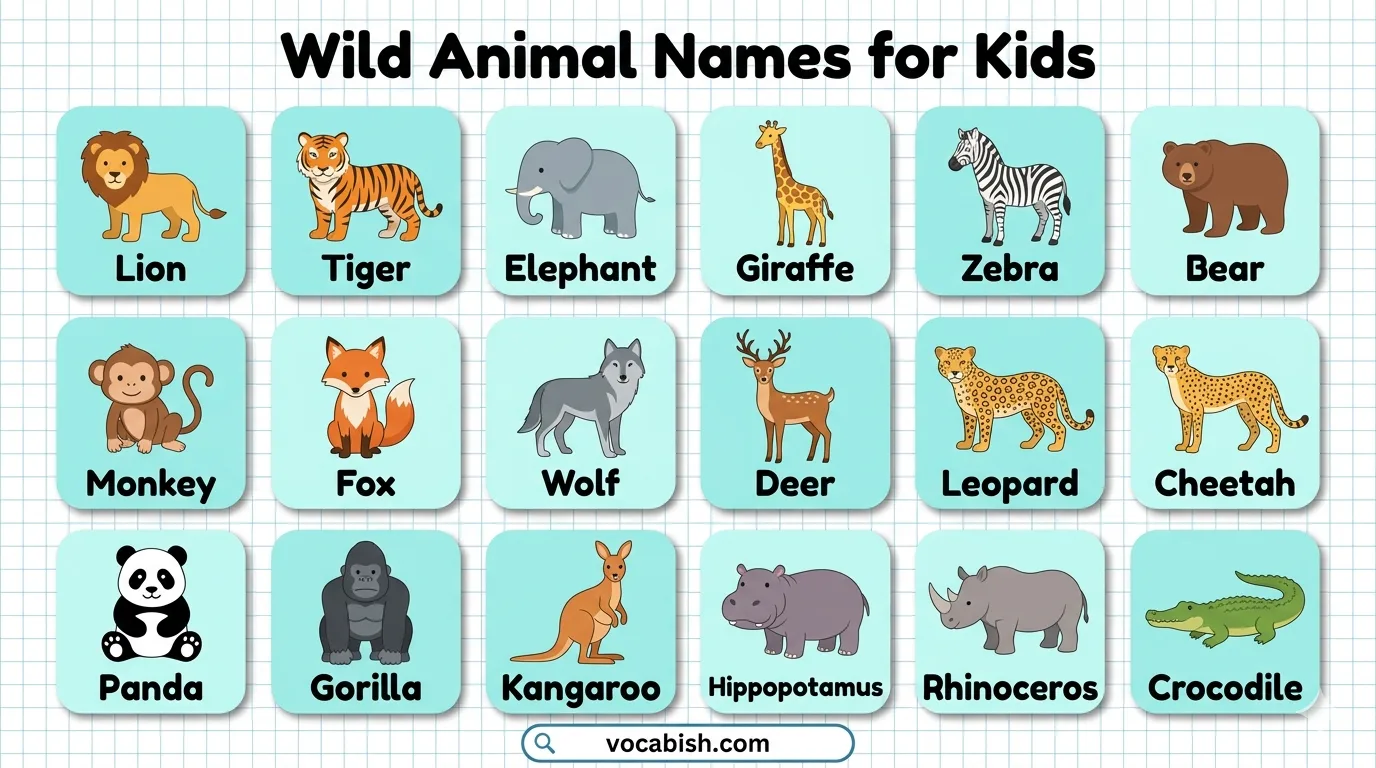
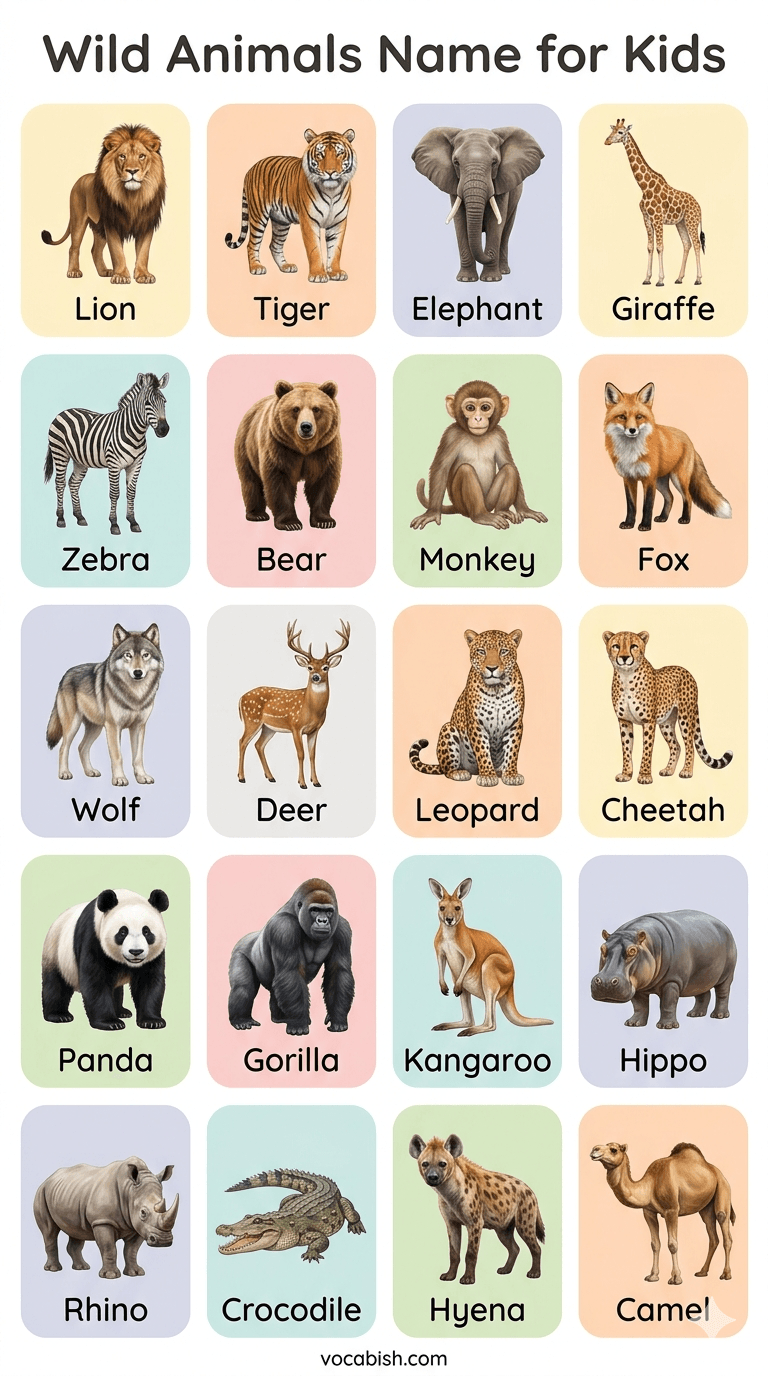
Below is a list of important wild animals that children often learn first. Each word includes a short meaning and pictures to make learning easier.
- Lion – A large wild cat known as the “king of the jungle.”
- Tiger – A strong orange animal with black stripes.
- Elephant – The largest land animal with a long trunk.
- Giraffe – A very tall animal with a long neck.
- Zebra – A horse-like animal with black and white stripes.
- Bear – A large, strong animal with thick fur.
- Monkey – A smart animal that climbs trees easily.
- Fox – A small wild animal with a long tail.
- Wolf – A wild animal that looks similar to a dog.
- Deer – A gentle animal with long legs and sometimes horns.
- Leopard – A spotted wild cat that climbs trees well.
- Cheetah – The fastest land animal.
- Kangaroo – An animal that jumps and carries babies in a pouch.
- Panda – A black and white bear that eats bamboo.
- Crocodile – A large reptile that lives in rivers and water.
- Hippopotamus – A very large animal that spends much time in water.
- Rhinoceros – A heavy animal with one or two horns on its nose.
- Hyena – A wild animal known for its laughing sound.
- Gorilla – A large and powerful ape that lives in forests.
- Camel – A desert animal that stores fat in its hump.
Types of Wild Animals with Their Names
Big Wild Animals
Some wild animals are very large and powerful. Children often learn these first because they appear in many books and cartoons.
Examples include:
- Elephant
- Giraffe
- Rhinoceros
- Hippopotamus
- Bear
These animals usually live in forests, grasslands, or jungles.
Example sentence:
The elephant is the largest land animal.
Small Wild Animals
Not all wild animals are big. Many are small and quick.
Examples include:
- Fox
- Monkey
- Hyena
- Deer
These animals often move fast and live in forests or grasslands.
Example sentence:
The fox runs quickly in the forest.
Jungle Wild Animals
Many famous wild animals live in jungles or dense forests.
Common jungle animals include:
- Lion
- Tiger
- Leopard
- Monkey
- Gorilla
These animals survive by hunting, climbing trees, or living in groups.
Example sentence:
The tiger lives in the jungle.
List of Wild Animal Names for Kids
- Lion
- Tiger
- Elephant
- Giraffe
- Zebra
- Bear
- Monkey
- Fox
- Wolf
- Deer
- Leopard
- Cheetah
- Panda
- Gorilla
- Kangaroo
- Hippopotamus
- Rhinoceros
- Crocodile
- Hyena
- Camel
Tips to Remember Animal Vocabulary
Learning vocabulary becomes easier with simple practice methods.
Try these tips:
- Look at animal pictures while learning new words.
- Say each animal name out loud.
- Write short sentences using the words.
- Watch nature videos or documentaries in English.
- Play animal word games with friends or classmates.
Regular practice helps children remember vocabulary for a long time.
Related Articles:
FAQs
Wild animals are animals that live in nature without human care. They find their own food and shelter in forests, jungles, deserts, or mountains. Examples include lions, tigers, elephants, and bears.
Some common wild animals name for kids include lion, tiger, elephant, giraffe, zebra, bear, fox, wolf, deer, and monkey. These animals live in forests, jungles, or grasslands.
Kids can remember wild animals names by looking at pictures, repeating the words aloud, using them in short sentences, and watching animal videos or educational programs in English.
Wild animals live in nature and survive on their own, such as lions and elephants. Domestic animals live with humans and receive care, such as dogs, cats, cows, and goats.
Five easy wild animals name for kids are lion, tiger, elephant, giraffe, and zebra. These animals are common in books, zoos, and school lessons, so children learn them quickly.
Wild animals usually live in natural habitats such as forests, jungles, mountains, deserts, and rivers. Each animal lives where it can find food, water, and safe shelter.
Conclusion
Learning wild animals name for kids in English is a fun and effective way to improve vocabulary. Animal words are easy to remember because children see them in books, cartoons, zoos, and nature programs.
By learning these names, students can:
- Describe animals correctly
- Improve reading and speaking skills
- Build a strong foundation in English vocabulary
Start practicing these wild animal words, and soon talking about nature in English will feel easy and natural.