

Learning antonyms is a powerful way to expand your English vocabulary. In this blog post, you will explore a list of 100 antonyms for common adjectives, helping you understand words and their opposites in context. Knowing antonyms improves your speaking, reading, writing, and listening skills. By mastering these opposites, you can describe things more accurately, express ideas clearly, and communicate confidently in everyday and professional situations.
What are Adjectives and Antonyms?
Adjectives are words that describe nouns (people, places, things).
Example: “happy,” “cold,” “big.”
Antonyms are opposite words.
Example: The antonym of “happy” is “sad”.
So, antonyms of adjectives are words that have opposite meanings to describing words.
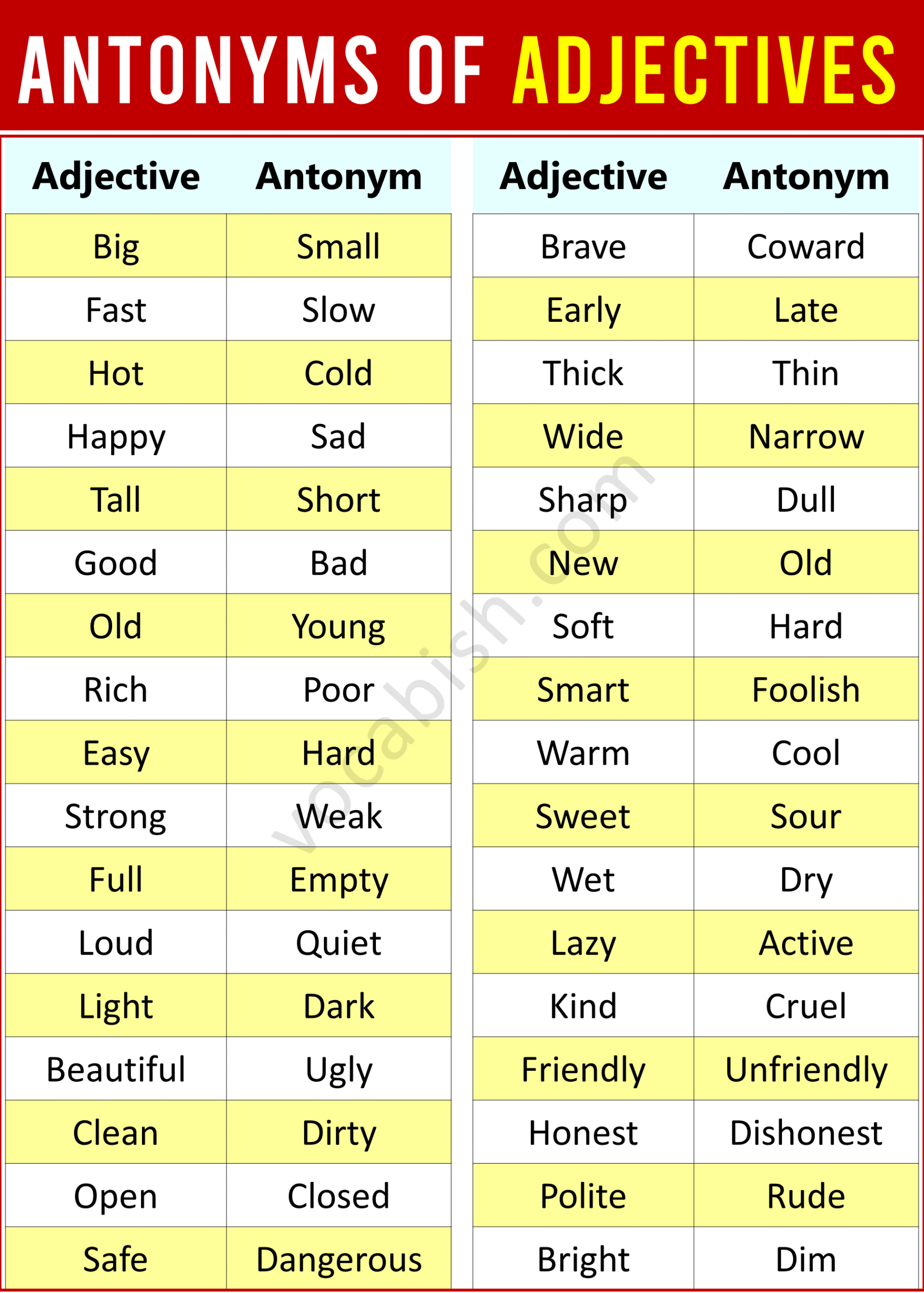
Antonyms for Common Adjectives
Here is a simple list of 100 adjectives with their antonyms. These are very common and easy to remember.
| Adjective | Antonym |
|---|---|
| Big | Small |
| Fast | Slow |
| Hot | Cold |
| Happy | Sad |
| Tall | Short |
| Good | Bad |
| Old | Young |
| Rich | Poor |
| Easy | Hard |
| Strong | Weak |
| Full | Empty |
| Loud | Quiet |
| Light | Dark |
| Beautiful | Ugly |
| Clean | Dirty |
| Open | Closed |
| Safe | Dangerous |
| Brave | Coward |
| Early | Late |
| Thick | Thin |
| Wide | Narrow |
| Sharp | Dull |
| New | Old |
| Soft | Hard |
| Smart | Foolish |
| Warm | Cool |
| Sweet | Sour |
| Wet | Dry |
| Lazy | Active |
| Kind | Cruel |
| Friendly | Unfriendly |
| Honest | Dishonest |
| Polite | Rude |
| Bright | Dim |
| Noisy | Silent |
| Right | Wrong |
| Busy | Free |
| Thick | Thin |
| Neat | Messy |
| Calm | Nervous |
| Cheap | Expensive |
| Bitter | Sweet |
| Flexible | Stiff |
| Famous | Unknown |
| Soft | Rough |
| Simple | Complicated |
| Safe | Risky |
| Alive | Dead |
| Cool | Warm |
| Comfortable | Uncomfortable |
| Real | Fake |
| Legal | Illegal |
| Healthy | Sick |
| Useful | Useless |
| Powerful | Powerless |
| Tidy | Untidy |
| Generous | Greedy |
| Wise | Foolish |
| Careful | Careless |
| Clear | Cloudy |
| Heavy | Light |
| Interested | Bored |
| Safe | Unsafe |
| Strong | Fragile |
| Loyal | Disloyal |
| Funny | Serious |
| Happy | Unhappy |
| Important | Unimportant |
| Organized | Disorganized |
| Healthy | Unhealthy |
| Deep | Shallow |
| Straight | Curved |
| Dry | Moist |
| Modern | Old-fashioned |
| Sharp | Blunt |
| Energetic | Tired |
| Lucky | Unlucky |
| Bright | Dull |
| Fair | Unfair |
| Loyal | Betraying |
| Peaceful | Violent |
| Real | Imaginary |
| Exciting | Boring |
| True | False |
| Helpful | Unhelpful |
| Smooth | Rough |
| Honest | Lying |
| Generous | Selfish |
| Serious | Silly |
| Beautiful | Horrible |
| Confident | Shy |
| Hardworking | Lazy |
| Busy | Idle |
| Respectful | Disrespectful |
| Humble | Proud |
| Hopeful | Hopeless |
| Creative | Unimaginative |
| Thick | Slim |
| Relaxed | Tense |
| Eager | Reluctant |
| Helpful | Harmful |
Try learning 5–10 pairs daily and use them in sentences to improve your memory. Opposite words help you communicate clearly and express feelings better.
Read More