
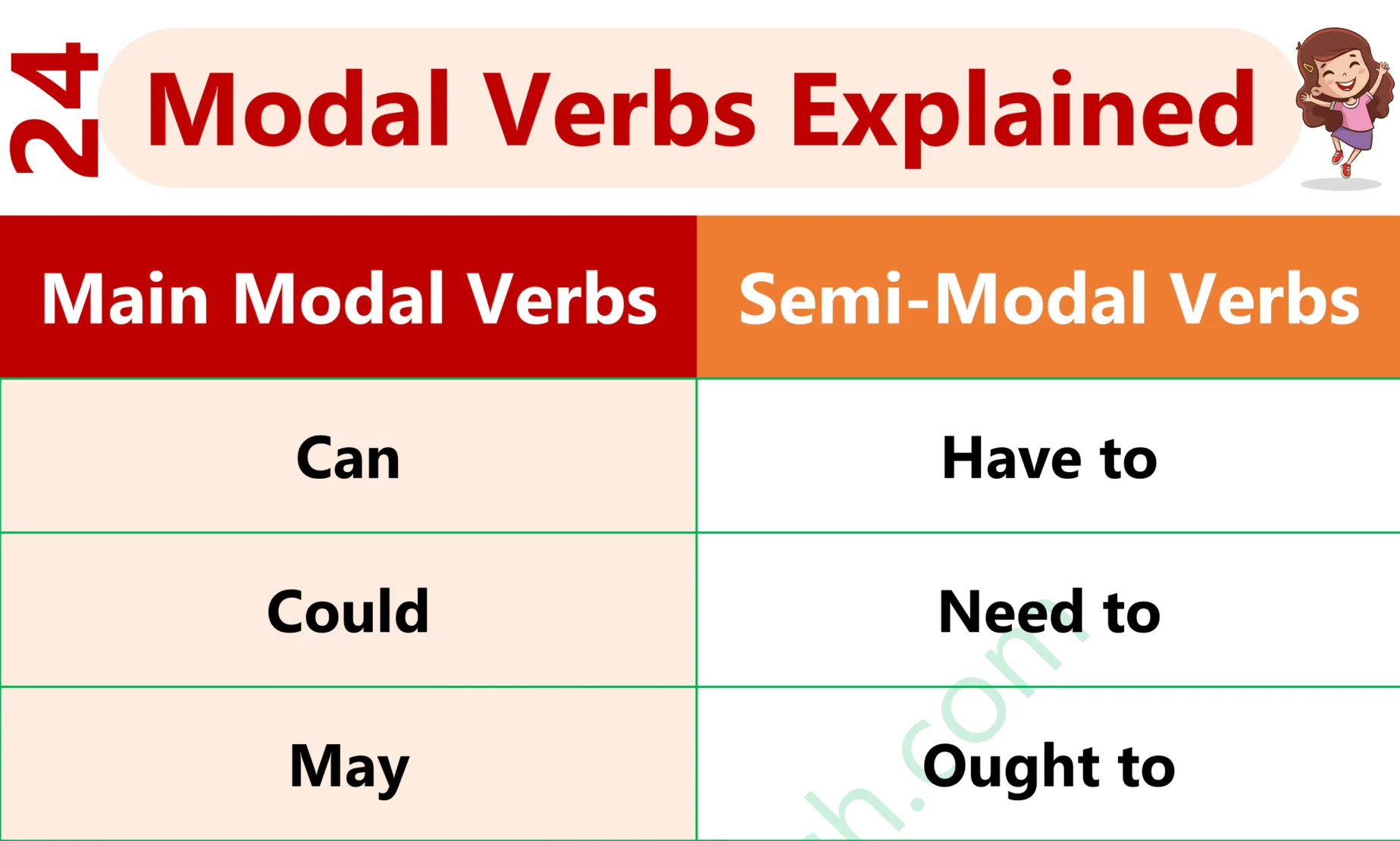

Many English learners know basic verbs like go, eat, or study, but conversations become harder when they need to ask for permission, give advice, or talk about possibility. That’s where Modal Verbs become important. Small words like can, should, might, and must completely change the meaning and tone of a sentence in everyday conversations.
In English communication, modal verbs help speakers sound more polite, natural, and clear. Compare “Open the window” with “Could you open the window?” The grammar changes only a little, but the sentence feels very different. In this article, you’ll learn how modal verbs work, when to use them, and how they help you speak and write English more naturally in real situations.
What Are Modal Verbs?
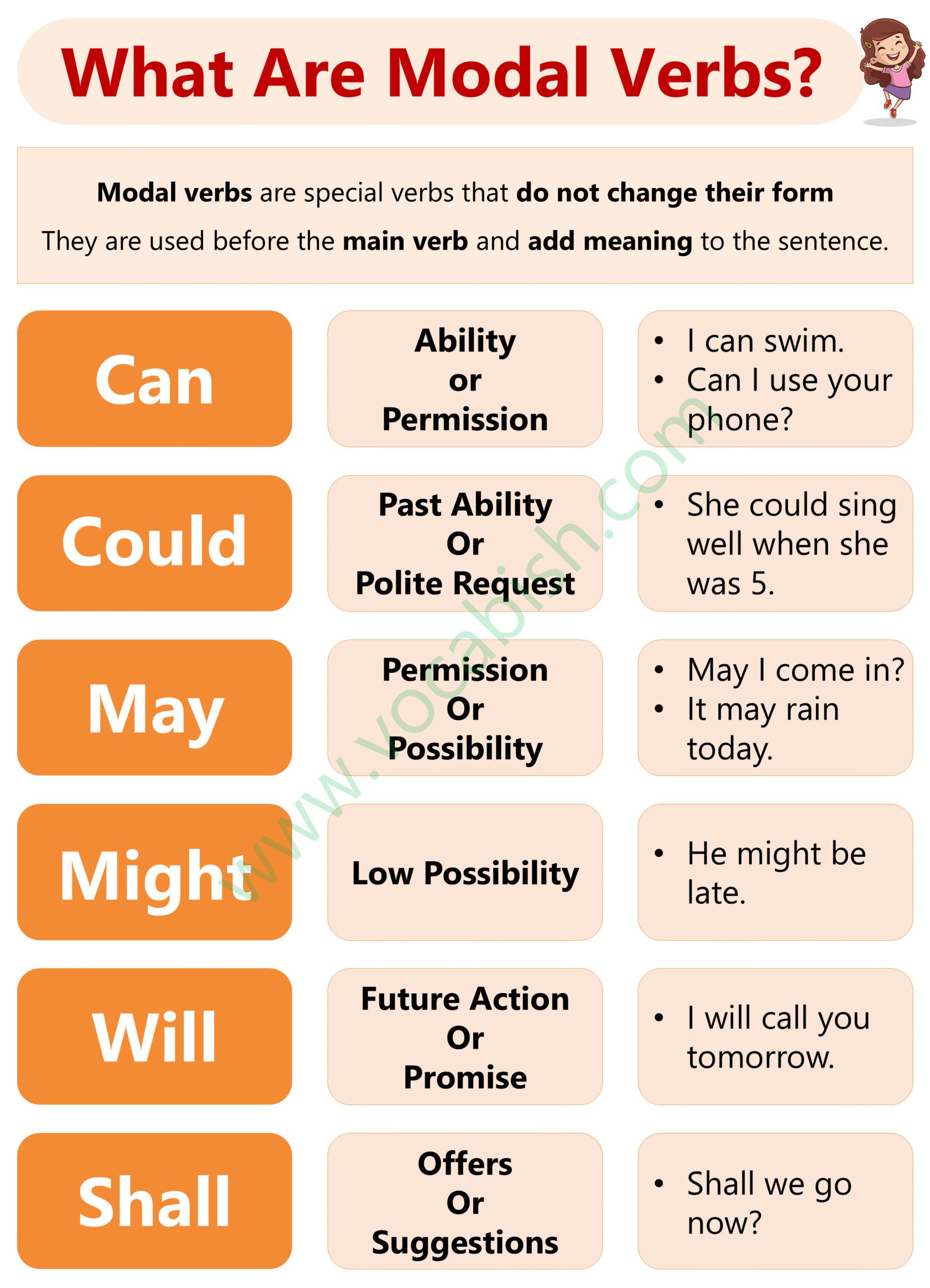
Modal verbs are helping verbs that add meaning to the main verb in a sentence. They show ideas such as:
- ability
- permission
- advice
- possibility
- obligation
- requests
Unlike regular verbs, modal verbs do not usually change form.
Examples:
- She can swim.
- You should study more.
- They might arrive late.
The modal verb comes before the main verb.
Basic structure:
Subject + Modal Verb + Base Verb
Examples:
- He might call later.
- I can drive.
- We should leave now.
Why Modal Verbs Matter in English
Without modal verbs, English can sound too direct or unnatural.
For example:
- Give me your pen.
- Could you give me your pen?
The second sentence sounds more polite and natural.
These verbs help you:
- ask questions politely
- give advice naturally
- express uncertainty
- make friendly requests
- speak more confidently
Modal Verbs Rules
Modal verbs follow several important grammar rules.
1. Use the Base Form of the Verb
Correct:
- She can drive.
- They should study.
Incorrect:
- She can drives.
- They should studying.
2. Modal Verbs Do Not Use “To”
Correct:
- I must go.
- You should eat.
Incorrect:
- I must to go.
- You should to eat.
3. Modal Verbs Do Not Change Form
Correct:
- He can swim.
- They can swim.
Incorrect:
- He cans swim.
4. Questions Are Formed Without “Do”
Correct:
- Can you swim?
- Should we leave?
Incorrect:
- Do you can swim?
5. Negatives Use “Not”
Examples:
- cannot / can’t
- should not / shouldn’t
- must not / mustn’t
Sentences:
- You mustn’t smoke here.
- She can’t come today.
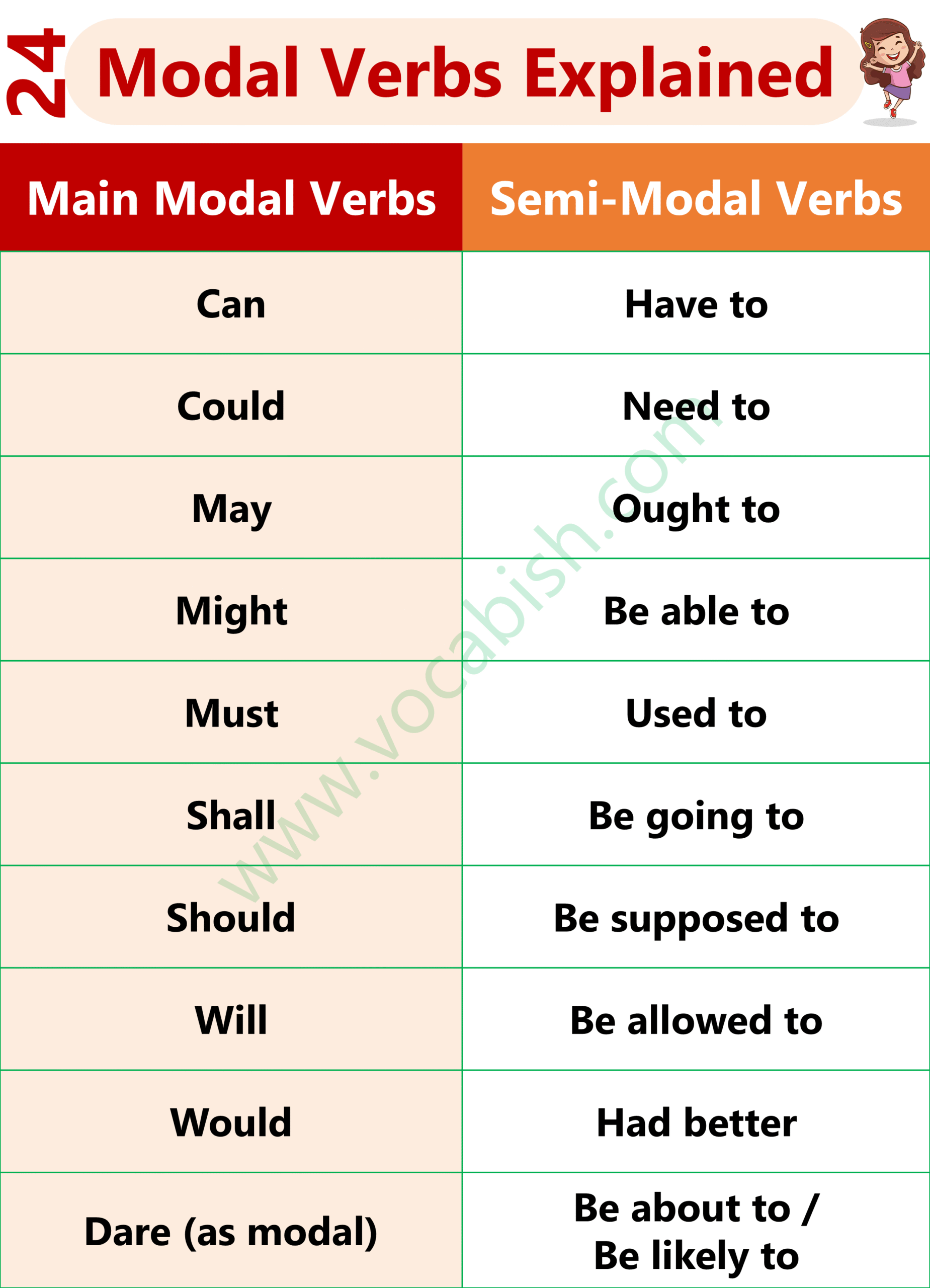
Modal Verbs List
These are the most common modal verbs in English:
Modal Verb | Common Use |
|---|---|
Can | ability, permission |
Could | past ability, polite requests |
May | permission, possibility |
Might | weak possibility |
Must | obligation, certainty |
Shall | offers, suggestions |
Should | advice |
Will | future, promises |
Would | polite requests, imaginary situations |
Dare | challenge or boldness |
Can for Ability and Permission
Use | Example |
|---|---|
Ability | She can swim well. |
Permission | Can I use your phone? |
Request | Can you help me? |
Could for Polite Requests and Past Ability
Use | Example |
|---|---|
Polite Request | Could you open the door? |
Past Ability | I could run fast as a child. |
Possibility | It could rain later. |
May and Might for Possibility
Modal Verb | Example |
|---|---|
May | She may come tonight. |
Might | We might be late. |
Must and Should for Advice and Obligation
Modal Verb | Use | Example |
|---|---|---|
Must | Strong obligation | You must wear a helmet. |
Should | Advice | You should sleep earlier. |
Using Must and Should for Advice and Obligation
Modal Verb | Use | Example |
|---|---|---|
Must | Strong obligation | You must wear a helmet. |
Should | Advice | You should sleep earlier. |
Using Shall and Dare for Suggestion and Challenge
Modal Verb | Use | Example |
|---|---|---|
Shall | Suggestion or offer | Shall we start now? |
Dare | Challenge or boldness | How dare you say that? |
Modal Verbs in Everyday Situations
Understanding grammar rules is helpful, but modal verbs become easier when you see them in real communication.
At a Restaurant
- Could I see the menu?
- May we sit here?
- Can I get some water?
Giving Advice
- You should take a break.
- You must see a doctor.
- You shouldn’t stay up so late.
Asking for Help
- Can you help me?
- Could you explain this again?
- Would you mind opening the window?
Talking About Possibility
- It might snow tonight.
- She may be busy.
- They could arrive late.
Common Mistakes with Modal Verbs
English learners often make similar mistakes with modal verbs.
1. Using Verb Endings After Modals
Incorrect:
- She can sings.
Correct:
- She can sing.
2. Using Two Modals Together
Incorrect:
- He might can help.
Correct:
- He might be able to help.
3. Confusing “Mustn’t” and “Don’t Have To”
These expressions are very different.
Expression | Meaning |
|---|---|
You mustn’t smoke. | smoking is prohibited |
You don’t have to come. | coming is optional |
Difference Between Common Modal Verbs
Modal | Main Meaning | Example |
|---|---|---|
Can | ability | I can swim. |
Could | polite request | Could you help me? |
May | permission | May I enter? |
Might | weak possibility | It might rain. |
Must | obligation | You must stop. |
Shall | suggestion | Shall we go? |
Should | advice | You should rest. |
Will | future | I will call you. |
Would | polite request | Would you sit down? |
Dare | challenge | How dare you! |
Modal Verbs Practice Quiz
Choose the correct modal verb.
1. _____ you help me carry this box?
a) Must
b) Can
c) Shall
Answer: b) Can
2. You _____ wear a seatbelt while driving.
a) must
b) might
c) would
Answer: a) must
3. It _____ rain later, so bring an umbrella.
a) should
b) might
c) shall
Answer: b) might
4. _____ I borrow your pen?
a) May
b) Must
c) Dare
Answer: a) May
5. You _____ get more sleep.
a) should
b) dare
c) will
Answer: a) should
Worksheet for Practice
Fill in the blanks with the correct modal verb (can, may, must, should, could):
Sentence | Answer |
|---|---|
You ___ finish your homework. | must |
___ I help you? | can |
We ___ visit our grandma tomorrow. | may |
He ___ not speak French. | cannot |
You ___ try this new recipe. | should |
Conclusion
Modal verbs make English communication smoother, more polite, and more natural.
They help speakers:
- ask for permission
- give advice
- make requests
- express ability
- talk about possibility
- show obligation
If you want to improve spoken English, learning modal verbs is one of the best places to start.
You may also like:
Frequently Asked Questions
Modal verbs are helping verbs that express ability, permission, advice, possibility, necessity, or requests.
The most common modal verbs are:
can
could
may
might
must
should
will
would
No. Modal verbs usually stay the same with all subjects.
Correct:
He can swim.
They can swim.
Yes. Modal verbs are very common in questions.
Examples:
Can you help me?
Would you like some tea?
Both express possibility, but might usually suggests weaker possibility than may.
Example:
She may come. → more likely
She might come. → less certain

M.ishfaq..29..oman
M.ishfaq. 1993.20.11..30….00923013956359..3830229543905
M.ishfaq. 29….oman..please. 00923013956359..oman…thanks.. May have already
Very Good