
In this blog post, you will learn about synecdoche, a common part of figurative language in English. Synecdoche happens when a part of something represents the whole, such as saying “hands” instead of workers. When you understand this idea, you can recognise it in books, news, and conversations. Learning synecdoche helps you master natural expressions, improve reading skills, and speak with more confidence. It also strengthens your writing and listening because you begin to notice deeper meanings behind everyday words.
Synecdoche Definition and Examples
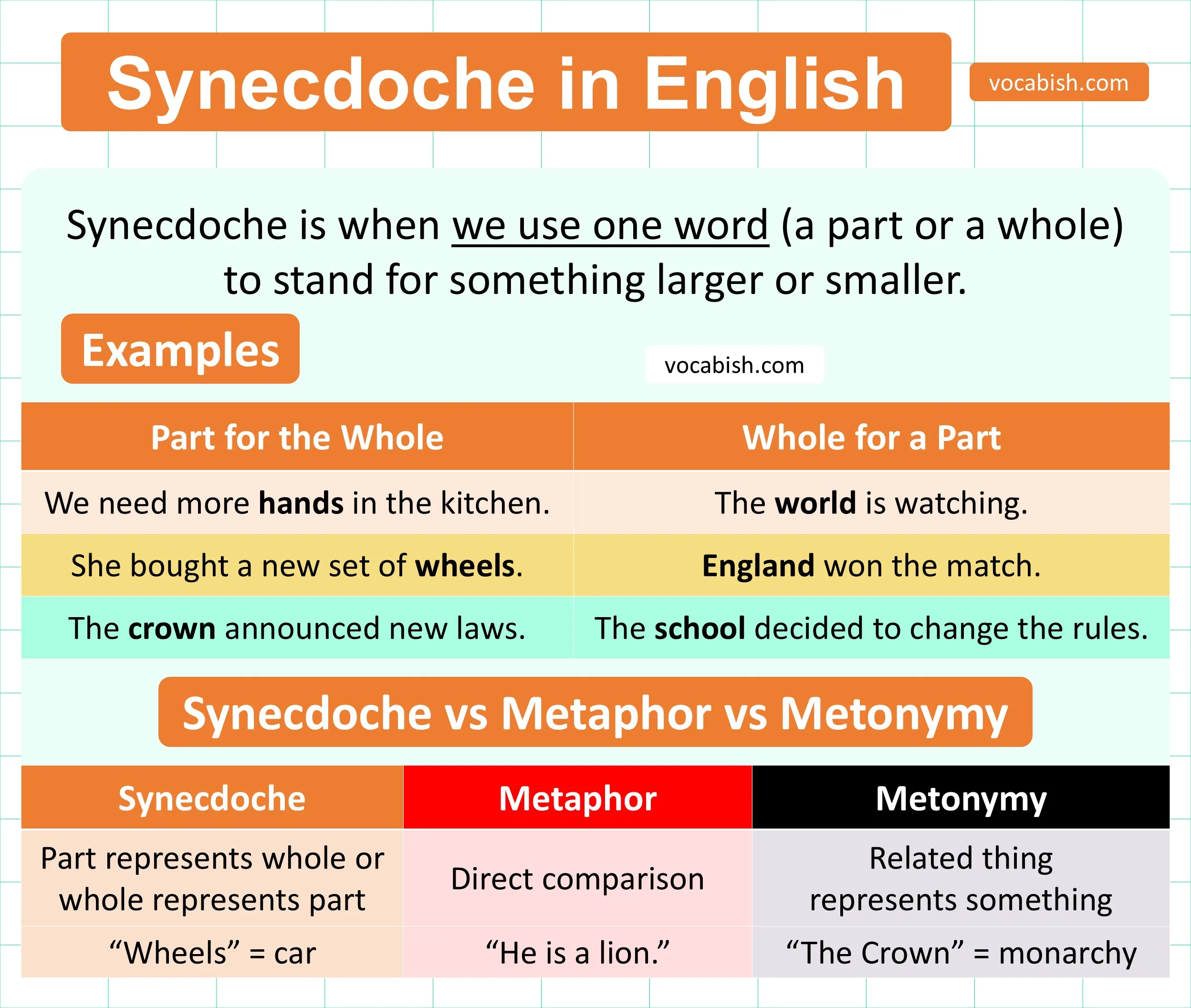
Synecdoche is a figure of speech where a part of something represents the whole, or the whole represents a part.
In simple words:
- We mention a small part to mean the whole thing.
- Or we use the whole name to mean just one part.
Simple Definition
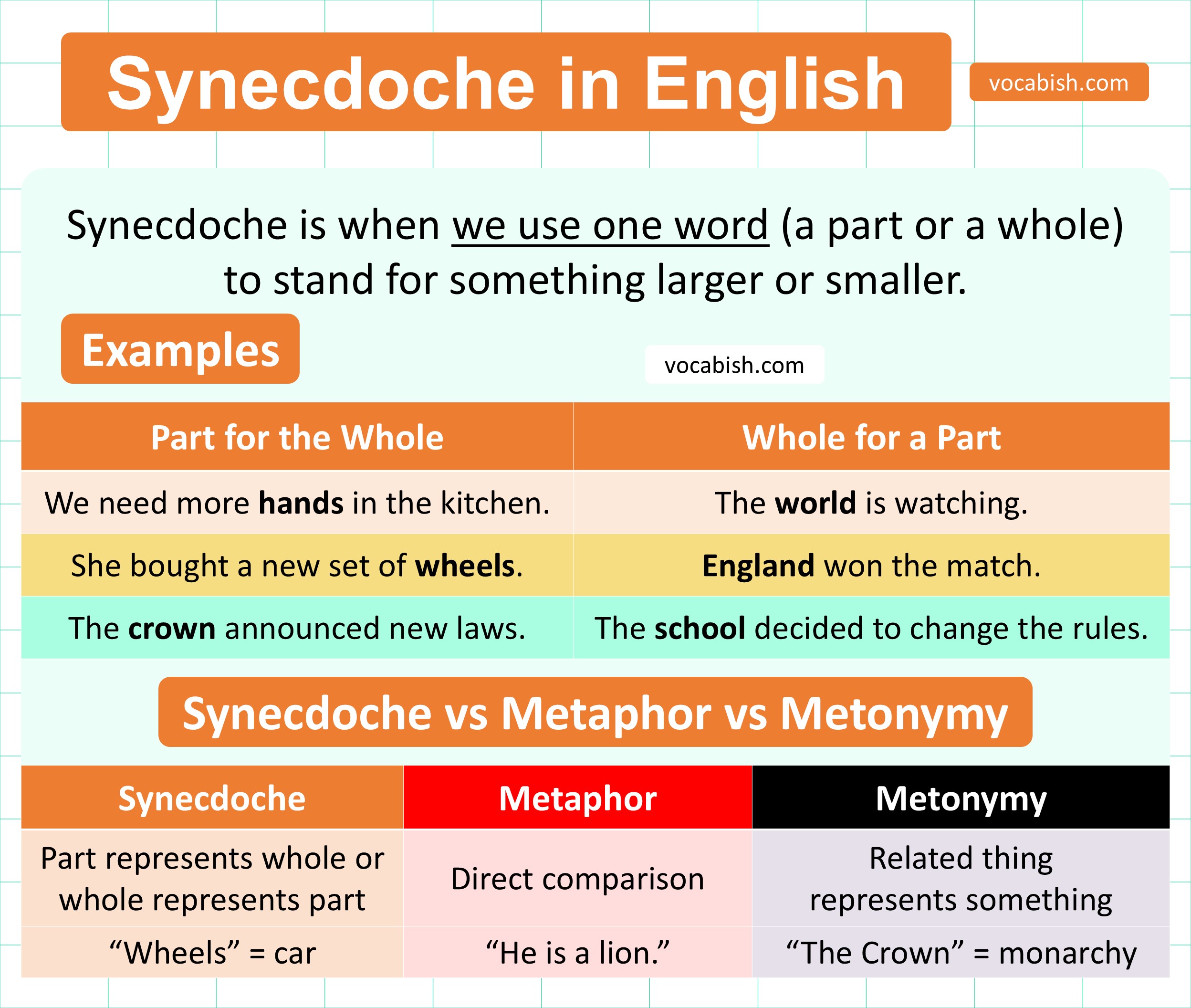
Synecdoche is when we use one word (a part or a whole) to stand for something larger or smaller.
Easy Example
“All hands on deck.”
- Hands = sailors (people)
- Here, a part of the body represents the whole person.
Synecdoche is common in:
- Daily conversation
- News headlines
- Literature
- Political speeches
- Advertising
It helps make language powerful and memorable.
Synecdoche in English
Types of Synecdoche
There are two main types of synecdoche.
1. Part for the Whole
A small part represents the entire thing.
Examples:
“We need more hands in the kitchen.”
- Hands = workers
“She bought a new set of wheels.”
- Wheels = car
“The crown announced new laws.”
- Crown = the king or queen
“There are many new faces in the class.”
- Faces = students
2. Whole for a Part
The whole word represents just one part.
Examples:
“The world is watching.”
- World = many people (not everyone)
“England won the match.”
- England = England’s national team
“The school decided to change the rules.”
- School = school management or authorities
Usage of Synecdoche
Synecdoche does not have strict grammar rules like tenses. However, there are important usage guidelines.
1: The Meaning Must Be Clear
The listener should understand what the part represents.
Correct:
- “We need more hands.”
(Clear in a work situation.)
Unclear:
- “The hands are tired.”
(Are we talking about body parts or workers?)
Always check the context.
2: Use Common and Recognised Expressions
Some synecdoche expressions are widely accepted in English.
Common examples:
- Wheels (car)
- Hands (workers)
- Headcount (number of people)
- Crown (monarchy)
- Suits (business executives)
Avoid creating confusing or strange ones.
3: Use in Informal and Creative Writing
Synecdoche is common in:
- Speeches
- Stories
- Poems
- Journalism
It is less common in:
- Academic essays
- Scientific writing
4: Keep Grammar Agreement Correct
Even if a part represents people, verb agreement must follow the subject.
Correct:
- “All hands are ready.”
(Hands = plural)
Correct:
- “The crown has decided.”
(Crown = singular noun)
Examples of Synecdoche in Sentences
Let us look at affirmative, negative, and question examples.
Affirmative Sentences
- “The factory needs more hands.”
- “She showed her new wheels to her friends.”
- “The White House made a statement.”
- “Many mouths depend on him for food.”
- “The crown will address the nation tonight.”
Negative Sentences
- “We do not have enough hands to finish the job.”
- “He did not polish his wheels.”
- “The White House did not comment on the issue.”
- “The school did not agree with the decision.”
Question Sentences
- “Do we have enough hands for this project?”
- “Did you see his new wheels?”
- “Has the crown approved the plan?”
- “Is the world ready for this change?”
Synecdoche in Literature and Media
Many famous writers use synecdoche.
For example:
- In “Julius Caesar” by William Shakespeare, body parts often represent people or emotions.
- In “The Old Man and the Sea” by Ernest Hemingway, physical details sometimes represent the whole character.
In modern media:
- “Wall Street reacted strongly.”
- Wall Street = financial markets
- “Hollywood loves sequels.”
- Hollywood = film industry
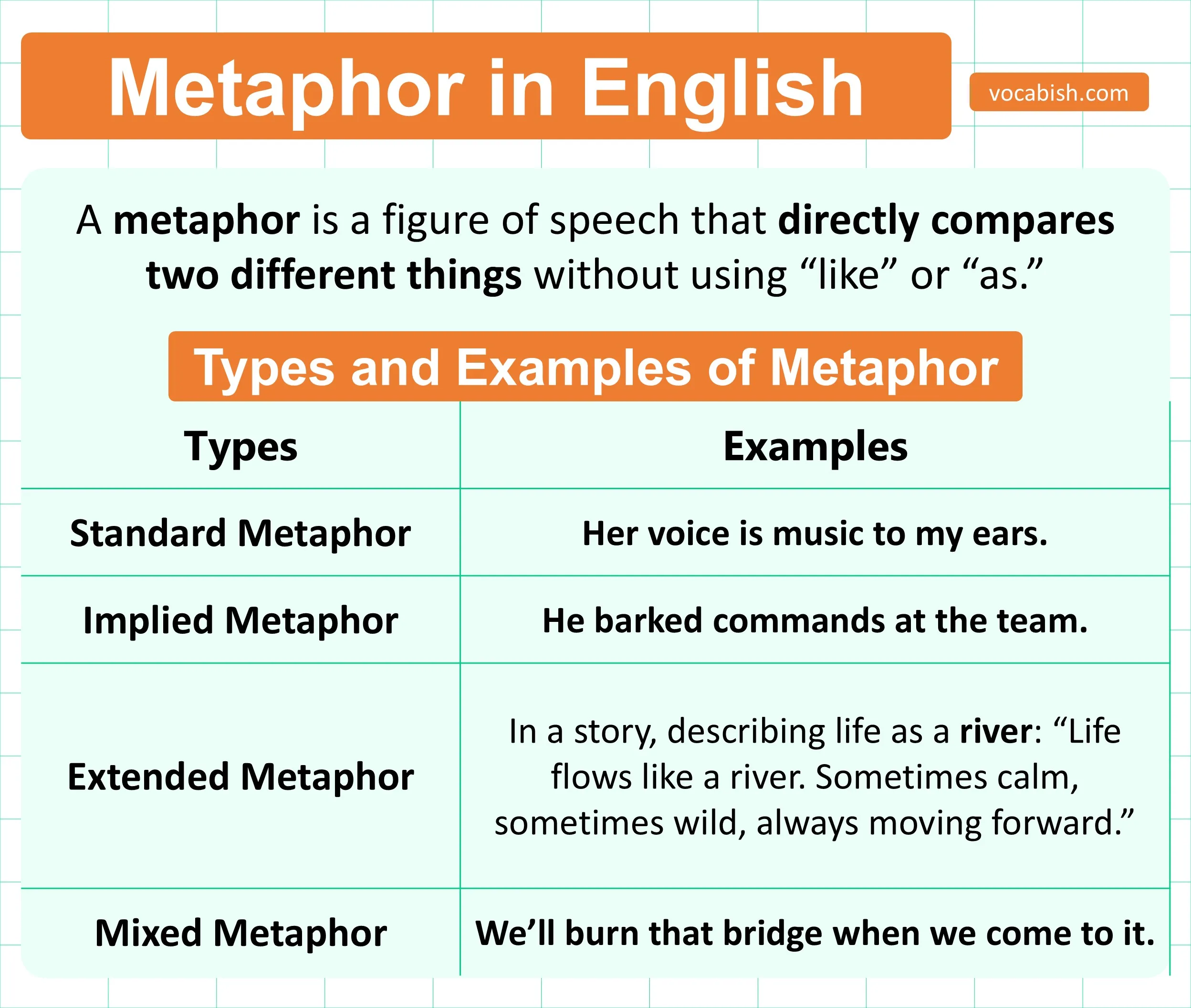
Synecdoche vs Metaphor vs Metonymy
Feature | Synecdoche | Metaphor | Metonymy |
|---|---|---|---|
Meaning | Part represents whole or whole represents part | Direct comparison | Related thing represents something |
Example | “Wheels” = car | “He is a lion.” | “The Crown” = monarchy |
Relationship | Physical part-whole link | Imagined similarity | Close association |
Common in speech? | Yes | Yes | Yes |
Understanding this difference helps avoid confusion in exams and writing tasks.
Why Synecdoche Is Important for English Learners
Learning synecdoche helps you:
- Understand newspapers and headlines
- Improve creative writing
- Speak more naturally
- Understand literature
- Recognise figurative language in exams
It also improves listening skills. Native speakers use synecdoche often in casual conversation.
Conclusion
Synecdoche is a powerful and creative part of English. It allows a small word to represent something bigger. You have learned clear examples of synecdoche in English with meanings, types, rules, and common mistakes. Now try to notice these expressions in films, books, and conversations. When used correctly, synecdoche makes your English richer and more natural.
Frequently Asked Questions
What is synecdoche with an example?
Synecdoche is a figure of speech where a part of something represents the whole, or the whole represents a part. For example, “All hands on deck” uses hands to mean sailors. This type of figurative language makes English more expressive and is common in daily speech, literature, and media.
What are 10 examples of synecdoche in English with meanings?
Here are 10 clear examples of synecdoche in English with meanings:
1. Hands = workers
2. Wheels = car
3. Faces = people
4. Mouths = family members
5. Heads = cattle
6. The Crown = monarch
7. The White House = US government
8. England = England’s team
9. Suits = businesspeople
10. Bread = money
Each example shows a part–whole relationship.
What is synecdoche vs metonymy?
Synecdoche uses a part to represent the whole, such as “wheels” for car. Metonymy uses something closely related, like “the White House” for the US government. The key difference is that synecdoche depends on a part–whole connection, while metonymy depends on association, not physical parts.
How to explain synecdoche to a child?
You can explain synecdoche to a child by saying it is when we use one small part to talk about something bigger. For example, saying “We need more hands” means we need more people to help. Use simple, everyday examples so the child can understand the idea clearly.
How can I identify synecdoche in a sentence?
To identify synecdoche, check if a word represents a larger whole or a smaller part. Ask yourself: Is this a physical part standing for something bigger? For example, “nice wheels” clearly refers to a car. Context usually makes the meaning clear.
Read More