
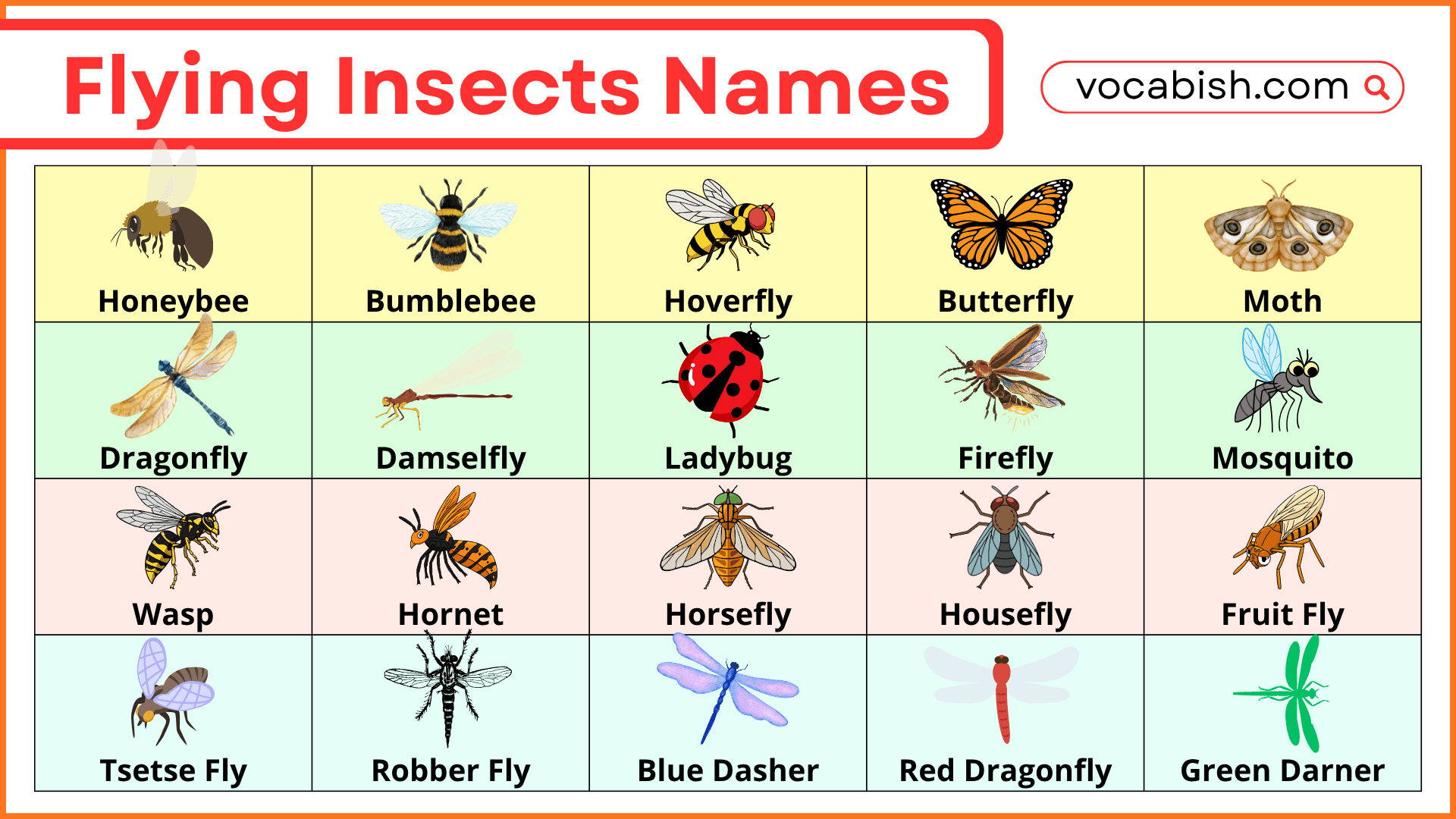
In this blog post, you will learn the names of 50+ common flying insects in English, along with pictures to help you remember them easily. Knowing these words is important because it helps you understand conversations, articles, and videos about nature, gardens, or the outdoors. By studying these insect names, you can improve your speaking, reading, writing, and listening skills all at once. Learning vocabulary with pictures makes it easier to recall, so you can confidently use these words in daily life and English lessons.
Flying Insects Meaning in English
Flying insects are small animals with six legs, two antennae, and wings that help them move through the air. They can be found in gardens, forests, fields, and even homes. Most flying insects help plants grow by carrying pollen, while some can bite or sting.
Here, we will learn the names of 50+ common flying insects in English, along with their important description, pictures, and how to use them in sentences.
Common Flying Insects Names
Bee
Bees are flying insects that collect nectar from flowers and help pollinate plants.
Example: The bee landed on a bright sunflower to collect nectar.
Butterfly
Butterflies are colourful flying insects with large wings, often seen in gardens and meadows.
Example: A butterfly hovered gracefully above the blooming flowers.
Mosquito
Mosquitoes are small flying insects that feed on blood and can spread diseases.
Example: A mosquito buzzed near my arm during the evening.
Fly
Flies are common insects that move quickly and are often found near food or waste.
Example: A fly landed on the fruit left on the table.
Dragonfly
Dragonflies are slender insects with long bodies and transparent wings, often near water.
Example: The dragonfly skimmed over the pond’s surface.
Moth
Moths are nocturnal insects similar to butterflies but usually less colourful and active at night.
Example: A moth circled the porch light after sunset.
Wasp
Wasps are flying insects with narrow bodies and stingers, often building nests in trees or walls.
Example: A wasp flew around the picnic, searching for food.
Ant with wings
Winged ants are reproductive ants that fly to mate and start new colonies.
Example: An ant with wings took off into the garden during mating season.
Beetle
Beetles are insects with hard outer shells and wings that allow them to fly short distances.
Example: A beetle crawled on the leaf before flying away.
Grasshopper
Grasshoppers are insects with strong hind legs that jump and fly short distances in fields.
Example: The grasshopper jumped from one plant to another and then flew.
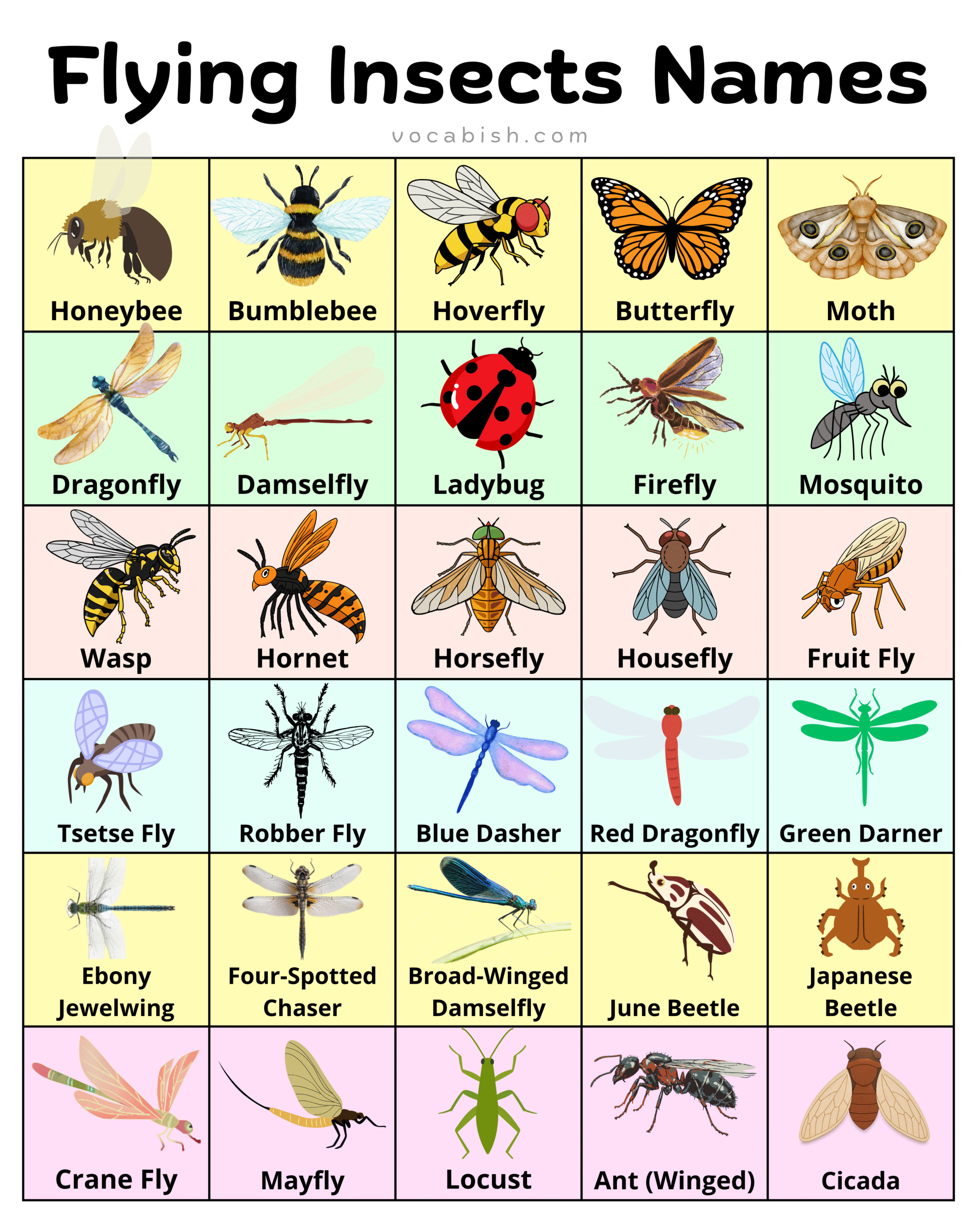
Features of Flying Insects
Here are some common features that most flying insects share:
- Have two wings or four wings
- Use wings for flying and escaping danger
- Have six legs and antennae
- Can be useful (like bees) or harmful (like mosquitoes)
Related: Insects Names with Pictures
Types of Flying Insects with Names and Pictures
1. Pollinator Insects
Pollinator insects help plants grow by carrying pollen from one flower to another.
- Honeybee
- Bumblebee
- Hoverfly
- Butterfly
- Moth
2. Butterflies and Moths
These insects have scaly wings and go through four life stages: egg, larva, pupa, and adult.
- Monarch Butterfly
- Swallowtail Butterfly
- Cabbage White Butterfly
- Luna Moth
- Atlas Moth
3. Dragonflies and Damselflies
They live near water areas and eat mosquitoes, flies, and small insects.
- Red Dragonfly
- Blue Dasher
- Ebony Jewelwing
- Green Darner
- Four-Spotted Chaser
- Broad-Winged Damselfly
4. Beetles that Can Fly
Many beetles have hidden wings under hard shells that open during flight.
- Ladybird (Ladybug)
- Firefly (Lightning Bug)
- Japanese Beetle
- June Beetle
5. Seasonal Flying Insects
Some insects fly only during specific seasons, mostly summer and spring.
- Mayfly
- Flying Ant
- Crane Fly
- Locust
6. Biting and Stinging Flyers
These insects can bite or sting for protection or feeding.
- Mosquito
- Wasp
- Hornet
- Horsefly
7. Insects with “Fly” in Their Name
Many flying insects include the word “fly” in their names but belong to different groups.
- Housefly
- Fruit Fly
- Tsetse Fly
- Robber Fly
8. Insects That Cannot Fly
Some insects lost their wings through evolution and live without flying.
- Ant (worker type)
- Termite (worker)
- Louse
- Flea
Household Flying Insects
Housefly
Common indoor insect that flies around food and waste areas
Example: A housefly is sitting on the kitchen table.
Mosquito
Small biting insect often found inside homes near water sources
Example: A mosquito is flying near my bed.
Fruit Fly
Tiny insect that gathers around fruits and sweet food items
Example: A fruit fly is near the banana.
Moth
Night-flying insect attracted to light inside houses
Example: A moth is flying around the bulb.
Drain Fly
Very small insect found near sinks and bathroom drains
Example: A drain fly is near the sink.
Gnats
Tiny flying insects that appear in groups inside homes
Example: Many gnats are flying near the window.
Black Flying Insect
Housefly
Black or dark gray insect commonly seen around garbage and food
Example: A housefly is on the wall.
Carpenter Bee
Large black bee that makes holes in wood surfaces
Example: A carpenter bee is near the wooden door.
Black Ant (Flying Ant)
Winged ants that fly during mating season
Example: A flying ant is near the light.
Black Wasp
Dark-colored wasp known for strong sting
Example: A black wasp is building a nest.
Blowfly
Shiny black fly often found near waste or dead animals
Example: A blowfly is buzzing loudly.
Green Flying Insect
Green Bottle Fly
Bright green shiny fly often found near garbage areas
Example: A green bottle fly is on the trash bin.
Green Lacewing
Light green insect with soft wings and gentle flight
Example: A green lacewing is resting on a leaf.
Katydid
Green insect that looks like a leaf and can fly short distances
Example: A katydid is sitting on the plant.
Green Grasshopper (Flying Type)
Green insect that can jump and also fly short distances
Example: A grasshopper is flying across the field.
Large Flying Insects
Dragonfly
Long-bodied insect with wide wings and strong flying ability
Example: A dragonfly is flying over the pond.
Butterfly
Large colorful insect with wide wings and smooth flight
Example: A butterfly is flying in the garden.
Moth (Large Species)
Big night-flying insect with wide wingspan
Example: A moth is resting near the light.
Hornet
Very large wasp with powerful wings and strong sting
Example: A hornet is flying near the tree.
Carpenter Bee
Big bee that flies loudly and drills into wood
Example: A carpenter bee is near the roof.
Fastest Flying Insect
Dragonfly
Fast insect known for quick movement and strong flying speed
Example: A dragonfly is flying very fast near water.
Horsefly
Strong fast-flying insect that bites animals and humans
Example: A horsefly is chasing the cow.
Hawk Moth
Fast-moving moth that hovers like a hummingbird
Example: A hawk moth is flying near the flower.
Small White Flying Insect
Whitefly
Tiny white insect found on plant leaves in gardens
Example: A whitefly is sitting on the leaf.
Clothes Moth (White Type)
Small pale insect that damages clothes and fabrics
Example: A moth is inside the cupboard.
White Gnat
Very small white insect flying in groups near plants
Example: A white gnat is near the pot.
Cabbage White Butterfly
Small white butterfly often seen in gardens and farms
Example: A white butterfly is flying over the plants.
Why Are Flying Insects Important?
Flying insects help in many ways:
- Pollination → They help plants grow by spreading pollen.
- Food Chain → Birds and animals eat insects for food.
- Cleaning → Some insects clean the environment by eating waste.
Facts About Flying Insects
- Most flying insects have two or four wings.
- Bees and butterflies help plants reproduce by spreading pollen.
- Flies and mosquitoes can carry germs and diseases.
- Dragonflies can move in all directions while flying.
- Fireflies glow in the dark to attract partners.
Flying insects are small creatures with wings that fly in the air. They are important for nature, helpful for plants, and interesting to learn about. Understanding their names in English will help you speak, read, and describe nature better.
FAQs about Flying Insects
Flying insects are insects that have wings and can move through the air. Common examples include flies, mosquitoes, bees, butterflies, and moths.
Common flying insects include flies, mosquitoes, bees, wasps, butterflies, moths, and dragonflies. Each group has unique features, habitats, and roles in the environment.
Most stick insects cannot fly because they have small or no wings. Some species can glide or fly short distances, mainly males, but many rely on camouflage instead.
You can identify flying insects by their size, color, wing shape, and behavior. For example, bees are hairy and collect pollen, while flies have shorter antennae.
Some insects can fly very high in the air. For example, certain flies and locusts have been found flying over 2,000 meters above ground level.
Flying insects live in many habitats, including forests, gardens, water areas, and homes. They choose places with food, moisture, and safe spots for breeding.
Insects that fly are simply called flying insects. This group includes species like flies, bees, butterflies, moths, and mosquitoes that use wings for movement.
The fastest flying insect is the dragonfly. Some species can reach speeds of about 50 to 60 kilometers per hour during flight.
The largest flying insect is the Atlas moth. It has a wingspan of up to 25 centimeters, making it one of the biggest insects in the world.
Related Articles: