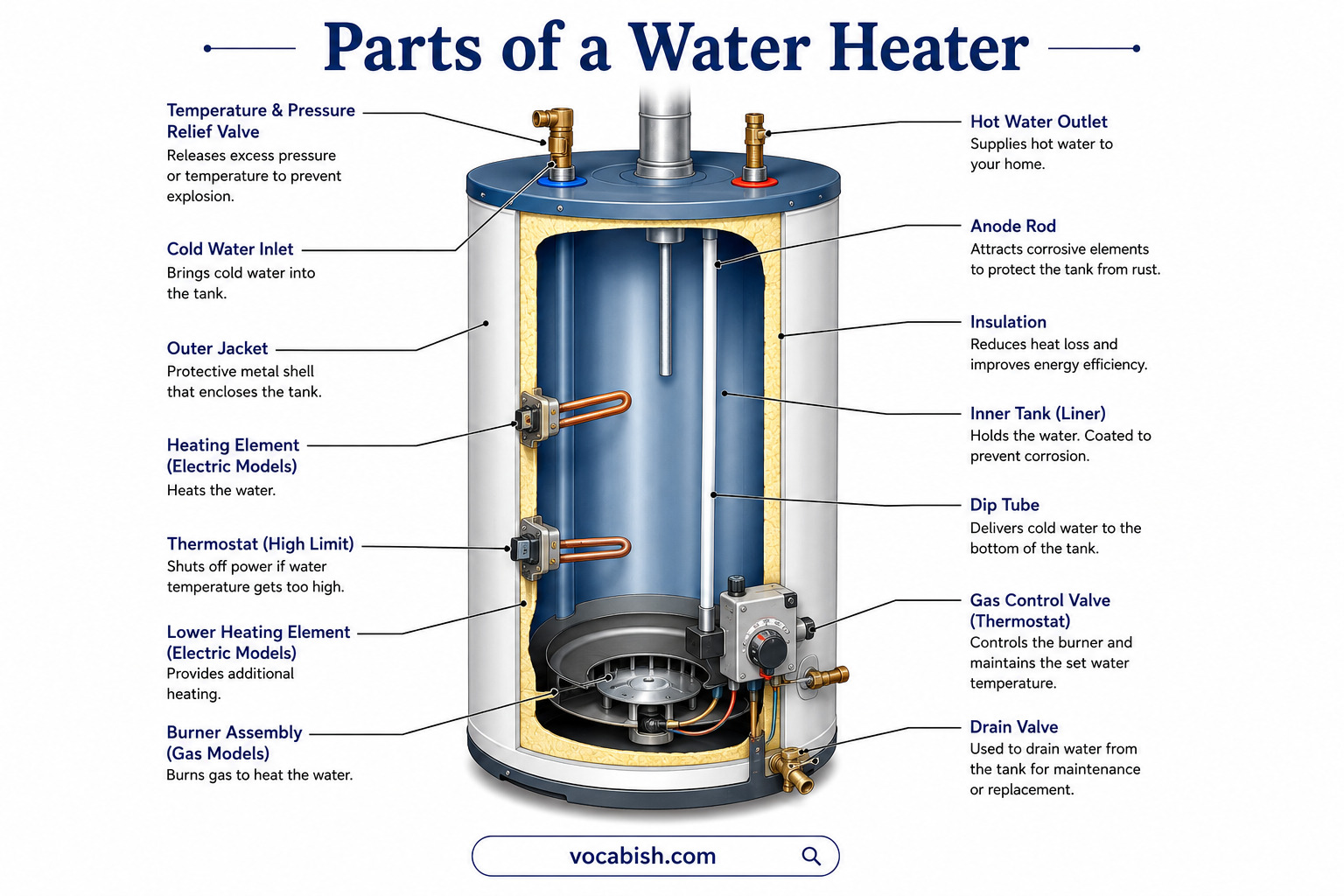

A water heater is a household appliance used to heat and store water for bathing, cleaning, cooking, and other daily needs. In this blog post, you will learn the parts of a water heater with their functions and a diagram to understand how each section works together to heat and supply hot water. From the heating element and thermostat to the tank and pressure relief valve, every part has a specific role in water heating, temperature control, and safety. Learning the names of water heater parts helps you understand English vocabulary related to home appliances, plumbing systems, heating equipment, and household maintenance commonly used in technical and everyday situations.
What Is a Water Heater?
A water heater is a machine that heats water inside a home or building. People use hot water every day, so this appliance is very useful. Some water heaters use gas, while others use electricity.
Main Parts of a Water Heater
Tank
The tank stores and heats water inside the water heater.
- Usually made of metal
- Holds hot water until people use it
- Found in many traditional water heaters
Example:
“The tank is full of hot water.”
Burner
The burner creates heat in a gas water heater.
- Uses gas to produce a flame
- Heats the bottom of the tank
- Common in gas-powered systems
Example:
“The burner stopped working yesterday.”
Heating Element
The heating element heats water in an electric water heater.
- Uses electricity instead of gas
- Usually located inside the tank
- Helps raise water temperature
Example:
“The heating element needs replacement.”
Thermostat
The thermostat controls the water temperature.
- Helps keep water warm
- Prevents overheating
- Allows users to change temperature settings
Example:
“The thermostat is set to medium heat.”
Temperature and Pressure Relief Valve
This valve releases extra pressure from the tank.
- Important safety part
- Prevents accidents
- Also called the T&P valve
Example:
“The relief valve keeps the heater safe.”
Dip Tube
The dip tube carries cold water into the tank.
- Sends water to the bottom
- Helps the heating process
- Made from plastic or metal
Example:
“The dip tube directs cold water inside.”
Anode Rod
The anode rod protects the tank from rust.
- Attracts minerals and corrosion
- Helps the tank last longer
- Requires checking over time
Example:
“The anode rod prevents rust damage.”
Drain Valve
The drain valve removes water from the tank.
- Located near the bottom
- Used during cleaning or repair
- Helps remove dirt and sediment
Example:
“Open the drain valve carefully.”
Flue Pipe
The flue pipe carries harmful gases outside.
- Found in gas water heaters
- Improves ventilation
- Important for safety
Example:
“The flue pipe moves smoke outside.”
Gas Valve
The gas valve controls gas flow to the burner.
- Opens and closes gas supply
- Helps control heating
- Common in gas heaters
Example:
“The gas valve is turned off.”
Pilot Light
The pilot light is a small flame inside a gas heater.
- Ignites the burner
- Must stay lit
- Found in older models
Example:
“The pilot light went out last night.”
Cold Water Inlet
The cold water inlet brings fresh water into the heater.
- Connects to home plumbing
- Supplies cold water
- Works with the dip tube
Example:
“The cold water inlet is leaking.”
Hot Water Outlet
The hot water outlet sends heated water to faucets and showers.
- Delivers hot water around the home
- Located near the top of the heater
- Connects to pipes
Example:
“Hot water flows through the outlet pipe.”
Insulation
Insulation keeps water hot for a longer time.
- Saves energy
- Reduces heat loss
- Wrapped around the tank
Example:
“Good insulation lowers energy costs.”
Control Panel
The control panel helps users operate the water heater.
- Contains buttons or settings
- Found on modern systems
- Helps adjust temperature
Example:
“The control panel is easy to use.”
Vent Pipe
The vent pipe removes gas and smoke safely.
- Similar to a flue pipe
- Improves air flow
- Important in gas heaters
Example:
“The vent pipe needs cleaning.”
Expansion Tank
The expansion tank manages extra water pressure.
- Protects plumbing systems
- Used in some homes
- Supports safer operation
Example:
“The expansion tank reduces pressure.”
Pressure Gauge
The pressure gauge shows water pressure levels.
- Helps monitor system condition
- Used during maintenance
- Improves safety checks
Example:
“The pressure gauge reads normal pressure.”
Water Heater Parts Diagram
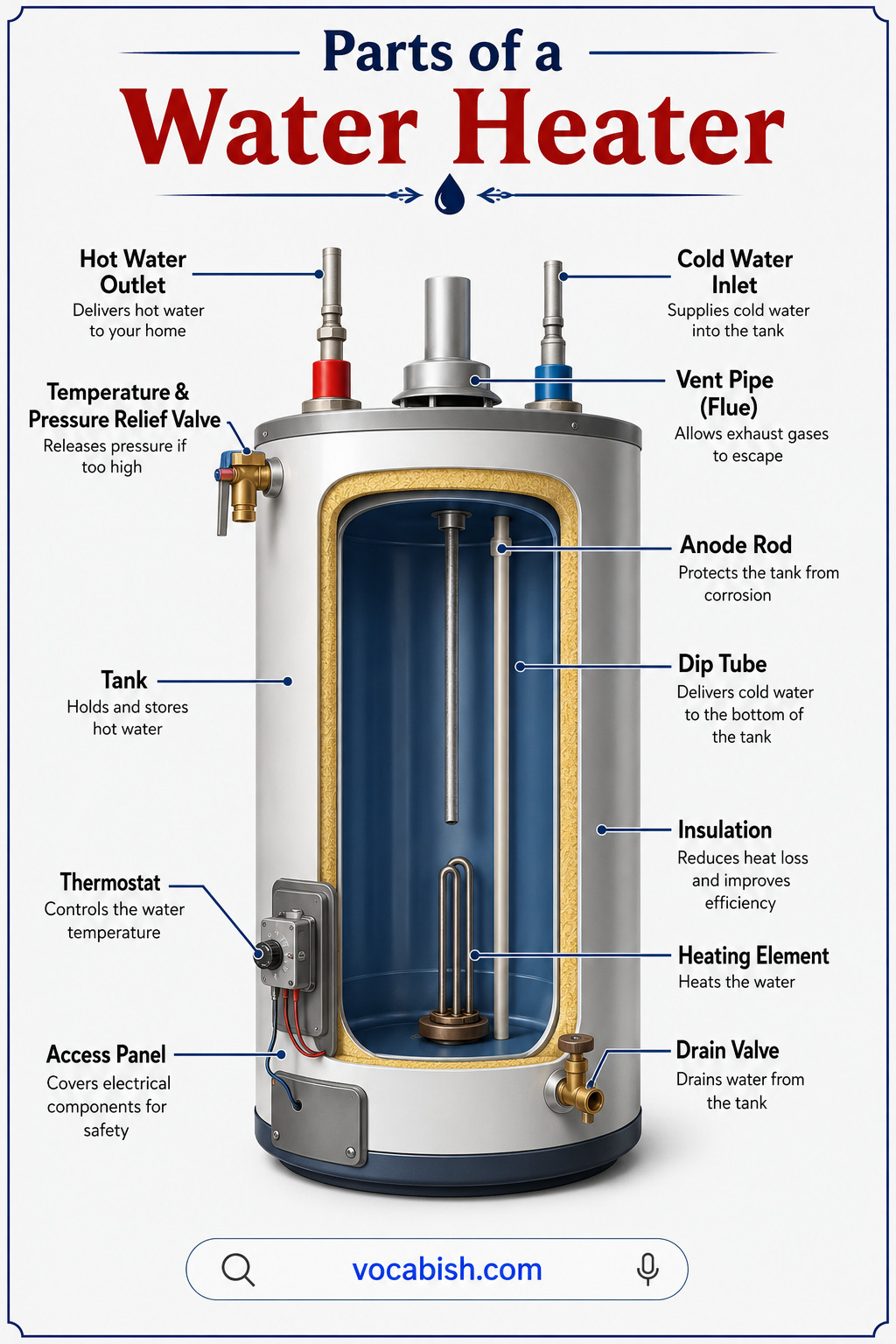
List of All Parts of Water Heater
Here’s a short list of all water heater parts names for easy learning:
Tank | Burner | Heating Element |
Thermostat | Temperature and Pressure Relief Valve | Dip Tube |
Anode Rod | Drain Valve | Flue Pipe |
Gas Valve | Pilot Light | Cold Water Inlet |
Hot Water Outlet | Insulation | Control Panel |
Vent Pipe | Expansion Tank | Pressure Gauge |
English Sentences About Water Heaters
These simple sentences help you use different parts of a water heater in everyday conversation:
- “The water heater is in the basement.”
- “Hot water is not coming out.”
- “The thermostat needs adjustment.”
- “The tank is leaking water.”
- “The plumber checked the burner.”
- “The pilot light is off.”
- “This heater uses electricity.”
- “The valve controls water flow.”
- “The heating element works well.”
- “The pressure inside the tank is high.”
Types of Water Heaters and their Functions
Here’s the list of all types of water heaters and their functions:
Type of Water Heater | Function |
|---|---|
Tank Water Heater | Stores and heats water in a tank |
Tankless Water Heater | Heats water only when needed |
Electric Water Heater | Uses electricity to heat water |
Gas Water Heater | Uses gas burners to heat water |
Solar Water Heater | Uses sunlight to heat water |
Heat Pump Water Heater | Moves heat from air to water |
Hybrid Water Heater | Combines tank and heat pump systems |
Condensing Water Heater | Reuses hot gas for better heating |
Point-of-Use Water Heater | Heats water near one faucet |
Portable Water Heater | Provides hot water in small spaces |
Tips for Learning Appliance Vocabulary
Learning appliance vocabulary becomes easier with practice.
- Read words aloud every day
- Use vocabulary in simple sentences
- Label household items at home
- Watch appliance repair videos in English
- Practice speaking with family or friends
- Review new words regularly
Understanding the parts of a water heater helps you build useful household vocabulary. These words appear in daily conversations, repair situations, and home appliance manuals. Simple practice with real-life examples makes learning easier and more effective.
FAQs about Parts of a Water Heater
The main parts of a water heater include the tank, thermostat, burner, heating element, dip tube, pressure valve, drain valve, and hot water outlet.
The thermostat controls water temperature inside the heater. It helps keep the water hot and prevents overheating for safe daily use.
The water heater tank stores and heats water until people use it for bathing, washing, cleaning, and other household activities.
The parts on a water heater are the tank, thermostat, burner, heating element, dip tube, drain valve, pressure relief valve, and hot water outlet.
Common water heater parts that go bad include the thermostat, heating element, pressure valve, anode rod, pilot light, and gas burner due to age or damage.
The four common types of water heaters are tank water heaters, tankless water heaters, electric water heaters, and gas water heaters.
The thing on top of a water heater is usually called the vent pipe, flue pipe, or hot water outlet, depending on the heater type.
Related Articles: