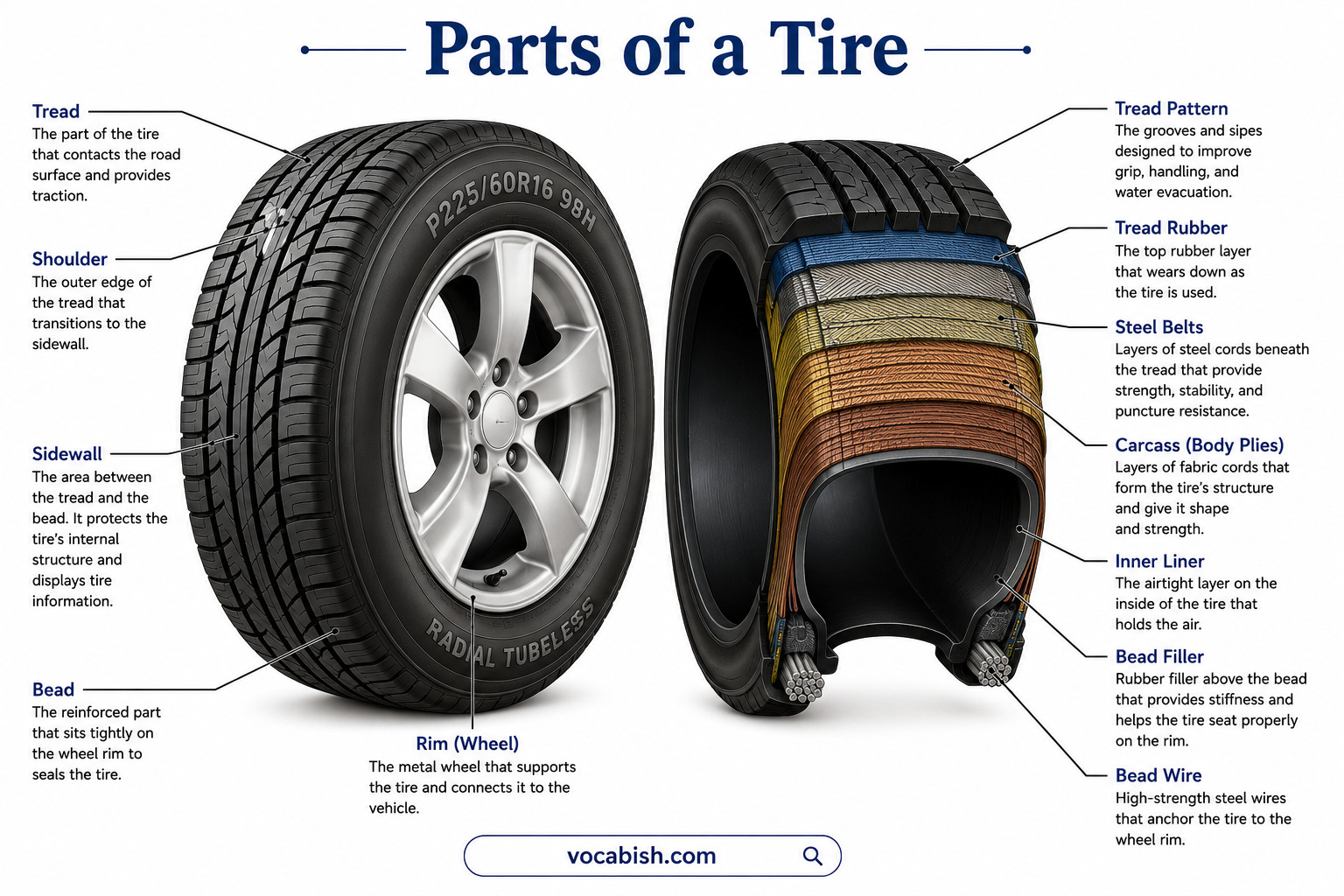

A tire is an important part of a vehicle that helps support weight, provide grip on the road, and allow smooth and safe movement. In this blog post, you will learn the parts of a tire with their uses and pictures to understand how each section of a tire works. From the tread and sidewall to the bead and inner lining, every part has a specific role in traction, durability, stability, and performance. Learning the names of tire parts helps you understand English vocabulary related to vehicles, transportation, automobile maintenance, and road safety commonly used in driving, repair work, and technical learning.
What Are Tire Parts?
Tire parts are the sections that work together to help a tire roll, grip the road, carry weight, and keep a vehicle balanced. Every part supports safe driving and smooth movement.
Why Learning Tire Vocabulary Is Important
Learning tire vocabulary helps you understand vehicle discussions, road safety instructions, repair shops, and driving information more easily. These words also appear in books, videos, and daily conversations.
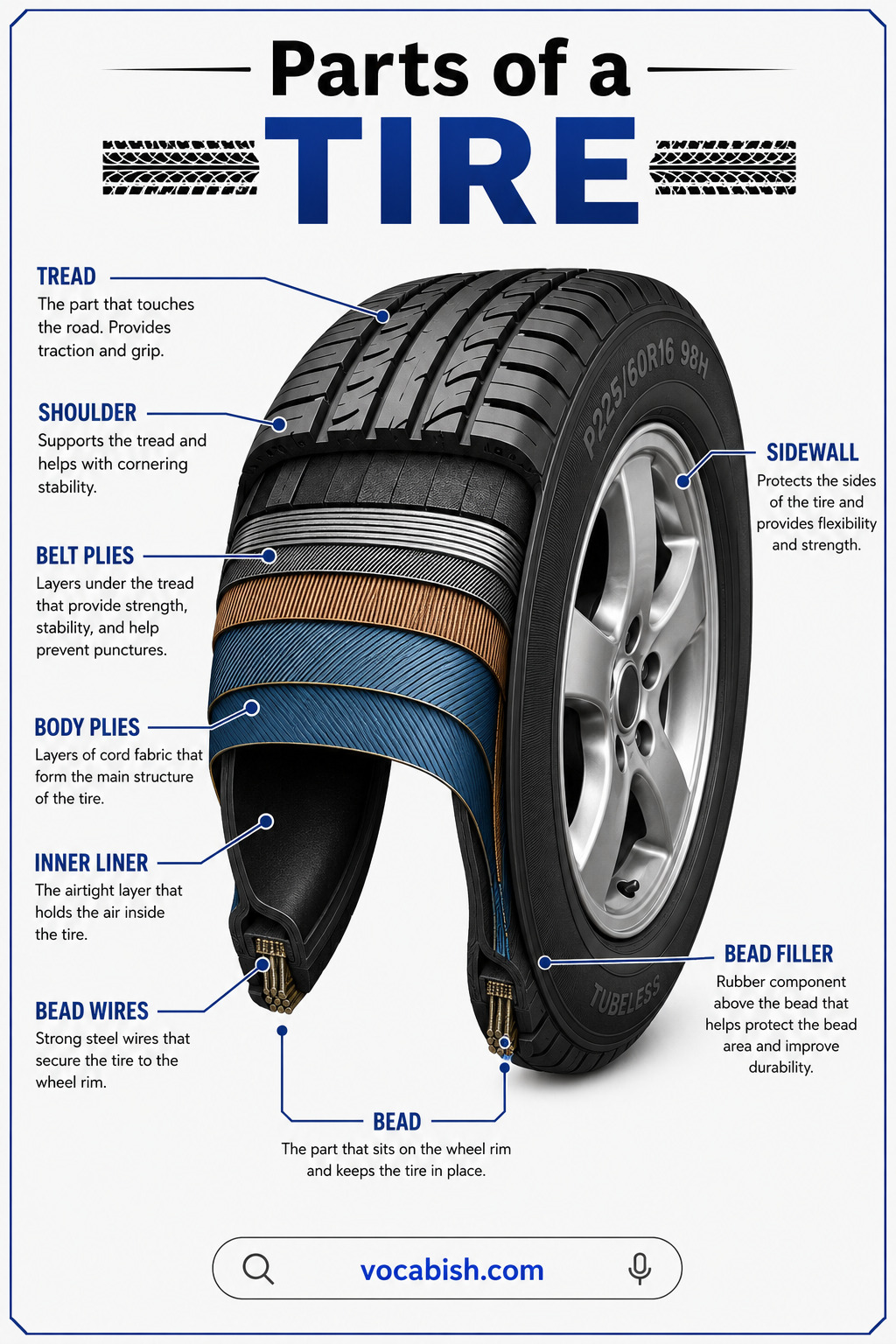
Parts of a Tire and Their Uses
Tread
The tread is the outer rubber surface that touches the road. It helps the vehicle move safely and stop correctly.
The tread grips wet and dry roads, helps the tire stop safely, and improves control while driving on rough streets every single day for better safety.
Sidewall
The sidewall is the side part of the tire. It protects the tire and supports the vehicle during movement.
The sidewall protects the tire edges, supports heavy vehicle weight, and keeps rides smooth when cars turn quickly on busy roads daily and safely.
Shoulder
The shoulder sits between the tread and sidewall. It helps the tire stay balanced during turns.
The shoulder connects the tread and sidewall, supports cornering strength, and reduces heat while the tire rolls on hot roads daily with ease always.
Bead
The bead is the strong edge inside the tire that connects tightly to the wheel’s rim.
The bead locks the tire tightly onto the wheel rim, prevents slipping, and keeps air sealed inside during long highway trips safely each day ahead.
Inner Liner
The inner liner is the inside layer that keeps air from escaping from the tire.
The inner liner holds air inside the tire, prevents slow leaks, and supports better tire pressure during daily driving activities for all vehicles.
Ply
The ply is a fabric layer inside the tire that adds strength and flexibility.
The ply strengthens the tire structure, supports heavy loads, and helps the tire stay flexible while moving across different road surfaces daily.
Belt
The belt is a strong layer under the tread. It gives the tire extra support and stability.
The belt strengthens the tire under the tread, improves stability, and helps drivers enjoy smoother handling at higher speeds safely every day outdoors.
Groove
Grooves are deep lines in the tread. They help water move away from the tire surface.
The groove pushes water away from the tire surface, improves traction, and helps drivers avoid slipping during rainy weather safely each day outside.
Sipe
Sipes are tiny cuts in the tread that improve grip on wet or slippery roads.
The sipes create tiny gripping edges on the tread, improve traction on wet roads, and support safer braking in cold weather conditions each day now.
Rim
The rim is the metal wheel that holds and supports the tire securely.
The rim supports the tire structure, keeps the wheel balanced, and helps vehicles move smoothly on roads during everyday travel safely always.
Valve Stem
The valve stem is a small tube used to fill the tire with air.
The valve stem allows air to enter the tire, keeps pressure balanced, and helps drivers maintain safe and comfortable driving conditions daily.
Carcass
The carcass forms the main body of the tire. It supports weight and keeps the tire strong.
The carcass gives the tire its main shape, supports vehicle weight, and helps absorb road shocks for smoother travel every day with comfort always.
Tire Cap
The tire cap covers the valve stem and protects it from dirt and moisture.
The tire cap protects the valve stem from dust, blocks moisture entry, and helps keep tire air pressure stable during daily driving always.
Tube
The tube is a rubber air container used inside some older or special tires.
The tube stores air inside certain tires, supports smooth movement, and helps vehicles travel safely on rough roads every single day ahead.
Shoulder Block
The shoulder block is a raised tread section near the tire shoulder for better grip.
The shoulder block improves cornering grip, supports stable turning, and helps tires handle rough roads more safely during daily driving activities.
Contact Patch
The contact patch is the tire area that directly touches the road surface.
The contact patch connects the tire to the road surface, improves traction, and helps vehicles brake and turn more safely every single day.
Daily English Words Related to Tires
- Air Pressure
- Wheel Alignment
- Tire Rotation
- Flat Tire
- Spare Tire
- Road Grip
- Brake Control
- Tire Repair
- Wheel Rim
- Tire Pump
- Tire Size
- Vehicle Safety
- Rubber Layer
- Tire Pressure Gauge
- Tire Maintenance
Types of Tires
- All-Season Tire – Good for normal weather conditions
- Winter Tire – Made for snow and icy roads
- Summer Tire – Best for hot weather and dry roads
- Tubeless Tire – Tire without an inner tube
- Radial Tire – Tire with strong layered design
- Off-Road Tire – Tire for rough and muddy roads
- Performance Tire – Tire for fast and sporty driving
- Touring Tire – Tire for comfortable long drives
Tips to Remember Tire Vocabulary
- Read the tire part names aloud every day.
- Match each word with a real tire picture.
- Use the words in short English sentences.
- Practice speaking the names while driving or traveling.
- Review the vocabulary regularly for better memory.
Learning tire parts in English helps you understand vehicles, road safety, and everyday conversations more confidently. These words are useful for students, drivers, mechanics, and anyone interested in improving practical English vocabulary.
Frequently Asked Questions
The parts of a tire are called tread, sidewall, bead, belt, ply, groove, shoulder, inner liner, valve stem, and carcass. Each part has a different job.
Tire tread gives road grip, improves braking, and pushes water away. It helps vehicles drive safely on wet, dry, and rough road surfaces.
The bead keeps the tire tightly connected to the wheel rim. It also prevents air leakage while the vehicle moves on the road.
The five basic elements of a tire are tread, sidewall, bead, body ply, and belts. These parts help the tire stay strong, safe, and balanced.
The 3 tire rule means drivers should replace tires when tread depth becomes less than 3 millimeters for better road grip and safer driving performance.
The air thing on a tire is called the valve stem. It allows air to enter or leave the tire and helps maintain correct tire pressure.
Related Articles: