
In this blog post, you will learn about dry fruits vocabulary and understand the names of more than 100 different dry fruits with their pictures. Dry fruits are common foods like almonds, raisins, dates, and walnuts, and their names are often used in daily English conversations, reading, and writing. When you learn these words, you can speak more confidently, read food labels easily, write better sentences, and understand spoken English in real-life situations.
This topic helps you build a strong base in English vocabulary and supports your ability to describe foods, meals, and healthy habits. By learning these names step by step, you will slowly master English words related to dry fruits and use them correctly in different situations.
Dry Fruits Meaning in English
Dry fruits are fruits that have had most of their water removed naturally or through drying methods. Some dry fruits are actually nuts and seeds, while others are dried fresh fruits like grapes and apricots.
They are known for their long shelf life, rich nutrients, and natural sweetness.
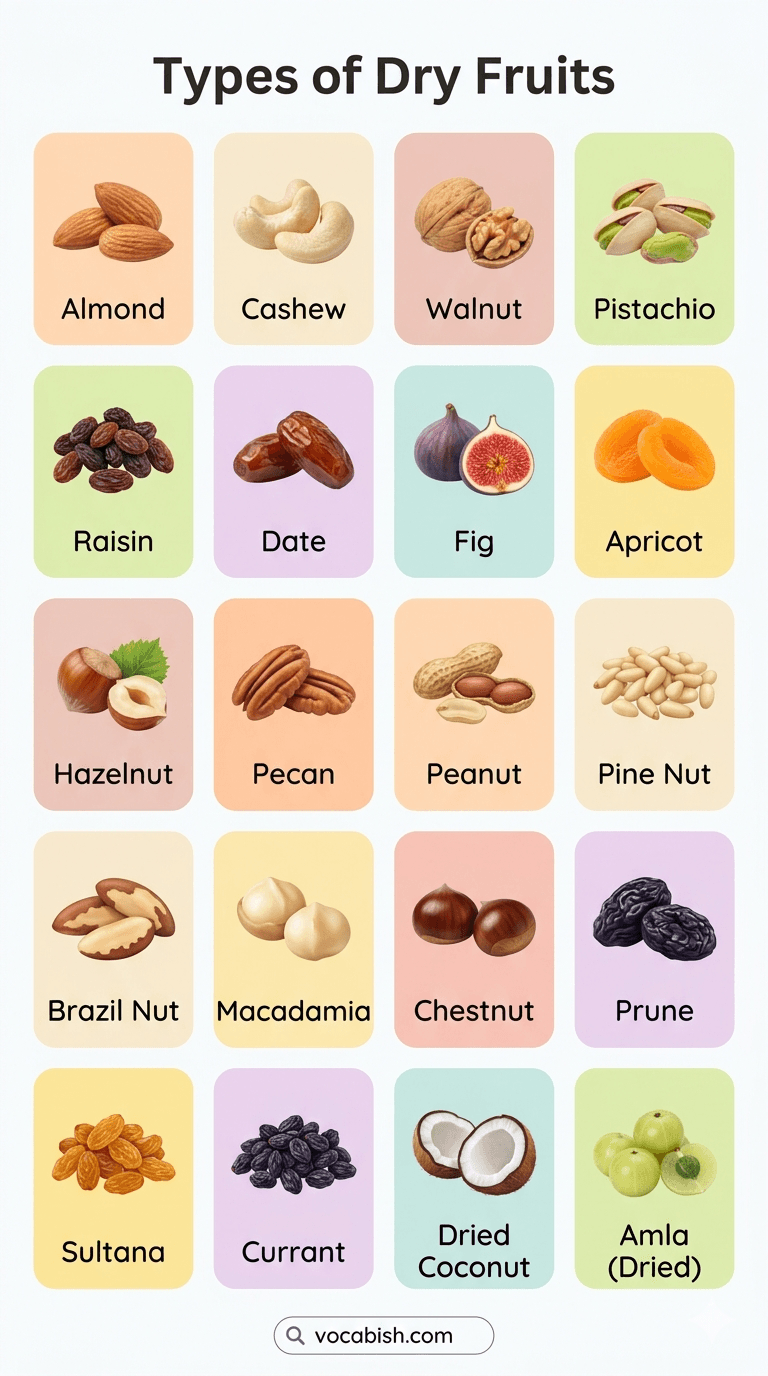
Common Dry Fruits Names in English with Pictures
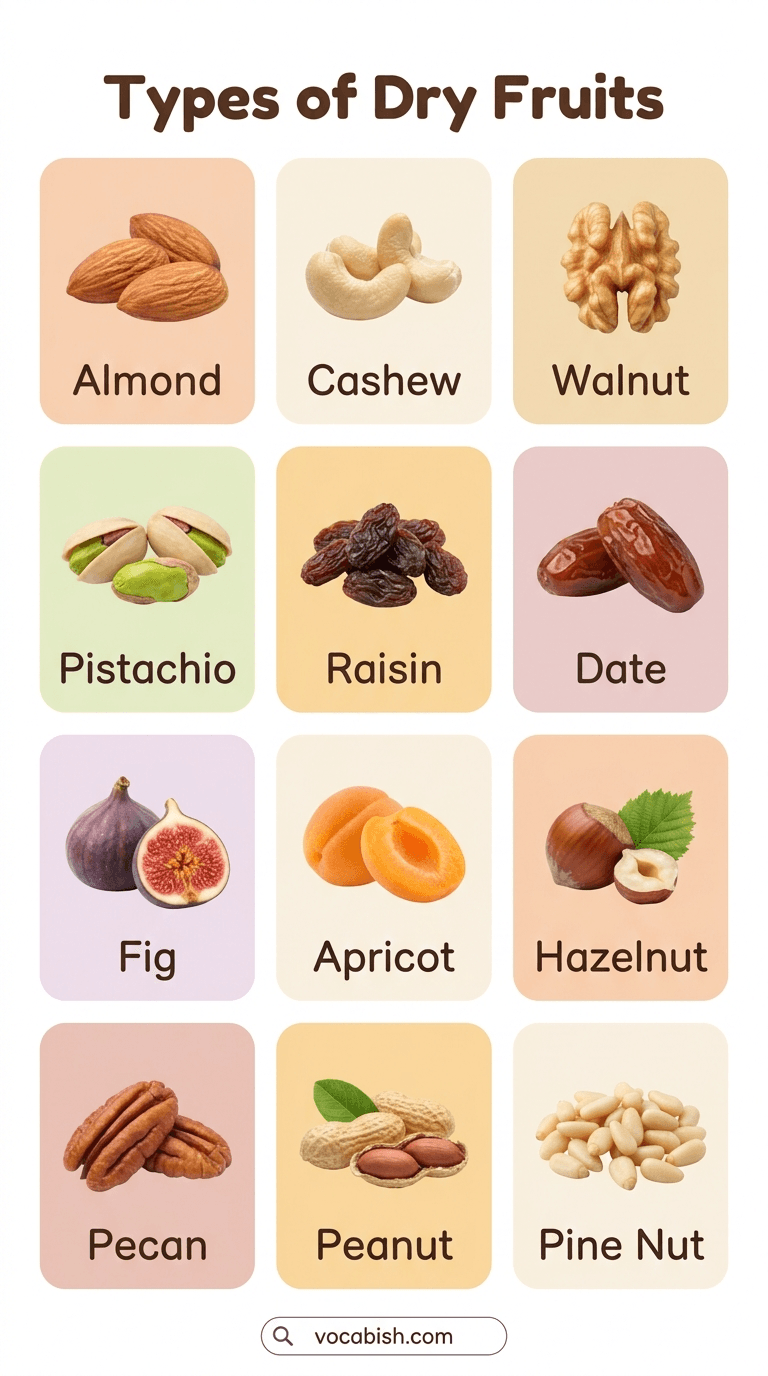
Here are some of the most common dry fruits with simple explanations:
- Almond: crunchy nut rich in vitamin E, supports skin health and energy
- Cashew: soft creamy nut, good source of healthy fats and minerals
- Walnut: brain-shaped nut, supports memory and heart health naturally
- Raisin: dried grape, naturally sweet and rich in iron and fiber
- Date: soft sweet fruit, provides quick energy and natural sugars
- Pistachio: small green nut, rich in protein and good for digestion
- Fig: soft chewy fruit, supports digestion and contains natural fiber
- Apricot: dried orange fruit, rich in vitamin A and good for eyes
- Hazelnut: round nut, contains healthy fats and supports heart health
- Peanut: affordable nut, high in protein and widely used in snacks
- Pine nut: small seed, rich in nutrients and used in cooking
- Chestnut: soft nut, low in fat and used in winter dishes
- Pecan: sweet nut, rich in antioxidants and good for heart health
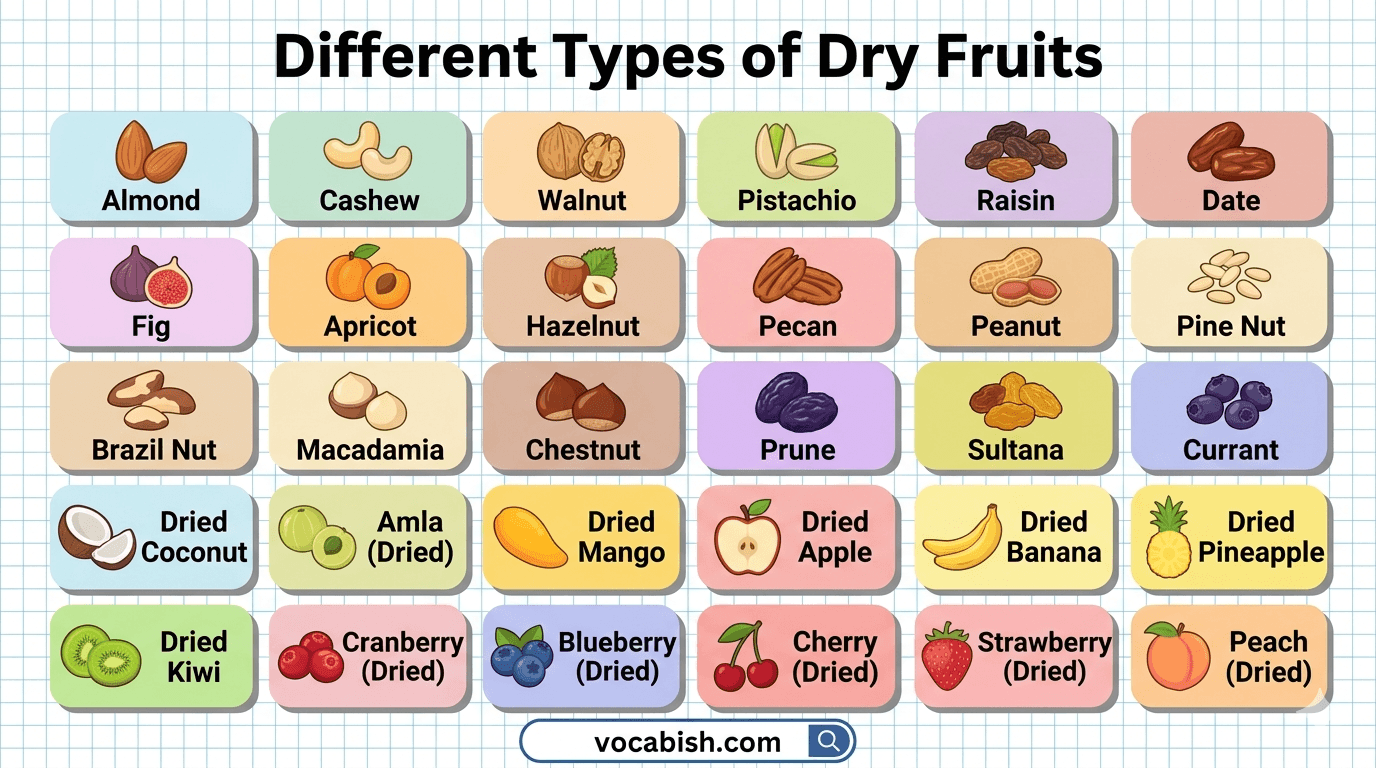
Different Types of Dry Fruits with Examples
Tree Nuts
These are hard-shelled fruits that grow on trees and are widely eaten.
- Almond: popular nut, rich in calcium and supports strong bones
- Cashew: kidney-shaped nut, provides energy and improves immunity
- Walnut: rich nut, supports brain function and heart health
- Pistachio: green nut, helps in weight control and digestion
- Hazelnut: sweet nut, used in chocolates and desserts
- Pecan: buttery nut, supports heart health and reduces cholesterol
- Chestnut: starchy nut, often roasted and eaten in cold seasons
- Macadamia: rich nut, contains healthy fats and creamy texture
- Brazil nut: large nut, rich in selenium and supports thyroid function
Dried Fruits
These are fruits that are dried to remove water and increase shelf life.
- Raisin: dried grape, sweet taste and improves digestion
- Date: natural sweet fruit, boosts energy and supports digestion
- Fig: chewy fruit, high fiber content and supports gut health
- Apricot: dried fruit, improves skin and eye health
- Prune: dried plum, helps relieve constipation and supports digestion
- Sultana: golden raisin, sweeter and softer than regular raisins
- Currant: small dried grape, used in baking and desserts
- Dried apple: sliced fruit, light snack and rich in fiber
- Dried banana: sweet chips, high in potassium and energy
- Dried mango: tropical fruit, rich in vitamins and sweet flavor
Seeds Used as Dry Fruits
Some seeds are also grouped as dry fruits due to their nutritional value.
- Pumpkin seed: flat seed, rich in magnesium and supports heart health
- Sunflower seed: small seed, contains vitamin E and healthy fats
- Flaxseed: tiny seed, supports digestion and contains omega-3 fatty acids
- Chia seed: small seed, absorbs water and improves digestion
- Sesame seed: small seed, used in cooking and rich in calcium
- Watermelon seed: edible seed, rich in protein and minerals
Tropical and Exotic Dry Fruits
These dry fruits are less common but very nutritious.
- Dried coconut: hard fruit, rich in healthy fats and used in cooking
- Tamarind: tangy fruit, used in sauces and improves digestion
- Amla dried: sour fruit, rich in vitamin C and boosts immunity
- Dried kiwi: sweet-tangy fruit, rich in vitamins and fiber
- Dried pineapple: tropical fruit, sweet taste and supports digestion
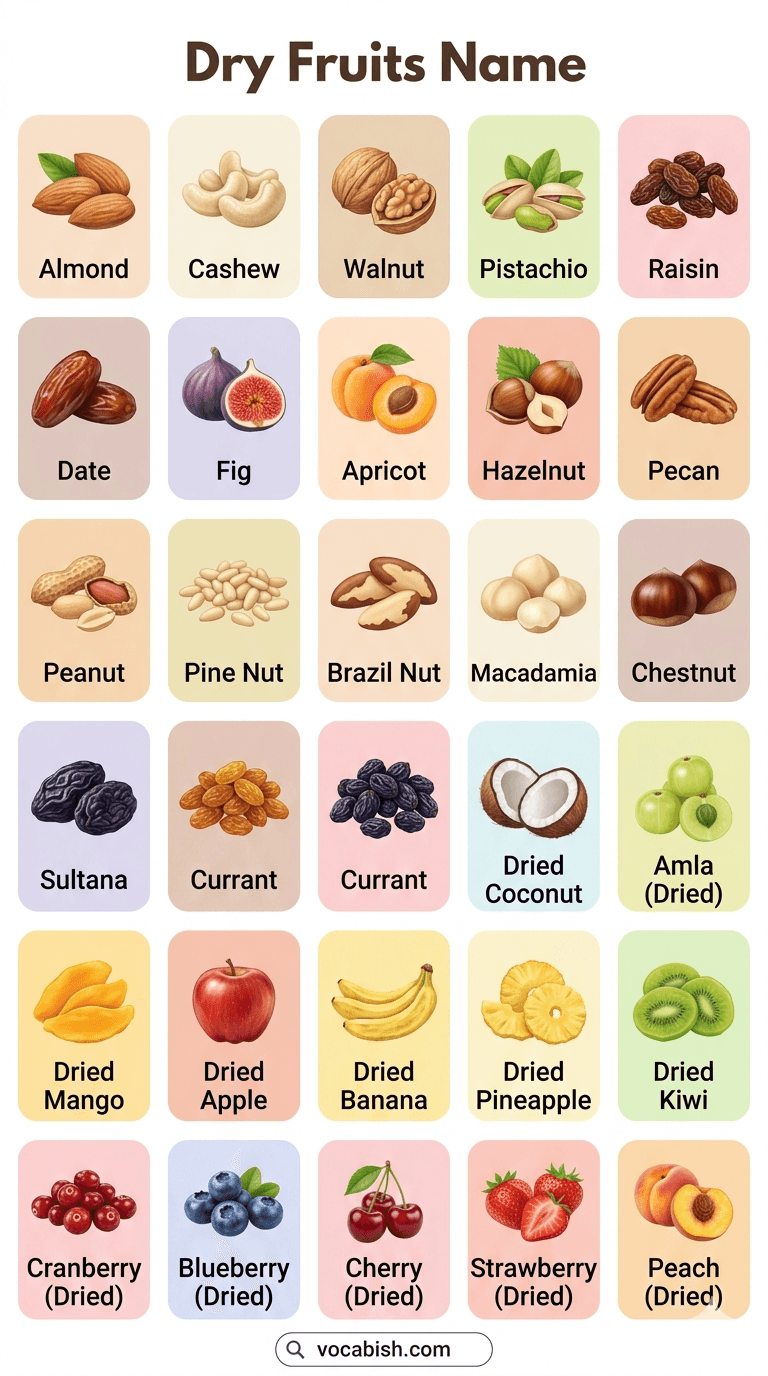
50 Dry Fruits Name with Pictures
Here is a combined list of important dry fruits:
Almond | Cashew | Walnut |
|---|---|---|
Pistachio | Hazelnut | Pecan |
Chestnut | Macadamia | Brazil Nut |
Peanut | Pine Nut | Coconut (Dried) |
Raisin | Sultana | Currant |
Date | Fig | Apricot (Dried) |
Prune | Dried Apple | Dried Banana |
Dried Mango | Dried Pineapple | Dried Kiwi |
Tamarind | Amla (Dried) | Blueberry (Dried) |
Cranberry (Dried) | Cherry (Dried) | Strawberry (Dried) |
Peach (Dried) | Pear (Dried) | Papaya (Dried) |
Guava (Dried) | Orange Peel (Dried) | Lemon Peel (Dried) |
Pumpkin Seed | Sunflower Seed | Flaxseed |
Chia Seed | Sesame Seed | Watermelon Seed |
Muskmelon Seed | Lotus Seed (Makhana) | Betel Nut |
Uses of Dry Fruits in Daily Life
Dry fruits are used in many simple and useful ways:
- Eaten as snacks for quick energy and healthy nutrition
- Added to desserts like cakes, cookies, and sweets
- Mixed in breakfast cereals, yogurt, and oatmeal
- Used in cooking dishes for rich taste and texture
They are known for their easy storage, high energy, and natural nutrients.
Health Benefits of Dry Fruits
Dry fruits are small in size but very powerful for health. They provide natural energy, essential nutrients, and long-lasting freshness.
- Boosts energy levels: rich in natural sugars, gives quick and sustained energy
- Supports heart health: contains healthy fats that reduce bad cholesterol levels
- Improves digestion: high fiber content helps smooth and regular digestion
- Strengthens immunity: packed with vitamins and minerals that protect the body
- Enhances brain function: nutrients support memory, focus, and mental performance
- Good for skin health: vitamins help maintain glowing and healthy skin
- Supports bone strength: rich in calcium and magnesium for strong bones
- Helps in weight control: small portions keep you full for longer time
- Regulates blood sugar: helps maintain balanced sugar levels when eaten properly
- Improves blood health: iron-rich dry fruits help prevent weakness and fatigue
Nutritional Benefits of Dry Fruits
Dry fruits are known for their high nutrition, compact size, and natural goodness.
- Rich in healthy fats: supports heart and overall body health
- High in protein: helps build muscles and repair body tissues
- Loaded with fiber: improves digestion and gut health naturally
- Good source of vitamins: includes vitamin A, B, C, and E
- Contains minerals: iron, calcium, potassium, and magnesium are present
- Natural antioxidants: protect cells from damage and aging
- Energy-dense food: provides more calories in small quantity
- Low in water content: makes them easy to store for long time
- Supports metabolism: helps body process food efficiently
- Improves overall health: regular intake supports body balance and strength
List of Dry Fruits Names in English
Here’s the list of 50 dry fruits names in English:
Dried Mulberry | Dried Gooseberry | Dried Blackcurrant |
|---|---|---|
Dried Redcurrant | Dried Whitecurrant | Dried Elderberry |
Dried Raspberry | Dried Blackberry | Dried Boysenberry |
Dried Cranberry Slice | Dried Bilberry | Dried Lingonberry |
Dried Longan | Dried Lychee | Dried Persimmon |
Dried Jackfruit | Dried Durian | Dried Sapodilla |
Dried Starfruit | Dried Dragon Fruit | Dried Passion Fruit |
Dried Pomegranate Seeds | Dried Barberry | Dried Sea Buckthorn |
Dried Olive | Dried Tomato | Dried Sweet Corn Kernel |
Dried Green Peas | Dried Chickpea | Dried Soybean |
Dried Kidney Beans | Dried Black Beans | Dried Lentils |
Dried Fava Beans | Dried Split Peas | Dried Broad Beans |
Dried Lotus Root | Dried Bamboo Shoots | Dried Water Chestnut |
Dried Taro Chips | Dried Yam Chips | Dried Sweet Potato |
Related Articles:
- List of Exotic Fruits and Their Pictures
- Different Types of Melons Name with Pictures
- List of Stone Fruits and Their Names
FAQs About Dry Fruits
Dry fruits are foods with little or no water content. They include nuts like almonds and dried fruits like raisins, which are preserved for longer storage and easy use.
Common dry fruits names include almond, cashew, walnut, pistachio, raisin, date, fig, apricot, and hazelnut. These are widely used in daily diets and are easy to learn for beginners.
Dry fruits are important because they provide energy, healthy fats, vitamins, and minerals. Regular intake supports heart health, digestion, and immunity when eaten in small and balanced portions.
Nuts are hard-shelled seeds like almonds and walnuts, while dried fruits are dehydrated fresh fruits like raisins and dates. Both are dry fruits but differ in origin and texture.
There are three main types of dry fruits: nuts, dried fruits, and edible seeds. These include almonds, raisins, dates, walnuts, and sunflower seeds, each offering different nutrients and health benefits.
Almonds, walnuts, raisins, and dates are best for daily eating. They provide balanced nutrition, improve energy levels, and support overall health when consumed in moderate amounts.
The top 10 dry fruits are almond, cashew, walnut, pistachio, raisin, date, fig, apricot, hazelnut, and pecan. These are popular for their taste, nutrition, and daily health benefits.
Yes, many dried fruits have anti-inflammatory properties. Items like raisins, figs, and apricots contain antioxidants and vitamins that help reduce inflammation and support overall body health when eaten regularly.
Summary on Dry Fruits
Understanding the different types of dry fruits with names in English is helpful for both language learning and daily life. From nuts like almonds and walnuts to dried fruits like raisins and dates, each type has its own taste and benefit. Learning these names improves vocabulary and helps in making better food choices every day.