
Learning vocabulary about Different Types of Passion Fruit helps learners understand how food words are used in everyday English. In this blog post, we will explore different names of passion fruit and learn how each type is described in real conversations, food labels, and health information. This topic builds strong vocabulary skills because it connects language with real fruits found in markets, recipes, and nutrition discussions. It also supports better understanding of reading, speaking, writing, and listening when talking about food, diet, and healthy eating. By studying these fruit names and their uses, learners can easily recognize them in texts and use them correctly in daily communication.
Passion Fruit Meaning
Passion fruit is a tropical vine fruit from the Passiflora plant family. It contains a soft, juicy center filled with edible seeds. The fruit is rich in vitamins A and C, fiber, and antioxidants. It is commonly eaten fresh, used in juices, desserts, smoothies, and sauces. Different species vary in size, taste, and color, but all share a refreshing tropical flavor and health-supporting properties.
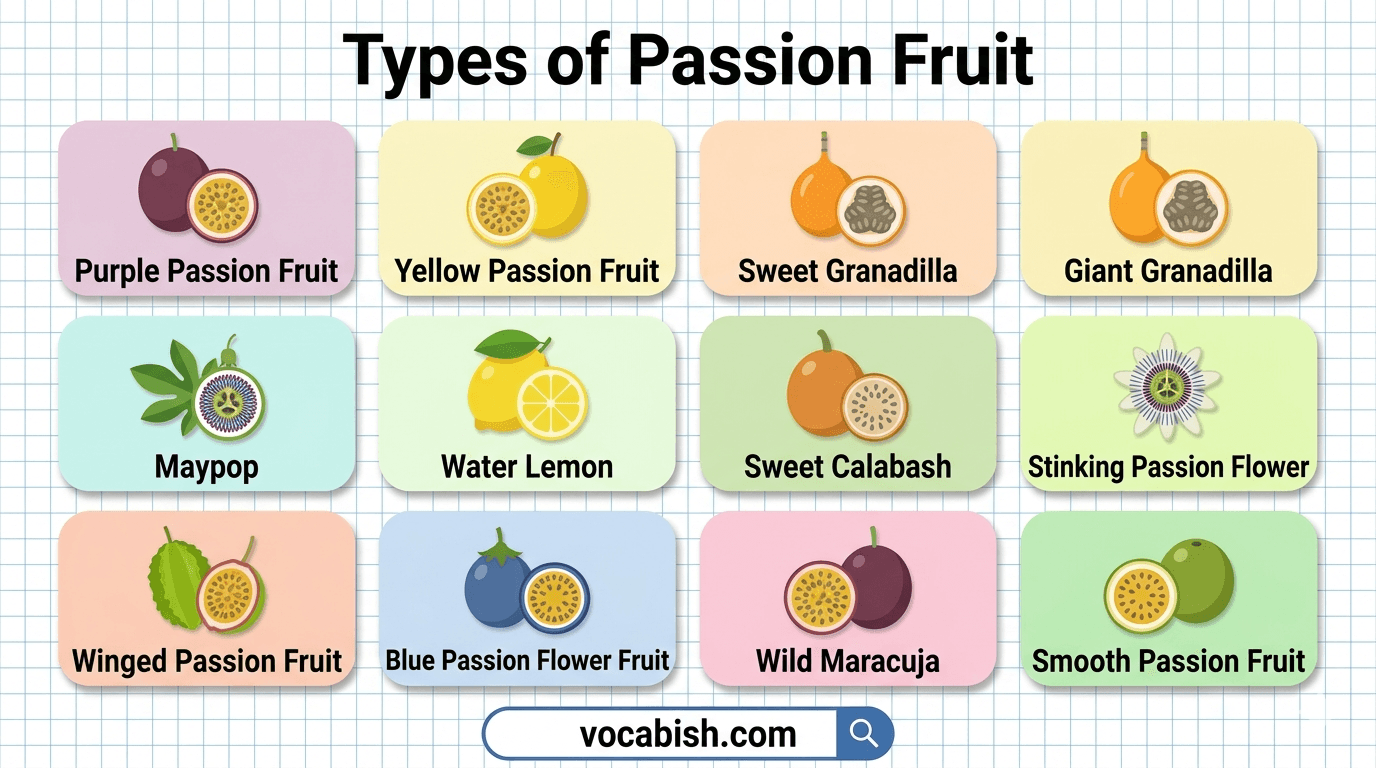
Different Types of Passion Fruit
- Purple Passion Fruit (Passiflora edulis)
Small round fruit, rich aroma, high antioxidant content, supports immune health - Yellow Passion Fruit (Passiflora flavicarpa)
Larger fruit, more acidic taste, excellent vitamin C source, boosts energy levels - Sweet Granadilla (Passiflora ligularis)
Sweet pulp flavor, hard shell, good digestion support, improves gut health naturally - Giant Granadilla (Passiflora quadrangularis)
Very large fruit size, mild flavor, rich in fiber, supports heart wellness - Maypop (Passiflora incarnata)
Native wild fruit, slightly tart taste, calming herbal effects, helps relaxation and sleep - Water Lemon (Passiflora laurifolia)
Juicy and aromatic pulp, sweet taste, hydrating fruit type, supports body hydration - Sweet Calabash (Passiflora maliformis)
Hard shell fruit, fragrant pulp, rich antioxidant properties, supports skin health - Stinking Passion Flower (Passiflora foetida)
Wild fruit variety, strong smell, medicinal traditional use, supports immunity system - Winged Passion Fruit (Passiflora alata)
Fragrant red pulp, sweet flavor, rich vitamin content, improves overall vitality - Blue Passion Flower Fruit (Passiflora caerulea)
Ornamental fruit, mild edible pulp, low calorie content, supports light diet - Wild Maracuja (Passiflora cincinnata)
Sour wild fruit, strong flavor, high nutrient density, boosts energy naturally - Smooth Passion Fruit (Passiflora setacea)
Rare tropical type, balanced taste, high fiber content, improves digestion process
Major Types of Passion Fruit and Their Benefits
Purple Passion Fruit
- Benefits: Rich in antioxidants, supports heart health, boosts immunity
- Usage: Used in juices, smoothies, desserts, and fresh fruit bowls
Yellow Passion Fruit
- Benefits: High vitamin C, improves energy, supports immune system strength
- Usage: Common in commercial juice production and tropical drinks
Sweet Granadilla
- Benefits: Aids digestion, rich in fiber, supports gut health naturally
- Usage: Eaten fresh by cutting open and scooping pulp with spoon
Giant Granadilla
- Benefits: High fiber content, supports digestion, promotes fullness and satiety
- Usage: Used in desserts, fruit salads, and traditional food recipes
Maypop
- Benefits: Natural calming effects, may help reduce stress and improve sleep
- Usage: Used in herbal remedies and traditional medicinal preparations
Water Lemon
- Benefits: Hydrating fruit, supports body fluid balance, rich in nutrients
- Usage: Eaten fresh or used in refreshing tropical drinks
Sweet Calabash
- Benefits: Contains antioxidants, supports skin health, improves overall wellness
- Usage: Used in jams, juices, and traditional sweet preparations
Winged Passion Fruit
- Benefits: Boosts energy, rich in vitamins, supports overall body vitality
- Usage: Consumed fresh or blended into smoothies and juices
Wild Maracuja
- Benefits: High nutrient density, supports immunity, improves natural energy levels
- Usage: Common in exotic juices, sauces, and flavoring drinks
Smooth Passion Fruit
- Benefits: Improves digestion, high fiber content, supports gut health
- Usage: Used in smoothies, desserts, and healthy breakfast bowls
Health Benefits of Different Types of Passion Fruit
- Boosts Immunity: High vitamin C strengthens body defense system
- Improves Digestion: Fiber helps smooth bowel movement and gut health
- Supports Heart: Potassium and antioxidants maintain healthy blood pressure
- Enhances Skin: Antioxidants reduce aging signs and improve skin glow
- Reduces Stress: Natural compounds support relaxation and better sleep quality
- Controls Weight: Low calorie fruit helps in healthy weight management
Passion VS Other Fruits Explained
Granadilla vs Passion Fruit
Fruit Type | Taste | Texture | Main Benefit |
|---|---|---|---|
Granadilla | Sweet mild | Jelly pulp | Improves digestion health |
Passion fruit | Tangy strong | Juicy seeds | Boosts immunity system |
Maypop vs Passion Fruit
Fruit Type | Taste | Use | Main Benefit |
|---|---|---|---|
Maypop | Mild tart | Herbal medicine | Reduces stress naturally |
Passion fruit | Tangy sweet | Food use | Improves immune strength |
Dragon Fruit vs Passion Fruit
Fruit Type | Taste | Texture | Main Benefit |
|---|---|---|---|
Dragon fruit | Mild sweet | Soft seeds | Hydration and fiber support |
Passion fruit | Tangy strong | Juicy pulp | Boosts antioxidants |
Maracuja vs Passion Fruit
Fruit Type | Taste | Use | Main Benefit |
|---|---|---|---|
Maracuja | Strong sour | Juice making | High energy support |
Passion fruit | Tangy sweet | Desserts | Immunity boosting fruit |
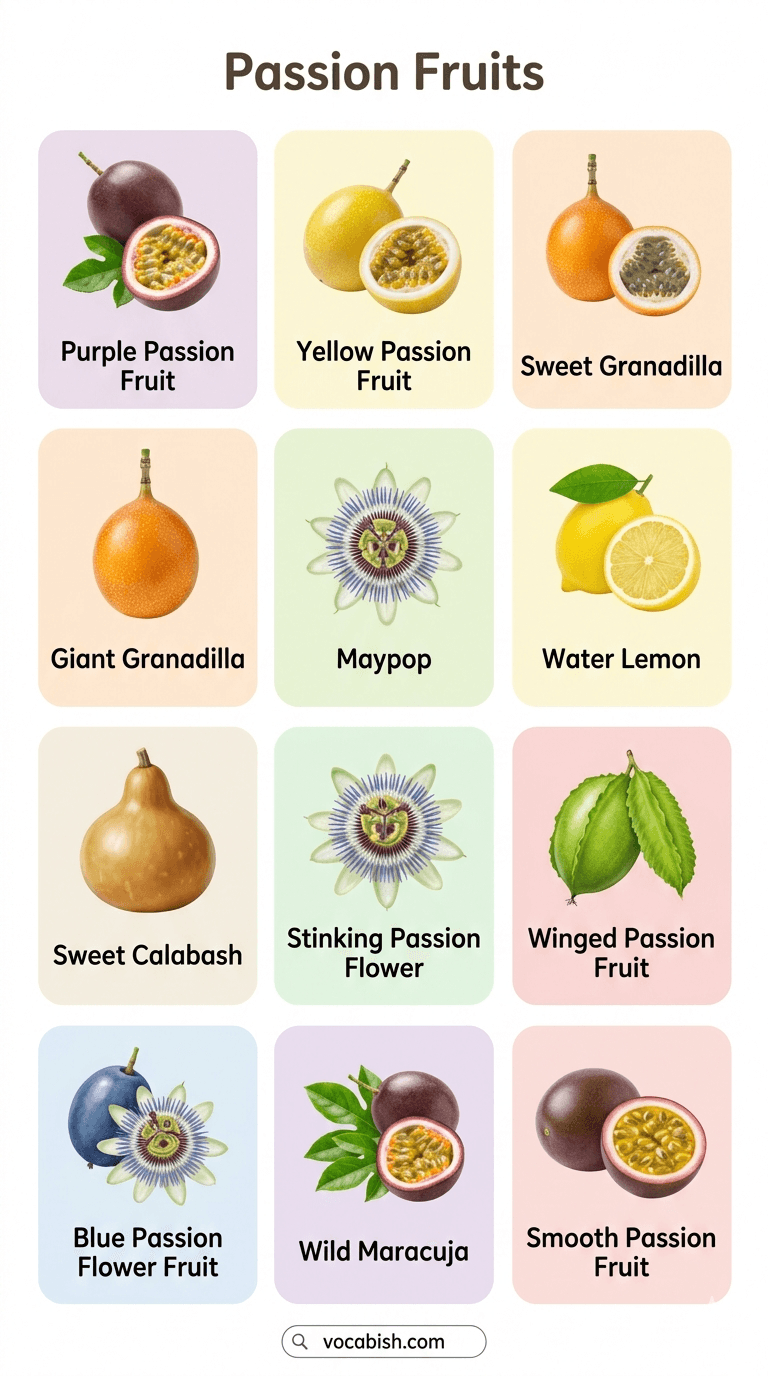
List of All Passion Fruit in English
Purple Passion Fruit | Yellow Passion Fruit | Sweet Granadilla |
Giant Granadilla | Maypop | Water Lemon |
Sweet Calabash | Stinking Passion Flower | Winged Passion Fruit |
Blue Passion Flower Fruit | Wild Maracuja | Smooth Passion Fruit |
Related Articles:
FAQs about Passion Fruit
Passion fruit is a tropical fruit from the Passiflora plant. It has a juicy seed-filled pulp, rich in vitamins, antioxidants, and fiber, commonly eaten fresh or used in drinks and desserts.
Main types include purple passion fruit, yellow passion fruit, granadilla, giant granadilla, maypop, and maracuja. Each type differs in taste, size, and sweetness level.
Yes, passion fruit is low in calories and high in fiber. It helps you feel full longer, reduces overeating, and supports healthy weight management naturally.
Passion fruit supports immunity, improves digestion, and promotes heart health. It is rich in vitamin C, fiber, and antioxidants that help protect the body from damage.
Purple passion fruit is sweeter and aromatic, while yellow passion fruit is larger and more acidic. Both are nutritious and rich in vitamin C and antioxidants.
Cut the fruit in half and scoop out the soft pulp with seeds using a spoon. You can eat it fresh or add it to yogurt, juice, or desserts.
Granadilla is a sweet type of passion fruit with soft jelly-like pulp. It has a mild flavor and is often eaten fresh for digestion and hydration benefits.
Passion fruit tastes sweet and tangy with a tropical flavor. Some types are more sour, while others are mild and fragrant with a juicy, refreshing pulp inside.
Conclusion
Different types of passion fruit offer unique flavors, textures, and health benefits. From sweet granadilla to sour wild maracuja, each variety plays an important role in nutrition and culinary use. Understanding these types helps in choosing the right fruit for taste preference and health goals.