
In this blog post, we will explore Christmas Tongue Twisters for Kids. Tongue twisters are short phrases with repeated sounds that help learners master pronunciation and remember new words. Practicing them improves speaking, reading, writing, and listening skills because children hear, say, and understand English in real-life contexts. Learning Christmas-themed tongue twisters also helps kids recognize festive vocabulary, use words correctly, and build confidence in speaking aloud. By the end of this blog post, learners will be able to understand and practice these tongue twisters with ease, improving their English step by step.
What Are Christmas Tongue Twisters?
Christmas tongue twisters are short, tricky phrases that are fun to say out loud. They often use alliteration, which is repeating the same sound at the start of words. For example, “Santa’s sleigh slides silently.”
Tongue twisters help kids practice pronunciation, remember new words, and enjoy speaking English. They are playful, seasonal, and perfect for learning vocabulary in context.
Why Christmas Tongue Twisters Are Great for Kids
Learning English can be more fun with tongue twisters because they:
- Improve pronunciation – Saying tricky phrases slowly at first trains your mouth to form sounds correctly.
- Boost listening skills – Kids learn to hear small differences in English words.
- Enhance vocabulary – Each twister introduces new words in context.
- Encourage confidence – Practicing aloud helps kids speak English naturally.
Using Christmas-themed phrases adds a festive spirit, which makes learning enjoyable and memorable.
Vocabulary Words for Christmas Tongue Twisters
Before trying tongue twisters, it helps to know some Christmas words. Here’s a list of key words kids often see in festive twisters:
- Santa Claus – The man in red who brings gifts.
- Reindeer – Animals that pull Santa’s sleigh.
- Sleigh – A type of cart Santa rides.
- Elf – A helper of Santa.
- Stocking – A sock hung for small gifts.
- Candy cane – Sweet, striped candy shaped like a cane.
- Christmas tree – Decorated tree with lights and ornaments.
- Ornament – Decoration hung on a Christmas tree.
- Snowflake – Ice crystal that falls from the sky.
- Gifts / Presents – Items given during Christmas.
- Wreath – Circular decoration for doors.
- Chimney – A passage for Santa to enter the house.
- Carol – A Christmas song.
- Bell – Small ringing instrument, often on decorations.
- Mistletoe – Plant used for holiday kisses.
- Holiday lights – Bright decorations on trees or houses.
- North Pole – Where Santa lives.
- Festive – Full of celebration and joy.
These words can appear in tongue twisters, helping kids learn meaning and pronunciation together.
List of Fun Christmas Tongue Twisters
Here’s a collection of easy and fun Christmas tongue twisters for kids. Start slowly, then try saying them faster!
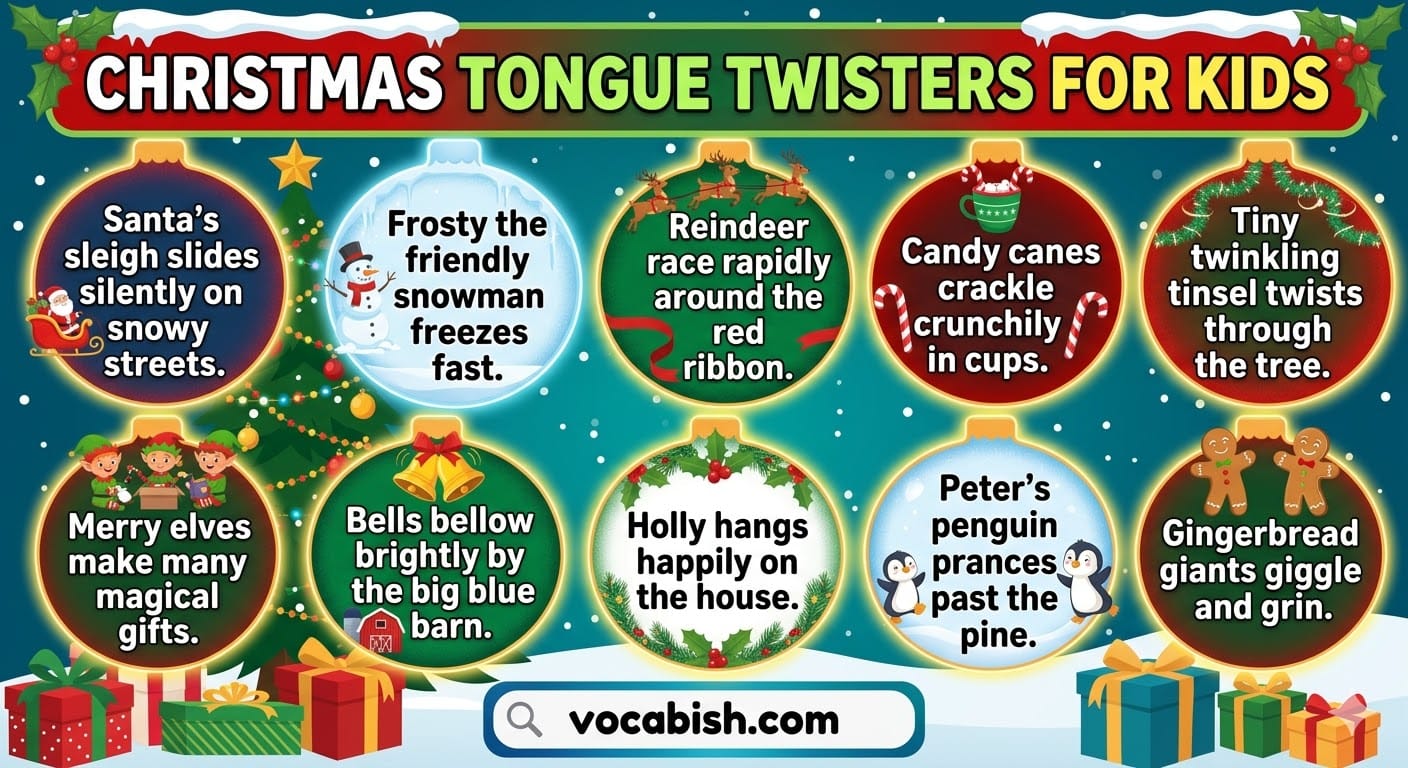
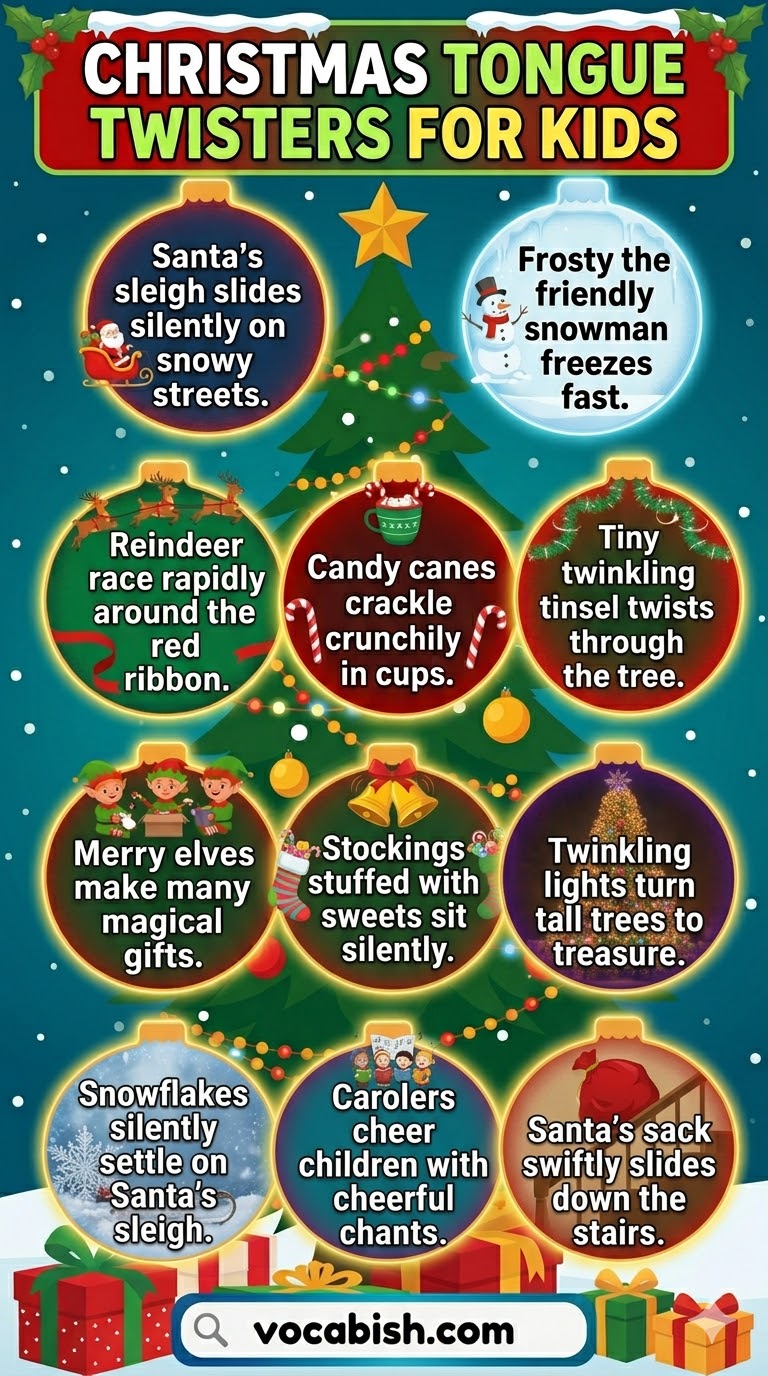
- Santa’s sleigh slides silently on snowy streets.
- Frosty the friendly snowman freezes fast.
- Reindeer race rapidly around the red ribbon.
- Candy canes crackle crunchily in cups.
- Tiny twinkling tinsel twists through the tree.
- Merry elves make many magical gifts.
- Bells bellow brightly by the big blue barn.
- Holly hangs happily on the house.
- Peter’s penguin prances past the pine.
- Gingerbread giants giggle and grin.
- Stockings stuffed with sweets sit silently.
- Twinkling lights turn tall trees to treasure.
- Snowflakes silently settle on Santa’s sleigh.
- Carolers cheer children with cheerful chants.
- Santa’s sack swiftly slides down the stairs.
These phrases are playful and introduce new words naturally while giving kids a chance to practice pronunciation and memory.
Tips for Practicing Christmas Tongue Twisters
- Start slow: Say each word clearly before speeding up.
- Repeat often: Repetition helps pronunciation stick.
- Break it into parts: Learn one line at a time.
- Use gestures: Act out words to remember meaning.
- Record yourself: Listening helps improve accuracy.
Practicing tongue twisters regularly will make kids more confident speakers and help them enjoy English during holidays.
Related Articles:
- Popular Tongue Twisters for Kids
- Tongue Twisters in English for Students
- Short Tongue Twisters for Kids
FAQs
Christmas tongue twisters for kids are fun, short phrases with repeated sounds. They help children practice pronunciation, learn festive vocabulary, and improve English speaking skills.
They strengthen pronunciation, boost confidence in speaking, and introduce Christmas vocabulary in a fun way, making English learning enjoyable and memorable.
Common words include Santa Claus, reindeer, sleigh, elf, stocking, candy cane, ornaments, snowflake, gifts, and Christmas tree for easy vocabulary practice.
Here are some fun Christmas tongue twisters for kids:
1. Santa’s sleigh slides silently on snowy streets.
2. Frosty the friendly snowman freezes fast.
3. Reindeer race rapidly around the red ribbon.
4. Candy canes crackle crunchily in cups.
5. Tiny twinkling tinsel twists through the tree.
6. Merry elves make many magical gifts.
7. Bells bellow brightly by the big blue barn.
8. Holly hangs happily on the house.
Five easy tongue twisters for kids are:
1. Peter Piper picked a peck of pickled peppers.
2. She sells seashells by the seashore.
3. How much wood would a woodchuck chuck?
4. Betty Botter bought some butter.
5. Red lorry, yellow lorry.
Christmas is a holiday celebrated on December 25th. It honors the birth of Jesus, features giving gifts, decorating trees, singing carols, and spending time with family.
Conclusion
Christmas tongue twisters are more than just fun—they are a powerful learning tool. Kids can improve pronunciation, expand vocabulary, and enjoy English naturally. Using festive words makes learning memorable and exciting. Encourage children to practice daily, read aloud, and share tongue twisters with friends and family.
Learning English through Christmas tongue twisters is a playful way to build skills and confidence, turning language practice into holiday joy.