
Money is used in every country, and each type of money has its own currency, symbol, and name. When you read prices online, watch international news, or travel to another country, you often see symbols like $, €, or £. These small signs represent different types of money used around the world. In this blog post, you will learn important currency symbols, what they mean, and how people use them in everyday communication. Understanding these symbols helps you read prices correctly, follow global news, and recognize money in different countries. By the end, you will better understand, recognize, and use common currency symbols when reading, writing, speaking, and listening in English.
What Is a Currency Symbol?
A currency symbol is a short sign that represents a country’s money.
Instead of writing the full name of a currency, people often use a symbol.
Example:
- $10 = ten dollars
- €20 = twenty euros
- ¥500 = five hundred yen
Currency symbols make prices shorter and easier to read.
Why Currency Symbols Are Important in English
English learners often see currency symbols in many places:
- Online shopping websites
- Travel tickets
- International news
- Bank information
- Business documents
Understanding these symbols helps learners:
- Recognize prices quickly
- Understand international money
- Read English content more easily
How Currency Symbols Are Used in Writing
In English writing, the currency symbol usually appears before the number.
Examples:
- $50
- €100
- £25
However, some currencies appear after the number in certain contexts.
Example:
- 100¥
Still, in most English texts, the symbol comes before the number.
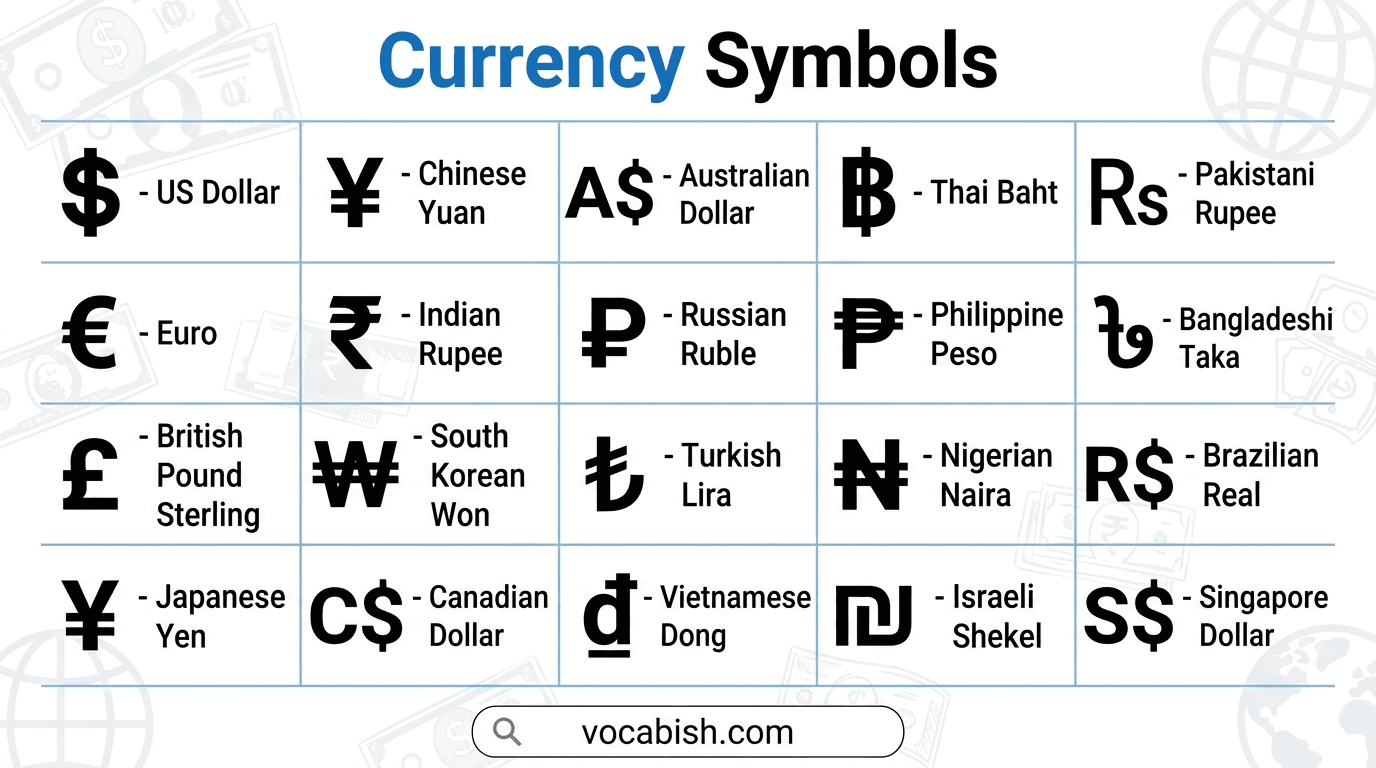
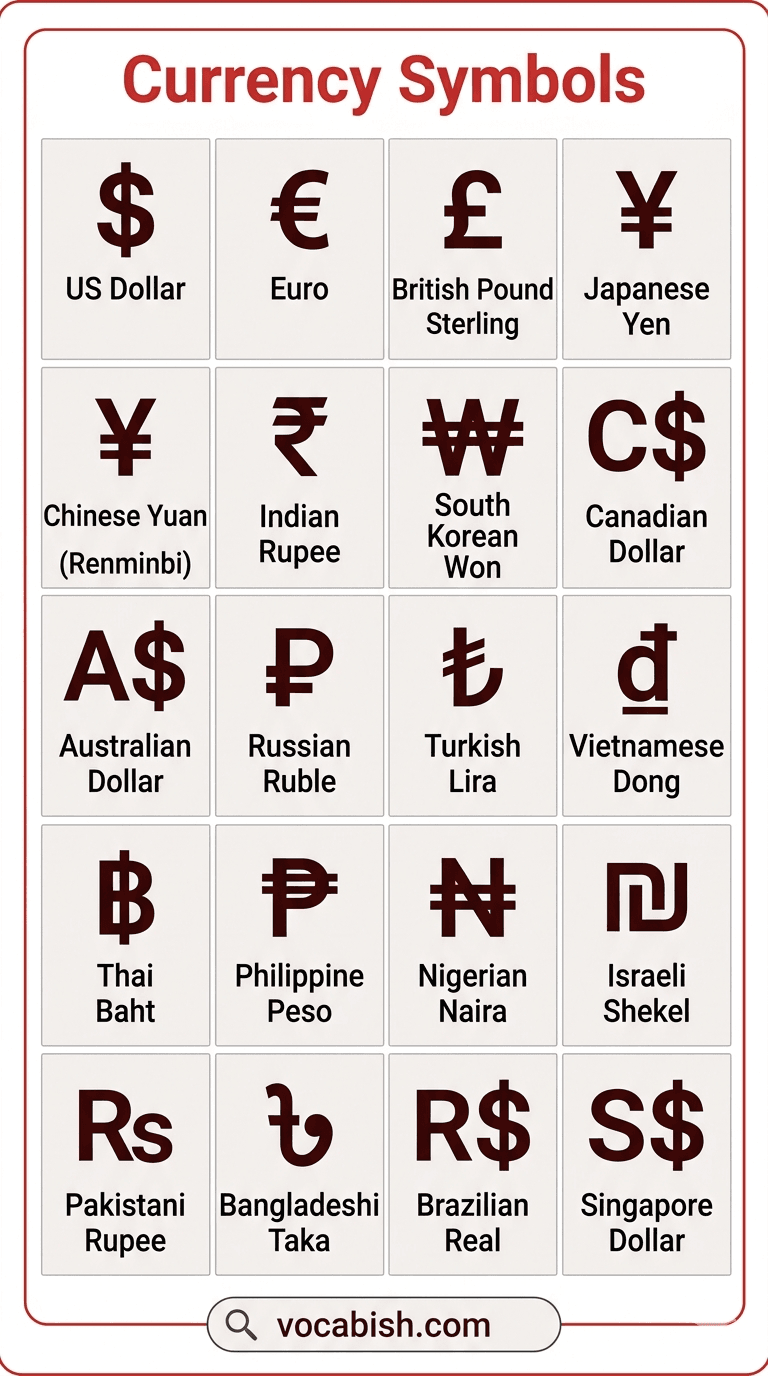
Common Currency Symbols and Their Names
Below are common currency symbols with their names and countries.
- $ — US Dollar
Official currency of the United States, widely used in international trade and global markets. - € — Euro
Shared currency of many European Union countries, commonly used for trade, travel, and banking. - £ — British Pound Sterling
Official currency of the United Kingdom, one of the world’s oldest and strongest currencies. - ¥ — Japanese Yen
Official currency of Japan, widely used in Asian markets and international financial transactions. - ¥ — Chinese Yuan (Renminbi)
China’s official currency, increasingly important in global trade and international business transactions. - ₹ — Indian Rupee
Official currency of India, commonly used in South Asian trade, commerce, and daily transactions. - ₩ — South Korean Won
National currency of South Korea, widely used in technology trade and Asian financial markets. - C$ — Canadian Dollar
Official currency of Canada, frequently used in international trade, especially energy and natural resources. - A$ — Australian Dollar
Australia’s national currency, commonly used in Asia-Pacific trade and global commodity markets. - ₽ — Russian Ruble
Official currency of Russia, mainly used in domestic trade and regional financial activities. - ₺ — Turkish Lira
National currency of Turkey, commonly used for trade, tourism, and everyday economic activities. - ₫ — Vietnamese Dong
Official currency of Vietnam, widely used in domestic markets, tourism, and daily financial transactions. - ฿ — Thai Baht
Thailand’s national currency, widely used in tourism, local markets, and Southeast Asian trade. - ₱ — Philippine Peso
Official currency of the Philippines, used in daily transactions, remittances, and local business activities. - ₦ — Nigerian Naira
Nigeria’s national currency, widely used in West African trade, banking, and everyday commerce. - ₪ — Israeli Shekel
Official currency of Israel, commonly used in local business, technology sectors, and international trade. - ₨ — Pakistani Rupee
National currency of Pakistan, used for domestic trade, banking, and everyday financial transactions. - ৳ — Bangladeshi Taka
Official currency of Bangladesh, commonly used in garment trade, local markets, and banking. - R$ — Brazilian Real
Brazil’s official currency, widely used in South American trade and commodity export markets. - S$ — Singapore Dollar
Singapore’s national currency, widely trusted in global finance, trade, and international banking sectors.
Currency Symbols by Region
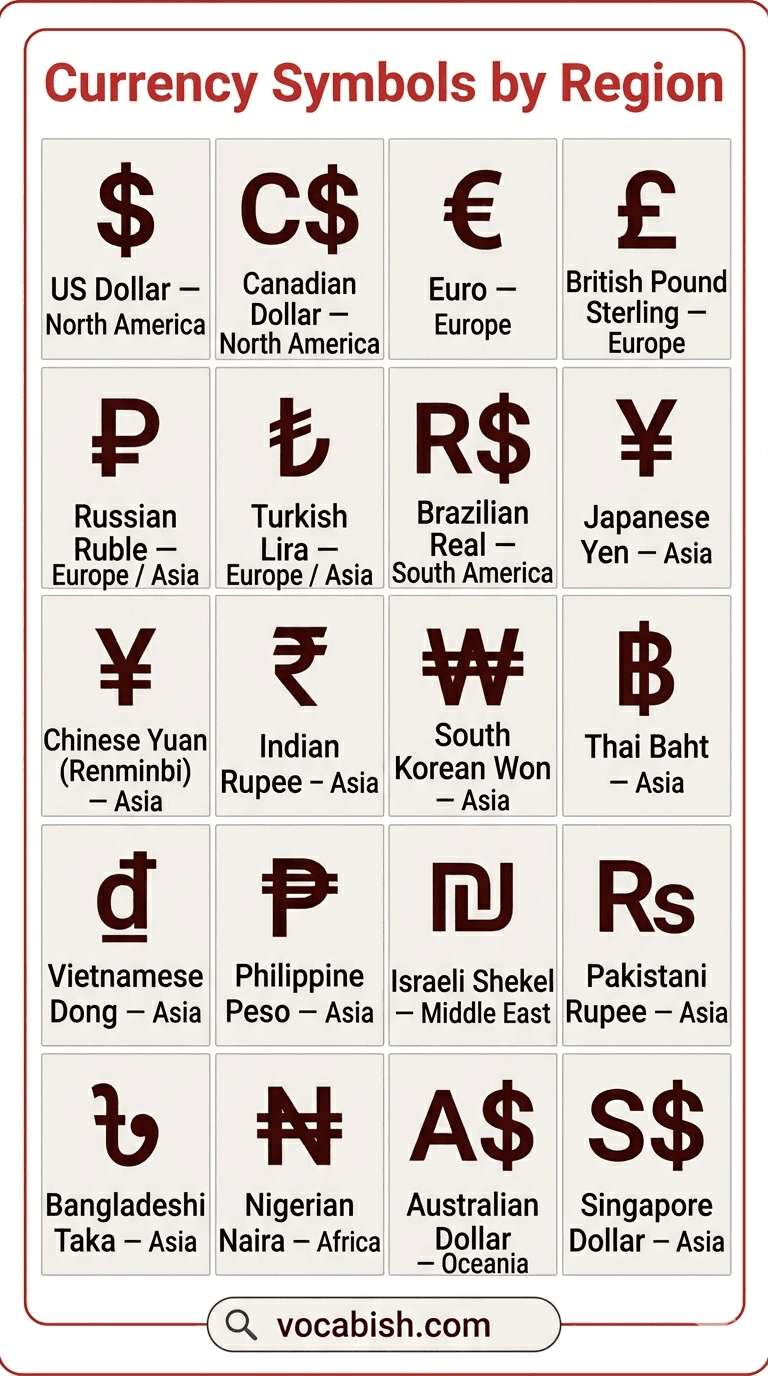
Grouping currencies by world region helps English learners understand where different money symbols are commonly used. It also makes it easier to remember currencies based on geography.
Below are major currency symbols organized by region with their uses.
North America Currency Symbols
Currencies used in North American countries are important in global trade and international finance.
- $ — US Dollar
The primary currency of the United States and the most widely used global reserve currency. - C$ — Canadian Dollar
Canada’s national currency, commonly used in energy, natural resources, and international trade. - $ — Mexican Peso
Official currency of Mexico, widely used in North American commerce and tourism.
South America Currency Symbols
South American countries use several unique currencies for local and regional trade.
- R$ — Brazilian Real
Brazil’s official currency, widely used in South American trade and export markets. - $ — Argentine Peso
National currency of Argentina, used in local trade, banking, and economic activities. - $ — Chilean Peso
Official currency of Chile, commonly used in domestic markets and international copper trade. - S/ — Peruvian Sol
Peru’s national currency, used in everyday transactions and regional commerce. - ₲ — Paraguayan Guaraní
Currency of Paraguay, widely used in local markets and financial transactions.
European Currency Symbols
Europe contains many strong currencies used in international finance and business.
- € — Euro
Shared currency of many European Union countries and one of the world’s major currencies. - £ — Pound Sterling
Official currency of the United Kingdom and one of the oldest currencies in the world. - Fr — Swiss Franc
Switzerland’s national currency, widely trusted in global banking and finance. - zł — Polish Zloty
Poland’s official currency, commonly used in Central European trade and markets. - Ft — Hungarian Forint
Hungary’s national currency used in local commerce and financial activities. - Kč — Czech Koruna
Official currency of the Czech Republic used in domestic trade and banking.
Asian Currency Symbols
Asia has many major economies, so its currencies play an important role in global trade.
- ¥ — Japanese Yen
Japan’s national currency and one of the most traded currencies in international markets. - ¥ — Chinese Yuan (Renminbi)
China’s official currency, increasingly used in international trade and global finance. - ₹ — Indian Rupee
Official currency of India, widely used in South Asian commerce and daily transactions. - ₩ — South Korean Won
Currency of South Korea, used in technology exports and regional economic activities. - ฿ — Thai Baht
Thailand’s national currency, widely used in tourism and Southeast Asian trade. - ₫ — Vietnamese Dong
Vietnam’s official currency used in local markets and economic development. - S$ — Singapore Dollar
Strong Asian currency used in international banking and financial markets.
Middle East Currency Symbols
Middle Eastern currencies are important in energy trade and regional business.
- د.إ — UAE Dirham
Official currency of the United Arab Emirates, widely used in regional trade and tourism. - ر.س — Saudi Riyal
Saudi Arabia’s national currency used in oil trade and Middle Eastern commerce. - ﷼ — Iranian Rial
Iran’s official currency used in domestic markets and regional transactions. - ₪ — Israeli Shekel
Israel’s currency widely used in technology industries and local business.
African Currency Symbols
African countries use many currencies that support regional trade and economic growth.
- ₦ — Nigerian Naira
Nigeria’s national currency used in West African commerce and banking. - ₵ — Ghanaian Cedi
Ghana’s official currency used in everyday transactions and regional trade. - Br — Ethiopian Birr
Ethiopia’s currency used in domestic markets and national economic activities. - KSh — Kenyan Shilling
Kenya’s official currency widely used in East African trade and banking. - TSh — Tanzanian Shilling
Currency of Tanzania used in local commerce and regional business.
Oceania Currency Symbols
Countries in the Oceania region also use internationally recognized currencies.
- A$ — Australian Dollar
Australia’s national currency widely used in Asia-Pacific trade and global commodity markets. - NZ$ — New Zealand Dollar
Official currency of New Zealand used in regional trade and financial activities.
List of All Currency Symbols with Country
| Currency Symbol | Currency Name | Country / Region |
|---|---|---|
| $ | US Dollar | United States |
| C$ | Canadian Dollar | Canada |
| A$ | Australian Dollar | Australia |
| NZ$ | New Zealand Dollar | New Zealand |
| € | Euro | European Union Countries |
| £ | Pound Sterling | United Kingdom |
| ¥ | Yen | Japan |
| ¥ | Yuan (Renminbi) | China |
| ₹ | Indian Rupee | India |
| ₩ | Won | South Korea |
| ₩ | Won | North Korea |
| ₽ | Ruble | Russia |
| ₺ | Turkish Lira | Turkey |
| ₫ | Dong | Vietnam |
| ₴ | Hryvnia | Ukraine |
| ₱ | Peso | Philippines |
| ₦ | Naira | Nigeria |
| ₵ | Cedi | Ghana |
| ₭ | Kip | Laos |
| ₮ | Tögrög | Mongolia |
| ฿ | Baht | Thailand |
| ₡ | Colón | Costa Rica |
| ₲ | Guaraní | Paraguay |
| ₸ | Tenge | Kazakhstan |
| R$ | Brazilian Real | Brazil |
| Fr | Swiss Franc | Switzerland |
| kr | Krona | Sweden |
| kr | Krone | Denmark |
| kr | Krone | Norway |
| zł | Zloty | Poland |
| Ft | Forint | Hungary |
| Kč | Koruna | Czech Republic |
| lei | Leu | Romania |
| лв | Lev | Bulgaria |
| د.إ | Dirham | United Arab Emirates |
| ر.س | Riyal | Saudi Arabia |
| ﷼ | Rial | Iran |
| ₪ | Shekel | Israel |
| ₨ | Rupee | Pakistan |
| ₨ | Rupee | Nepal |
| ₨ | Rupee | Sri Lanka |
| ৳ | Taka | Bangladesh |
| RM | Ringgit | Malaysia |
| S$ | Singapore Dollar | Singapore |
| HK$ | Hong Kong Dollar | Hong Kong |
| NT$ | New Taiwan Dollar | Taiwan |
| Rp | Rupiah | Indonesia |
| ₭ | Kip | Laos |
| Br | Birr | Ethiopia |
| KSh | Shilling | Kenya |
| TSh | Shilling | Tanzania |
Conclusion
Currency symbols are small signs, but they carry important meaning. They help people understand prices quickly across different countries.
By learning world currency symbols with names, English learners can:
- Read global prices
- Understand financial news
- Travel with confidence
- Improve vocabulary knowledge
Start by remembering the most common symbols, then gradually learn more. Over time, these symbols will become easy to recognize and use in everyday English reading.