
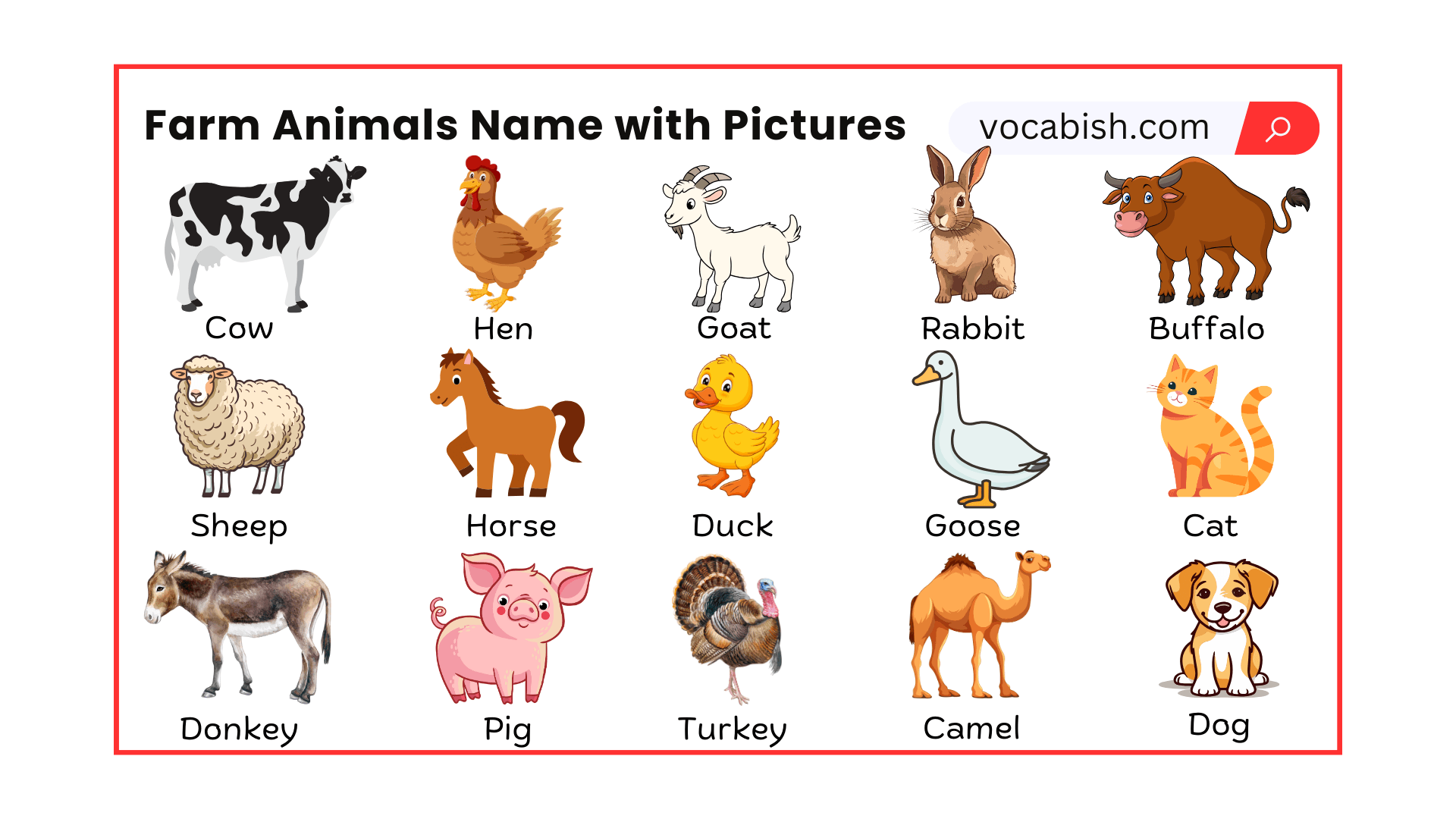
In this blog post, you will learn the names of common farm animals in English, along with pictures to help you recognize them. Knowing these names can improve your speaking, reading, writing, and listening skills. By exploring animals like cows, chickens, and goats, you expand your vocabulary and gain confidence when describing these creatures in English. Let’s explore the world of farm animals and master the words that bring them to life.
What are Farm Animals?
Farm animals are animals that people raise on farms. They can be mammals like cows or goats, or birds like chickens. These animals help humans in many ways:
- Milk: Cow, goat
- Meat: Pig, sheep
- Wool: Sheep
- Work: Horse, donkey
Knowing farm animals names helps learners talk about daily life, farms, food, and animals in English.
Why Learn Farm Animals Names?
Learning farm animals vocabulary helps students:
- Speak clearly about animals
- Read simple texts and storybooks
- Write sentences using animal names
- Listen to conversations about farms or nature
Farm animals names are basic vocabulary for children, beginners, and English learners worldwide.
List of Farm Animals Names in English
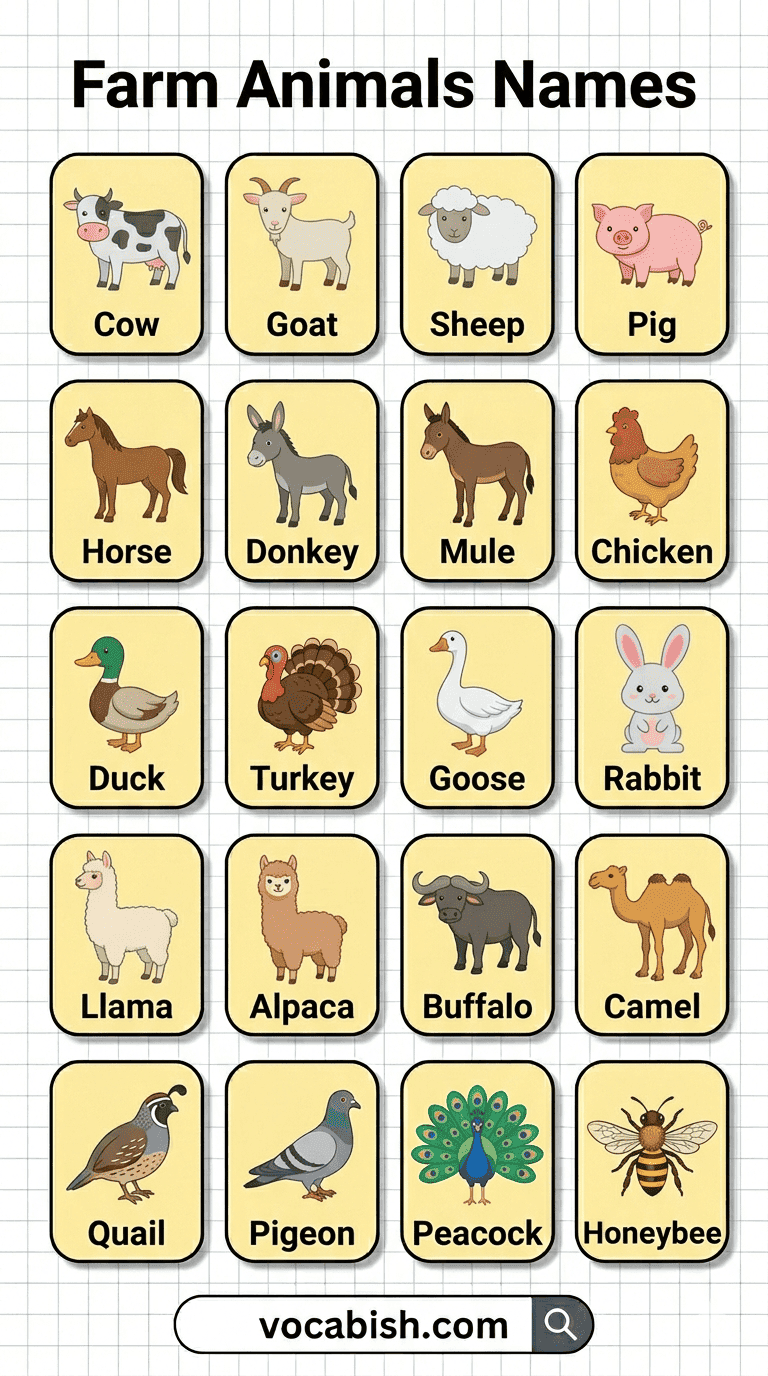
Here are some important farm animals names every learner should know:
- Cow
- Goat
- Sheep
- Pig
- Horse
- Donkey
- Mule
- Chicken
- Duck
- Turkey
- Goose
- Rabbit
- Llama
- Alpaca
- Buffalo
- Camel
- Quail
- Pigeon
- Peacock
- Honeybee
Types of Animals on a Farm with Their Uses
Milk and Meat Animals
- Cow – Gives milk and meat
- Goat – Provides milk, sometimes meat
- Sheep – Gives wool and meat
- Pig – Raised for meat
Work Animals
- Horse – Helps with riding and farming
- Donkey – Carries loads
- Mule – Strong animal used for transport
- Camel – Used in deserts for carrying goods
Poultry
- Chicken – Lays eggs and provides meat
- Duck – Eggs and meat, can swim
- Turkey – Raised for meat
- Goose – Meat, eggs, and feathers
Small Farm Mammals
- Rabbit – Raised for meat and sometimes fur
- Llama/Alpaca – Wool and carrying light loads
20 Animals that Live on a Farm
- Cow – A large farm animal that gives milk and sometimes meat.
- Goat – A small farm animal that gives milk and can also be raised for meat.
- Sheep – An animal raised for wool, milk, and meat.
- Pig – A farm animal raised mainly for meat.
- Horse – A strong animal used for riding, carrying loads, and farm work.
- Donkey – A small, strong animal used to carry loads and help on farms.
- Mule – A cross between a horse and a donkey, used for work and carrying heavy loads.
- Chicken – A bird kept on farms for eggs and meat.
- Duck – A water-loving bird raised for eggs, meat, and feathers.
- Turkey – A large bird raised for meat, especially during special meals.
- Goose – A farm bird that provides meat, eggs, and feathers.
- Rabbit – A small mammal raised for meat and sometimes fur.
- Llama – A South American animal used for wool and carrying light loads.
- Alpaca – Similar to a llama, raised mainly for soft wool.
- Buffalo – A large animal raised for milk, meat, and farm work.
- Camel – A desert animal sometimes kept on farms for carrying goods and milk.
- Quail – A small bird kept for eggs and meat.
- Pigeon – A bird raised on farms for food, racing, or messages in some countries.
- Peacock – A bird kept for decoration, beauty, and sometimes meat.
- Honeybee – Insects kept on farms for honey and pollination of crops.
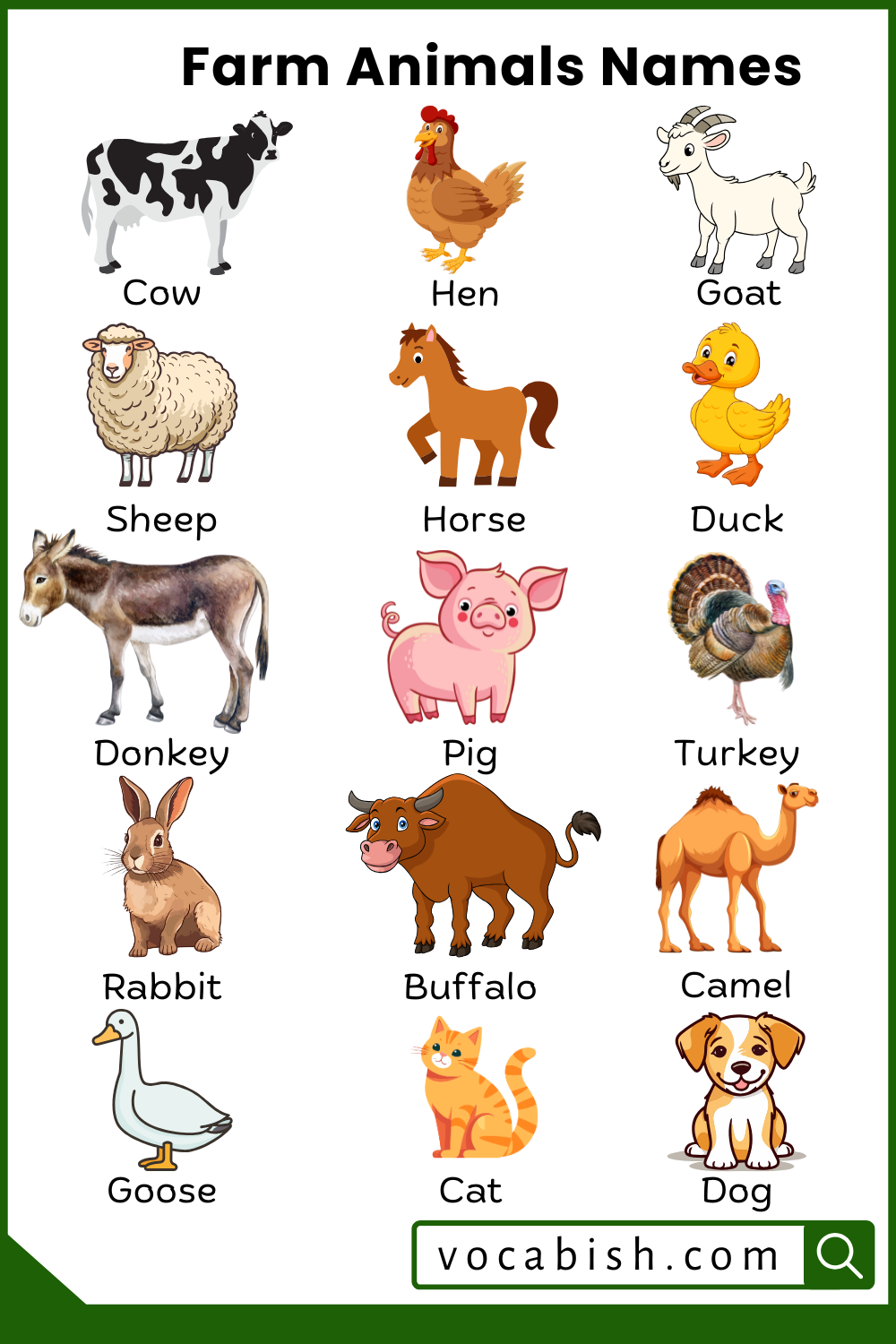
Farm animals are an easy and fun part of English vocabulary. They connect us with food, farming, and daily life. By learning these names and using them in sentences, you can improve your English speaking and writing in a simple way.
FAQs about Farm Animals
Farm animals are animals raised on farms to provide milk, meat, wool, eggs, or help with work. Examples include cow, goat, horse, pig, and chicken.
Common farm animals names include cow, goat, sheep, horse, pig, chicken, duck, turkey, and rabbit. These are basic words for English learners.
Animals that give milk include cow, goat, and buffalo. Learning these words helps describe food, farms, and daily routines in English.
Farm animals that provide meat include cow, pig, sheep, chicken, and turkey. Knowing these names helps learners understand food and farm vocabulary.
Yes, horses are farm animals. They are used for riding, carrying loads, and helping with work on farms.
Small farm animals include rabbit, chicken, duck, and goose. These animals are often raised for eggs, meat, or wool.
Related Articles: