
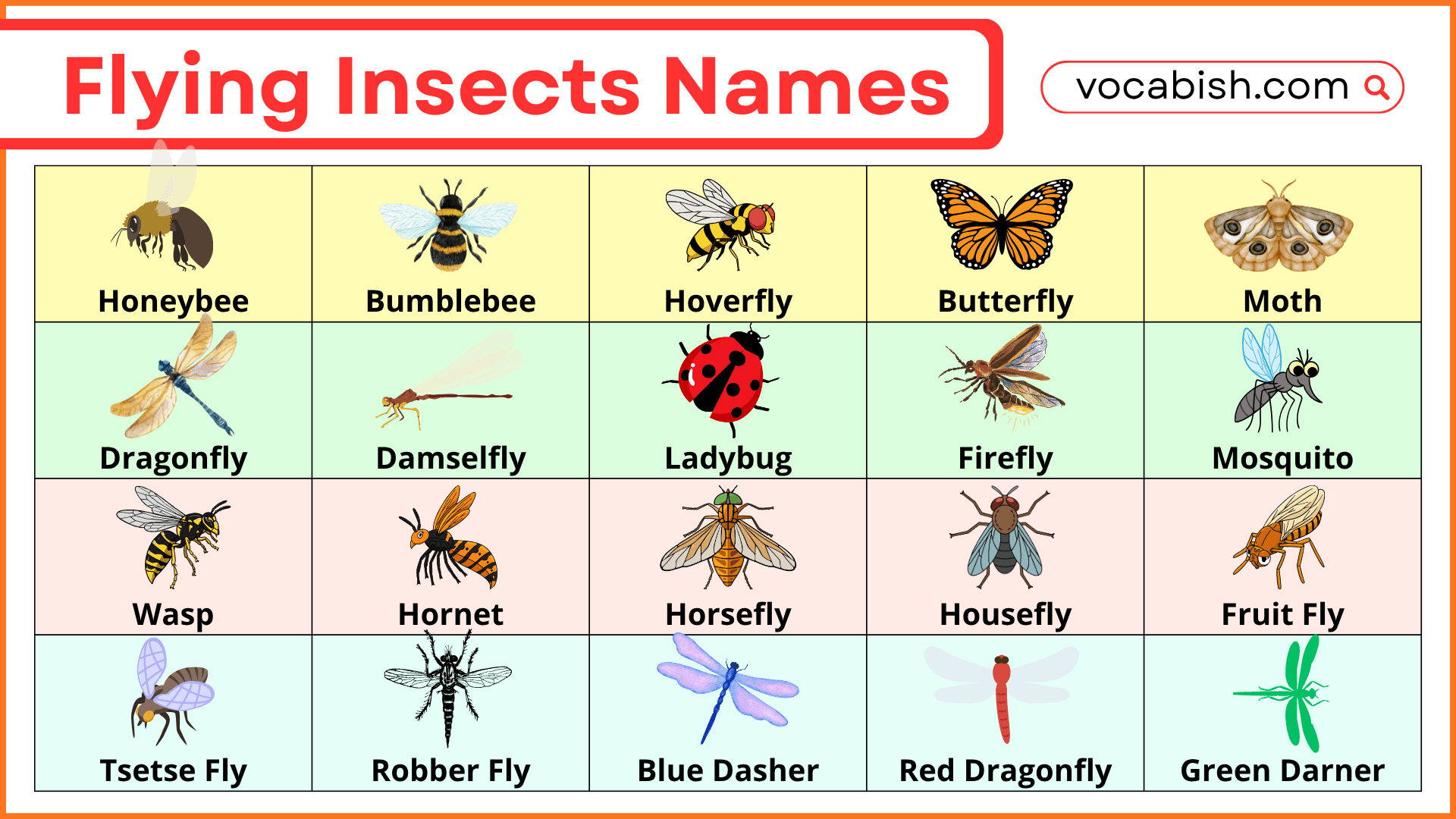
In this blog post, you will learn the names of 50+ common flying insects in English, along with pictures to help you remember them easily. Knowing these words is important because it helps you understand conversations, articles, and videos about nature, gardens, or the outdoors. By studying these insect names, you can improve your speaking, reading, writing, and listening skills all at once. Learning vocabulary with pictures makes it easier to recall, so you can confidently use these words in daily life and English lessons.
What Are Flying Insects?
Flying insects are small animals with six legs, two antennae, and wings that help them move through the air. They can be found in gardens, forests, fields, and even homes. Most flying insects help plants grow by carrying pollen, while some can bite or sting.
Here, we will learn the names of 50+ common flying insects in English, along with their important description, pictures, and how to use them in sentences.
Common Flying Insects Names
Bee
Bees are flying insects that collect nectar from flowers and help pollinate plants.
Example: The bee landed on a bright sunflower to collect nectar.
Butterfly
Butterflies are colourful flying insects with large wings, often seen in gardens and meadows.
Example: A butterfly hovered gracefully above the blooming flowers.
Mosquito
Mosquitoes are small flying insects that feed on blood and can spread diseases.
Example: A mosquito buzzed near my arm during the evening.
Fly
Flies are common insects that move quickly and are often found near food or waste.
Example: A fly landed on the fruit left on the table.
Dragonfly
Dragonflies are slender insects with long bodies and transparent wings, often near water.
Example: The dragonfly skimmed over the pond’s surface.
Moth
Moths are nocturnal insects similar to butterflies but usually less colourful and active at night.
Example: A moth circled the porch light after sunset.
Wasp
Wasps are flying insects with narrow bodies and stingers, often building nests in trees or walls.
Example: A wasp flew around the picnic, searching for food.
Ant with wings
Winged ants are reproductive ants that fly to mate and start new colonies.
Example: An ant with wings took off into the garden during mating season.
Beetle
Beetles are insects with hard outer shells and wings that allow them to fly short distances.
Example: A beetle crawled on the leaf before flying away.
Grasshopper
Grasshoppers are insects with strong hind legs that jump and fly short distances in fields.
Example: The grasshopper jumped from one plant to another and then flew.
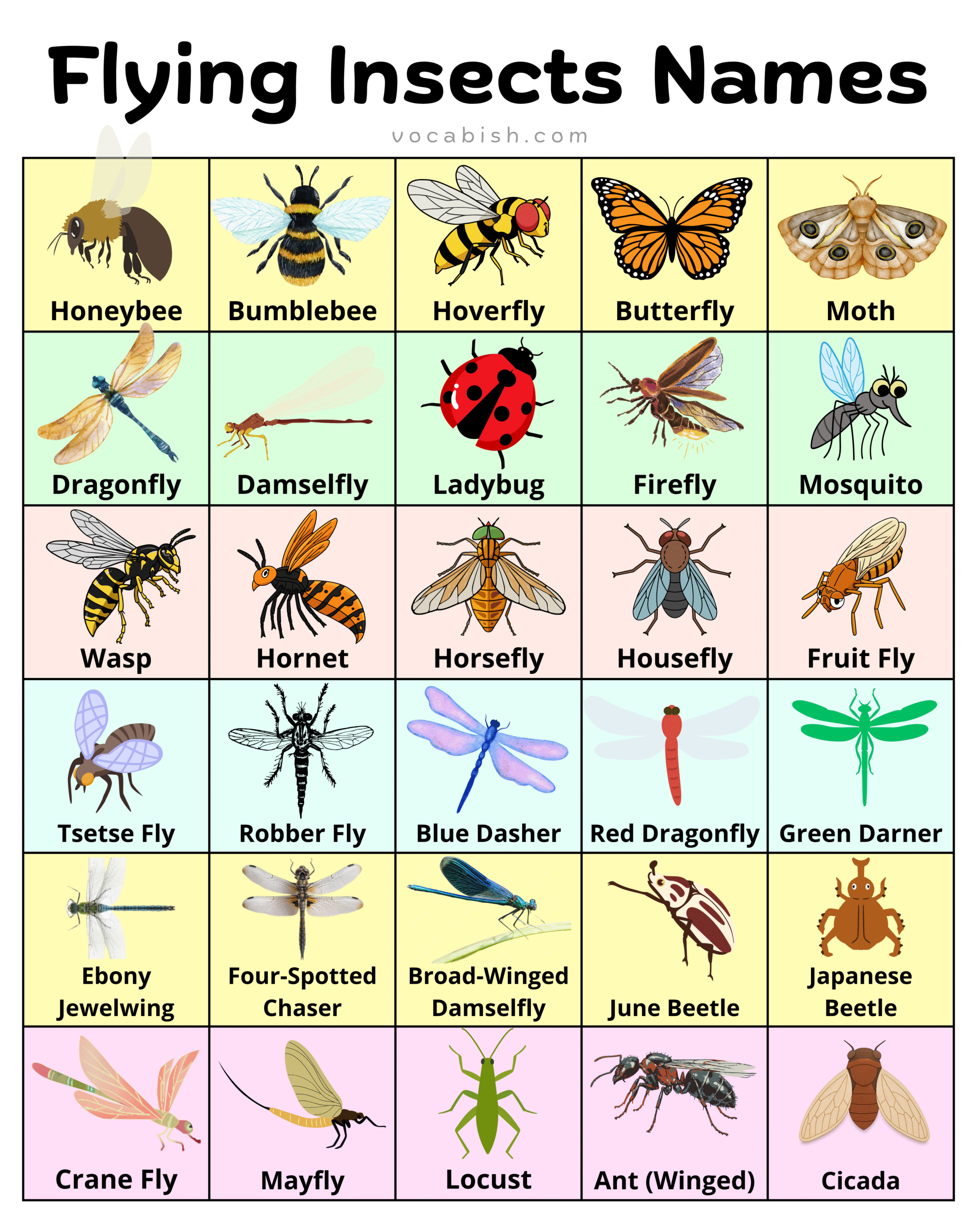
Features of Flying Insects
Here are some common features that most flying insects share:
- Have two wings or four wings
- Use wings for flying and escaping danger
- Have six legs and antennae
- Can be useful (like bees) or harmful (like mosquitoes)
Related: Insects Names with Pictures
Types of Flying Insects with Names and Photos
1. Pollinator Insects
Pollinator insects help plants grow by carrying pollen from one flower to another.
Honeybee
Honeybees are small, social insects that produce honey and play a vital role in pollinating flowers.
Example: A honeybee landed on the apple blossom, collecting nectar for its hive.
Bumblebee
Bumblebees are large, fuzzy insects that pollinate flowers and are active in warm weather.
Example: A bumblebee hovered near the lavender bush, spreading pollen between flowers.
Hoverfly
Hoverflies are harmless insects resembling bees, feeding on nectar while helping flowers reproduce naturally.
Example: A hoverfly rested on a daisy before flying to another flower.
Butterfly
Butterflies are colourful insects that feed on nectar and help transfer pollen between garden plants.
Example: A butterfly landed on the marigold, fluttering its wings gracefully.
Moth
Moths are nocturnal insects that pollinate night-blooming flowers and are attracted to light sources.
Example: A moth circled the porch lamp, then settled on the wall quietly.
2. Butterflies and Moths
These insects have scaly wings and go through four life stages: egg, larva, pupa, and adult.
Monarch Butterfly
Monarch butterflies are famous for long migrations and striking orange and black patterned wings across continents.
Example: A monarch butterfly rested on the milkweed before continuing its long migration.
Swallowtail Butterfly
Swallowtail butterflies are large, colourful insects with distinctive tail-like extensions on their bright wings.
Example: A swallowtail butterfly hovered over the garden flowers, showing its striking tail patterns.
Cabbage White Butterfly
Cabbage white butterflies are common white insects often found near gardens feeding on flowers and plants.
Example: A cabbage white butterfly landed gently on a cabbage leaf.
Luna Moth
Luna moths are pale green nocturnal insects with large wings and long tails, active at night.
Example: A luna moth fluttered near the window under the moonlight.
Atlas Moth
Atlas moths are among the world’s largest moths, with broad brown wings featuring bold patterns.
Example: An atlas moth spread its massive wings on the tree trunk.
3. Dragonflies and Damselflies
They live near water areas and eat mosquitoes, flies, and small insects.
Red Dragonfly
Red dragonflies are bright red insects found near water, symbolising strength, energy, and good luck.
Example: A red dragonfly hovered above the pond, its vivid colour shining in sunlight.
Blue Dasher
Blue Dashers are small, fast-flying dragonflies with blue bodies and transparent wings near gardens or ponds.
Example: A blue dasher zipped past the flowers and landed on a reed.
Ebony Jewelwing
Ebony Jewelwings are dark damselflies with shiny black wings and metallic green bodies near slow streams.
Example: An ebony jewelwing rested on a leaf beside the quiet stream.
Green Darner
Green Darners are large dragonflies with bright green thorax and blue tails, known for long migrations.
Example: A green darner flew gracefully over the lake during its seasonal migration.
Four-Spotted Chaser
Four-Spotted Chasers are medium-sized dragonflies with four dark wing spots, commonly active near lakes in summer.
Example: A four-spotted chaser perched on a reed, its wings catching the sunlight.
Broad-Winged Damselfly
Broad-Winged Damselflies are graceful insects with wide wings and metallic blue-green bodies, flying slowly near forest water.
Example: A broad-winged damselfly hovered gently above the forest stream.
4. Beetles that Can Fly
Many beetles have hidden wings under hard shells that open during flight.
Ladybird (Ladybug)
Ladybirds are small red beetles with black spots that feed on plant pests, protecting gardens naturally.
Example: A ladybird crawled across the leaf, eating tiny aphids.
Firefly (Lightning Bug)
Fireflies are nocturnal beetles that produce light from their bodies to attract mates at night.
Example: Fireflies lit up the garden, twinkling like tiny lanterns in the dark.
Japanese Beetle
Japanese beetles are greenish flying insects that feed on flowers and leaves, often damaging gardens.
Example: A Japanese beetle chewed on the rose petals, leaving small holes.
June Beetle
June beetles are large brown beetles that fly during summer nights and are attracted to lights.
Example: A June beetle buzzed around the porch light before settling on the railing.
5. Seasonal Flying Insects
Some insects fly only during specific seasons, mostly summer and spring.
Mayfly
Mayflies are delicate insects living near water, with very short adult lifespans, usually appearing in May.
Example: A mayfly skimmed across the river surface, living only for a single day.
Flying Ant
Flying ants are reproductive ants that emerge in summer to find mates before shedding their wings.
Example: A flying ant hovered near the garden during the summer mating season.
Crane Fly
Crane flies are large, mosquito-like insects that fly clumsily but do not bite humans.
Example: A crane fly landed on the window, harmlessly resting its long legs.
Locust
Locusts are large grasshoppers that fly in swarms, often damaging crops during warm weather.
Example: A locust flew above the wheat field, joining a growing swarm.
6. Biting and Stinging Flyers
These insects can bite or sting for protection or feeding.
Mosquito
Mosquitoes are small flying insects that feed on human or animal blood and can spread diseases.
Example: A mosquito landed on my arm and bit me during the evening.
Wasp
Wasps are flying insects that can sting and build paper-like nests during summer months.
Example: A wasp buzzed near the picnic, searching for sweet food.
Hornet
Hornets are large, aggressive wasps that protect their nests and can sting painfully.
Example: A hornet hovered near the tree, guarding its nest.
Horsefly
Horseflies are large biting flies that feed on the blood of animals, often causing pain.
Example: A horsefly landed on the cow, making it swish its tail.
7. Insects with “Fly” in Their Name
Many flying insects include the word “fly” in their names but belong to different groups.
Housefly
Houseflies are common insects that land on food and surfaces, spreading germs and bacteria easily.
Example: A housefly landed on the sandwich, making us move it away quickly.
Fruit Fly
Fruit flies are tiny insects that gather around ripe or fermenting fruits and vegetables.
Example: A fruit fly hovered over the banana left on the kitchen counter.
Tsetse Fly
Tsetse flies are blood-feeding insects found in Africa that can transmit sleeping sickness to animals and humans.
Example: A tsetse fly bit the cow while it grazed near the river.
Robber Fly
Robber flies are predatory insects that catch and eat other insects in mid-flight.
Example: A robber fly snatched a smaller fly while hovering above the garden flowers.
8. Insects That Cannot Fly
Some insects lost their wings through evolution and live without flying.
Ant (worker type)
Most worker ants cannot fly; only winged males and queens fly temporarily to start new colonies.
Example: The worker ant carried food while the winged queen prepared to fly.
Termite (worker)
Worker termites cannot fly; only reproductive termites develop wings briefly to mate and start colonies.
Example: A winged termite flew from the soil during the mating season.
Louse
Lice are tiny parasitic insects that live on hair or feathers and cannot fly at all.
Example: The louse crawled quickly through the child’s hair unnoticed.
Flea
Fleas are small, wingless insects that jump long distances and feed on the blood of animals.
Example: The flea jumped from the dog to the sofa, searching for a host.
Why Are Flying Insects Important?
Flying insects help in many ways:
- Pollination → They help plants grow by spreading pollen.
- Food Chain → Birds and animals eat insects for food.
- Cleaning → Some insects clean the environment by eating waste.
Facts About Flying Insects
- Most flying insects have two or four wings.
- Bees and butterflies help plants reproduce by spreading pollen.
- Flies and mosquitoes can carry germs and diseases.
- Dragonflies can move in all directions while flying.
- Fireflies glow in the dark to attract partners.
Flying insects are small creatures with wings that fly in the air. They are important for nature, helpful for plants, and interesting to learn about. Understanding their names in English will help you speak, read, and describe nature better.
FAQs
What are flying insects?
Flying insects are small animals with wings that help them move through the air, such as bees, flies, and butterflies.
Which flying insects are useful for humans?
Bees, butterflies, and hoverflies are useful because they help pollinate plants and increase crop growth.
Which flying insects can bite or sting?
Mosquitoes, wasps, and hornets can bite or sting humans and animals for protection or feeding.
Can all insects fly?
No, not all insects can fly. Some, like ants and fleas, live without wings or can only fly during certain times.
Why are flying insects important in nature?
They help plants grow, provide food for birds, and keep the balance of nature healthy and strong.
Read More