
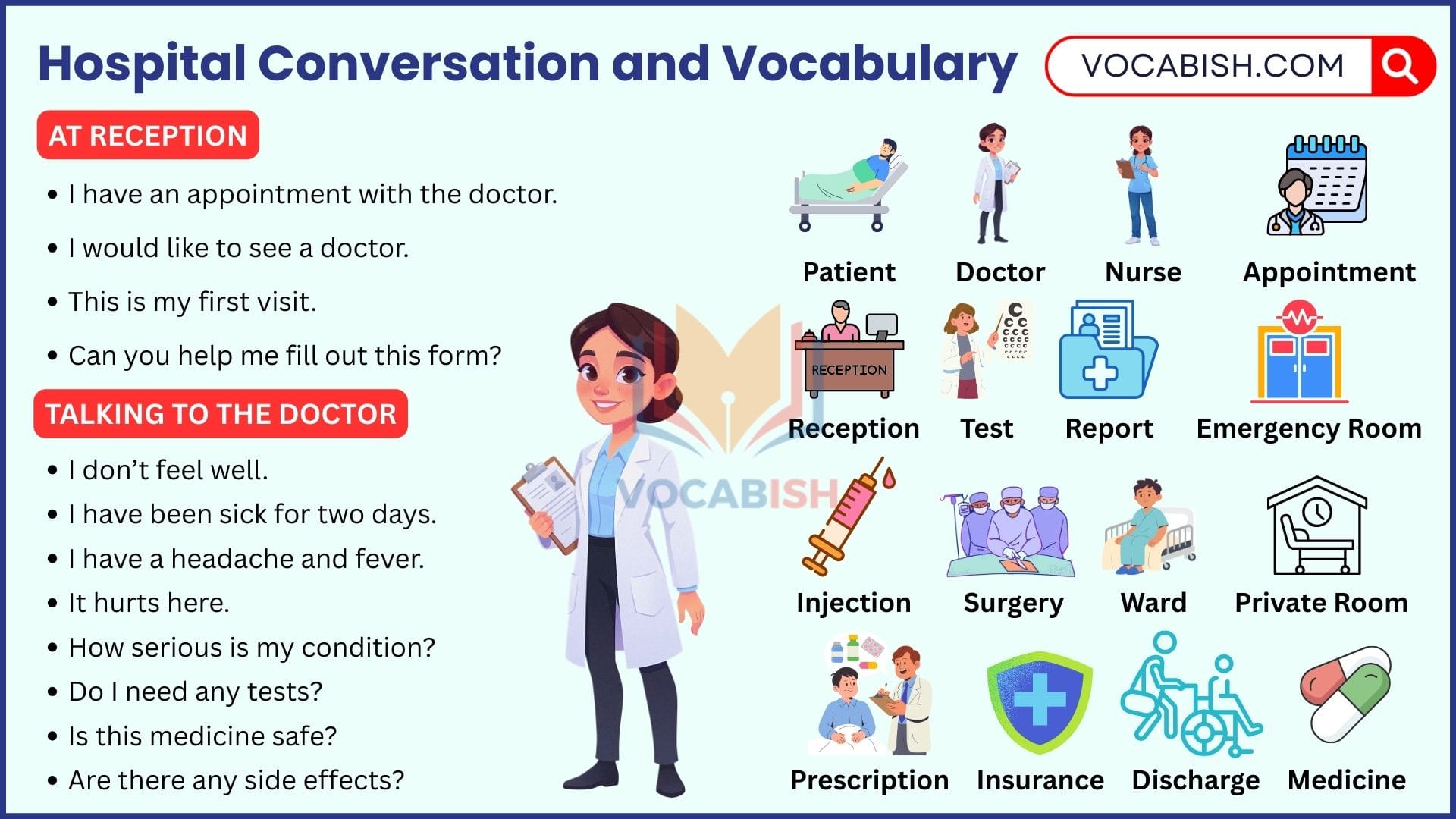
In this blog post, you will learn Hospital English, useful conversation phrases for patients and visitors. These words and sentences are used in real medical situations, such as talking to a doctor, asking about an appointment, or describing pain and symptoms. Understanding this vocabulary is important for English learners because hospitals require accurate communication. When you master these phrases, you can speak with confidence, understand instructions, read medical forms, and write basic information correctly. Learning hospital conversations also improves listening skills during real discussions with nurses and staff. Keep reading to understand and use these expressions in daily life.
Why Learning Hospital English Is Important
Hospital English is part of daily life vocabulary. It helps you:
- Communicate clearly in medical situations
- Understand health instructions
- Ask for help confidently
- Support family and friends
- Avoid misunderstandings
These phrases improve your speaking, listening, reading, and comprehension skills in real-world situations.
Common Hospital Vocabulary
Here are important hospital-related words every learner should know.
- Patient
A person receiving medical care. - Doctor
A medical professional who treats illness. - Nurse
A person who cares for patients. - Appointment
A scheduled meeting with a doctor. - Reception
The front desk area of a hospital. - Emergency Room (ER)
The section for urgent treatment. - Prescription
A written order for medicine. - Medicine
A drug used to treat illness. - Injection
Medicine given with a needle. - Surgery
A medical operation. - Ward
A hospital room with several beds. - Private Room
A single room for one patient. - Test
A medical check (blood test, X-ray, etc.). - Report
A document showing test results. - Discharge
Permission to leave the hospital. - Insurance
A system that pays medical costs. - Pharmacy
A place to buy medicine. - Symptoms
Signs of illness. - Treatment
Medical care for illness. - Diagnosis
Identification of a disease.
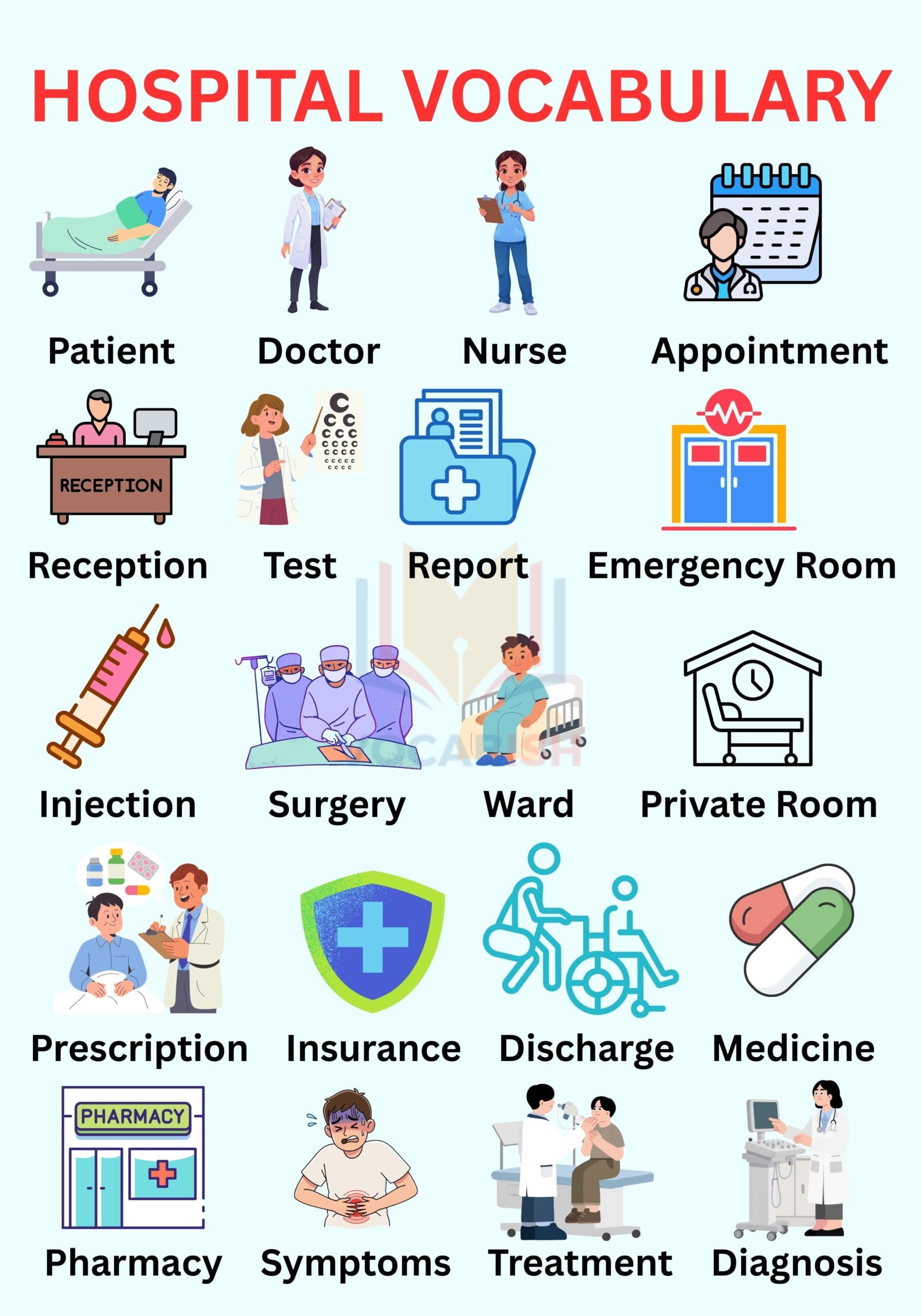
Try to pronounce these words clearly and use them in short sentences.
English Phrases for Patients
These phrases are useful if you are receiving treatment.
At Reception
- “I have an appointment with the doctor.”
- “I would like to see a doctor.”
- “This is my first visit.”
- “Can you help me fill out this form?”
Talking to the Doctor
- “I don’t feel well.”
- “I have been sick for two days.”
- “I have a headache and fever.”
- “It hurts here.”
- “How serious is my condition?”
- “Do I need any tests?”
- “Is this medicine safe?”
- “Are there any side effects?”
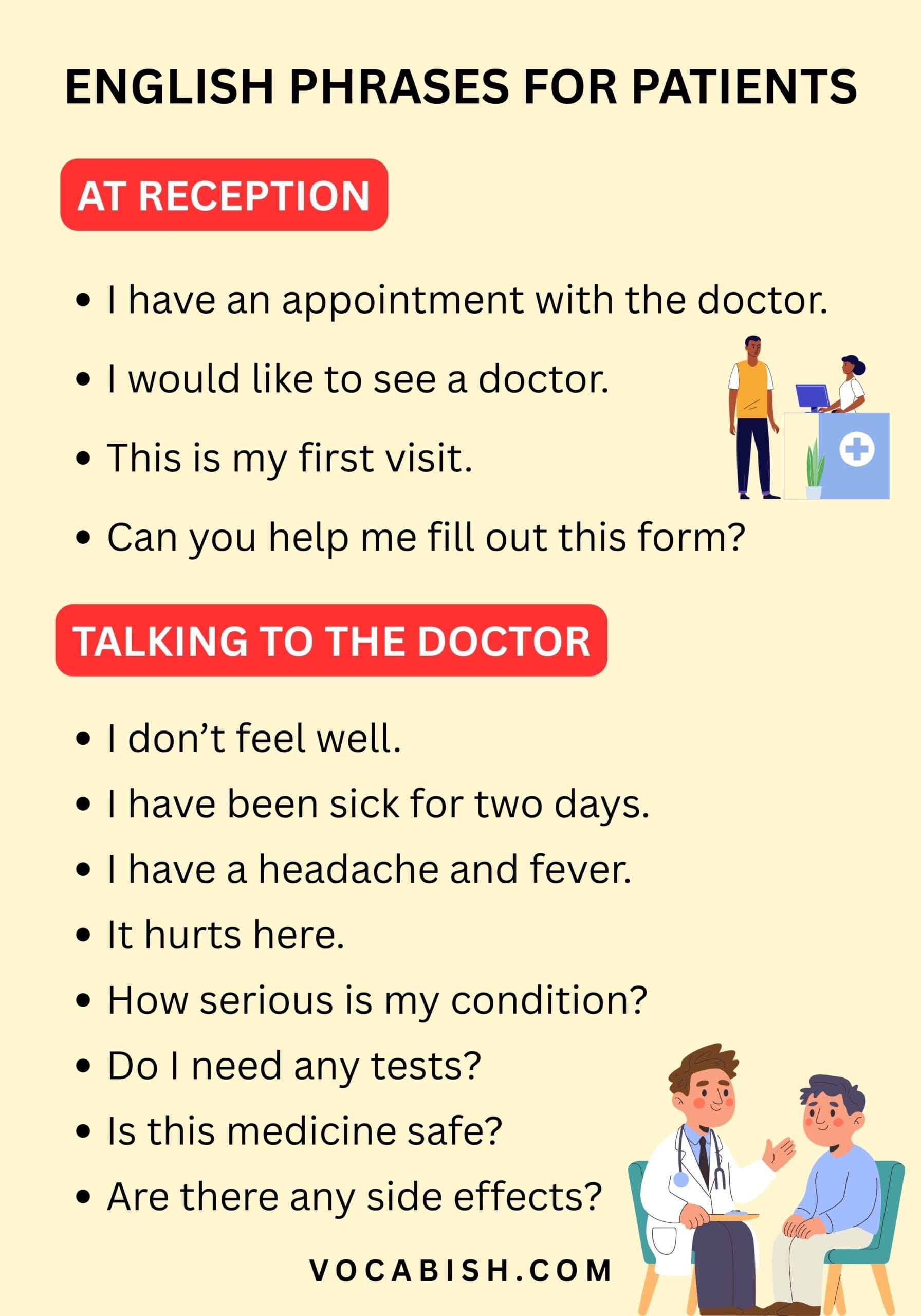
These phrases are short and direct. Speak slowly and clearly.
English Phrases for Visitors
Visitors also need useful hospital conversation phrases.
Asking About a Patient
- “I am here to see Mr. John.”
- “Which room is he in?”
- “What are the visiting hours?”
- “Can I speak to the nurse?”
Showing Care and Support
- “How are you feeling today?”
- “I hope you get well soon.”
- “The doctor said everything will be fine.”
- “Please take care of yourself.”
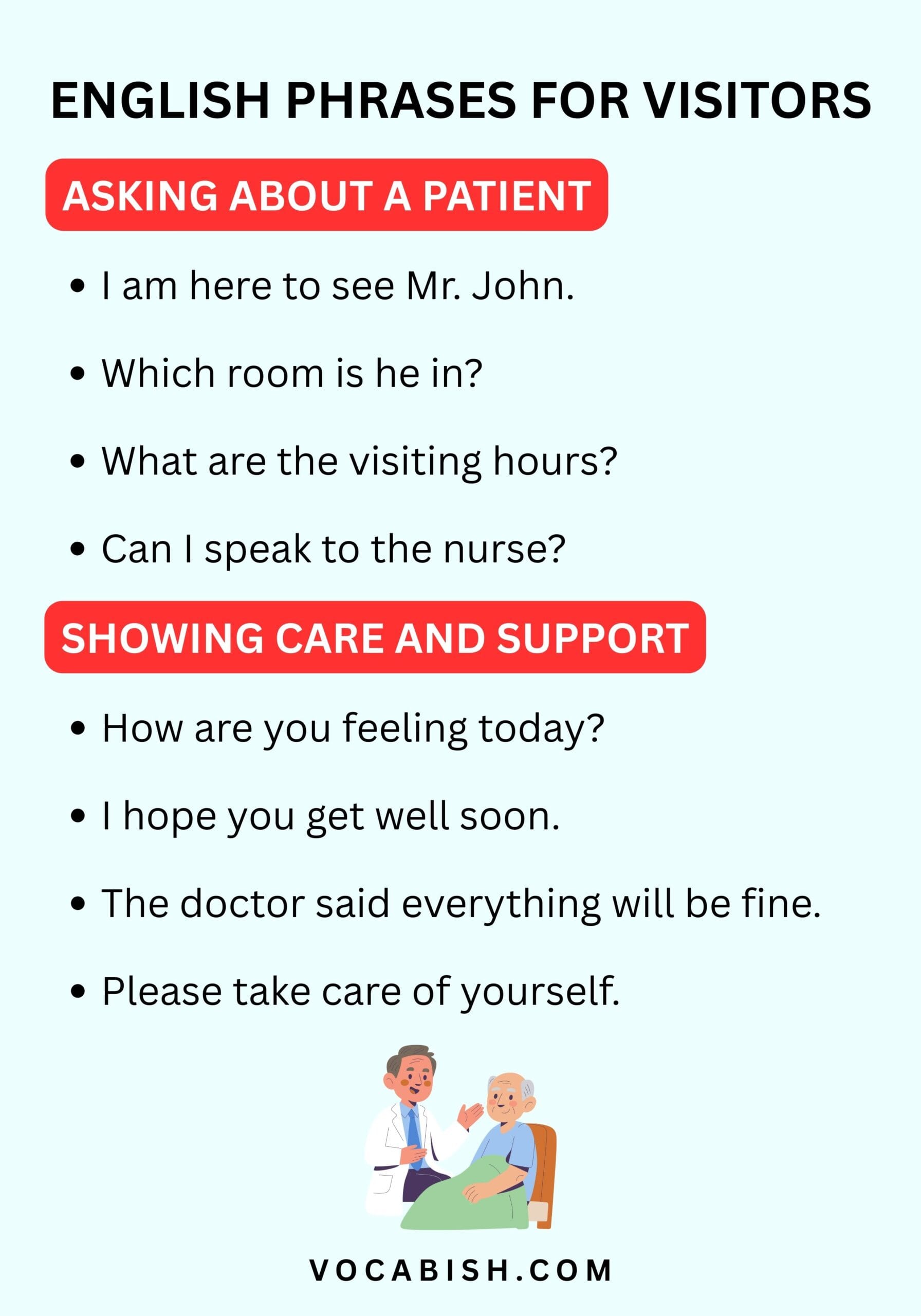
These phrases show politeness and kindness.
Emergency and Urgent Situations
In emergencies, use clear and simple sentences.
- “It’s an emergency.”
- “Please call a doctor immediately.”
- “He is not breathing.”
- “She fainted.”
- “We need help right now.”
- “Call an ambulance.”
In urgent situations, stay calm and speak clearly.
Talking About Pain and Symptoms
Describing pain correctly helps doctors understand your problem.
Describing Pain
- “I have sharp pain.”
- “It is a burning pain.”
- “The pain is mild.”
- “The pain is severe.”
- “It comes and goes.”
Talking About Symptoms
- “I feel dizzy.”
- “I feel weak.”
- “I have a cough.”
- “I have stomach pain.”
- “I feel nauseous.”
- “I have difficulty breathing.”
Use simple words. Point to the area if needed.
Understanding Hospital Instructions
It is important to understand medical advice.
Asking for Clarification
- “Could you repeat that, please?”
- “Can you explain it in simple words?”
- “How often should I take this medicine?”
- “Should I take it before or after food?”
- “How long will the treatment last?”
Never feel shy to ask questions. Clear understanding protects your health.
Polite and Respectful Expressions
Good manners are important in hospitals.
- “Thank you for your help.”
- “I appreciate your support.”
- “Excuse me.”
- “Please.”
- “I’m sorry for the trouble.”
Polite language builds positive communication.
Practice Tips
To improve your hospital English vocabulary:
- Practice speaking these phrases aloud.
- Create short role-play conversations.
- Listen to English medical dialogues online.
- Write small example sentences daily.
- Review new words every week.
Regular practice makes you confident and fluent.
Final Thoughts
Learning hospital English conversation phrases for patients and visitors is practical and important. These words and sentences help you communicate clearly in medical settings. They also improve your everyday English skills.
With regular practice, you will feel more confident when visiting a hospital, talking to doctors, or supporting loved ones. Clear communication can make a difficult situation easier and safer.
Read More