
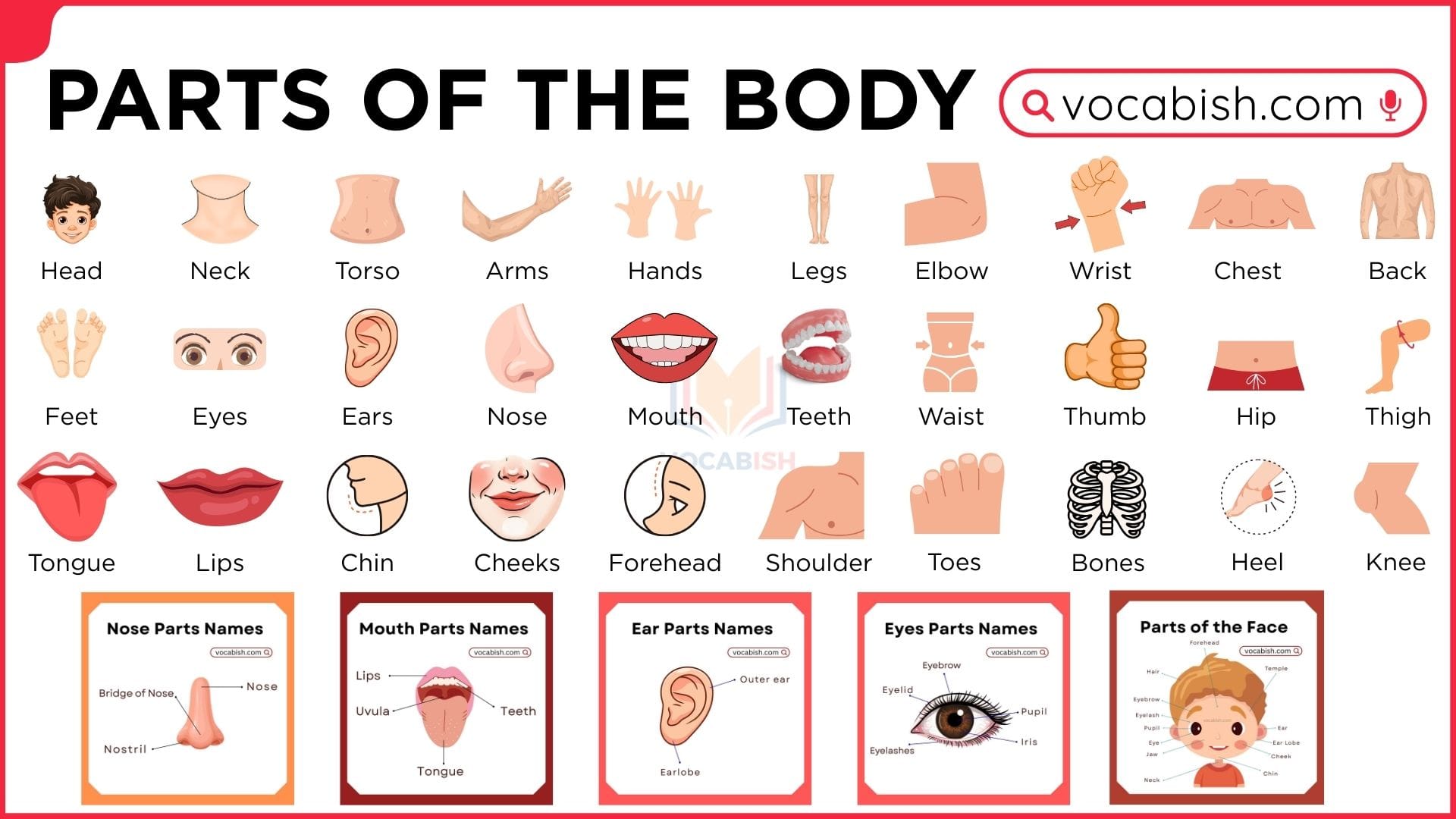
In this blog post, you will learn the Parts of the Human Body and their Names in English. Knowing these body parts helps students, learners, and health enthusiasts talk about the human body clearly and confidently. When you understand each part, your speaking becomes more accurate, your writing sounds precise, and your reading and listening skills improve as you recognize these terms in conversations, stories, and lessons. Step by step, you will master the vocabulary of the human body and describe it with confidence.
What Are the Parts of the Human Body?
The human body is made of many different parts that help us move, think, feel, see, hear, and live. Each part has a special job. In English, we use these words in daily talk, school, health, and work life.
Body parts are used in:
- Health and medical talk
- Sports and fitness
- Daily actions
- Feelings and expressions
Example:
I hurt my leg.
She closed her eyes.
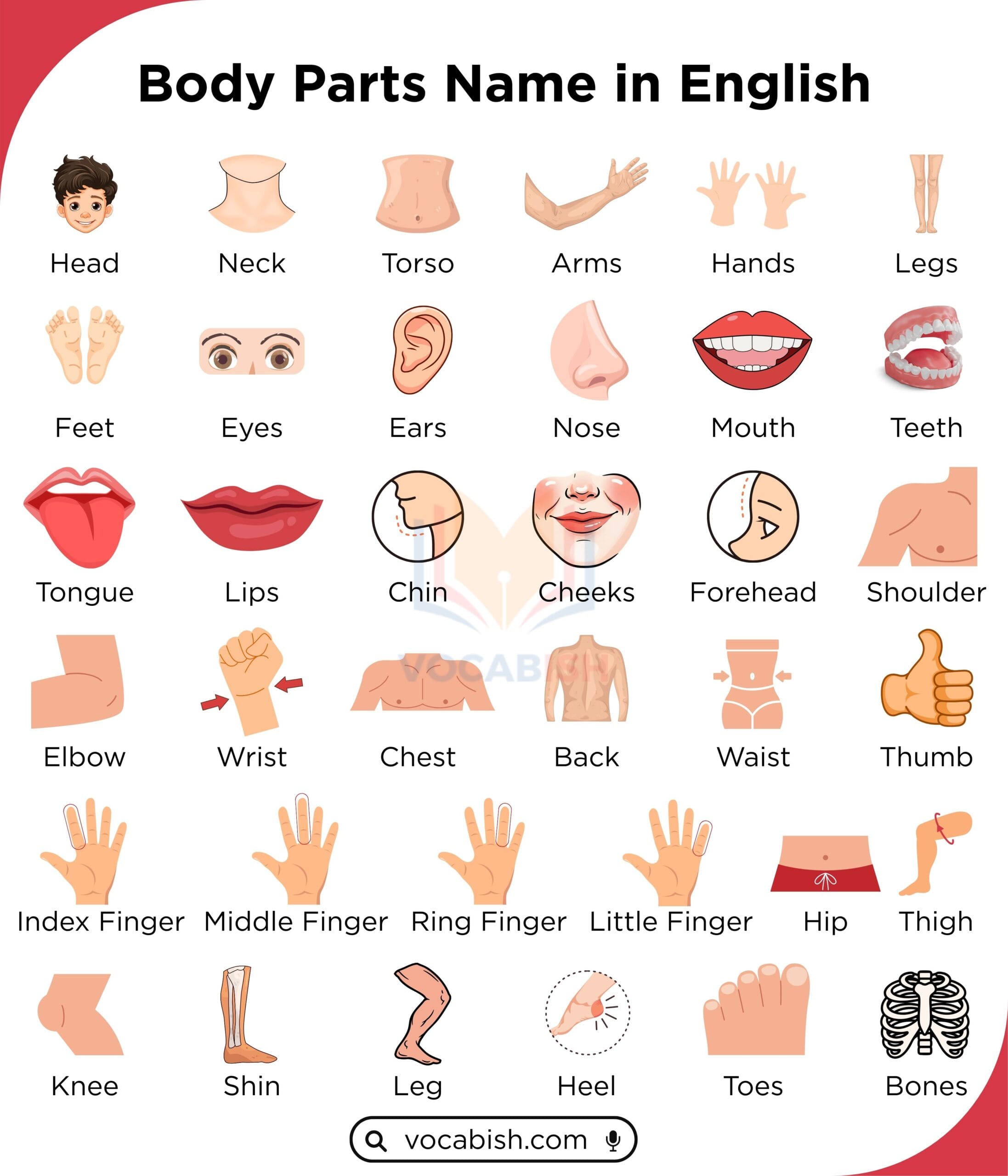
Main Parts of the Human Body
Head:
Top part of the body that contains the brain, eyes, ears, nose, and mouth for thinking and sensing.
Neck:
Connects the head to the body and helps move the head up, down, and side to side.
Torso:
Middle part of the body that holds important organs like the heart, lungs, and stomach.
Arms:
Long upper body parts used for lifting, carrying, pushing, pulling, and holding objects.
Hands:
End part of the arms used for touching, holding, writing, and doing daily work.
Legs:
Lower body parts used for walking, running, jumping, standing, and movement.
Feet:
Bottom of the legs that help us stand, balance, walk, and move safely.
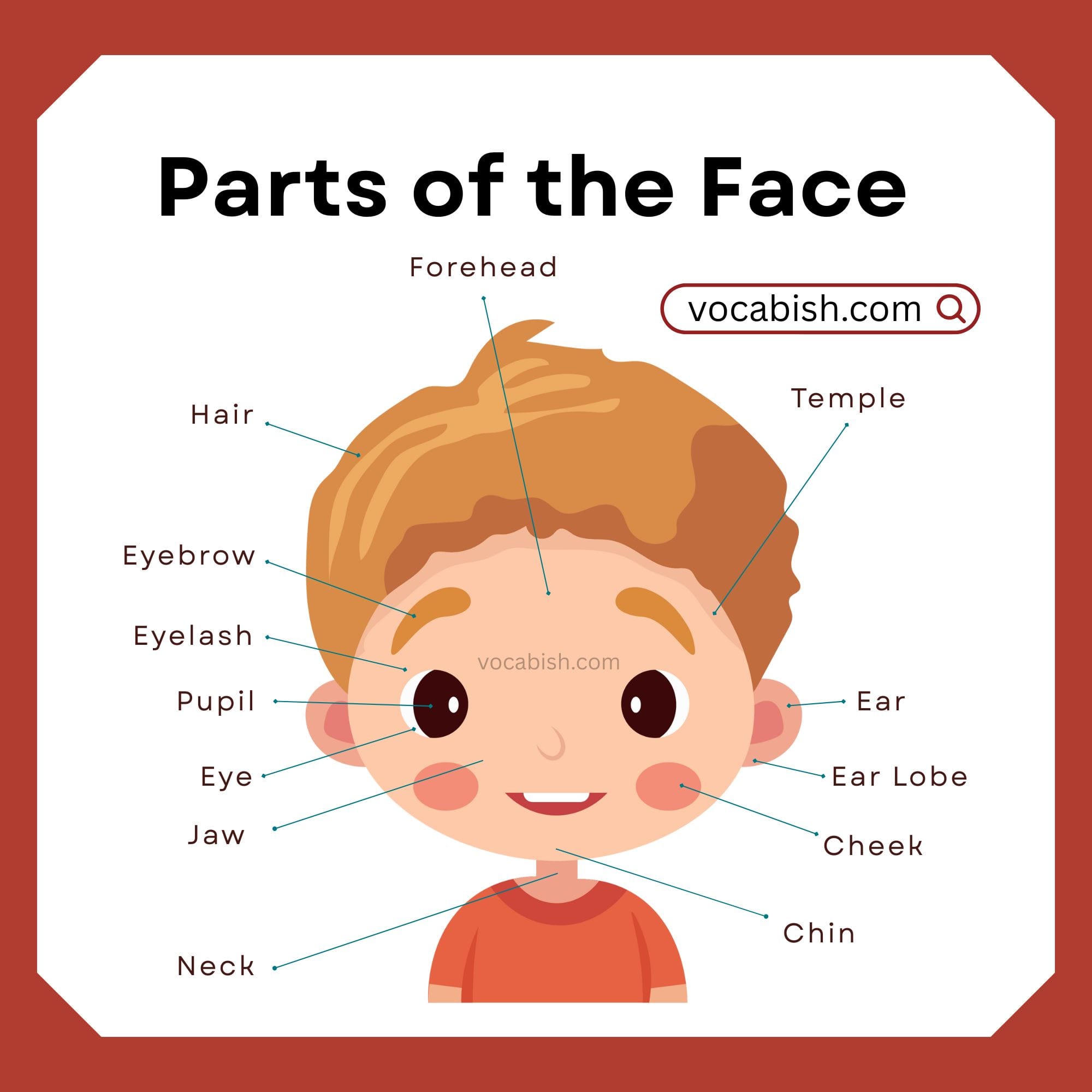
Face Parts Name in English
These parts help us see, hear, breathe, eat, and speak.
Eyes:
Help us see colours, shapes, people, objects, and everything around us.
Ears:
Help us hear sounds, voices, music, and also support body balance.
Nose:
Helps us breathe air and smell different things around us.
Mouth:
Used for eating food, drinking water, breathing, and speaking words.
Teeth:
Strong white parts inside the mouth used to bite and chew food.
Tongue:
Helps taste food, move food while chewing, and clearly pronounce words.
Lips:
Soft outer parts of the mouth used for speaking, smiling, and closing the mouth.
Chin:
Lower front part of the face just below the mouth that supports jaw movement.
Cheeks:
Soft side parts of the face that help in chewing and forming facial expressions.
Forehead:
Upper front part of the face above the eyes that shows expressions.
Upper Body Parts Name in English
These help in movement, lifting, and holding.
Shoulder:
Connects the arms to the body and helps move the arms in different directions.
Arm:
Upper limb of the body that helps in lifting, pushing, pulling, and holding things.
Elbow:
Middle joint of the arm that helps bend and straighten the arm.
Wrist:
Joint between the hand and arm that allows hand movement and rotation.
Hand:
Used for writing, holding, touching, opening, closing, and daily activities.
Chest:
Front upper body part that protects the heart and lungs.
Back:
Rear part of the body that supports posture and keeps the body upright.
Waist:
Middle narrow part of the body between chest and hips, helping bending movements.
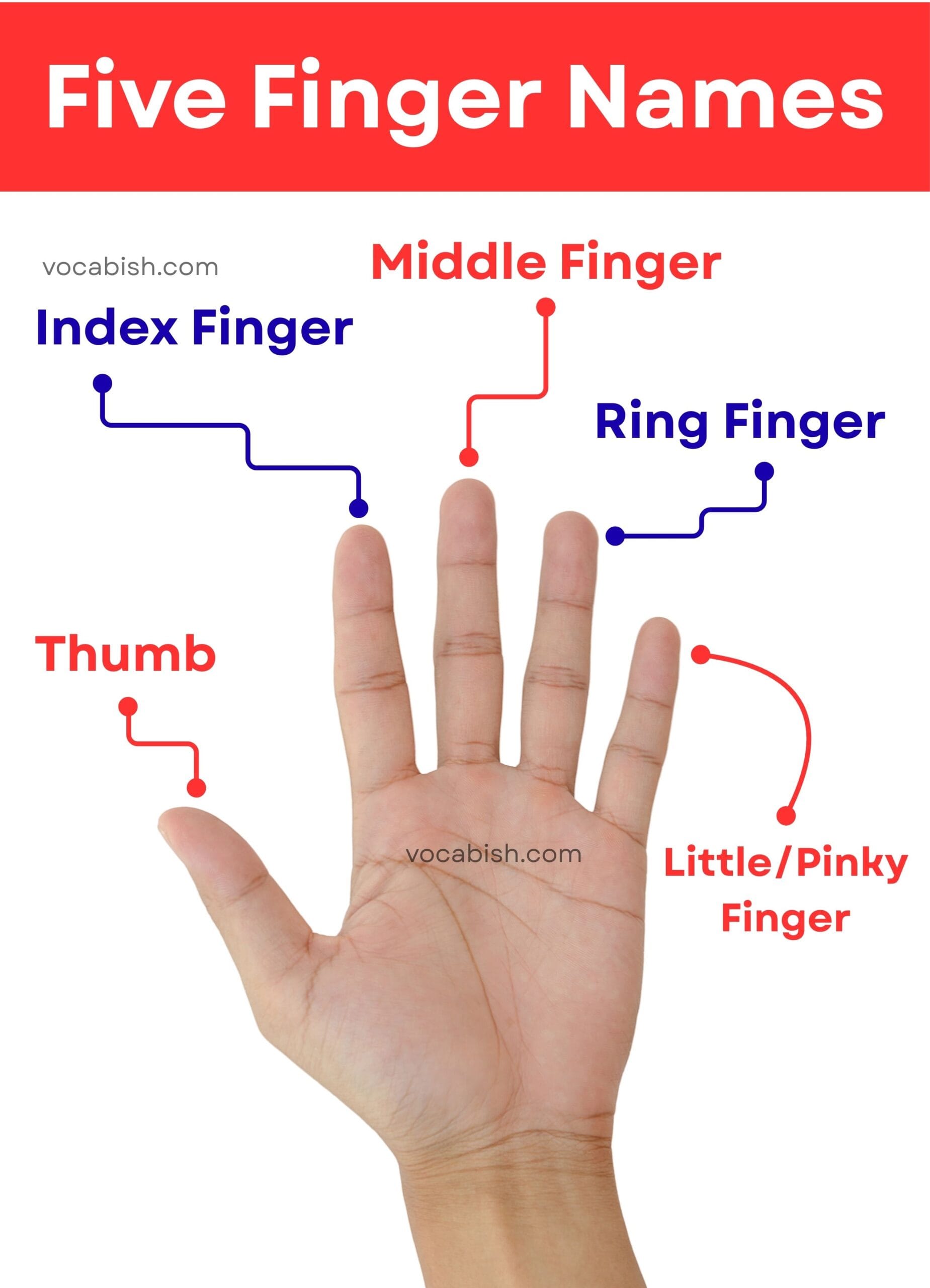
Fingers Name in English
Thumb:
Strong first finger that helps in gripping, holding, and doing most hand work.
Index Finger:
Used for pointing at objects, pressing buttons, and guiding actions.
Middle Finger:
Longest finger of the hand that supports grip and balance.
Ring Finger:
Finger next to the middle finger where rings are usually worn.
Little Finger:
Smallest finger that helps with balance and support while holding objects.
Lower Body Parts Name in English
These parts help us stand, walk, and run.
Hip:
Side part of the body that supports body weight and helps in walking and sitting.
Thigh:
Upper part of the leg between hip and knee that supports strong movement.
Knee:
Joint between thigh and lower leg that allows bending while walking or sitting.
Leg:
Lower limb of the body used for walking, running, standing, and jumping.
Shin:
Front hard part of the lower leg between the knee and ankle.
Ankle:
Joint between leg and foot that helps in walking and balancing.
Foot:
Lower end of the leg that supports standing, walking, and body balance.
Heel:
Back bottom part of the foot that touches the ground while walking.
Toes:
Small front parts of the foot that help in balance and forward movement.
Internal Body Parts Name in English
These parts are inside the body and keep us alive and healthy.
Brain:
Controls thinking, memory, emotions, learning, and all body actions.
Heart:
Pumps blood around the body to keep us alive and active.
Lungs:
Help us breathe by taking in oxygen and removing carbon dioxide.
Stomach:
Helps break down and digest food after eating.
Liver:
Cleans the blood and helps in digestion and energy storage.
Kidneys:
Remove waste and extra water from the blood to make urine.
Intestines:
Help absorb nutrients from digested food and remove waste.
Bladder:
Stores urine until it is passed out of the body.
Bones:
Give shape, strength, and support to the body structure.
Muscles:
Help the body move by contracting and relaxing.
Five Senses and Related Body Parts
Sight:
Allows us to see people, colours, objects, and movements using our eyes.
Hearing:
Helps us listen to sounds, voices, music, and noise using our ears.
Smell:
Lets us recognise different scents and odours using the nose.
Taste:
Helps us know sweet, sour, bitter, and salty flavours using the tongue.
Touch:
Allows us to feel hot, cold, soft, hard, and pain using the skin.
Parts of the Body for Kids
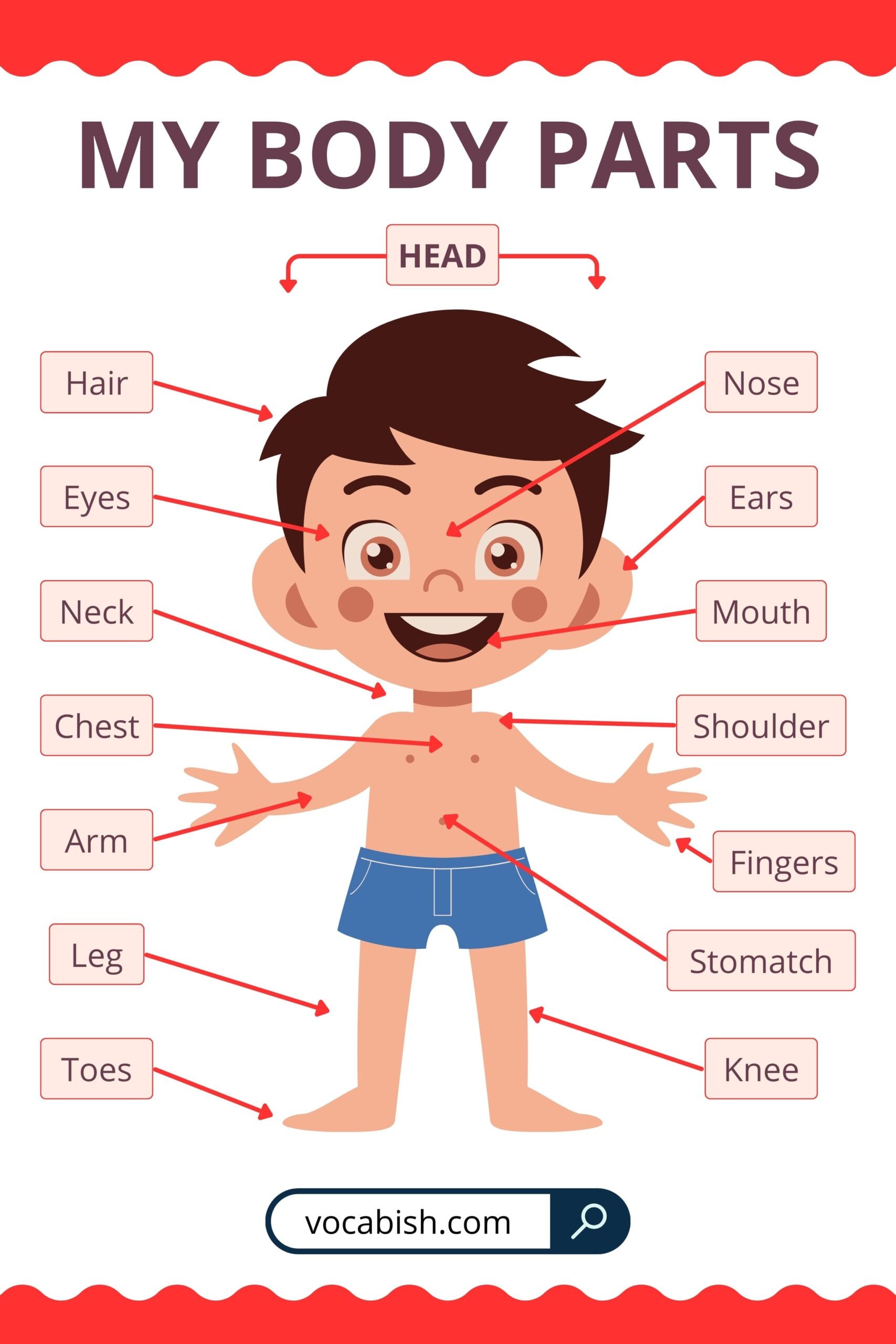
Here’s the list of important parts of the human body that kids can learn and remember easily.
Head
The top part of the body where the brain is.
Hair
Grows on the head and keeps it warm.
Forehead
The front upper part of the face.
Eyes
Help us to see.
Ears
Help us to hear sounds.
Nose
Helps us breathe and smell.
Mouth
Used for eating and talking.
Teeth
Help us chew food.
Tongue
Helps us taste food and talk.
Lips
Help us speak and smile.
Chin
The bottom part of the face.
Neck
Connects the head to the body.
Shoulders
Help move the arms.
Arms
Used to lift and carry things.
Elbow
Helps the arm to bend.
Hands
Used to hold and touch things.
Fingers
Small parts of the hand used for picking things.
Thumb
The strong first finger of the hand.
Chest
The front part of the upper body.
Back
The rear part of the body that supports us.
Stomach
Helps in digesting food inside the body.
Legs
Help us walk, run, and jump.
Knees
Help the legs bend.
Ankles
Join the leg and the foot.
Feet
Help us stand and walk.
Toes
Small parts of the feet for balance.
Skin
Covers the whole body and protects it.
Heart
Pumps blood inside the body.
Brain
Helps us think and learn.
Why Learning Body Parts Is Important
Learning body parts name in English helps you:
- Speak about health problems
- Describe injuries
- Talk about daily actions
- Improve vocabulary and confidence
The parts of the human body are the words we use to talk about our health, actions, and feelings. In this guide, you learned:
- External body parts
- Internal body organs
- Face parts
- Hands and fingers
- Leg and foot parts
- Five senses
These words are basic but very powerful in daily English learning.
FAQs
What are the main parts of the human body?
The main parts of the human body are the head, neck, torso, arms, hands, legs, and feet.
What are the common face parts name in English?
Common face parts include eyes, ears, nose, mouth, teeth, tongue, lips, cheeks, chin, and forehead.
What are the upper body parts name in English?
Upper body parts include shoulders, arms, elbows, wrists, hands, chest, back, and waist.
What are the five fingers name in English?
The five fingers are called thumb, index finger, middle finger, ring finger, and little finger.
What are the lower body parts name in English?
Lower body parts include hips, thighs, knees, legs, shins, ankles, feet, heels, and toes.
What are the main internal body parts in English?
The main internal body parts are brain, heart, lungs, stomach, liver, kidneys, intestines, bones, and muscles.
What are the five senses and their body parts?
The five senses are sight (eyes), hearing (ears), smell (nose), taste (tongue), and touch (skin).
What is the French word for head and hand?
In French, head is called tête and hand is called main.
What is the Spanish word for eyes and heart?
In Spanish, eyes are called ojos and heart is called corazón.
Read More