
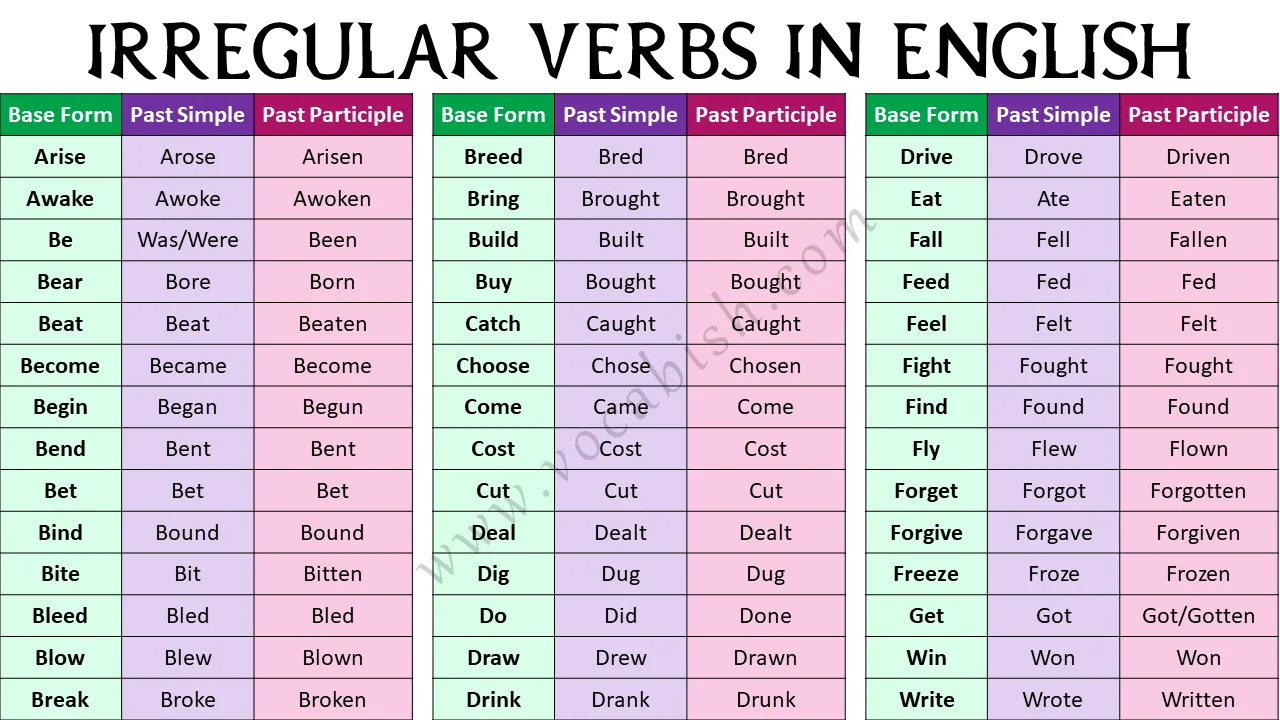
In this blog post, you will learn a list of unique irregular verbs in English with examples. Irregular verbs are special because they do not follow the usual “-ed” rule in the past tense. Knowing them is very important for English learners. When you master these verbs, you can speak more naturally, read with confidence, write correctly, and understand spoken English better. Learning irregular verbs helps you use English in real conversations and everyday situations. Keep reading to understand these verbs and use them with ease in your own sentences.
What are Irregular Verbs?
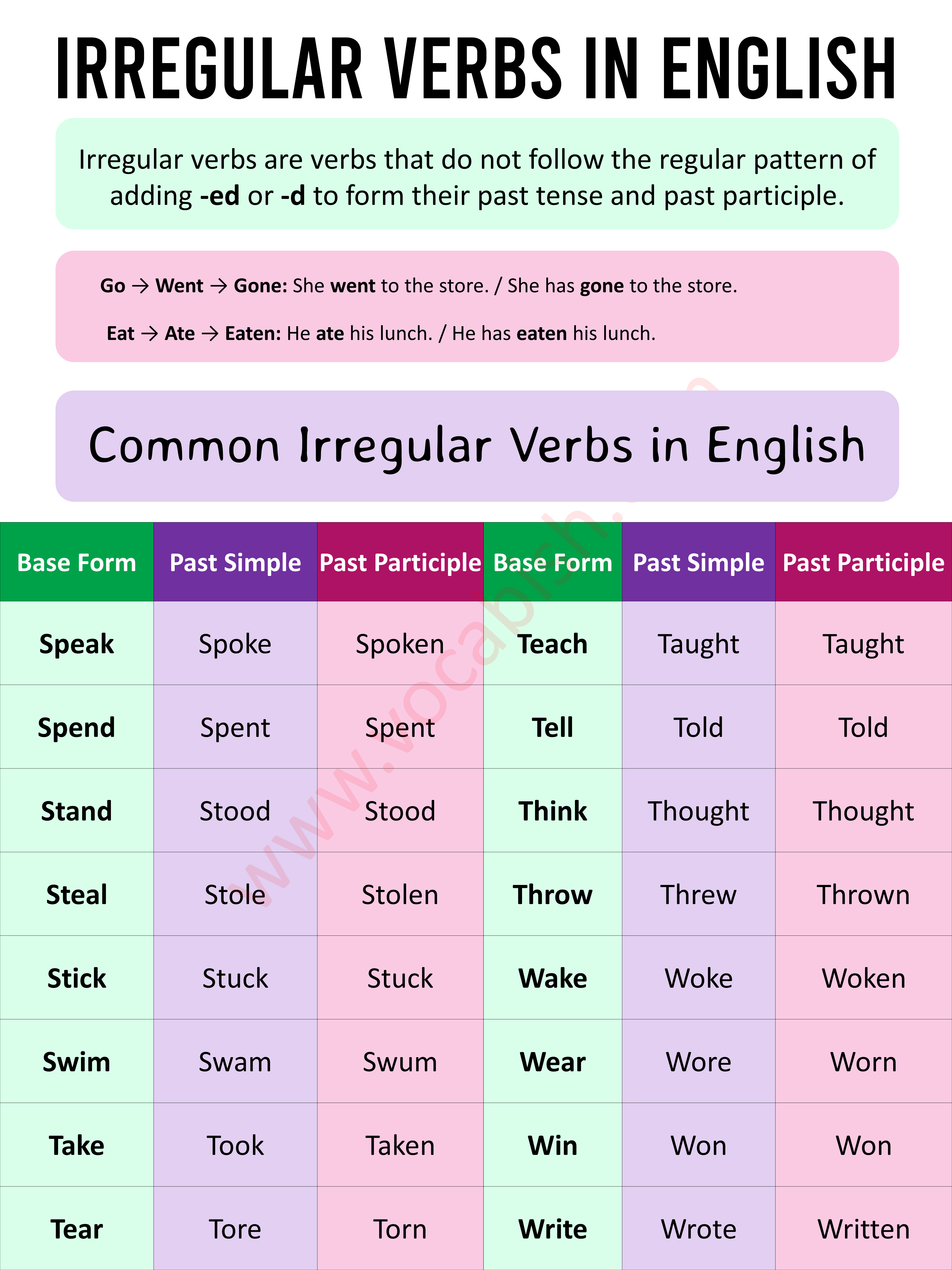
Irregular verbs are verbs that do not follow the regular pattern of adding -ed or -d to form their past tense and past participle. Instead, they change in various ways, making them essential to learn for proper grammar usage.
Examples:
Go → Went → Gone
- She went to the store.
- She has gone to the store.
Eat → Ate → Eaten
- He ate his lunch.
- He has eaten his lunch.
Write → Wrote → Written
- They wrote a letter.
- They have written a letter.
Types of Irregular Verbs
Completely Irregular Verbs:
These verbs change entirely in their past forms.
Be → Was/Were → Been
- I was at the party.
- I have been to Paris.
Go → Went → Gone
- They went to the concert.
- They have gone home.
Verbs with the Same Base and Past Participle:
The past simple changes, but the past participle remains the same as the base form.
Come → Came → Come
- She came early.
- She has come before.
Run → Ran → Run
- He ran fast.
- He has run in many races.
Verbs with the Same Past and Past Participle:
The base form changes, but the past and past participle are identical.
Buy → Bought → Bought
- She bought a new book.
- She has bought all the books in the series.
Build → Built → Built
- They built a sandcastle.
- They have built many houses.
Verbs That Stay the Same:
These verbs do not change in any form.
Cut → Cut → Cut
- He cut the paper.
- He has cut the paper.
Put → Put → Put
- She put the keys on the table.
- She has put the keys on the table.
List of Common Irregular Verbs
| Base Form | Past Simple | Past Participle |
|---|---|---|
| Go | Went | Gone |
| Be | Was/Were | Been |
| Get | Got | Got/Gotten |
| Say | Said | Said |
| See | Saw | Seen |
| Think | Thought | Thought |
| Make | Made | Made |
| Take | Took | Taken |
| Come | Came | Come |
| Know | Knew | Known |
Irregular Verbs Examples in English
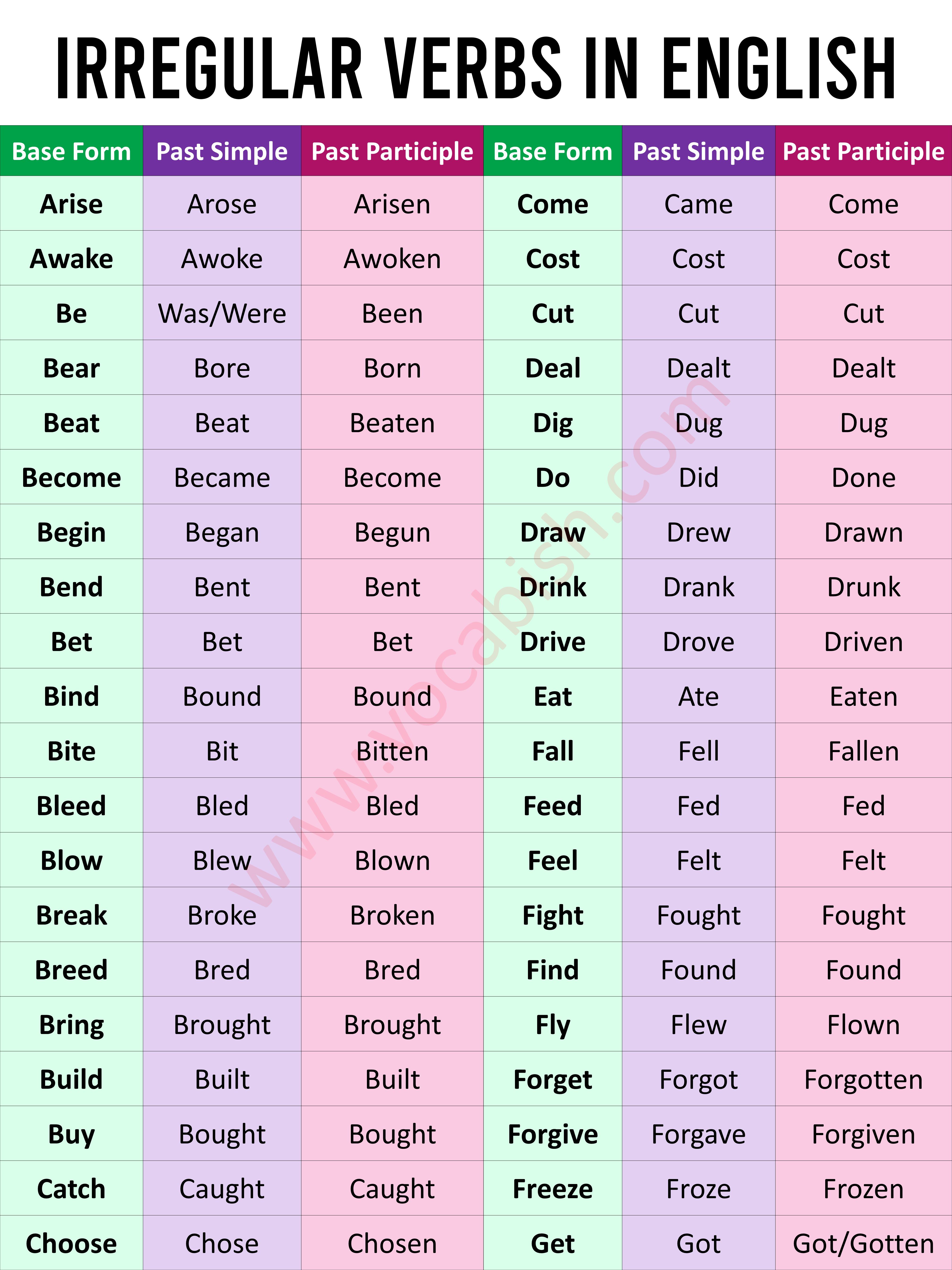
Here’s the list of unique irregular verbs in English:
| Base Form | Past Simple | Past Participle |
|---|---|---|
| Arise | Arose | Arisen |
| Awake | Awoke | Awoken |
| Be | Was/Were | Been |
| Bear | Bore | Born |
| Beat | Beat | Beaten |
| Become | Became | Become |
| Begin | Began | Begun |
| Bend | Bent | Bent |
| Bet | Bet | Bet |
| Bind | Bound | Bound |
| Bite | Bit | Bitten |
| Bleed | Bled | Bled |
| Blow | Blew | Blown |
| Break | Broke | Broken |
| Breed | Bred | Bred |
| Bring | Brought | Brought |
| Build | Built | Built |
| Buy | Bought | Bought |
| Catch | Caught | Caught |
| Choose | Chose | Chosen |
| Come | Came | Come |
| Cost | Cost | Cost |
| Cut | Cut | Cut |
| Deal | Dealt | Dealt |
| Dig | Dug | Dug |
| Do | Did | Done |
| Draw | Drew | Drawn |
| Drink | Drank | Drunk |
| Drive | Drove | Driven |
| Eat | Ate | Eaten |
| Fall | Fell | Fallen |
| Feed | Fed | Fed |
| Feel | Felt | Felt |
| Fight | Fought | Fought |
| Find | Found | Found |
| Fly | Flew | Flown |
| Forget | Forgot | Forgotten |
| Forgive | Forgave | Forgiven |
| Freeze | Froze | Frozen |
| Get | Got | Got/Gotten |
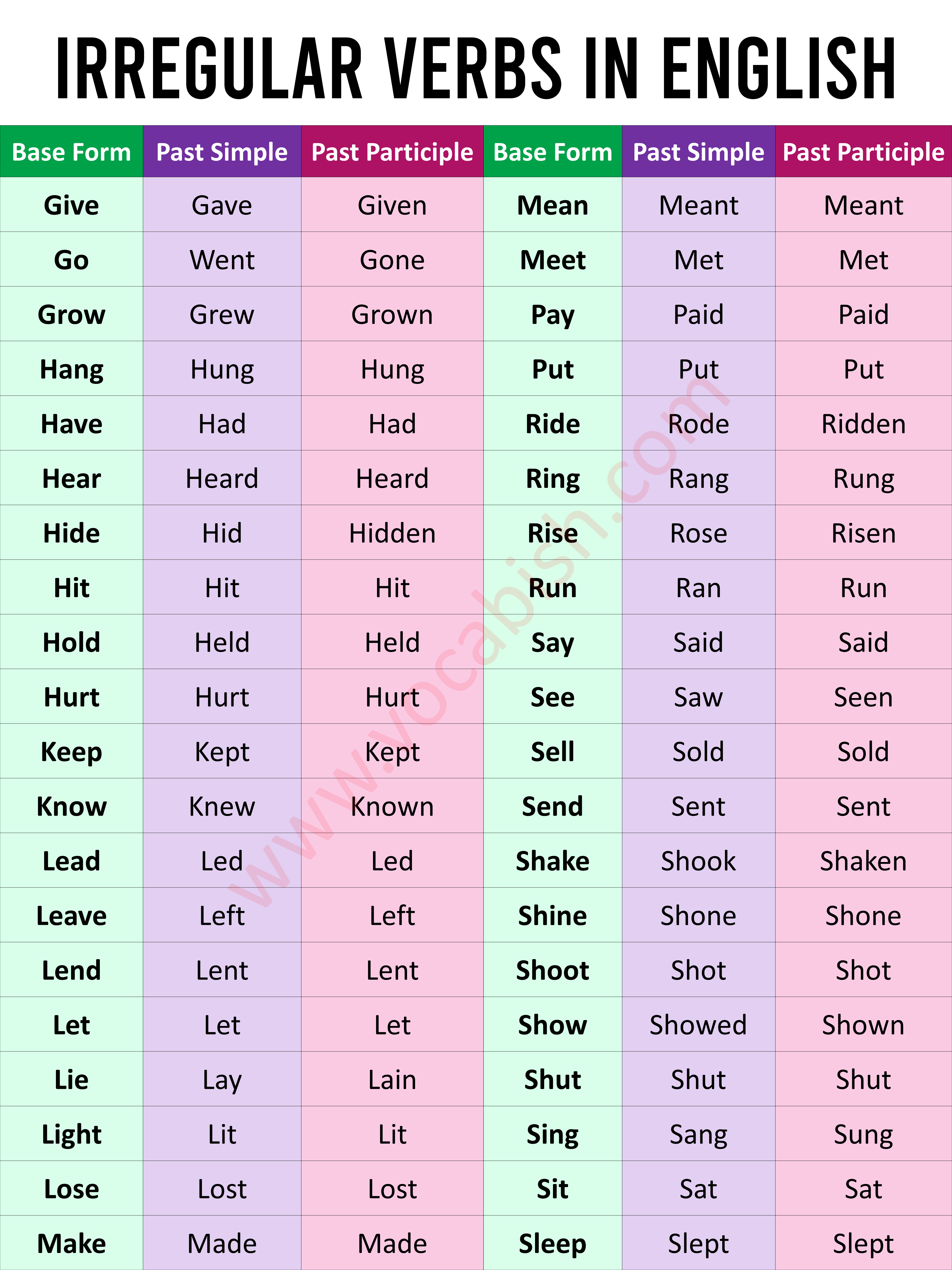
Irregular Verb List with PDF
| Base Form | Past Simple | Past Participle |
|---|---|---|
| Give | Gave | Given |
| Go | Went | Gone |
| Grow | Grew | Grown |
| Hang | Hung | Hung |
| Have | Had | Had |
| Hear | Heard | Heard |
| Hide | Hid | Hidden |
| Hit | Hit | Hit |
| Hold | Held | Held |
| Hurt | Hurt | Hurt |
| Keep | Kept | Kept |
| Know | Knew | Known |
| Lead | Led | Led |
| Leave | Left | Left |
| Lend | Lent | Lent |
| Let | Let | Let |
| Lie | Lay | Lain |
| Light | Lit | Lit |
| Lose | Lost | Lost |
| Make | Made | Made |
| Mean | Meant | Meant |
| Meet | Met | Met |
| Pay | Paid | Paid |
| Put | Put | Put |
| Read | Read (pronounced “red”) | Read (pronounced “red”) |
| Ride | Rode | Ridden |
| Ring | Rang | Rung |
| Rise | Rose | Risen |
| Run | Ran | Run |
| Say | Said | Said |
| See | Saw | Seen |
| Sell | Sold | Sold |
| Send | Sent | Sent |
| Shake | Shook | Shaken |
| Shine | Shone | Shone |
| Shoot | Shot | Shot |
| Show | Showed | Shown |
| Shut | Shut | Shut |
| Sing | Sang | Sung |
| Sit | Sat | Sat |
| Sleep | Slept | Slept |
| Speak | Spoke | Spoken |
| Spend | Spent | Spent |
| Stand | Stood | Stood |
| Steal | Stole | Stolen |
| Stick | Stuck | Stuck |
| Swim | Swam | Swum |
| Take | Took | Taken |
| Teach | Taught | Taught |
| Tear | Tore | Torn |
| Tell | Told | Told |
| Think | Thought | Thought |
| Throw | Threw | Thrown |
| Understand | Understood | Understood |
| Wake | Woke | Woken |
| Wear | Wore | Worn |
| Win | Won | Won |
| Write | Wrote | Written |
Examples of Irregular Verbs in Sentences
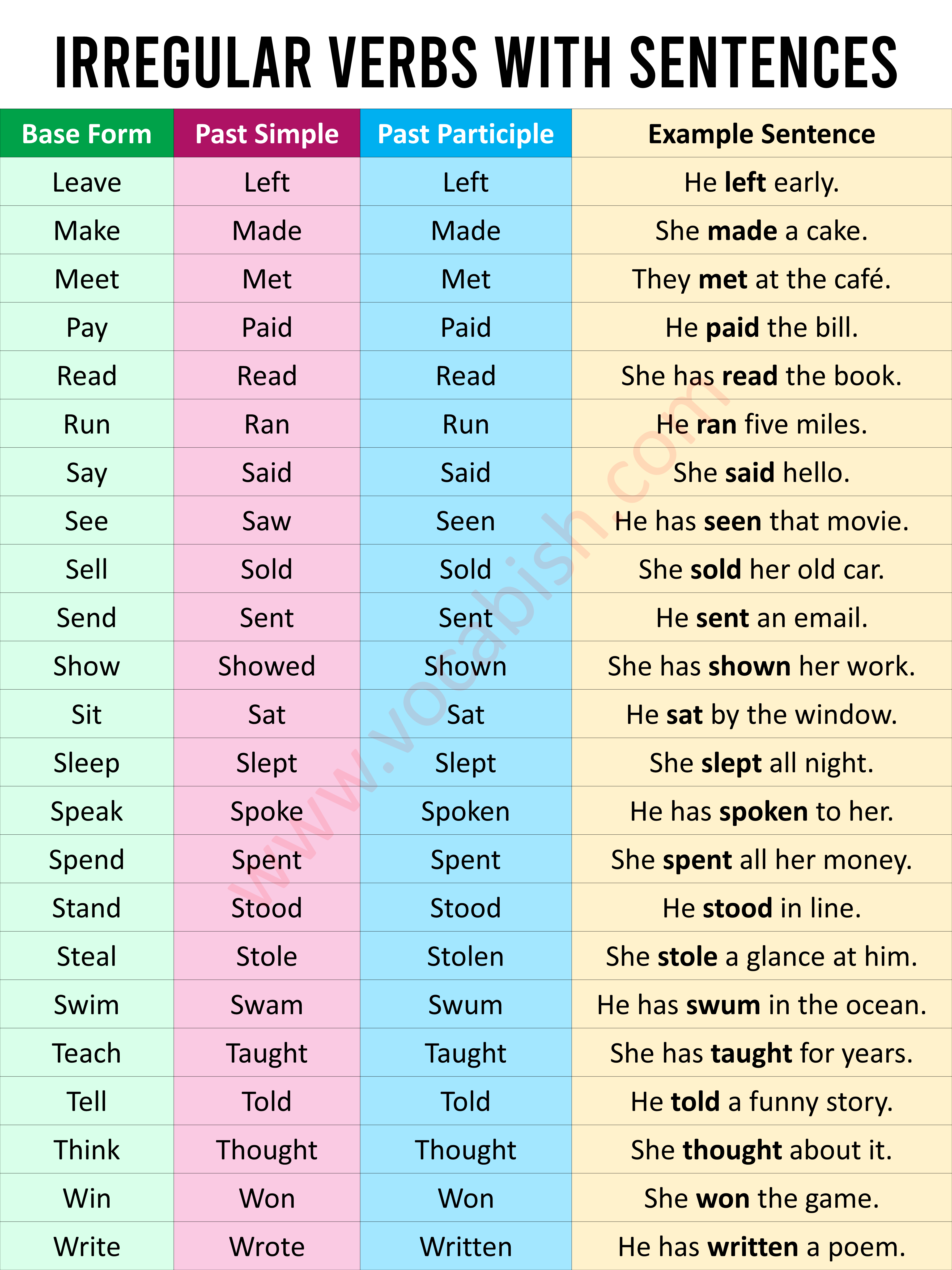
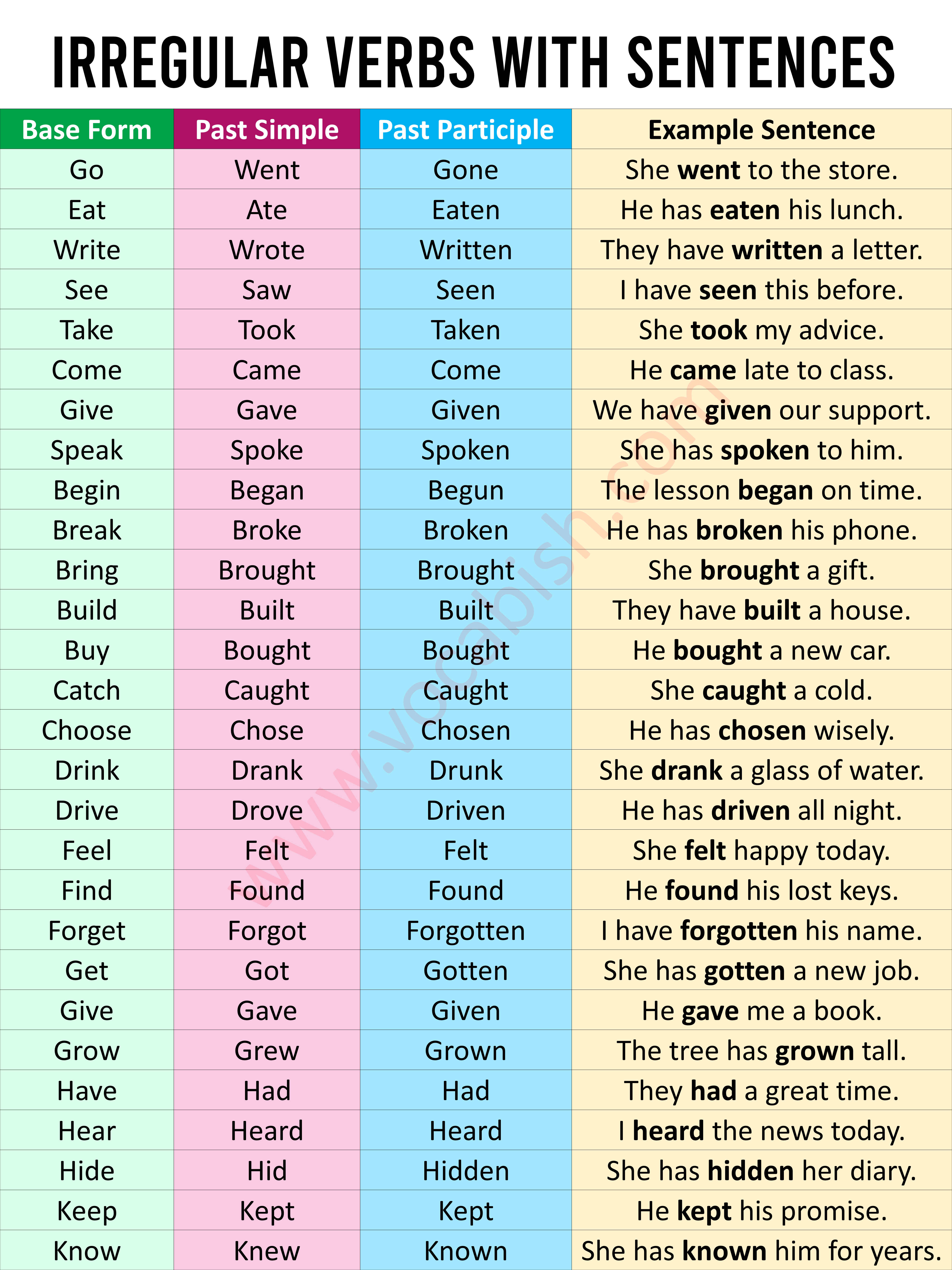
| Base Form | Past Simple | Past Participle | Example Sentence |
|---|---|---|---|
| Go | Went | Gone | She went to the store. |
| Eat | Ate | Eaten | He has eaten his lunch. |
| Write | Wrote | Written | They have written a letter. |
| See | Saw | Seen | I have seen this before. |
| Take | Took | Taken | She took my advice. |
| Come | Came | Come | He came late to class. |
| Give | Gave | Given | We have given our support. |
| Speak | Spoke | Spoken | She has spoken to him. |
| Begin | Began | Begun | The lesson began on time. |
| Break | Broke | Broken | He has broken his phone. |
| Bring | Brought | Brought | She brought a gift. |
| Build | Built | Built | They have built a house. |
| Buy | Bought | Bought | He bought a new car. |
| Catch | Caught | Caught | She caught a cold. |
| Choose | Chose | Chosen | He has chosen wisely. |
| Drink | Drank | Drunk | She drank a glass of water. |
| Drive | Drove | Driven | He has driven all night. |
| Feel | Felt | Felt | She felt happy today. |
| Find | Found | Found | He found his lost keys. |
| Forget | Forgot | Forgotten | I have forgotten his name. |
| Get | Got | Gotten | She has gotten a new job. |
| Give | Gave | Given | He gave me a book. |
| Grow | Grew | Grown | The tree has grown tall. |
| Have | Had | Had | They had a great time. |
| Hear | Heard | Heard | I heard the news today. |
| Hide | Hid | Hidden | She has hidden her diary. |
| Keep | Kept | Kept | He kept his promise. |
| Know | Knew | Known | She has known him for years. |
| Leave | Left | Left | He left early. |
| Make | Made | Made | She made a cake. |
| Meet | Met | Met | They met at the café. |
| Pay | Paid | Paid | He paid the bill. |
| Read | Read | Read | She has read the book. |
| Run | Ran | Run | He ran five miles. |
| Say | Said | Said | She said hello. |
| See | Saw | Seen | He has seen that movie. |
| Sell | Sold | Sold | She sold her old car. |
| Send | Sent | Sent | He sent an email. |
| Show | Showed | Shown | She has shown her work. |
| Sit | Sat | Sat | He sat by the window. |
| Sleep | Slept | Slept | She slept all night. |
| Speak | Spoke | Spoken | He has spoken to her. |
| Spend | Spent | Spent | She spent all her money. |
| Stand | Stood | Stood | He stood in line. |
| Steal | Stole | Stolen | She stole a glance at him. |
| Swim | Swam | Swum | He has swum in the ocean. |
| Teach | Taught | Taught | She has taught for years. |
| Tell | Told | Told | He told a funny story. |
| Think | Thought | Thought | She thought about it. |
| Understand | Understood | Understood | He has understood the lesson. |
| Win | Won | Won | She won the game. |
| Write | Wrote | Written | He has written a poem. |
Read More
Frequently Asked Questions
What is an irregular verb and examples?
An irregular verb is a verb that does not follow the normal -ed pattern in past tense. Examples include go → went, eat → ate, and write → wrote.
What are 20 irregular verbs?
Twenty common irregular verbs are: be, become, begin, break, bring, buy, catch, choose, come, do, drink, drive, eat, fall, feel, find, get, give, go, have.
How do you use irregular verbs in sentences?
Irregular verbs are used in past or past participle forms. For example: I ate breakfast or She has written a letter.
What is the difference between regular and irregular verbs?
Regular verbs add -ed for past tense, like talk → talked, while irregular verbs change form, like see → saw.