
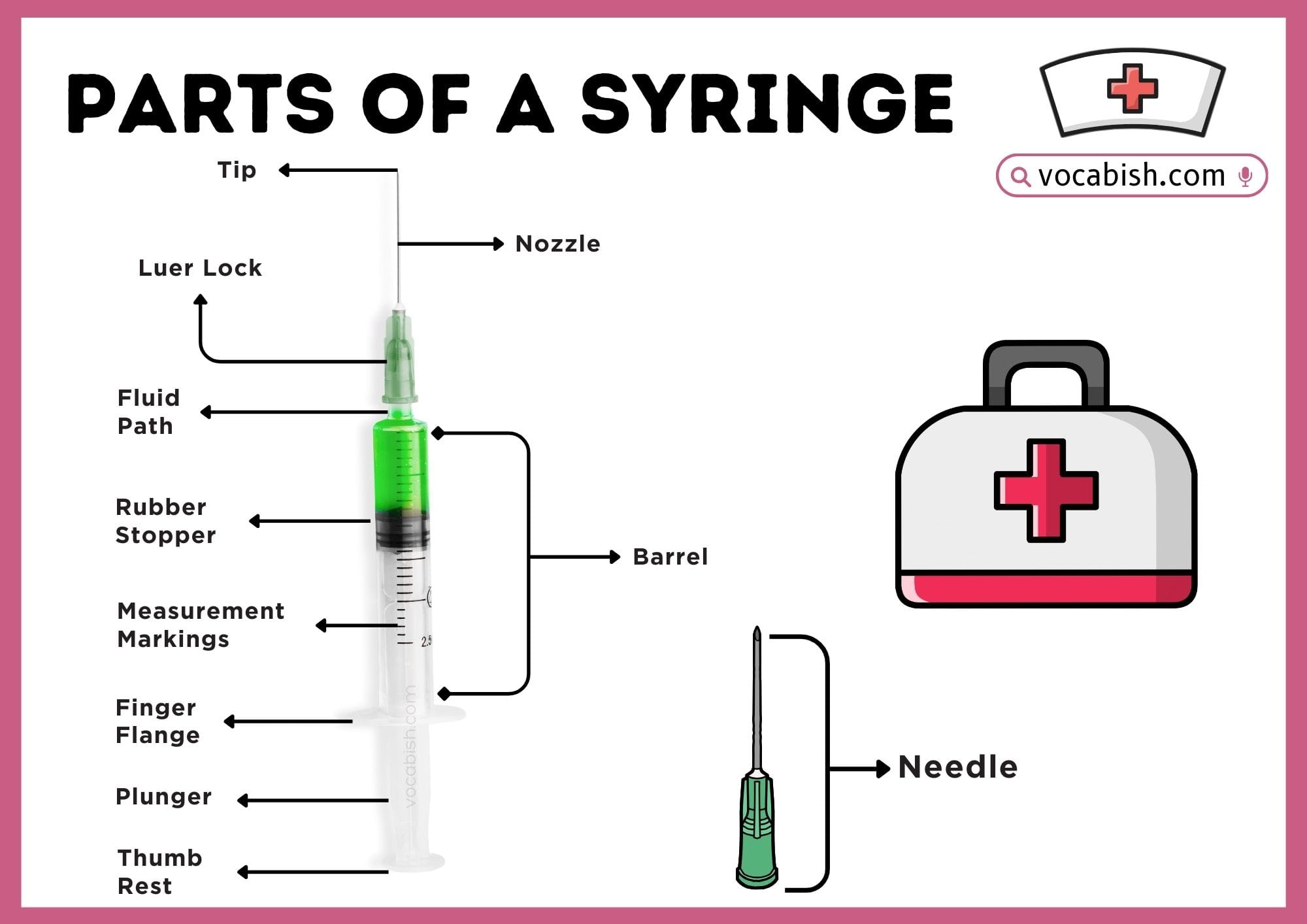
In this blog post, you will learn the different Parts of a Syringe, their Functions, and how they work together to safely inject or withdraw fluids. Understanding these parts helps you use a syringe correctly in medical, laboratory, or daily health settings. When you know how each part works, your practical skills improve and your understanding of injections and fluid measurement becomes stronger. You also improve your reading and comprehension because you can follow instructions, medical guides, and lab procedures confidently. Step by step, you will master the syringe and its use safely and accurately.
What is a Syringe?
A syringe is a medical device used to push liquids into the body or pull liquids out. It works by creating pressure and suction when the plunger moves inside the barrel. Syringes are used for injections, liquid medicines, and medical measurements.
Main Parts of a Syringe
1. Barrel
The barrel is the long, clear tube of the syringe.
Function:
- Holds the liquid or medicine
- Shows measurement markings for accurate dosing
2. Plunger
The plunger is the rod that moves inside the barrel.
Function:
- Pulls liquid into the syringe
- Pushes liquid out during use
3. Rubber Stopper
The rubber stopper is attached to the end of the plunger.
Function:
- Creates a tight seal
- Prevents liquid from leaking
4. Tip
The tip is the narrow front end of the barrel.
Function:
- Connects the syringe to a needle or tube
5. Nozzle
The nozzle is the small opening at the tip.
Function:
- Allows liquid to pass from the barrel to the needle
6. Needle
The needle is a thin, sharp metal tube attached to some syringes.
Function:
- Delivers medicine into the body
- Draws fluids such as blood
Additional Syringe Parts and Features
Measurement Markings
Printed lines on the barrel showing liquid volume.
Finger Flange
Flat edges near the barrel end.
Function: Helps hold the syringe steady.
Luer Lock or Slip Tip
Connection types that secure the needle safely.
Needle Cap
A protective cover placed over the needle.
Function: Prevents injury and keeps the needle clean.
Parts of a Syringe and Their Functions
| Part | Function |
|---|---|
| Barrel | Holds liquid and shows measurements |
| Plunger | Draws in and pushes out liquid |
| Rubber Stopper | Seals liquid inside |
| Tip | Connects to needle |
| Nozzle | Allows liquid flow |
| Needle | Delivers or removes fluid |
| Finger Flange | Provides grip |
| Needle Cap | Protects the needle |
How Each Part Works Together
- The plunger moves inside the barrel to control liquid flow.
- The rubber stopper prevents leakage.
- The tip and nozzle guide liquid to the needle.
- The needle delivers medicine accurately.
Each part plays a role in safe and precise use.
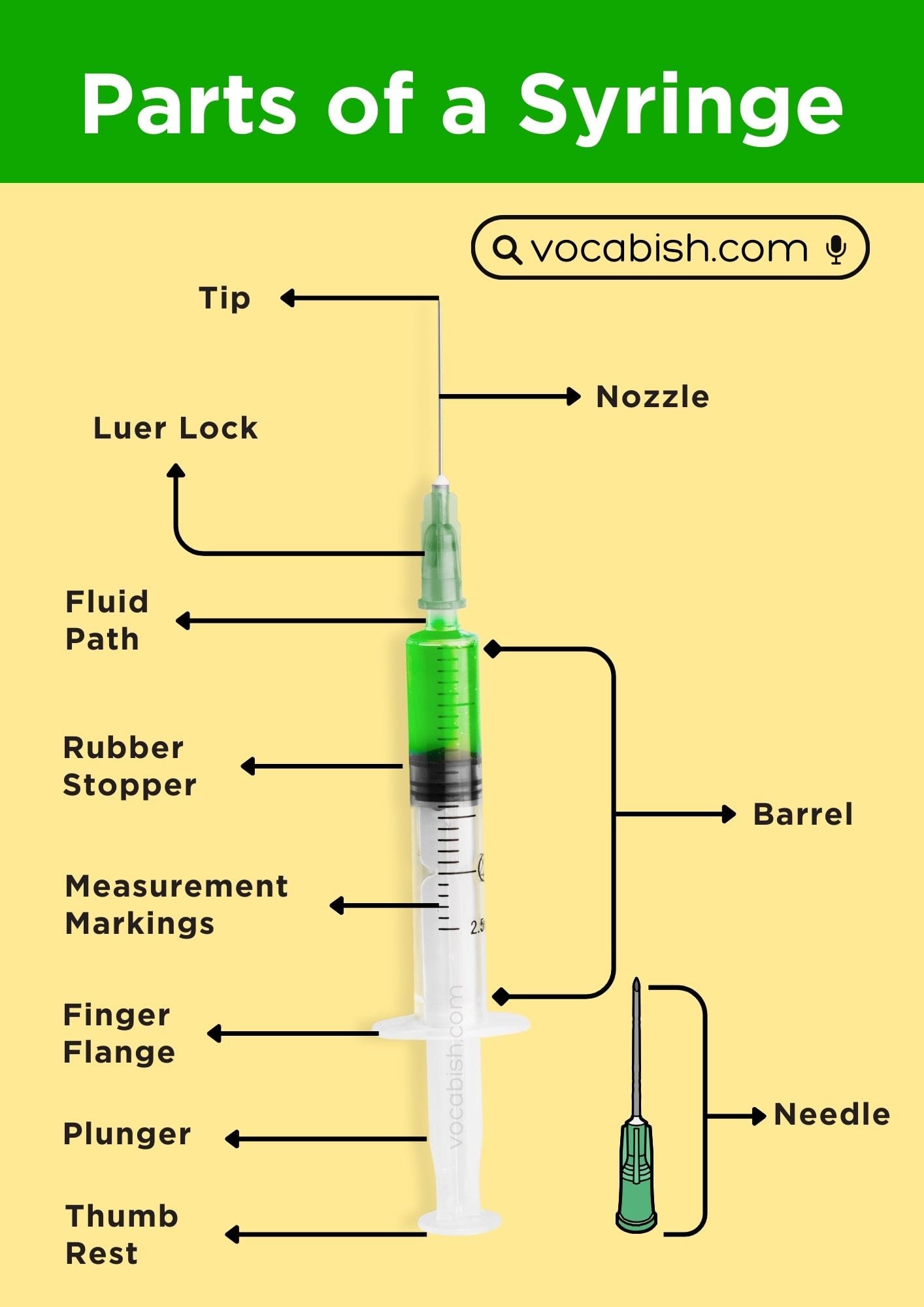
Parts of a Syringe Diagram
FAQs
What are the main parts of a syringe?
The main parts are the barrel, plunger, rubber stopper, tip, nozzle, and needle.
What does the barrel of a syringe do?
It holds the liquid and shows measurement markings.
Why is the plunger important in a syringe?
It controls how liquid enters and leaves the syringe.
What is the rubber stopper used for?
It creates a seal to stop liquid from leaking.
What is the syringe tip?
It is the front end that connects to the needle.
What is the function of the nozzle?
It allows liquid to flow from the barrel to the needle.
Why does a syringe have measurement markings?
They help give the correct amount of medicine.
What is a needle cap used for?
It covers the needle to prevent injury and contamination.
Are all syringes used with needles?
No, some syringes are used without needles for liquids.
Why is understanding syringe parts important?
It helps ensure safe, accurate, and proper use.
Read More