

In this blog post, you will learn useful Positive Adjectives to describe a Leader in English with meaning and examples. These words help you talk about people in power in a respectful and accurate way. When you understand how to use them, your speaking becomes more confident and your writing sounds more professional. You also improve your reading and listening because you recognize these qualities in stories, speeches, and conversations. Step by step, you will master the language of leadership and express ideas more clearly.
What Are Positive Adjectives for Leaders?
Positive adjectives are words that show good qualities. When describing a leader, they highlight strengths, abilities, and character. For example, words like honest, brave, and inspiring make someone sound trustworthy and strong.
Leaders can be described in many contexts:
- Workplace: efficient, decisive, motivating
- Social settings: friendly, approachable, fair
- Problem-solving situations: creative, strategic, brave
Why Using Positive Adjectives is Important
Using positive adjectives helps in:
- Showing respect and appreciation
- Encouraging teamwork and collaboration
- Highlighting strengths in reports, CVs, or evaluations
- Making communication more clear and engaging
Types of Positive Adjectives for Leaders
Personality Traits
| Trait | Meaning |
|---|---|
| Honest | Always truthful and trustworthy |
| Brave | Faces challenges without fear |
| Confident | Believes in own abilities |
| Friendly | Easy to approach and kind |
| Fair | Treats everyone equally |
| Calm | Handles pressure quietly |
| Humble | Not proud, open to learning |
Leadership Skills
| Skill | Meaning |
|---|---|
| Inspiring | Motivates others to do their best |
| Decisive | Makes clear and firm decisions |
| Strategic | Plans carefully for success |
| Visionary | Sees the bigger picture clearly |
| Motivating | Encourages others to act |
| Organised | Keeps tasks and team structured |
Work Ethic and Approach
| Work Ethic | Meaning |
|---|---|
| Responsible | Takes duty seriously |
| Dedicated | Committed to work fully |
| Reliable | Can be trusted to deliver |
| Hardworking | Puts effort into tasks |
| Efficient | Works in a smart, fast way |
| Focused | Concentrates on important tasks |
Social and Emotional Qualities
| Quality | Meaning |
|---|---|
| Empathetic | Understands others’ feelings |
| Supportive | Helps team members succeed |
| Patient | Waits calmly without anger |
| Adaptable | Adjusts easily to change |
| Communicative | Shares ideas clearly |
| Respectful | Treats everyone with respect |
How to Use These Adjectives in Sentences
Here are examples to help learners use these words correctly:
- She is a dedicated leader who inspires her team every day.
- A confident leader can face challenges calmly.
- Being empathetic helps a leader understand team members’ problems.
- He is a strategic thinker and always plans ahead.
- An honest leader earns trust from everyone in the office.
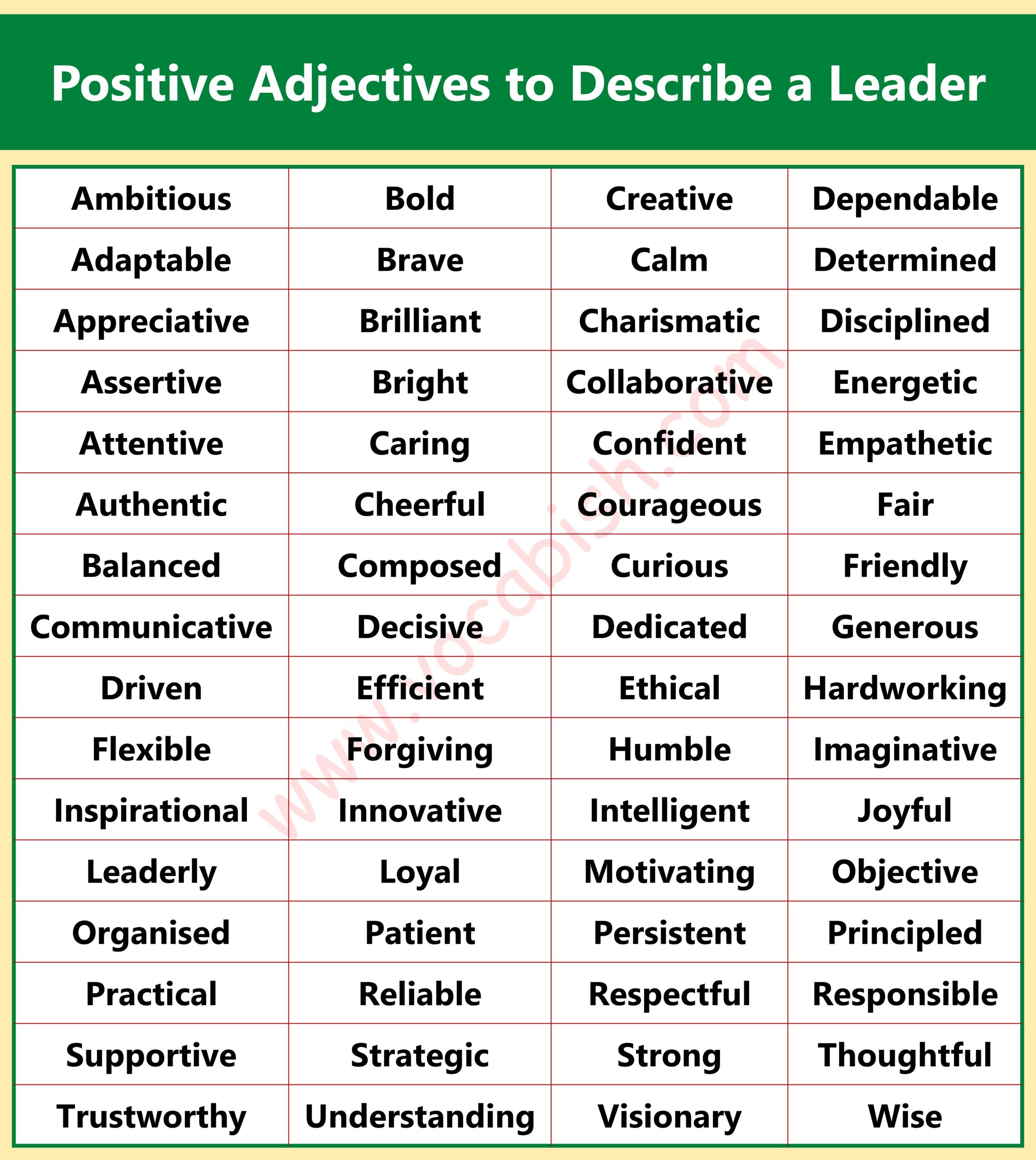
A to Z List of Positive Adjectives to Describe a Leader
| Ambitious | Bold | Creative | Dependable |
| Adaptable | Brave | Calm | Determined |
| Appreciative | Brilliant | Charismatic | Disciplined |
| Assertive | Bright | Collaborative | Energetic |
| Attentive | Caring | Confident | Empathetic |
| Authentic | Cheerful | Courageous | Fair |
| Balanced | Composed | Curious | Friendly |
| Communicative | Decisive | Dedicated | Generous |
| Driven | Efficient | Ethical | Hardworking |
| Flexible | Forgiving | Humble | Imaginative |
| Inspirational | Innovative | Intelligent | Joyful |
| Leaderly | Loyal | Motivating | Objective |
| Organised | Patient | Persistent | Principled |
| Practical | Reliable | Respectful | Responsible |
| Supportive | Strategic | Strong | Thoughtful |
| Trustworthy | Understanding | Visionary | Wise |
| Worthy | Zealous |
Describing a leader with positive adjectives helps show their strengths, skills, and good character. Learning these words is useful for writing, speaking, or communicating in professional and social settings.
Using simple, short, and easy-to-remember words makes it easier for learners to improve English and express themselves clearly. Keep this list as a reference to describe leaders confidently in everyday English.
FAQs
What are some common positive adjectives to describe a leader?
Some common positive adjectives are honest, confident, brave, inspiring, fair, and motivating.
Which words show a leader’s good personality?
Words like humble, friendly, empathetic, approachable, kind, and respectful show a leader’s good personality.
What adjectives describe a leader’s work style?
A leader’s work style can be described as organised, dedicated, responsible, efficient, focused, and proactive.
How can I describe a leader who motivates their team?
You can describe a motivating leader as inspiring, supportive, encouraging, visionary, persuasive, and energetic.
What are simple positive words for a leader in English?
Simple positive words include bold, wise, compassionate, patient, trustworthy, and strong.
Read More