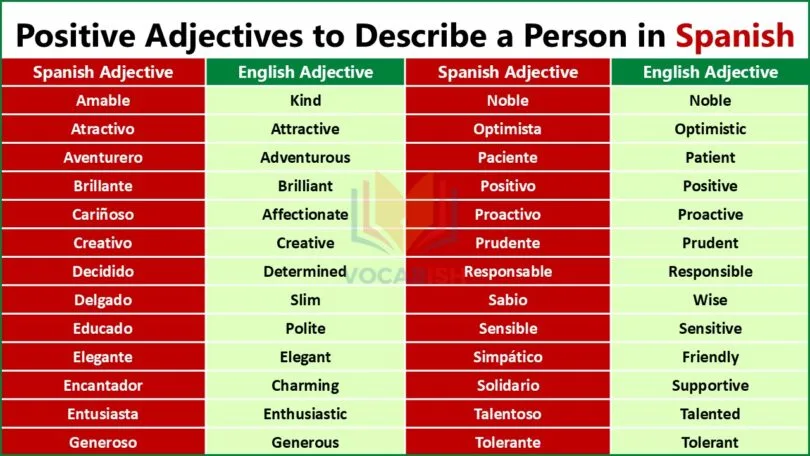

In this blog post, you will learn useful Positive Adjectives to describe a Person in Spanish with meanings and examples. These words help you talk about people in a kind, accurate, and respectful way. When you understand how to use them, your speaking becomes more natural and your writing sounds more confident. You also improve your reading and listening because you recognize these qualities in stories, conversations, and videos. Step by step, you will master Spanish vocabulary and express your ideas more clearly every day.
What Are Positive Adjectives in Spanish?
Positive adjectives are words used to describe someone in a good, kind, or admirable way. They can explain a person’s personality, abilities, or even looks. For example:
- Amable means kind
- Inteligente means smart
These words are used in everyday conversations, writing, and even formal introductions. They help show respect and appreciation for people.
Basic Rules for Using Spanish Adjectives
Spanish adjectives usually follow the noun they describe.
Example:
- Una persona amable – a kind person
- Un niño inteligente – a smart boy
Many Spanish adjectives also change slightly for gender.
Examples:
- generoso (masculine)
- generosa (feminine)
However, some adjectives stay the same for both genders.
Example:
- inteligente – intelligent
Understanding these simple patterns helps learners use adjectives correctly.
Daily Used Positive Adjectives for People
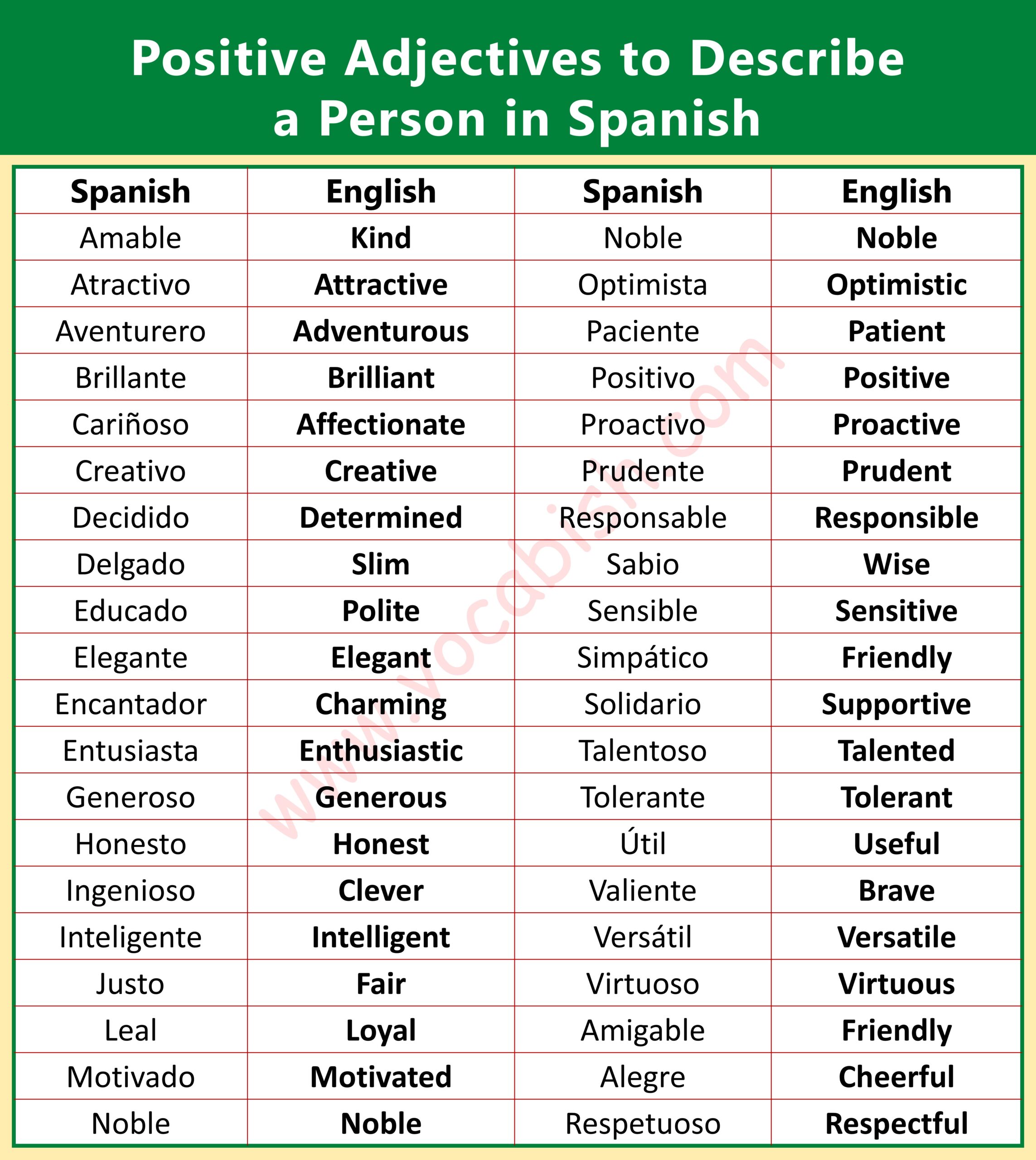
Below are common Spanish adjectives used in everyday conversations.
- Amable – Kind; a person who treats others politely and with respect.
- Amigable – Friendly; someone who enjoys talking and connecting with others.
- Inteligente – Intelligent; a person who learns quickly and understands ideas easily.
- Generoso / Generosa – Generous; someone who likes to give or help others.
- Honesto / Honesta – Honest; a person who tells the truth and behaves fairly.
- Responsable – Responsible; someone who completes tasks and keeps promises.
- Trabajador / Trabajadora – Hardworking; a person who works with effort and dedication.
- Paciente – Patient; someone who stays calm and does not get angry easily.
- Alegre – Cheerful; a person who feels happy and spreads positive energy.
- Comprensivo / Comprensiva – Understanding; someone who listens and cares about others’ feelings.
- Creativo / Creativa – Creative; a person who has new ideas and imagination.
- Valiente – Brave; someone who faces challenges without fear.
- Educado / Educada – Polite; a person who shows good manners.
- Optimista – Optimistic; someone who expects good things to happen.
- Leal – Loyal; a person who supports friends and family faithfully.
These adjectives appear often in daily Spanish conversations and descriptions.
Positive Personality Adjectives in Spanish
These adjectives describe how a person behaves or feels inside.
- Simpático / Simpática – Nice and pleasant to be around.
- Cariñoso / Cariñosa – Affectionate; someone who shows love and warmth.
- Divertido / Divertida – Fun; a person who makes others laugh and enjoy time.
- Motivado / Motivada – Motivated; someone who wants to achieve goals.
- Seguro / Segura – Confident; a person who believes in their abilities.
People use these words when talking about friends, classmates, or coworkers.
Positive Character Traits in Spanish
Character traits show strong personal qualities.
- Sabio / Sabia – Wise; someone with good knowledge and judgment.
- Justo / Justa – Fair; a person who treats everyone equally.
- Solidario / Solidaria – Supportive; someone who helps people in difficult times.
- Persistente – Persistent; a person who does not give up easily.
- Honorable – Honorable; someone respected for good actions.
These words often appear in descriptions, speeches, or writing tasks.
Positive Social and Behavior Adjectives
These adjectives describe how people act around others.
- Colaborador / Colaboradora – Cooperative; someone who works well with others.
- Respetuoso / Respetuosa – Respectful; a person who values others.
- Servicial – Helpful; someone who likes to assist others.
- Considerado / Considerada – Thoughtful; a person who thinks about others’ needs.
- Sociable – Social; someone who enjoys meeting and talking to people.
These words are common in school, workplace, and social conversations.
List of Spanish Positive Adjectives for a Person
Amable | Amigable | Inteligente |
Generoso / Generosa | Honesto / Honesta | Responsable |
Trabajador / Trabajadora | Paciente | Alegre |
Comprensivo / Comprensiva | Creativo / Creativa | Valiente |
Educado / Educada | Optimista | Leal |
Simpático / Simpática | Cariñoso / Cariñosa | Divertido / Divertida |
Motivado / Motivada | Seguro / Segura | Sabio / Sabia |
Justo / Justa | Solidario / Solidaria | Persistente |
Honorable | Colaborador / Colaboradora | Respetuoso / Respetuosa |
Servicial | Considerado / Considerada | Sociable |
Tips to Remember Spanish Adjectives Easily
Learning vocabulary becomes easier with simple strategies.
Practice with real people.
Describe your friends or family using Spanish adjectives.
Use small sentences.
Example:
- Mi amigo es amable.
- Ella es inteligente.
Group words by meaning.
For example, learn all personality words together.
Repeat regularly.
Short daily practice improves memory.
Conclusion
Positive adjectives help learners describe people in a friendly and respectful way. Spanish includes many useful words for talking about personality, behavior, and character.
By learning these adjectives, students can:
- communicate more clearly
- give compliments naturally
- improve Spanish vocabulary quickly
Start using these words in simple sentences, and you will build confidence in Spanish conversations.
Related Articles:
- Positive Adjectives to Describe a Leader
- Positive Adjectives to Describe a Person for Work
- Unique Positive Adjectives to Describe a Person
FAQs about Positive Spanish Adjectives
Positive adjectives to describe a person in Spanish are words that show good qualities like kindness, intelligence, or honesty. They help describe someone’s personality in a positive way.
Common beginner-friendly Spanish adjectives include amable (kind), inteligente (smart), honesto (honest), and generoso (generous). These are widely used in daily conversations.
You say “kind person” in Spanish as persona amable. It describes someone who is polite, friendly, and treats others with respect and kindness in daily life.
Positive personality adjectives in Spanish include simpático (nice), alegre (cheerful), divertido (fun), and cariñoso (affectionate). These describe how a person behaves and interacts with others.
Spanish adjectives often change by gender and number. For example, amable stays the same, but generoso becomes generosa when describing a female person.
A hardworking person in Spanish is trabajador (male) or trabajadora (female). It describes someone who puts effort, energy, and dedication into their work or studies.
Positive adjectives are important because they help learners describe people clearly, give compliments, and communicate politely in everyday Spanish conversations and writing tasks.
An intelligent and kind person can be described as inteligente y amable in Spanish. These adjectives together show both mental ability and a friendly personality.