Skip to content
  • Home
  • Privacy Policy
  • About Us
  • Contact Us
Vocabish Logo

Vocabish

Learn English as a Second Language

  • Home
  • Basic English Learning
  • Vocabulary
    • Adjectives
    • Synonyms
    • Antonyms
    • Confusing Words
  • Sentences
    • Examples
  • Privacy Policy
  • Contact Us
  • Toggle search form
Spanish Positive Adjectives to Describe a Person

Positive Adjectives to Describe a Person in Spanish

Posted on December 3, 2025February 4, 2026 By Muhammad Matloob No Comments on Positive Adjectives to Describe a Person in Spanish

Learning how to describe people in a friendly and positive way is very useful in Spanish. Using positive adjectives helps you talk about someone’s personality, skills, or appearance in a polite and engaging manner. In this article, you will find easy-to-understand words, examples, and a table to help you remember them quickly.

Table of Contents

Toggle
  • What Are Positive Adjectives in Spanish?
  • Common Positive Adjectives to Describe Personality
    • 1. Kindness and Friendliness
    • 2. Intelligence and Skills
    • 3. Behaviour and Attitude
    • 4. Appearance and Charm
  • Positive Adjectives to Describe a Person in Spanish
  • A to Z Positive Adjectives to Describe a Person in Spanish
  • How to Use Positive Adjectives in Sentences
  • FAQs about Spanish Adjectives to Describe a Person

What Are Positive Adjectives in Spanish?

Positive adjectives are words used to describe someone in a good, kind, or admirable way. They can explain a person’s personality, abilities, or even looks. For example:

  • Amable means kind
  • Inteligente means smart

These words are used in everyday conversations, writing, and even formal introductions. They help show respect and appreciation for people.
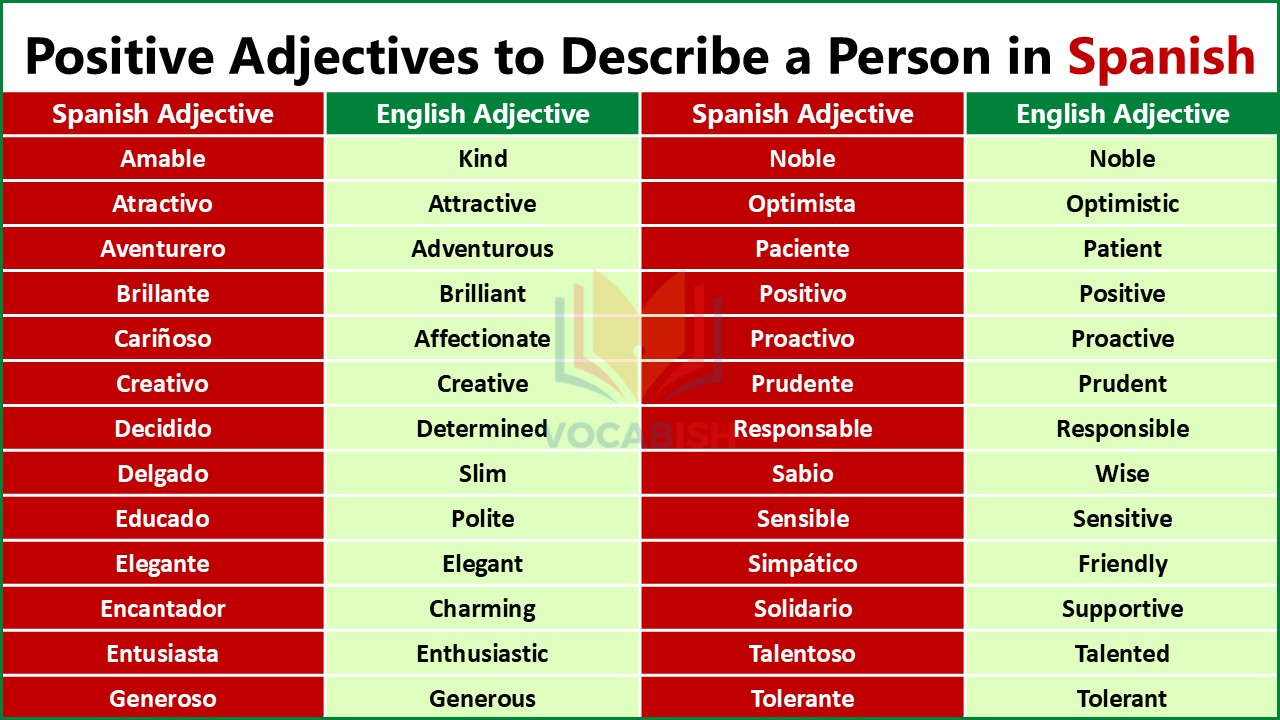
Positive Adjectives to Describe a Person in Spanish

Common Positive Adjectives to Describe Personality

1. Kindness and Friendliness

These adjectives describe someone who is caring, helpful, and friendly:

  • Amable – kind
  • Cariñoso/a – affectionate
  • Simpático/a – nice, friendly
  • Generoso/a – generous
  • Atento/a – attentive, thoughtful

2. Intelligence and Skills

These describe someone who is clever, skilled, or smart:

  • Inteligente – intelligent
  • Creativo/a – creative
  • Sabio/a – wise
  • Hábil – skillful
  • Ingenioso/a – clever, resourceful

3. Behaviour and Attitude

These adjectives reflect a person’s good behaviour, attitude, or energy:

  • Optimista – optimistic
  • Responsable – responsible
  • Paciente – patient
  • Valiente – brave
  • Leal – loyal

4. Appearance and Charm

These describe someone’s attractive and charming qualities:

  • Atractivo/a – attractive
  • Elegante – elegant
  • Simpático/a – pleasant, nice
  • Encantador/a – charming
  • Amigable – friendly

Positive Adjectives to Describe a Person in Spanish

Personality Skills & Intelligence Behaviour & Attitude Appearance & Charm
Amable Inteligente Responsable Atractivo/a
Cariñoso/a Creativo/a Paciente Elegante
Simpático/a Sabio/a Valiente Encantador/a
Generoso/a Hábil Leal Simpático/a
Atento/a Ingenioso/a Optimista Amigable

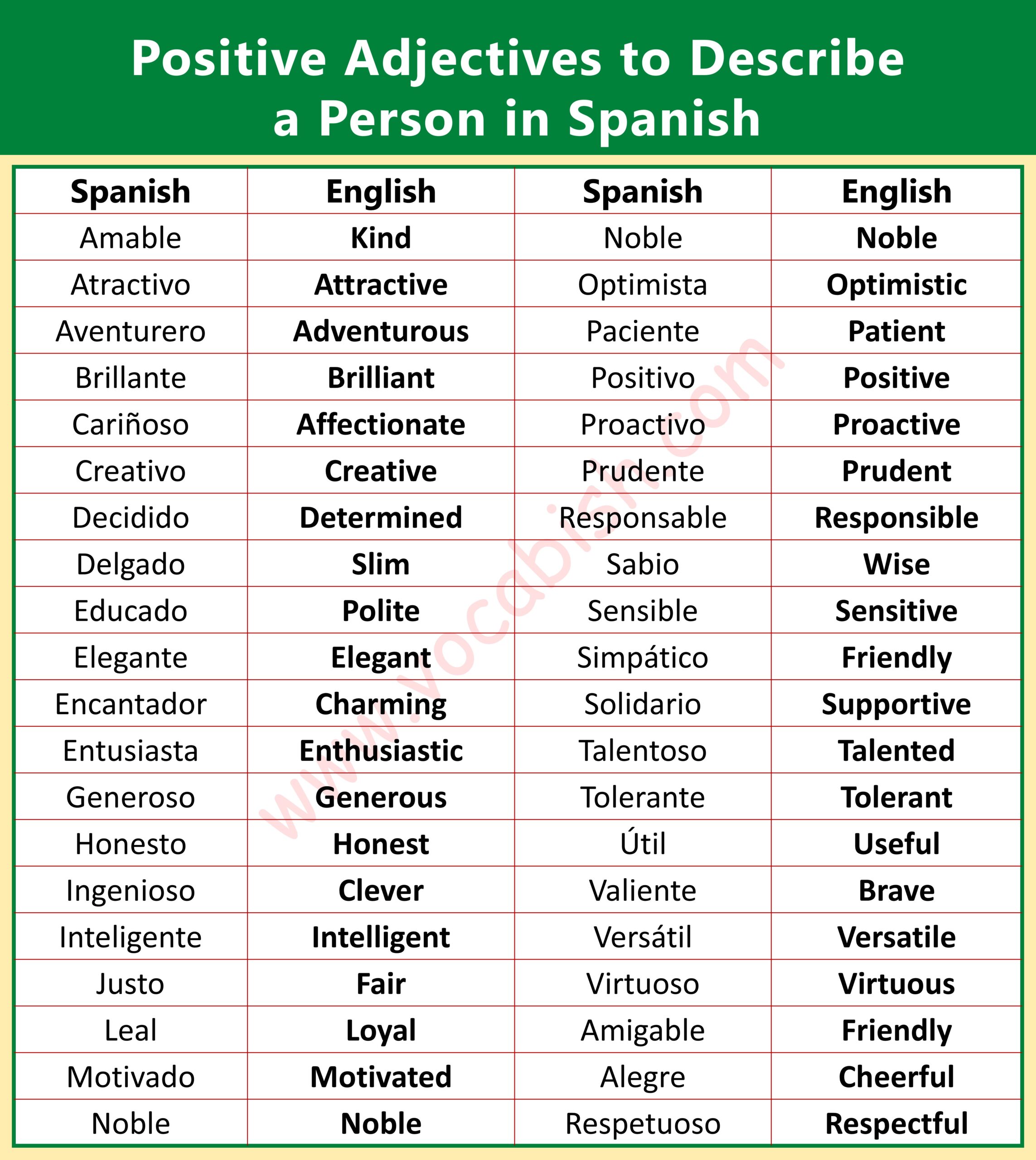
A to Z Positive Adjectives to Describe a Person in Spanish

Spanish English Spanish English
Amable Kind Noble Noble
Atractivo Attractive Optimista Optimistic
Aventurero Adventurous Paciente Patient
Brillante Brilliant Positivo Positive
Cariñoso Affectionate Proactivo Proactive
Creativo Creative Prudente Prudent
Decidido Determined Responsable Responsible
Delgado Slim Sabio Wise
Educado Polite Sensible Sensitive
Elegante Elegant Simpático Friendly
Encantador Charming Solidario Supportive
Entusiasta Enthusiastic Talentoso Talented
Generoso Generous Tolerante Tolerant
Honesto Honest Útil Useful
Ingenioso Clever Valiente Brave
Inteligente Intelligent Versátil Versatile
Justo Fair Virtuoso Virtuous
Leal Loyal Amigable Friendly
Motivado Motivated Alegre Cheerful
Noble Noble Respetuoso Respectful

How to Use Positive Adjectives in Sentences

Here are simple examples of how to use these words:

  • Ella es muy amable. – She is very kind.
  • Juan es inteligente y creativo. – Juan is intelligent and creative.
  • Mi amiga es paciente y leal. – My friend is patient and loyal.
  • Carlos es encantador y elegante. – Carlos is charming and elegant.

Using these adjectives will make your Spanish conversations positive and respectful.

Learning positive adjectives in Spanish helps you describe people in a friendly and respectful way. Using words like amable, inteligente, or encantador makes your speech more natural and engaging. Keep practising these words, and try to use them in daily conversations to improve your Spanish skills quickly.


FAQs about Spanish Adjectives to Describe a Person

Can positive adjectives in Spanish describe both personality and appearance?
Yes, words like amable (kind), simpático (friendly), atractivo (attractive), and elegante (elegant) can describe a person’s character or looks.

What are some common positive adjectives in Spanish to describe someone?
Common words include generoso (generous), inteligente (intelligent), paciente (patient), and encantador (charming).

Which Spanish adjectives show respect and good behaviour?
Adjectives like responsable (responsible), leal (loyal), atento (attentive), and valiente (brave) highlight respectful and admirable traits.

Can positive adjectives in Spanish be used for both men and women?
Yes, most adjectives can change endings: amable stays the same, simpático becomes simpática, generoso becomes generosa, depending on the gender.


Read More

  1. Adjectives to Describe a Situation in English
  2. Positive Adjectives to Describe a Person in French
  3. 45+ Positive Adjectives to Describe a Thing
Adjectives

Post navigation

Previous Post: Present Continuous Tense with Formula, Examples, and Exercises
Next Post: Positive Adjectives to Describe a Leader in English

Leave a Reply Cancel reply

Your email address will not be published. Required fields are marked *

  • Facebook
  • Pinterest

Recent Comments

  • OmarFaruk on 200+ Action Verbs List in English with Pictures
  • Alfred Kolekou on All Types of Jobs, Professions, Careers, and Occupations
  • Batu Dube Ukke on 10 Lines About A Day at the Park
  • Batu Dube Ukke on 10 Lines About A Day at the Park
  • ayantu on Modal Verbs Definition, Rules, and Examples

Recent Posts

  • List of Similes in English with Examples in Sentences
  • List of Homographs in English with Meanings
  • 100 Homonyms Meanings and Examples in English
  • 100 Best Homophones and Meaning with Examples
  • 35+ Healthy Vegetable Names in English with Pictures

Most Popular Articles

  • Face Emoji Meanings — The Hidden Meanings Behind Emojis (4,337)
  • Unique Irregular Verbs List in English with Examples (4,138)
  • 500 Daily Used Normal vs Advanced English Words (4,030)
  • Clothes and Fashion Vocabulary in English (2,442)
  • Heart Emoji Meanings : What Each Colour Heart Means (2,406)
  • Emoji Meanings: Complete List of Emojis and Their Meanings (2,279)
  • 200+ Action Verbs List in English with Pictures (2,271)
  • 50 Basic Adjectives to Describe People in English (2,084)
  • 100 A to Z Difficult Words with Synonyms in English (1,453)

Our Topics

  • 12 Tenses (3)
  • Adjectives (44)
  • Antonyms (11)
  • Basic English Learning (5)
  • Confusing Words (35)
  • Examples (29)
  • Other Ways to Say (11)
  • Sentences (18)
  • Synonyms (37)
  • Vocabulary (136)
  • Worksheets (7)
  • Writing (14)

Copyright © 2026 Vocabish.

Powered by PressBook WordPress theme