
Pronouns are words we use instead of nouns to avoid repetition and make sentences smoother. Words like he, she, it, they, and who are common examples. In this blog post, you will learn 100 pronoun examples in sentences to see how they are used in real English. When you understand pronouns, you can speak more naturally and write clearer sentences. With regular practice, you will master the correct use of pronouns in reading, writing, listening, and daily conversation. Keep reading to explore practical examples and improve your English step by step.
What is a Pronoun?
A pronoun is a word that replaces a noun. It can refer to a person, place, thing, or idea. Pronouns make speech and writing easier.
Example:
- Instead of: Lisa likes Lisa’s book.
- We say: Lisa likes her book.
Pronouns can be used in different contexts:
- Talking about people (he, she, they)
- Showing ownership (my, your, their)
- Asking questions (who, which, what)
100 Pronoun Examples in Sentences
Here’s the list of 100 pronoun examples in sentences:
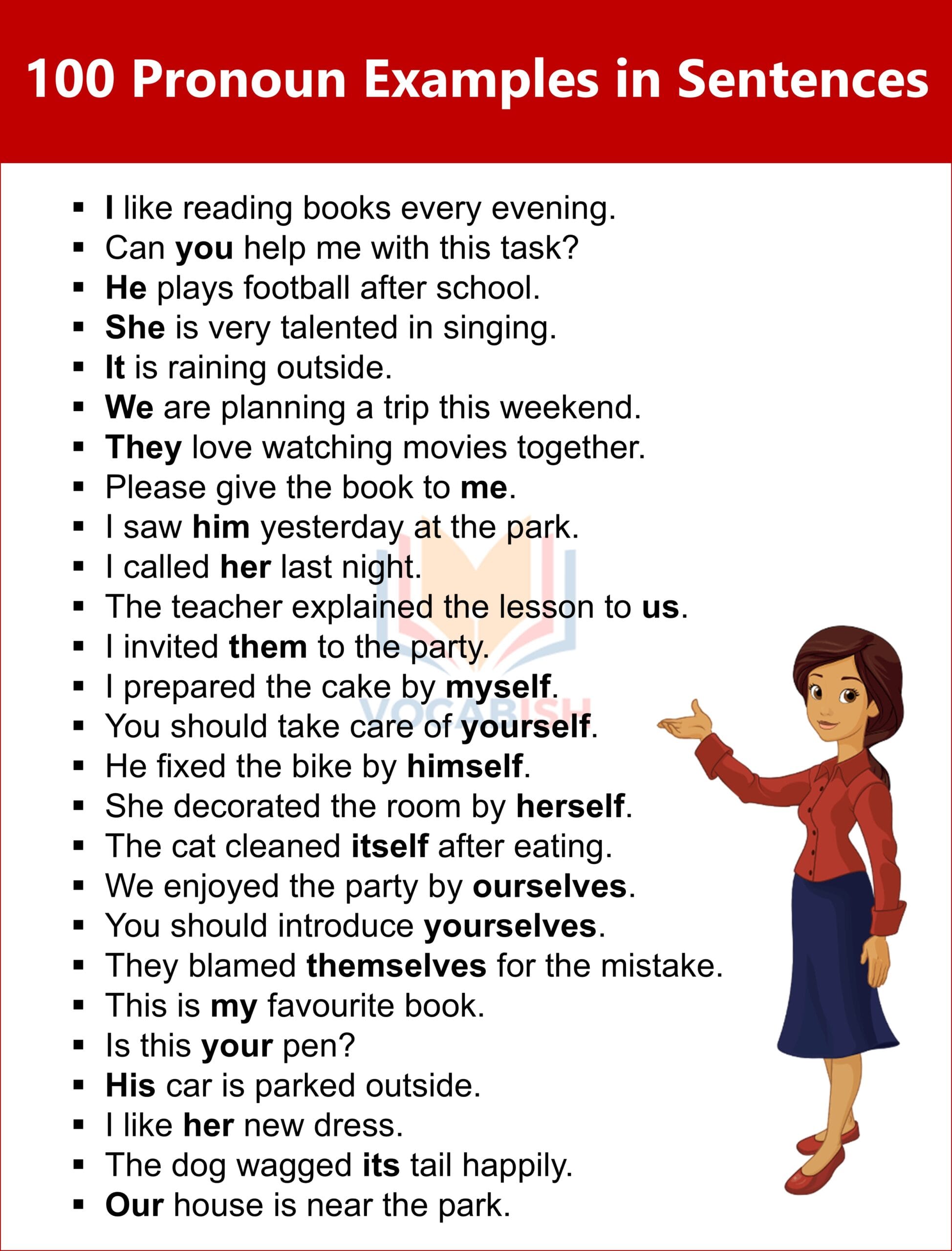
- I like reading books every evening.
- Can you help me with this task?
- He plays football after school.
- She is very talented in singing.
- It is raining outside.
- We are planning a trip this weekend.
- They love watching movies together.
- Please give the book to me.
- I saw him yesterday at the park.
- I called her last night.
- The teacher explained the lesson to us.
- I invited them to the party.
- I prepared the cake by myself.
- You should take care of yourself.
- He fixed the bike by himself.
- She decorated the room by herself.
- The cat cleaned itself after eating.
- We enjoyed the party by ourselves.
- You should introduce yourselves.
- They blamed themselves for the mistake.
- This is my favourite book.
- Is this your pen?
- His car is parked outside.
- I like her new dress.
- The dog wagged its tail happily.
- Our house is near the park.
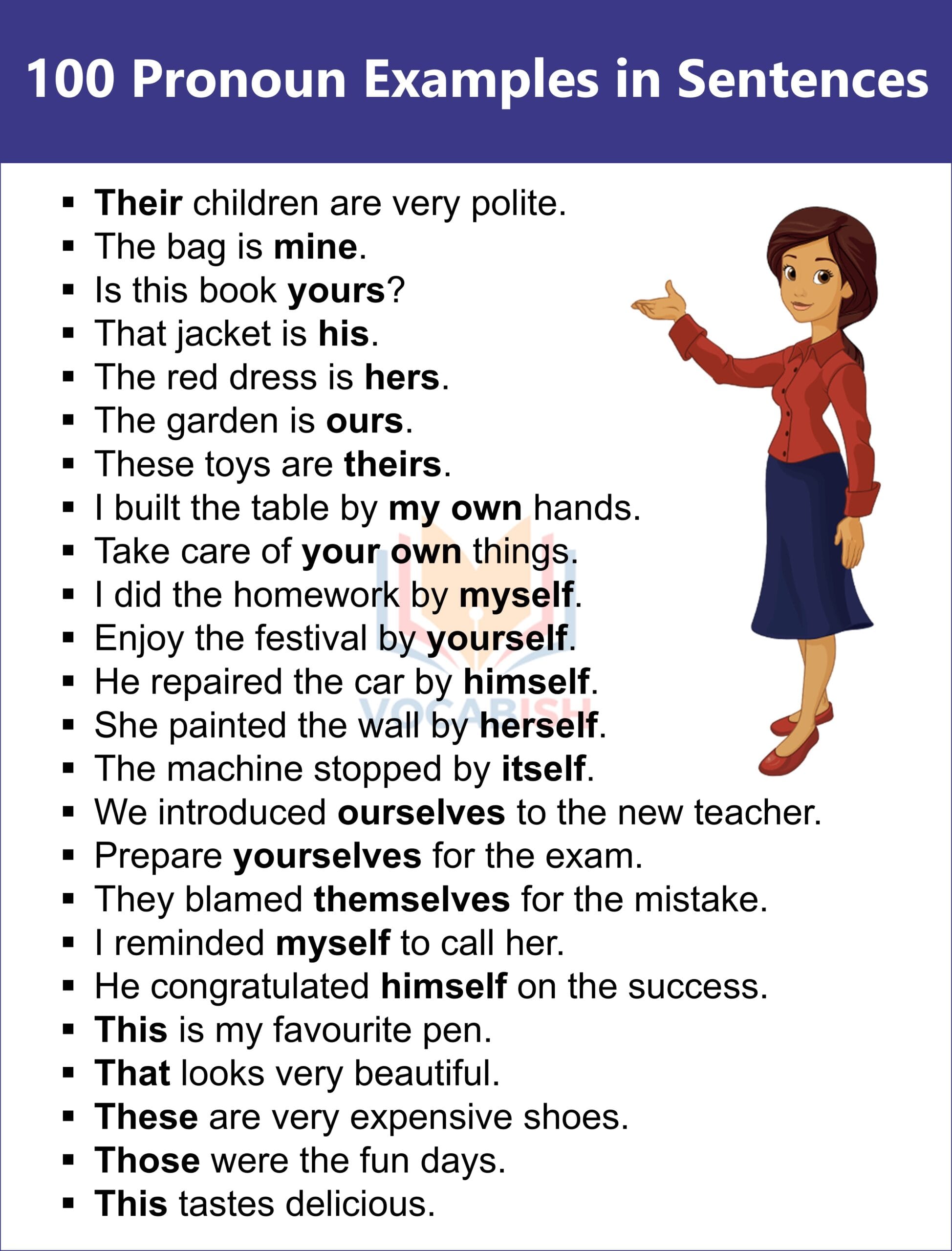
- Their children are very polite.
- The bag is mine.
- Is this book yours?
- That jacket is his.
- The red dress is hers.
- The garden is ours.
- These toys are theirs.
- I built the table by my own hands.
- Take care of your own things.
- I did the homework by myself.
- Enjoy the festival by yourself.
- He repaired the car by himself.
- She painted the wall by herself.
- The machine stopped by itself.
- We introduced ourselves to the new teacher.
- Prepare yourselves for the exam.
- They blamed themselves for the mistake.
- I reminded myself to call her.
- He congratulated himself on the success.
- This is my favourite pen.
- That looks very beautiful.
- These are very expensive shoes.
- Those were the fun days.
- This tastes delicious.
- That belongs to me.
- These are my best friends.
- Those are new tables.
- This is enough for now.
- That seems very difficult.
- Who is at the door?
- Whom did you call yesterday?
- Which dress do you like?
- What is your favourite colour?
- Whose bag is this?
- Who wants to join the class?
- Whom should I give this letter?
- Which is your favourite movie?
- What are you doing now?
- Whose shoes are these?
- The man who called is my uncle.
- The teacher whom you met is kind.
- The boy whose bag is red is happy.
- The book which you want is here.
- I know the girl that sings well.
- She is the girl who won the prize.
- The person whom I saw was helpful.
- A man whose car broke down needs help.
- The pen which I bought is blue.
- This is the house that Jack built.
- Anyone can join the class.
- Everyone is happy today.
- Someone is at the door.
- Nobody knows the answer.
- No one came to the party.
- Each student has a book.
- You can choose either of them.
- Neither of the two options is correct.
- Few people understand this topic.
- Many students passed the exam.
- Several friends came over.
- All are welcome here.
- Some of the apples are sweet.
- Do you have any questions?
- One should always be honest.
- Both answers are correct.
- The others are waiting outside.
- I need another pen.
- Much has been done today.
- Most students enjoy holidays.
- Something is missing here.
- Anything is possible.
- Nothing is impossible.
- Everything is ready for the trip.
- Someone told me a story.
Here’s a complete list with examples for each type:
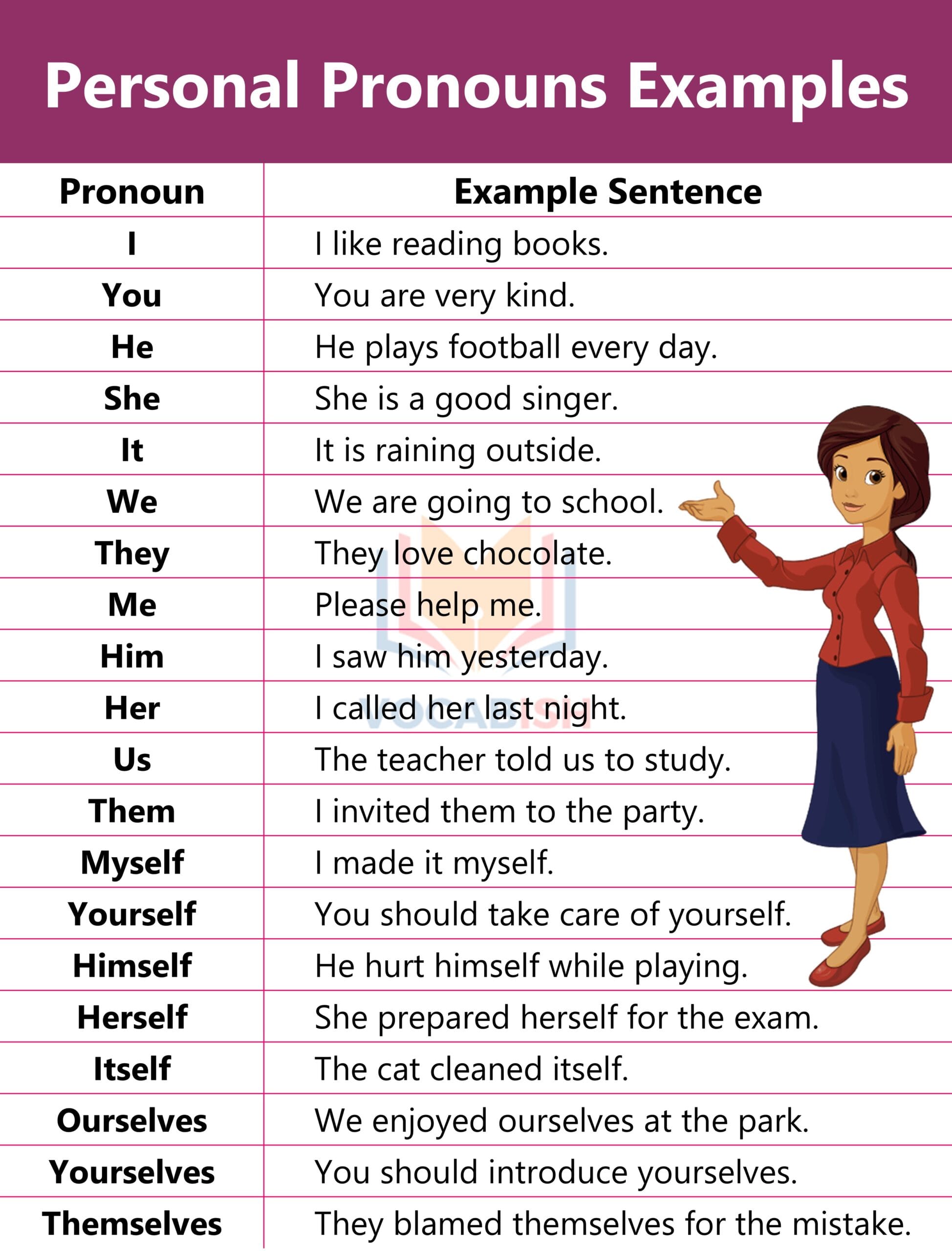
Personal Pronouns Examples in Sentences
| Pronoun | Example Sentence |
|---|---|
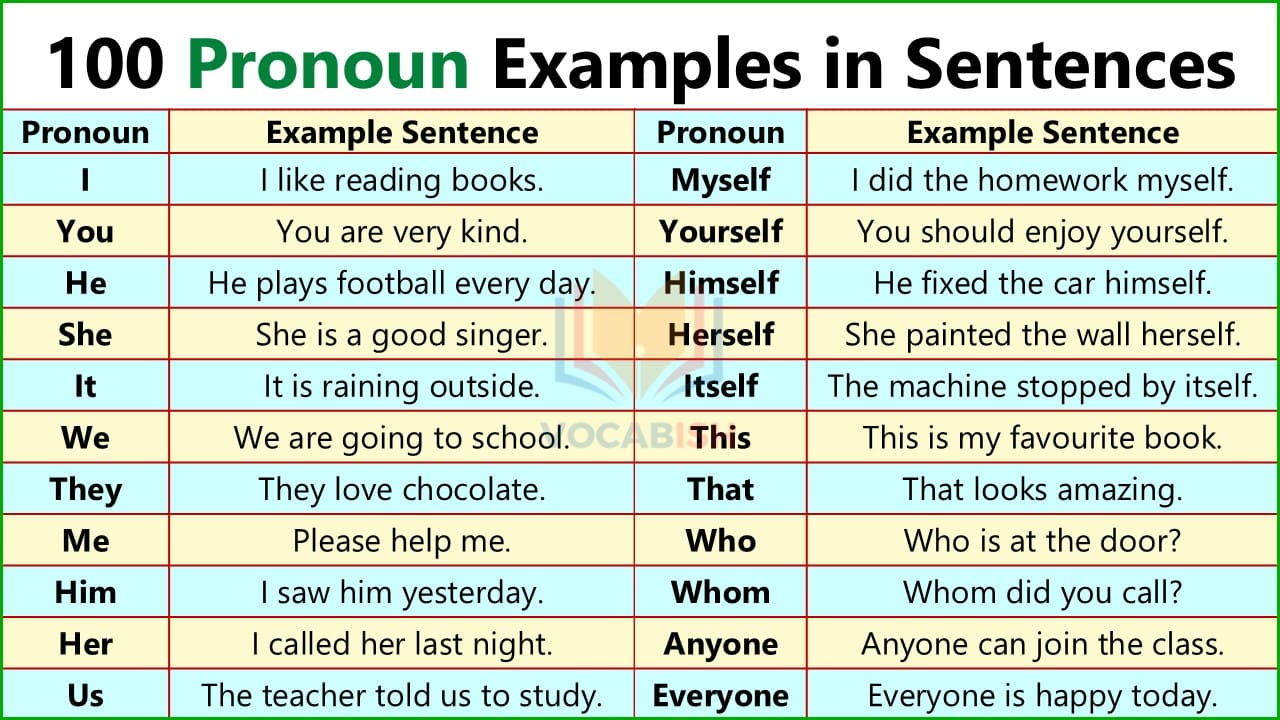
| I | I like reading books. |
| You | You are very kind. |
| He | He plays football every day. |
| She | She is a good singer. |
| It | It is raining outside. |
| We | We are going to school. |
| They | They love chocolate. |
| Me | Please help me. |
| Him | I saw him yesterday. |
| Her | I called her last night. |
| Us | The teacher told us to study. |
| Them | I invited them to the party. |
| Myself | I made it myself. |
| Yourself | You should take care of yourself. |
| Himself | He hurt himself while playing. |
| Herself | She prepared herself for the exam. |
| Itself | The cat cleaned itself. |
| Ourselves | We enjoyed ourselves at the park. |
| Yourselves | You should introduce yourselves. |
| Themselves | They blamed themselves for the mistake. |
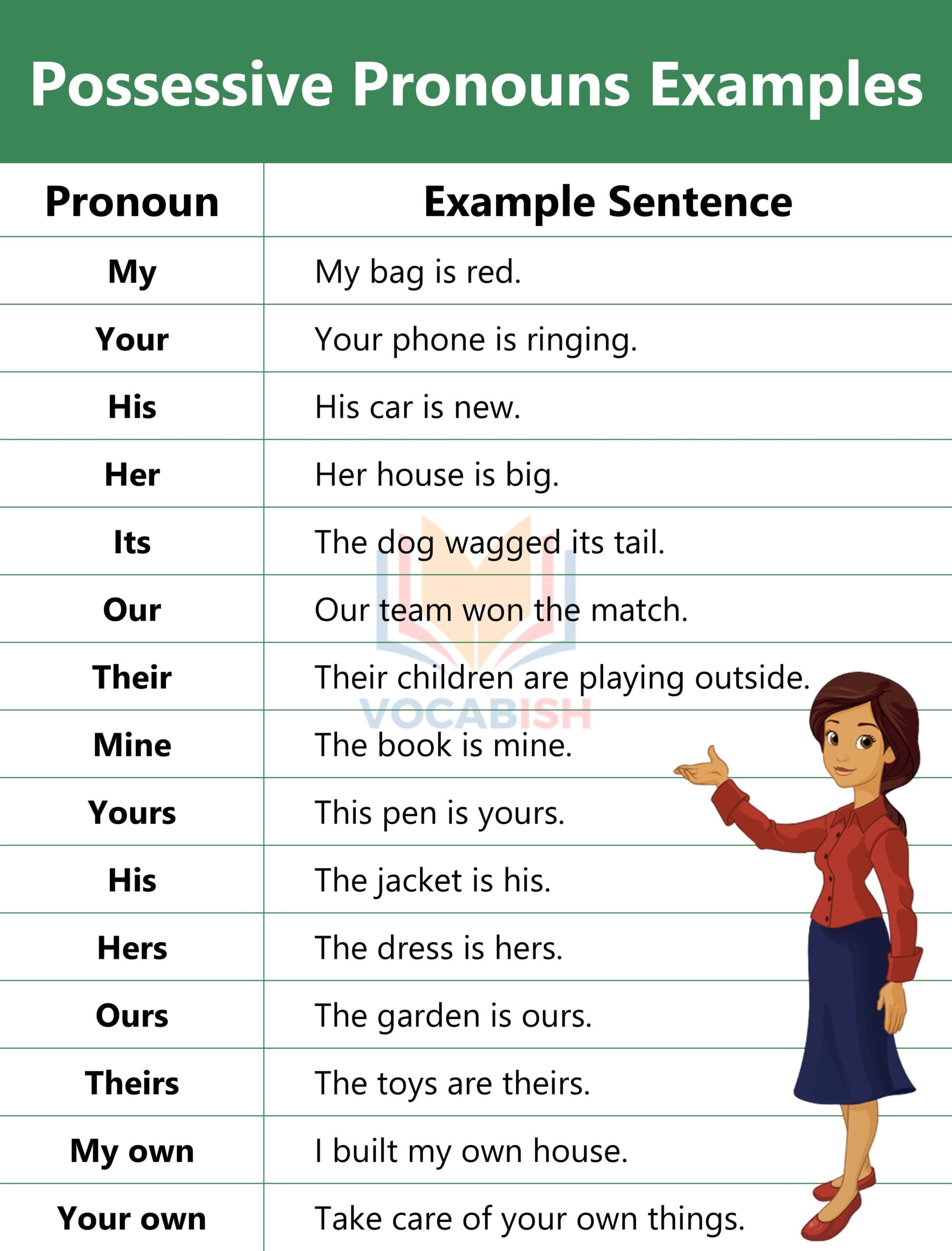
Possessive Pronouns Examples in Sentences
| Pronoun | Example Sentence |
|---|---|
| My | My bag is red. |
| Your | Your phone is ringing. |
| His | His car is new. |
| Her | Her house is big. |
| Its | The dog wagged its tail. |
| Our | Our team won the match. |
| Their | Their children are playing outside. |
| Mine | The book is mine. |
| Yours | This pen is yours. |
| His | The jacket is his. |
| Hers | The dress is hers. |
| Ours | The garden is ours. |
| Theirs | The toys are theirs. |
| My own | I built my own house. |
| Your own | Take care of your own things. |
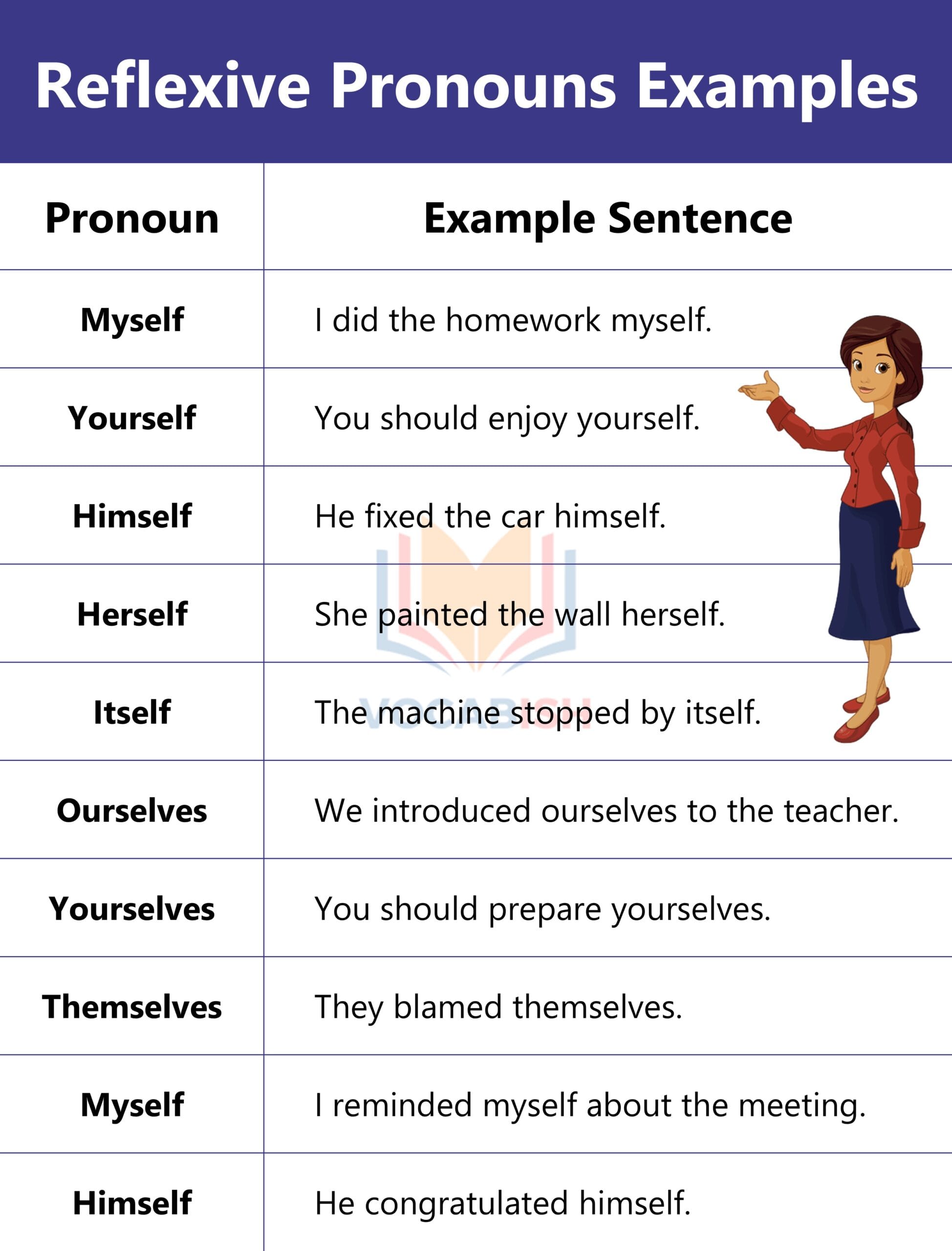
Reflexive Pronouns Examples in Sentences
| Pronoun | Example Sentence |
|---|---|
| Myself | I did the homework myself. |
| Yourself | You should enjoy yourself. |
| Himself | He fixed the car himself. |
| Herself | She painted the wall herself. |
| Itself | The machine stopped by itself. |
| Ourselves | We introduced ourselves to the teacher. |
| Yourselves | You should prepare yourselves. |
| Themselves | They blamed themselves. |
| Myself | I reminded myself about the meeting. |
| Himself | He congratulated himself. |
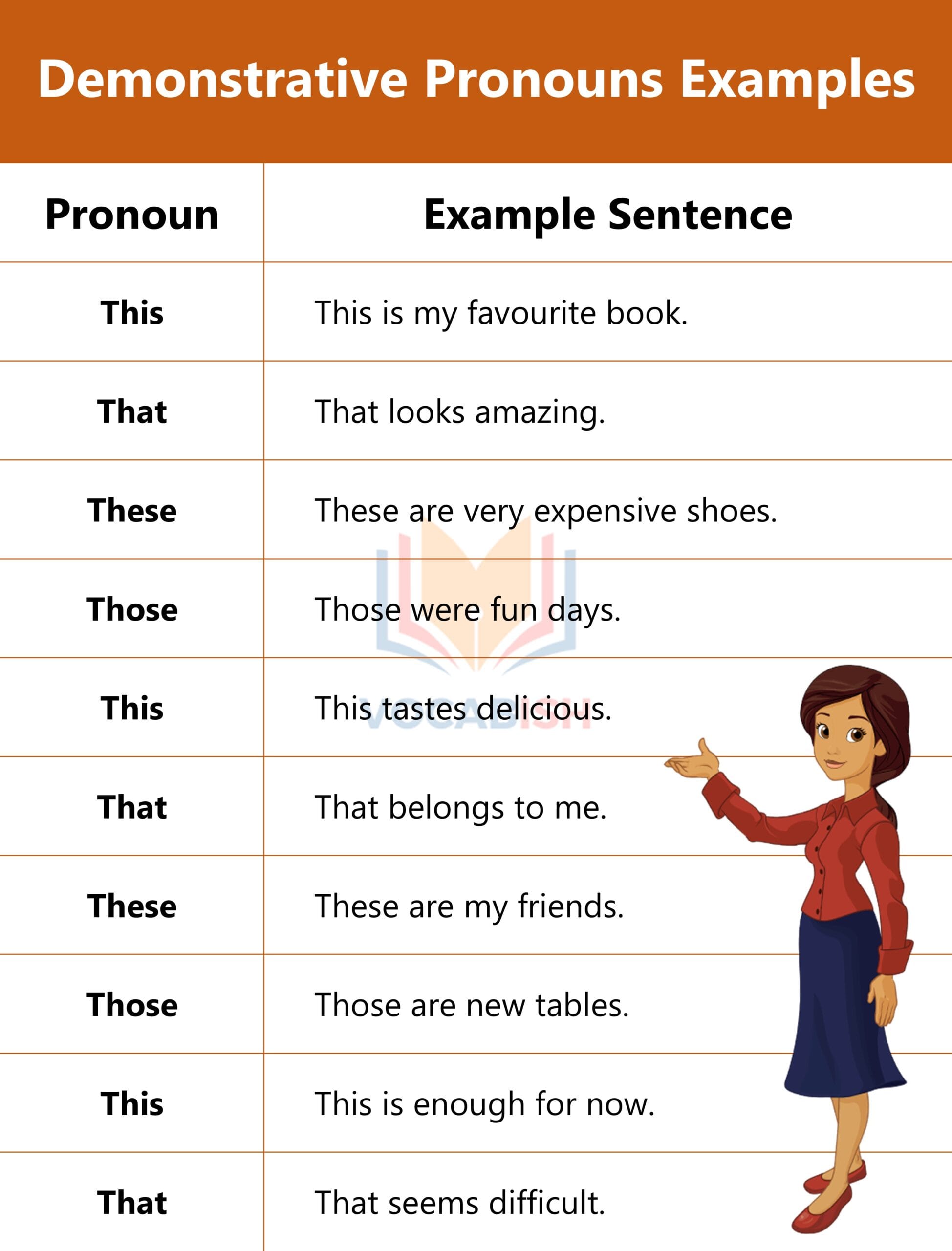
Demonstrative Pronouns Examples in Sentences
| Pronoun | Example Sentence |
|---|---|
| This | This is my favourite book. |
| That | That looks amazing. |
| These | These are very expensive shoes. |
| Those | Those were fun days. |
| This | This tastes delicious. |
| That | That belongs to me. |
| These | These are my friends. |
| Those | Those are new tables. |
| This | This is enough for now. |
| That | That seems difficult. |
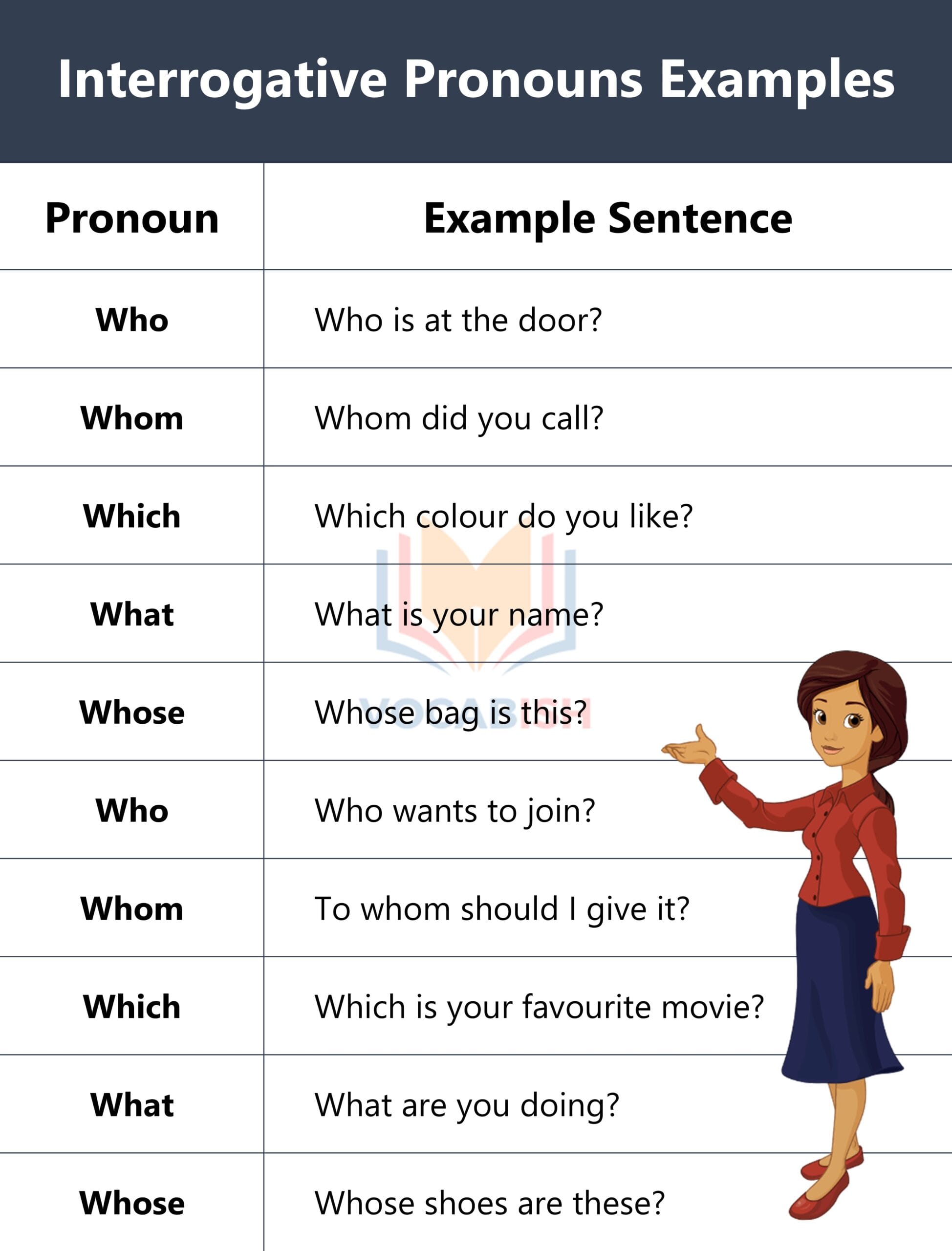
Interrogative Pronouns Examples in Sentences
| Pronoun | Example Sentence |
|---|---|
| Who | Who is at the door? |
| Whom | Whom did you call? |
| Which | Which colour do you like? |
| What | What is your name? |
| Whose | Whose bag is this? |
| Who | Who wants to join? |
| Whom | To whom should I give it? |
| Which | Which is your favourite movie? |
| What | What are you doing? |
| Whose | Whose shoes are these? |
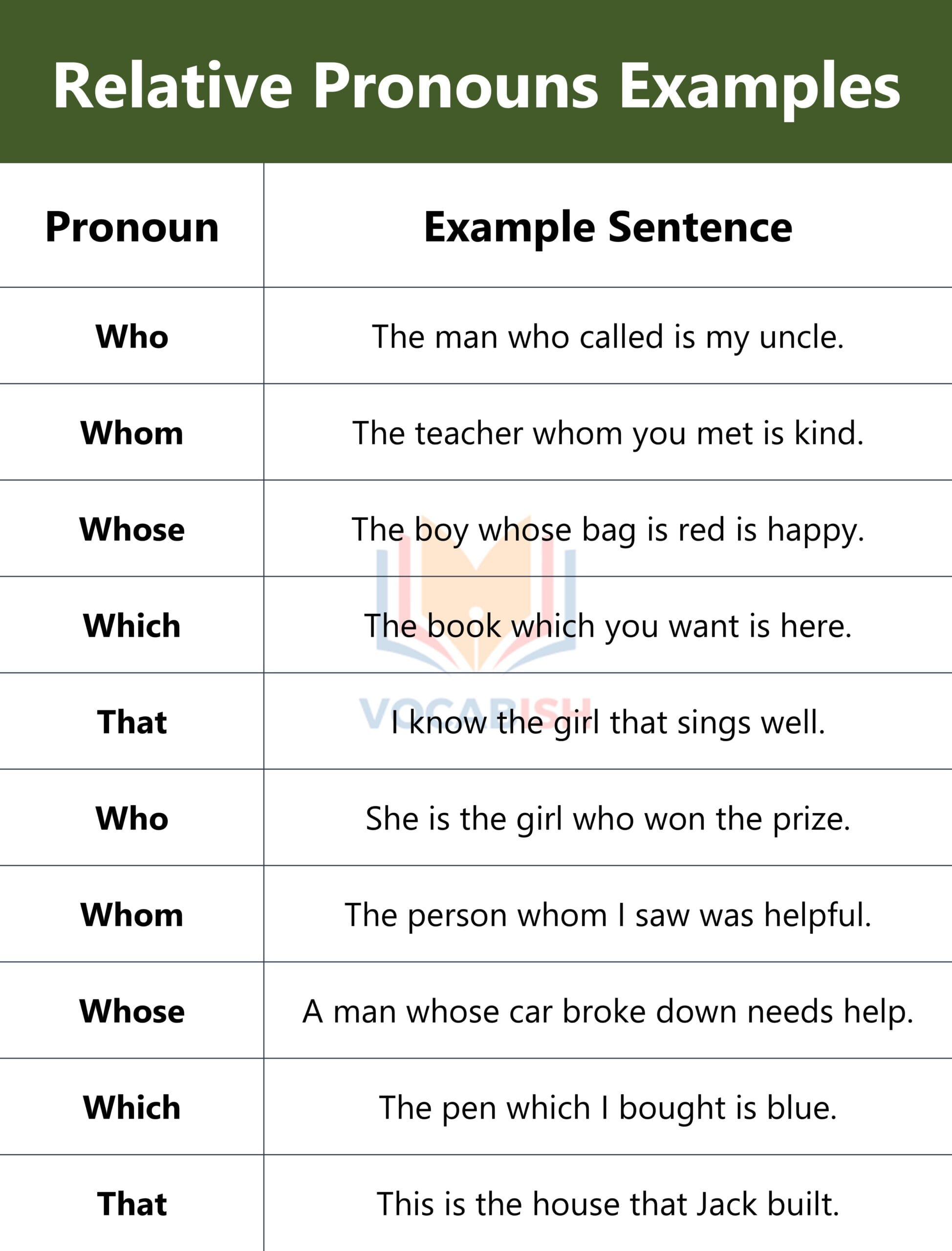
Relative Pronouns Examples in Sentences
| Pronoun | Example Sentence |
|---|---|
| Who | The man who called is my uncle. |
| Whom | The teacher whom you met is kind. |
| Whose | The boy whose bag is red is happy. |
| Which | The book which you want is here. |
| That | I know the girl that sings well. |
| Who | She is the girl who won the prize. |
| Whom | The person whom I saw was helpful. |
| Whose | A man whose car broke down needs help. |
| Which | The pen which I bought is blue. |
| That | This is the house that Jack built. |
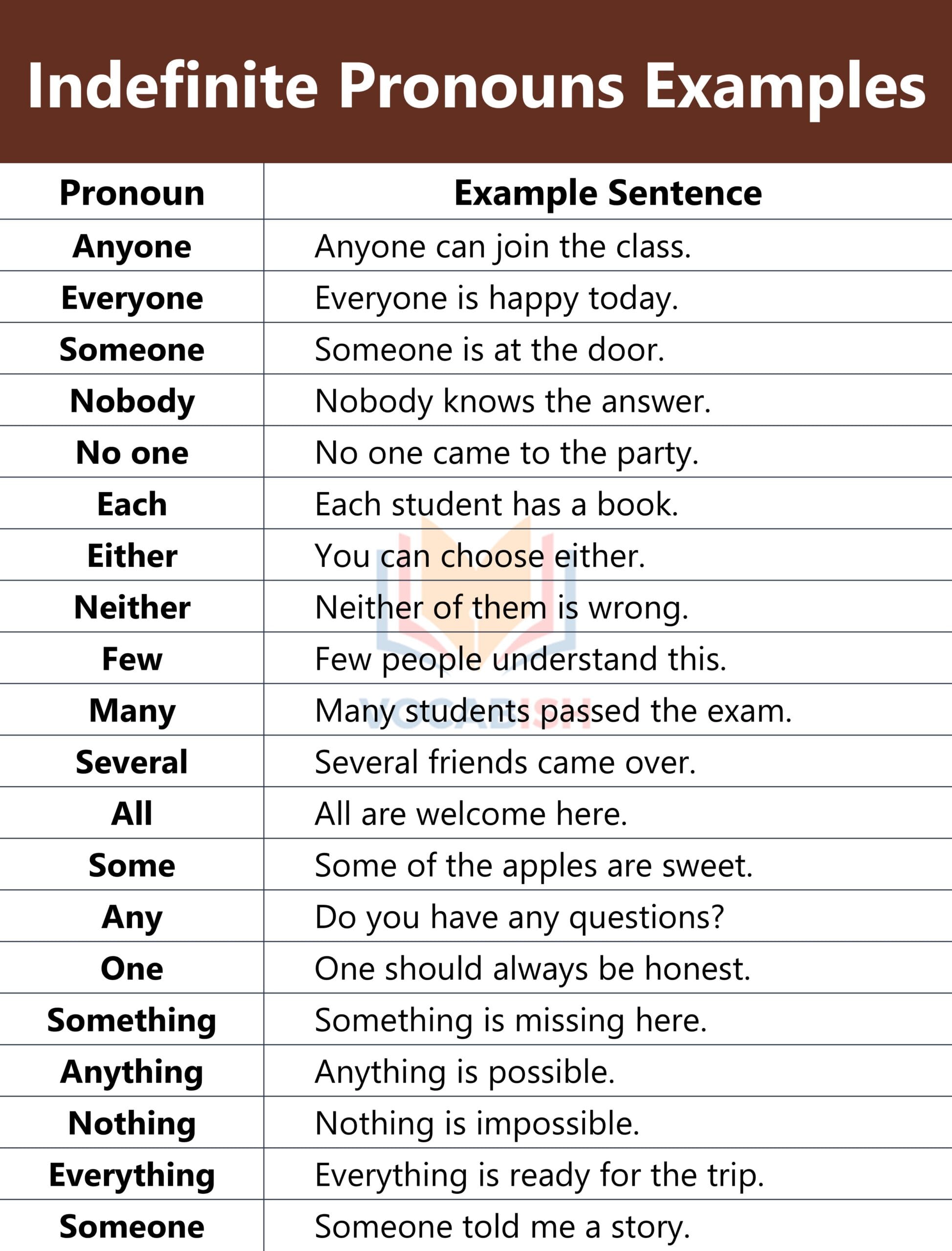
Indefinite Pronouns Examples in Sentences
| Pronoun | Example Sentence |
|---|---|
| Anyone | Anyone can join the class. |
| Everyone | Everyone is happy today. |
| Someone | Someone is at the door. |
| Nobody | Nobody knows the answer. |
| No one | No one came to the party. |
| Each | Each student has a book. |
| Either | You can choose either. |
| Neither | Neither of them is wrong. |
| Few | Few people understand this. |
| Many | Many students passed the exam. |
| Several | Several friends came over. |
| All | All are welcome here. |
| Some | Some of the apples are sweet. |
| Any | Do you have any questions? |
| One | One should always be honest. |
| Both | Both are correct. |
| Others | Others are waiting outside. |
| Another | I need another pen. |
| Much | Much has been done today. |
| Most | Most students enjoy holidays. |
| Something | Something is missing here. |
| Anything | Anything is possible. |
| Nothing | Nothing is impossible. |
| Everything | Everything is ready for the trip. |
| Someone | Someone told me a story. |
100 Pronoun Examples in Sentences PDF
100 Pronoun Examples in Sentences
Pronouns are essential words in English. They make sentences short, clear, and easy to understand. By learning these 100 pronoun examples, learners can improve speaking and writing skills. Practising these sentences every day will help you use pronouns correctly in conversations.
Frequently Asked Questions
What are pronouns in English?
Pronouns are words that replace nouns in a sentence, like he, she, it, they, to make speech and writing simpler and clearer.
Why are pronouns important in sentences?
Pronouns help avoid repetition of nouns and make sentences shorter, smoother, and easier to understand.
Can you give examples of pronouns in sentences?
Yes, for example: She is reading a book, They are playing football, It is raining, We enjoyed ourselves.
What are the types of pronouns with examples?
Common types include personal (I, you, he), possessive (my, her, their), reflexive (myself, themselves), demonstrative (this, those), and indefinite (someone, anyone, everything).
How many pronouns should English learners know?
English learners should know at least 100 common pronouns with examples in sentences to use them correctly in speaking and writing.
How do pronouns improve English writing and speaking?
Using pronouns makes writing and speaking more natural and fluent by replacing repeated nouns and connecting ideas smoothly.
Where can I find 100 pronoun examples in sentences?
You can find a complete list of 100 pronoun examples in sentences with easy-to-understand examples in guides or articles about pronoun examples for learners.
Read More