
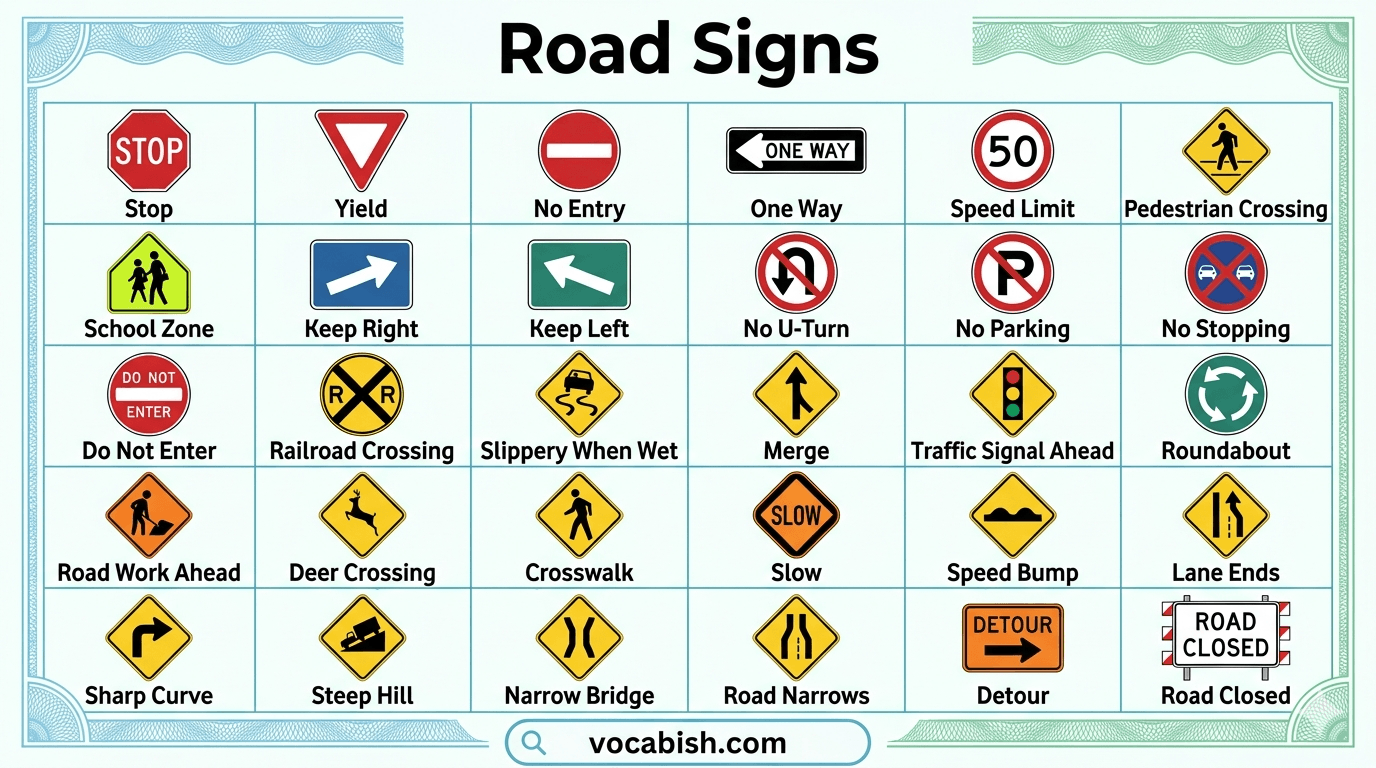
Road signs are an important part of everyday communication on streets and highways. They use symbols and short words to show rules, warnings, and directions for drivers and pedestrians. Learning road signs, their meanings, and their symbols helps English learners understand real-life situations while traveling, driving, or reading public signs. When you study this vocabulary, you begin to recognize traffic messages quickly and use the correct words when talking about roads and safety. In this blog post, you will learn more than 100 road signs and their meanings in English with pictures.
Why Road Signs Matter
Road signs are symbols or boards on streets and highways that give instructions, warnings, or information. Learning them in English helps you:
- Understand traffic rules
- Travel safely
- Use English in real-life situations
Knowing road signs is not only for drivers—it helps pedestrians, cyclists, and travelers too.
Basic Vocabulary for Road Signs
Before learning the signs, here are key words you need to know:
- Sign: A symbol or notice that gives information
- Direction: The way to go
- Warning: A sign that tells you to be careful
- Prohibit: To not allow something
- Speed limit: The maximum speed you can drive
- Pedestrian: A person walking
- Intersection: Where two or more roads meet
- Crosswalk: A place for people to walk across the street
These words often appear on road signs or in driving instructions.
Common Road Signs with Meanings in English
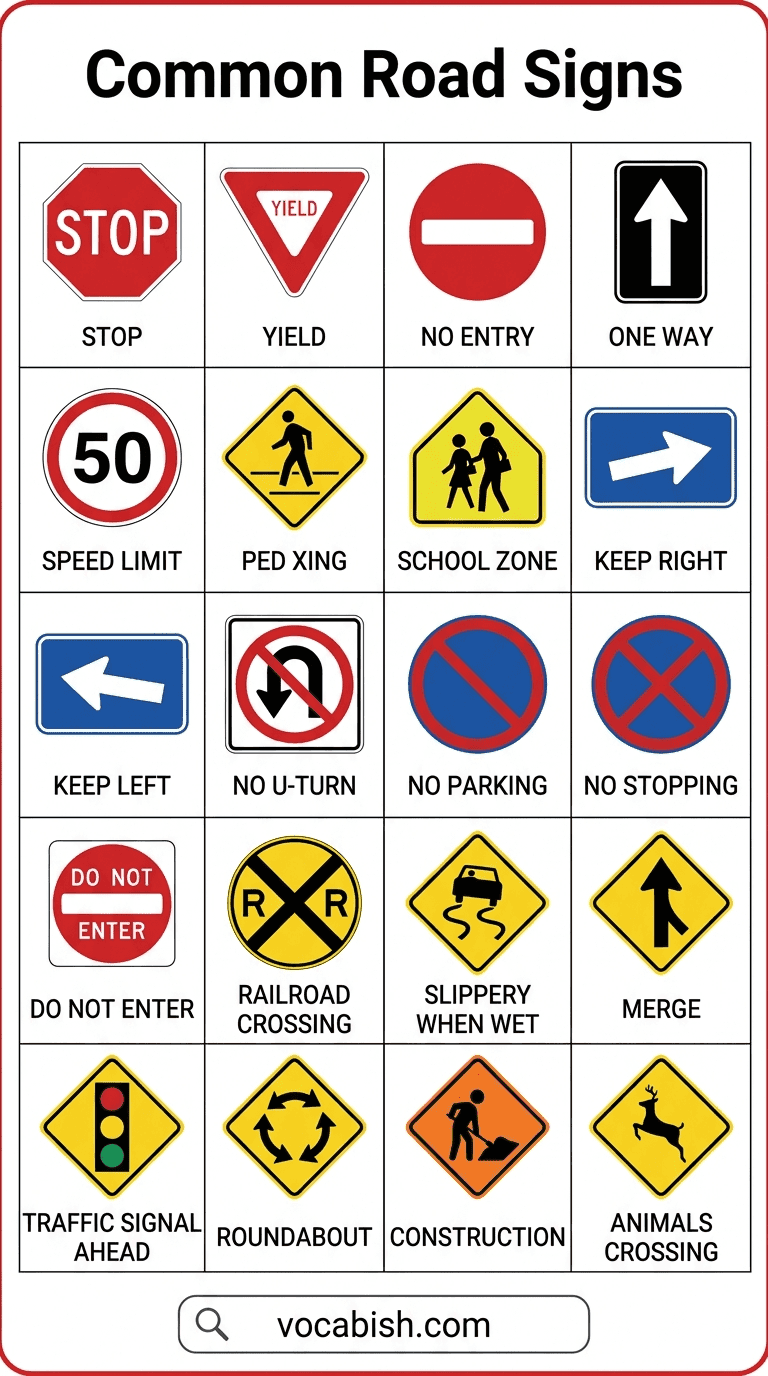
- Stop – You must stop completely.
Example: I stopped at the stop sign before turning. - Yield – Slow down and give way to other vehicles.
Example: We yielded to cars coming from the main road. - No Entry – Vehicles cannot enter.
Example: The street is closed because of the no entry sign. - One Way – Traffic moves in one direction.
Example: I drove carefully down the one-way street. - Speed Limit – Maximum speed allowed.
Example: The speed limit sign says 50 km/h. - Pedestrian Crossing (Ped Xing) – People may cross the road.
Example: I waited for pedestrians to cross at the ped xing. - School Zone – Slow down near schools.
Example: Drivers must slow down in the school zone. - Keep Right – Stay on the right side of the road.
Example: Trucks must keep right for slow traffic. - Keep Left – Stay on the left side of the road.
Example: Cyclists must keep left on this road. - No U-Turn – Turning around is not allowed.
Example: I continued straight because no U-turn is allowed. - No Parking – Parking is prohibited.
Example: I could not park here because of the no parking sign. - No Stopping – Vehicles cannot stop.
Example: I drove through carefully; no stopping is allowed. - Do Not Enter – Entry is forbidden.
Example: I turned back at the do not enter sign. - Railroad Crossing (RR Xing) – Train tracks ahead.
Example: I looked both ways at the railroad crossing. - Slippery When Wet – Road may be slippery in rain.
Example: I drove slowly because the road was slippery when wet. - Merge – Two lanes join; merge safely.
Example: Cars merged carefully at the merge sign. - Traffic Signal Ahead – Traffic lights ahead.
Example: I prepared to stop at the traffic signal ahead. - Roundabout – Circular intersection ahead.
Example: We entered the roundabout carefully. - Road Work Ahead / Construction – Road work ahead.
Example: I followed the detour near the road work sign. - Deer Crossing / Animals Crossing – Animals may cross.
Example: I stopped for deer at the deer crossing.
Types of Road Signs with Meanings
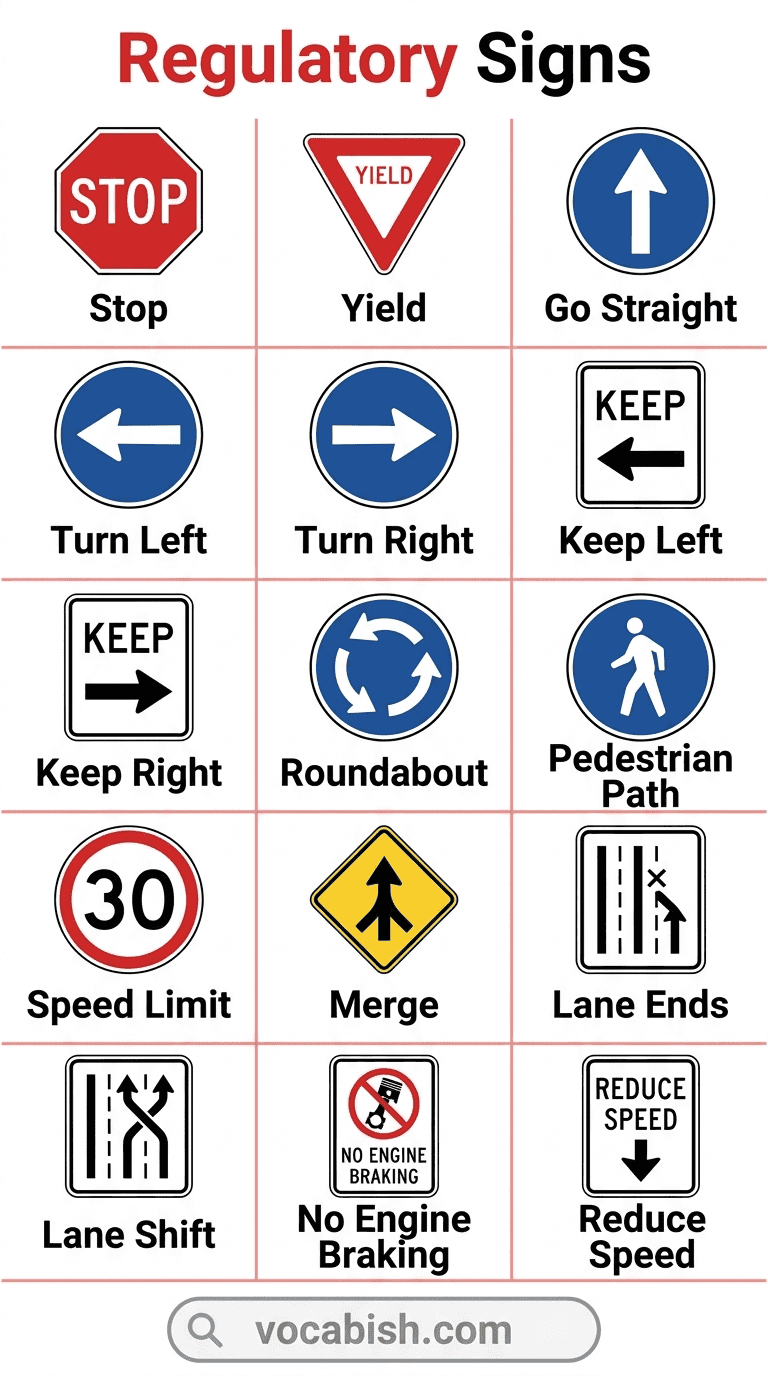
Regulatory Signs
Regulatory signs tell drivers what they must do on the road:
- Stop – You must stop completely.
Example: I stopped at the stop sign before turning. - Yield – Slow down and give way to other vehicles.
Example: We yielded to cars coming from the main road. - Go Straight – Only go straight ahead.
Example: Cars must go straight at this intersection. - Turn Left – You must turn left.
Example: The sign tells drivers to turn left here. - Turn Right – You must turn right.
Example: I turned right as the sign instructed. - Keep Left – Stay on the left side of the road.
Example: Cyclists must keep left on this path. - Keep Right – Stay on the right side of the road.
Example: Trucks must keep right for slow traffic. - Roundabout – Follow the circular direction of the roundabout.
Example: We entered the roundabout and went around carefully. - Pedestrian Path – Walk only on this path.
Example: People must use the pedestrian path to cross safely. - Speed Limit – Do not drive faster than the number shown.
Example: The speed limit sign says 50 km/h. - Merge – Join another lane safely.
Example: Cars merged smoothly at the merge sign. - Lane Ends – Move out of the ending lane.
Example: I changed lanes because the lane ends sign appeared. - Lane Shift – Road shifts left or right; follow the lane.
Example: Drivers followed the lane shift at the construction site. - No Engine Braking – Do not use engine to slow down.
Example: Trucks must follow the no engine braking rule. - Reduce Speed – Slow down; danger ahead.
Example: I reduced speed before the sharp curve.
Prohibition Signs
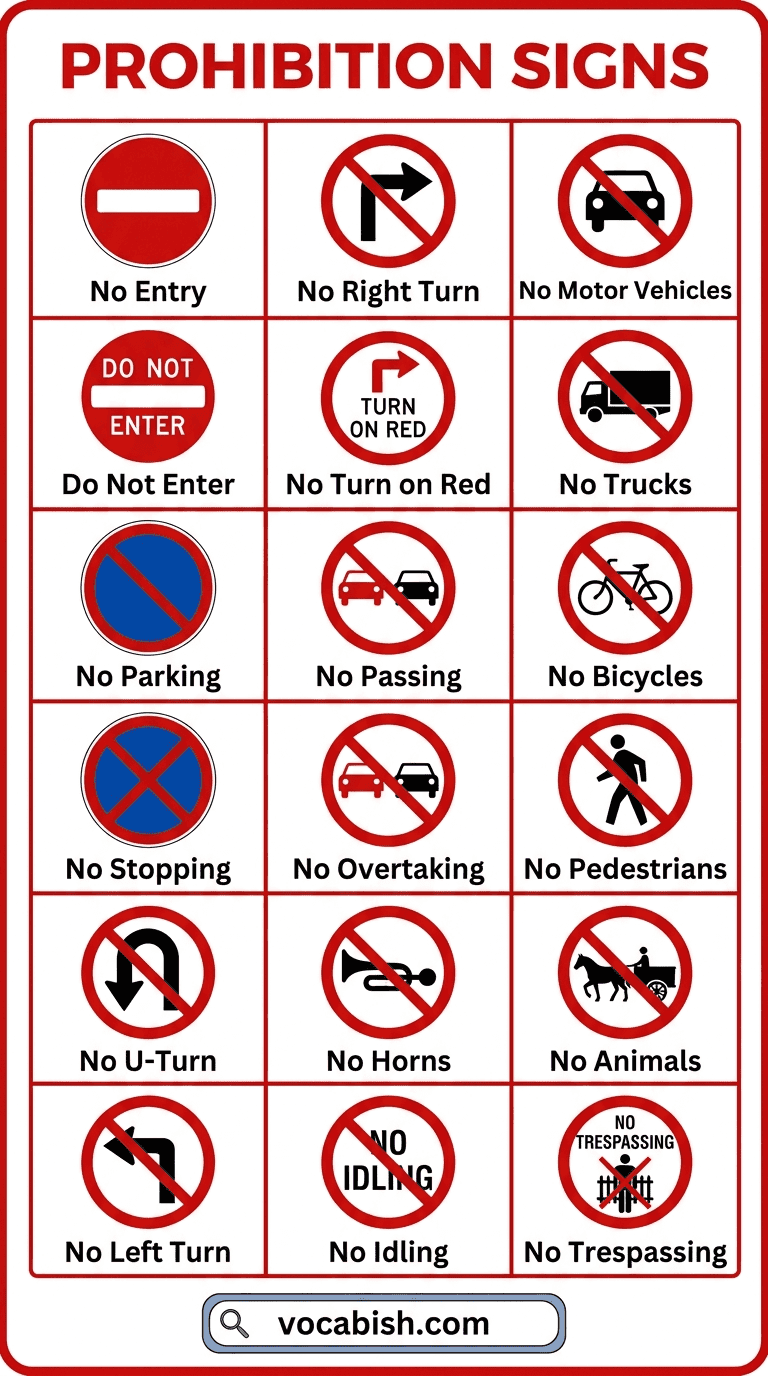
Prohibition signs tell drivers what they cannot do:
- No Entry – Vehicles cannot enter.
Example: Cars cannot go down this street because of the no entry sign. - Do Not Enter – Entry forbidden.
Example: I turned back at the do not enter sign. - No Parking – Parking is not allowed.
Example: I could not park here because of the no parking sign. - No Stopping – Vehicles cannot stop.
Example: I drove through carefully; no stopping is allowed. - No U-Turn – Cannot turn around.
Example: I continued straight because no U-turn is allowed. - No Left Turn – Cannot turn left.
Example: I turned right because the no left turn sign was posted. - No Right Turn – Cannot turn right.
Example: The no right turn sign stopped me from turning. - No Turn on Red – Cannot turn at red light.
Example: I waited at the red light; turning was not allowed. - No Passing – Do not pass other vehicles.
Example: I stayed behind the truck because no passing was allowed. - No Overtaking – Do not overtake vehicles.
Example: Cars followed the no overtaking rule on the bridge. - No Horns – Do not honk.
Example: The hospital area has a no horns sign. - No Idling – Do not leave engine running.
Example: I turned off the car at the no idling sign. - No Motor Vehicles – Cars and motorcycles not allowed.
Example: Only bicycles can use this path; no motor vehicles sign posted. - No Trucks – Trucks are prohibited.
Example: The road is closed to trucks. - No Bicycles – Bicycles are prohibited.
Example: Cyclists cannot enter this street. - No Pedestrians – Walking is prohibited.
Example: Pedestrians must use the sidewalk; no pedestrians sign posted. - No Animals – Animals not allowed.
Example: Keep pets off this road; no animals sign posted. - No Trespassing – Private property; entry forbidden.
Example: I did not enter because of the no trespassing sign. - No Engine Running / Starting / Revving / Testing / Parking / Moving – Engines must stay off or not be used.
Example: I turned off the engine at the no engine running sign.
Warning Signs
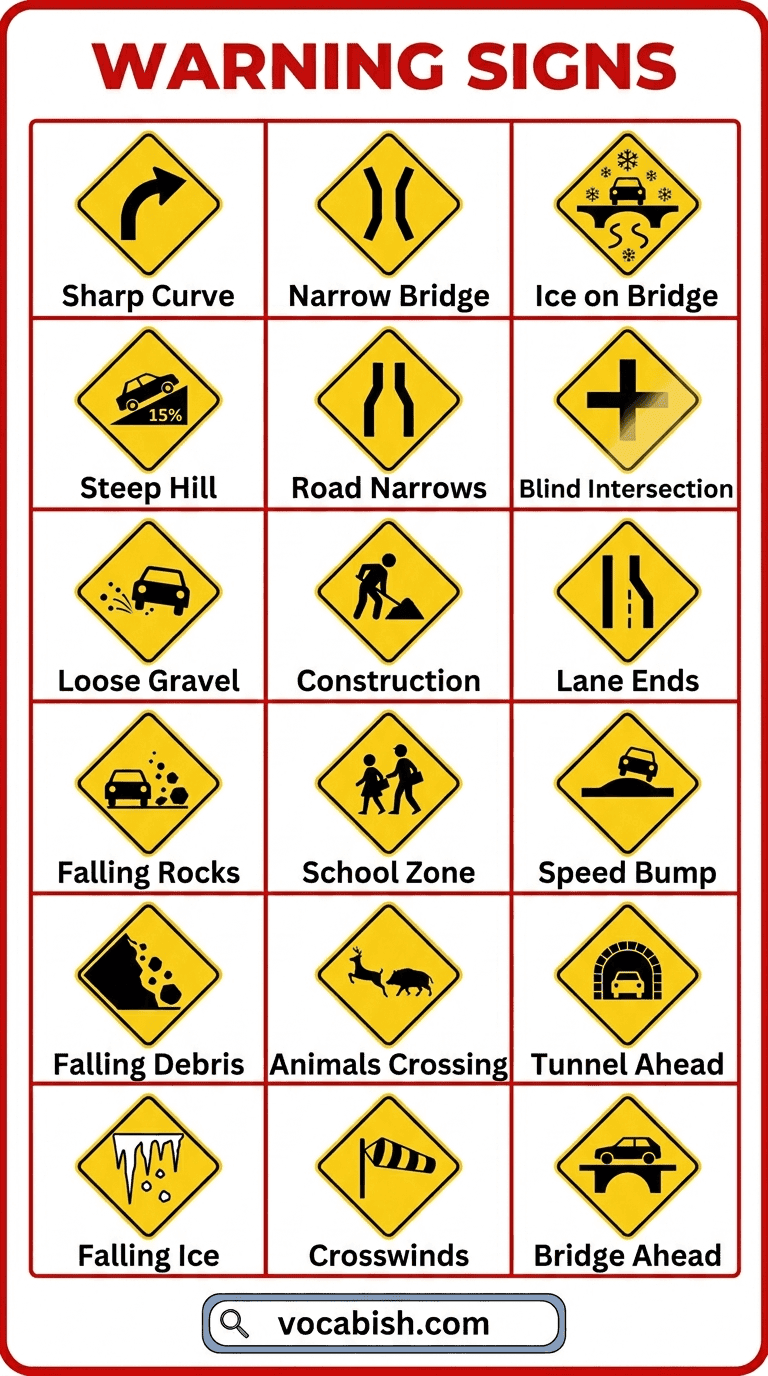
Warning signs alert drivers to danger or special road conditions.
- Slippery When Wet – Road may be slippery when wet.
Example: I drove slowly because the slippery when wet sign was posted. - Sharp Curve – Road curves sharply ahead.
Example: I slowed down at the sharp curve. - Steep Hill – Road goes steeply up or down.
Example: Trucks used low gear on the steep hill. - Loose Gravel – Gravel on the road may reduce traction.
Example: I drove carefully on loose gravel. - Falling Rocks / Debris – Rocks or debris may fall on the road.
Example: I watched for falling rocks near the mountain road. - Narrow Bridge / Road Narrows – Road or bridge becomes narrower.
Example: I slowed down because the road narrows ahead. - Road Work / Construction – Construction or maintenance ahead.
Example: I followed the detour near the road work sign. - Children / School Zone / Slow Children – Children may be nearby.
Example: I drove slowly through the school zone. - Deer / Wild Animals / Animals Xing – Animals may cross the road.
Example: I stopped for deer at the deer crossing. - Traffic Signal Ahead – Traffic lights ahead.
Example: I prepared to stop for the traffic signal ahead. - Railroad Crossing (RR Xing) – Train tracks ahead.
Example: I looked both ways at the RR Xing. - Crosswinds – Strong wind may affect vehicles.
Example: I held the steering wheel tightly because of crosswinds. - Ice / Ice on Bridge – Road may be icy.
Example: I slowed down at the ice on bridge sign. - Blind Intersection – Limited visibility at intersection.
Example: I approached the blind intersection carefully. - Vehicles Entering from Right / Left – Cars may join from the side.
Example: I watched for vehicles entering from the right. - Lane Ends / Merge / Merge Left / Merge Right – Lanes join or end ahead.
Example: I merged carefully because the lane ends sign appeared. - Speed Bump / Bumps Ahead – Raised area to slow traffic.
Example: I slowed down for the speed bump. - Tunnel Ahead – Tunnel is coming.
Example: I turned on my lights before entering the tunnel. - Bridge Ahead – Bridge crossing ahead.
Example: I slowed down at the bridge ahead sign.
Guide Signs
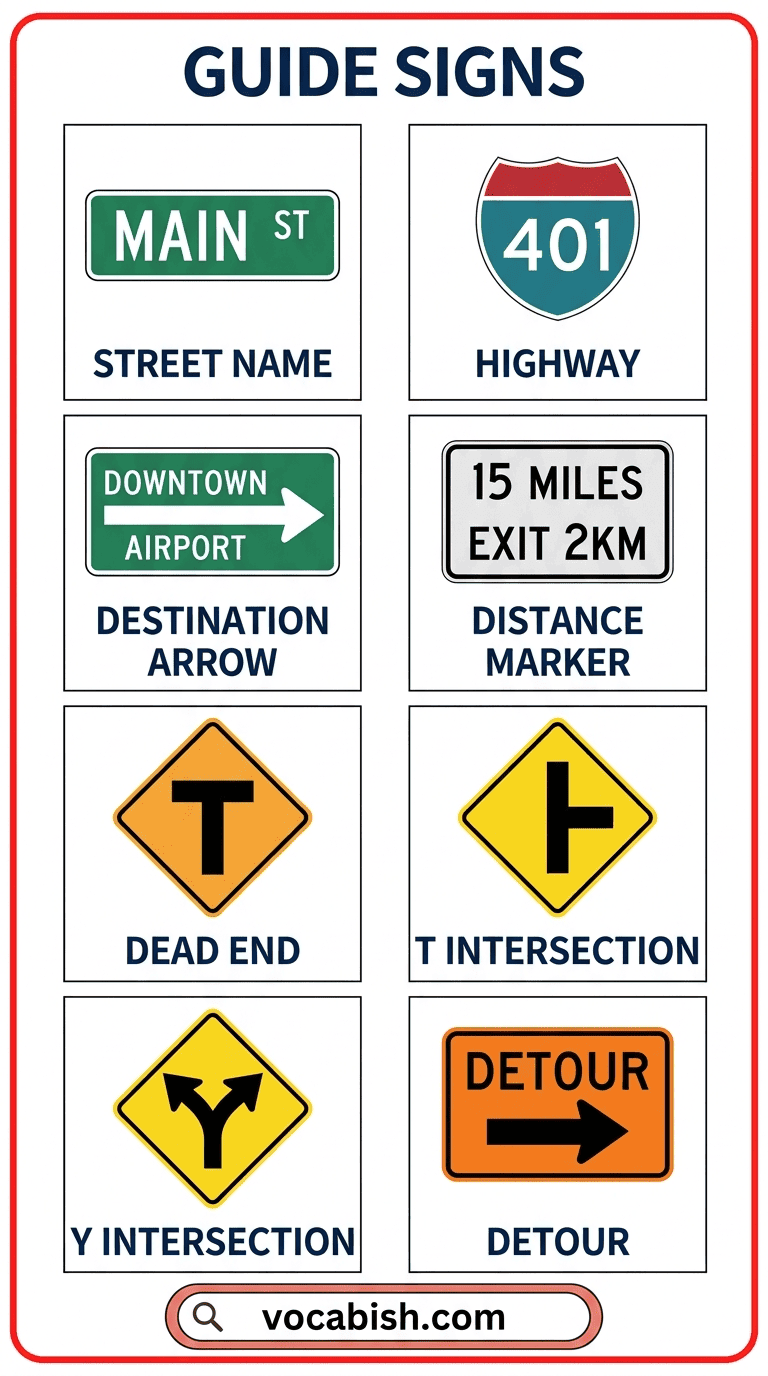
Guide signs help with directions, destinations, and routes.
- Street Name – Name of the street or road.
Example: I turned left on Main Street. - Highway / Route Number – Identifies a highway or route.
Example: I followed Highway 101 to reach the city. - Destination Arrow – Shows direction to a place.
Example: The arrow pointed to the nearest hospital. - Distance Marker – Distance to the destination.
Example: I saw the distance marker showing 5 km to the town. - Dead End – Road has no exit.
Example: I turned around because the road ended. - T Intersection / Y Intersection – Road ends or splits.
Example: I chose the left branch at the Y intersection. - Detour – Take an alternate route.
Example: I followed the detour around construction.
Information Signs
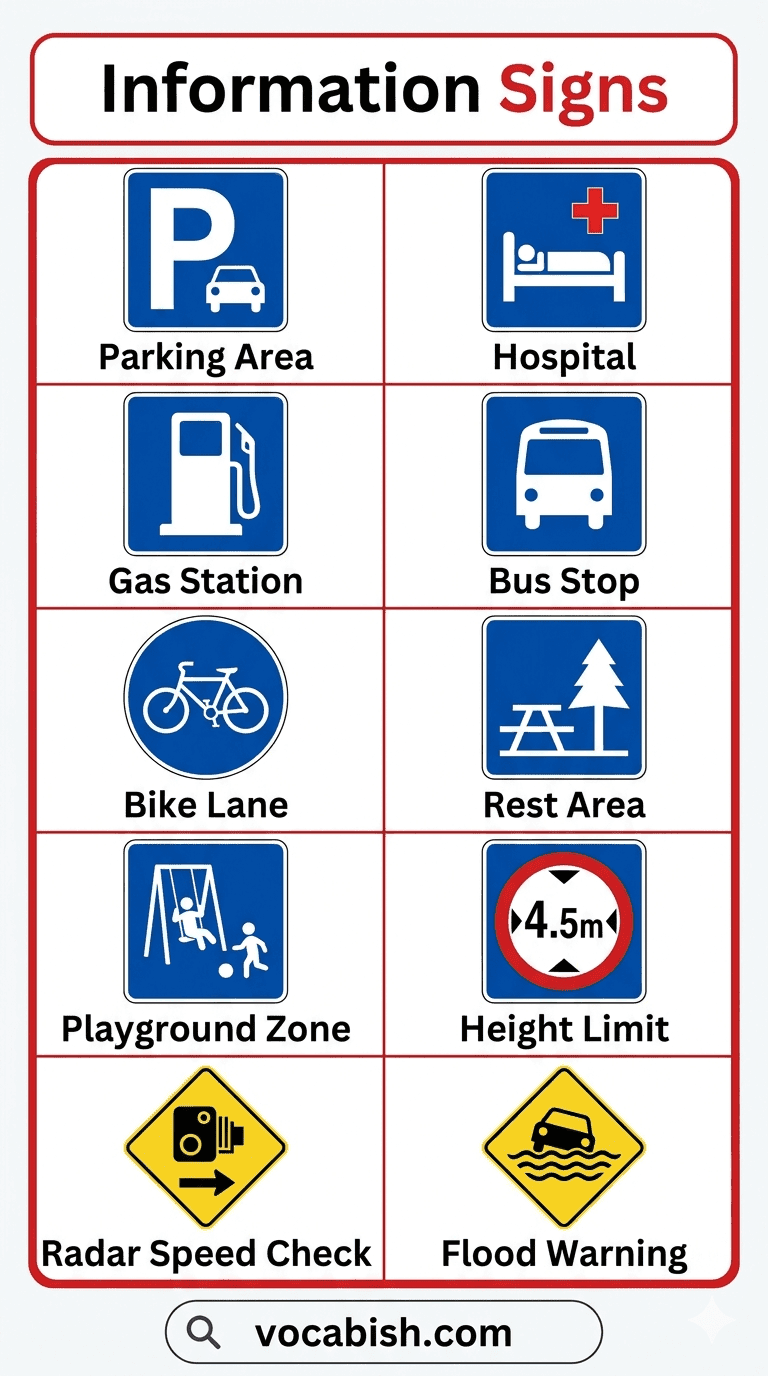
Information signs provide helpful information for drivers or pedestrians.
- Parking Area – Place to park vehicles.
Example: I parked my car in the parking area. - Hospital – Medical help nearby.
Example: I saw the hospital sign and drove carefully. - Fuel Station / Gas Station – Gas station ahead.
Example: I stopped at the fuel station sign to refuel. - Bus Stop – Place where buses pick up passengers.
Example: The bus stopped at the bus stop. - Bike Lane – Lane for bicycles.
Example: Cyclists must use the bike lane. - Rest Area – Place to rest or take a break.
Example: I stopped at the rest area during the long drive. - School / Playground Zone – Children may be present.
Example: I drove slowly in the school zone. - Low Clearance / Height Limit – Vehicles taller than the limit cannot pass.
Example: Trucks cannot enter under the low clearance sign. - Radar Speed Check – Speed is monitored.
Example: I slowed down because of the radar speed check sign. - Flood / Ice / Hazard Info – Road may be dangerous due to conditions.
Example: I avoided the flooded road ahead.
Construction / Work Signs
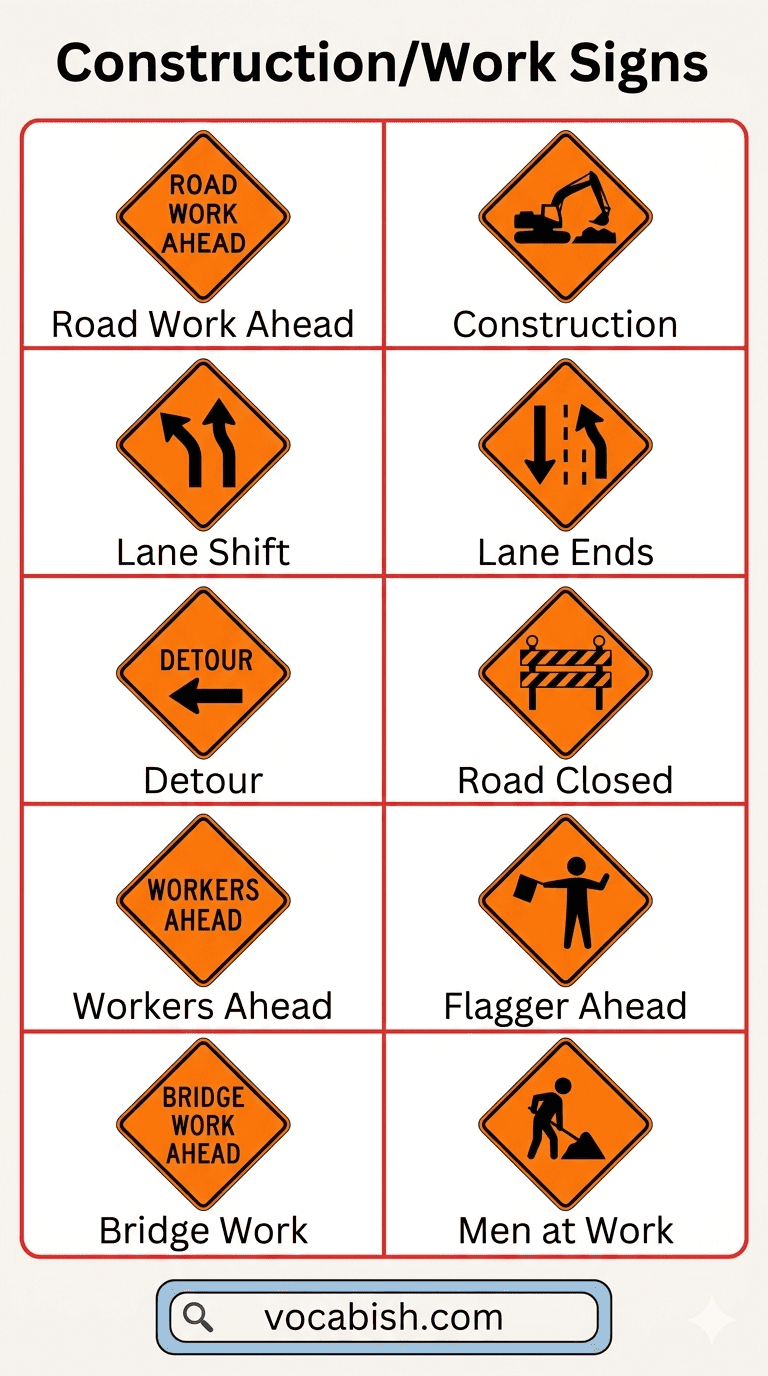
These signs warn drivers about road work or temporary hazards.
- Road Work Ahead – Road construction ahead.
Example: I slowed down because the road work ahead sign was posted. - Construction – Construction or maintenance work is ongoing.
Example: I followed the detour near the construction sign. - Lane Shift – Lane moves left or right due to construction.
Example: Drivers followed the lane shift at the work zone. - Lane Ends – Lane stops; merge into another lane.
Example: I merged safely because the lane ends sign appeared. - Detour – Take an alternate route around construction.
Example: I followed the detour to reach the main road. - Road Closed – Road is blocked; cannot pass.
Example: I turned back because of the road closed sign. - Workers Ahead – People are working on the road.
Example: I slowed down because the workers ahead sign was posted. - Flagger Ahead – A person is controlling traffic.
Example: I stopped because the flagger ahead was signaling. - Bridge Work / Repair – Construction on bridge ahead.
Example: I slowed down for bridge repair signs. - Men at Work / Machinery – Workers and machines present.
Example: I drove carefully because of the men at work sign.
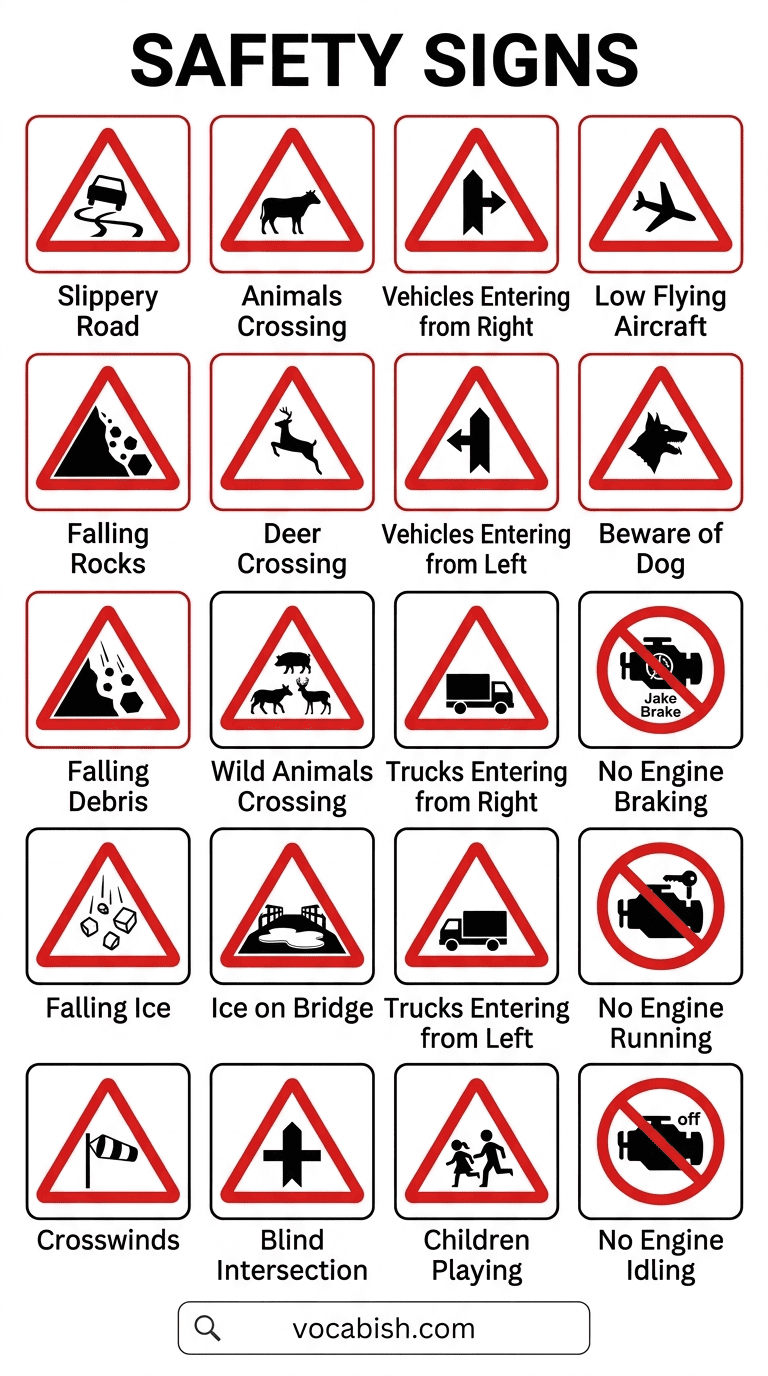
Special / Safety Signs
These signs warn about specific hazards or unusual conditions.
- Slippery Road – Road may be slippery.
Example: I slowed down because the road was slippery. - Falling Rocks / Falling Debris / Falling Ice – Rocks, debris, or ice may fall.
Example: I watched carefully for falling rocks on the mountain road. - Crosswinds – Strong winds may affect vehicles.
Example: I held the wheel tightly at the crosswinds sign. - Animals / Deer / Wild Animals Crossing – Animals may cross.
Example: I stopped for deer at the deer crossing sign. - Ice / Ice on Bridge – Road may be icy.
Example: I drove slowly because of ice on the bridge. - Low Clearance / Height Limit – Vehicles taller than the limit cannot pass.
Example: Trucks avoided the tunnel because of low clearance. - Blind Intersection – Limited visibility at the intersection.
Example: I slowed down at the blind intersection sign. - Sharp Curve / Steep Hill – Dangerous road shape ahead.
Example: I reduced speed for the sharp curve. - Speed Bump / Bumps Ahead – Raised areas to slow traffic.
Example: I drove carefully over the speed bump. - No Horns – Do not honk in quiet zones.
Example: I did not honk near the hospital; the no horns sign was posted. - No Engine Braking / No Engine Running / No Engine Starting – Engine cannot be used in certain ways.
Example: Trucks followed the no engine braking sign. - Flood – Road may be flooded.
Example: I avoided the flooded road ahead. - Vehicles Entering from Right / Left – Cars may join from side streets.
Example: I watched for vehicles entering from the left. - Trucks Entering from Right / Left – Trucks may enter from side streets.
Example: I slowed down because trucks were entering from the right. - Children Playing / School Zone – Children may be nearby.
Example: I drove slowly because of the children playing sign. - No Trespassing / Beware of Dog – Private property or hazards.
Example: I did not enter the yard because of the beware of dog sign. - Low Flying Aircraft – Aircraft may fly low overhead.
Example: I saw the low flying aircraft sign near the airfield. - Radar Speed Check – Speed is monitored by radar.
Example: I slowed down because of the radar speed check.
Example Sentences Using Road Signs
- I stopped at the stop sign before crossing the busy street.
- The pedestrian crossing sign warned me that people were walking nearby.
- We slowed down because the slippery road sign showed the street was wet.
- The speed limit sign told drivers not to go faster than 50 km/h.
- I could not enter the street because of the no entry sign.
- The children crossing sign reminded me to drive carefully near the school.
- Drivers must turn left when they see the turn left sign.
- We parked our car in the parking area shown on the sign.
- The roundabout sign indicated that cars should go around in a circle.
- The hospital sign helped me find medical help quickly.
100 Road Signs PDF
Related Articles:
FAQs about Road Signs
Road signs are visual symbols placed along roads to give instructions, warnings, and information. They help drivers, cyclists, and pedestrians understand traffic rules and travel safely.
Road signs are usually grouped into seven main types: regulatory, prohibition, warning, guide, information, construction/work, and special safety signs. Each type helps drivers understand specific road rules and conditions.
Some of the most common road signs include Stop, Yield, Speed Limit, No Entry, One Way, Pedestrian Crossing, School Zone, and Traffic Signal Ahead. These signs control traffic and improve road safety.
A Stop sign means drivers must completely stop their vehicle before continuing. Drivers should check for other vehicles, pedestrians, or cyclists before moving forward at an intersection.
A Yield sign tells drivers to slow down and give the right of way to other vehicles or pedestrians. Drivers may continue only when the road is clear and safe.
Blue road signs usually give information or instructions to drivers. They often show services, directions, or required actions, such as parking areas, hospitals, bike lanes, or mandatory routes.
A No Through Road sign tells drivers that the road does not continue to another street. It usually ends in a dead end or private area, so drivers cannot pass through.
A T road sign warns drivers that the road ahead ends at a T-shaped intersection. Drivers must turn left or right because the road does not continue straight.
A Speed Limit sign shows the maximum speed drivers are allowed to travel on that road. Drivers must follow this limit to maintain safety and obey traffic laws.
Conclusion
Learning all road signs in English improves safety, vocabulary, and confidence. Use this article to recognize signs quickly, understand traffic rules, and speak English naturally.