
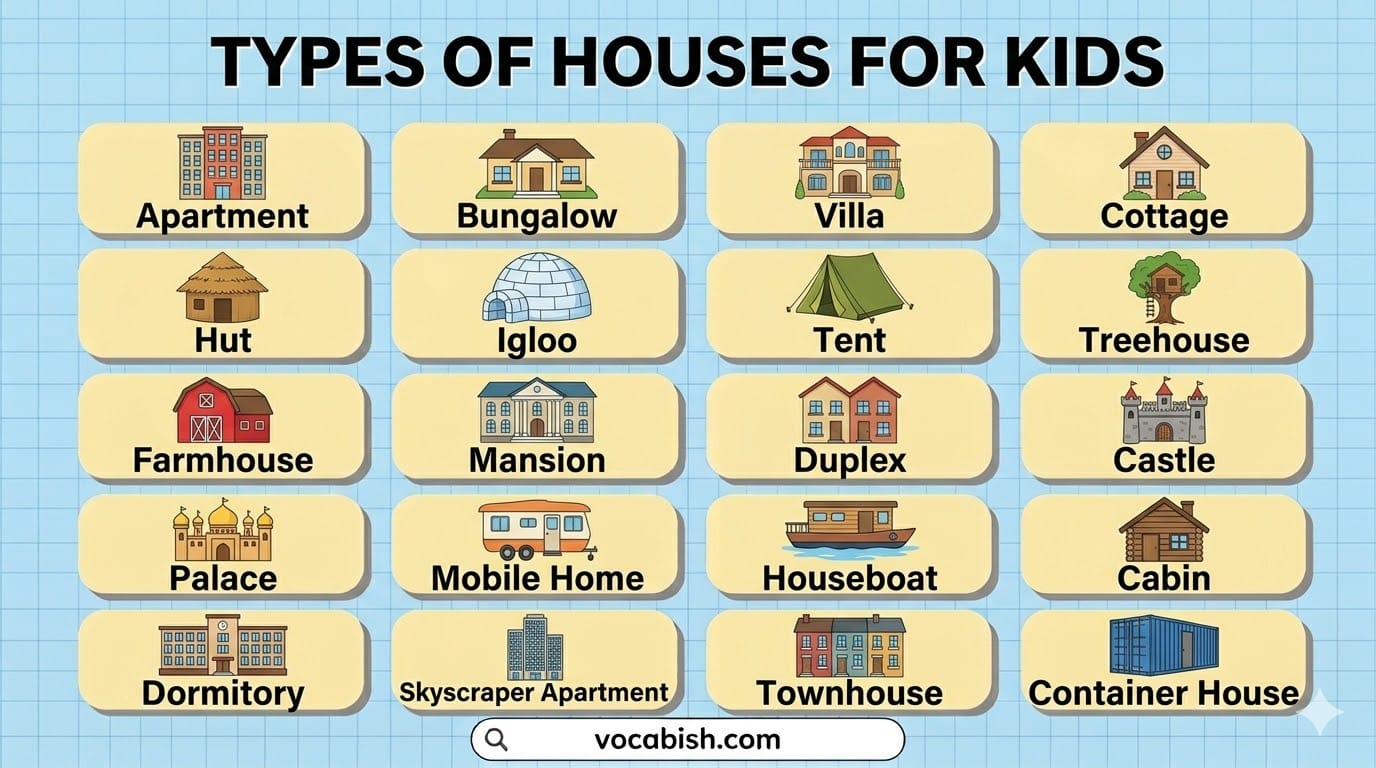
In this blog post, you will learn the types of houses for kids and understand how people live in different homes around the world. House vocabulary includes words like apartment, hut, villa, and cottage. These words are important for English learners because they help you talk about your home and describe other places correctly. When you study these names, you improve your speaking by using the right words, your reading by understanding stories better, your writing by describing homes clearly, and your listening by recognizing these words in conversations. Step by step, you will understand each type of house and master useful vocabulary that you can use in daily life.
What Are Types of Houses?
Types of houses are different kinds of homes where people live. Some houses are big, while others are small. Some are made of wood, and others are made of brick or ice.
For example:
- A villa is large and comfortable
- A hut is small and simple
Why Learning House Names Is Important
Learning house vocabulary is useful in daily life. It helps kids:
- Talk about their home clearly
- Understand stories and books
- Describe places while speaking
- Build strong English vocabulary
Common Types of Houses for Kids
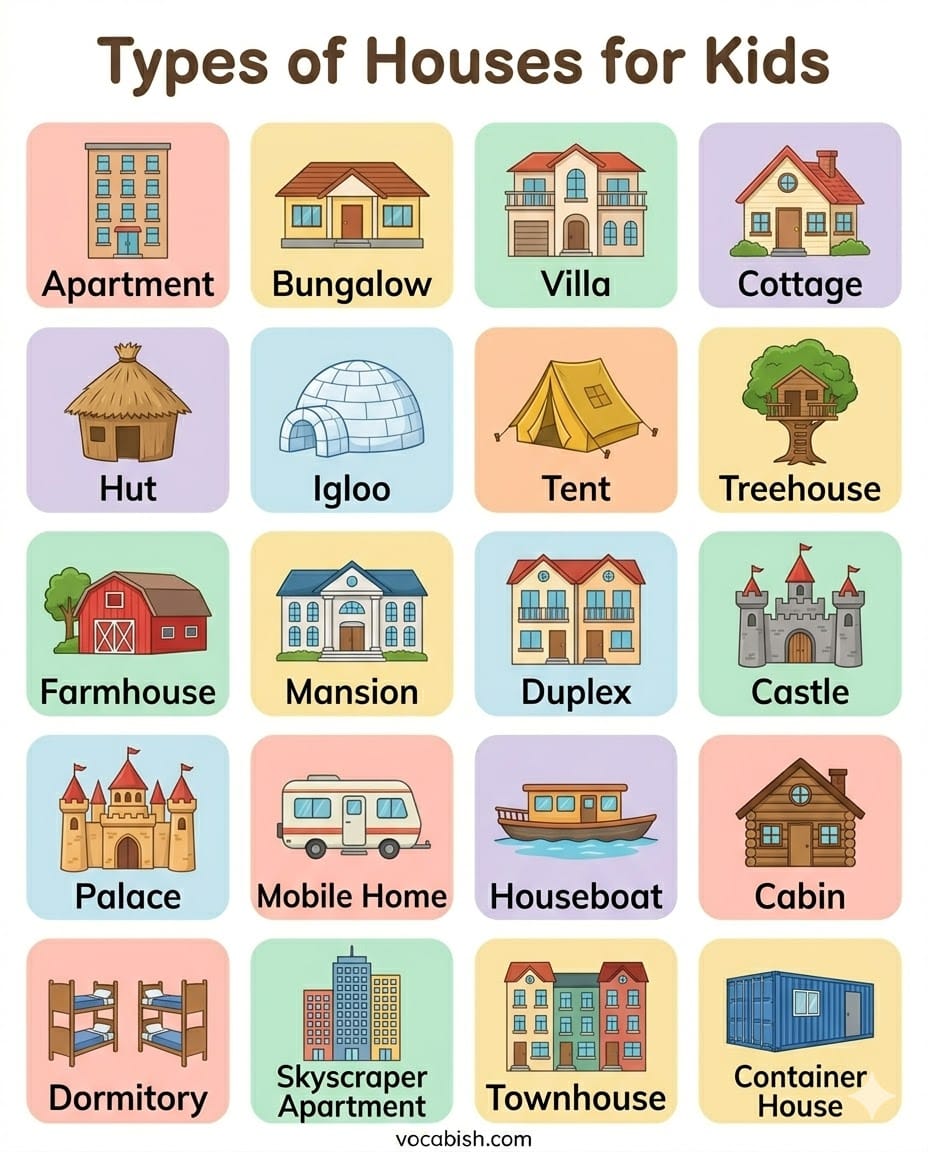
Here are 20 important types of houses with meanings and pictures:
- Apartment – A set of rooms in a big building where many families live
- Bungalow – A small house with only one floor
- Villa – A large and beautiful house, often in a rich area
- Cottage – A small, cozy house in the countryside
- Hut – A simple house made of wood, mud, or grass
- Igloo – A house made of snow and ice
- Tent – A portable house made of cloth, used for camping
- Treehouse – A small house built in a tree
- Farmhouse – A house on a farm
- Mansion – A very big and luxurious house
- Duplex – A house divided into two parts for two families
- Castle – A large, strong building where kings and queens lived
- Palace – A grand and beautiful home for royalty
- Mobile Home – A house that can be moved from one place to another
- Houseboat – A house that floats on water
- Cabin – A small wooden house in the forest or mountains
- Dormitory – A building where many students live together
- Skyscraper Apartment – A home in a very tall building
- Townhouse – Houses joined together in a row
- Container House – A modern house made from shipping containers
Modern and Special Types of Houses
Some houses are unique and built for special needs or places:
- Eco House – Built to protect the environment
- Smart Home – Uses technology to control lights and devices
- Underground House – Built below the ground
- Floating House – Built on water
These houses show how people design homes in creative ways.
Daily Use Sentences with House Vocabulary
Using new words in sentences helps learning faster:
- I live in an apartment with my family.
- The farmer lives in a farmhouse.
- We stayed in a cabin during our trip.
- The king lived in a palace.
- They built a treehouse for fun.
Tips to Remember House Names
Here are simple tips for kids:
- Learn 3–5 words daily
- Use pictures to remember each house
- Speak the words aloud
- Make your own sentences
- Practice with friends or family
FAQs about Types of Houses
Types of houses for kids are simple names of different homes like apartment, hut, and villa. These words help children understand where people live and improve everyday English vocabulary.
Common types of houses for kids include apartment, bungalow, hut, cottage, villa, and farmhouse. These are basic and useful words children often see in books and real life.
A house is a single building for one family, while an apartment is one home inside a larger building. Many families live in the same apartment building.
A bungalow is a small house with only one floor. It is easy to enter and move around, which makes it simple for children to understand.
A hut is a small and simple house made from natural materials like wood, mud, or grass. People often build huts in villages or forests.
An igloo is a house made of snow and ice. People in very cold regions build igloos to stay warm and protected from freezing weather conditions.
A house is a physical building made of walls and a roof. A home is a place filled with comfort, family, and emotions where people feel safe and happy.
Related Articles:
Conclusion
Learning types of houses for kids is easy and fun. These words help children describe homes, understand stories, and speak English better.
Start with simple house names, practice daily, and use them in real life. Step by step, your vocabulary will grow stronger and more useful.