
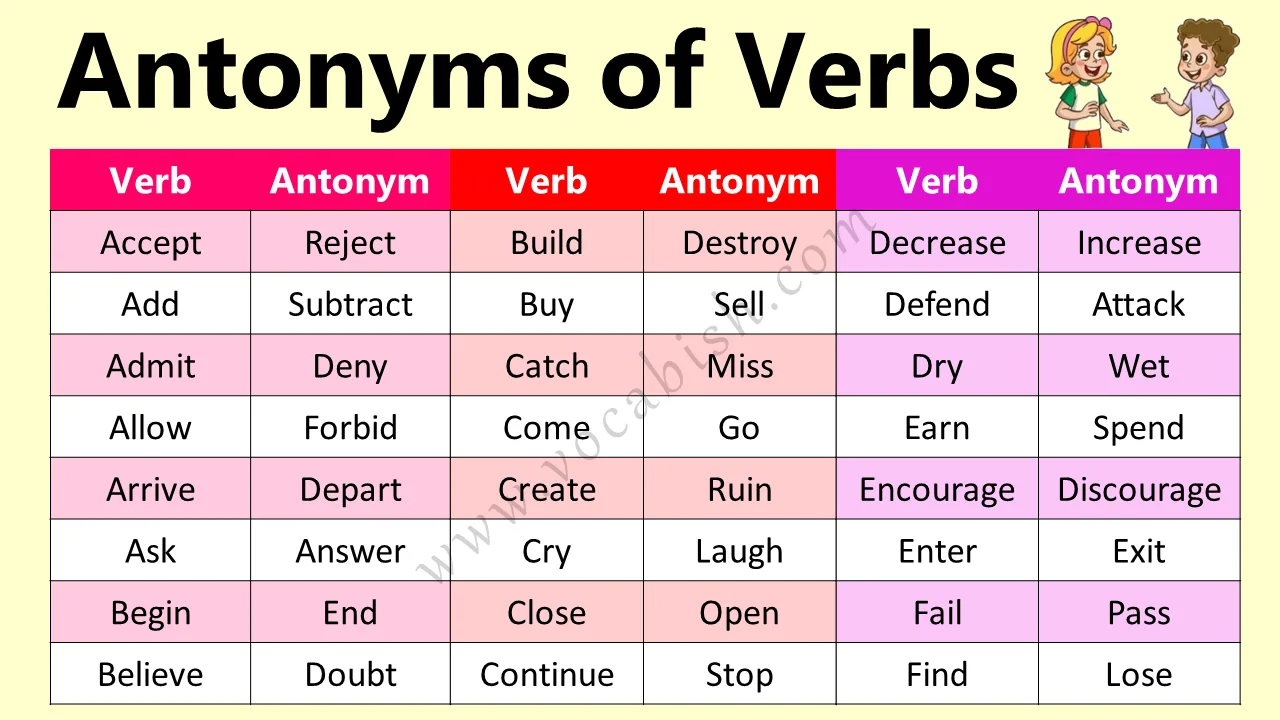
Learning verbs and their antonyms helps you express actions and their opposites clearly in English. In this blog post, you will explore 100 common English verbs with their antonyms, along with examples to show how each word is used in sentences. Understanding these verbs improves your speaking, reading, writing, and listening skills. By mastering verbs and their opposites, you can communicate ideas more precisely, describe actions effectively, and use English confidently in daily and professional situations.
What are Verbs and Antonyms?
Verbs → Action words that show what someone does.
She runs fast.
Antonyms → Words that show the opposite meaning of another word.
She walks slowly.
So, verbs tell us what is happening, and antonyms give the opposite action.
Why Learn Verbs with Antonyms?
- Helps in better vocabulary.
- Makes speaking clear and correct.
- Useful for writing, reading, and exams.
English Verbs and Their Antonyms with Examples
Accept – Reject
- I accept the gift.
- I reject the offer.
Add – Subtract
- Add two numbers.
- Subtract five marks.
Admit – Deny
- He admitted the truth.
- She denied it.
Allow – Forbid
- They allow pets.
- They forbid smoking.
Arrive – Depart
- He arrived late.
- The bus departed.
Ask – Answer
- She asked a question.
- He answered quickly.
Begin – End
- The game began.
- The match ended.
Believe – Doubt
- I believe you.
- She doubts me.
Build – Destroy
- They build houses.
- Fire destroyed homes.
Buy – Sell
- I buy fruits.
- He sells cars.
Catch – Miss
- Catch the ball.
- I missed the bus.
Come – Go
- She came home.
- He went away.
Create – Ruin
- They created art.
- He ruined it.
Cry – Laugh
- The baby cried.
- They laughed loud.
Close – Open
- Close the box.
- Open the bag.
Continue – Stop
- Continue reading.
- Stop talking.
Antonyms of Verbs with Examples
Decrease – Increase
- Prices decreased.
- Costs increased.
Defend – Attack
- Soldiers defend land.
- Enemies attack cities.
Dry – Wet
- Dry the clothes.
- Rain wets the road.
Earn – Spend
- He earns money.
- She spends it.
Encourage – Discourage
- Teachers encourage us.
- Failures discourage him.
Enter – Exit
- Enter the hall.
- Exit the gate.
Fail – Pass
- He failed the test.
- She passed well.
Find – Lose
- I found my pen.
- He lost his bag.
Float – Sink
- Boats float easily.
- Stones sink fast.
Forget – Remember
- I forgot his name.
- She remembers it.
Freeze – Melt
- Water freezes.
- Ice melts.
Give – Take
- Give me a pen.
- Take this book.
Grow – Shrink
- Plants grow fast.
- Clothes shrink later.
Verbs Examples with Antonyms
Hasten – Delay
- Hasten the work.
- Don’t delay jobs.
Help – Hinder
- He helps friends.
- Problems hinder progress.
Hope – Despair
- We hope for good.
- They despair in loss.
Ignore – Notice
- He ignored me.
- She noticed it.
Improve – Worsen
- His health improved.
- The pain worsened.
Join – Separate
- Join the team.
- Separate the chairs.
Keep – Throw
- Keep this safe.
- Throw it away.
Learn – Forget
- She learns fast.
- He forgets quickly.
Leave – Stay
- Leave the room.
- Stay here.
Lend – Borrow
- I lend books.
- He borrows pens.
Like – Dislike
- I like apples.
- She dislikes tea.
Love – Hate
- They love music.
- He hates noise.
Marry – Divorce
- She married him.
- They divorced later.
Move – Rest
- Move the chair.
- Rest a while.
Obey – Disobey
- Children obey parents.
- Some disobey rules.
Offer – Refuse
- He offered help.
- She refused it.
Open – Shut
- Open the door.
- Shut the window.
Play – Work
- Children play outside.
- Adults work daily.
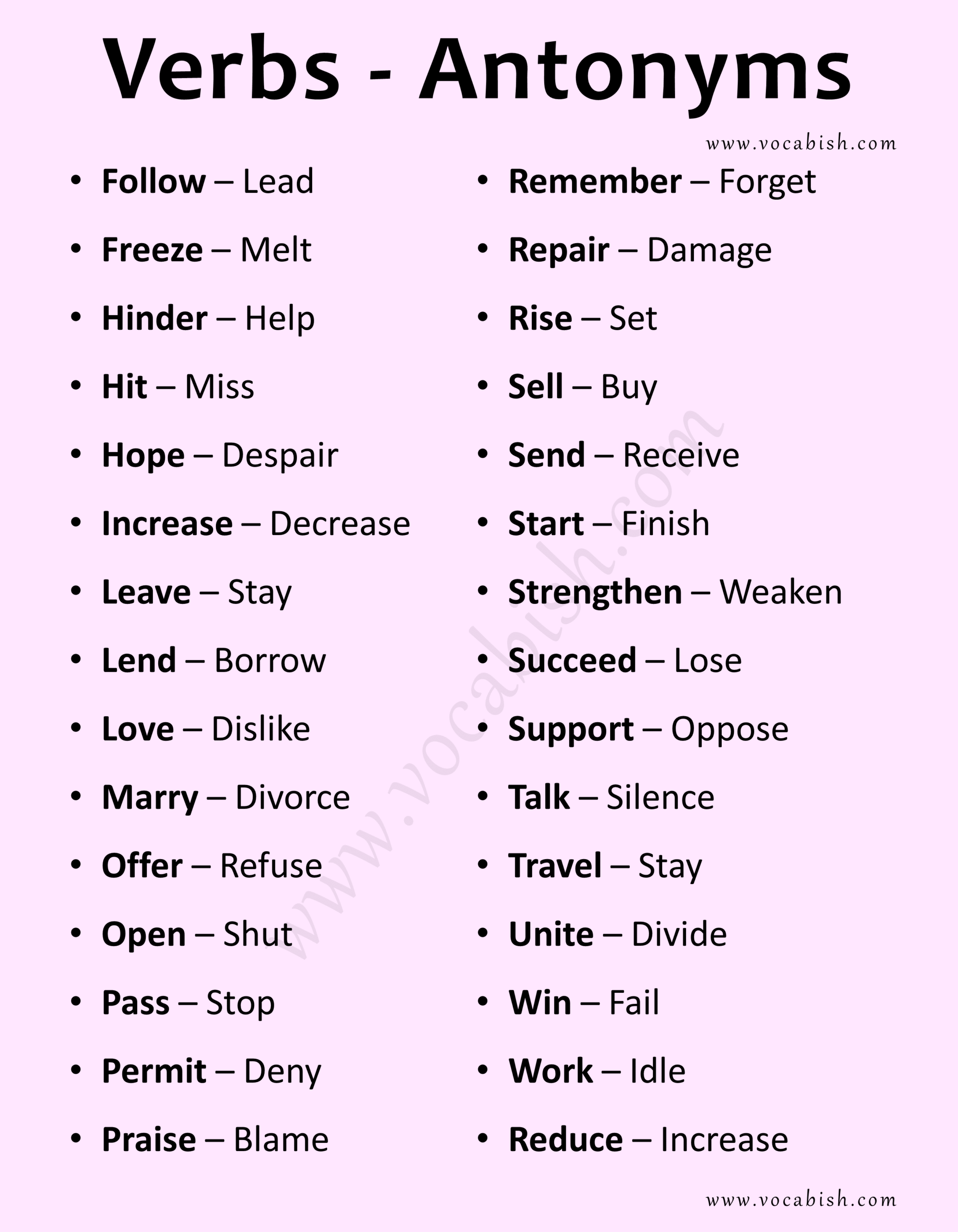
Examples of Verbs in English
Praise – Blame
- Teachers praise efforts.
- They blamed him.
Push – Pull
- Push the gate.
- Pull the rope.
Raise – Lower
- Raise your hand.
- Lower your voice.
Receive – Give
- I received a gift.
- She gave it.
Rise – Fall
- The sun rises.
- Leaves fall down.
Save – Waste
- Save some water.
- Don’t waste food.
Sell – Buy
- She sells flowers.
- I buy them.
Send – Receive
- I sent a letter.
- He received it.
Show – Hide
- Show your card.
- Hide the keys.
Sit – Stand
- Sit on the chair.
- Stand up now.
Smile – Frown
- She smiled nicely.
- He frowned hard.
Start – Stop
- Start the car.
- Stop the bus.
Strengthen – Weaken
- Exercise strengthens body.
- Illness weakens it.
Succeed – Fail
- He succeeded quickly.
- She failed badly.
Teach – Learn
- Teachers teach lessons.
- Students learn fast.
Tell – Listen
- He told a story.
- She listened well.
Throw – Catch
- Throw the ball.
- Catch it soon.
Tighten – Loosen
- Tighten the rope.
- Loosen the knot.
Unite – Divide
- They united families.
- Wars divide people.
Win – Lose
- He won the race.
- She lost it.
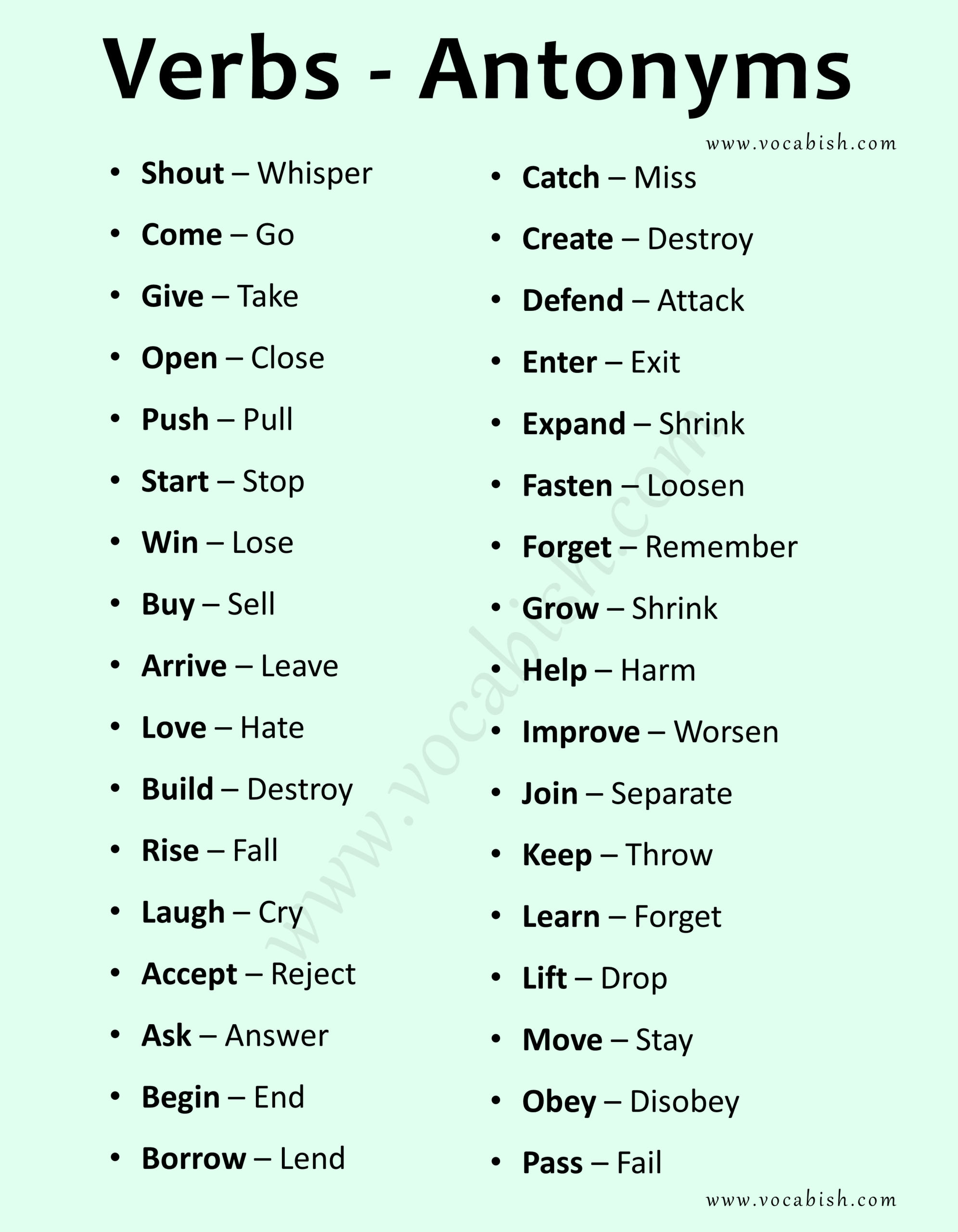
Antonyms Words for Verbs
Work – Rest
- Work hard today.
- Rest tomorrow.
Agree – Disagree
- I agree with you.
- I disagree fully.
Break – Fix
- He broke the toy.
- She fixed it.
Fasten – Unfasten
- Fasten your belt.
- Unfasten it now.
Gain – Lose
- He gained weight.
- She lost pounds.
Hide – Show
- Hide the truth.
- Show the facts.
Invite – Ignore
- Invite your friend.
- Ignore the call.
Kick – Catch
- Kick the ball.
- Catch it later.
Laugh – Cry
- He laughed loudly.
- She cried sadly.
Pass – Fail
- He passed exams.
- She failed again.
Permit – Prohibit
- They permit entry.
- They prohibit smoking.
Raise – Drop
- Raise the flag.
- Drop it down.
Repair – Damage
- Repair the car.
- Damage it more.
Reply – Question
- He replied fast.
- She questioned again.
Shout – Whisper
- Don’t shout loud.
- Whisper slowly.
Sleep – Wake
- Sleep early today.
- Wake up now.
Stand – Sit
- Stand in line.
- Sit down here.
Strengthen – Break
- Unity strengthens us.
- Hate breaks it.
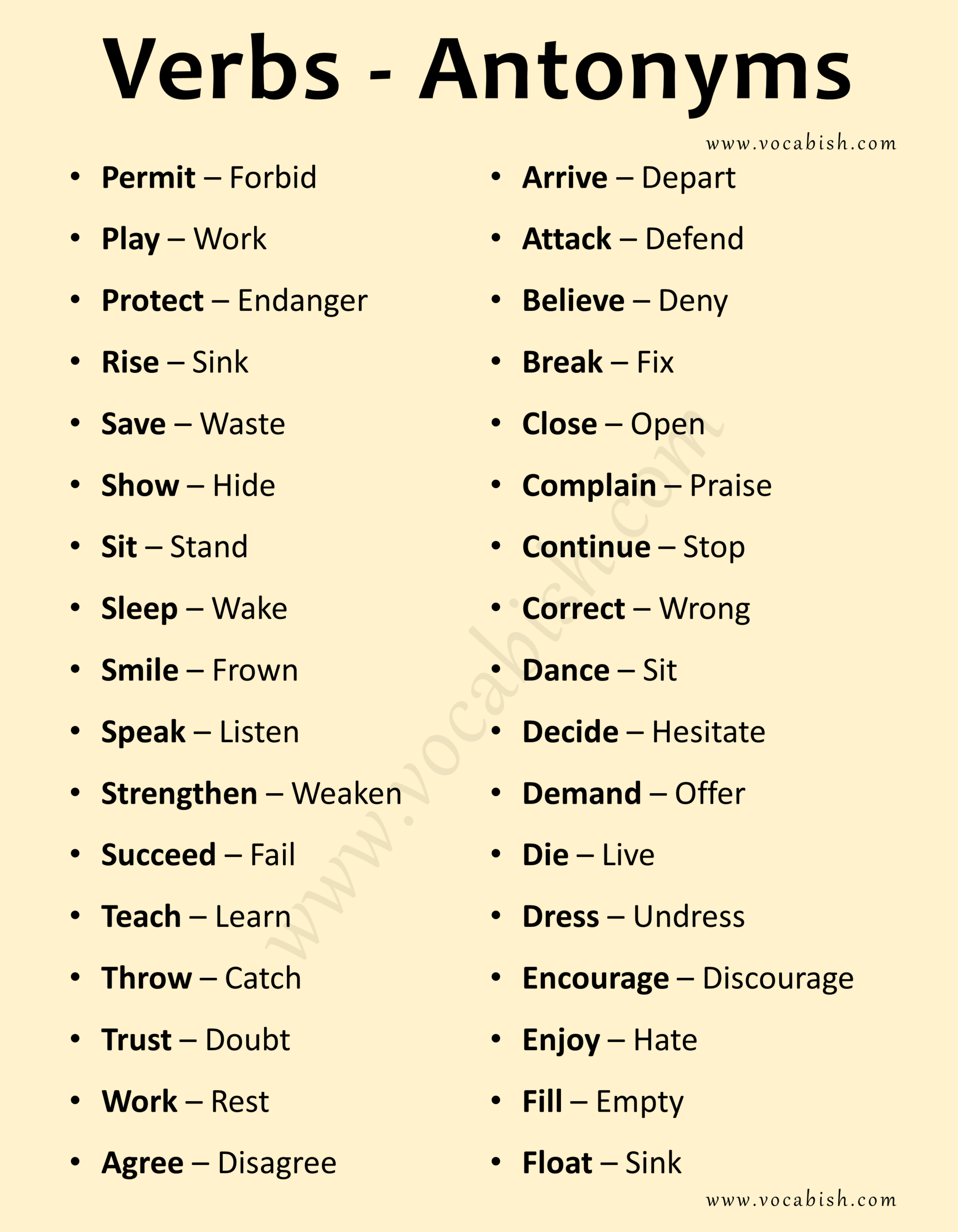
Learning verbs and antonyms is a simple and effective way to improve English. With practice, you will speak clearly, write better, and understand fast. Use these examples in daily life and you will see quick improvement.
FAQs
What are verbs and their antonyms?
Verbs are action words like run, eat, read. Their antonyms are opposite action words like walk, starve, ignore.
Why should English learners study verbs and antonyms?
Learning verbs with antonyms helps students understand opposite meanings, build strong vocabulary, and use better sentences in speaking and writing.
Can one verb have more than one antonym?
Yes, some verbs have different opposites depending on the context. Example: “Open” → antonyms can be “Close” or “Shut”.
How do antonyms improve English communication?
Using antonyms makes sentences clearer, helps in comparisons, and gives learners more word choices to express ideas.
Where can I find a list of verbs and antonyms with examples?
You can find complete lists online (like this article) that show verbs, their antonyms, and easy example sentences for practice.
Read More