
Words that are Slang are informal words and phrases people use in daily conversations, online chats, movies, games, and social media. In this blog post, you will learn how slang words work, why native speakers use them, and how they help you understand modern English more naturally. Many English learners know basic grammar and vocabulary, but they still feel confused when they hear words like “bro,” “lit,” “chill,” or “no cap.” That happens because slang is common in real-life communication. When you master slang words, you can improve your speaking, reading, writing, and listening skills step by step.
Introduction to the Slangs
Slang words are informal words people use in daily conversations. These words often sound fun, modern, and casual. Native English speakers use slang in schools, online chats, movies, games, and social media every day.
Learning words that are slang can help English learners:
- Understand real conversations
- Speak more naturally
- Improve listening skills
- Enjoy English movies and videos
- Communicate with confidence
What Are Slang Words?
Slang words are casual words or phrases people use in informal situations. They are not usually used in formal writing or business communication.
For example:
- “Cool” means nice or great.
- “Buddy” means friend.
- “Chill” means relax.
People often use slang with friends, family, classmates, or online.
Why Learning Slang Is Important
Learning words that are slang helps you understand modern English better. Many movies, songs, YouTube videos, and social media posts use slang words.
Slang also helps learners:
- Sound more natural
- Understand jokes and memes
- Join conversations easily
- Improve speaking confidence
However, use slang carefully. Some slang is only suitable for informal situations.
Daily Used Slang Words with Meanings and Examples
Here are common slang words people use every day.
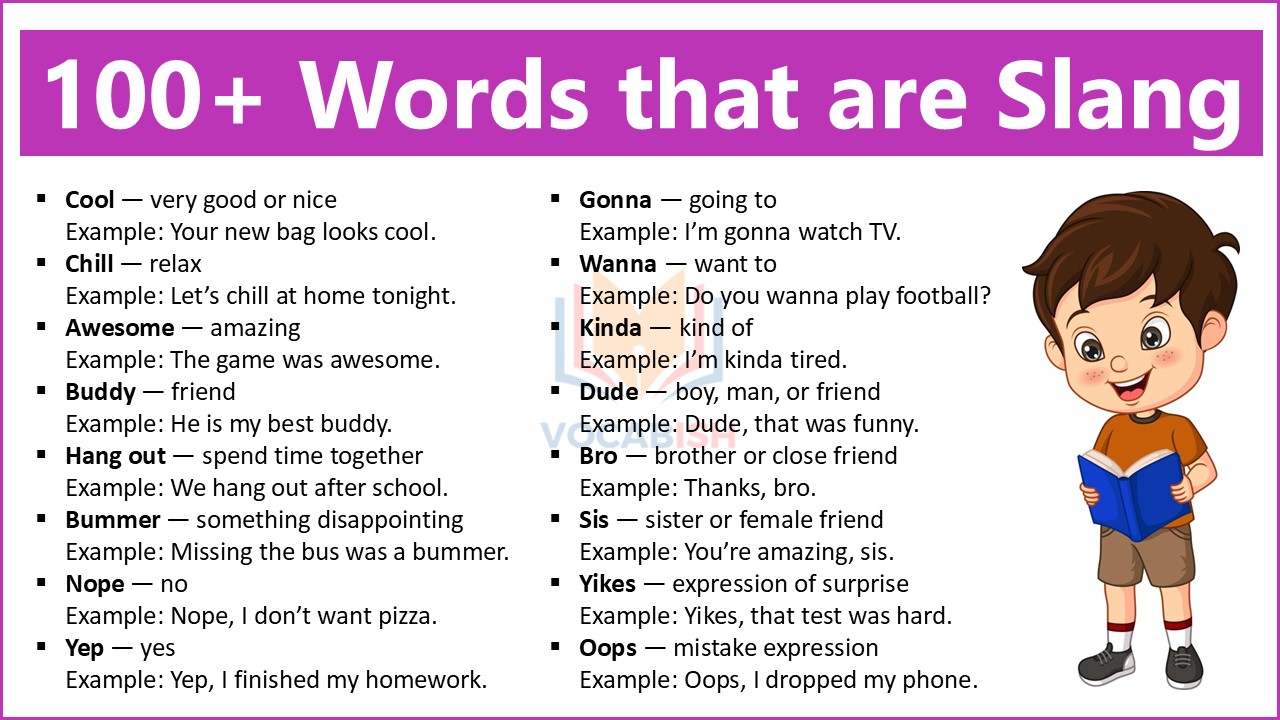
- Cool — very good or nice
Example: Your new bag looks cool. - Chill — relax
Example: Let’s chill at home tonight. - Awesome — amazing
Example: The game was awesome. - Buddy — friend
Example: He is my best buddy. - Hang out — spend time together
Example: We hang out after school. - Bummer — something disappointing
Example: Missing the bus was a bummer. - Nope — no
Example: Nope, I don’t want pizza. - Yep — yes
Example: Yep, I finished my homework. - Gonna — going to
Example: I’m gonna watch TV. - Wanna — want to
Example: Do you wanna play football? - Kinda — kind of
Example: I’m kinda tired. - Dude — boy, man, or friend
Example: Dude, that was funny. - Bro — brother or close friend
Example: Thanks, bro. - Sis — sister or female friend
Example: You’re amazing, sis. - Yikes — expression of surprise
Example: Yikes, that test was hard. - Oops — mistake expression
Example: Oops, I dropped my phone. - Bingo — correct answer
Example: Bingo! You got it right. - Nah — no
Example: Nah, I’m staying home. - Sweet — great or nice
Example: That’s a sweet bike. - Sick — very cool
Example: Your skateboard is sick.
Common Internet Slang
Internet slang appears in chats, texting, and social media.
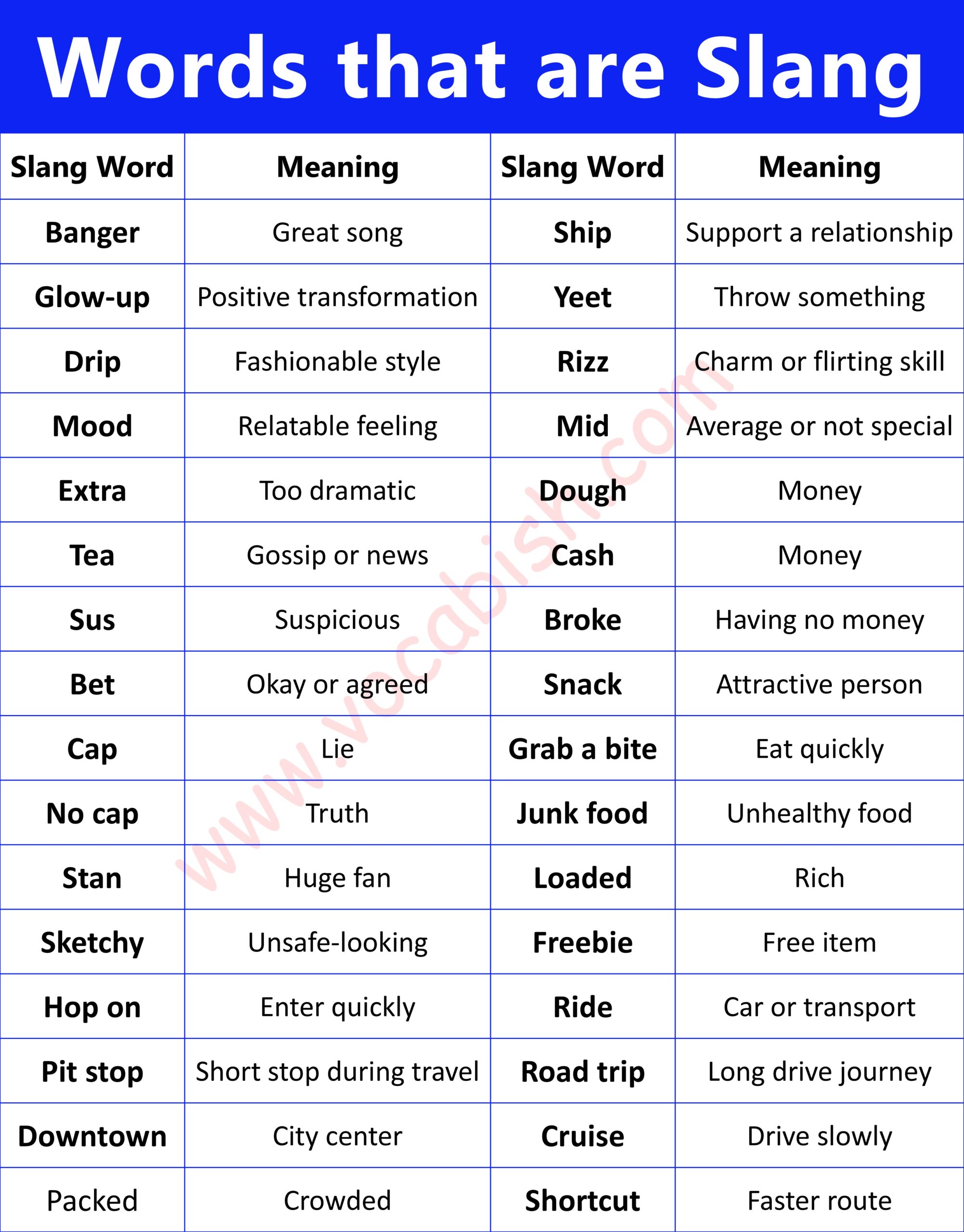
- LOL — laughing out loud
- BRB — be right back
- OMG — oh my God
- IDK — I don’t know
- BTW — by the way
- TBH — to be honest
- IMO — in my opinion
- FYI — for your information
- DM — direct message
- AFK — away from keyboard
- GOAT — greatest of all time
- Noob — beginner
- Savage — bold or fearless
- Flex — show off
- Ghost — suddenly stop replying
- Spam — unwanted messages
- Meme — funny online picture or joke
- Cringe — embarrassing
- FOMO — fear of missing out
- Vibe — feeling or mood
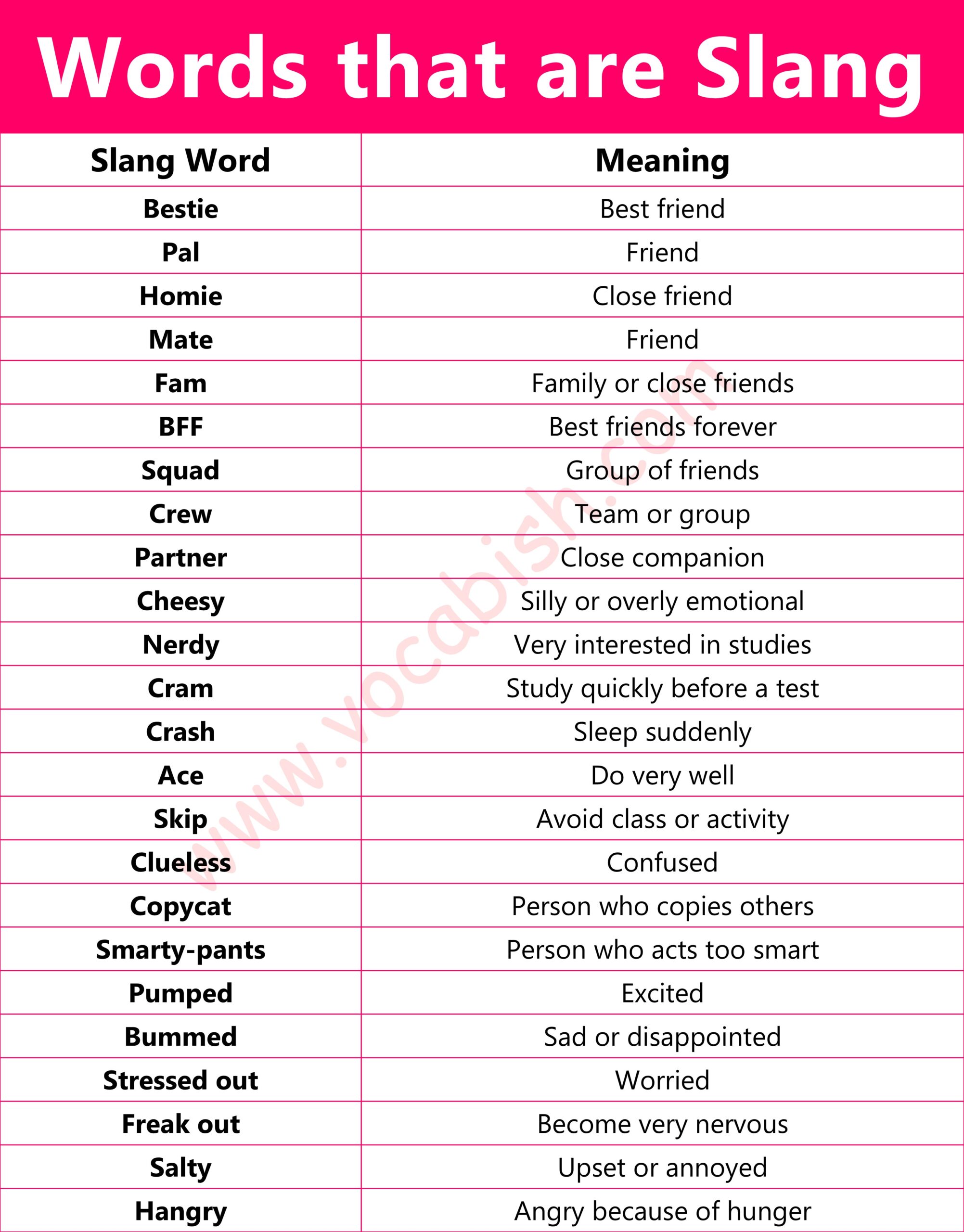
Friendly Slang Words
These slang words are often used between friends.
- Bestie — best friend
- Pal — friend
- Homie — close friend
- Mate — friend
- Fam — family or close friends
- Buddy — good friend
- BFF — best friends forever
- Squad — friend group
- Crew — team or group
- Partner — close companion
Cool and Trendy Slang
Young people often use these words online and in conversations.
- Lit — exciting or amazing
- Fire — excellent
- Dope — very cool
- Epic — impressive
- Fresh — stylish or new
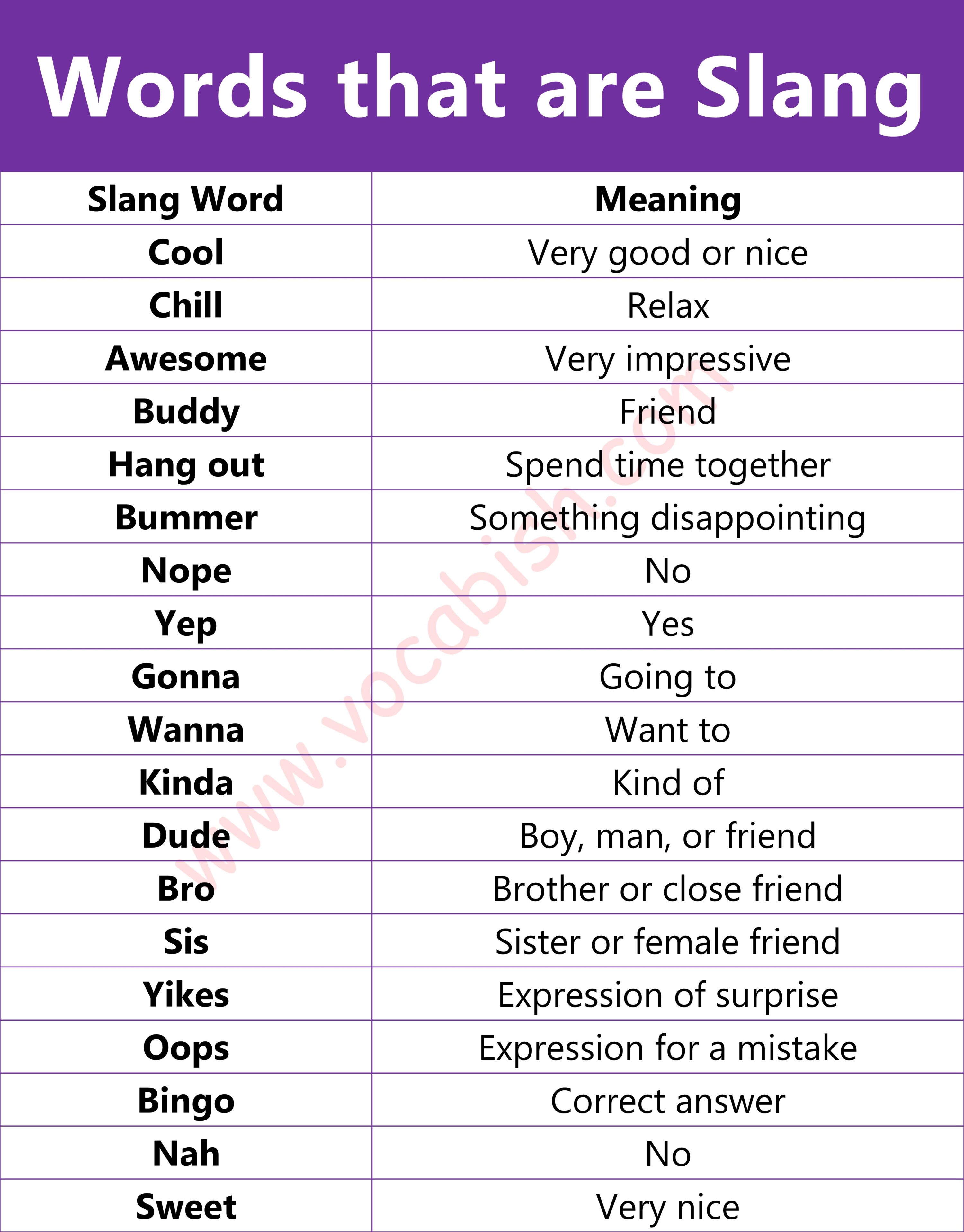
- Banger — great song
- Glow-up — positive transformation
- Drip — fashionable clothes
- Slay — do something very well
- Mood — relatable feeling
- Extra — too dramatic
- Low-key — secretly or quietly
- High-key — openly or strongly
- Snatched — looking very good
- Tea — gossip or news
School and Teen Slang
Students and teenagers use these slang words often.
- Cheesy — silly or overly emotional
- Nerdy — very interested in studies
- Cram — study quickly before a test
- Crash — sleep suddenly
- Ace — do very well
- Skip — avoid class or activity
- Geek out — get excited about something
- Clueless — confused
- Copycat — person who copies others
- Smarty-pants — person who acts too smart
Slang Words for Emotions
These slang terms describe feelings and reactions.
- Pumped — excited
- Bummed — sad or disappointed
- Stressed out — worried
- Freak out — become very nervous
- Psyched — excited
- Blue — sad
- Mad — angry
- Shook — shocked
- Salty — upset or annoyed
- Hangry — angry because of hunger
Funny Slang Words
These slang words sound playful and fun.
- Goofy — silly
- Bonkers — crazy
- Nutty — strange
- Wacky — funny and unusual
- Chicken — scared person
- Couch potato — lazy person
- Big mouth — person who tells secrets
- Crybaby — person who cries a lot
- Drama queen — overly dramatic person
- Party pooper — person who ruins fun
British Slang Words
People in the UK often use these slang words.
- Mate — friend
- Cheers — thank you
- Bloke — man
- Lad — boy or young man
- Fancy — like or want
- Knackered — very tired
- Dodgy — suspicious
- Chuffed — pleased
- Gutted — very disappointed
- Gobsmacked — shocked
American Slang Words
These slang words are popular in the United States.
- Y’all — you all
- Bucks — dollars
- Hit the road — leave
- Hang tight — wait
- Crash — stay or sleep somewhere
- Cool beans — great
- Ditch — leave behind
- Shoot — expression of disappointment
- Buzzed — slightly excited or dizzy
- Ripped — very strong body
Social Media Slang
Social media platforms use many fast and modern slang words.
- Viral — very popular online
- Influencer — popular online creator
- Trending — becoming popular
- Cancel — stop supporting someone
- Thumbnail — small preview image
- Streamer — person who broadcasts online
- Follower — social media subscriber
- Hashtag — keyword with # sign
- Clickbait — misleading title or image
- Filter — photo effect
Popular Short Slang Terms
These short slang terms are very common.
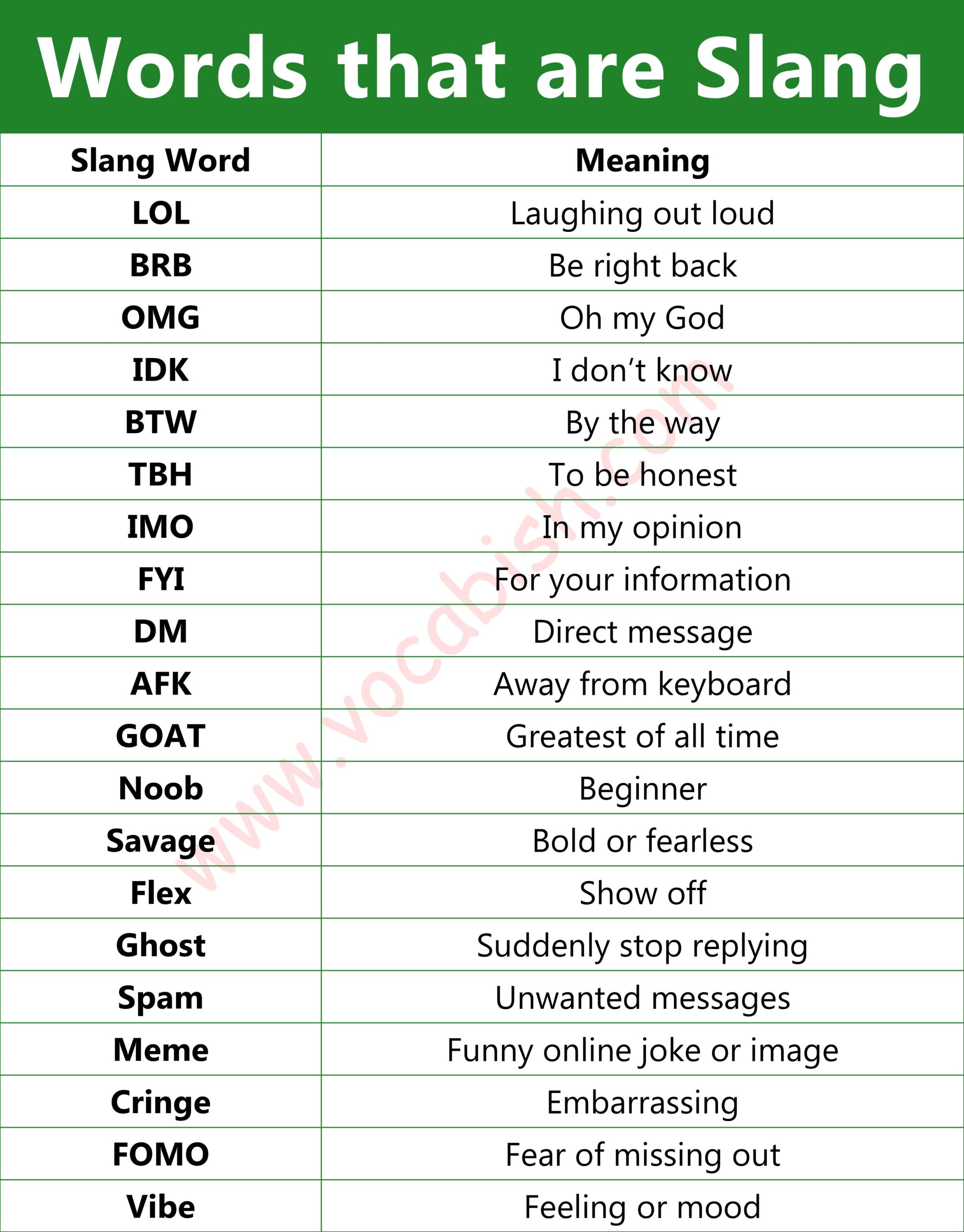
- Sus — suspicious
- Bet — okay or agreed
- Cap — lie
- No cap — truth
- Flex — show off
- Stan — huge fan
- Ship — support a relationship
- Yeet — throw something
- Rizz — charm or flirting skill
- Mid — average or not special
Food and Money Slang
People also use slang for food and money.
- Dough — money
- Cash — money
- Broke — having no money
- Snack — attractive person
- Grab a bite — eat quickly
- Junk food — unhealthy food
- Loaded — rich
- Treat — special food or reward
- Freebie — free item
- Takeout — food ordered from a restaurant
Travel and Street Slang
These slang words appear in travel and city conversations.
- Ride — car or transport
- Road trip — long drive journey
- Cruise — drive slowly
- Shortcut — faster route
- Packed — crowded
- Sketchy — unsafe-looking
- Hop on — enter quickly
- Hit the road — begin traveling
- Pit stop — short stop during travel
- Downtown — city center
Download Slang Words PDF
Tips for Using Slang Correctly
Follow these simple tips when using slang words:
Listen First
Watch movies, cartoons, or YouTube videos to hear how people use slang naturally.
Use Informal Situations
Use slang with friends or in casual conversations. Avoid slang in school essays or formal emails.
Learn Meaning Carefully
Some slang words have different meanings in different countries.
Practice Slowly
Start with simple slang like:
- Cool
- Chill
- Awesome
- Dude
- Bro
Avoid Overusing Slang
Too much slang can sound unnatural. Mix slang with normal English.
Conclusion
Learning words that are slang can make English more fun and practical. Slang helps learners understand real conversations, social media, songs, and movies more easily.
Start with common slang words first. Then practice them in daily speaking and listening activities. Over time, your English will sound more natural and confident.
The best way to learn slang is through regular exposure and simple practice. Keep learning new words, listen carefully, and enjoy the process of improving your English skills.
Related Articles: