
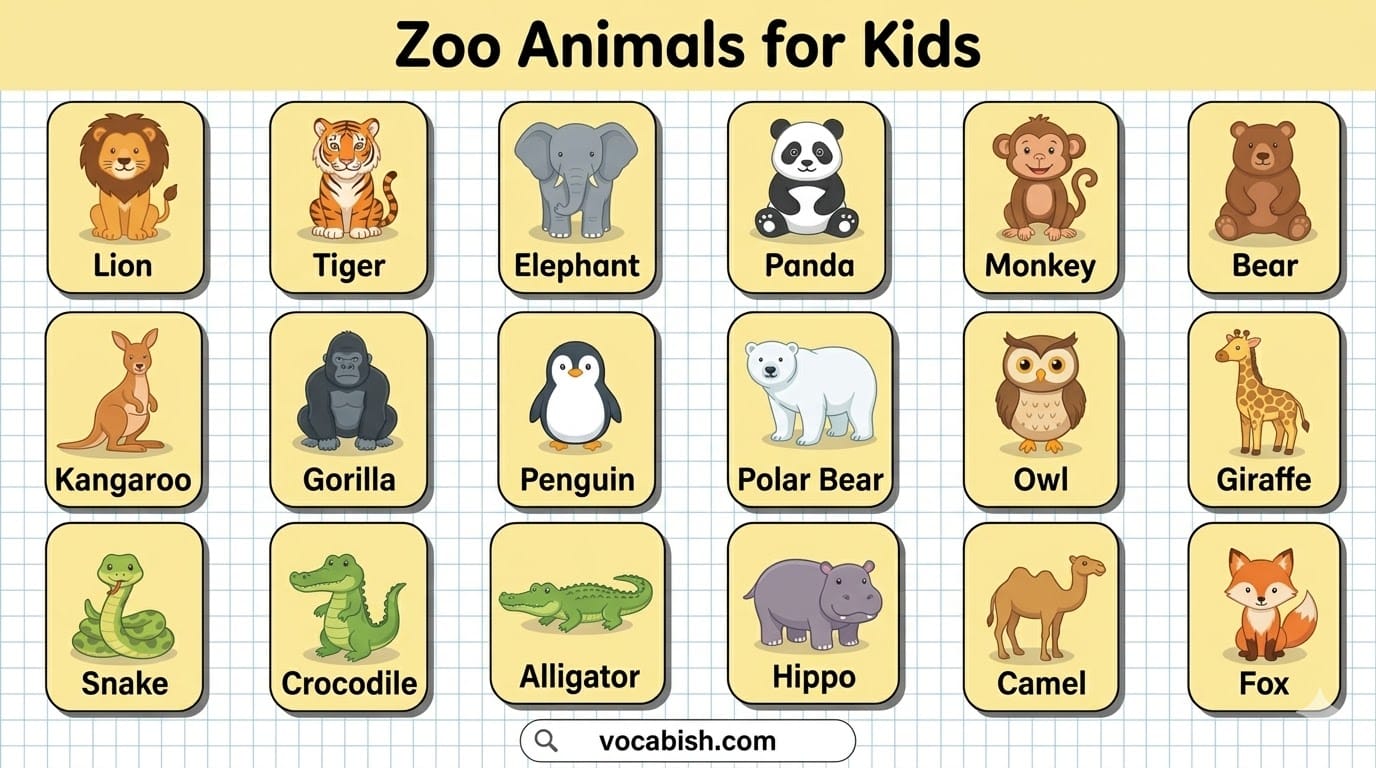
In this blog post, you will learn the names of many common zoo animals for kids. Zoo animal vocabulary helps you understand the world around you and talk about animals you see in books, videos, or at the zoo. Knowing these words improves your speaking, reading, writing, and listening skills because you can describe animals, ask questions, and follow stories about them. By learning zoo animal names, you can use English more confidently in everyday situations and enjoy learning about animals while practicing new words.
Why Learn Zoo Animal Names?
Learning zoo animal names helps children improve their English vocabulary. Animals are part of everyday life and learning their names makes reading, speaking, and listening more fun. When kids can recognize animals, they can also describe them and talk about trips to the zoo confidently. This topic is especially helpful for young learners who enjoy pictures, stories, or visits to zoos.
Knowing animal names also builds general knowledge. It connects words to real-life objects, which makes English learning easier and more meaningful.
Types of Zoo Animals
Zoo animals can be grouped into categories. This helps learners remember them better:
- Mammals: Lion, Tiger, Elephant, Panda, Monkey, Bear, Kangaroo, Gorilla
- Birds: Penguin, Owl, Flamingo, Peacock
- Reptiles: Snake, Crocodile, Alligator
- Aquatic Animals: Otter, Hippo
- Desert Animals: Camel, Meerkat, Fox
Using categories makes learning more organized and easier for kids to recall.
Common Zoo Animals and Their Names
Here is a list of common zoo animals that every child should know. Each animal is easy to understand with a simple description:
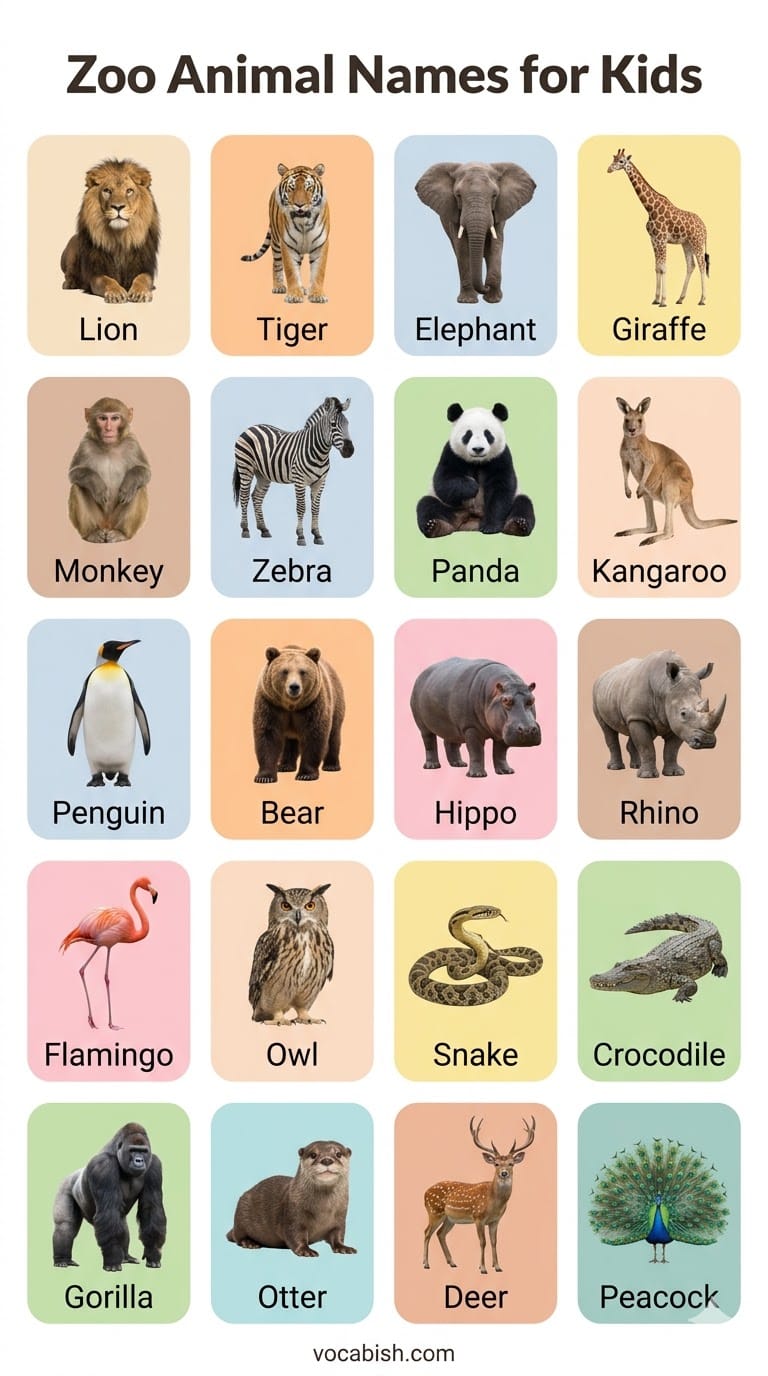
- Lion – A big cat known as the “king of the jungle.” It has a thick mane.
- Tiger – A striped big cat, strong and fast.
- Elephant – The largest land animal, with a long trunk and big ears.
- Giraffe – A very tall animal with a long neck and spots.
- Monkey – A playful animal that climbs trees and swings from branches.
- Zebra – A horse-like animal with black and white stripes.
- Panda – A black and white bear that eats bamboo.
- Kangaroo – A jumping animal with a pouch for its baby.
- Penguin – A bird that cannot fly but swims very well.
- Bear – A strong, furry animal found in forests or zoos.
- Hippo (Hippopotamus) – A large, heavy animal that lives in water.
- Rhino (Rhinoceros) – A strong animal with thick skin and one or two horns.
- Flamingo – A tall, pink bird often seen standing on one leg.
- Owl – A bird that is active at night and has big eyes.
- Snake – A long, slithering reptile.
Detailed Zoo Animal Vocabulary List
Here’s a longer vocabulary list with descriptions for more learning:
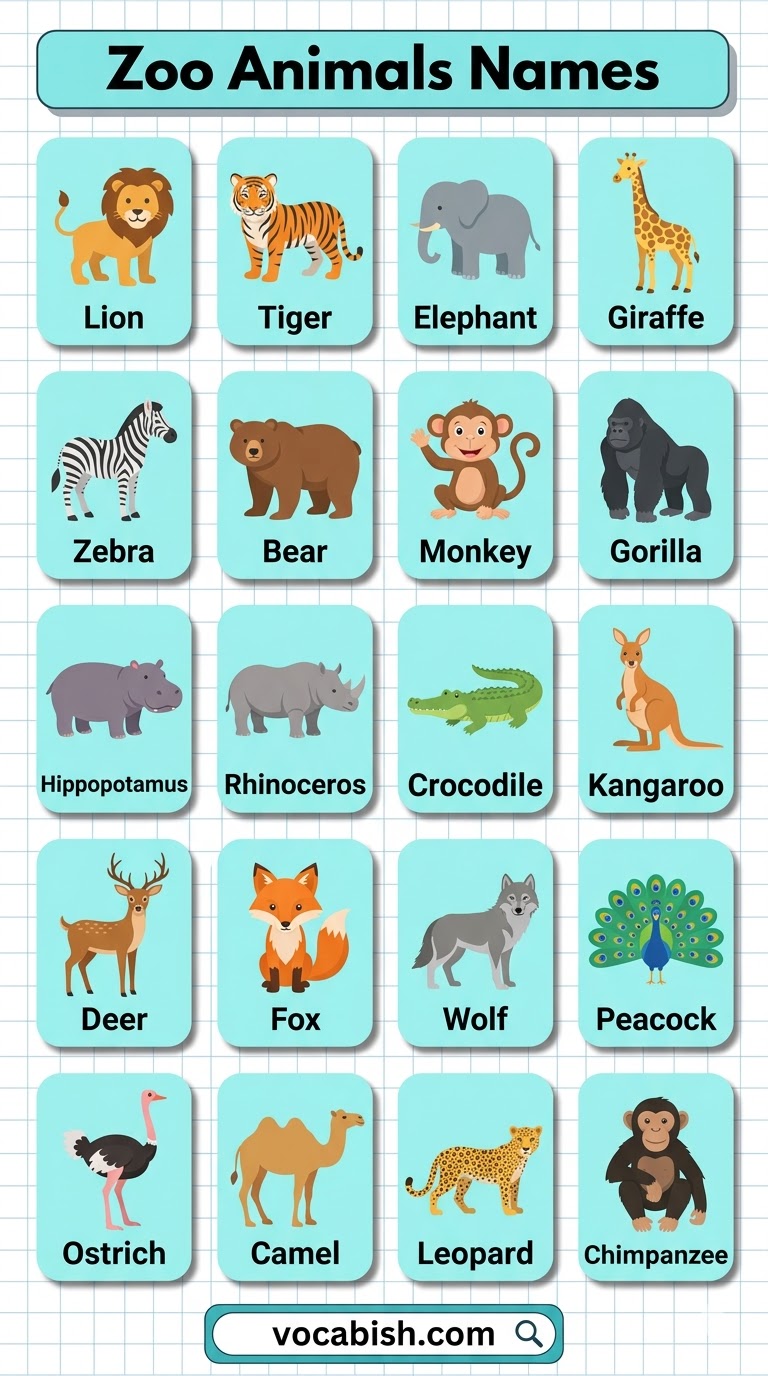
- Crocodile – A large reptile with sharp teeth, lives in water.
- Alligator – Similar to a crocodile but has a wider snout.
- Leopard – A wild cat with spots, very fast and quiet.
- Gorilla – A big, strong ape that lives in forests.
- Chimpanzee – A smart monkey-like ape that uses tools.
- Peacock – A colorful bird with long, beautiful feathers.
- Camel – An animal with humps, often found in deserts.
- Deer – A gentle, forest animal with antlers (males).
- Otter – A small animal that loves swimming in rivers.
- Meerkat – A small desert animal that stands on two legs.
- Fox – A clever animal with a bushy tail.
- Wolf – A wild dog that hunts in groups called packs.
Using Zoo Animal Names in Sentences
Learning names is not enough. Kids should know how to use these words in sentences:
- The lion is sleeping under a tree.
- I saw a giraffe eating leaves from a tall branch.
- Penguins like to swim in cold water.
- The elephant sprays water with its trunk.
- My favorite animal at the zoo is the panda.
Short, simple sentences help students remember words and use them naturally in conversation or writing.
Tips to Remember Zoo Animal Vocabulary
Here are some tips for learning and remembering zoo animal names:
- Flashcards: Make cards with animal pictures and names.
- Zoo Visits: Seeing animals in real life helps memory.
- Drawing Animals: Draw animals and write their names.
- Storytime: Use animal names in short stories.
- Word Games: Play games like “I spy with animals.”
These methods make learning interactive and fun while improving English skills.
FAQs
Lions, tigers, elephants, monkeys, and penguins are easy to recognize and remember.
Use pictures, flashcards, zoo visits, or storybooks with animal names.
It builds vocabulary, improves reading and speaking, and connects English words to real-life objects.
Start with 10–15 common animals and gradually add more as they become confident.
Yes, you can teach counting, colors, habitats, and sentence formation using animals.
Related Articles:
Conclusion
Learning zoo animal names is fun, practical, and educational. By practicing vocabulary with real-life examples, categories, and sentences, kids can speak and read English confidently. Use the lists, sentences, and tips in this guide to make English learning enjoyable and memorable.