
Verbs are action words. They show what someone or something does, feels, or becomes. Words like run, eat, think, and grow are common examples. In this blog post, you will learn 400+ A to Z verbs in English with pictures to help you build a strong vocabulary. Verbs are the heart of every sentence, so knowing them is very important. When you understand how verbs work, you can create better sentences and express your ideas more clearly. With regular practice, you will master the correct use of verbs in speaking, reading, writing, and listening. Keep reading to explore the full A to Z list and improve your English step by step.
Here’s the list of 400+ A to Z verbs in English:
List of Verbs in English
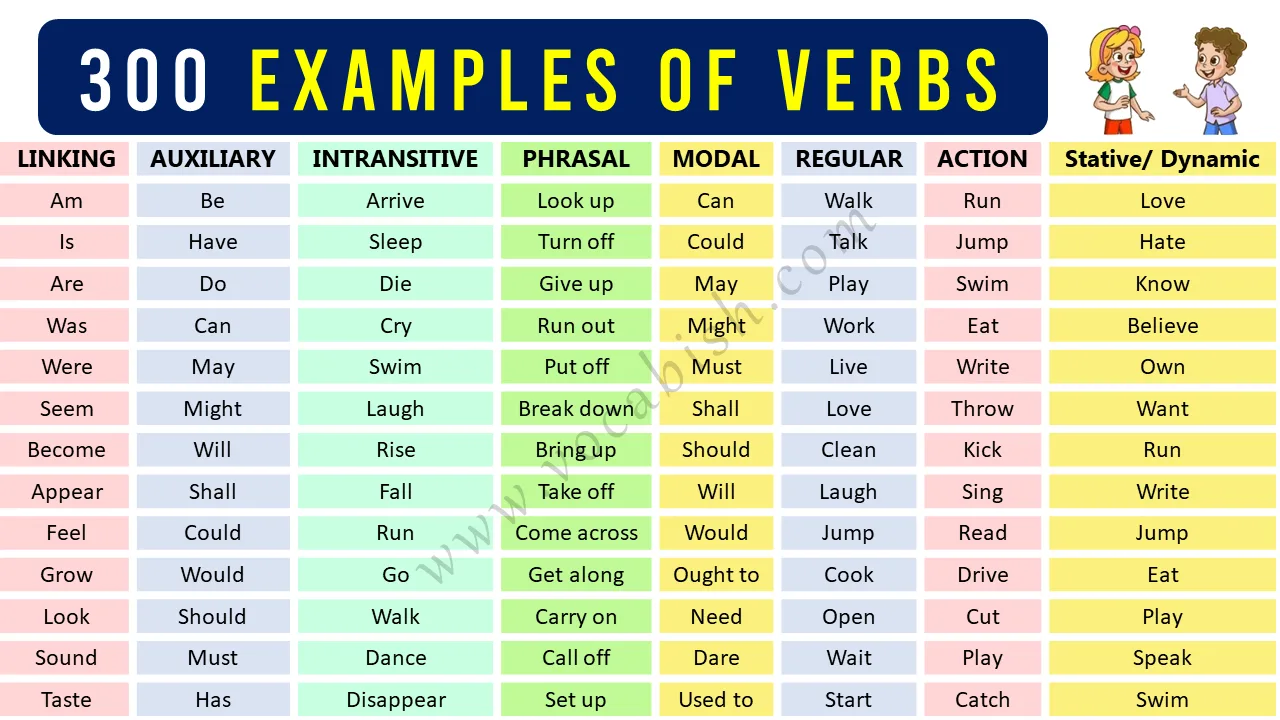
List of Linking Verbs
- am
- is
- are
- was
- were
- seem
- become
- appear
- feel
- grow
- look
- sound
- taste
- remain
- stay
List of Auxiliary Verbs
- be
- have
- do
- can
- may
- might
- will
- shall
- could
- would
- should
- must
- has
- had
List of Intransitive Verbs
- arrive
- sleep
- die
- cry
- swim
- laugh
- rise
- fall
- run
- go
- walk
- dance
- disappear
- stand
- jump
List of Phrasal Verbs
- look up
- turn off
- give up
- run out
- put off
- break down
- bring up
- take off
- come across
- get along
- carry on
- call off
- set up
- back out
- fill in
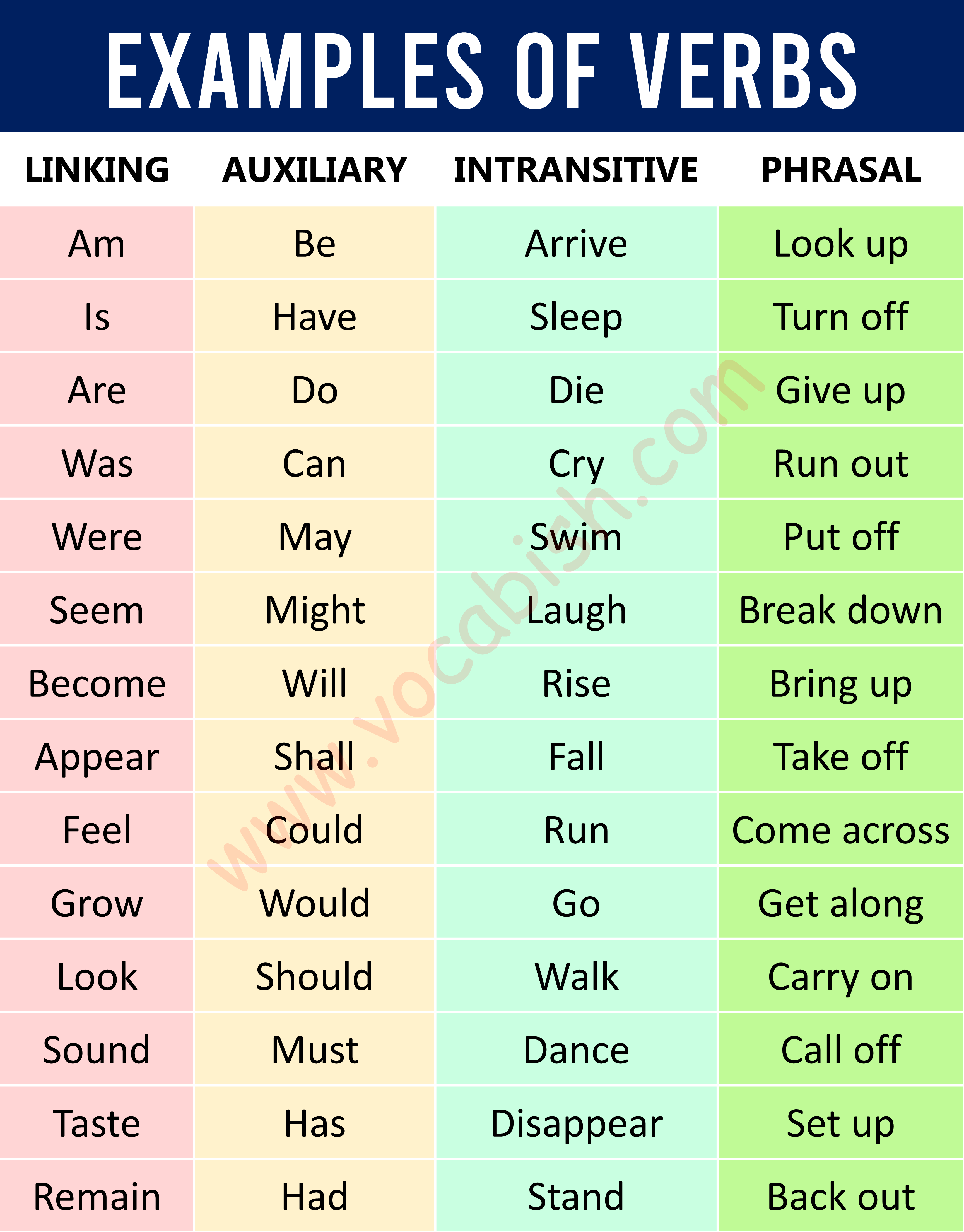
List of Modal Verbs
- can
- could
- may
- might
- must
- shall
- should
- will
- would
- ought to
- need
- dare
- used to
List of Regular Verbs
- walk
- talk
- play
- work
- live
- love
- clean
- laugh
- jump
- cook
- open
- wait
- start
- dance
- learn
- Read more hugely listed regular verbs in English
List of Action Verbs
- run
- jump
- swim
- eat
- write
- throw
- kick
- sing
- read
- drive
- cut
- play
- catch
- draw
- drink
Stative and Dynamic Verbs List
Stative Verbs:
- love
- hate
- know
- believe
- own
- want
- need
- prefer
- understand
- seem
Dynamic Verbs:
- run
- write
- jump
- eat
- play
- speak
- swim
- laugh
- move
- dance
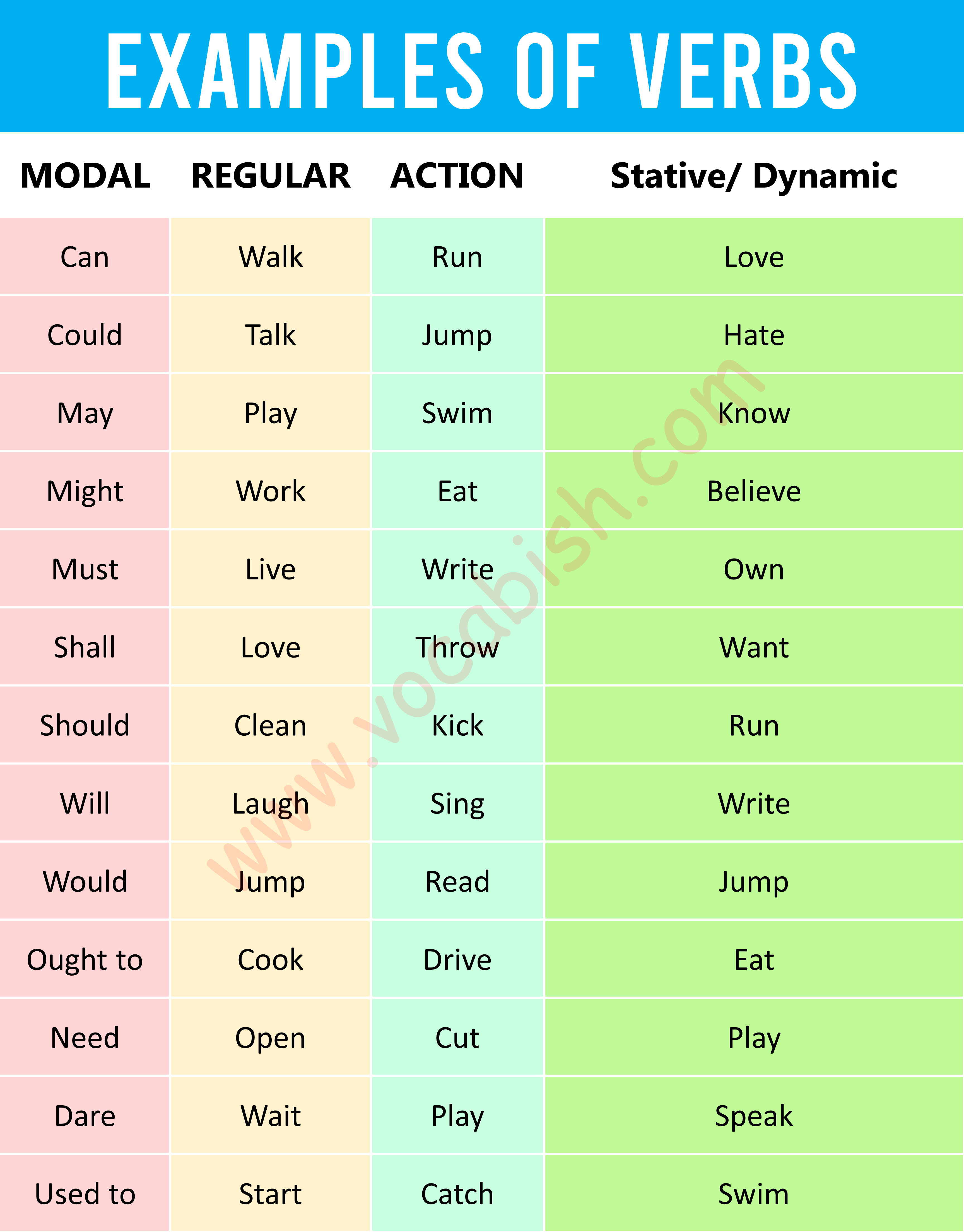
Irregular Verbs List
- go → went → gone
- do → did → done
- see → saw → seen
- take → took → taken
- give → gave → given
- eat → ate → eaten
- speak → spoke → spoken
- write → wrote → written
- drive → drove → driven
- break → broke → broken
Stative Verbs List
- know
- believe
- own
- belong
- love
- hate
- prefer
- think
- seem
- understand
Gerunds List
- running
- swimming
- eating
- dancing
- playing
- writing
- reading
- singing
- talking
- sleeping
Infinitives List
- to run
- to eat
- to swim
- to play
- to write
- to sing
- to dance
- to drive
- to learn
- to teach
Participles List
Present Participles:
- running
- eating
- swimming
- playing
- writing
- reading
- driving
- working
- singing
- cooking
Past Participles Examples:
- gone
- eaten
- written
- taken
- broken
- driven
- spoken
- seen
- sung
- known
Compound Verbs List
- has been eating
- will have finished
- had been running
- might have spoken
- was writing
- is dancing
- are working
- have learned
- has seen
- will be going
Finite Verbs List
- eat
- runs
- dances
- sings
- writes
- works
- talks
- reads
- plays
- teaches
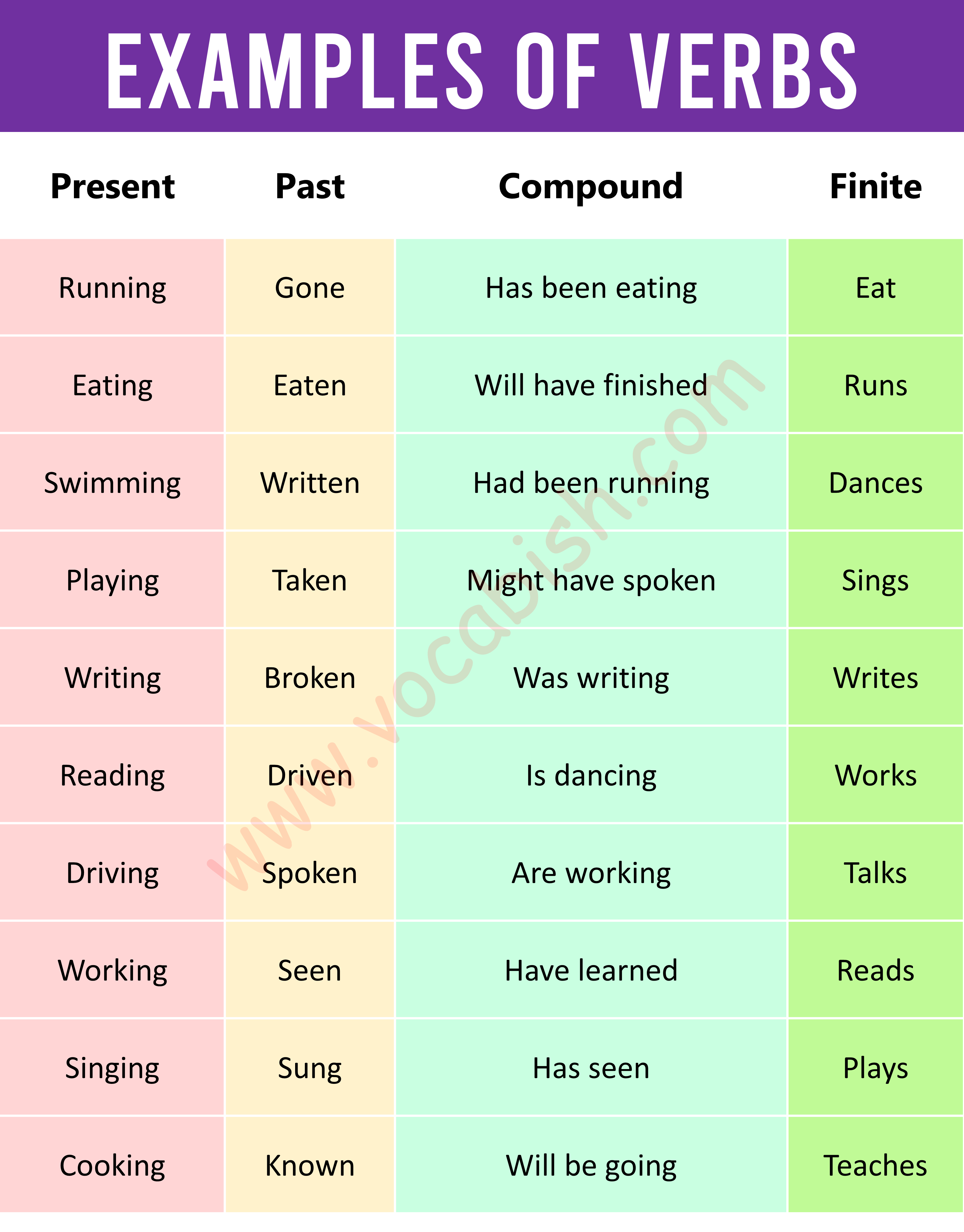
Verbs are the heart of every English sentence. Understanding all 16 types of verbs helps you express actions, feelings, and states more clearly. From action verbs to modal verbs, each type plays an important role in communication.
FAQs
What is a verb in English grammar?
A verb is a word that shows action, state, or being. It tells what someone or something does.
Example: run, eat, play, is, have.
How many types of verbs are there in English?
There are 16 main types of verbs, including action verbs, linking verbs, helping verbs, transitive verbs, intransitive verbs, modal verbs, and others. Each type has a special function in a sentence.
What are some examples of common verbs?
Common verbs used in daily English include:
go, come, eat, play, write, read, sleep, think, work, speak.
These verbs help describe what we do every day.
Why is it important to learn different types of verbs?
Learning different types of verbs helps you use correct grammar, make better sentences, and express ideas clearly in speaking and writing.
What is the difference between action and linking verbs?
An action verb shows what someone does (She runs fast), while a linking verb connects the subject to a description or state (She is happy).
Read More