

In this blog post, you will learn 120 examples of conditional sentences of types 1, 2, and 3. Conditional sentences are an important part of English vocabulary because they show cause and effect. By mastering them, you can talk about real situations, imagine possible events, and describe things that did not happen in the past. Understanding these sentence types will help you improve your speaking, reading, writing, and listening skills. With practice, you will be able to use conditional sentences naturally in daily conversations, school, or work.
Why Learning Conditional Sentences Is Important
- Helps you speak naturally in real-life situations.
- Improves your writing and comprehension skills.
- Teaches you how to express cause and effect clearly.
- Strengthens your vocabulary and grammar.
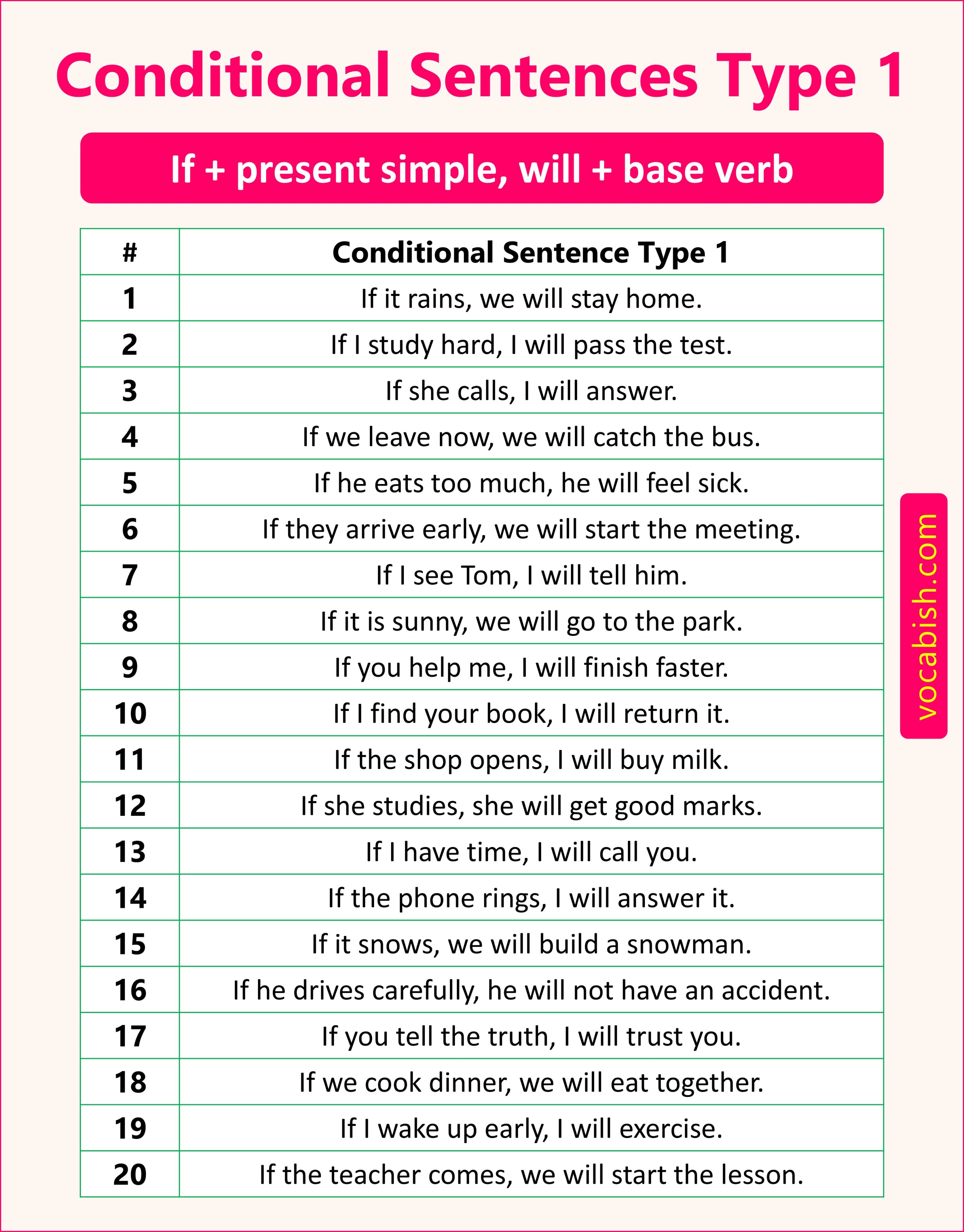
Conditional Sentences Type 1
Use: Type 1 is used for real or possible situations in the present or future.
Structure:If + present simple, will + base verb
Examples:
| # | Conditional Sentence Type 1 |
|---|---|
| 1 | If it rains, we will stay home. |
| 2 | If I study hard, I will pass the test. |
| 3 | If she calls, I will answer. |
| 4 | If we leave now, we will catch the bus. |
| 5 | If he eats too much, he will feel sick. |
| 6 | If they arrive early, we will start the meeting. |
| 7 | If I see Tom, I will tell him. |
| 8 | If it is sunny, we will go to the park. |
| 9 | If you help me, I will finish faster. |
| 10 | If I find your book, I will return it. |
| 11 | If the shop opens, I will buy milk. |
| 12 | If she studies, she will get good marks. |
| 13 | If I have time, I will call you. |
| 14 | If the phone rings, I will answer it. |
| 15 | If it snows, we will build a snowman. |
| 16 | If he drives carefully, he will not have an accident. |
| 17 | If you tell the truth, I will trust you. |
| 18 | If we cook dinner, we will eat together. |
| 19 | If I wake up early, I will exercise. |
| 20 | If the teacher comes, we will start the lesson. |
| 21 | If she wears a coat, she will stay warm. |
| 22 | If I finish work, I will watch TV. |
| 23 | If they play football, they will enjoy it. |
| 24 | If I meet Anna, I will ask her. |
| 25 | If you open the window, the room will be fresh. |
| 26 | If it rains tomorrow, we will stay inside. |
| 27 | If I find money, I will buy a gift. |
| 28 | If he studies well, he will pass the exam. |
| 29 | If we leave together, we will arrive on time. |
| 30 | If the children sleep, we will talk quietly. |
| 31 | If you come early, I will give you tea. |
| 32 | If I clean the room, my mom will be happy. |
| 33 | If it is cold, I will wear a jacket. |
| 34 | If she calls me, I will answer immediately. |
| 35 | If I take a taxi, I will reach faster. |
| 36 | If we visit London, we will see the Tower. |
| 37 | If I eat breakfast, I will feel energetic. |
| 38 | If he runs, he will catch the bus. |
| 39 | If you try, you will succeed. |
| 40 | If I find the keys, I will open the door. |
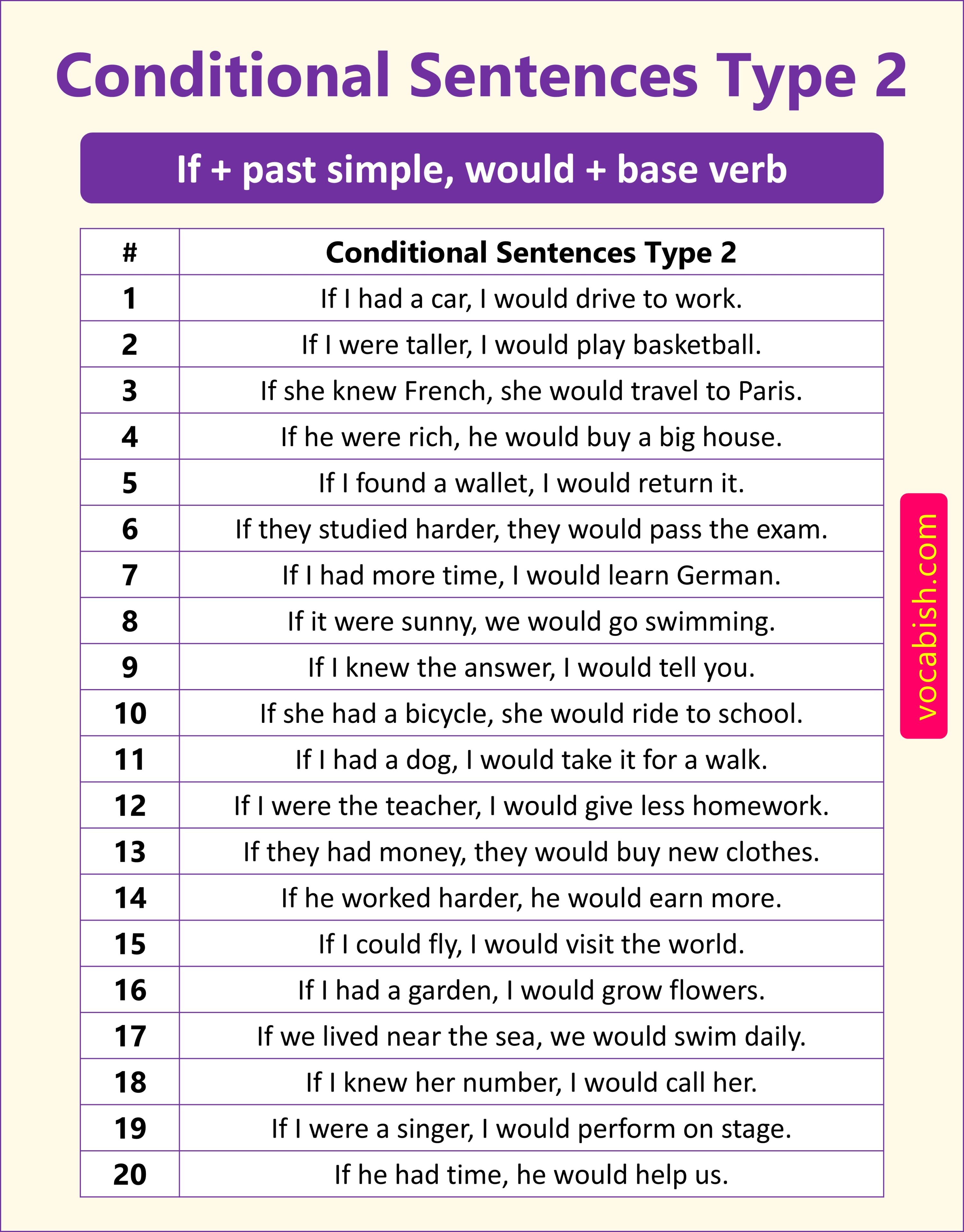
Conditional Sentences Type 2
Use: Type 2 is for imaginary or unlikely situations now or in the future.
Structure:If + past simple, would + base verb
Examples:
| # | Conditional Sentences Type 2 |
|---|---|
| 1 | If I had a car, I would drive to work. |
| 2 | If I were taller, I would play basketball. |
| 3 | If she knew French, she would travel to Paris. |
| 4 | If he were rich, he would buy a big house. |
| 5 | If I found a wallet, I would return it. |
| 6 | If they studied harder, they would pass the exam. |
| 7 | If I had more time, I would learn German. |
| 8 | If it were sunny, we would go swimming. |
| 9 | If I knew the answer, I would tell you. |
| 10 | If she had a bicycle, she would ride to school. |
| 11 | If I had a dog, I would take it for a walk. |
| 12 | If I were the teacher, I would give less homework. |
| 13 | If they had money, they would buy new clothes. |
| 14 | If he worked harder, he would earn more. |
| 15 | If I could fly, I would visit the world. |
| 16 | If I had a garden, I would grow flowers. |
| 17 | If we lived near the sea, we would swim daily. |
| 18 | If I knew her number, I would call her. |
| 19 | If I were a singer, I would perform on stage. |
| 20 | If he had time, he would help us. |
| 21 | If I were a student, I would study every day. |
| 22 | If it rained less, we would play football. |
| 23 | If I had a camera, I would take pictures. |
| 24 | If I had a computer, I would write a story. |
| 25 | If I were strong, I would lift heavy boxes. |
| 26 | If she spoke English, she would travel easily. |
| 27 | If I had a bike, I would ride to school. |
| 28 | If I knew cooking, I would make dinner. |
| 29 | If we had a pet, we would love it. |
| 30 | If he were smarter, he would solve problems. |
| 31 | If I had a boat, I would sail on the river. |
| 32 | If I were famous, I would meet celebrities. |
| 33 | If I knew the way, I would help you. |
| 34 | If she studied more, she would get better grades. |
| 35 | If I were free, I would visit you. |
| 36 | If they tried harder, they would succeed. |
| 37 | If I were a painter, I would paint landscapes. |
| 38 | If he were older, he would drive a car. |
| 39 | If I had a map, I would find the place. |
| 40 | If I had courage, I would speak in public. |
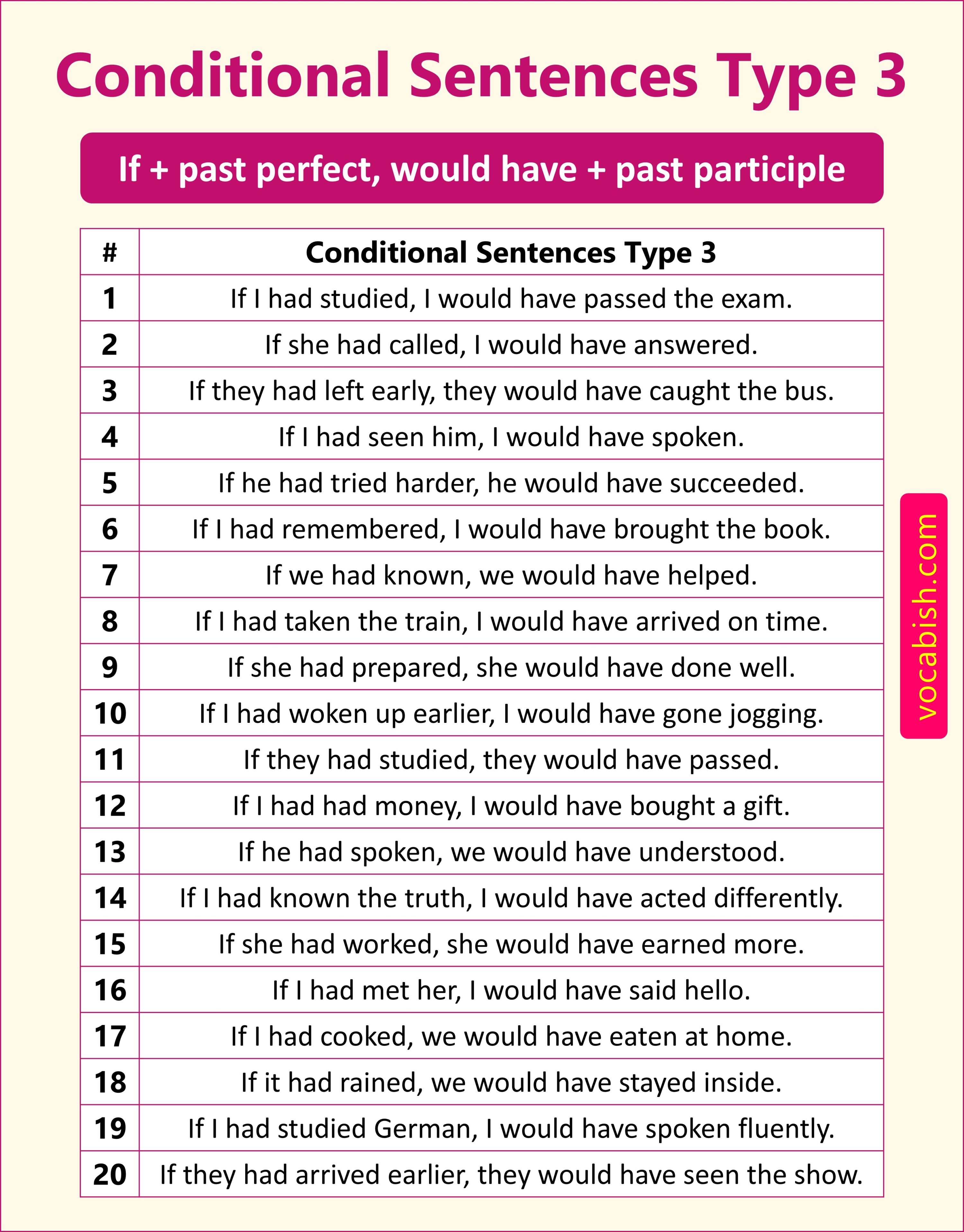
Conditional Sentences Type 3
Use: Type 3 talks about situations that did not happen in the past.
Structure:If + past perfect, would have + past participle
Examples:
| # | Conditional Sentences Type 3 |
|---|---|
| 1 | If I had studied, I would have passed the exam. |
| 2 | If she had called, I would have answered. |
| 3 | If they had left early, they would have caught the bus. |
| 4 | If I had seen him, I would have spoken. |
| 5 | If he had tried harder, he would have succeeded. |
| 6 | If I had remembered, I would have brought the book. |
| 7 | If we had known, we would have helped. |
| 8 | If I had taken the train, I would have arrived on time. |
| 9 | If she had prepared, she would have done well. |
| 10 | If I had woken up earlier, I would have gone jogging. |
| 11 | If they had studied, they would have passed. |
| 12 | If I had had money, I would have bought a gift. |
| 13 | If he had spoken, we would have understood. |
| 14 | If I had known the truth, I would have acted differently. |
| 15 | If she had worked, she would have earned more. |
| 16 | If I had met her, I would have said hello. |
| 17 | If I had cooked, we would have eaten at home. |
| 18 | If it had rained, we would have stayed inside. |
| 19 | If I had studied German, I would have spoken fluently. |
| 20 | If they had arrived earlier, they would have seen the show. |
| 21 | If I had called, she would have answered. |
| 22 | If we had started earlier, we would have finished on time. |
| 23 | If I had opened the window, the room would have been fresh. |
| 24 | If he had listened, he would have learned. |
| 25 | If I had bought a ticket, I would have entered the cinema. |
| 26 | If she had asked, I would have helped. |
| 27 | If I had written a letter, she would have received it. |
| 28 | If they had prepared food, we would have eaten. |
| 29 | If I had slept more, I would have felt better. |
| 30 | If he had practiced, he would have played well. |
| 31 | If I had studied more, I would have passed. |
| 32 | If we had brought umbrellas, we would not have gotten wet. |
| 33 | If I had turned left, I would have avoided traffic. |
| 34 | If she had smiled, he would have felt happy. |
| 35 | If I had tried, I would have succeeded. |
| 36 | If they had followed the instructions, it would have worked. |
| 37 | If I had told the truth, they would have trusted me. |
| 38 | If he had come, we would have started the party. |
| 39 | If I had bought a map, I would not have gotten lost. |
| 40 | If she had studied harder, she would have won the prize. |
Conditional Sentence Examples (Mixed Types)
Here’s a mix of Type 1, 2, and 3 examples for practice:
- If it rains, we will stay home.
- If I won the lottery, I would buy a house.
- If she had studied, she would have passed the test.
- If he calls, I will answer immediately.
- If I were taller, I would play basketball.
- If they had left early, they would have arrived on time.
- If I eat breakfast, I will feel better.
- If I found a wallet, I would return it.
- If I had seen the movie, I would have liked it.
Conditional Sentences PDF
Tips for Using Conditional Sentences Correctly
- Always check the verb tense: present, past, or past perfect.
- Match the result verb with the correct auxiliary: will, would, or would have.
- Use common daily situations to make practice easy.
- Read, speak, and write conditional sentences regularly.
- Mix types to improve your flexibility in English.
Conclusion
Learning conditional sentences Type 1, 2, and 3 is essential for fluent English communication. They help you talk about real possibilities, dreams, and past events naturally. Practice with daily situations, use the vocabulary above, and gradually build your confidence. By mastering conditional sentences, you can improve your speaking, writing, and comprehension skills efficiently.
FAQs
Conditional sentences Type 1, 2, and 3 show cause and effect. Type 1 is real possibility, Type 2 is imaginary present/future, and Type 3 is unreal past.
Use “If + present simple, will + base verb.” Type 1 talks about real situations that can happen now or in the future.
Type 2 is used for imaginary or unlikely situations now or in the future. Use “If + past simple, would + base verb.”
Type 2 talks about unreal present or future events. Type 3 talks about unreal situations in the past that did not happen.
Yes. “If I had studied, I would have passed the exam.” Type 3 uses “If + past perfect, would have + past participle.”
Mixing tenses is common. Type 1 must use present + will, Type 2 past + would, and Type 3 past perfect + would have. Correct structure is key.
Related Articles: