
Idioms for kids are special phrases that have meanings different from the exact words used. For example, when someone says “piece of cake,” they mean something is very easy, not an actual cake. Children often hear these expressions in stories, classrooms, and everyday conversations. Learning idioms helps students understand the meanings behind common English expressions and recognize them when reading or listening. It also helps learners use English naturally when speaking and writing. In this blog post, readers will learn common idioms, their meanings, and how people use them in real sentences. When children study idioms, they build stronger vocabulary, improve communication skills, and understand everyday English more confidently.
Idiom Definition for Kids
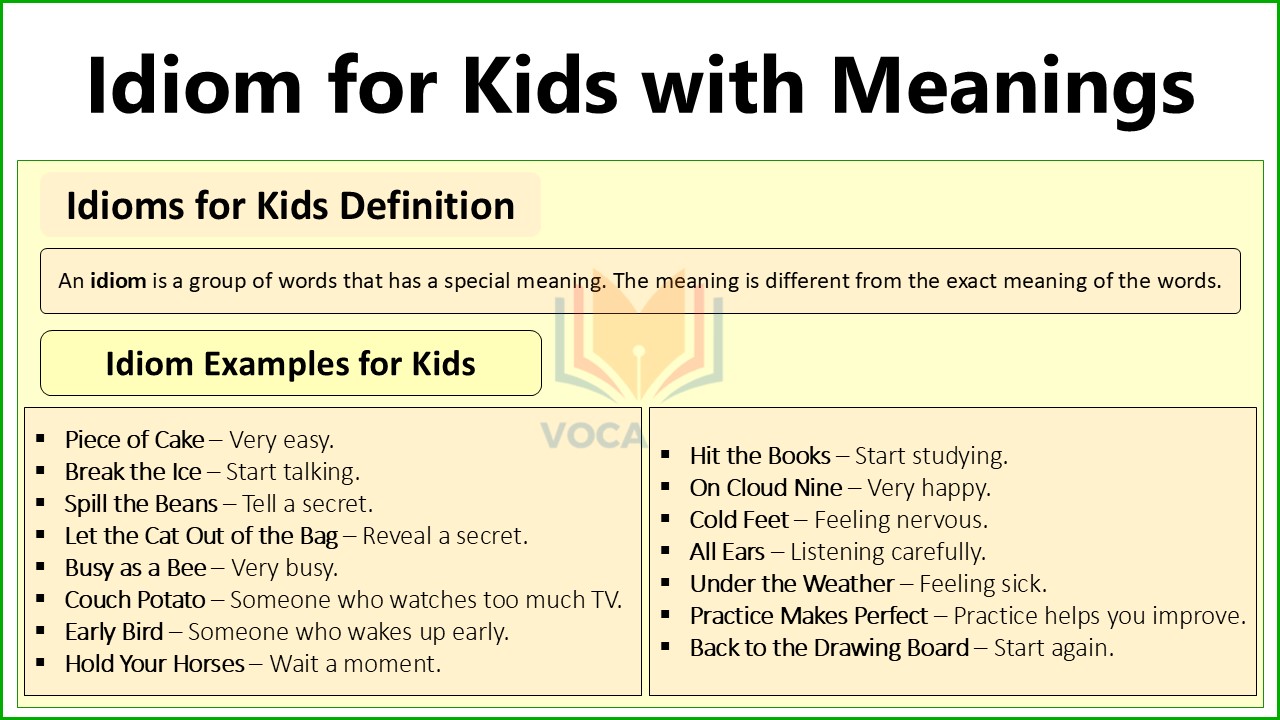
An idiom is a group of words that has a special meaning. The meaning is different from the exact meaning of the words.
For example:
- “Piece of cake” does not mean cake.
- It means something very easy to do.
Idioms make English fun and interesting. People use them in conversations, books, and stories.
Idiom Examples for Kids
Here are some simple idioms with meanings and examples.
- Piece of Cake – Something very easy
Example: The math test was a piece of cake. - Break the Ice – Start talking in a friendly way
Example: The teacher told a joke to break the ice. - Hold Your Horses – Wait for a moment
Example: Hold your horses! Dinner will be ready soon. - Spill the Beans – Tell a secret
Example: My brother spilled the beans about the surprise. - On Cloud Nine – Very happy
Example: She was on cloud nine after winning the game.
Common Idioms for Kids
These idioms are often used in everyday English.
- Early Bird – Someone who wakes up early
- Under the Weather – Feeling sick
- All Ears – Listening carefully
- In Hot Water – In trouble
- Cold Feet – Feeling nervous before doing something
- Rain or Shine – No matter what happens
- Hit the Books – Start studying
These expressions help children understand daily conversations.
List of Idioms for Kids
Here is a helpful list of easy idioms children can learn.
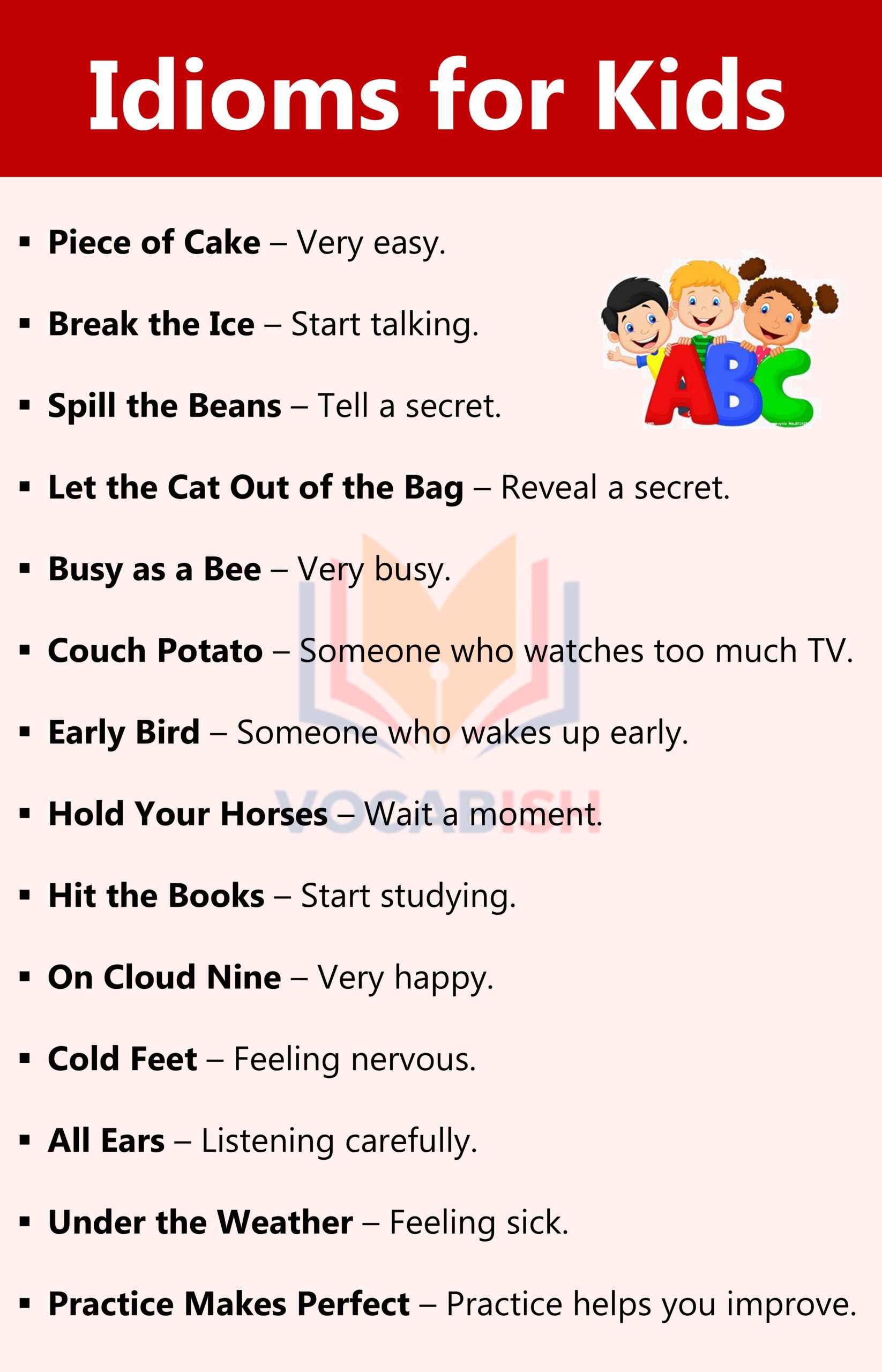
- Piece of cake
- Break the ice
- Spill the beans
- Let the cat out of the bag
- Busy as a bee
- Couch potato
- Early bird
- Hold your horses
- Hit the books
- On cloud nine
- Cold feet
- All ears
- Under the weather
- Practice makes perfect
- Back to the drawing board
Each idiom teaches a new way to express ideas in English.
Funny Idioms for Kids
Some idioms sound funny because the words create silly pictures.
- Butterflies in My Stomach – Feeling nervous
- Monkey See, Monkey Do – Copying others
- Zip Your Lip – Stop talking
- Busy as a Bee – Very busy
- Couch Potato – Someone who watches too much TV
These idioms make learning English more enjoyable.
Christmas Idioms for Kids
People sometimes use idioms during the Christmas season.
- Deck the Halls – Decorate the house for Christmas
- Spread Christmas Cheer – Share happiness with others
- White Christmas – A Christmas day with snow
- Christmas Came Early – Getting good news sooner than expected
- Stocking Stuffer – A small gift
Example sentence:
We decorated the house to deck the halls before Christmas.
Halloween Idioms for Kids
Some idioms use spooky or Halloween-related ideas.
- Scared Stiff – Very frightened
- Make Your Blood Run Cold – Something very scary
- Ghost Town – A place with no people
- Skeleton in the Closet – A hidden secret
- Witching Hour – Late night when strange things may happen
Example sentence:
The empty street looked like a ghost town.
Popular Idioms for Kids
These idioms are widely used in English-speaking countries.
- Practice Makes Perfect – Repeating helps improve skill
- The Ball Is in Your Court – It is your turn to act
- Hit the Nail on the Head – Say exactly the right thing
- Learn the Ropes – Understand how something works
- A Blessing in Disguise – Something good that seemed bad at first
Kids often hear these expressions in school or daily conversations.
American Idioms for Kids
These idioms are common in American English.
- Hit the Road – Leave or start a trip
- Shoot for the Stars – Try your best to achieve something big
- Call It a Day – Stop working for today
- Go the Extra Mile – Try harder than expected
- The Best of Both Worlds – Enjoy two good things together
Example sentence:
After finishing our homework, we decided to call it a day.
Afrikaans Idioms for Kids
Afrikaans also has interesting idioms. Here are simple ones translated into English.
- “The apple does not fall far from the tree” – Children are like their parents
- “Kick the bucket of milk” – Make a mistake
- “Walk with long teeth” – Do something unwillingly
- “Carry water to the sea” – Do something unnecessary
- “Put the cart before the horse” – Do things in the wrong order
Idioms exist in many languages, not only English.
Chinese Idioms for Kids
Chinese idioms are often short and come from stories.
- Draw a Snake and Add Feet – Ruin something by adding too much
- Paper Tiger – Something that seems strong but is weak
- Kill Two Birds with One Stone – Achieve two goals with one action
- Frog in a Well – Someone with a very limited view
- Learn Like Sailing Upstream – If you stop, you move backward
These idioms show wisdom from Chinese culture.
Tips for Teaching Idioms to Kids
Learning idioms becomes easier with simple teaching methods.
Helpful strategies include:
- Use pictures to explain idioms
- Show examples in short sentences
- Practice idioms during daily conversations
- Play vocabulary games
- Encourage kids to create their own sentences
These activities help children remember idioms naturally.
Why Idioms Improve English Skills
Idioms strengthen many language abilities at the same time.
They improve:
- Listening skills – Kids understand real conversations
- Reading skills – Stories and books become easier
- Speaking skills – Children sound more natural
- Writing skills – Sentences become more expressive
Regular practice helps learners recognize idioms quickly and use them confidently.
Learning idioms for kids is a fun way to explore English vocabulary. These expressions make language lively and meaningful. When children understand idioms, they communicate ideas clearly and enjoy learning English even more.
FAQs
Idioms for kids are short phrases with meanings different from the literal words. They help children understand everyday English expressions used in conversations, stories, and school communication.
An idiom is a group of words that has a special meaning not understood from the individual words. For example, “piece of cake” means something very easy to do.
Common idioms for kids include “piece of cake,” “break the ice,” “hit the books,” “spill the beans,” and “busy as a bee.” These expressions appear often in daily conversations.
Easy idiom examples for kids include “on cloud nine” (very happy), “hold your horses” (wait), and “under the weather” (feeling sick). These expressions are simple and commonly used.
Kids can learn idioms by reading stories, practicing sentences, using picture examples, and hearing them in conversations. Regular practice helps children remember idioms and use them correctly in speaking and writing.
A simple list of idioms for kids includes “piece of cake,” “early bird,” “cold feet,” “all ears,” “busy as a bee,” and “couch potato.” Each idiom expresses an idea in a fun way.
Related Articles: