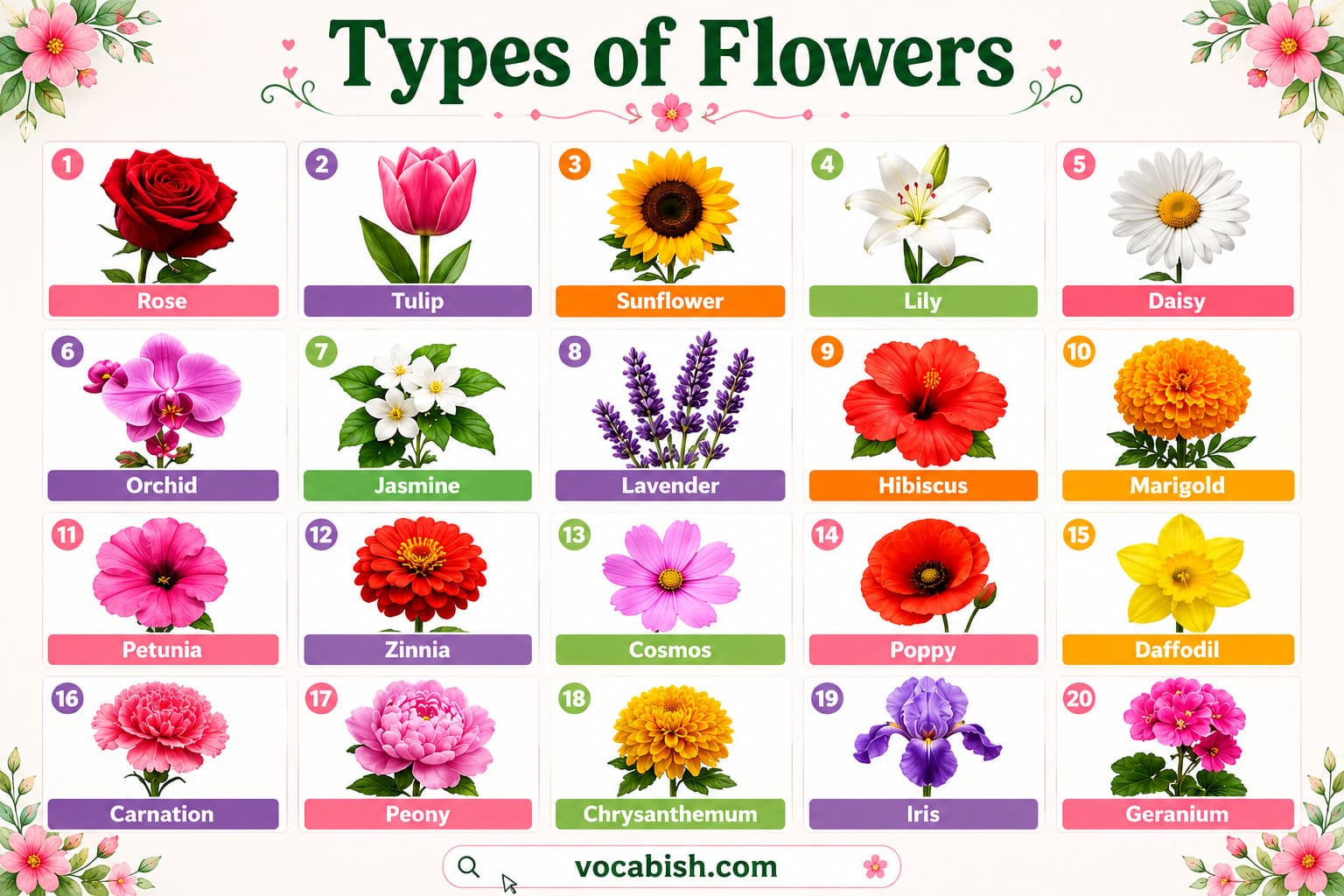

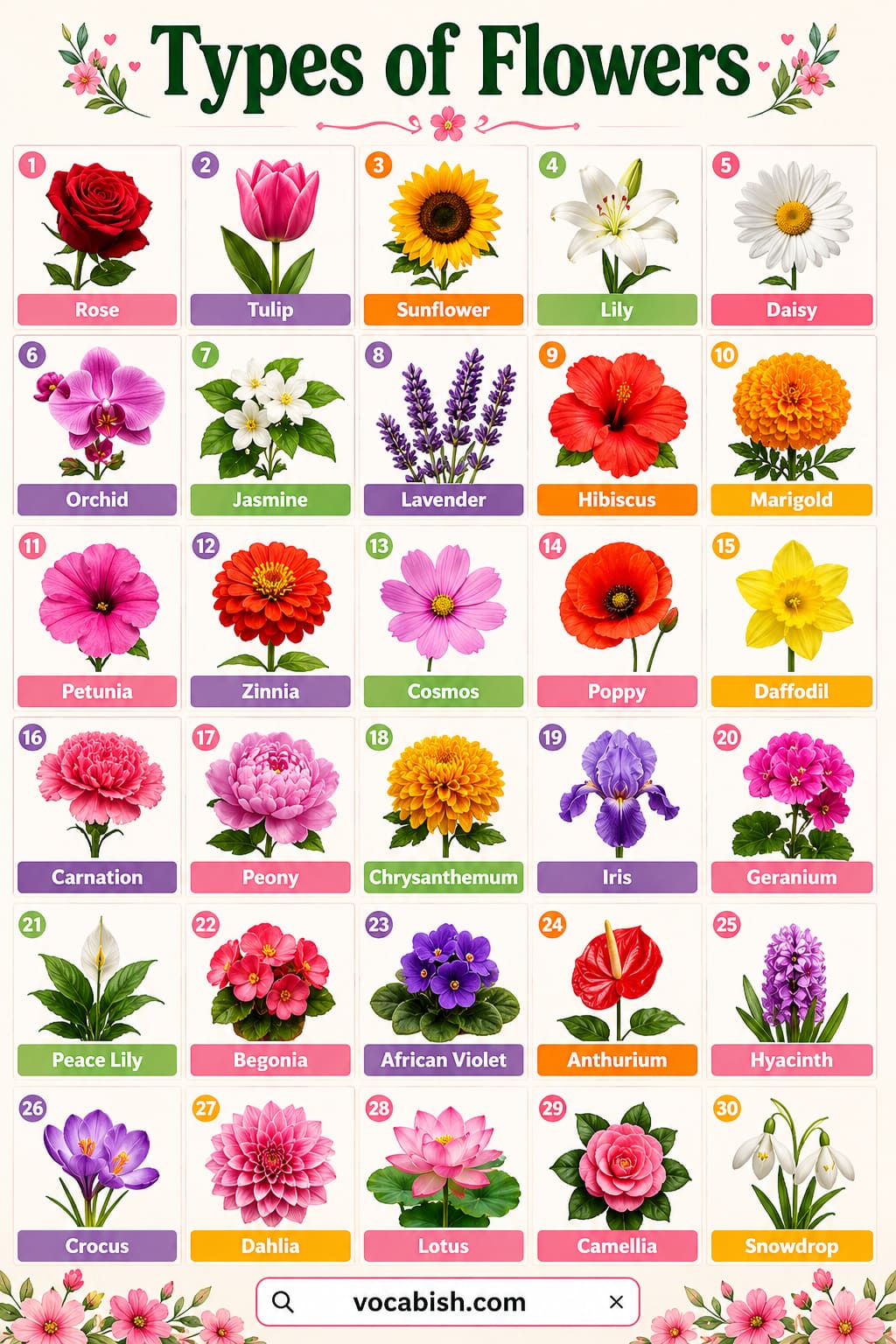
Flowers bring color, beauty, and fragrance to gardens, homes, and special occasions around the world. Learning different types of flowers can help you expand your English vocabulary while becoming familiar with some of the most popular blooms found in nature. On this page, you’ll discover 150+ popular flower names from A to Z, along with short descriptions and practical examples to make learning easier. Use the table of contents below to quickly jump to any flower or letter section you want to explore.
What Are Types of Flowers?
Types of flowers are different flower names or flower groups used to describe blooming plants. Some flowers grow in gardens, some grow in fields, and some are used for gifts, decoration, perfumes, and special events.
- Flower: The colorful part of a plant that often has petals and fragrance.
- Garden Flower: A flower people grow in home gardens, parks, or pots.
- Wildflower: A flower that grows naturally without being planted by people.
- Bouquet Flower: A flower often arranged and given as a gift.
- Seasonal Flower: A flower that blooms in a certain season, such as spring or summer.
- Fragrant Flower: A flower known for its pleasant smell.
If you would like to explore more about plant identification, flower classification, and gardening information, you can visit trusted resources such as Royal Horticultural Society (RHS) and Missouri Botanical Garden
Why Flower Names Are Useful in English
Flower vocabulary helps you talk about beauty, color, nature, emotions, and celebrations. These words are common in conversations, cards, poems, stories, and daily descriptions.
- For Daily Conversation: You can say, “I saw red roses near the gate.”
- For Gifts: You can say, “She received a bouquet of tulips.”
- For Describing Places: You can say, “The garden is full of daisies.”
- For School Learning: You can understand words like petal, stem, pollen, and bloom.
- For Travel and Nature: You can describe flowers you see in parks, forests, and gardens.
- For Writing: You can use flower names in essays, captions, stories, and messages.
Basic Flower Vocabulary
These words help you understand beautiful flower names and descriptions. Learn them before reading the full A to Z flower list.
- Bloom: A flower when it opens.
Example: Roses bloom in summer. - Blossom: A flower on a tree or plant.
Example: Cherry blossoms look beautiful in spring. - Petal: The soft colorful part of a flower.
Example: The petals are pink. - Stem: The long green part that holds a flower.
Example: The stem is strong. - Leaf: The green part of a plant.
Example: The leaves are fresh after rain. - Bud: A flower before it opens.
Example: The rose bud will open soon. - Fragrance: A pleasant smell.
Example: Lavender has a calming fragrance. - Bouquet: A group of flowers arranged together.
Example: He bought a bouquet for his mother. - Vase: A container used to hold flowers.
Example: The lilies are in a glass vase. - Thorn: A sharp point on some plants.
Example: Roses often have thorns. - Pollen: Fine powder made by flowers.
Example: Bees carry pollen from flower to flower. - Nectar: Sweet liquid inside some flowers.
Example: Bees collect nectar from flowers.
Parts of a Flower in English
Knowing flower parts makes it easier to describe plants in English. These words are also useful for science lessons and garden vocabulary.
- Petal: The soft colored part of a flower that makes it attractive.
- Stem: The part that supports the flower and keeps it upright.
- Leaf: The green part that helps the plant make food.
- Bud: A young flower that has not opened yet.
- Root: The part under the soil that takes in water.
- Pollen: Fine powder that helps flowers produce seeds.
- Sepal: The small green part that protects a flower bud.
- Seed: The part that can grow into a new plant.
For readers interested in scientific plant information and flower anatomy, the USDA Plants Database provides detailed plant records and identification resources.
150+ Flower Names A to Z with Pictures
Here is a large A to Z list of flower names. Each flower includes a picture, a short description, and an example in a sentence for everyday conversation.
A Flower Names
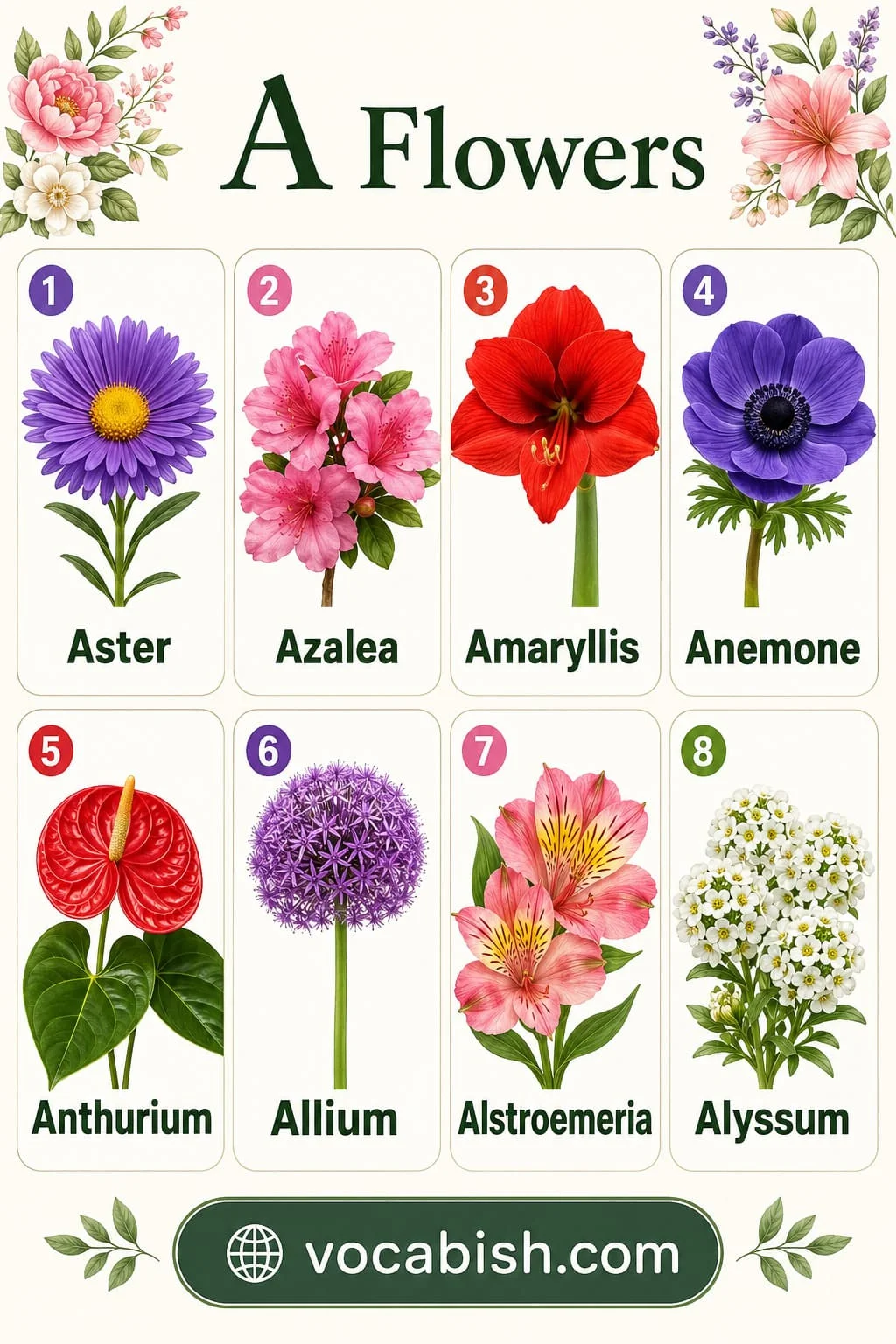
- Aster: A small star-shaped flower, often purple, pink, or white.
Example: Asters add soft color in autumn. - Azalea: A flowering shrub with bright blooms in pink, red, white, or purple.
Example: The azalea looks lovely near the path. - Amaryllis: A large trumpet-shaped flower often grown indoors.
Example: My aunt grows amaryllis by the window. - Anemone: A delicate flower with soft petals and a dark center.
Example: The anemone moves gently in the wind. - Anthurium: A shiny heart-shaped tropical flower.
Example: The anthurium looks bright on the table. - Allium: A round flower head made of many tiny flowers.
Example: Allium flowers look like purple balls. - Alstroemeria: A colorful flower often used in bouquets.
Example: She bought alstroemeria for the dining room. - Alyssum: A tiny flower that grows in clusters.
Example: Alyssum grows well along garden edges.
B Flower Names
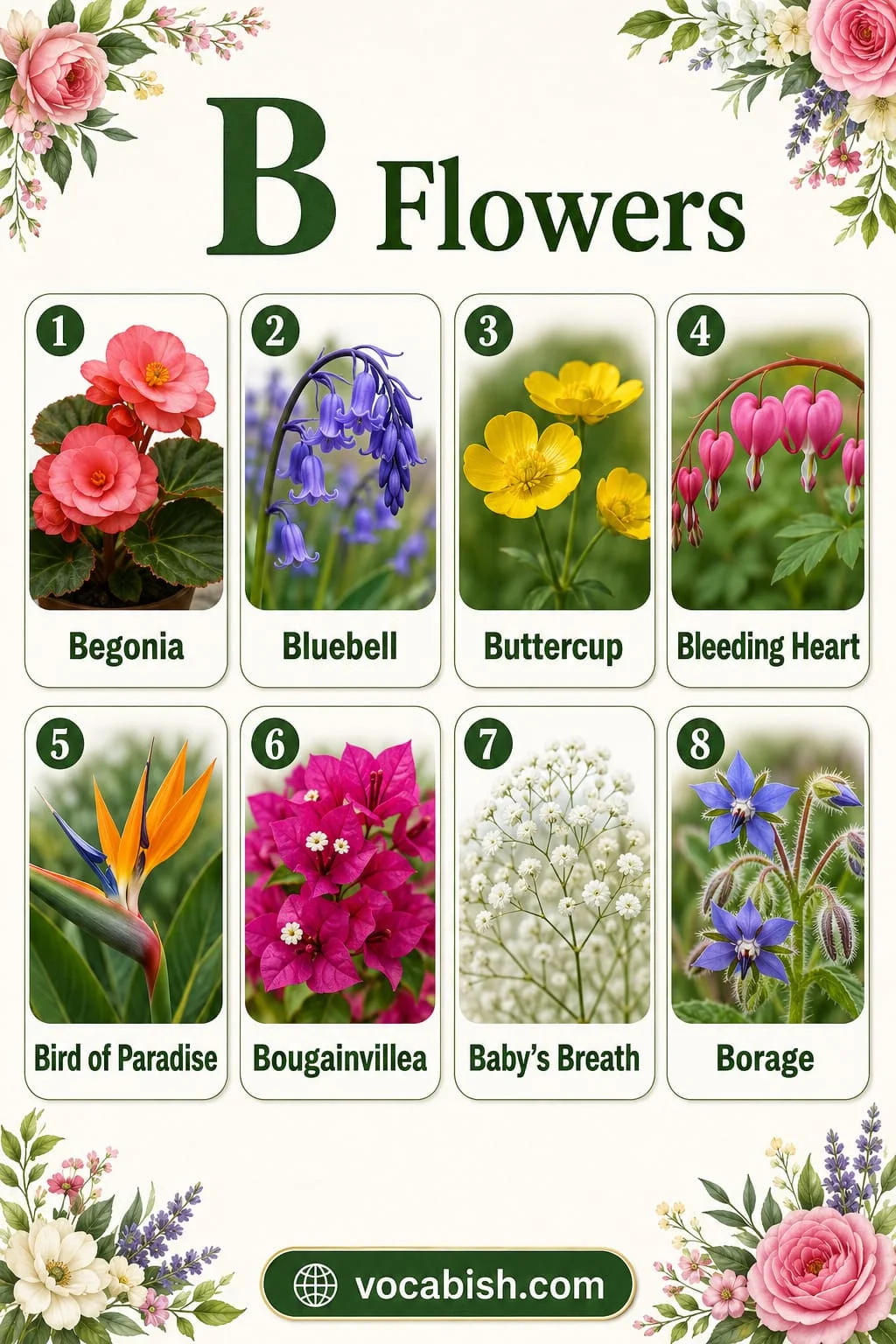
- Begonia: A soft garden flower often grown in pots.
Example: Begonias look pretty on balconies. - Bluebell: A blue bell-shaped flower that often grows in groups.
Example: Bluebells cover the ground in spring. - Buttercup: A small yellow flower with shiny petals.
Example: The child picked a buttercup from the field. - Bleeding Heart: A flower shaped like a small heart.
Example: Bleeding heart flowers look unique and gentle. - Bird of Paradise: A bright tropical flower shaped like a bird.
Example: Bird of paradise grows in warm places. - Bougainvillea: A bright climbing plant with paper-like flowers.
Example: Bougainvillea covers the gate with color. - Baby’s Breath: Tiny white flowers often used with roses.
Example: Baby’s breath makes the bouquet look soft. - Borage: A blue star-shaped flower that attracts bees.
Example: Borage grows well in sunny gardens.
C Flower Names
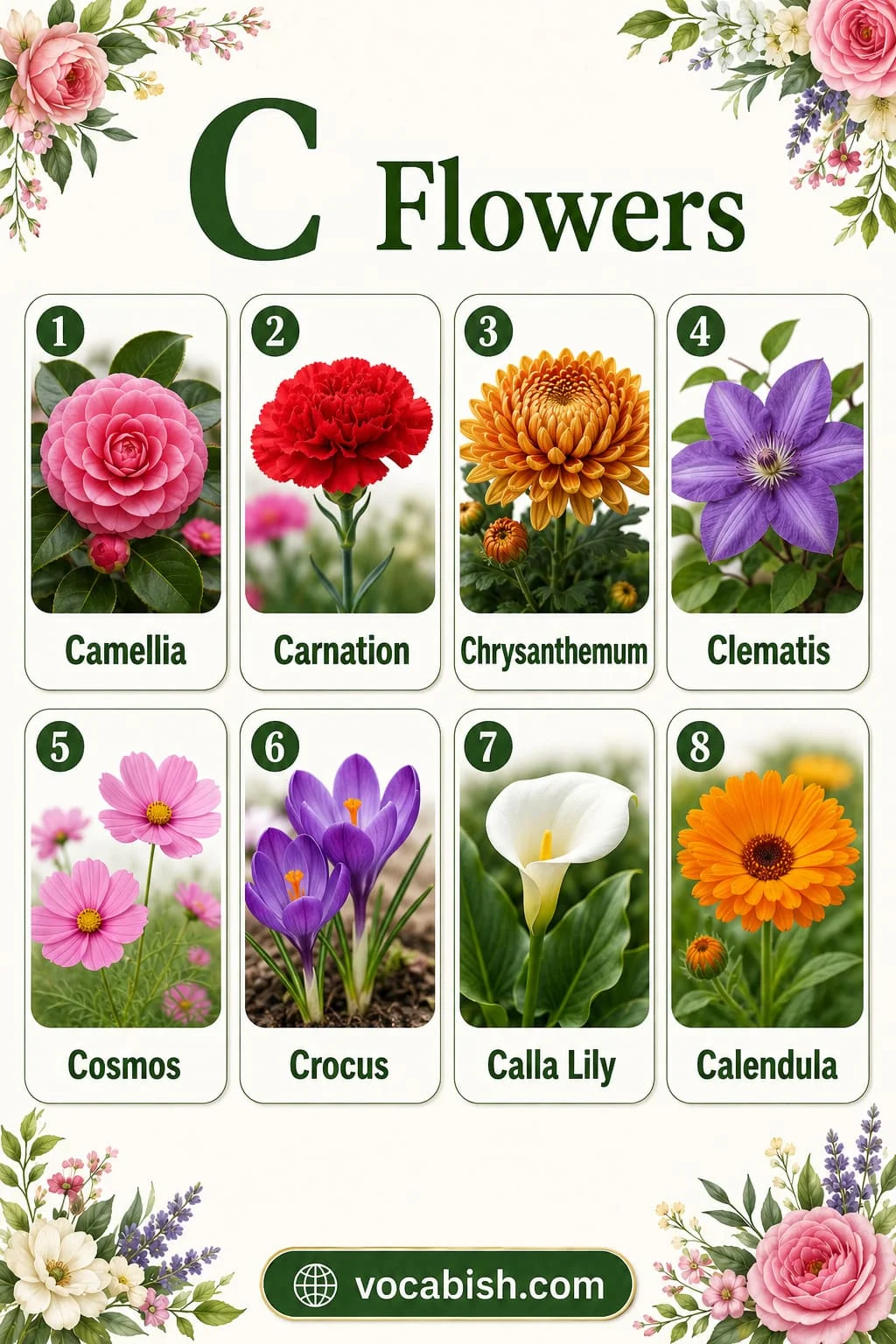
- Camellia: A round flower with smooth layered petals.
Example: The camellia blooms before many spring flowers. - Carnation: A ruffled flower often used as a gift.
Example: He gave his teacher a pink carnation. - Chrysanthemum: A full flower with many narrow petals.
Example: Chrysanthemums are common in autumn. - Clematis: A climbing flower with wide colorful petals.
Example: Clematis grows beautifully on the wall. - Cosmos: A light flower with thin stems and open petals.
Example: Cosmos flowers move softly in the breeze. - Crocus: A small flower that often blooms in early spring.
Example: Crocus flowers appear after cold weather. - Calla Lily: A smooth trumpet-shaped flower used in elegant arrangements.
Example: The bride carried calla lilies. - Calendula: A bright orange or yellow flower.
Example: Calendula brings warm color to the garden.
D Flower Names
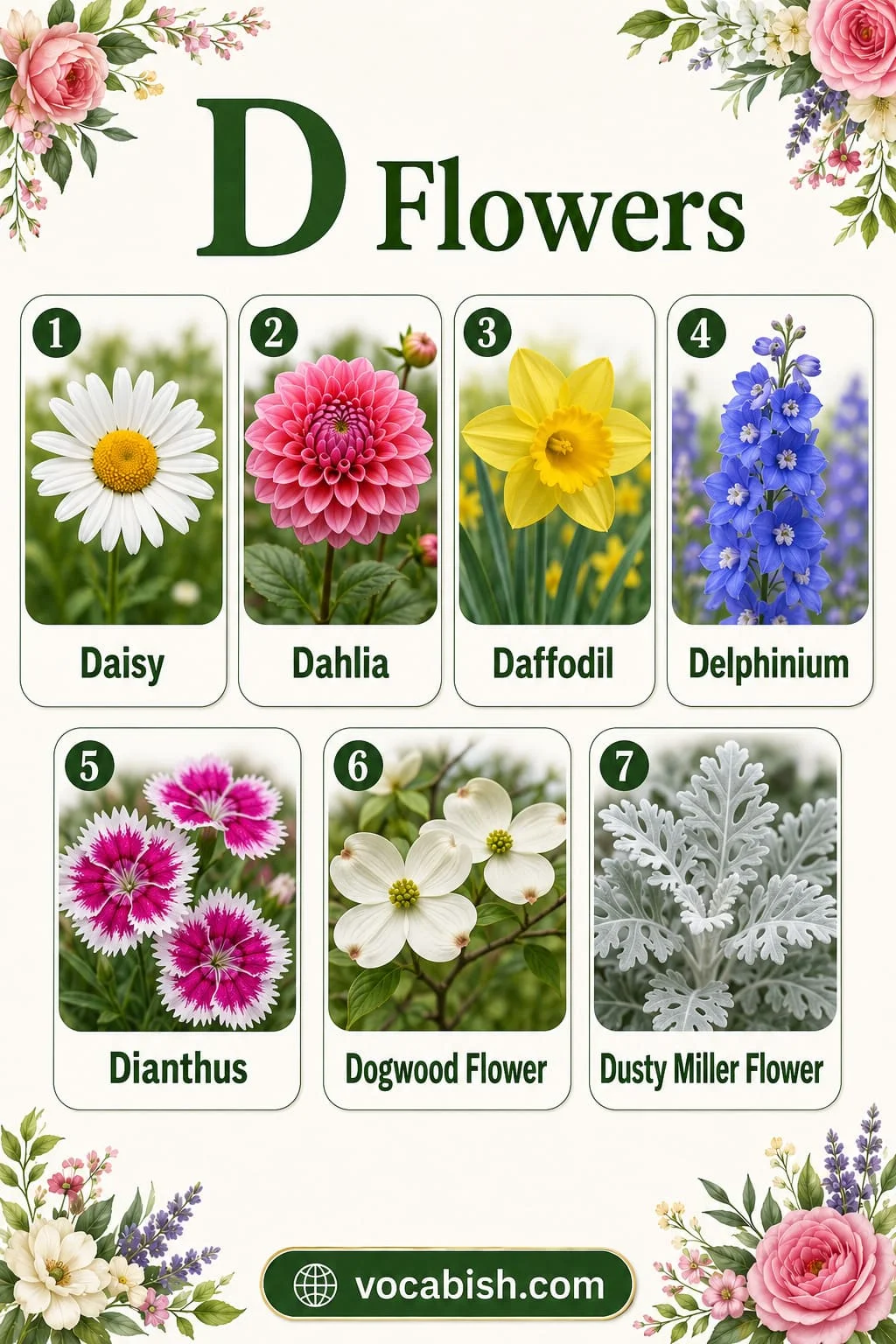
- Daisy: A white flower with a yellow center.
Example: A daisy grew beside the path. - Dahlia: A large flower with many layered petals.
Example: Dahlias look bold in summer gardens. - Daffodil: A yellow spring flower with a trumpet-shaped center.
Example: Daffodils bloom in spring. - Delphinium: A tall flower with blue, purple, pink, or white spikes.
Example: Delphiniums stand tall in the garden. - Dianthus: A small flower with fringed petals.
Example: Dianthus has a light sweet smell. - Dogwood Flower: A tree flower often seen in white or pink.
Example: Dogwood flowers appear on trees in spring. - Dusty Miller Flower: A plant with soft silver leaves and small yellow flowers.
Example: Dusty miller adds contrast to flower beds.
E Flower Names
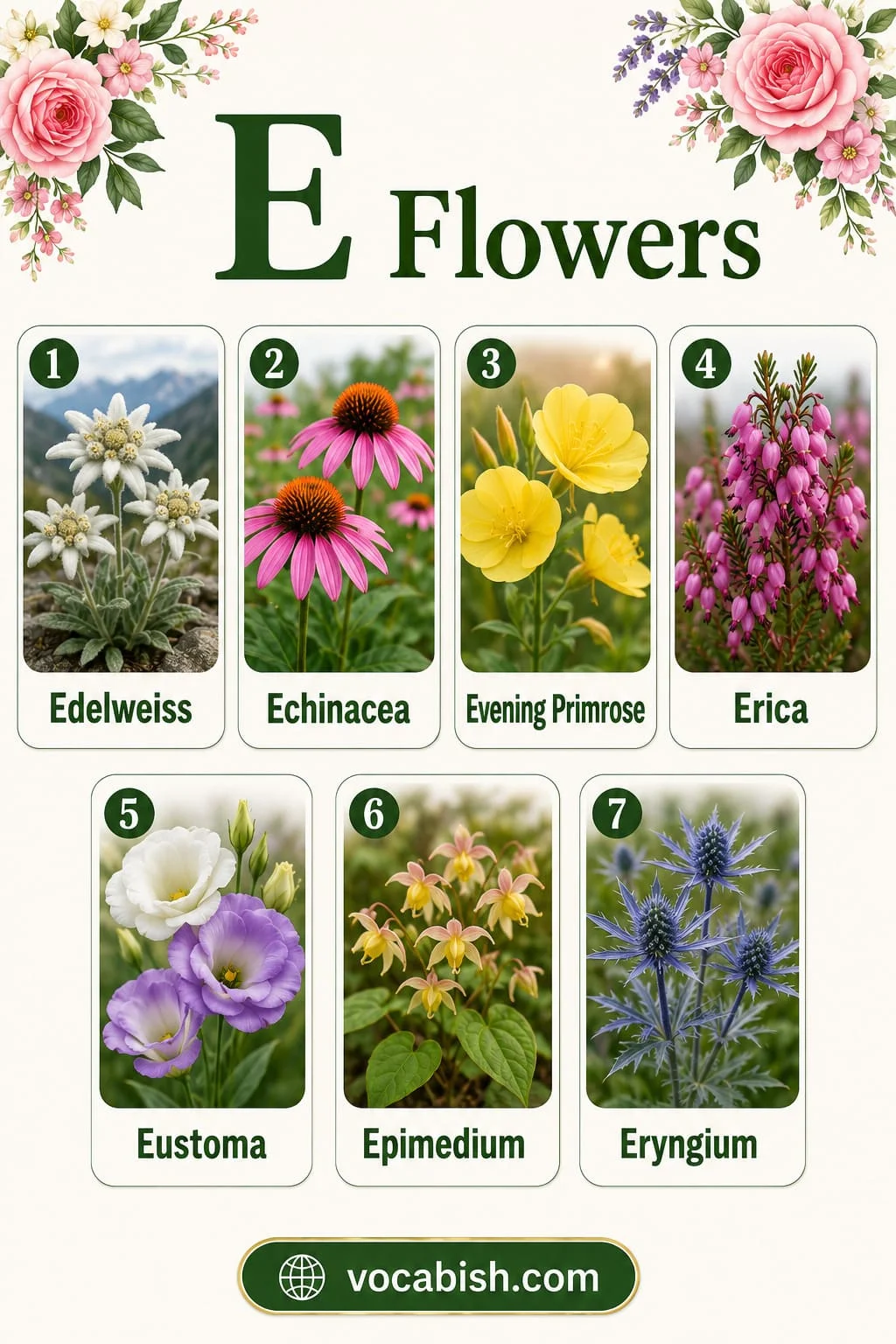
- Edelweiss: A small white mountain flower.
Example: Edelweiss grows in cool mountain areas. - Echinacea: A daisy-like flower with a raised center.
Example: Echinacea attracts butterflies. - Evening Primrose: A soft yellow flower that may open later in the day.
Example: Evening primrose looks bright at sunset. - Erica: A shrub with tiny bell-like flowers.
Example: Erica adds color to winter gardens. - Eustoma: A soft flower that looks a little like a rose.
Example: Eustoma is popular in bouquets. - Epimedium: A delicate flower that often grows in shade.
Example: Epimedium grows well under trees. - Eryngium: A spiky blue flower often used in arrangements.
Example: Eryngium gives bouquets a bold look.
F Flower Names
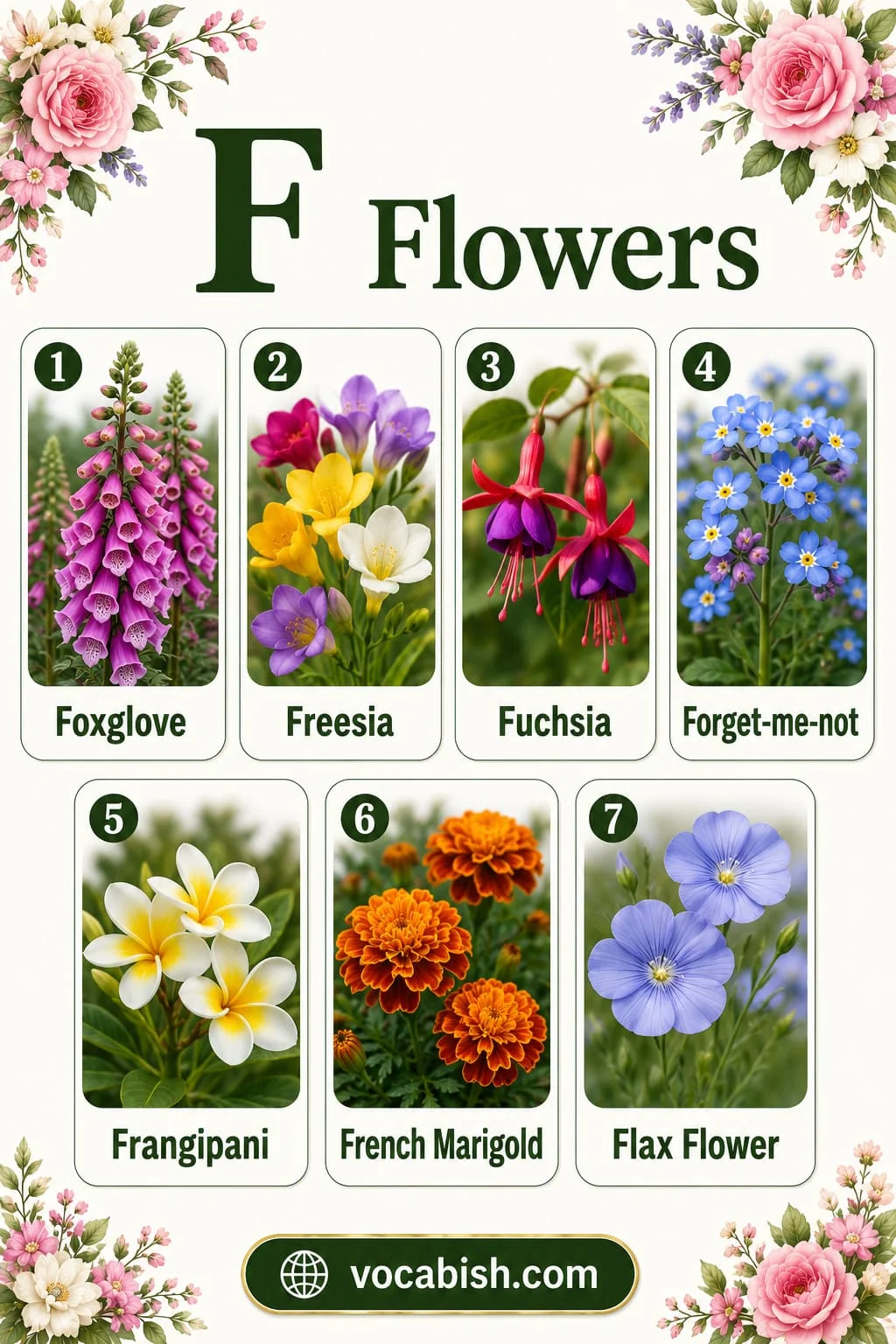
- Foxglove: A tall flower with bell-shaped blooms.
Example: Foxgloves look beautiful but should not be eaten. - Freesia: A fragrant flower with curved stems.
Example: Freesia smells fresh and sweet. - Fuchsia: A hanging flower in pink, purple, red, or white.
Example: Fuchsia flowers look like tiny lanterns. - Forget-me-not: A tiny blue flower with a yellow center.
Example: Forget-me-nots are small and charming. - Frangipani: A tropical flower with a sweet scent.
Example: Frangipani flowers are common in warm countries. - French Marigold: A bright orange or yellow flower with ruffled petals.
Example: French marigolds grow well in sunny beds. - Flax Flower: A small blue flower with soft petals.
Example: Flax flowers look light and delicate.
G Flower Names
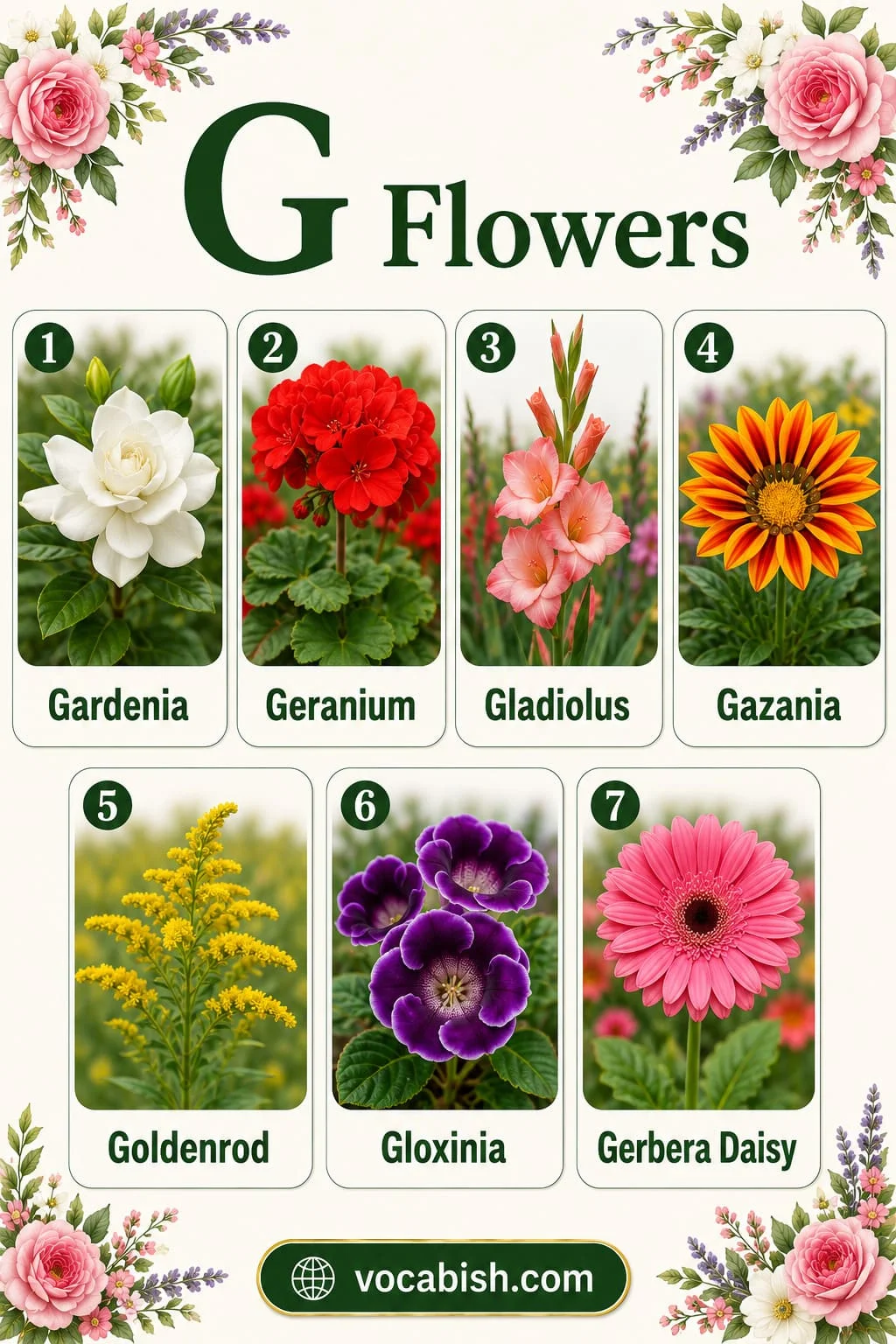
- Gardenia: A white flower with a strong sweet scent.
Example: Gardenia smells wonderful in the evening. - Geranium: A bright flower often grown in pots.
Example: Geraniums look nice on balconies. - Gladiolus: A tall flower with many blooms on one stem.
Example: Gladiolus flowers look good in tall vases. - Gazania: A daisy-like flower in bright colors.
Example: Gazania opens wide in the sun. - Goldenrod: A yellow flower that grows in tall clusters.
Example: Goldenrod brings gold color to fields. - Gloxinia: A large velvety indoor flower.
Example: Gloxinia grows well in pots. - Gerbera Daisy: A bright daisy-like flower often used in bouquets.
Example: Gerbera daisies look cheerful in a vase.
H Flower Names
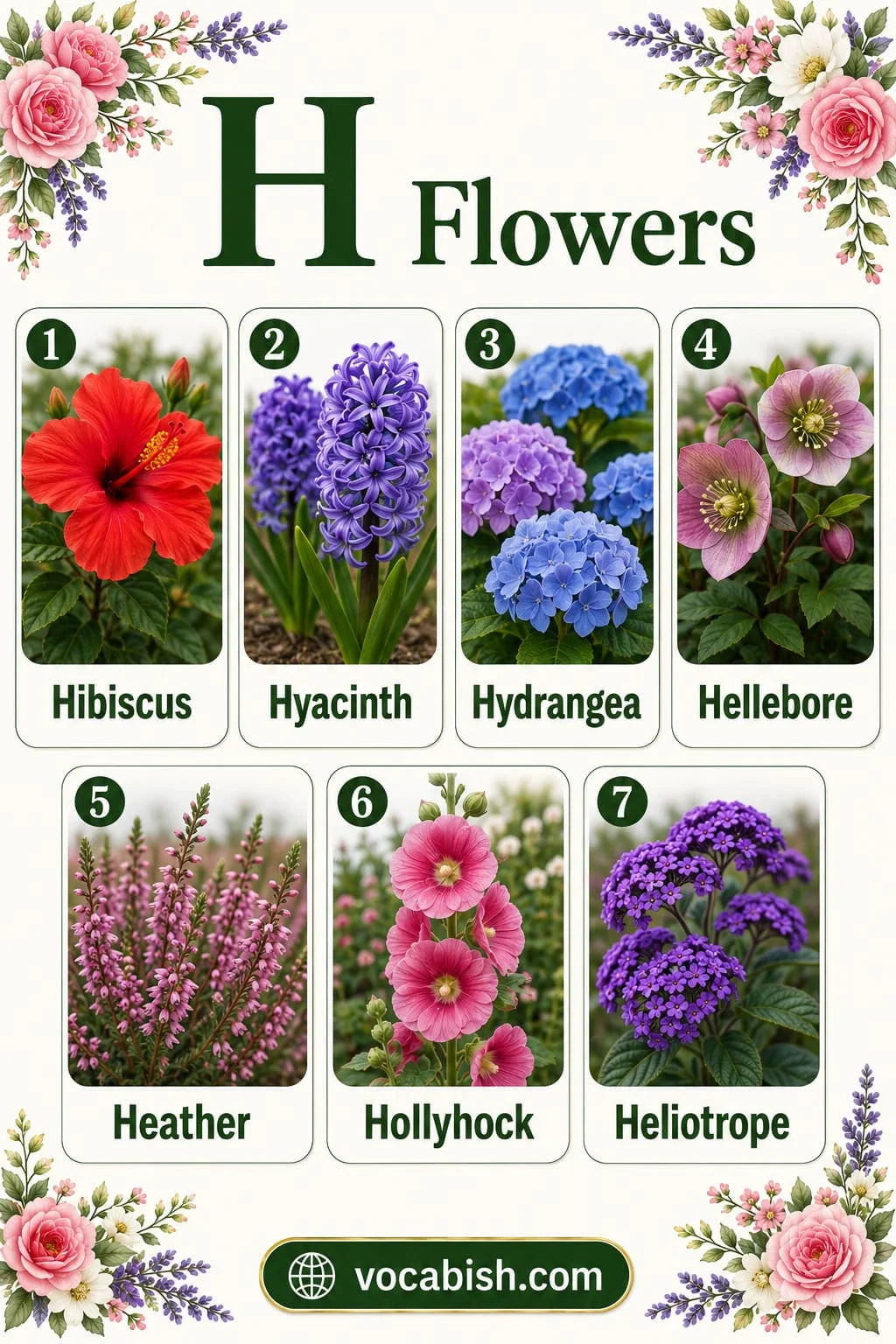
- Hibiscus: A large tropical flower with a long center.
Example: Hibiscus flowers grow in warm gardens. - Hyacinth: A fragrant flower with many small blooms on a short spike.
Example: Hyacinths smell strong and sweet. - Hydrangea: A flower with large round clusters.
Example: Hydrangeas make the garden look full. - Hellebore: A flower that can bloom in cold months.
Example: Hellebores bloom when many plants are quiet. - Heather: A low plant with tiny purple or pink flowers.
Example: Heather grows well in open areas. - Hollyhock: A tall plant with large flowers on long stems.
Example: Hollyhocks grow beside old garden walls. - Heliotrope: A small fragrant flower often seen in purple.
Example: Heliotrope has a sweet scent.
I Flower Names
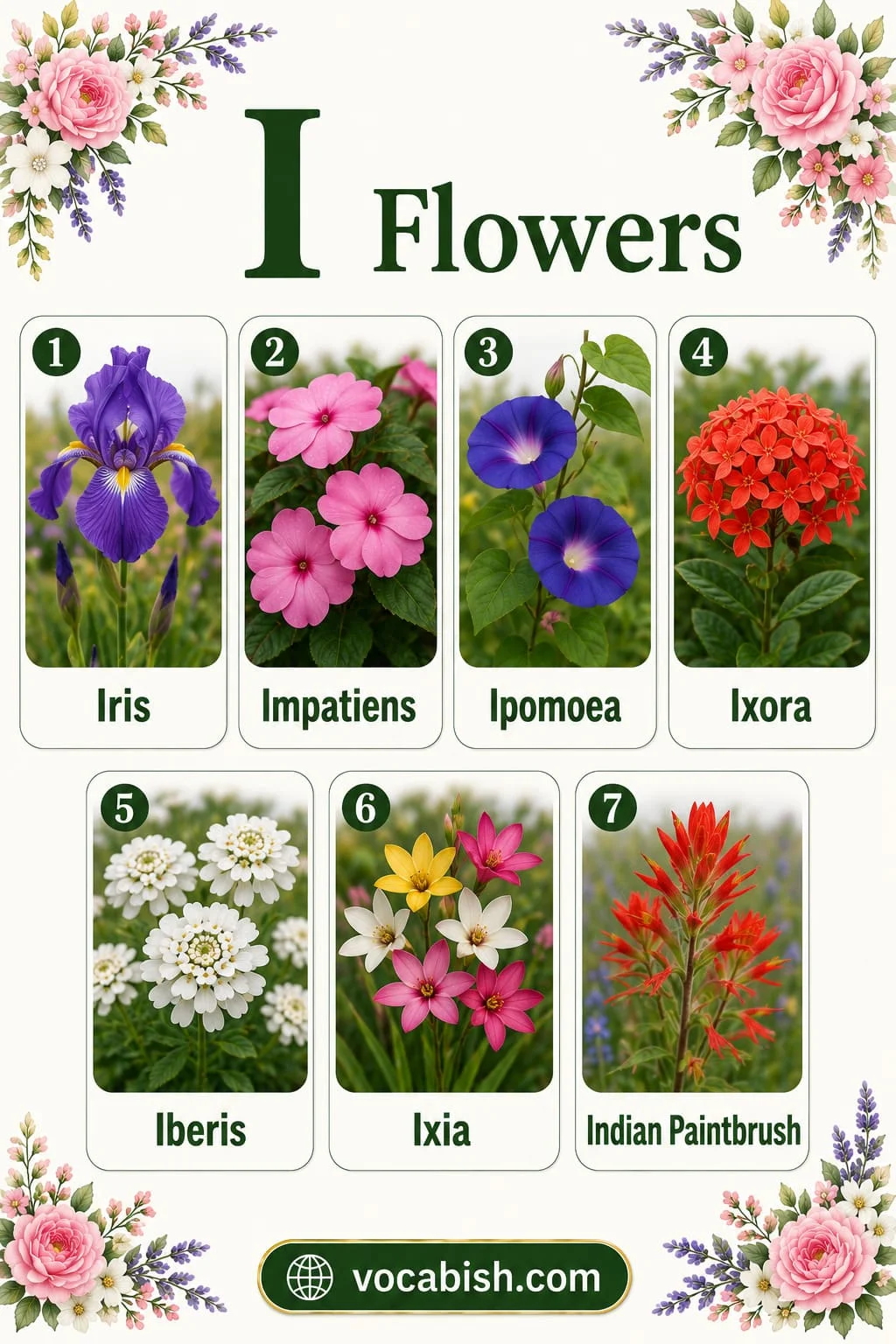
- Iris: A graceful flower with folded petals.
Example: The iris has a rich purple color. - Impatiens: A soft flower that grows well in shade.
Example: Impatiens brighten shady corners. - Ipomoea: A climbing plant with trumpet-shaped flowers.
Example: Ipomoea flowers open in the morning. - Ixora: A tropical flower that grows in round clusters.
Example: Ixora grows well in warm climates. - Iberis: A low plant with white flower clusters.
Example: Iberis looks neat along garden borders. - Ixia: A star-shaped flower on thin stems.
Example: Ixia adds bright color to spring displays. - Indian Paintbrush: A wildflower with bright red or orange parts.
Example: Indian paintbrush grows in open fields.
J Flower Names
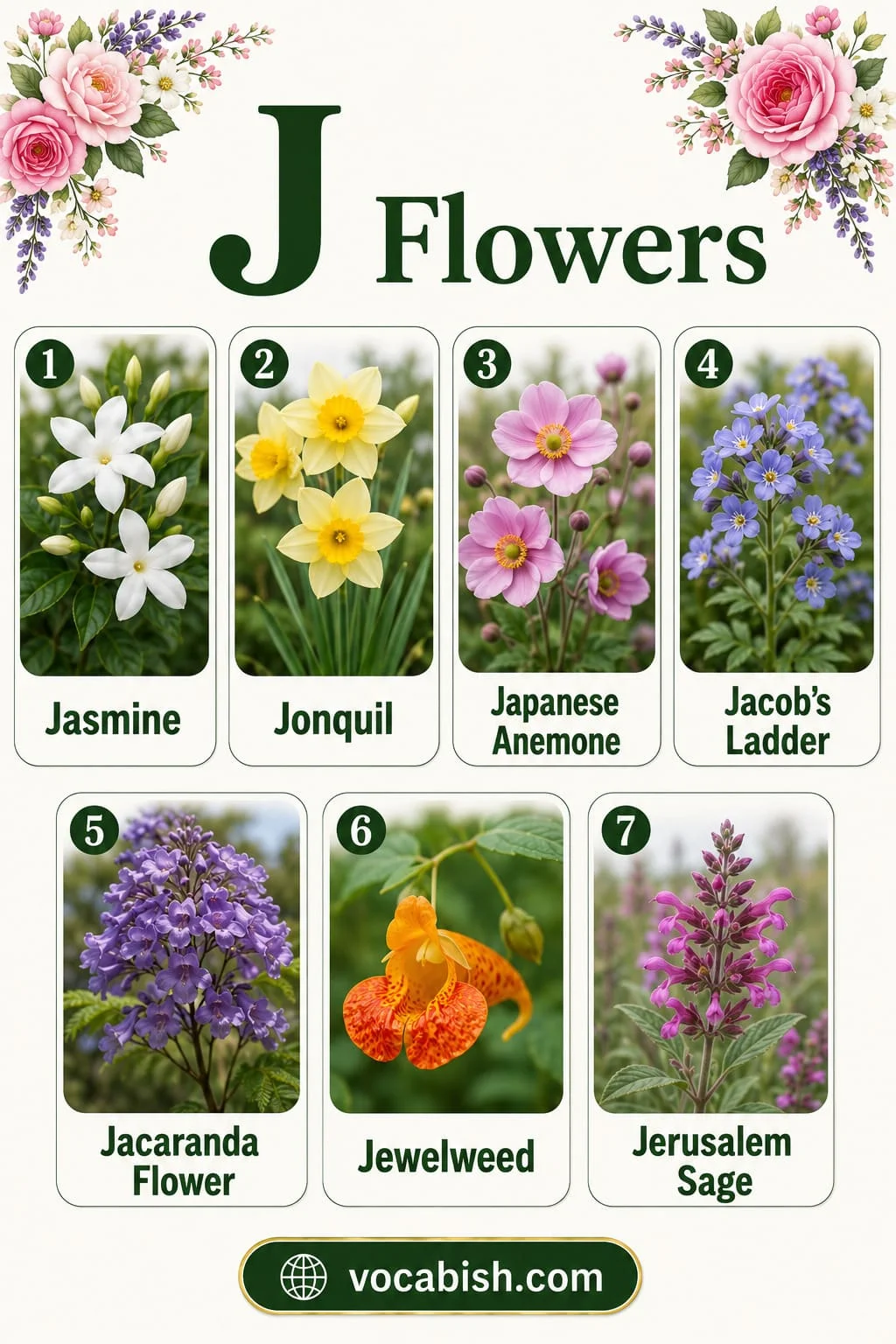
- Jasmine: A small fragrant flower, often white or yellow.
Example: Jasmine smells lovely at night. - Jonquil: A small daffodil-like flower.
Example: Jonquils brighten the garden in spring. - Japanese Anemone: A tall flower with soft open petals.
Example: Japanese anemones bloom late in the season. - Jacob’s Ladder: A plant with blue flowers and ladder-like leaves.
Example: Jacob’s ladder grows well in cool gardens. - Jacaranda Flower: A purple flower that grows on trees.
Example: Jacaranda flowers cover the street with color. - Jewelweed: An orange wildflower that often grows near wet areas.
Example: Jewelweed grows beside streams. - Jerusalem Sage: A yellow flower that grows on a shrub-like plant.
Example: Jerusalem sage grows well in sunny spots.
K Flower Names
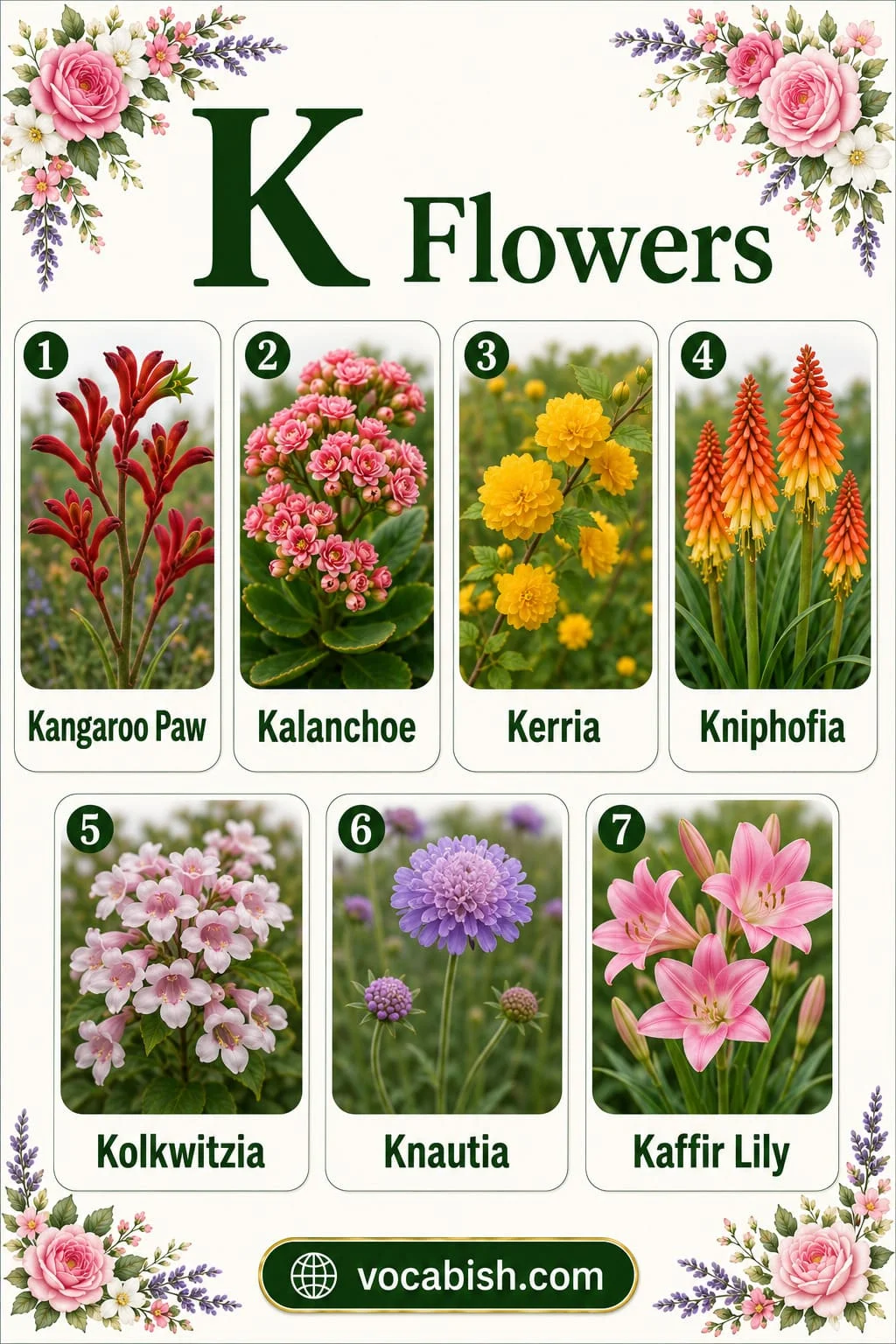
- Kangaroo Paw: A fuzzy flower shaped a little like an animal paw.
Example: Kangaroo paw has an unusual shape. - Kalanchoe: A small bright flower often grown indoors.
Example: Kalanchoe looks nice in a sunny room. - Kerria: A yellow spring flower on arching branches.
Example: Kerria adds cheerful color to gardens. - Kniphofia: A tall red, orange, or yellow flower spike.
Example: Kniphofia looks like a bright torch. - Kolkwitzia: A shrub with small pink bell-shaped flowers.
Example: Kolkwitzia is also called beauty bush. - Knautia: A small pincushion-like flower.
Example: Knautia attracts bees and butterflies. - Kaffir Lily: A bright flower often seen in orange or red.
Example: Kaffir lilies grow well in mild climates.
L Flower Names
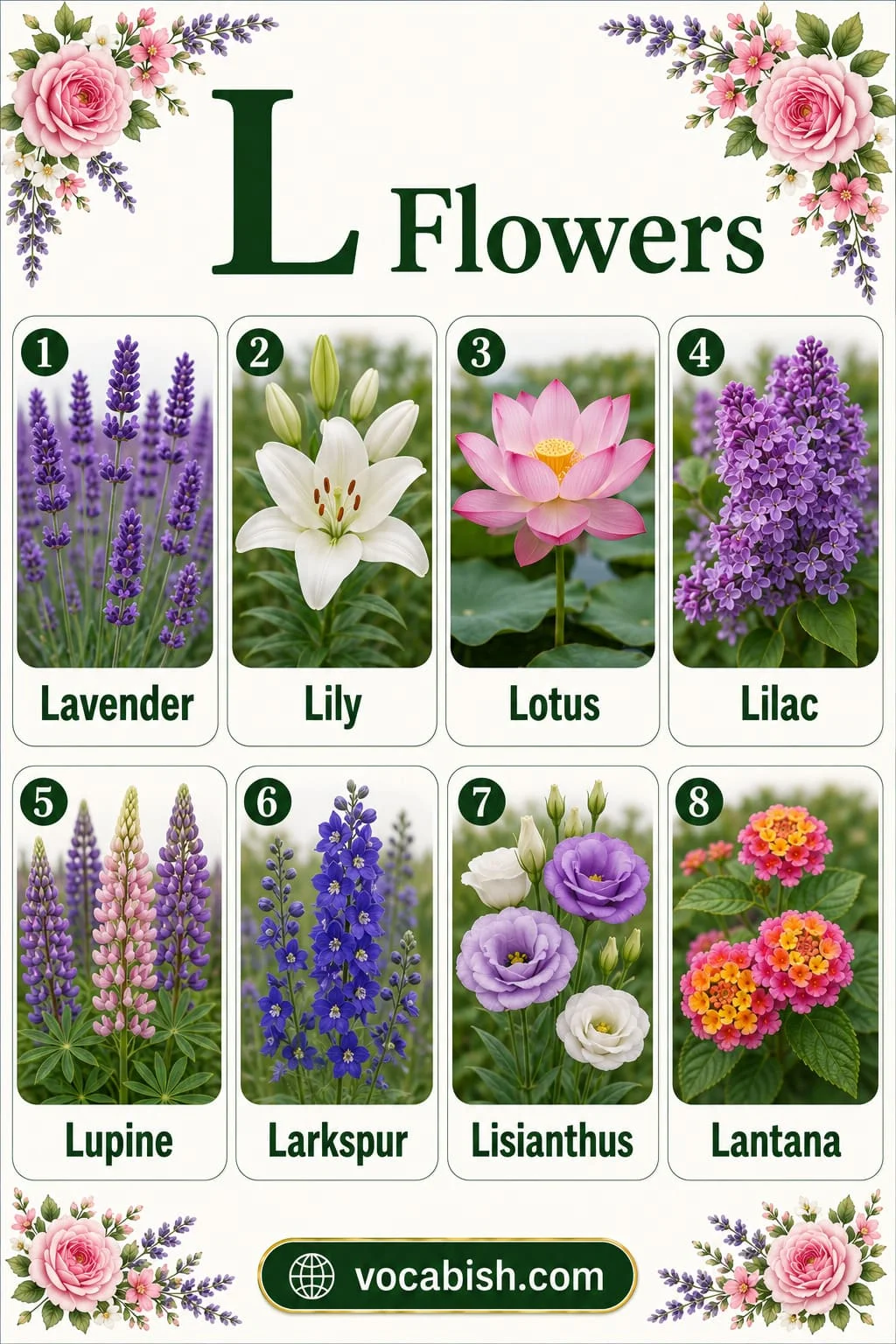
- Lavender: A purple flower known for its relaxing scent.
Example: Lavender is used in soaps and perfumes. - Lily: A large elegant flower with strong petals.
Example: Lilies look graceful in a vase. - Lotus: A water flower with wide petals.
Example: The lotus grows above the water. - Lilac: A fragrant flower that grows in clusters on shrubs.
Example: Lilac smells sweet in spring. - Lupine: A tall flower spike with many small blooms.
Example: Lupines grow in colorful groups. - Larkspur: A tall flower often seen in blue, pink, or white.
Example: Larkspur adds height to flower beds. - Lisianthus: A soft flower often used in bouquets.
Example: Lisianthus looks elegant in wedding flowers. - Lantana: A small flower that grows in colorful clusters.
Example: Lantana attracts butterflies.
M Flower Names
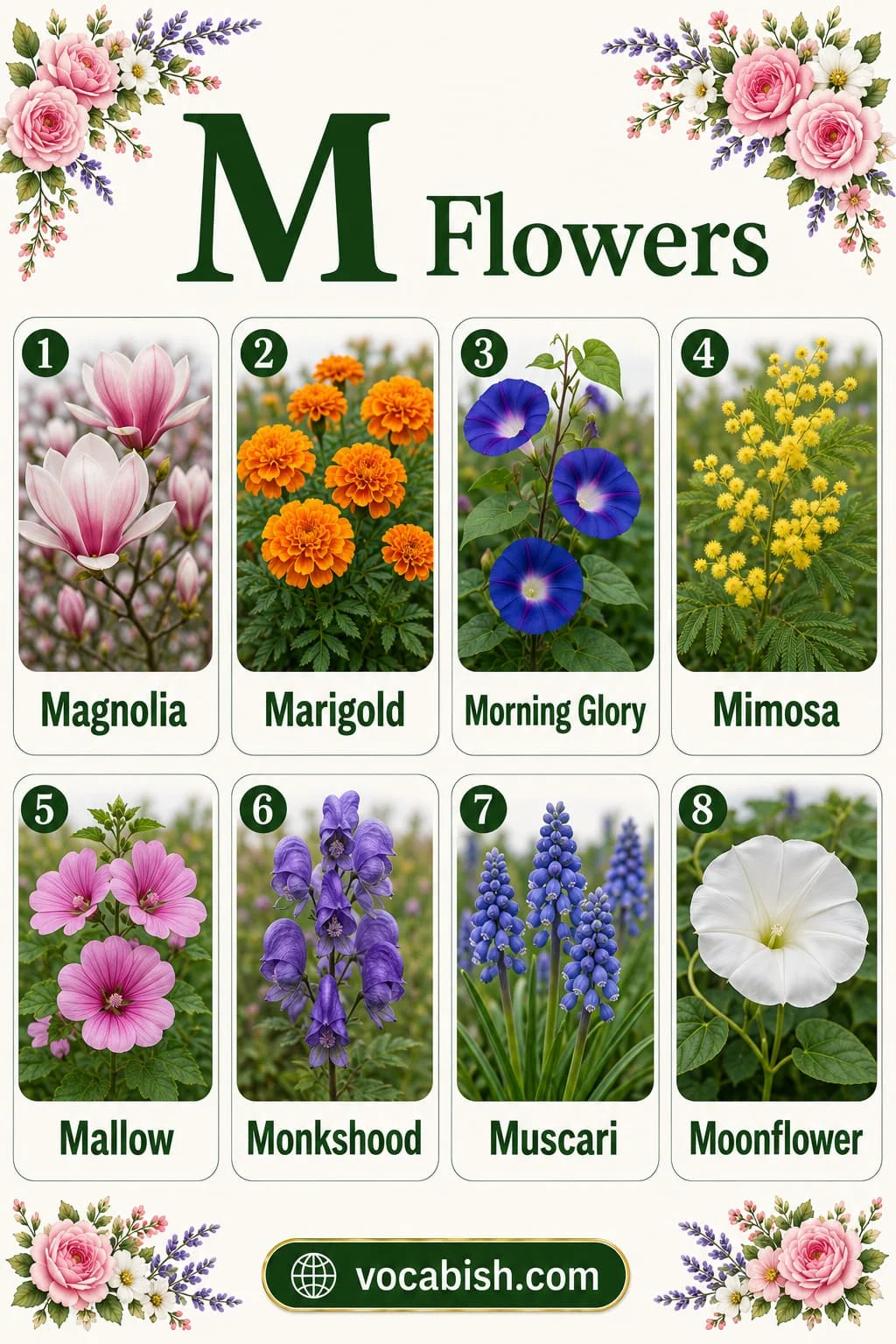
- Magnolia: A large flower that grows on trees or shrubs.
Example: Magnolia flowers open before many leaves appear. - Marigold: A bright orange or yellow flower.
Example: Marigolds are common in sunny gardens. - Morning Glory: A trumpet-shaped flower that often opens in the morning.
Example: Morning glory climbs over the fence. - Mimosa: A soft yellow puff-like flower.
Example: Mimosa flowers look light and fluffy. - Mallow: A soft open flower with five petals.
Example: Mallow grows in gardens and wild places. - Monkshood: A hood-shaped blue or purple flower.
Example: Monkshood is beautiful but poisonous. - Muscari: A small blue flower cluster that looks like grapes.
Example: Muscari is also called grape hyacinth. - Moonflower: A white flower that opens at night.
Example: Moonflowers look beautiful in the evening.
N Flower Names
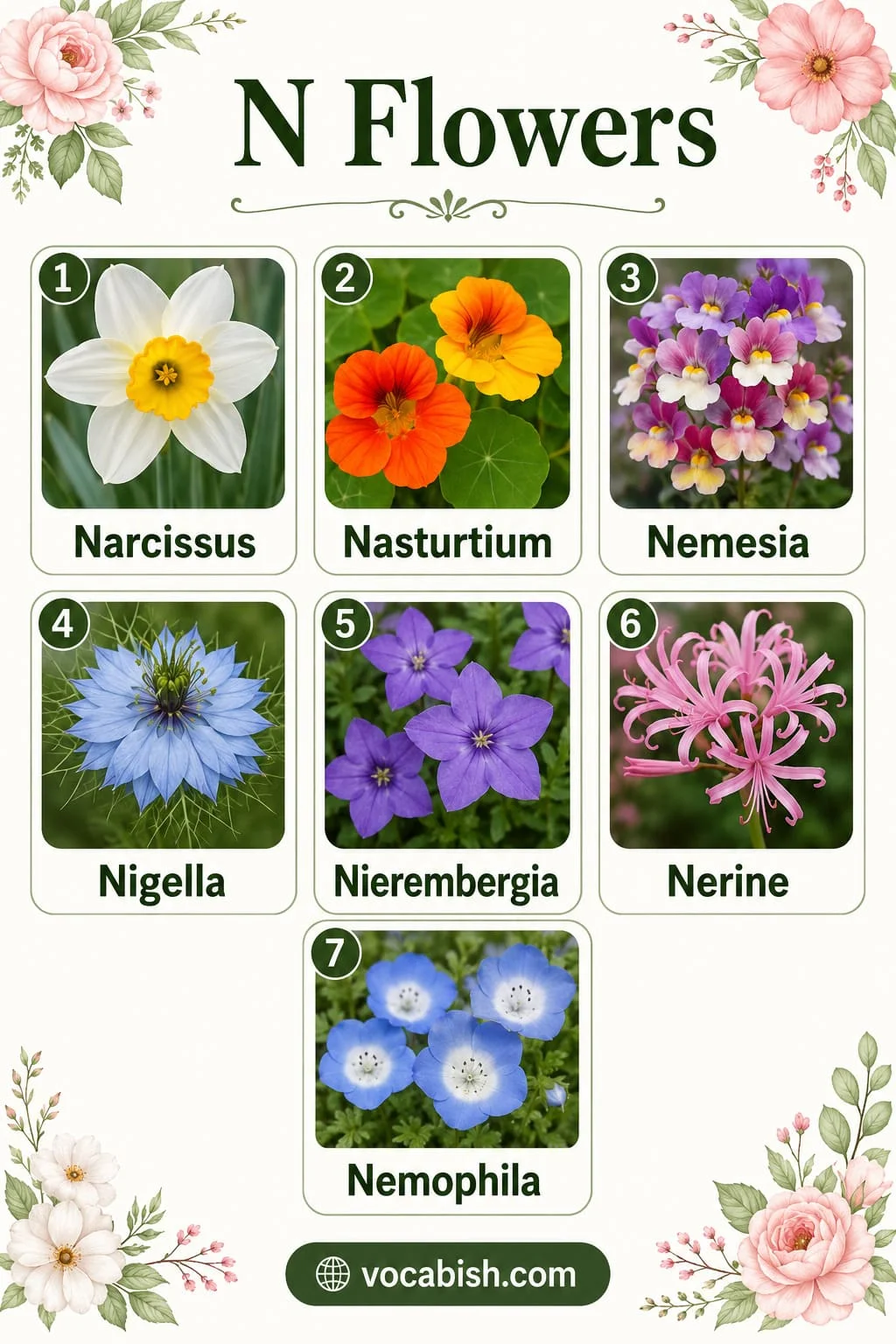
- Narcissus: A daffodil-like flower with a central cup.
Example: Narcissus flowers are common in spring. - Nasturtium: A bright flower with round leaves.
Example: Nasturtium grows well in pots. - Nemesia: A small colorful flower often used in containers.
Example: Nemesia brings soft color to baskets. - Nigella: A blue flower with fine airy leaves.
Example: Nigella is also called love-in-a-mist. - Nierembergia: A small cup-shaped flower.
Example: Nierembergia looks neat in hanging baskets. - Nerine: A pink flower with curved petals.
Example: Nerine flowers appear late in the year. - Nemophila: A small blue flower often called baby blue eyes.
Example: Nemophila creates a soft blue carpet.
O Flower Names
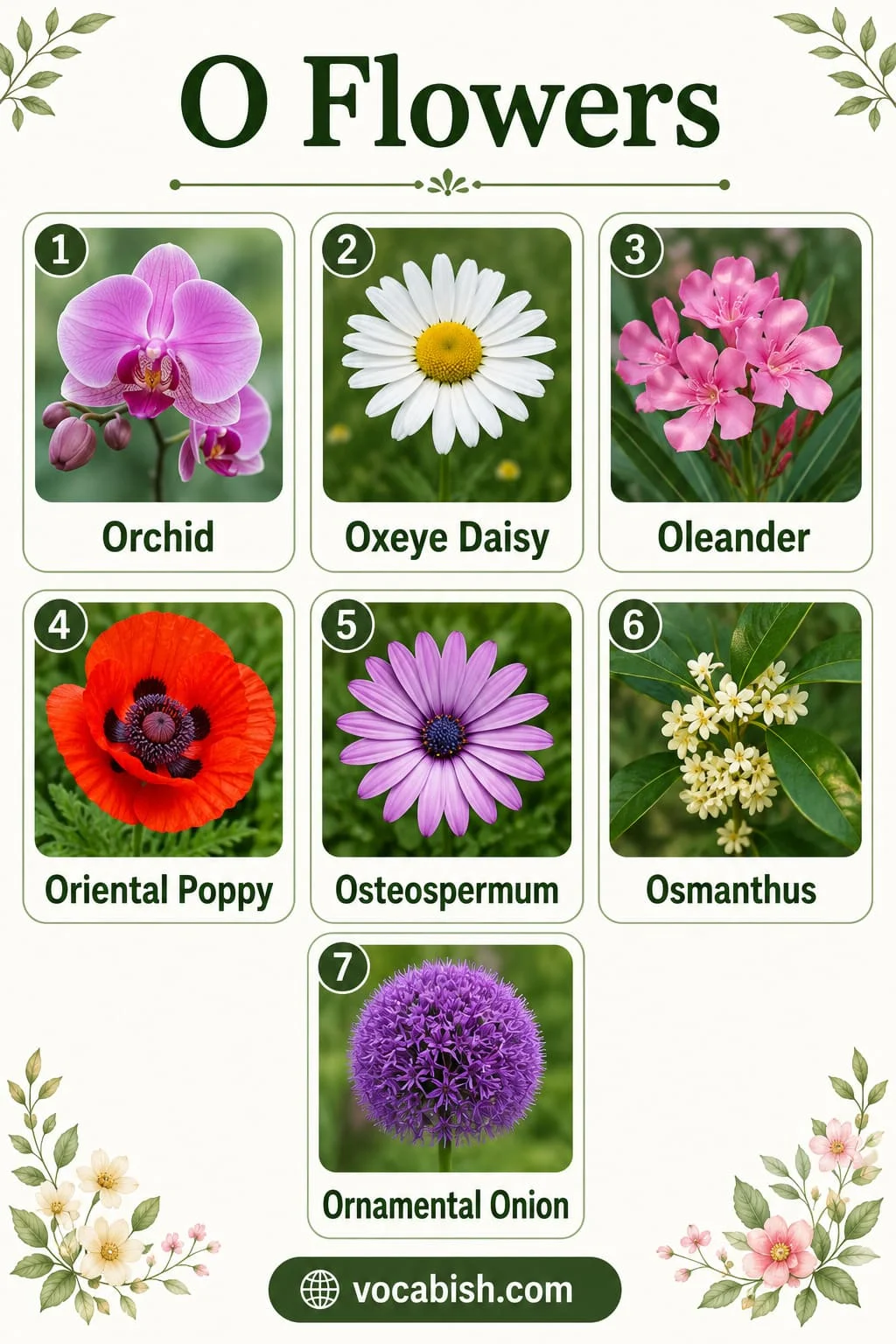
- Orchid: An elegant flower with many shapes and colors.
Example: Orchids are popular indoor flowers. - Oxeye Daisy: A white wildflower with a yellow center.
Example: Oxeye daisies grow in open fields. - Oleander: A flowering shrub with pink, white, or red flowers.
Example: Oleander is attractive but toxic. - Oriental Poppy: A large poppy with bright petals and a dark center.
Example: Oriental poppies stand out in gardens. - Osteospermum: A daisy-like flower in bright shades.
Example: Osteospermum is also called African daisy. - Osmanthus: A shrub with tiny fragrant flowers.
Example: Osmanthus flowers have a sweet smell. - Ornamental Onion: Another name for many allium flowers.
Example: Ornamental onions look round and bold.
P Flower Names
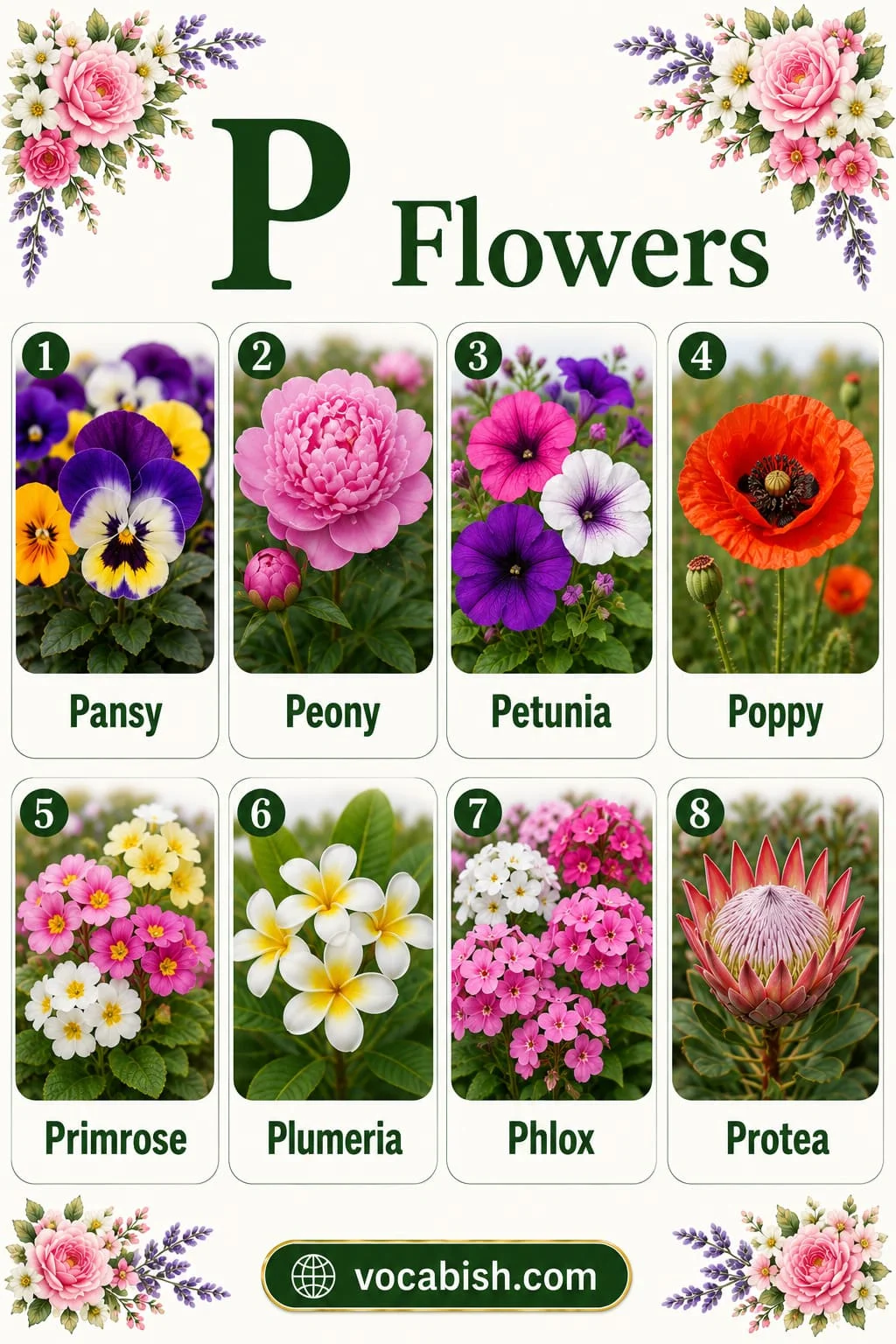
- Pansy: A small flower with face-like markings.
Example: Pansies look cheerful in cool weather. - Peony: A large soft flower with many petals.
Example: Peonies are loved for their full blooms. - Petunia: A trumpet-shaped flower in many colors.
Example: Petunias grow well in hanging baskets. - Poppy: A flower with thin petals and a dark center.
Example: Red poppies are easy to recognize. - Primrose: A low flower that often blooms early.
Example: Primroses add color after winter. - Plumeria: A tropical flower with a sweet scent.
Example: Plumeria is used in flower garlands. - Phlox: A flower that grows in colorful clusters.
Example: Phlox creates a bright garden carpet. - Protea: A large bold flower with a dramatic shape.
Example: Protea looks strong and unusual.
Q Flower Names
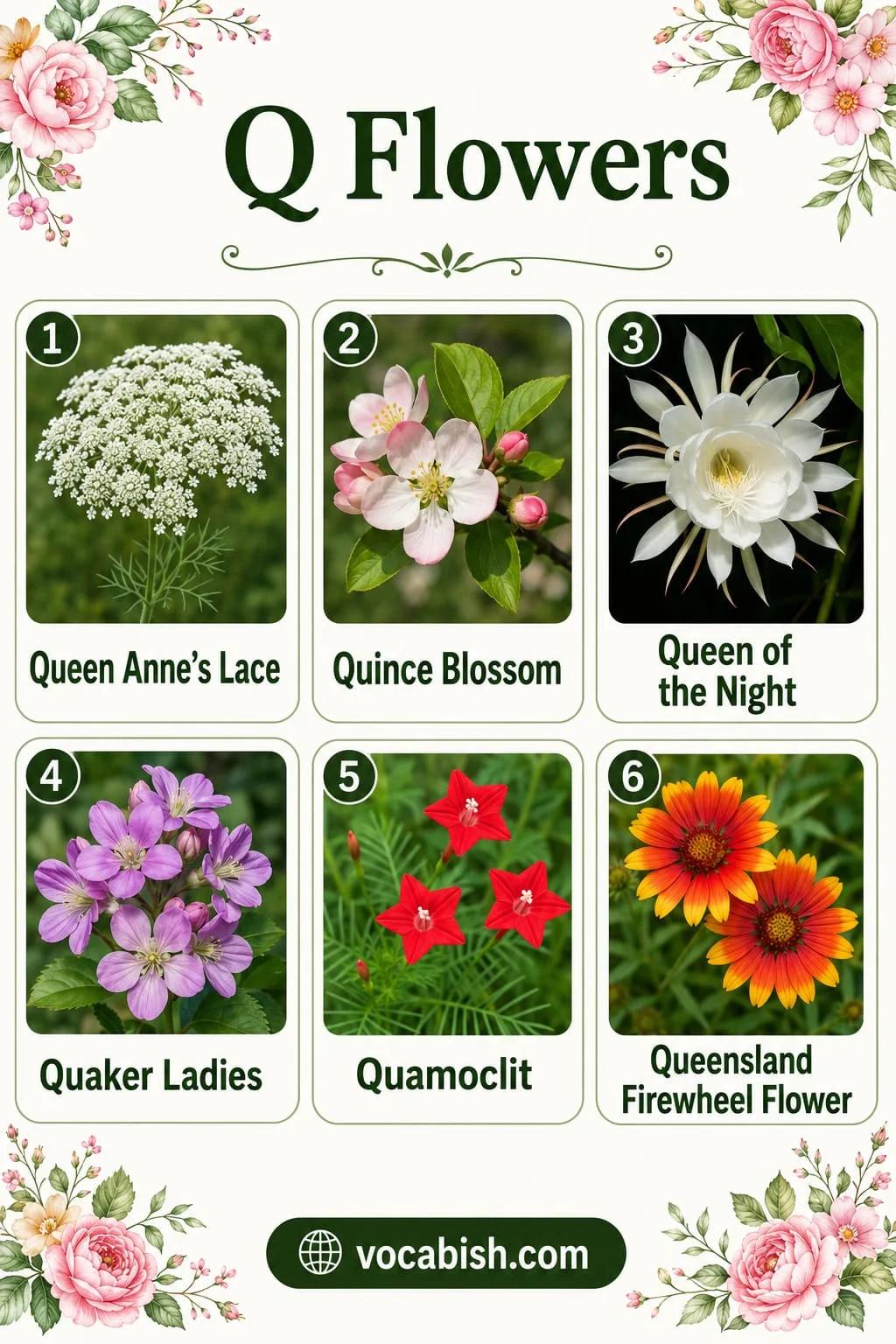
- Queen Anne’s Lace: A white flower cluster that looks like lace.
Example: Queen Anne’s lace grows along roadsides. - Quince Blossom: A flower that grows on quince shrubs or trees.
Example: Quince blossoms appear before the fruit. - Queen of the Night: A large cactus flower that blooms at night.
Example: Queen of the night blooms for a short time. - Quaker Ladies: A small pale blue wildflower.
Example: Quaker ladies grow close to the ground. - Quamoclit: A small star-shaped climbing flower.
Example: Quamoclit vines can grow on fences. - Queensland Firewheel Flower: A bright red-orange tree flower.
Example: Firewheel flowers look bold in warm climates.
R Flower Names
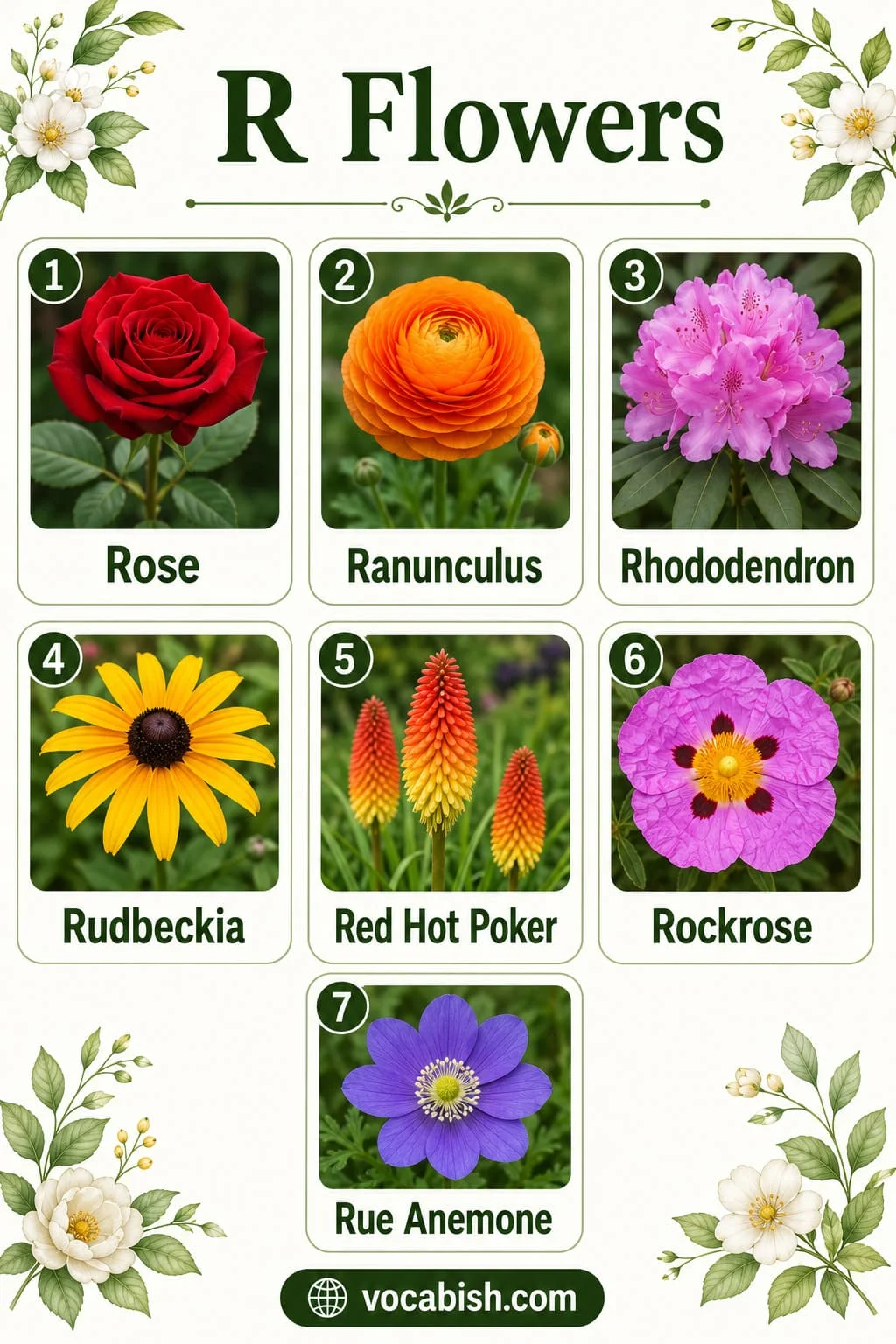
- Rose: A famous flower with soft petals and thorns.
Example: A red rose often represents love. - Ranunculus: A round flower with many thin layers.
Example: Ranunculus looks like a paper rose. - Rhododendron: A shrub with large flower clusters.
Example: Rhododendrons bloom in spring. - Rudbeckia: A yellow flower with a dark center.
Example: Rudbeckia is also called black-eyed Susan. - Red Hot Poker: A tall flower spike in red, orange, or yellow.
Example: Red hot poker looks like a flame. - Rockrose: A delicate flower that grows well in dry sunny areas.
Example: Rockrose opens in warm sunlight. - Rue Anemone: A small pale woodland flower.
Example: Rue anemone blooms in early spring.
S Flower Names
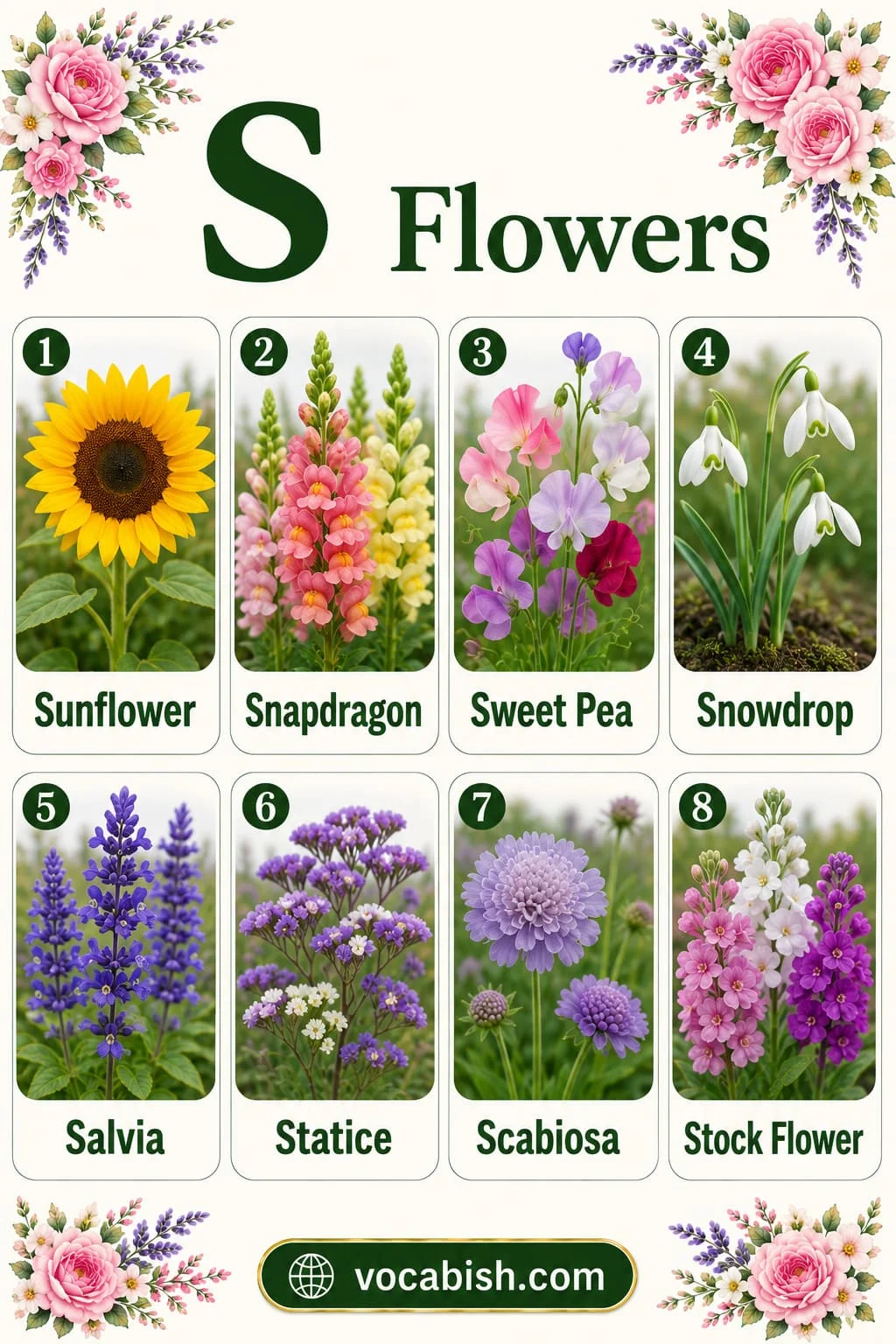
- Sunflower: A large yellow flower with a dark center.
Example: Sunflowers make gardens look happy. - Snapdragon: A flower with blooms shaped like tiny mouths.
Example: Snapdragons come in many bright colors. - Sweet Pea: A soft fragrant climbing flower.
Example: Sweet peas smell fresh and sweet. - Snowdrop: A small white flower that hangs down.
Example: Snowdrops often appear near the end of winter. - Salvia: A tall flower spike in purple, red, blue, or white.
Example: Salvia attracts bees to the garden. - Statice: A papery flower often used dried.
Example: Statice keeps its color after drying. - Scabiosa: A pincushion-like flower.
Example: Scabiosa is popular with butterflies. - Stock Flower: A fragrant flower often used in bouquets.
Example: Stock flowers smell sweet in spring.
T Flower Names
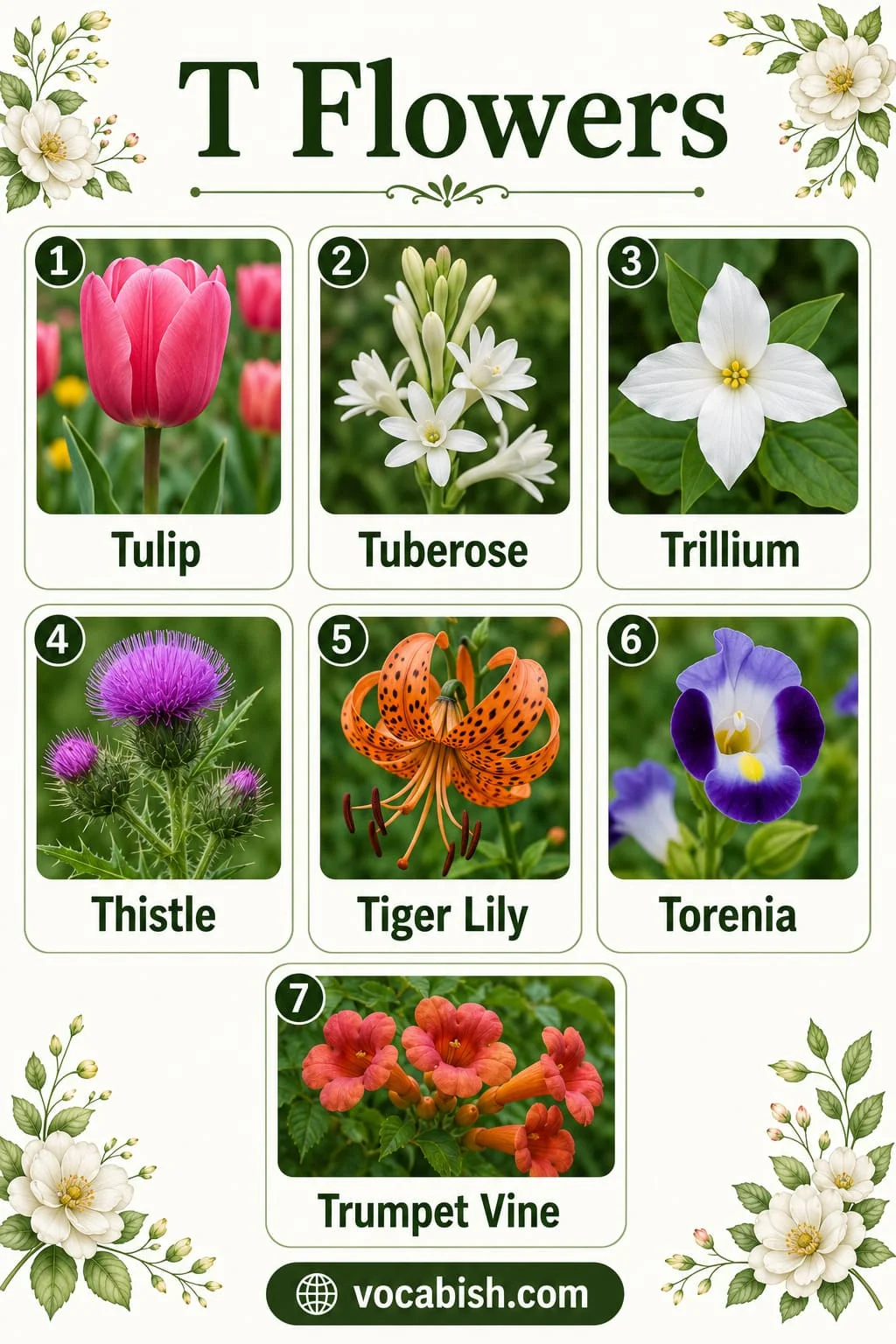
- Tulip: A cup-shaped spring flower.
Example: Tulips are famous spring flowers. - Tuberose: A white fragrant flower on tall stems.
Example: Tuberose has a rich sweet scent. - Trillium: A woodland flower with three petals.
Example: Trillium grows in shaded woodland areas. - Thistle: A spiky flower, often purple.
Example: Thistles have sharp leaves and bold flowers. - Tiger Lily: An orange lily with dark spots.
Example: Tiger lilies are easy to notice. - Torenia: A small trumpet-shaped flower.
Example: Torenia grows well in shaded pots. - Trumpet Vine: A climbing plant with orange trumpet-shaped flowers.
Example: Trumpet vine can cover a fence.
U Flower Names
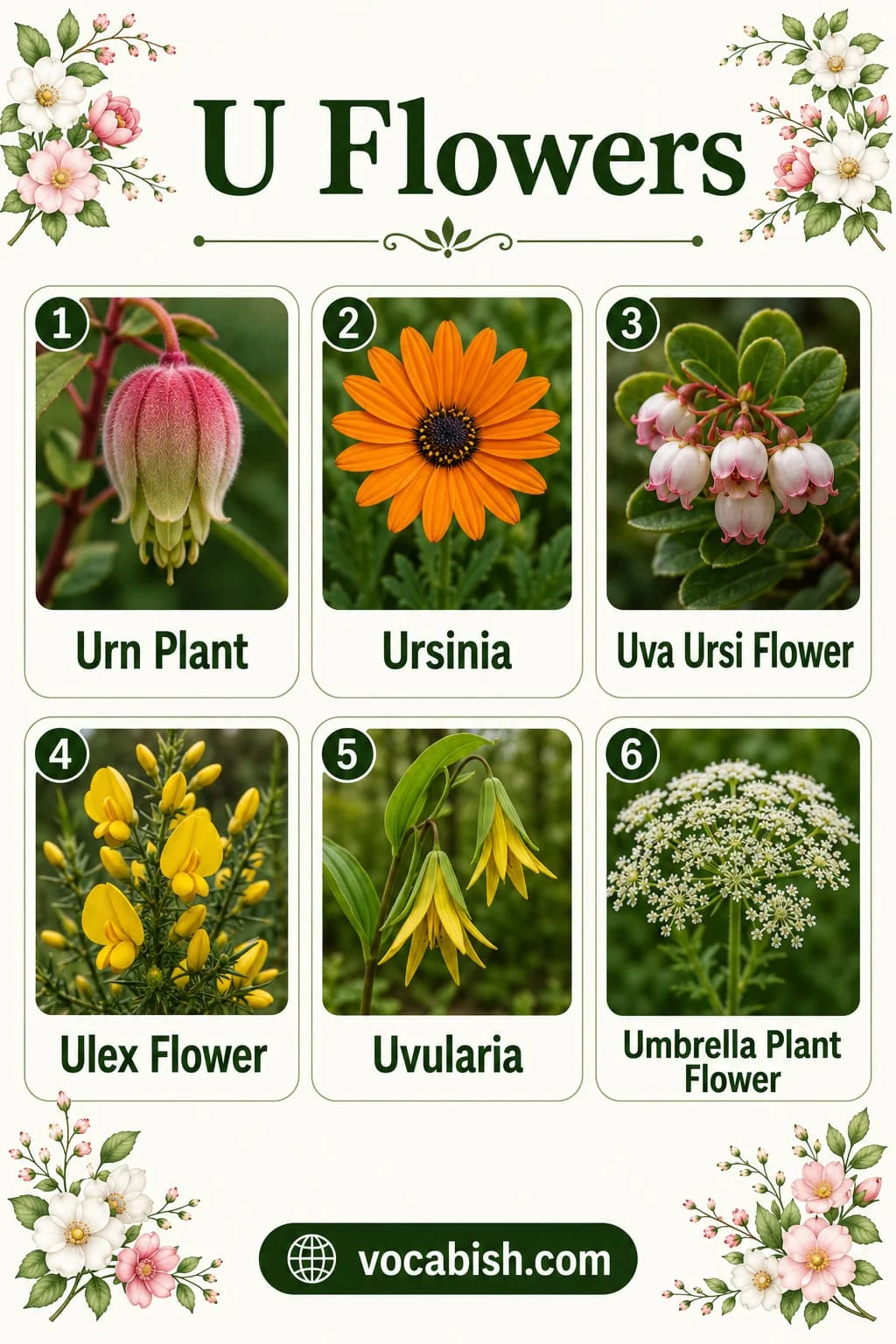
- Urn Plant: A tropical plant with a pink flower spike.
Example: The urn plant is often grown indoors. - Ursinia: A bright daisy-like flower.
Example: Ursinia opens beautifully in sunny weather. - Uva Ursi Flower: A tiny pink or white bell-shaped flower.
Example: Uva ursi has small flowers and red berries. - Ulex Flower: A yellow flower on a spiny shrub.
Example: Ulex flowers brighten rough open land. - Uvularia: A hanging yellow bell-like flower.
Example: Uvularia is also called merrybells. - Umbrella Plant Flower: A small flower cluster from an umbrella plant.
Example: Umbrella plant flowers are not very showy.
V Flower Names
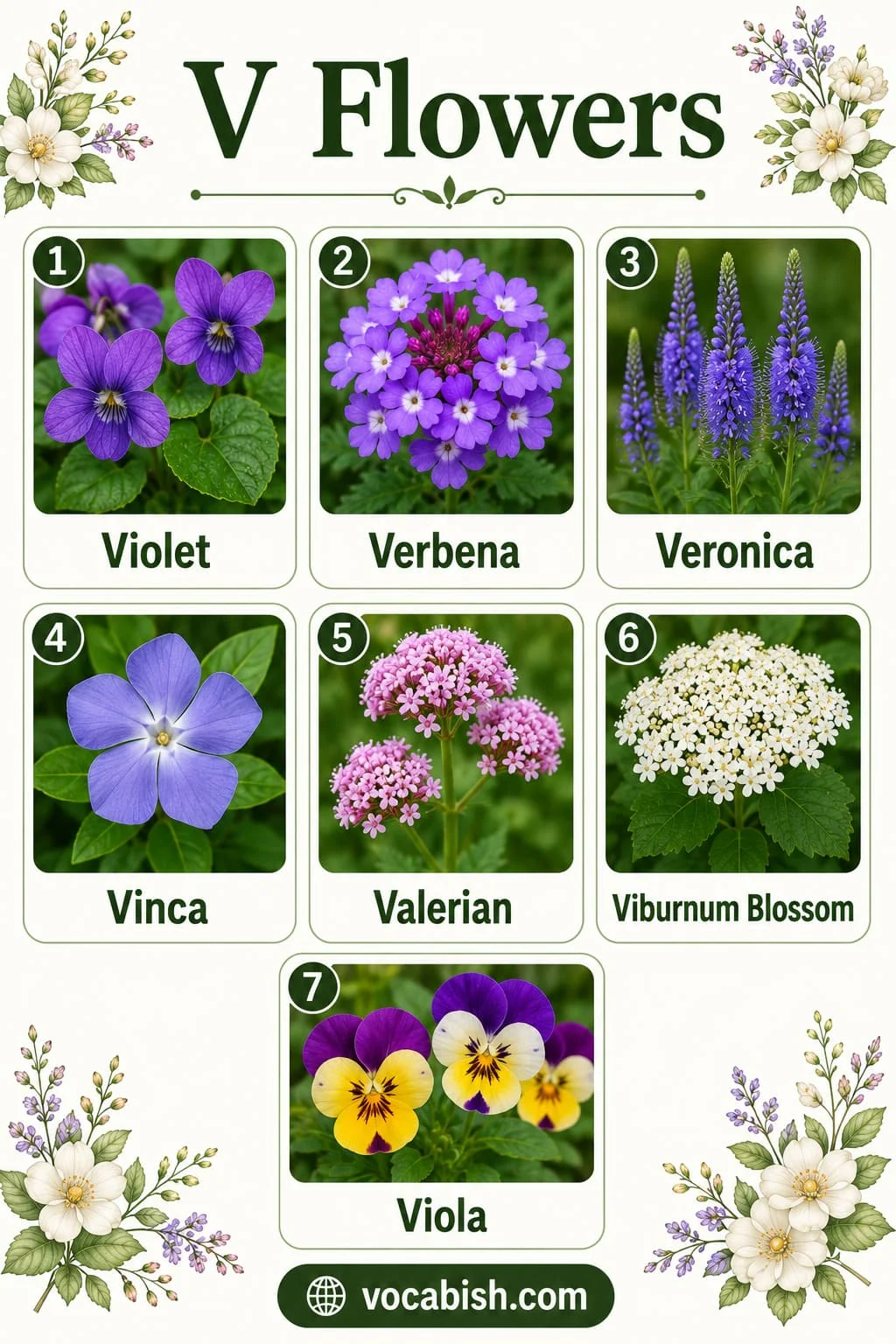
- Violet: A small purple, blue, or white flower.
Example: Violets grow close to the ground. - Verbena: A small flower that grows in colorful clusters.
Example: Verbena looks good in pots and borders. - Veronica: A narrow flower spike, often blue or purple.
Example: Veronica adds blue color to the garden. - Vinca: A five-petal flower with glossy leaves.
Example: Vinca can grow as ground cover. - Valerian: A flower with small fragrant clusters.
Example: Valerian flowers attract insects. - Viburnum Blossom: White or pink flower clusters on shrubs.
Example: Viburnum blossoms look fresh in spring. - Viola: A small flower related to pansies and violets.
Example: Violas grow well in cool weather.
W Flower Names
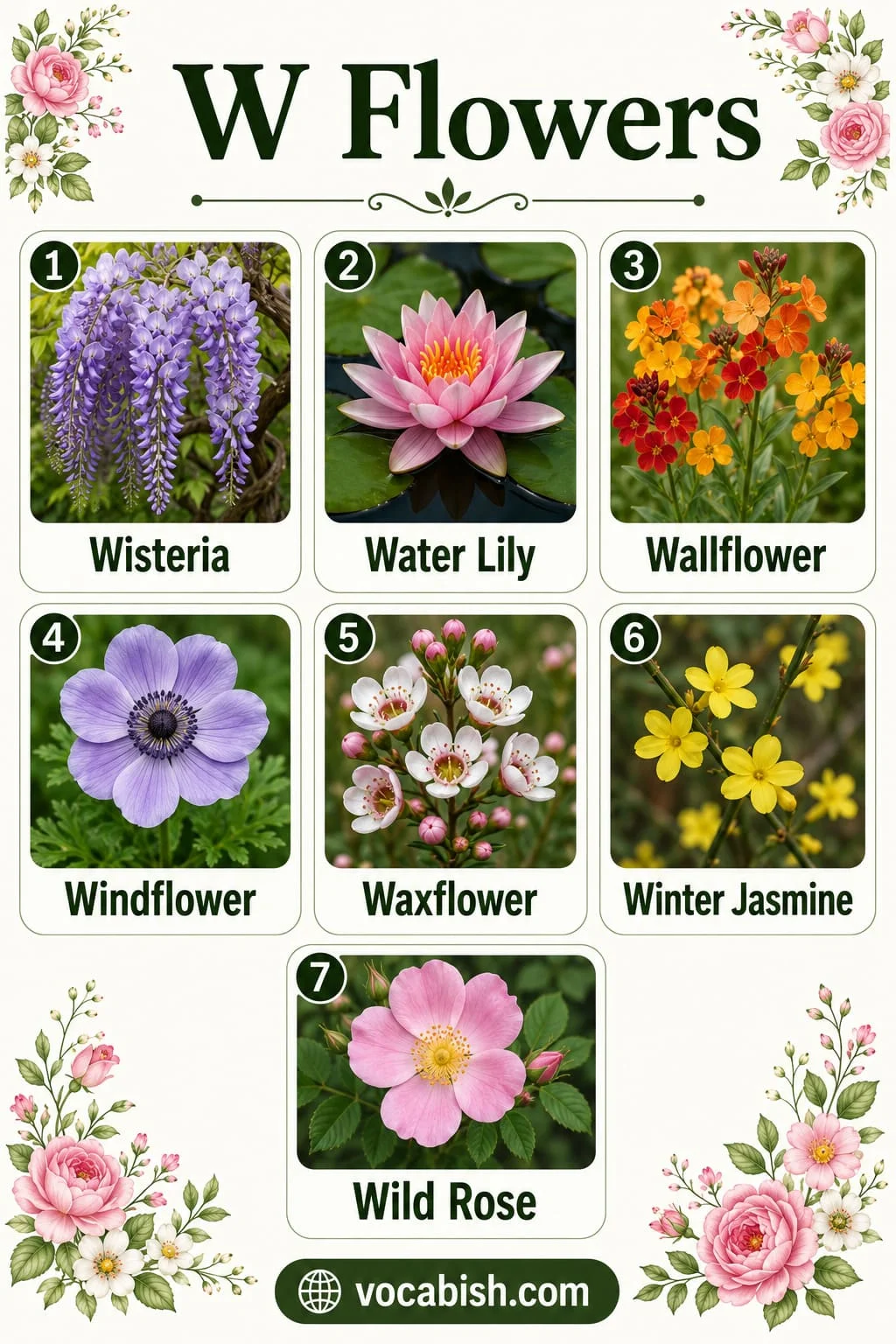
- Wisteria: A climbing plant with hanging purple or white flower clusters.
Example: Wisteria hangs beautifully from a pergola. - Water Lily: A flower that floats on water.
Example: Water lilies grow in ponds. - Wallflower: A bright flower often grown near walls.
Example: Wallflowers bring color to spring gardens. - Windflower: A light flower that moves easily in the wind.
Example: Windflowers look soft and natural. - Waxflower: A small waxy flower often used in bouquets.
Example: Waxflowers add texture to flower arrangements. - Winter Jasmine: A yellow flower that blooms in colder months.
Example: Winter jasmine brightens the garden in winter. - Wild Rose: A natural rose with open petals.
Example: Wild roses grow along the path.
X Flower Names
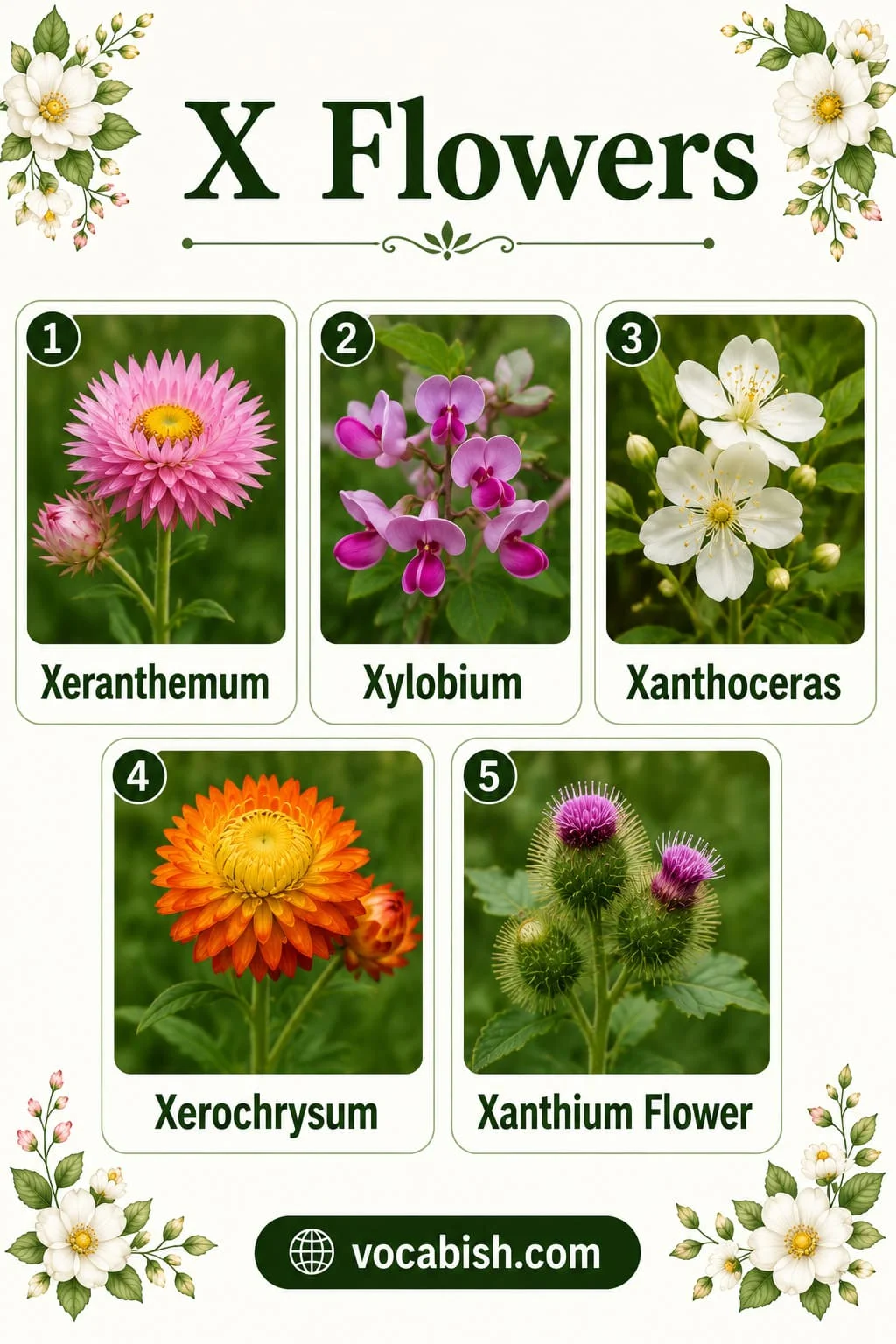
- Xeranthemum: A papery flower often used in dried arrangements.
Example: Xeranthemum keeps its shape after drying. - Xylobium: An orchid with unusual flowers.
Example: Xylobium is not a common house flower. - Xanthoceras: A flowering shrub or small tree with white flowers.
Example: Xanthoceras flowers have colorful centers. - Xerochrysum: A papery flower also called strawflower.
Example: Xerochrysum is popular for dried flowers. - Xanthium Flower: A small flower from a rough wild plant.
Example: Xanthium is more known for its burrs than its flowers.
Y Flower Names
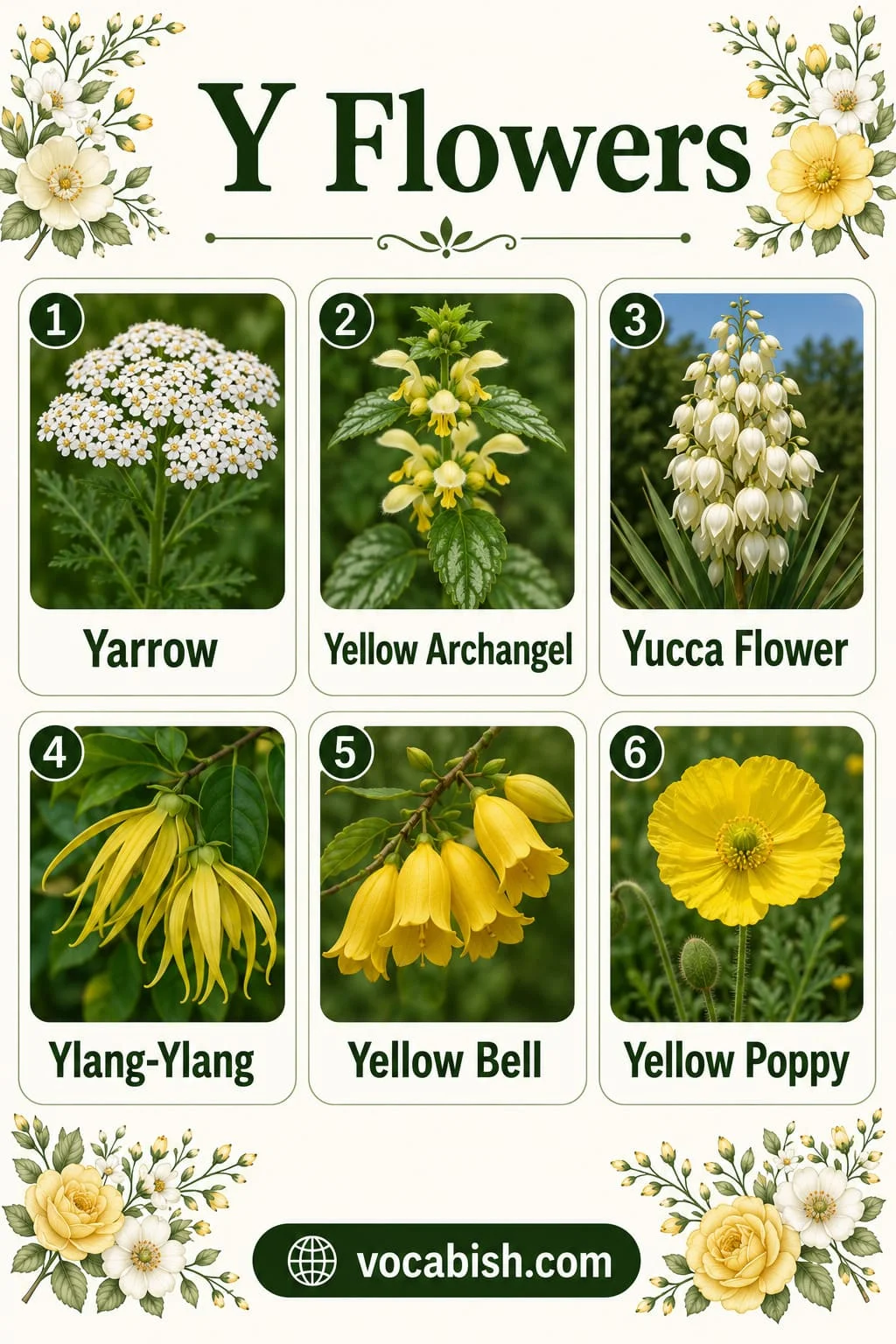
- Yarrow: A flower with tiny blooms in flat clusters.
Example: Yarrow grows well in sunny places. - Yellow Archangel: A yellow hood-shaped flower.
Example: Yellow archangel can grow in shaded areas. - Yucca Flower: A tall flower stem with white bell-shaped blooms.
Example: Yucca flowers stand above sharp leaves. - Ylang-Ylang: A yellow fragrant flower used in perfumes.
Example: Ylang-ylang has a sweet perfume scent. - Yellow Bell: A bright yellow trumpet-shaped flower.
Example: Yellow bells grow well in warm gardens. - Yellow Poppy: A poppy flower with yellow petals.
Example: Yellow poppies look bright in sunlight.
Z Flower Names
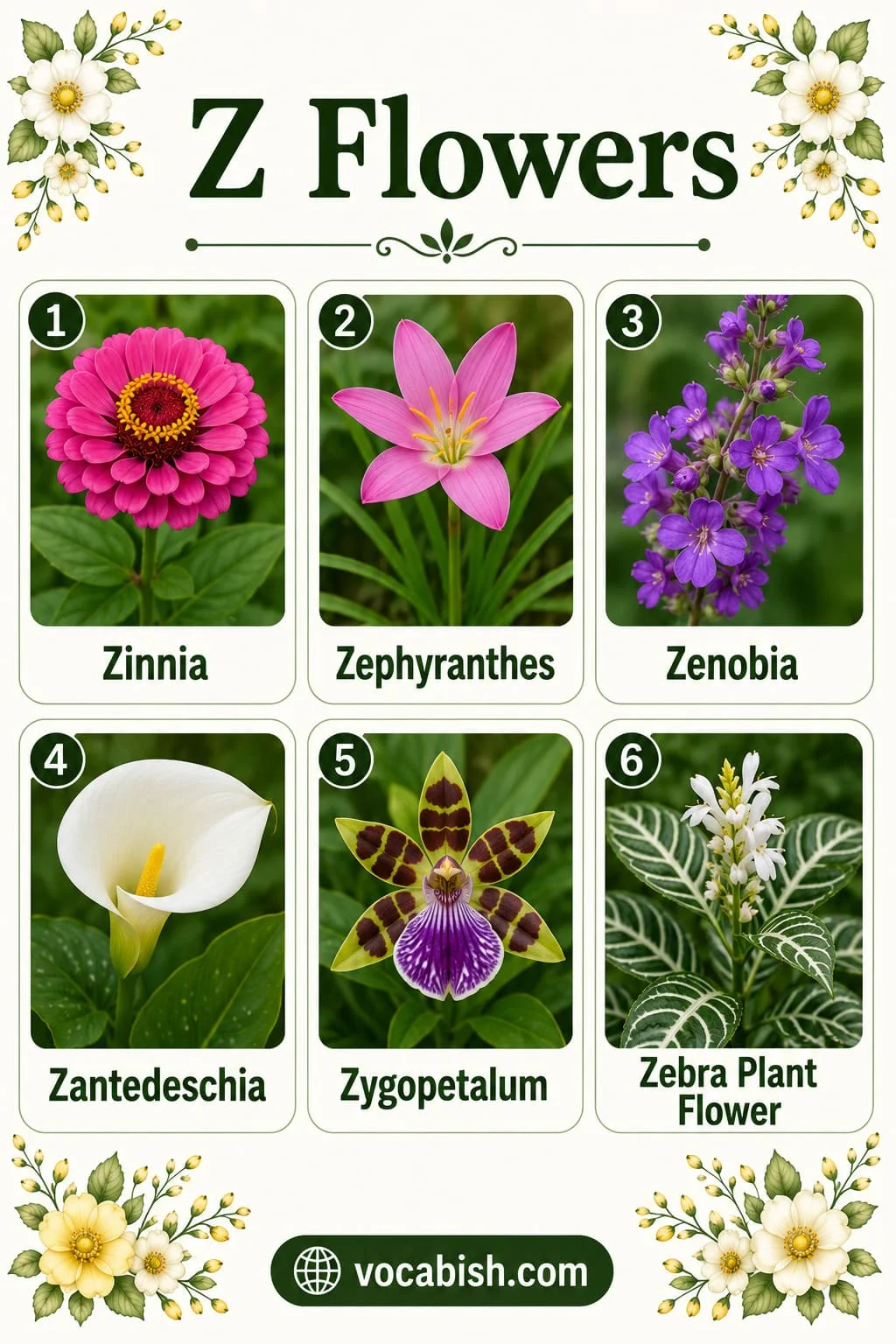
- Zinnia: A bright round flower in many colors.
Example: Zinnias are easy to spot in summer. - Zephyranthes: A small rain lily that often blooms after rain.
Example: Zephyranthes is often called rain lily. - Zenobia: A shrub with small white bell-shaped flowers.
Example: Zenobia flowers look soft and delicate. - Zantedeschia: A smooth flower also known as calla lily.
Example: Zantedeschia is used in elegant displays. - Zygopetalum: A colorful orchid with patterned petals.
Example: Zygopetalum orchids have eye-catching flowers. - Zebra Plant Flower: A bright flower spike from a zebra plant.
Example: Zebra plant flowers look bright above striped leaves.
Most Popular Flowers in the World
Flower Name | Color | Bloom Season |
|---|---|---|
Rose | Red, Pink, White, Yellow, Orange | Spring to Fall |
Tulip | Red, Pink, Yellow, Purple, White | Spring |
Lily | White, Yellow, Orange, Pink | Summer |
Sunflower | Yellow, Orange | Summer to Early Fall |
Orchid | Purple, White, Pink, Yellow | Varies by Species |
Daisy | White, Yellow, Pink | Spring to Summer |
Lavender | Purple, Blue | Summer |
Jasmine | White, Yellow | Spring to Summer |
Hibiscus | Red, Pink, Yellow, Orange, White | Summer to Fall |
Peony | Pink, White, Red, Coral | Late Spring to Early Summer |
Carnation | Red, Pink, White, Yellow | Spring to Summer |
Chrysanthemum | Yellow, White, Pink, Purple, Red | Fall |
Hydrangea | Blue, Pink, White, Purple | Summer |
Marigold | Yellow, Orange, Gold | Summer to Fall |
Magnolia | White, Pink, Purple | Spring |
Gerbera Daisy | Red, Pink, Orange, Yellow, White | Spring to Fall |
Poppy | Red, Orange, Pink, White | Late Spring to Early Summer |
Daffodil | Yellow, White, Orange | Early Spring |
Iris | Purple, Blue, White, Yellow | Spring to Early Summer |
Lotus | Pink, White | Summer |
Common Uses of Flowers
Flowers are used in many parts of daily life. People use them for gifts, decoration, weddings, prayers, perfumes, gardens, and emotional messages.
- Flowers for Gifts: People often give roses, tulips, carnations, and lilies as gifts during birthdays, anniversaries, and special occasions.
- Wedding Flowers: Lilies, orchids, roses, and peonies are popular wedding flowers because they look elegant and graceful.
- Decoration Flowers: Sunflowers, daisies, chrysanthemums, and marigolds brighten homes, hotels, gardens, offices, and event halls.
- Flowers for Perfume: Jasmine, lavender, rose, gardenia, and ylang-ylang are used in perfumes, soaps, candles, and scented oils.
- Garden Flowers: Tulips, petunias, zinnias, daisies, and geraniums are grown to make gardens colorful and attractive.
- Indoor Flowers: Orchids, anthuriums, peace lilies, and kalanchoe are often kept inside homes and offices.
- Religious Flowers: Lotus, marigold, jasmine, and lilies are used in prayers, ceremonies, and cultural events in many places.
- Funeral Flowers: Lilies, white roses, chrysanthemums, and carnations are often used to show respect, peace, and sympathy.
- Seasonal Flowers: Daffodils, crocuses, tulips, and hyacinths are linked with spring, while chrysanthemums and asters are common in autumn.
- Bouquet Flowers: Roses, carnations, baby’s breath, alstroemeria, ranunculus, and tulips are often arranged in hand bouquets.
- Fragrant Flowers: Gardenia, jasmine, freesia, lavender, and tuberose are loved because of their pleasant smell.
- Wildflowers: Bluebells, buttercups, poppies, yarrow, and oxeye daisies grow naturally in fields, forests, and open areas.
- Water Flowers: Lotus and water lilies grow in ponds, lakes, and calm water.
- Tropical Flowers: Hibiscus, frangipani, bird of paradise, and ixora grow well in warm climates.
- Dried Flowers: Statice, strawflower, lavender, and baby’s breath are often dried and used for long-lasting decoration.
Flower Colors and Meanings
Flower colors often carry feelings in English conversations. These meanings can change by culture, but they are helpful when talking about gifts and events.
- Red Flowers: Red roses, red tulips, and red carnations often suggest love, respect, passion, or strong feelings.
- Pink Flowers: Pink peonies, pink roses, and pink camellias often show care, sweetness, gratitude, or gentle love.
- White Flowers: White lilies, white roses, and white daisies often suggest peace, purity, sympathy, or calm beauty.
- Yellow Flowers: Yellow sunflowers, yellow daffodils, and yellow marigolds often show joy, friendship, warmth, and hope.
- Purple Flowers: Purple orchids, lavender, violets, and irises often suggest beauty, charm, respect, and mystery.
- Blue Flowers: Blue hydrangeas, bluebells, and forget-me-nots often suggest calmness, trust, memory, and peace.
- Orange Flowers: Orange marigolds, orange lilies, and orange zinnias often show energy, warmth, excitement, and happiness.
- Green Flowers: Green orchids, green hydrangeas, and green carnations can suggest freshness, growth, and nature.
How to Use Flower Names in English Sentences
Flower names are common nouns, so you can use them in normal English sentences. Add colors, numbers, places, and feelings to make your sentences more natural.
- A Rose: She gave me a rose.
- Red Roses: Red roses are popular on Valentine’s Day.
- A Bouquet of Tulips: He bought a bouquet of tulips for his sister.
- White Lilies: White lilies look graceful in a vase.
- Yellow Sunflowers: Yellow sunflowers grow tall in summer.
- Purple Lavender: Purple lavender smells calm and fresh.
- Pink Peonies: Pink peonies are popular wedding flowers.
- Fresh Flowers: Fresh flowers make the room look brighter.
- Dried Flowers: Dried flowers can last for many months.
- Wildflowers: We saw wildflowers near the road.
- Garden Flowers: My mother grows garden flowers near the window.
- Flowers in Bloom: The flowers are in bloom this week.
- Plant Flowers: We will plant flowers in the front yard.
- Pick Flowers: The children picked flowers from the field.
- Water the Flowers: Please water the flowers every morning.
- Smell the Flowers: Stop and smell the flowers in the garden.
Common Flower Phrases in English
English speakers use flower words in many useful phrases. These phrases appear in everyday conversations, captions, stories, and messages.
- A Bunch of Flowers: A group of flowers held together.
Example: She carried a bunch of flowers. - A Bouquet of Roses: Roses arranged as a gift.
Example: He sent a bouquet of roses. - Flower Bed: A garden area where flowers grow.
Example: The flower bed is near the gate. - In Full Bloom: Fully open and beautiful.
Example: The garden is in full bloom. - Fresh Flowers: Newly cut or healthy flowers.
Example: I bought fresh flowers today. - Dried Flowers: Flowers kept after drying.
Example: Dried flowers last a long time. - Potted Plant: A plant growing in a pot.
Example: The orchid is a potted plant. - Cut Flowers: Flowers cut for display.
Example: Cut flowers need clean water. - Flower Shop: A shop that sells flowers.
Example: She works at a flower shop. - Flower Arrangement: Flowers placed in a decorative style.
Example: The flower arrangement looks beautiful. - Floral Design: A design made with flowers.
Example: The floral design looks modern. - Flower Garden: A garden full of flowers.
Example: Their flower garden is colorful. - Blooming Season: The time when a flower opens.
Example: Spring is the blooming season for tulips. - Flower Pot: A container used to grow flowers.
Example: The marigold is in a flower pot.
Safety Note
Some flowers are beautiful but unsafe if eaten or touched carelessly. Learn the names, enjoy the pictures, and check safety before planting flowers around children or pets.
- Oleander: Beautiful but toxic if eaten.
- Foxglove: Attractive but unsafe to eat.
- Monkshood: Very poisonous and should be handled carefully.
- Some Lilies: Harmful to cats and some pets.
- Unknown Wildflowers: Do not eat wildflowers unless a trusted expert says they are safe.
- Flower Allergies: Some people may sneeze or feel irritation around strong pollen or fragrance.
Download Types of Flowers PDF
FAQs About Types of Flowers
Common types of flowers include roses, tulips, lilies, daisies, sunflowers, orchids, carnations, marigolds, lavender, and daffodils in everyday English.
There are thousands of flower species worldwide, but learners can start with common names used in gardens, flower shops, and daily conversations.
Start with rose, lily, tulip, daisy, sunflower, orchid, jasmine, lavender, marigold, and carnation because they appear often in English.
A flower can grow on many plants, while blossom often describes flowers on trees, such as cherry, apple, or peach blossoms.
Roses, tulips, lilies, carnations, orchids, and sunflowers are popular gift flowers for birthdays, weddings, anniversaries, and special events.
Roses, lilies, orchids, peonies, tulips, baby’s breath, and hydrangeas are common wedding flowers because they look soft and graceful.
Most flower names are common nouns, so they are not capitalized unless they start a sentence or include a place name.
Group flowers by color, season, use, or smell. Then practice short sentences like “I planted tulips” or “Jasmine smells sweet.”
Final Thoughts
Learning types of flowers is a pleasant way to grow your English vocabulary. Flower names help you describe nature, gifts, gardens, colors, seasons, and special events.
- Start with common flowers: Rose, tulip, lily, daisy, sunflower, and orchid are great first words.
- Use picture practice: Look at a flower image and say its English name aloud.
- Make short sentences: Say, “The rose is red,” or “Lavender smells sweet.”
- Group flowers by use: Learn gift flowers, wedding flowers, garden flowers, and perfume flowers.
- Review often: Flower names become easier when you see them in photos, gardens, shops, and daily English.
You May Also Like:
References: