
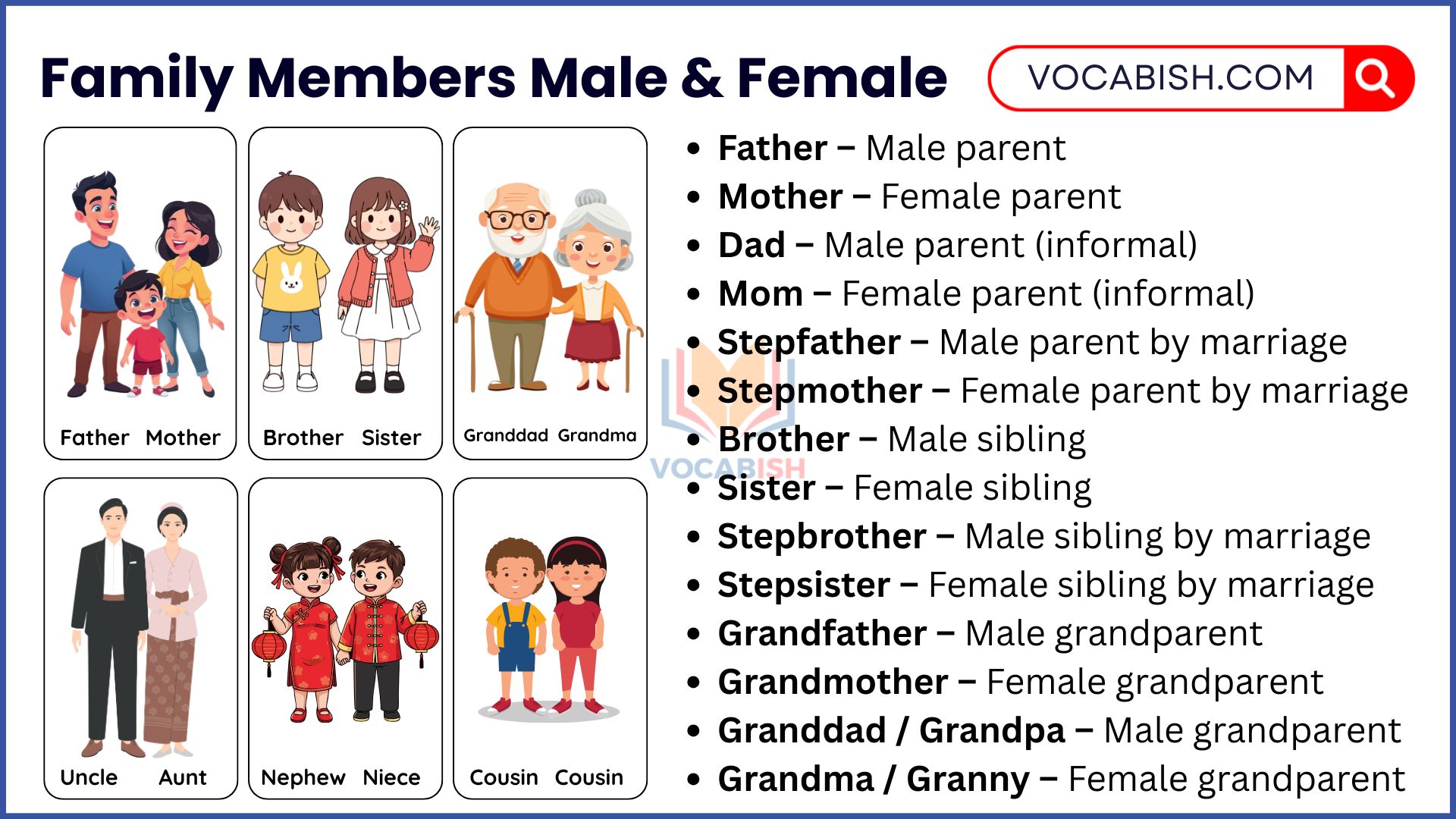
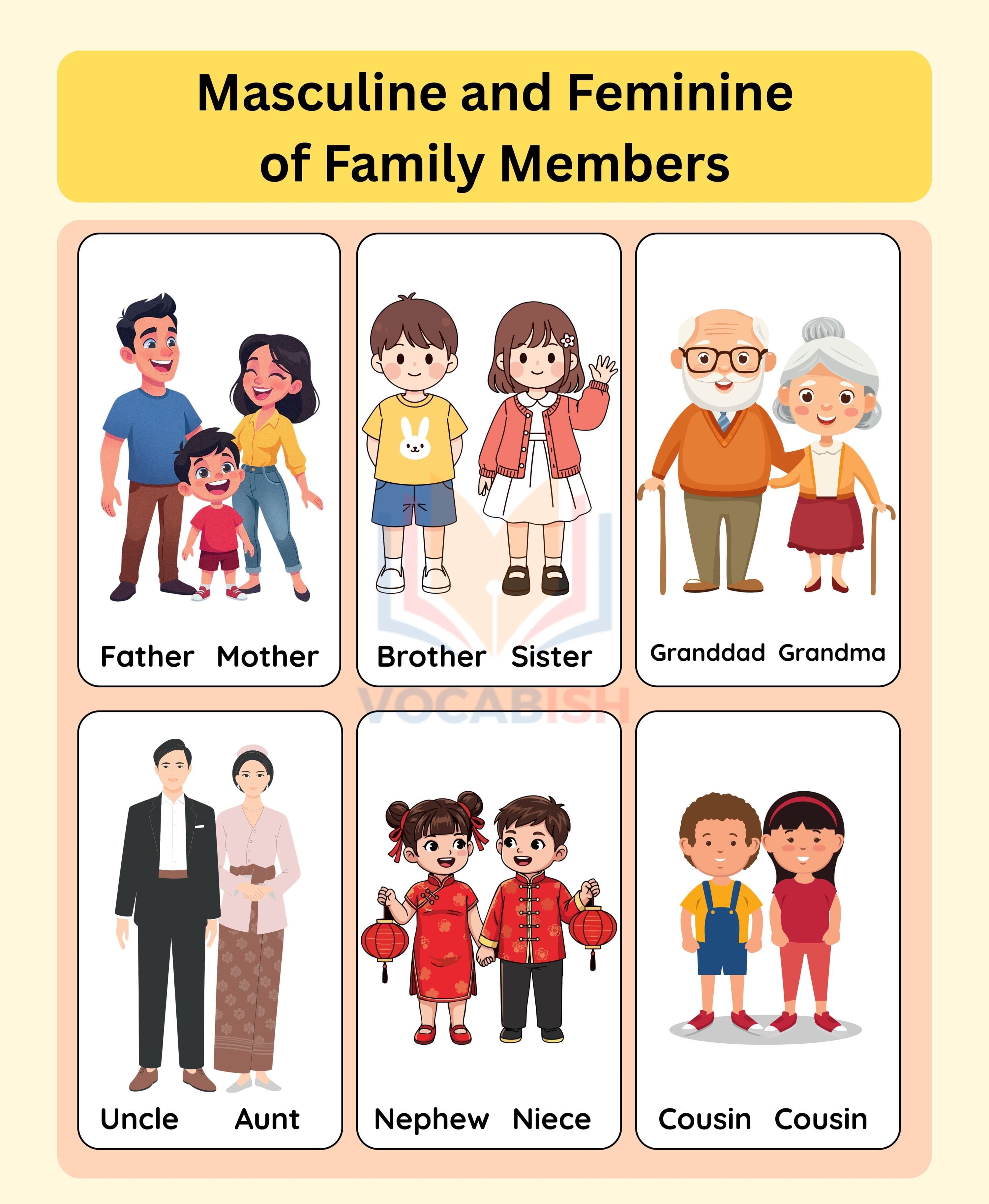
In this blog post, you will learn the masculine and feminine of family members in English. Masculine words are used for male relatives, and feminine words are used for female relatives. For example, a father is male, and a mother is female. A brother is male, and a sister is female.
Knowing these words is very important for English learners. It helps you speak, read, write, and listen better. You can talk about your family clearly, understand stories and conversations, and write sentences without mistakes.
Why Learning Masculine and Feminine Words Matters
English uses specific words for males and females in families. For example, a “father” is male, and a “mother” is female. Using the correct word:
- Helps you communicate clearly
- Improves listening and reading comprehension
- Makes your writing accurate
- Expands your vocabulary quickly
Learning these words also makes English more natural and easier to understand in conversations, stories, and daily life.
Masculine and Feminine Family Vocabulary
Here is a list of common family members with their masculine and feminine forms.
Parents
- Father – Male parent
- Mother – Female parent
- Dad – Male parent (informal)
- Mom – Female parent (informal)
- Stepfather – Male parent by marriage
- Stepmother – Female parent by marriage
Siblings
- Brother – Male sibling
- Sister – Female sibling
- Stepbrother – Male sibling by marriage
- Stepsister – Female sibling by marriage
Grandparents
- Grandfather – Male grandparent
- Grandmother – Female grandparent
- Granddad / Grandpa – Male grandparent (informal)
- Grandma / Granny – Female grandparent (informal)
Relatives
- Uncle – Male sibling of parent
- Aunt – Female sibling of parent
- Nephew – Son of your sibling
- Niece – Daughter of your sibling
- Cousin (male) – Male child of your aunt or uncle
- Cousin (female) – Female child of your aunt or uncle
Tips to Remember Masculine and Feminine Words
- Many masculine words end with -er, like “father” or “brother.”
- Feminine words often have -ess or are unique, like “aunt” or “mother.”
- Use daily practice: label your family members in English at home.
- Read simple stories and notice how characters are described.
Practice Using These Words in Daily Life
- Introduce your family in English: “This is my mother and my father.”
- Describe your sibling: “I have one brother and one sister.”
- Talk about relatives: “My uncle is very kind. My aunt cooks well.”
By practicing, these words will become natural, and you will speak with confidence.
Conclusion
Mastering the masculine and feminine forms of family members is a key step in learning English. It strengthens your speaking, reading, and writing skills. Use this vocabulary every day, and you will soon feel more comfortable talking about family in English.
FAQs
What is the masculine and feminine of family members?
The masculine and feminine of family members are words that show whether a relative is male or female. For example, father – mother, brother – sister, and uncle – aunt.
What are some common masculine and feminine family members?
Common masculine and feminine family members include father – mother, brother – sister, grandfather – grandmother, uncle – aunt, nephew – niece, stepbrother – stepsister.
What is the difference between a nephew and a niece?
A nephew is the son of your sibling or sibling-in-law, and a niece is the daughter.
Are words like stepfather and stepmother considered masculine and feminine?
Yes. Stepfather is the masculine form, and stepmother is the feminine form. These words are used for parents by marriage, and knowing them helps learners speak accurately about family members.
Can cousins have masculine and feminine forms?
Yes. A male cousin is referred to as cousin (male), and a female cousin as cousin (female). While the word “cousin” is often general, specifying gender helps English learners speak more clearly about family relationships.
Related Articles: