
In this blog post, you will learn the parts, functions, and diagram of a fish in English. This vocabulary helps you understand the names of each part of a fish and what role it plays in its body. Learning these words is important for students, science learners, and English learners who want to describe animals accurately. When you know these terms, you can speak confidently about fish, read biology texts with better understanding, write clear descriptions, and follow spoken explanations more easily. Keep reading to build your knowledge and understand how each part of a fish works together.
What is a Fish?
A fish is a cold-blooded animal that lives in water. Fish can breathe with gills, swim using fins, and have scales covering their body. They can be found in rivers, lakes, and oceans.
Read More: Different Types of Fish
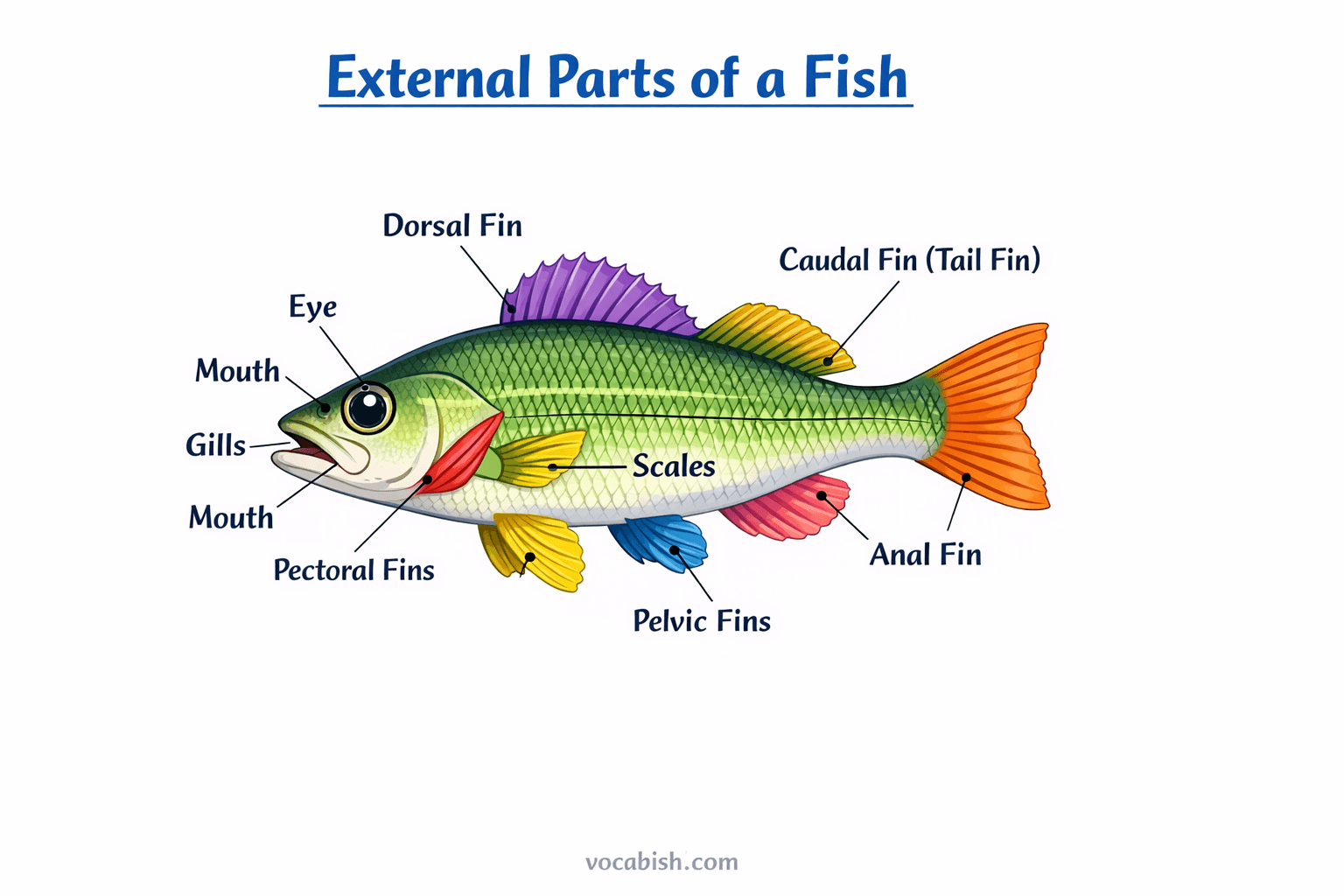
External Parts of a Fish with Diagram
Fins
Dorsal Fin
Helps the fish stay stable while swimming.
Pectoral Fins
Used for steering and balance.
Pelvic Fins
Helps in direction control and stopping.
Anal Fin
Gives stability when swimming.
Caudal Fin (Tail)
Used for fast movement and propulsion.
Gills
Gills
Allow fish to breathe underwater by taking oxygen from water.
Eyes
Eyes
Help fish to see and detect movement in water.
Mouth
Mouth
Used for eating and sometimes breathing.
Scales
Scales
Protect the fish and reduce friction while swimming.
Lateral Line
Lateral Line
A sense organ that detects water movement and vibrations.
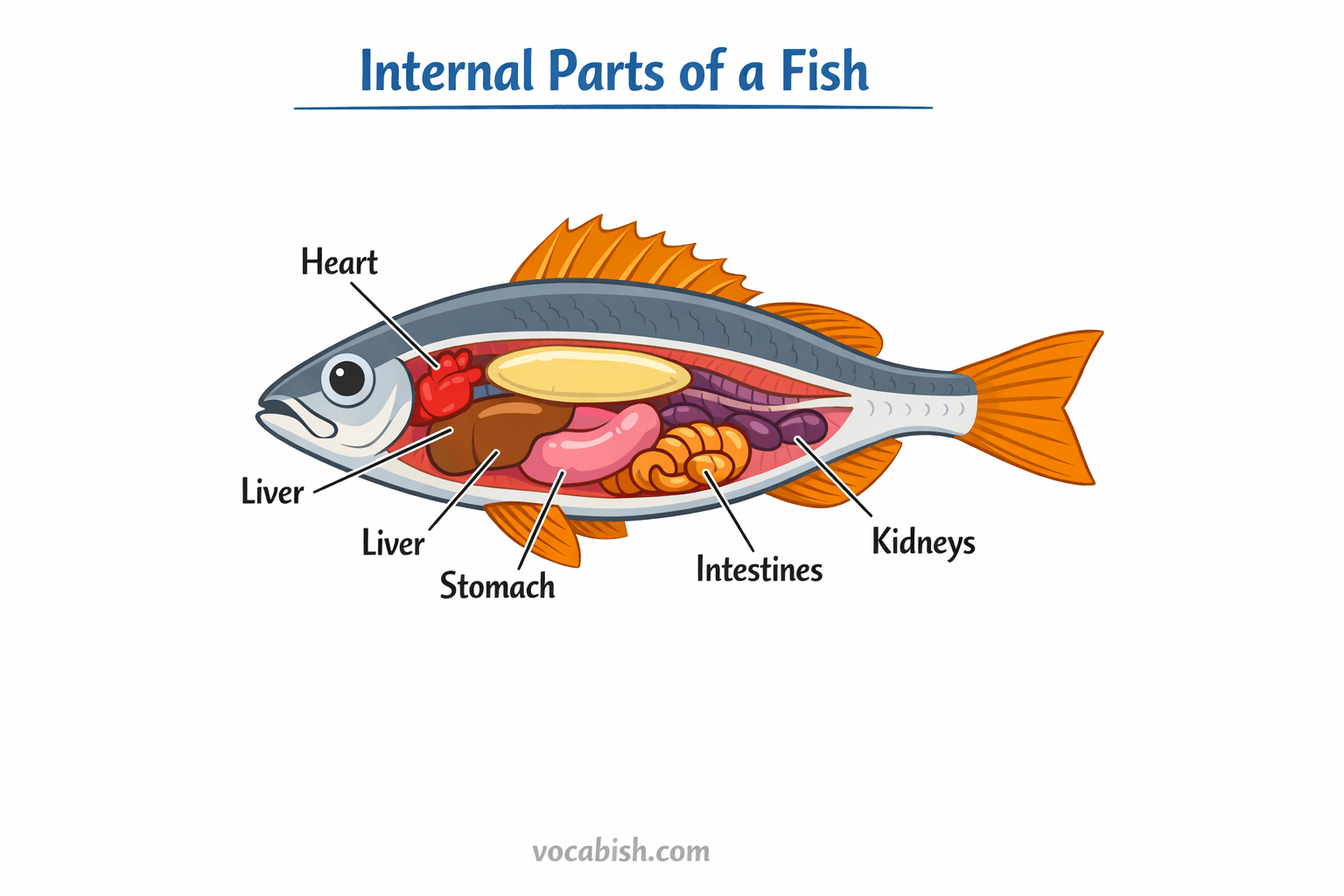
Internal Parts of a Fish
Heart
Heart
Pumps blood through the fish’s body.
Stomach
Stomach
Breaks down the food the fish eats.
Intestines
Intestines
Absorb nutrients from the food.
Liver
Liver
Produces enzymes to help digestion and stores energy.
Kidneys
Kidneys
Clean the fish’s blood and maintain water balance.
Swim Bladder
Swim Bladder
Helps the fish to float or sink in water easily.
Conclusion
Understanding the parts of a fish and their functions is important for students and beginners. Knowing these parts helps you learn biology and nature in a simple way. Fish use their fins, gills, and other organs to survive, move, and eat in water.
Frequently Asked Questions
What are the main parts of a fish?
The main external parts of a fish are fins, gills, eyes, mouth, scales, and lateral line. Each part helps the fish move, breathe, see, and protect itself in water.
What is the function of a fish’s dorsal fin?
The dorsal fin helps the fish stay stable and balanced while swimming. It stops the fish from rolling over in water.
What do gills do in a fish?
Gills allow a fish to breathe underwater by taking oxygen from water and releasing carbon dioxide.
What are the internal parts of a fish?
The main internal parts include the heart, stomach, intestines, liver, kidneys, and swim bladder. These organs help the fish digest food, circulate blood, and control floating.
How does a fish swim using its fins?
Fins like pectoral, pelvic, anal, and caudal fins help the fish move forward, turn, stop, and maintain balance in water.
What is the purpose of the swim bladder in a fish?
The swim bladder allows the fish to float or sink easily without using its fins constantly, helping it save energy.
Read More