
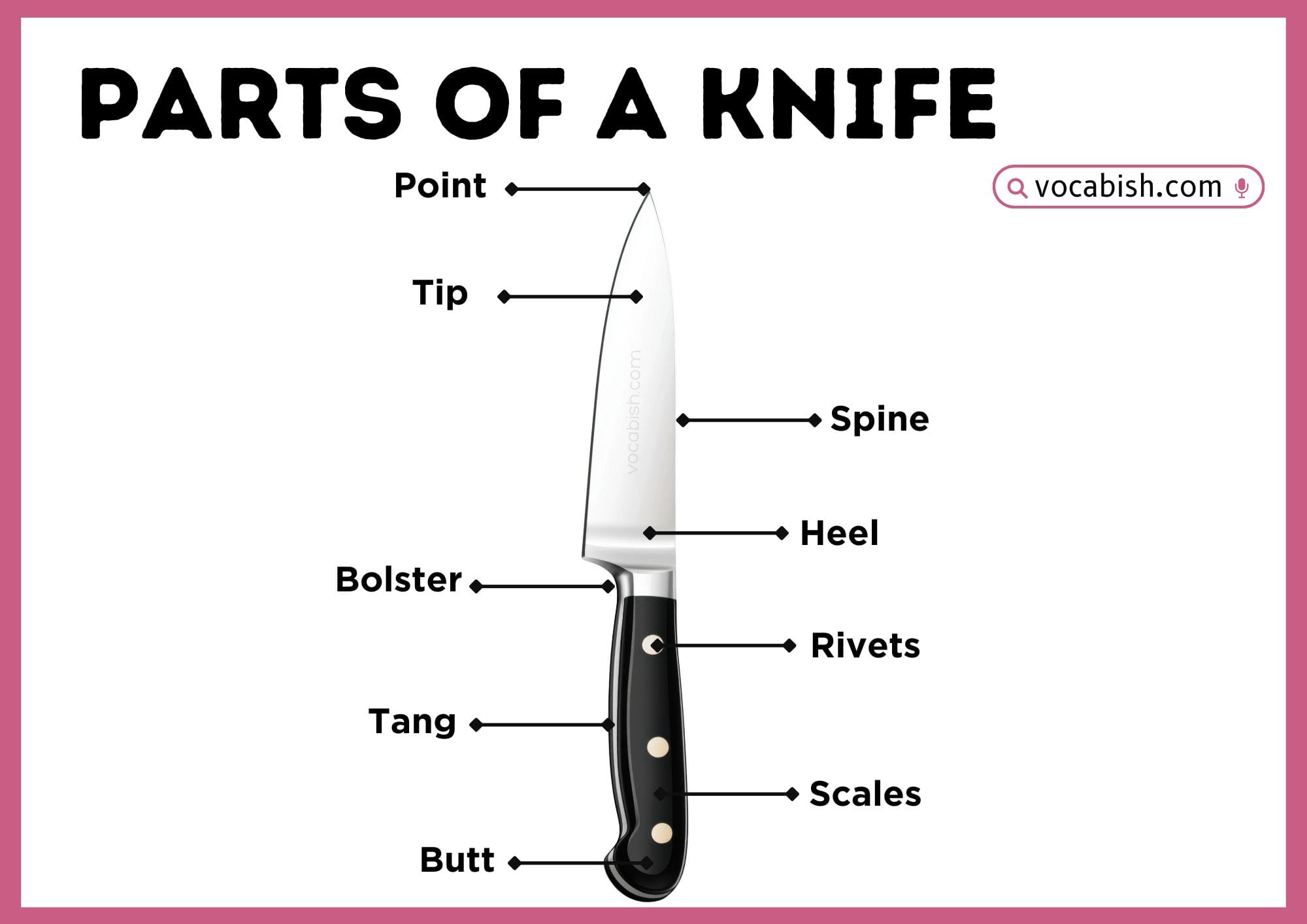
In this blog post, you will learn the different Parts of a Knife, their Functions, and how they work together to make cutting, chopping, and slicing easier and safer. Understanding these parts helps students, chefs, and home cooks use knives correctly and efficiently. When you know the function of each part, your practical skills improve, and your safety while handling knives increases. You also improve your reading and comprehension because you recognize these parts in instructions, cookbooks, and guides. Step by step, you will master knife vocabulary and use knives with confidence.
What is a Knife?
A knife is a cutting tool with a blade and a handle. It is used for many kitchen tasks such as chopping vegetables, cutting meat, and slicing fruit. Different knives are made for different uses.
Example uses:
- Cutting bread
- Chopping onions
- Slicing tomatoes
Main Parts of a Knife
A kitchen knife has several key parts. Each part has a name and a purpose.
1. Blade
- The blade is the flat metal part used for cutting.
- It is usually made of steel.
- The blade includes the edge, tip, heel, and spine.
2. Tip
- The tip is the pointed end of the blade.
- Used for quick, small cuts or detailed work.
3. Edge
- The edge is the sharp cutting side of the blade.
- Used for slicing, chopping, and cutting food.
4. Spine
- The spine is the top, thicker side of the blade.
- Gives the knife strength and balance.
5. Heel
- The heel is the back part of the edge, close to the handle.
- Used for strong cutting, such as heavy vegetables.
6. Bolster
- The bolster is the thick part between the blade and handle.
- Adds strength and protects fingers from slipping.
7. Tang
- The tang is the part of the blade that extends into the handle.
- A full tang makes the knife stronger.
8. Handle
- The handle is the part you hold.
- Made from wood, plastic, or metal.
- Should feel comfortable and stable.
9. Butt
- The butt is the end of the handle.
- Helps with grip and balance.
10. Rivets
- Rivets are metal pins that hold the handle and tang together.
- Found on many traditional knives.
Complete List of Knife Parts
| Knife Part | Description | Function |
|---|---|---|
| Blade | Flat metal cutting part | Cuts food |
| Tip | Pointed end of blade | Small, detailed cuts |
| Edge | Sharp cutting side | Slicing and chopping |
| Spine | Thick top of blade | Strength and support |
| Heel | Back end of edge | Tough cutting tasks |
| Bolster | Thick joint area | Safety and balance |
| Tang | Metal inside handle | Strength and durability |
| Handle | Part you hold | Grip and control |
| Butt | End of handle | Balance |
| Rivets | Pins in handle | Keep handle secure |
Functions of Each Part
- Blade: Main cutting surface
- Tip: Detail cutting
- Edge: Sharp part for slicing
- Spine: Supports blade and adds balance
- Heel: Power cuts through hard food
- Bolster: Finger protection
- Tang: Strength inside the handle
- Handle: Control and comfort
- Butt: Balance in hand
- Rivets: Keep handle strong
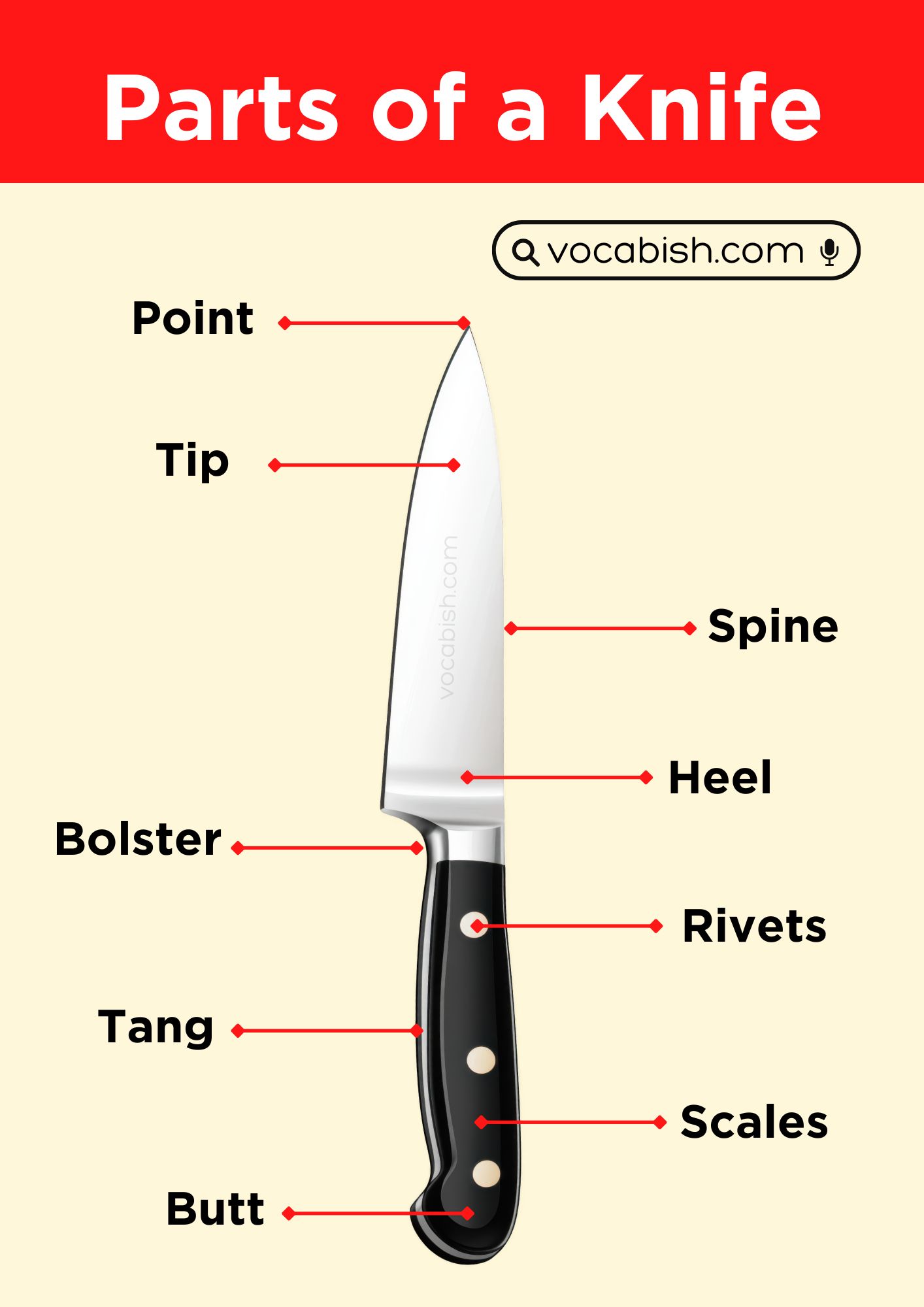
Parts of the Knife Diagram
Types of Kitchen Knives
| Knife Type | Description | Common Use |
|---|---|---|
| Chef’s Knife | Large, all-purpose knife | Chopping and slicing |
| Paring Knife | Small and sharp | Peeling fruits and vegetables |
| Bread Knife | Long with serrated edge | Cutting bread |
| Utility Knife | Medium-sized | Everyday cutting tasks |
| Carving Knife | Long, thin blade | Slicing meat |
Knife in Daily Use
Knives are used in many kitchen tasks, such as:
- Cutting vegetables
- Preparing meat
- Slicing fruit
- Opening packages
- Serving cooked food
Knowing the parts of a knife helps improve safety, accuracy, and control during cooking.
A knife has many important parts: blade, edge, tip, spine, heel, bolster, tang, handle, butt, and rivets. Each part helps the knife work properly and safely. Understanding these parts makes it easier to use a knife confidently and learn new kitchen vocabulary.
FAQs
What are the main parts of a kitchen knife?
The main parts are the blade, edge, spine, tip, heel, bolster, tang, handle, butt, and rivets, each with its own function.
What is the function of the knife blade?
The blade is used for cutting, slicing, and chopping food of all types.
What does the tip of a knife do?
The tip helps with small, detailed cuts, such as cutting herbs or trimming meat.
Why is the spine of a knife important?
The spine adds strength and balance, helping control the knife safely.
What is the heel of a knife used for?
The heel is used for heavy cutting, such as chopping thick vegetables.
What is a knife bolster?
The bolster is the thicker part between the blade and handle that gives support and finger protection.
What does tang mean in a knife?
The tang is the metal extension inside the handle that gives the knife strength and durability.
Why are rivets used in knife handles?
Rivets hold the handle firmly to the tang, keeping the knife secure and stable.
How does the handle affect knife use?
The handle provides grip, comfort, and control while cutting.
Read More