
In this blog post, you will learn Positive Adjectives, which are words used in English to describe good qualities, behavior, and personality traits. These words help you talk about a Son in a kind and respectful way, showing his strengths, character, and actions. Learning this type of Vocabulary is important for English learners because it helps you express thoughts about family and relationships with more meaning and accuracy. It also supports growth in speaking, reading, writing, and listening skills, since these adjectives often appear in daily conversations, stories, and texts.
What Are Positive Adjectives for a Son?
Positive adjectives are describing words that show the good qualities of a person. When we use them for a son, they help show his nature, behaviour, and strengths in a warm and respectful way.
These adjectives can be used in different situations such as daily talk, writing cards, school notes, or speaking politely about someone.
How to Use These Adjectives in Daily English
You can use these adjectives:
- To describe his personality
- To talk about his achievements
- To compliment his behaviour
- To show support or encouragement
Example:
He is a kind, helpful, and confident son.
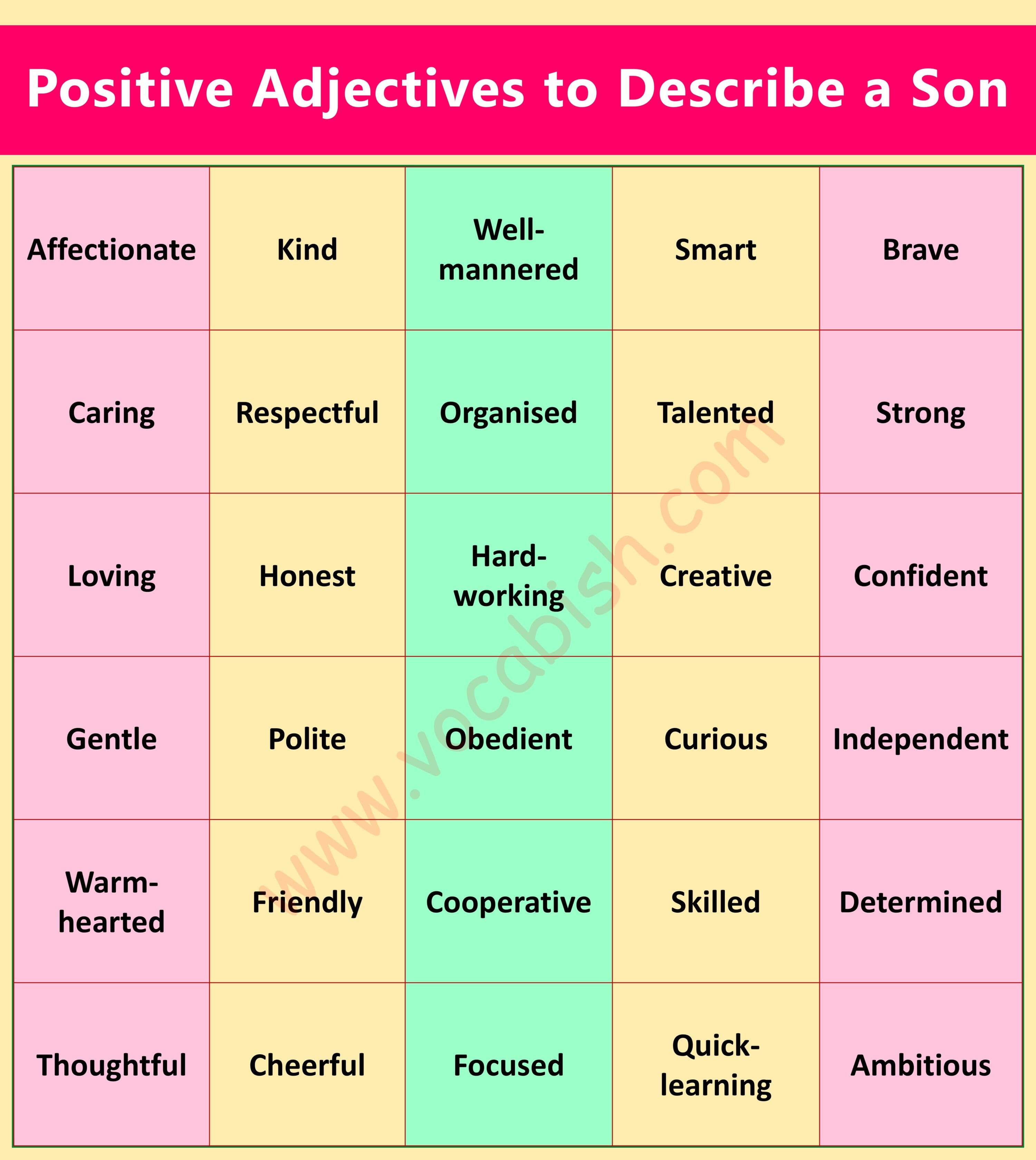
Positive Adjectives to Describe a Son
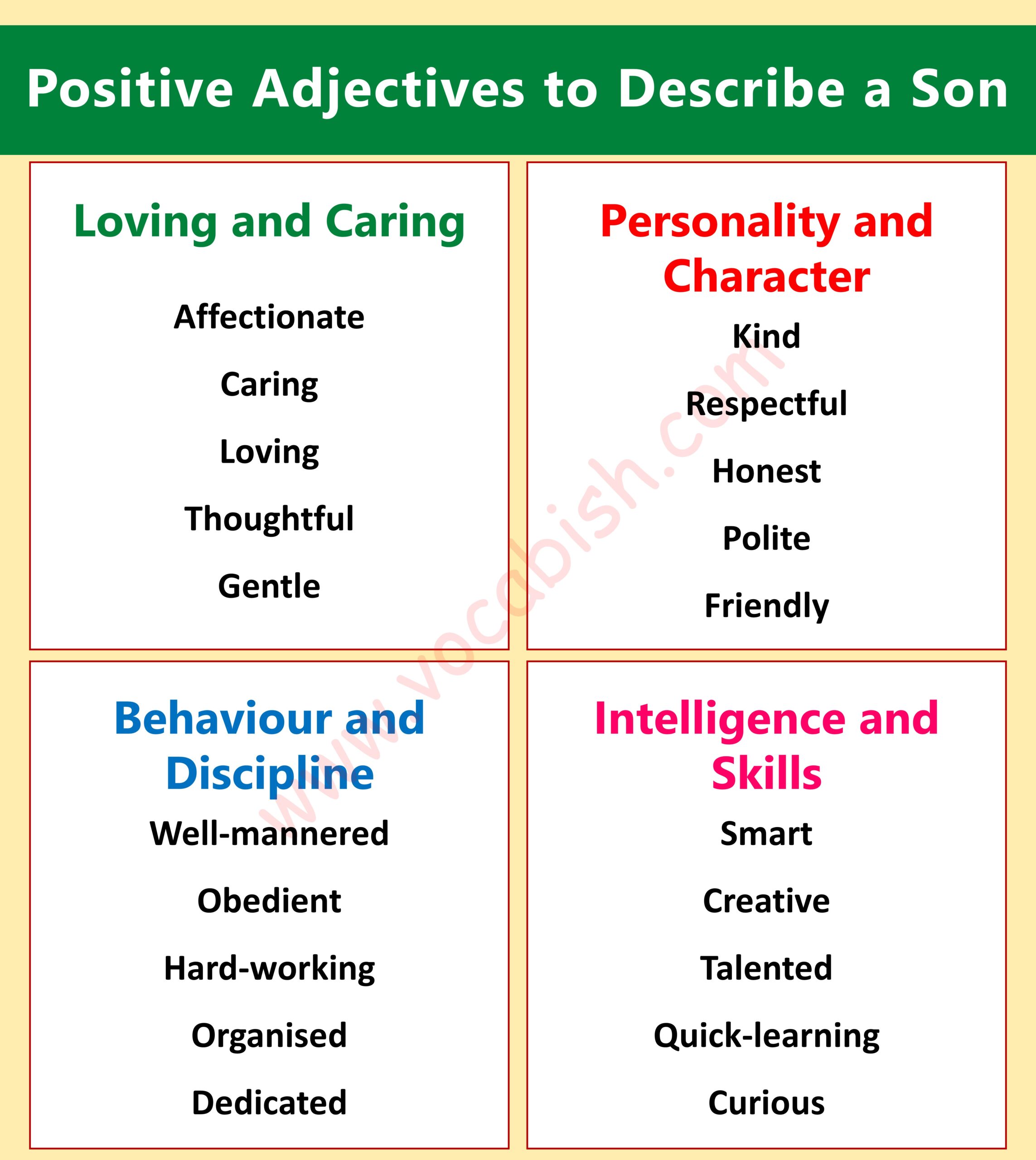
Loving and Caring Qualities
These words show a warm and gentle nature.
- Affectionate
- Caring
- Loving
- Warm-hearted
- Thoughtful
- Gentle
- Supportive
Personality and Character
Words that describe how he acts or behaves daily.
- Kind
- Respectful
- Honest
- Polite
- Friendly
- Responsible
- Cheerful
- Patient
- Reliable
Behaviour and Discipline
Useful for school, home, and social environments.
- Well-mannered
- Obedient
- Hard-working
- Organised
- Dedicated
- Focused
- Cooperative
- Self-controlled
Intelligence and Skills
Words for academic, creative, or practical strengths.
- Smart
- Creative
- Talented
- Quick-learning
- Curious
- Innovative
- Skilled
- Sharp-minded
Strength and Confidence
These words show bravery and personal power.
- Brave
- Strong
- Confident
- Determined
- Independent
- Courageous
- Ambitious
- Motivated
Useful Describing Words for a Son
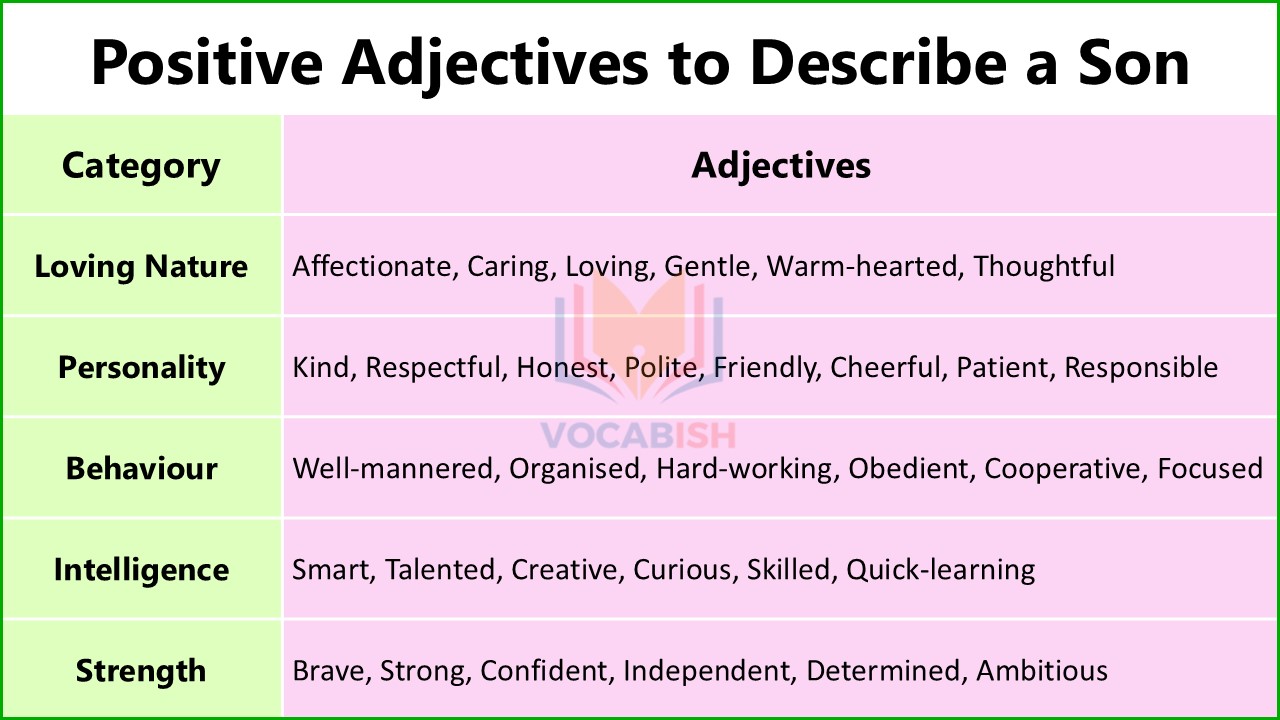
| Category | Adjectives |
|---|---|
| Loving Nature | Affectionate, Caring, Loving, Gentle, Warm-hearted, Thoughtful |
| Personality | Kind, Respectful, Honest, Polite, Friendly, Cheerful, Patient, Responsible |
| Behaviour | Well-mannered, Organised, Hard-working, Obedient, Cooperative, Focused |
| Intelligence | Smart, Talented, Creative, Curious, Skilled, Quick-learning |
| Strength | Brave, Strong, Confident, Independent, Determined, Ambitious |
Example Sentences
Here are simple sentences to show how each adjective is used:
- He is a caring son who always helps others.
- My son is very creative and loves to make new things.
- She is proud of her brave and confident son.
- He is a responsible son who finishes his tasks on time.
- Everyone likes him because he is friendly and polite.
- He is a determined boy who never gives up.
Using positive adjectives helps show respect and love towards a son. These words make communication clearer, kinder, and more meaningful. By learning these simple describing words, English learners can express themselves in a confident and natural way.
Frequently Asked Questions
You can describe your son’s personality using simple adjectives like kind, honest, cheerful, confident, and responsible. These words clearly show his behaviour, nature, and the way he interacts with others.
Positive words for writing include caring, respectful, hard-working, creative, brave, and supportive. These adjectives help you express his strengths in a warm and meaningful way.
Common positive adjectives for boys are friendly, smart, courageous, reliable, polite, talented, and independent. These words highlight both character and abilities.
A perfect son can be described as kind, responsible, respectful, and loving. He shows good manners, supports his family, and behaves thoughtfully in different situations.
Useful adjectives for behaviour include well-mannered, obedient, organised, cooperative, and focused. These words describe positive actions at home, in school, and in social settings.
Related Articles: