
Learning fruit vocabulary helps you understand everyday English used in food, shopping, and nature topics. One important group is stone fruits, which includes fruits like peach, plum, cherry, apricot, and mango. These fruits are known for having a hard seed inside the center, and they are commonly used in daily life conversations, recipes, and descriptions.
In this blog post, you will learn the List of All Stone Fruits Name in English with Their Pictures. This topic helps you recognize different fruit names, understand their meanings, and use them correctly in speaking and writing. When you learn these words, you improve your ability to describe food, ask questions in markets, and talk about healthy eating in English.
Stone Fruits Meaning
Stone fruits are fruits that have a single hard seed or pit inside the center. This seed is not edible and is usually removed before eating. The outer part is soft, juicy, and often sweet or slightly sour.
In simple words, stone fruits are known as drupes in botany. They grow on trees or plants and are commonly found in both tropical and temperate regions.
Why Are they Called Stone Fruits?
Stone fruits are called “stone fruits” because they contain a hard, stone-like seed in the center.
- Hard inner seed: Each fruit has a strong, solid seed in the middle.
- Protective shell: This seed is covered by a very hard layer called the pit.
- Stone-like structure: The pit feels like a small stone when opened or broken.
- Botanical name: In science, these fruits are called drupes.
- Natural design: The hard seed protects the real seed inside for plant growth.
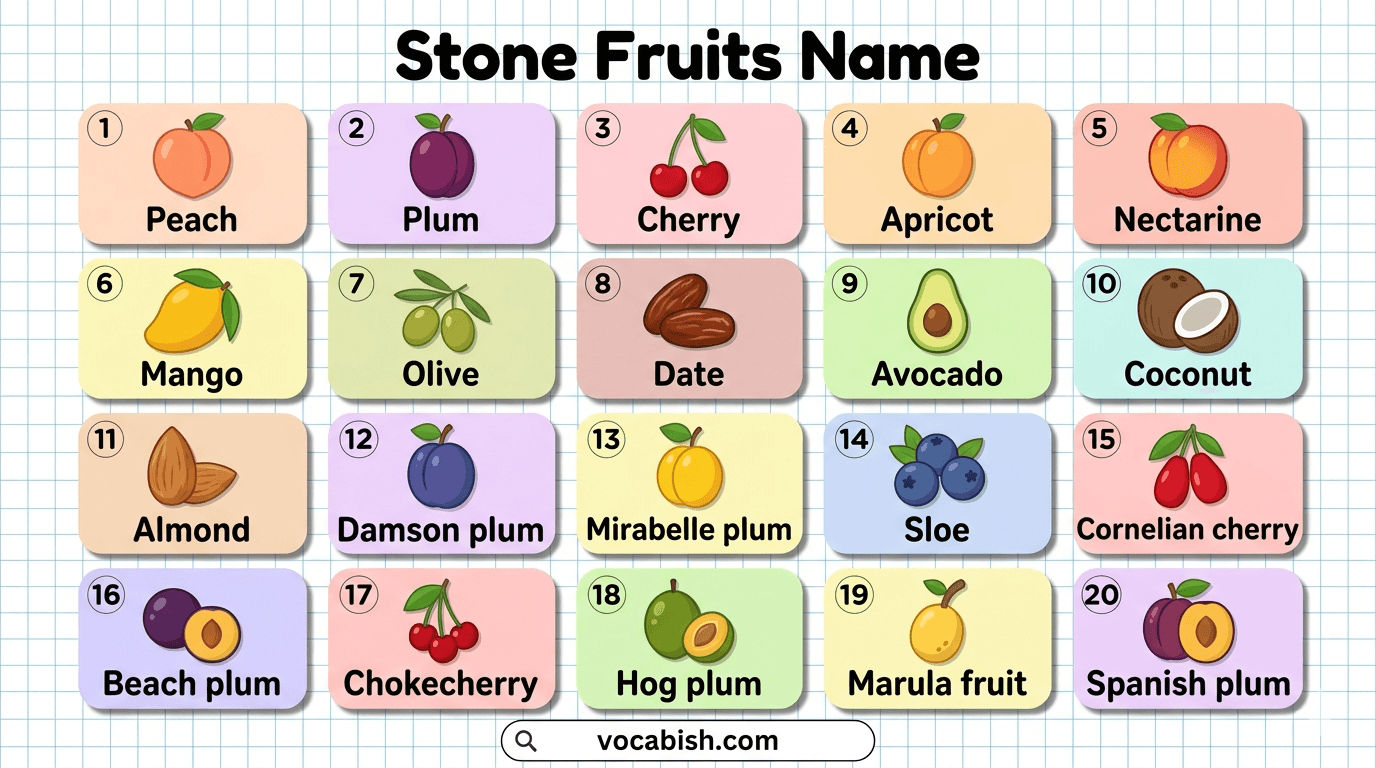
Common Stone Fruits in English with Pictures
- Peach
Soft fruit with sweet juice and fuzzy outer skin. - Plum
Juicy fruit that can taste sweet or slightly sour. - Cherry
Small round fruit often eaten fresh or in desserts. - Apricot
Orange colored fruit with soft flesh and sweet flavor. - Nectarine
Smooth version of peach without fuzzy skin. - Mango
Tropical fruit with rich sweetness and soft pulp. - Olive
Small bitter fruit mainly used for oil production. - Date
Sweet dried fruit from palm trees with rich energy. - Avocado
Creamy green fruit often used in salads and spreads. - Coconut
Large hard fruit with water and white edible flesh. - Almond
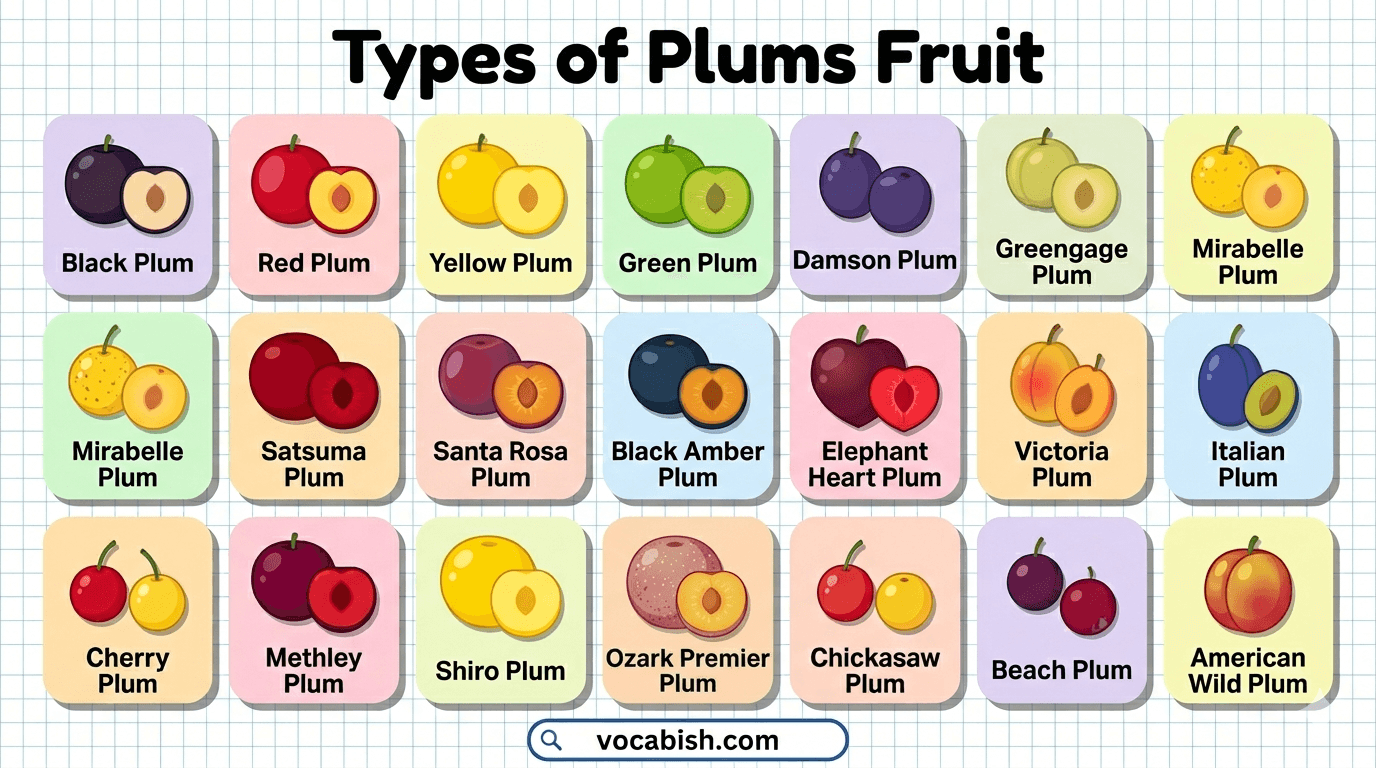
Seed found inside fruit, used in snacks and sweets. - Damson Plum
Small sour plum used mostly in jams and sauces. - Mirabelle Plum
Small golden plum with sweet taste. - Sloe
Wild sour fruit used in traditional drinks and syrups.
Uncommon Stone Fruits Names
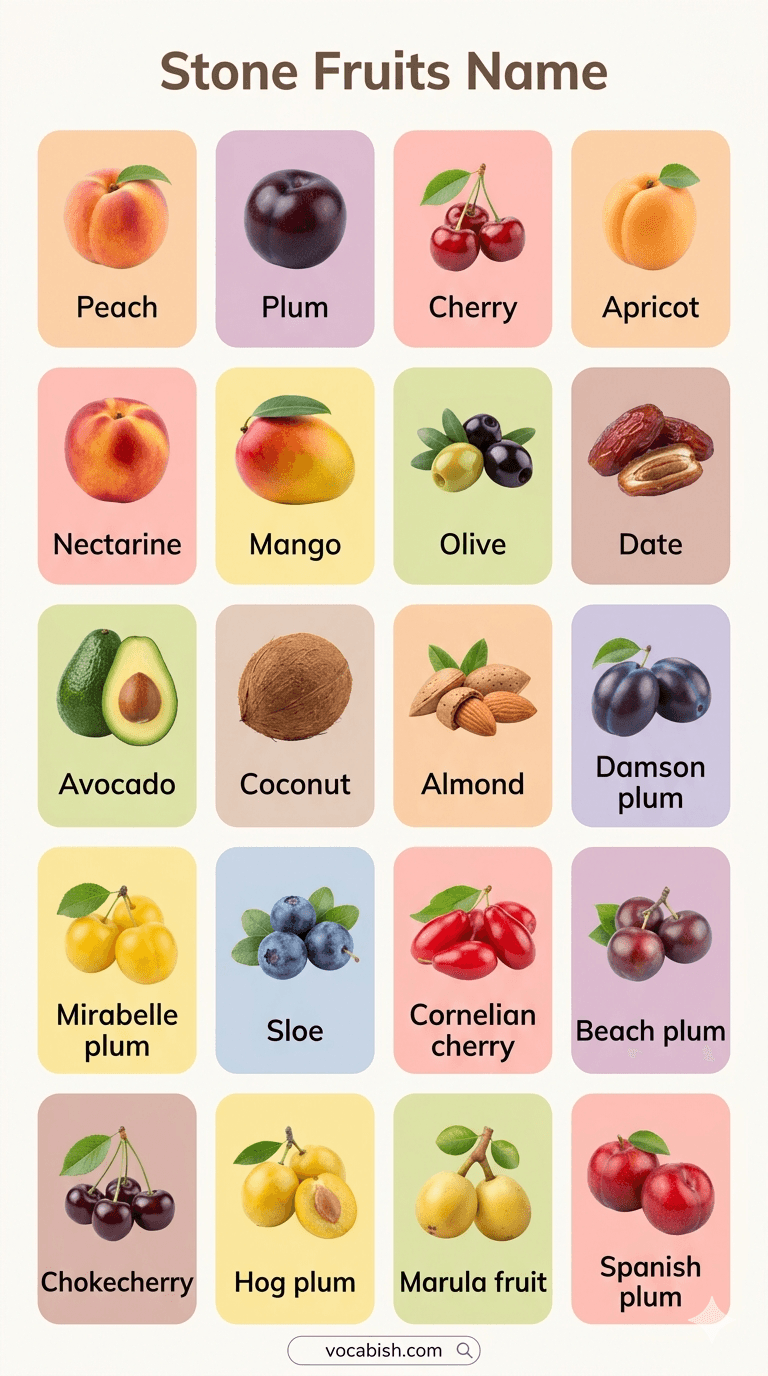
Here are some rare and less common stone fruits with meanings:
- Sloe (Blackthorn fruit)
Small wild fruit with very sour taste used in traditional drinks. - Cornelian cherry
Red fruit used in jams with a tart and slightly sweet flavor. - Wild apricot
Smaller version of apricot found in forest or mountain areas. - Beach plum
Coastal fruit that grows near sea areas with tangy taste. - Japanese plum (Ume fruit)
Used in pickles and traditional Asian cooking. - Kakadu plum
Australian native fruit rich in natural vitamin C content. - Chokecherry
Small dark fruit used in syrups, jellies, and preserves. - Sand cherry
Wild cherry variety that grows in sandy soil regions. - Hog plum
Tropical fruit used in sauces, drinks, and local recipes. - Governor’s plum
Sweet-sour fruit found in tropical and subtropical regions. - Natal plum
Small red fruit used in jams and ornamental plants. - Spanish plum
Also called ambarella, used in pickles and chutneys. - Wild peach
Naturally growing peach variety with smaller size and stronger taste. - Marula fruit
African fruit used for juices and traditional alcoholic drinks. - Prunus mume fruit
Botanical name for Japanese apricot used in preserved foods.
Types of Stone Fruits
Soft Stone Fruits
These fruits are juicy and soft, often eaten fresh.
Examples: peach, plum, apricot, cherry, nectarine.
Tropical Stone Fruits
These grow in warm climates and have rich sweetness.
Examples: mango, avocado, coconut, date.
Wild and Lesser Known Stone Fruits
These are less common but still part of the stone fruit family.
Examples: sloe, damson plum, mirabelle plum, almond.
Stone Fruits to Eat
These stone fruits are commonly eaten fresh or used in everyday cooking and are generally safe and nutritious.
- Peach fruit
- Plum fruit
- Cherry fruit
- Apricot fruit
- Mango fruit
- Nectarine fruit
- Olive fruit
- Date fruit
- Avocado fruit
- Damson plum
- Mirabelle plum
- Sloe fruit
Stone Fruits in Scientific Terms
In science, stone fruits are known as drupes, a type of fleshy fruit with a hard inner seed.
- Drupes classification
Drupes are fruits with one seed surrounded by fleshy edible layers. - Exocarp layer
Exocarp is the outer skin layer that protects the fruit surface. - Mesocarp layer
Mesocarp is the soft middle layer that is juicy and edible. - Endocarp layer
Endocarp is the hard inner layer that forms the stone or pit. - Prunus genus fruits
Many stone fruits belong to Prunus genus including peach, plum, and cherry. - Single seed structure
Stone fruits typically contain one large seed inside the hard pit. - Angiosperm category
Stone fruits come from flowering plants known as angiosperms in plant science.
Scientific Parts of Stone Fruits
Understanding fruit structure helps in learning biology and food science vocabulary.
- Fruit skin layer
Outer protective layer that prevents damage and moisture loss. - Fleshy pulp layer
Soft edible part that contains juice and natural sugars. - Hard stone core
Central protective shell that surrounds and protects the seed. - Seed inside pit
Seed inside the stone can grow into a new plant. - Plant reproduction role
Stone fruits help plants reproduce by spreading seeds through animals and humans.
Stone Fruits Benefits in Daily Life
Stone fruits are not only tasty but also very healthy for regular diets.
- Peach helps in hydration and supports healthy skin.
- Plum supports digestion and keeps the stomach active.
- Cherry may help reduce inflammation in the body.
- Apricot supports eye health and provides natural fiber.
- Mango gives energy and is rich in natural vitamins.
- Nectarine supports hydration and healthy immune function.
- Avocado provides healthy fats for heart support.
- Olive supports heart health through natural oils.
- Date gives quick energy and supports natural sugar levels.
- Damson plum supports digestion and gut balance.
- Mirabelle plum provides antioxidants and gentle sweetness.
- Sloe is used in small amounts for traditional health drinks.
List of All Stone Fruits
Peach | Plum | Cherry |
Apricot | Nectarine | Mango |
Olive | Date | Almond |
Coconut | Avocado | Damson plum |
Mirabelle plum | Sloe (Blackthorn) | Cornelian cherry |
Beach plum | Chokecherry | Sand cherry |
Wild peach | Wild plum | Hog plum |
Spanish plum (Ambarella) | Marula fruit | Natal plum |
Japanese plum (Ume) | Greengage plum | Black cherry |
Related Articles:
- List All Fruits and Their Types with Names
- Tropical Fruits Name with Pictures
- Citrus Fruits Names and Their Benefits
Summary of Stone Fruits Names
Stone fruits are an important group of fruits with a hard seed inside and soft edible flesh. Learning their names in English such as peach, plum, cherry, apricot, nectarine, mango, olive, and others helps improve food vocabulary and everyday communication. These fruits are widely enjoyed for their natural sweetness, health benefits, and versatility in cooking.
FAQs about Stone Fruits
Stone fruits are fruits that contain a hard seed or pit in the center surrounded by soft, juicy flesh. Common examples include peach, plum, cherry, apricot, and mango. These fruits are also called drupes in scientific terms.
They are called stone fruits because they have a hard, stone-like seed inside the fruit. This seed is protected by a strong inner shell called the pit, which looks and feels like a small stone.
Yes, coconut is a stone fruit. It has a hard outer shell and a single seed inside with white edible flesh and coconut water, fitting the drupe classification.
Stone fruits include peach, plum, cherry, apricot, nectarine, mango, olive, date, avocado, and coconut. All these fruits share a single hard seed surrounded by edible fleshy fruit.
No, strawberry is not a stone fruit. It is an aggregate fruit with many tiny seeds on its outer surface, not a single hard seed inside like peaches or plums.
Yes, stone fruits are healthy because they provide vitamins, fiber, and antioxidants. They support digestion, hydration, and immunity when eaten in balanced daily portions as part of a healthy diet.
Stone fruits are scientifically called drupes. A drupe is a fruit type with an outer skin, fleshy middle layer, and a hard inner shell containing a single seed.
Yes, many stone fruits like plum, peach, and apricot support digestion because they contain natural fiber and water. These nutrients help maintain healthy bowel movement and gut function.
Uncommon stone fruits include sloe, cornelian cherry, beach plum, hog plum, marula fruit, and chokecherry. These are less widely available but still belong to the stone fruit or drupe family.
Yes, mango is a stone fruit. It contains a single large hard seed in the center surrounded by juicy, sweet flesh, which classifies it as a drupe in botanical terms.