
Pome fruits are popular, everyday foods like apples, pears, and quinces that feature a core of seeds surrounded by sweet, edible flesh.
In this post, we will explore the different types of pome fruits, their nutritional value, and their amazing health benefits. Learning these simple fruit names will easily expand your English vocabulary and help you talk confidently about food and healthy eating!
Explore our complete category of the different types of fruits.
Pome Fruits: Meaning
The term “pome” refers to a specific family of fruits that have a central core holding tiny seeds, surrounded by sweet, edible flesh. The most famous everyday examples of pome fruits that you likely already eat are apples and pears.
Pome Fruits Characteristics
Pome fruits share a few unique traits that make them easy to identify. They typically feature a thin outer skin, a thick layer of crisp or juicy fruit, and a somewhat tough, papery inner core that protects their seeds. Most of these fruits grow on trees in cooler climates and are known for their long shelf life.
Characteristic | Description |
|---|---|
Core Structure | Hard central core with seeds inside |
Edible Flesh | Soft or firm part around the core |
Seed Location | Seeds stay grouped in the middle |
Fruit Origin | Develops from flower ovary and receptacle |
Skin Type | Thin outer skin, smooth or slightly rough |
Texture | Can be crisp like apple or soft like pear |
Taste | Sweet, mildly sweet, or slightly tart |
Nutrients | Rich in fiber, vitamins, and antioxidants |
Water Content | Usually high, gives juicy feel |
Growth Type | Grows on temperate fruit trees |
Ripening Season | Matures in specific seasonal cycles |
Storage Ability | Can be stored for weeks or months |
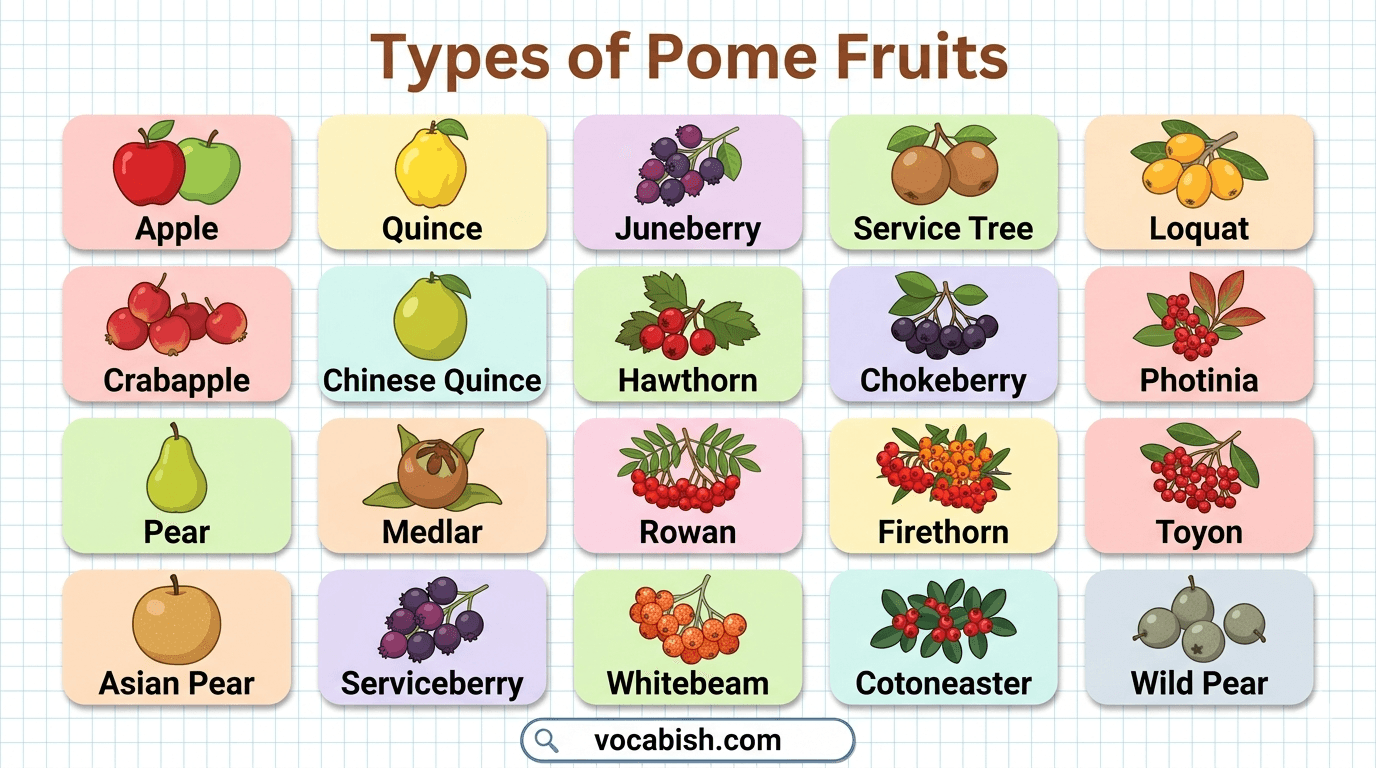
Common Types of Pome Fruits in English with Pictures
- Apple: Crisp, sweet fruit with smooth skin, widely eaten raw or cooked worldwide
- Pear: Soft, juicy fruit with mild sweetness and grainy texture, popular in desserts
- Quince: Hard, sour fruit often cooked before eating, used in jams and jellies
- Medlar: Small brown fruit with soft flesh, eaten when overripe for sweet taste
- Asian pear: Round, crisp fruit combining apple texture with mild pear sweetness
- Crab apple: Small, tart apple variety often used for making jelly and preserves
- Wild pear: Smaller, less sweet pear variety growing naturally in forest areas
- Desert apple: Cultivated apple type known for sweetness and fresh eating quality
- Cooking apple: Tart apple variety used in pies, sauces, and baked dishes
- European pear: Classic pear type with soft texture and sweet, aromatic flavor
- Chinese quince: Aromatic fruit used in traditional medicine and preserved products
- Mountain ash fruit: Small pome fruit used in jams, though slightly bitter raw
- Serviceberry: Small purple pome fruit with sweet flavor, often eaten fresh or dried
Main Types of Pome Fruits
Apples
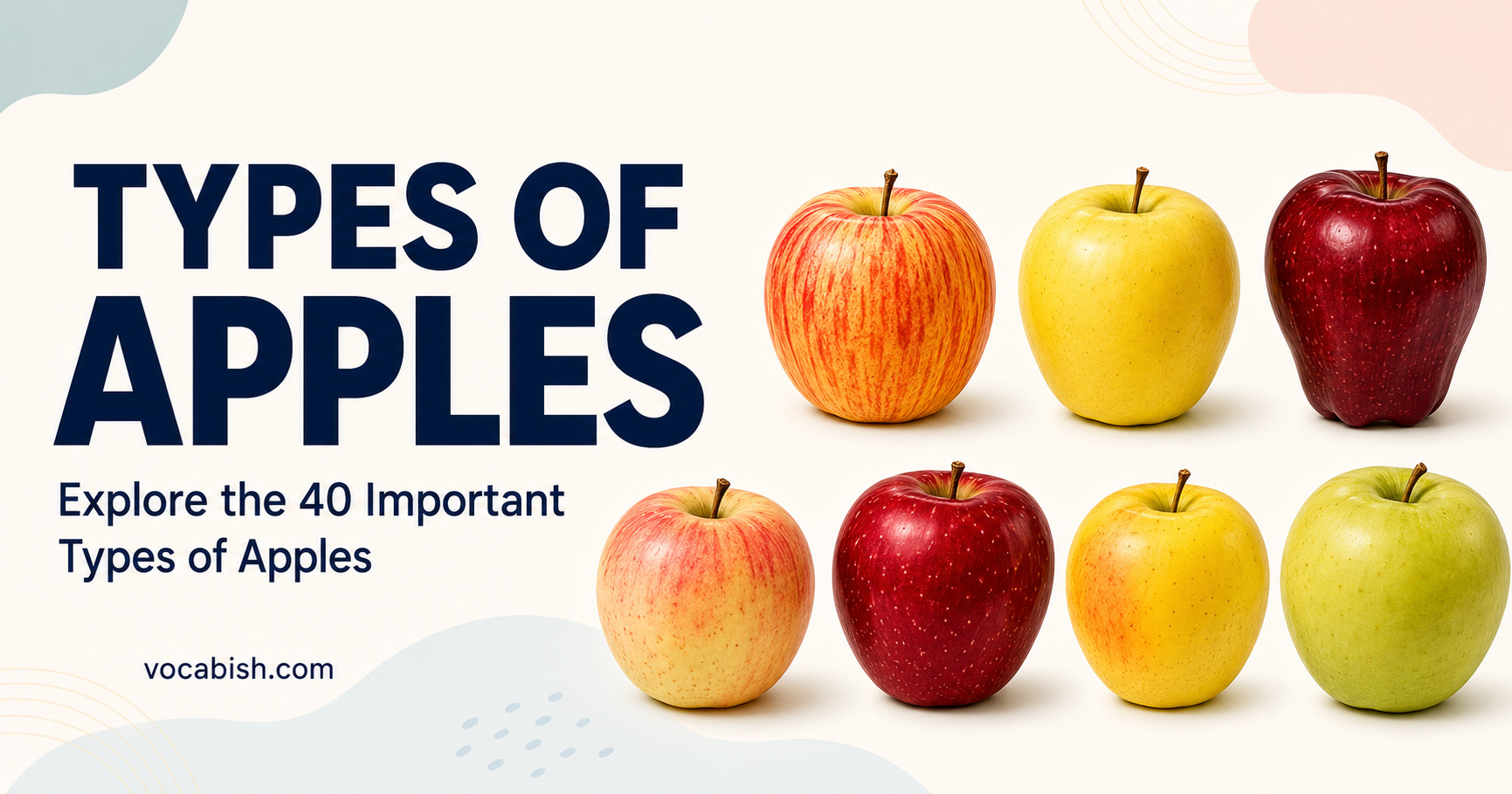
Apples are the most common pome fruits, available in many varieties with different flavors and colors. They are widely used in cooking and eaten fresh.
Pears
Pears are softer and juicier than apples. They have a mild sweetness and are often eaten fresh or in desserts.
Quinces
Quinces are hard and sour when raw. They become soft and fragrant when cooked, making them useful in sweet dishes.
Medlars
Medlars are less common and must soften before eating. They develop a sweet, rich flavor after ripening.
Read More: Botanical Definition of Pome Fruits
Nutritional Value of Pome Fruits
Pome fruits provide essential nutrients that support daily health.
- Fiber: Helps digestion and supports healthy gut function
- Vitamin C: Boosts immune system and supports skin health
- Antioxidants: Protect cells from damage and reduce inflammation risks
- Potassium: Supports heart health and helps maintain normal blood pressure
- Low calories: Suitable for balanced diets and weight management plans
Health Benefits of Pome Fruits
Eating pome fruits regularly offers several health benefits.
- Improves digestion: High fiber content supports smooth bowel movement and gut health
- Supports heart health: Nutrients help reduce cholesterol and improve blood circulation
- Boosts immunity: Vitamins strengthen body defenses against infections and illnesses
- Controls weight: Low calorie and high fiber help maintain healthy body weight
- Enhances skin health: Antioxidants support clearer and healthier looking skin
Uses of Pome Fruits in Daily Life
Pome fruits are used in many simple and practical ways.
- Fresh eating: Apples and pears are commonly eaten raw as daily snacks
- Cooking: Used in pies, sauces, baked dishes, and traditional meals
- Juices: Fresh fruit juices provide natural sweetness and nutrients
- Preserves: Made into jams, jellies, and spreads for long-term storage
- Drying: Dried slices used as snacks or added to cereals and desserts
Comparison of Pome Fruits
Fruit Type | Texture | Taste | Common Use |
|---|---|---|---|
Apple | Firm and crisp | Sweet or tart | Raw eating, baking |
Pear | Soft and juicy | Mild sweet | Fresh, desserts |
Quince | Hard then soft cooked | Sour to sweet | Jams, cooking |
Medlar | Soft when ripe | Sweet and rich | Fresh or processed |
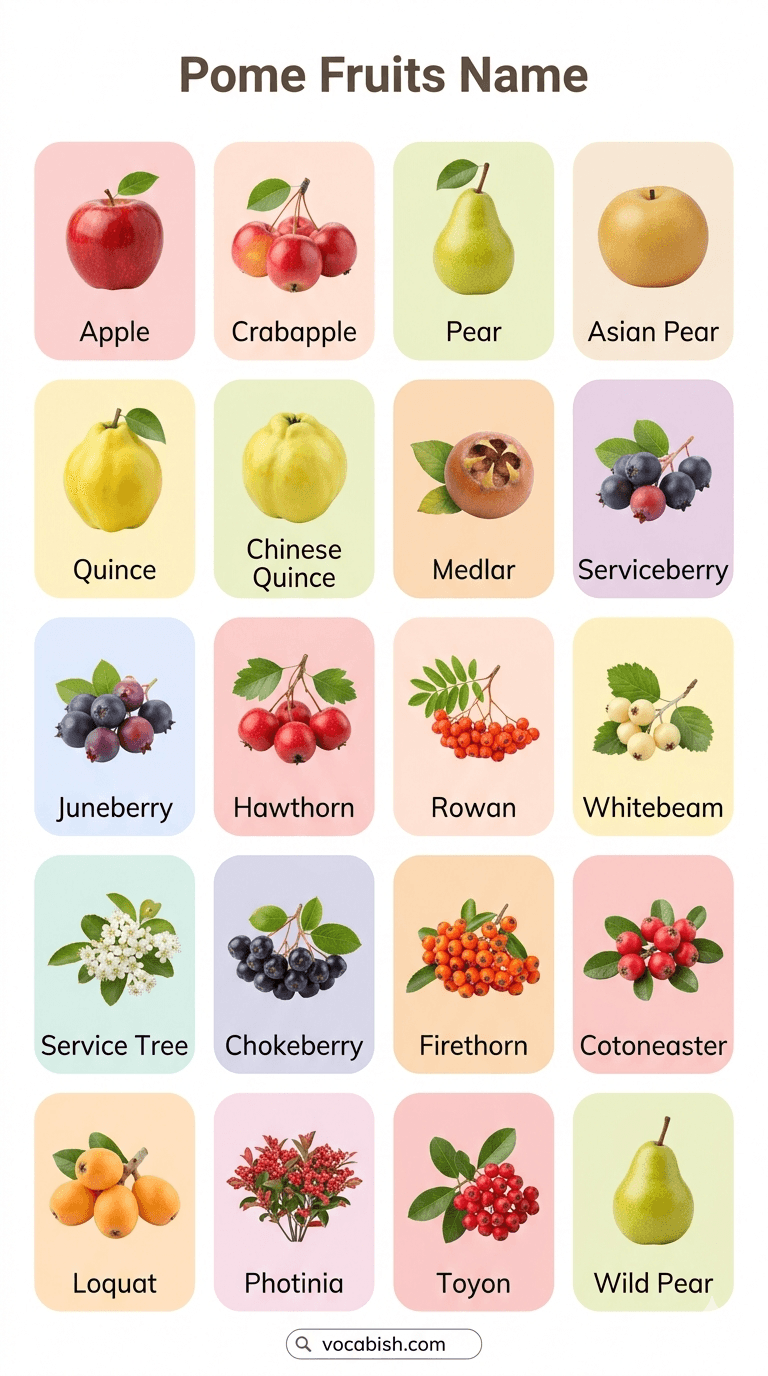
List of All Pome Fruits Name
Apple | Crabapple | Pear |
Asian Pear | Quince | Chinese Quince |
Medlar | Serviceberry | Juneberry |
Hawthorn | Rowan (Mountain Ash) | Whitebeam |
Service Tree | Chokeberry | Firethorn |
Cotoneaster | Loquat | Photinia |
Toyon | Docynia | Malacomeles |
Wild Pear | Wild Apple | Himalayan Pear |
European Rowan | Snow Pear | Crabapple Cherry |
Related Articles:
- Stone Fruits and Their Names with Pictures
- Tropical Fruits Name in English with Pictures
- Different Types of Melons Names
FAQs About Pome Fruits
Pome fruits are fruits that develop from a flower’s ovary with a central seed core. Apples, pears, and quinces are common examples.
The main pome fruits include apples, pears, quinces, medlars, and loquats. These fruits share a similar structure with a core containing seeds.
Pome fruits have a central core, edible fleshy part, thin skin, and multiple seeds inside. They are usually juicy and grow on temperate trees.
Yes, apples and pears are the most common pome fruits. Both have a core with seeds and surrounding edible flesh that is sweet or mildly tart.
Pome fruits contain fiber, vitamin C, potassium, and antioxidants. These nutrients support digestion, immunity, heart health, and overall body wellness.
Pome fruits differ because their edible flesh grows around a core. Other fruits, like berries or stone fruits, have different seed and flesh structures.
Pome fruits are healthy because they are low in fat, high in fiber, and rich in vitamins. They help digestion and support a balanced diet.
Pome fruits mostly grow in temperate regions on trees. They need seasonal climates with moderate temperatures to grow and ripen properly.
Conclusion
Pome fruits are an important group of fruits with simple structure, rich nutrition, and many uses. Apples, pears, and quinces are easy to find and include in daily meals. Their healthy nutrients, natural sweetness, and versatile uses make them a valuable part of a balanced diet. Understanding their types and benefits helps in making better food choices every day.