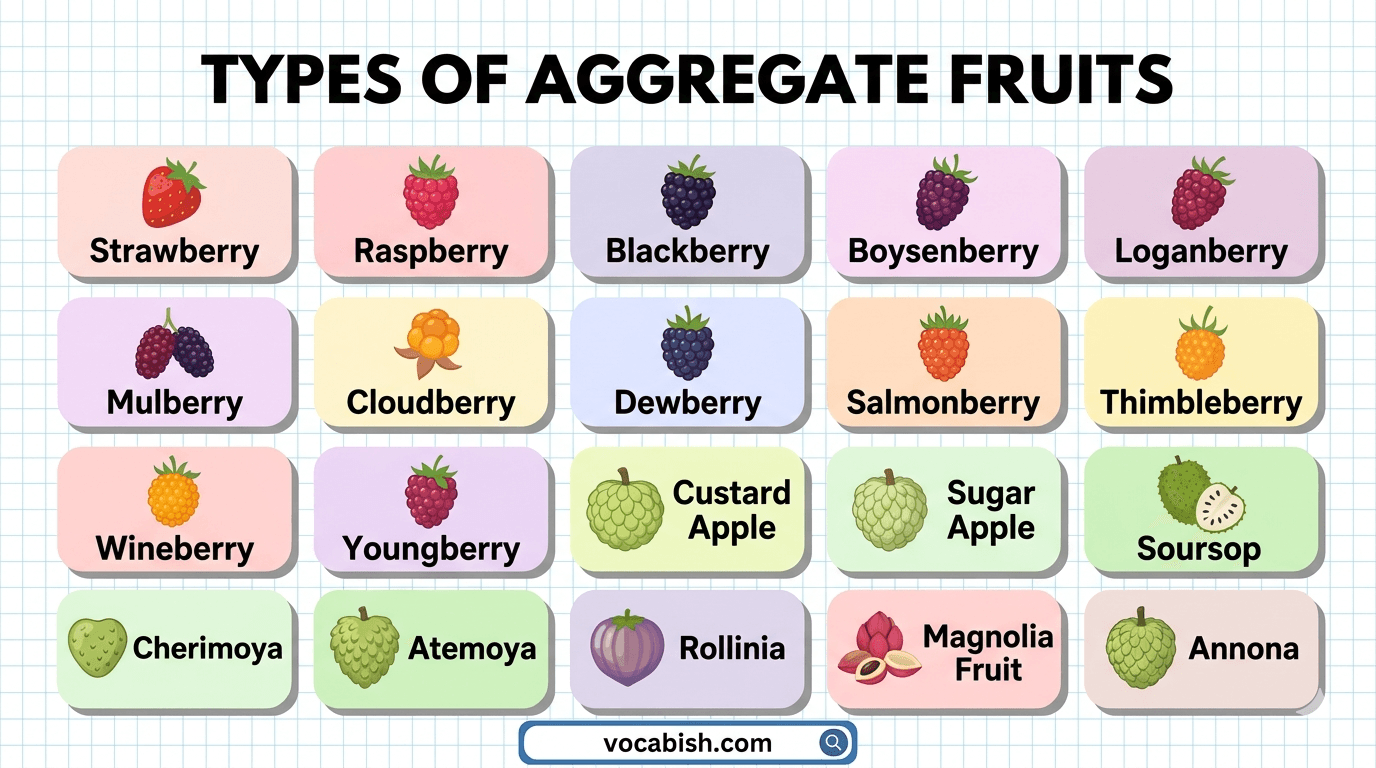

Aggregate fruits are unique fruits that develop from a single flower with many tiny parts joined together, such as strawberries, raspberries, and blackberries.
In this post, we will explore the names of these fascinating fruits to help you easily build your English vocabulary. Mastering these simple words will make you much more confident when talking, reading, and writing about food and nature in your daily life!
Aggregate Fruits Meaning
An aggregate fruit is a unique type of fruit that grows from a single flower containing many separate parts. Instead of forming one solid piece, these parts develop together into a tightly packed cluster. When you look closely at a raspberry or blackberry, you can easily see the many small, individual “fruitlets” that join together to make up the whole fruit.
Common Aggregate Fruits Name in English with Pictures
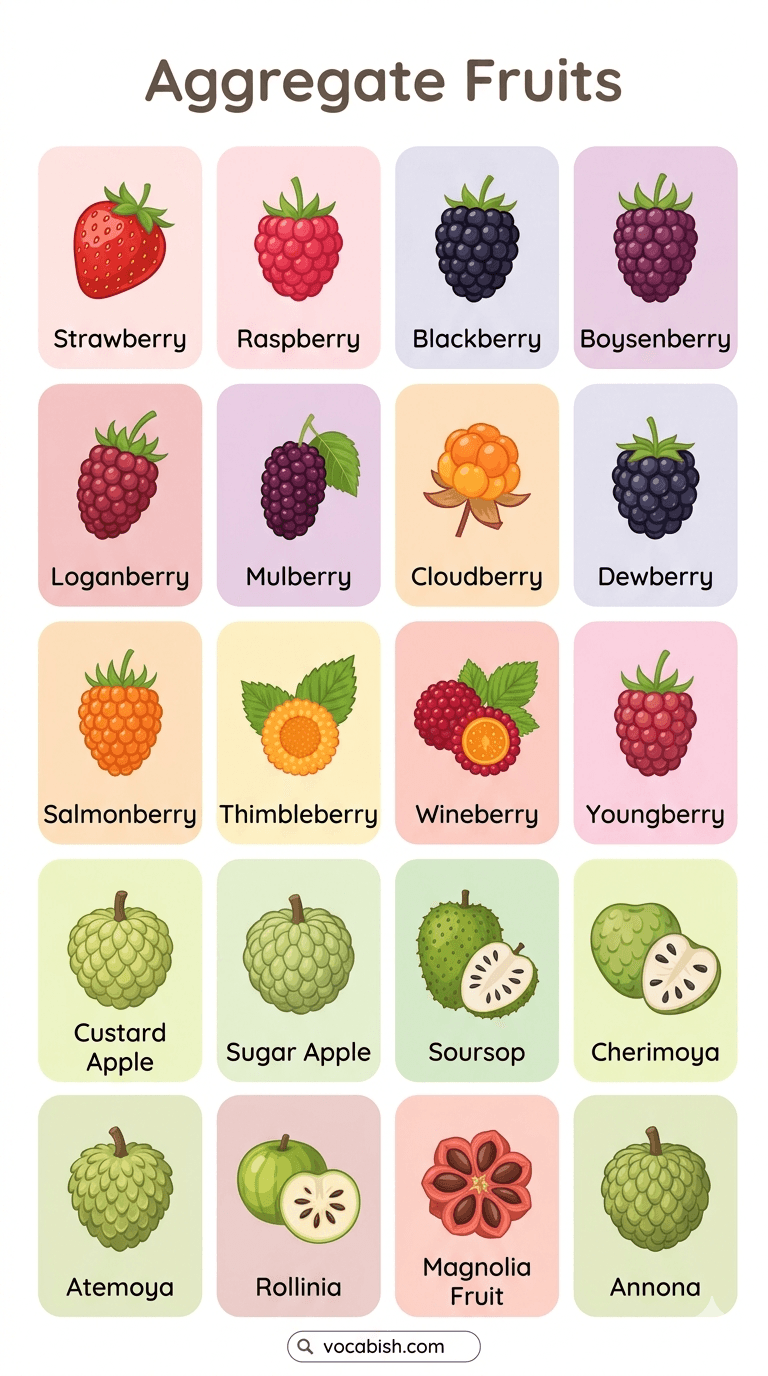
- Strawberry
Red juicy fruit with seeds outside, sweet taste, and soft texture. - Raspberry
Small red fruit made of many drupelets, soft and slightly tart. - Blackberry
Dark purple fruit with juicy segments, rich flavor, and a slightly sweet taste. - Boysenberry
A hybrid berry combining raspberry and blackberry flavors, with a soft and juicy texture. - Loganberry
A cross between a raspberry and a blackberry, elongated in shape with a tangy flavor. - Mulberry
Small elongated fruit with a sweet taste that grows on trees in clusters. - Custard Apple
Green scaly fruit with creamy pulp and sweet tropical flavor. - Sugar Apple
Similar to custard apple, soft pulp and a very sweet taste. - Soursop
A large green fruit with spiky skin and sour-sweet pulp used in drinks. - Magnolia Fruit
A cone-like fruit with red seeds grows on magnolia trees. - Annona
Tropical fruit group, including custard apple varieties with creamy and aromatic pulp. - Cloudberry
Golden berries are found in cold regions, have a soft texture, and have a slightly tart taste.
Main Types of Aggregate Fruits with Examples
1. Aggregate of Achenes
These fruits feature many tiny, dry, seed-like parts resting on a sweet, fleshy base.
Example: Strawberries. The little “seeds” you see on the outside of a strawberry are actually the true fruits (achenes)!
2. Aggregate of Drupelets
These are made up of tight clusters of tiny, juicy fruitlets. Each little bump contains a single hard seed inside.
Example: Raspberries and blackberries.
3. Aggregate of Follicles
These consist of a group of dry, pod-like fruits that naturally split open along one side to release their seeds when they are fully ripe.
Example: Magnolia tree fruits and star anise.
4. Aggregate of Berries
These are formed when multiple soft, juicy berries grow from a single flower and fuse together into one larger, fleshy fruit.
Example: Custard apples (sugar apples).
List of All Aggregate Fruit Names
Strawberry | Raspberry | Blackberry |
|---|---|---|
Boysenberry | Loganberry | Mulberry |
Cloudberry | Dewberry | Salmonberry |
Thimbleberry | Wineberry | Youngberry |
Custard Apple | Sugar Apple | Soursop |
Cherimoya | Atemoya | Rollinia |
Magnolia Fruit | Annona | Himalayan Blackberry |
Health Benefits of Aggregate Fruits
- Rich in antioxidants
Helps protect cells from damage and supports overall body health. - Boosts immunity
High vitamin content strengthens the immune system and prevents common illnesses. - Improves digestion
Contains dietary fiber that supports healthy digestion and gut function. - Supports heart health
Helps reduce cholesterol levels and improves blood circulation. - Enhances skin health
Vitamins and minerals promote glowing skin and reduce aging signs. - Weight management support
Low calorie and high fiber content helps control body weight naturally.
Nutritional Value of Aggregate Fruits
- High in vitamin C
Supports immune system and helps in healing and tissue repair. - Good source of fiber
Helps digestion and keeps stomach healthy and active daily. - Contains essential minerals
Includes potassium, magnesium, and iron for body functions. - Low in calories
Suitable for healthy diet and weight control plans. - Natural sugars present
Provides quick energy without harmful processed sugars.
Daily Uses of Aggregate Fruits
- Fresh consumption
Eaten raw as healthy snacks or breakfast additions. - Desserts preparation
Used in cakes, pies, ice creams, and sweet dishes. - Juices and smoothies
Blended into drinks for refreshing and nutritious beverages. - Jam and preserves
Cooked into spreads for bread and bakery products. - Salads and toppings
Added to fruit salads, yogurt, and cereals for extra flavor.
Related Articles:
FAQs About Aggregate Fruits
An aggregate fruit forms from one flower with many ovaries. Each ovary develops into a small fruit, and all parts join together to make one complete fruit.
Common aggregate fruits include strawberry, raspberry, blackberry, custard apple, and soursop. These fruits show how many small fruit parts combine into one visible fruit body.
Yes, strawberries are aggregate fruits. The small seeds on the surface are separate fruits called achenes, while the red fleshy part supports these units.
A cranberry is a simple fruit. It develops from a single ovary in one flower, not from multiple ovaries or a group of flowers.
The seven common fruit categories are berries, drupes, pomes, citrus fruits, melons, tropical fruits, and aggregate fruits. These groups are based on structure, texture, and growth pattern.
A cucumber is a simple fruit. It grows from one ovary of a single flower and does not form from multiple ovaries or combined flowers.
A strawberry is an aggregate fruit of achenes. The small seeds on its surface are individual fruits, while the red fleshy part supports and holds them together.
The four main types of fruit are simple fruits, aggregate fruits, multiple fruits, and accessory fruits. They are grouped based on how they develop from one or more flowers.
Aggregate fruits are rich in vitamin C, fiber, antioxidants, and essential minerals. These nutrients help boost immunity, improve digestion, and support overall body health.
Conclusion
Aggregate fruits are unique because they grow from multiple ovaries in one flower. Fruits like strawberries, raspberries, blackberries, and custard apples are common examples. They are rich in nutrients, easy to use in daily meals, and offer many health benefits. Understanding their types and uses helps in learning both botany concepts and healthy eating habits.