
Talking about the future is something you do every day. You might make a promise, predict tomorrow’s weather, decide to help someone, or talk about your weekend plans. In English, one of the most common ways to do this is with the future simple.
This tense is easy to learn and very useful in daily conversations. Once you understand when and how to use it, speaking about future events becomes much more natural.
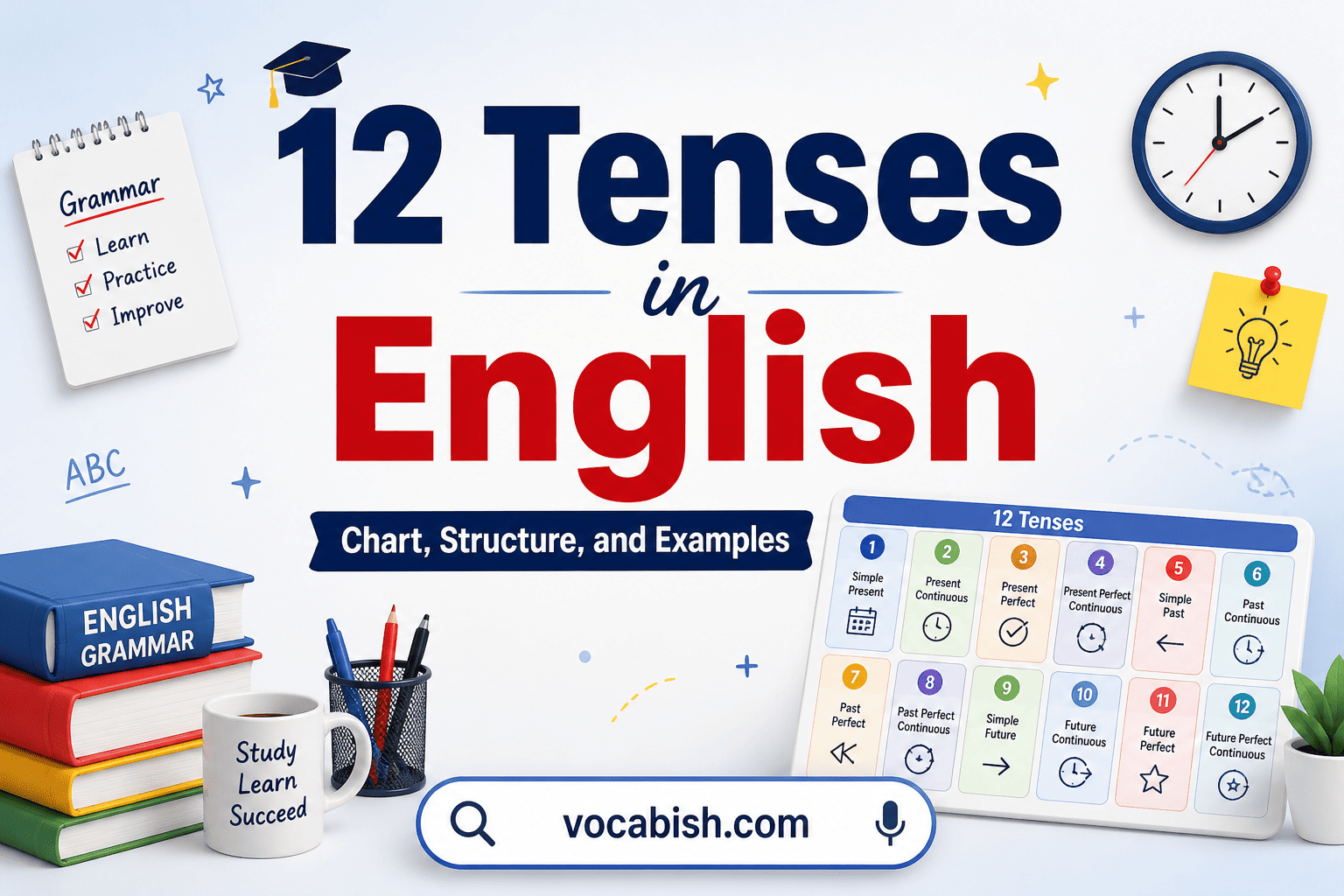
If you want to read about the structures of the verb tenses, then you may visit this: Tense Structure
What Is the Future Simple Tense?
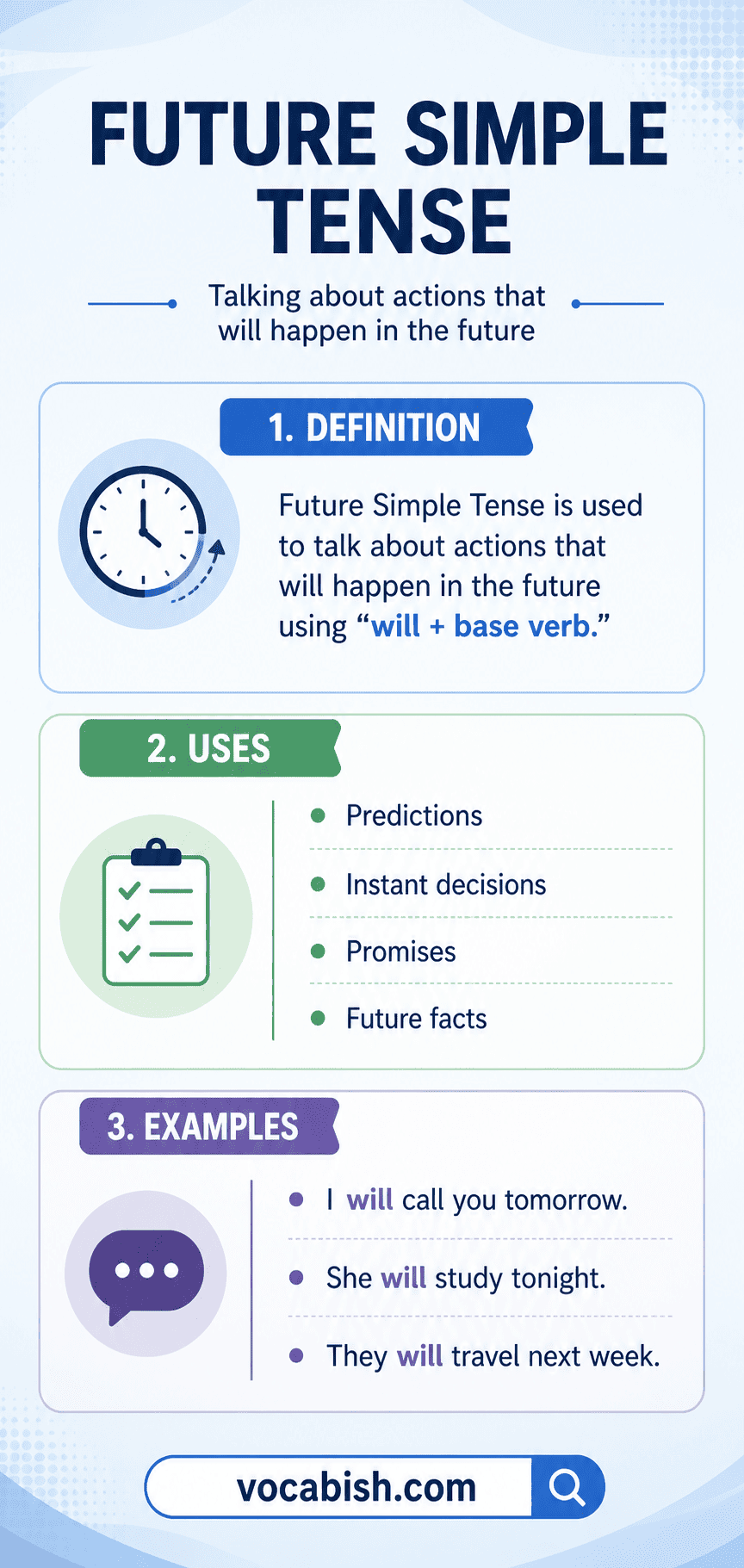
The future simple tense is used to talk about actions, events, decisions, predictions, or promises that will happen in the future.
It is usually formed with will + base verb.
Examples:
- I will call you later.
- She will arrive tomorrow.
- They will visit us next week.
In spoken English, will is often shortened:
- I will → I’ll
- We will → We’ll
- They will → They’ll
Why Do We Use the Future Simple Tense?
The simple future tense helps you express future ideas clearly. People use it when they:
- make predictions
- give promises
- offer help
- make quick decisions
- talk about future events
It is especially common in everyday speaking because it is simple and flexible.
Examples:
- I think it will rain today.
- Don’t worry. I will help you.
- We will see what happens.
How the Future Simple Tense Works
The future simple uses the helping verb “will” followed by the base form of the main verb.
Pattern:
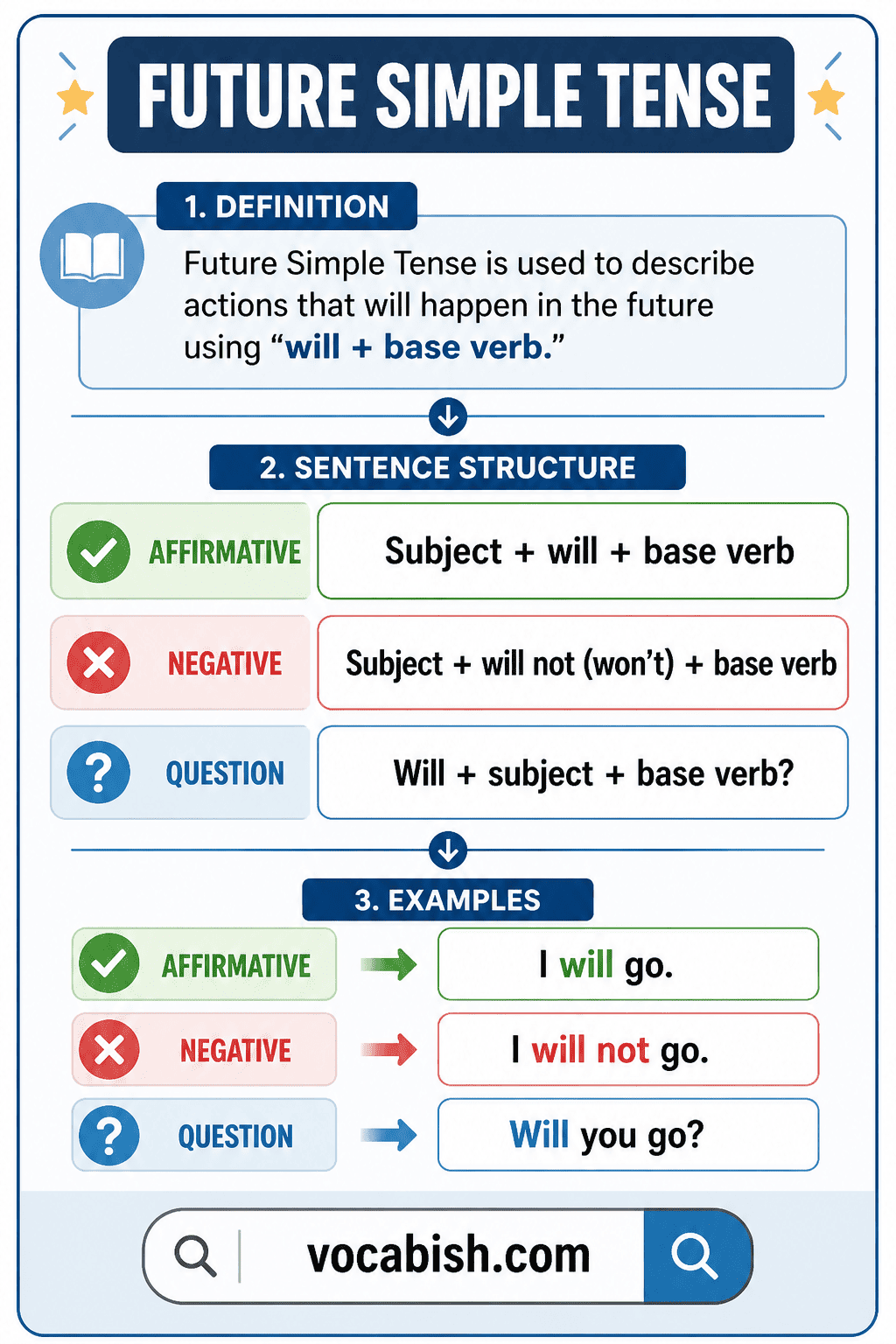
Subject + will + base verb
Examples:
- She will study tonight.
- We will travel next month.
- I will finish the report tomorrow.
The main verb never changes after will.
- ✔ He will go.
- ❌ He will goes.
Future Simple Tense Formula
Here’s the structure of the future simple that we used for talking about future actions, decisions, predictions, offers, and promises.
Positive Sentence Structure
When you want to talk about a future action, prediction, promise, or decision, you usually use a positive future simple sentence. It tells the listener that something is expected to happen later.
- Structure: Subject + will + Base Verb + Object
- Example: She will buy a new laptop next month.
Sentence Part | Word/Phrase | Function |
|---|---|---|
Subject | She | The person doing the action |
Future Marker | will | Shows the action is in the future |
Base Verb | buy | Main action |
Object | a new laptop next month | Gives more details |
Negative Sentence Structure
Not every future event will happen. To express something you do not expect, do not plan, or believe will not happen, use the negative form of the future simple tense.
- Structure: Subject + will not (won’t) + Base Verb + Object
- Example: They won’t attend the meeting tomorrow.
Sentence Part | Word/Phrase | Function |
|---|---|---|
Subject | They | The people doing the action |
Negative Future Marker | won’t | Shows the action will not happen |
Base Verb | attend | Main action |
Object | the meeting tomorrow | Gives more details |
Interrogative Sentence Structure
Questions about future events often begin with will. This form helps you ask about someone’s plans, intentions, decisions, or expectations.
- Structure: Will + Subject + Base Verb + Object?
- Example: Will you join us for dinner tonight?
Sentence Part | Word/Phrase | Function |
|---|---|---|
Question Marker | Will | Starts a future question |
Subject | you | The person doing the action |
Base Verb | join | Main action |
Object | us for dinner tonight | Gives more details |
When to Use the Future Simple Tense
Use the future simple when you are talking about something that has not happened yet. It is often used for future decisions, expectations, predictions, promises, and offers. In everyday conversations, people use it whenever they want to express what they think, decide, or plan to do later.
Talking About Future Plans
Although planned arrangements often use other future forms, people commonly use the Future Simple to mention future actions and intentions.
Examples:
- I will visit my grandparents this weekend.
- We will travel to Lahore next month.
- She will start her new job next week.
Making Predictions
Use the future simple when you believe something will happen in the future.
Examples:
- I think the team will win.
- It will be a busy day tomorrow.
- The weather will improve soon.
Promises and Offers
The future simple is very common when promising something or offering help.
Examples:
- I will always support you.
- We will finish the work on time.
- I’ll carry your bag.
Instant Decisions
Sometimes you decide something at the moment of speaking.
Examples:
- The phone is ringing. I’ll answer it.
- I’m thirsty. I’ll get some water.
- The room is cold. I’ll close the window.
Signal Words Used with the Future Simple Tense
The future simple tense uses will + base verb. Time expressions tell us when the future action will happen.
Time Expression | Example Sentence |
|---|---|
tomorrow | I will call you tomorrow. |
day after tomorrow | They will arrive the day after tomorrow. |
tonight | He will finish his homework tonight. |
afternoon | I will meet my teacher this afternoon. |
evening | We will have dinner together this evening. |
weekend | They will go to the park this weekend. |
next week | I will start my new class next week. |
next month | She will travel next month. |
next year | We will move house next year. |
next Monday | He will take the test next Monday. |
soon | The bus will come soon. |
later | I will help you later. |
in a minute | I will be ready in a minute. |
in an hour | Dad will return in an hour. |
in two days | She will send the email in two days. |
in the future | People will use cleaner energy in the future. |
someday | I will visit London someday. |
one day | You will understand this one day. |
before long | The rain will stop before long. |
eventually | He will learn the answer eventually. |
by tomorrow | I will finish the work by tomorrow. |
after class | We will play football after class. |
after school | They will meet after school. |
when I get home | I will call you when I get home. |
as soon as possible | We will reply as soon as possible. |
from now on | I will study harder from now on. |
Rules for Using the Future Simple Tense
- Use will + base verb.
- She will study.
- Do not add -s, -ed, or -ing after will.
- ✔ He will work.
- ❌ He will works.
- Use will not or won’t for negative sentences.
- I won’t forget.
- Start questions with will.
- Will they arrive soon?
- The verb stays in its base form for all subjects.
- I will go.
- She will go.
- They will go.
Future Simple Tense Examples in Sentences
- I will call you tonight.
- She will finish her homework later.
- We will visit our friends next week.
- They will arrive at noon.
- He will buy a new car next year.
- I think it will rain tomorrow.
- The train will leave at six.
- I’ll help you with your project.
- We won’t be late.
- She won’t forget your birthday.
- Will you come with us?
- Will they join the meeting?
- My brother will start college soon.
- The company will launch a new product.
- I will send the email after lunch.
Future Simple vs Present Simple Tense
Future Simple | Present Simple |
|---|---|
Talks about future actions. | Talks about habits, facts, and schedules. |
Uses will. | Uses the present form of the verb. |
I will travel next month. | I travel to work by bus. |
She will call later. | She calls her mother every day. |
Past Simple vs Future Simple Tense
Future Simple | Past Simple |
|---|---|
Describes future actions. | Describes completed past actions. |
Uses will + base verb. | Uses the second form of the verb. |
We will visit Karachi next week. | We visited Karachi last week. |
He will buy a bicycle. | He bought a bicycle. |
Future Simple vs Other Future Tense Forms
English has several ways to talk about the future.
Form | Use | Example |
|---|---|---|
Future Simple | Predictions, promises, quick decisions | I will help you. |
Be Going To | Prior plans or intentions | I am going to start a course. |
Present Continuous | Arranged future events | We are meeting tomorrow. |
Compare:
- I’ll answer the phone. (decision made now)
- I’m going to buy a phone. (already planned)
- I’m meeting the manager tomorrow. (arranged event)
Future Simple Sentences Used in Daily Conversations
- A: Can you help me move this table?
- B: Sure, I will help you.
- A: What do you think about the match?
- B: I think our team will win.
- A: The doorbell is ringing.
- B: I’ll open the door.
- A: Will you attend the meeting tomorrow?
- B: Yes, I will.
- A: I feel nervous about the exam.
- B: Don’t worry. You will do well.
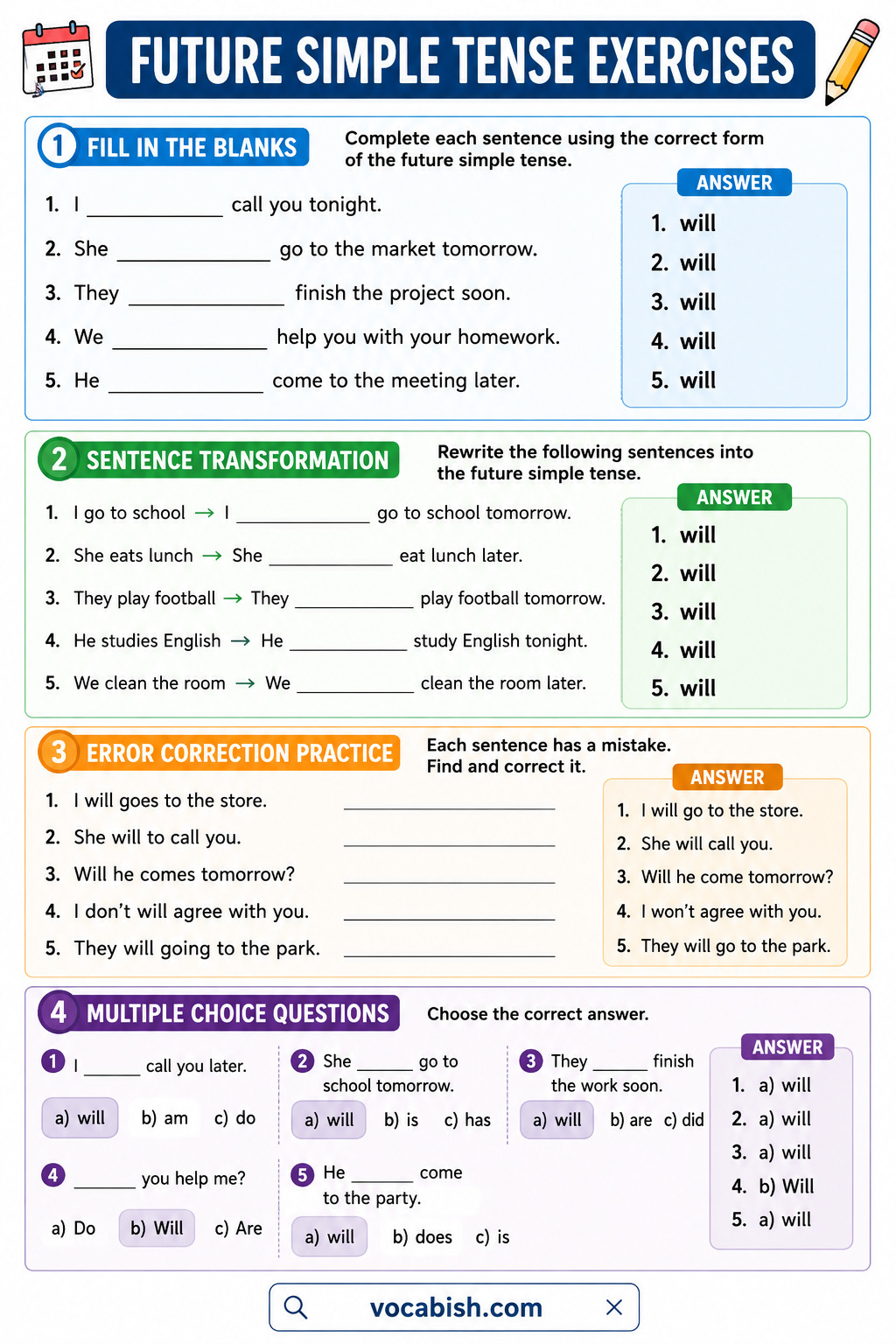
Future Simple Tense Exercises
Fill in the Blanks
Complete each sentence using the correct form of the future simple tense.
- I ______ call you tonight.
- She ______ go to the market tomorrow.
- They ______ finish the project soon.
- We ______ help you with your homework.
- He ______ come to the meeting later.
Answer:
- will
- will
- will
- will
- will
Sentence Transformation
Rewrite the following sentences into the future simple tense.
- I go to school → I ______ go to school tomorrow.
- She eats lunch → She ______ eat lunch later.
- They play football → They ______ play football tomorrow.
- He studies English → He ______ study English tonight.
- We clean the room → We ______ clean the room later.
Answer:
- will
- will
- will
- will
- will
Error Correction Practice
Each sentence has a mistake. Find and correct it.
- I will goes to the store.
- She will to call you.
- Will he comes tomorrow?
- I don’t will agree with you.
- They will going to the park.
Answer:
- I will go to the store.
- She will call you.
- Will he come tomorrow?
- I won’t agree with you.
- They will go to the park.
Multiple Choice Questions
Choose the correct answer.
- I ______ call you later.
a) will
b) am
c) do - She ______ go to school tomorrow.
a) will
b) is
c) has - They ______ finish the work soon.
a) will
b) are
c) did - ______ you help me?
a) Do
b) Will
c) Are - He ______ come to the party.
a) will
b) does
c) is
Answer:
- a) will
- a) will
- a) will
- b) Will
- a) will
FAQs about Future Simple Tense
The Future Simple Tense is used to talk about actions, decisions, predictions, promises, and events that will happen in the future.
The basic formula is:
Subject + will + base verb
Example:
I will study tonight.
Yes. Won’t is the short form of will not and is very common in spoken English.
I won’t be late.
She won’t forget.
No. The verb always stays in its base form.
✔ He will go.
❌ He will goes.
Yes. Native and non-native speakers use it every day for promises, predictions, offers, and quick decisions.
Will is often used for predictions, promises, and quick decisions. Going to is usually used for plans or intentions decided earlier.
Use will not or won’t before the base verb. Both forms have the same meaning.
You May Also Like:
- The Past Simple Tense Explained
- Present Simple Tense Uses and Examples
- The Chart of 12 Tenses in English Grammar
Conclusion
The Future Simple is one of the first future forms you should learn because it appears constantly in daily English. You can use it to make predictions, give promises, offer help, and talk about future actions. The structure is straightforward—will + base verb—which makes it easy to remember and use in conversation.
Practice creating your own sentences about tomorrow, next week, or next year. The more you use the simple future tense in real situations, the more confident and natural your English will become.