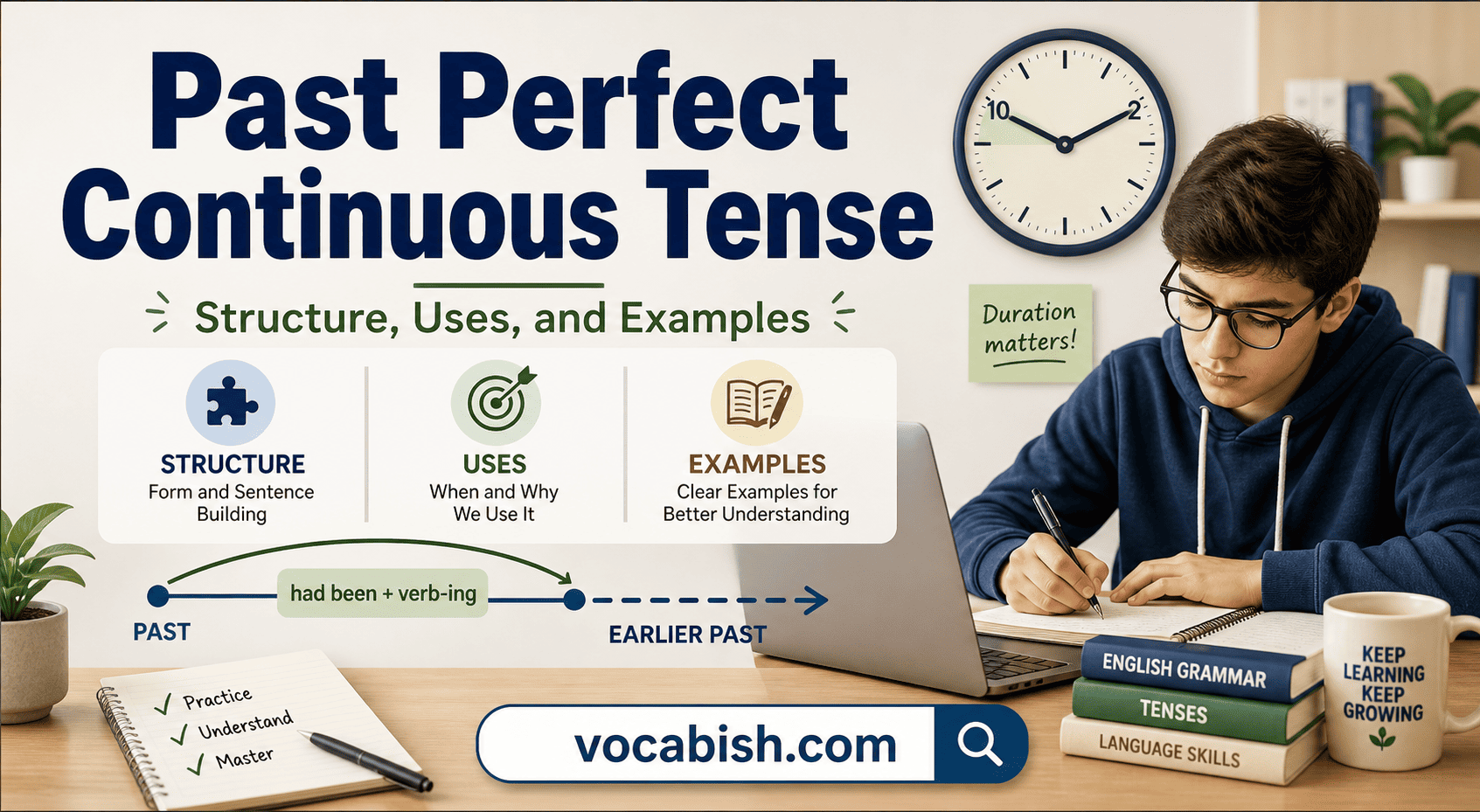

The Past Perfect Continuous tense is used to talk about actions that were happening for some time in the past before another past action. It helps you describe how long something had been going on and why something happened in the past.
In this blog post, you will learn the structure, uses, and examples of the Past Perfect Continuous so you can understand how sentences are formed and when to use them correctly. This tense is important because it connects two past events and shows the background of a situation. When you learn it, you can explain past actions more clearly in speaking, reading, writing, and listening.
Introduction to Past Perfect Continuous Tense
The Past Perfect Continuous Tense is used when we talk about an action that started in the past, continued for some time, and then stopped before another past action happened.
It sounds complicated, but in real communication, it’s very natural. Think of it as a “background action” in the past that sets the stage for something else.
For example, you might say someone was tired because they had been working for hours before a meeting. That “working” didn’t just happen—it continued over time.
What is the Past Perfect Continuous Tense?
The Past Perfect Continuous Tense describes:
- An action that started in the past
- Continued for a period of time
- And stopped before another past action or time reference
We use it to emphasize duration or cause in the past.
Examples:
- He left because he had been waiting for hours.
- They were tired because they had been traveling all night.
- I failed the test because I had been studying the wrong topics.
Most learners forget the “duration” part. Without it, the sentence usually feels incomplete or unnatural.
Formula and Structure of Past Perfect Continuous Tense
The structure is consistent and easy once you break it down.
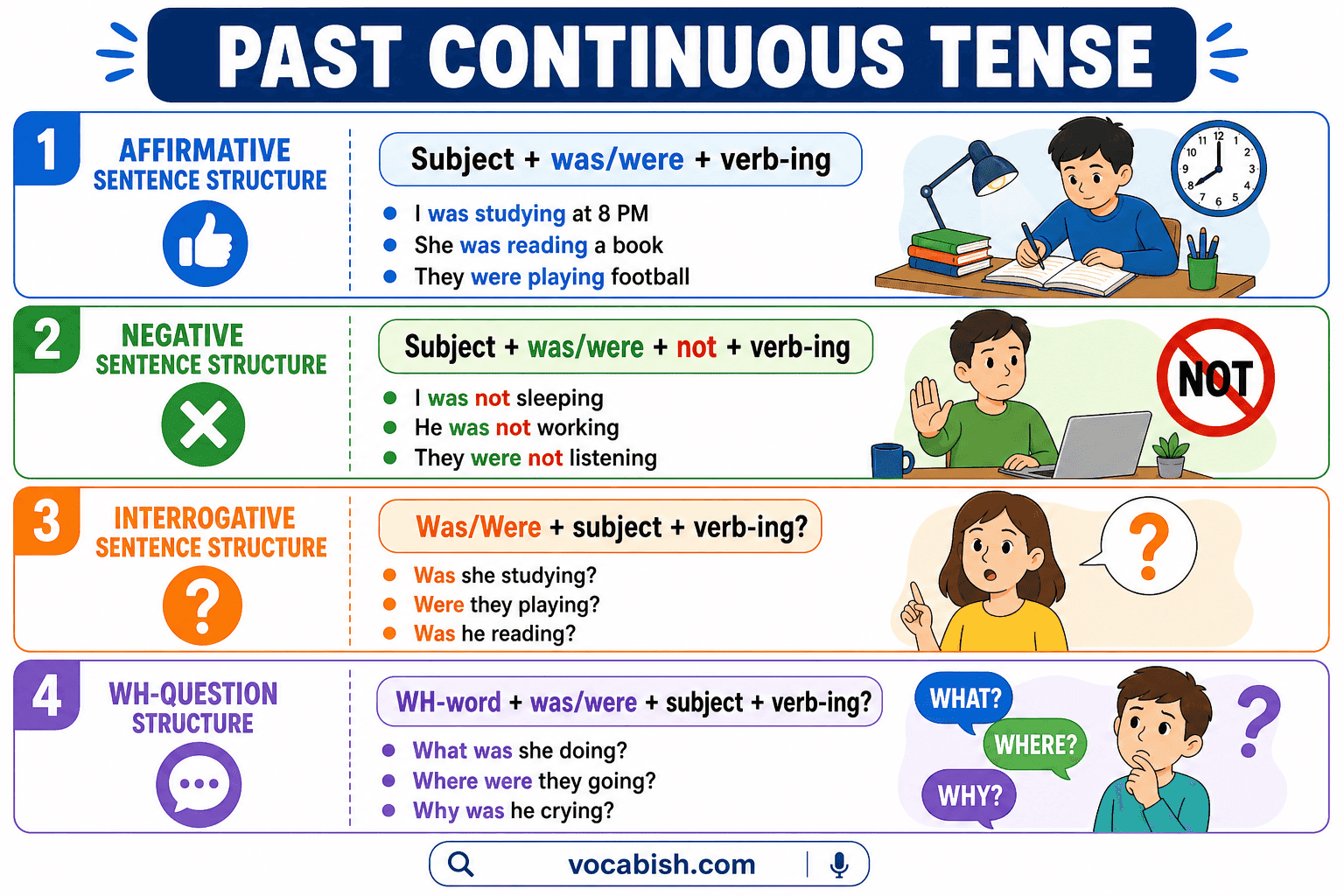
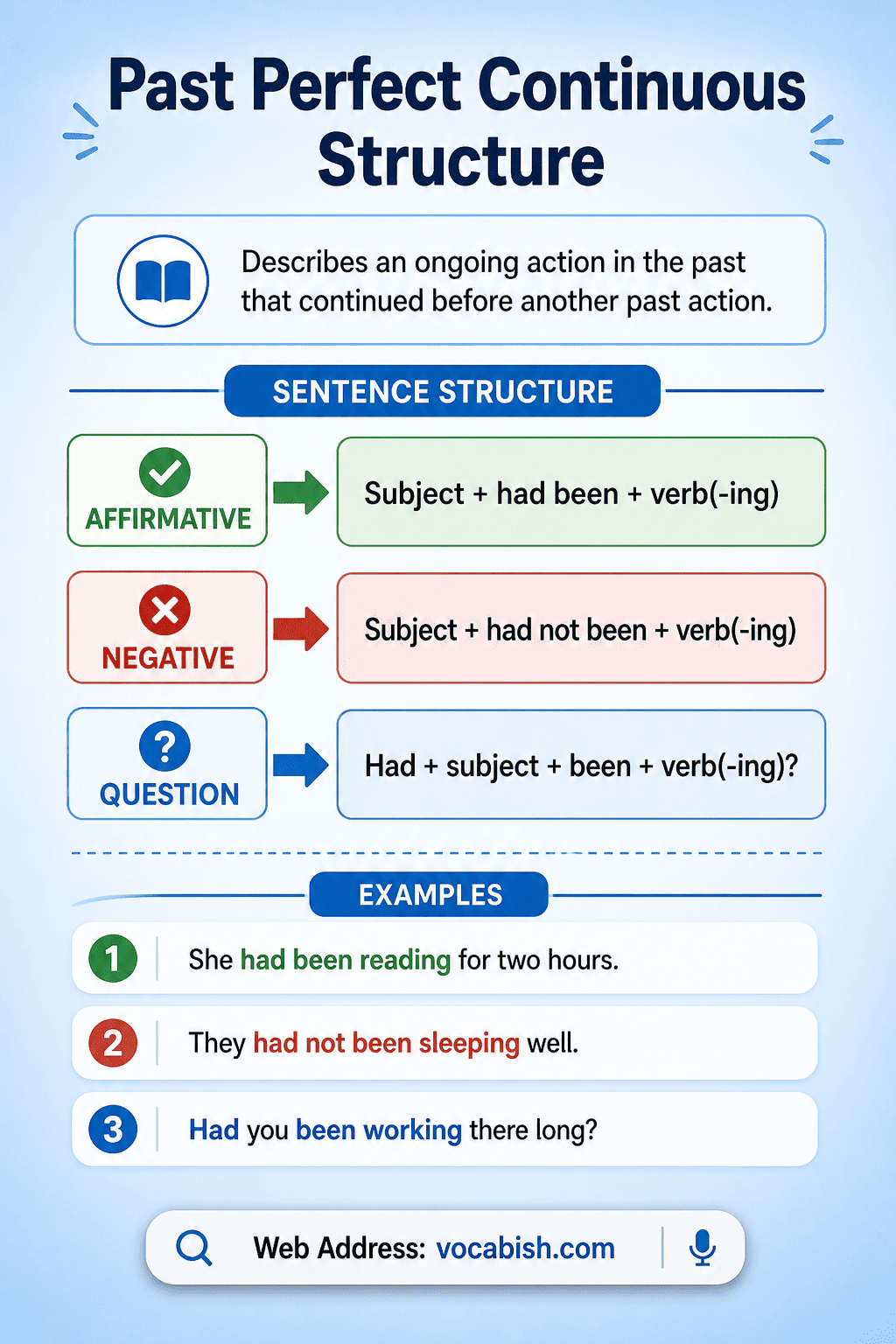
1. Affirmative Sentence Structure
Subject + had been + verb(-ing) + object
Examples:
- I had been working on the project for five hours.
- She had been cooking since morning.
- They had been playing football before it started raining.
2. Negative Sentence Structure
Subject + had not been + verb(-ing) + object
Examples:
- I had not been sleeping well before the exam.
- He had not been attending classes regularly.
- We had not been talking for weeks.
3. Interrogative Sentence Structure
Had + subject + been + verb(-ing) + object?
Examples:
- Had you been studying before the test?
- Had she been working there long?
- Had they been waiting for us?
4. WH-Question Structure
WH-word + had + subject + been + verb(-ing) + object?
Examples:
- Why had you been avoiding me?
- What had she been doing all day?
- How long had they been living there?
Helping Verbs Used in Past Perfect Continuous Tense
This tense relies on two helping verbs: had and been, plus the main verb in -ing form.
1. Use of “Had Been”
Had been is fixed in all subjects (I, you, he, she, it, we, they). There is no change.
Examples:
- I had been waiting for an hour.
- She had been working late nights.
- They had been arguing for a long time.
Common mistake: learners try to change “had” like in present tense. Don’t do that.
2. Use of Verb + Ing Form
The main verb always takes the -ing form.
Examples:
- running, studying, eating, traveling, sleeping
Examples in sentences:
- He had been running every morning.
- She had been studying for exams.
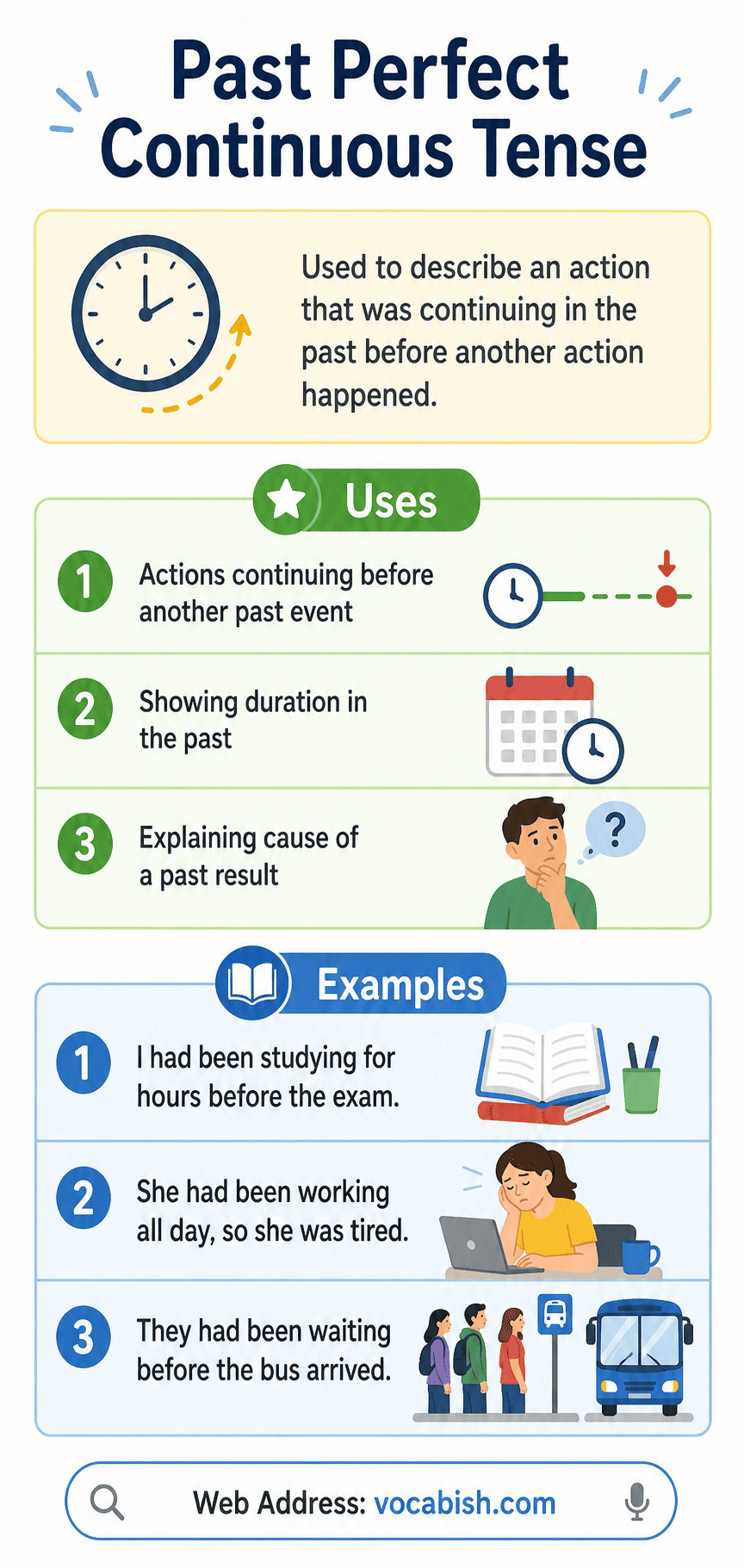
Main Uses of Past Perfect Continuous Tense
1. Actions Continuing Before Another Past Action
We use it when one long action was happening before another shorter past action.
Examples:
- I had been reading when the phone rang.
- She had been cooking before guests arrived.
- They had been arguing before the teacher entered.
2. Showing Duration in the Past
This tense emphasizes “how long” something happened.
Examples:
- He had been working there for 10 years.
- We had been living in Delhi since 2015.
- She had been studying all night.
3. Cause of a Past Situation or Result
It explains why something happened.
Examples:
- I was tired because I had been running.
- The floor was wet because it had been raining.
- He failed because he had been skipping classes.
4. Repeated Past Activities
It can show repeated actions over time before another event.
Examples:
- She had been calling him all day.
- They had been trying to fix the issue.
- I had been visiting that place regularly.
Time Expressions Used in Past Perfect Continuous Tense
Time expressions are very important because they show duration clearly.
1. Since
Used for a starting point.
- since morning
- since 2010
- since Monday
Example:
- I had been working since morning.
2. For
Used for a duration.
- for two hours
- for five years
Example:
- She had been studying for three hours.
3. Before
Shows earlier action.
Example:
- He had been sleeping before the alarm rang.
4. Until
Shows continuation up to a point.
Example:
- They had been waiting until midnight.
5. All Day / All Night
Shows continuous duration.
Example:
- We had been traveling all day.
Past Perfect Continuous Tense Examples
1. Daily Life Examples
- I had been cleaning the house all morning.
- She had been working late again.
- They had been studying together for hours.
- He had been fixing his bike since noon.
- We had been talking about the trip.
- I had been exercising regularly before injury.
- She had been cooking for guests.
- They had been waiting outside the shop.
- He had been reading that book for days.
- We had been planning the event carefully.
2. Storytelling Examples
- The detective arrived after the suspect had been hiding for days.
- She was exhausted because she had been searching for her lost dog.
- The road was blocked because it had been snowing heavily.
- He collapsed because he had been running for hours.
- They were happy because they had been preparing for this moment.
- The lights went out after they had been using too much electricity.
- She smiled because she had been remembering old times.
- The team lost because they had been practicing the wrong strategy.
- He was late because he had been helping a stranger.
- The garden looked fresh because it had been raining all night.
3. Spoken English Examples
- I had been thinking about calling you.
- She had been working too hard lately.
- We had been talking about you yesterday.
- He had been waiting for your reply.
- They had been planning a surprise.
- I had been feeling tired all day.
- She had been asking about the meeting.
- We had been discussing the issue.
- He had been traveling for work.
- They had been arguing again.
4. Question and Answer Examples
- Had you been studying before the exam?
- Yes, I had been studying for weeks.
- Had she been working late?
- Yes, she had been working overtime.
- Had they been waiting long?
- Yes, they had been waiting for hours.
- Why had you been crying?
- I had been watching a sad movie.
- How long had he been living there?
- He had been living there for five years.
Rules for Using Past Perfect Continuous Tense
- Use it for actions before another past event.
- Always use had been + verb(-ing).
- Do not use it for simple past actions.
- Focus on duration or cause.
- Do not combine with future time expressions.
Difference Between Past Perfect and Past Perfect Continuous
Feature | Past Perfect | Past Perfect Continuous |
|---|---|---|
Focus | Completion | Duration |
Structure | had + V3 | had been + V-ing |
Example | I had finished work | I had been working |
Emphasis | Result | Process |
Examples:
- I had finished my homework before dinner.
- I had been doing homework for two hours before dinner.
Difference Between Past Continuous and Past Perfect Continuous
Feature | Past Continuous | Past Perfect Continuous |
|---|---|---|
Time reference | Ongoing past action | Earlier past action |
Structure | was/were + V-ing | had been + V-ing |
Example | I was reading | I had been reading |
Examples:
- I was reading when she came.
- I had been reading for hours before she came.
Common Mistakes in Past Perfect Continuous Tense
- Wrong: I had working for hours.
Correct: I had been working for hours.
Why: Missing “been”. - Wrong: She had been work all day.
Correct: She had been working all day.
Why: Verb must be -ing form. - Wrong: Had you been worked there?
Correct: Had you been working there?
Why: Wrong verb form after “been”. - Wrong: I had been study yesterday.
Correct: I had been studying yesterday.
Why: Needs -ing form. - Wrong: They had been go home before dinner.
Correct: They had been going home before dinner.
Why: Base verb is incorrect.
Easy Tips to Learn the Tense Quickly
- Think: “long action in the past before another action.”
- Always remember had been + ing.
- Ask yourself: “How long was it happening?”
- If duration is important, this tense is likely correct.
- Practice with real-life stories instead of isolated sentences.
Past Perfect Continuous Tense Exercises
1. Fill in the Blanks
- I ______ (work) all night.
- She ______ (study) for hours.
- They ______ (wait) for the bus.
- He ______ (run) before breakfast.
- We ______ (talk) for a long time.
- The baby ______ (cry) all night.
- You ______ (practice) hard.
- She ______ (cook) since morning.
- I ______ (read) that book.
- They ______ (travel) for days.
Answers:
- had been working
- had been studying
- had been waiting
- had been running
- had been talking
- had been crying
- had been practicing
- had been cooking
- had been reading
- had been traveling
2. Make Correct Sentences
- I / study / for two hours
- She / work / since morning
- They / play / before rain
- He / wait / long time
- We / travel / all night
- I / read / book
- She / cook / dinner
- They / argue / again
- He / run / daily
- We / talk / for hours
3. Error Correction Practice
- I had been work all day.
- She had been study for hours.
- They had been waited long.
- He had been running every day yesterday.
- We had been talk for hours.
- She had been cook dinner.
- I had been sleep late.
- They had been goes home.
- He had been help me.
- We had been travel since morning.
4. Multiple Choice Questions
- I ____ for hours before he arrived.
A) had been working
B) was working
C) have worked - She ____ all night.
A) had been studying
B) studied
C) was study - They ____ for the bus.
A) had been waiting
B) waited
C) waiting - He was tired because he ____ running.
A) had been
B) has been
C) was - We ____ talking before dinner.
A) had been
B) were
C) have been - She ____ cooking since morning.
A) had been
B) was
C) has been - I ____ reading when she called.
A) had been
B) was
C) have been - They ____ arguing all day.
A) had been
B) were
C) have - He ____ working there for years.
A) had been
B) was
C) is - We ____ traveling before lockdown.
A) had been
B) were
C) have been
Answers:
1-A, 2-A, 3-A, 4-A, 5-A, 6-A, 7-A, 8-A, 9-A, 10-A
FAQs about Past Perfect Continuous Tense
The Past Perfect Continuous tense describes an action that was happening for some time in the past before another past action occurred, often showing duration or cause.
You form it using subject + had been + verb (-ing). Example: I had been working. This structure is the same for all subjects.
Use it when you want to show an ongoing action in the past that continued before another past event, especially to emphasize time or duration.
Past Perfect shows completed actions, while Past Perfect Continuous focuses on duration or ongoing activity before another past event.
Yes. She had been studying for hours. They had been waiting before the bus arrived. He had been working all night before the meeting.
Common time expressions include for, since, before, until, and all day. These words show how long the past action continued.
Conclusion
The Past Perfect Continuous Tense is all about duration and background actions in the past. Once you get comfortable with the structure had been + verb(-ing), it becomes much easier to recognize and use.
Focus on the idea of “how long something was happening before something else.” Practice with real-life situations, and the tense will start feeling natural in both speaking and writing.