
Buildings are everywhere, and knowing their names in English helps you learn vocabulary that is useful in daily life. In this blog post, you will explore all types of buildings with pictures, which makes it easier to recognize, remember, and talk about them. Learning building vocabulary improves your speaking, reading, writing, and listening skills. When you can name and describe different buildings confidently, you can communicate clearly about places, cities, and architecture in English.
List of Different Buildings Name with Pictures
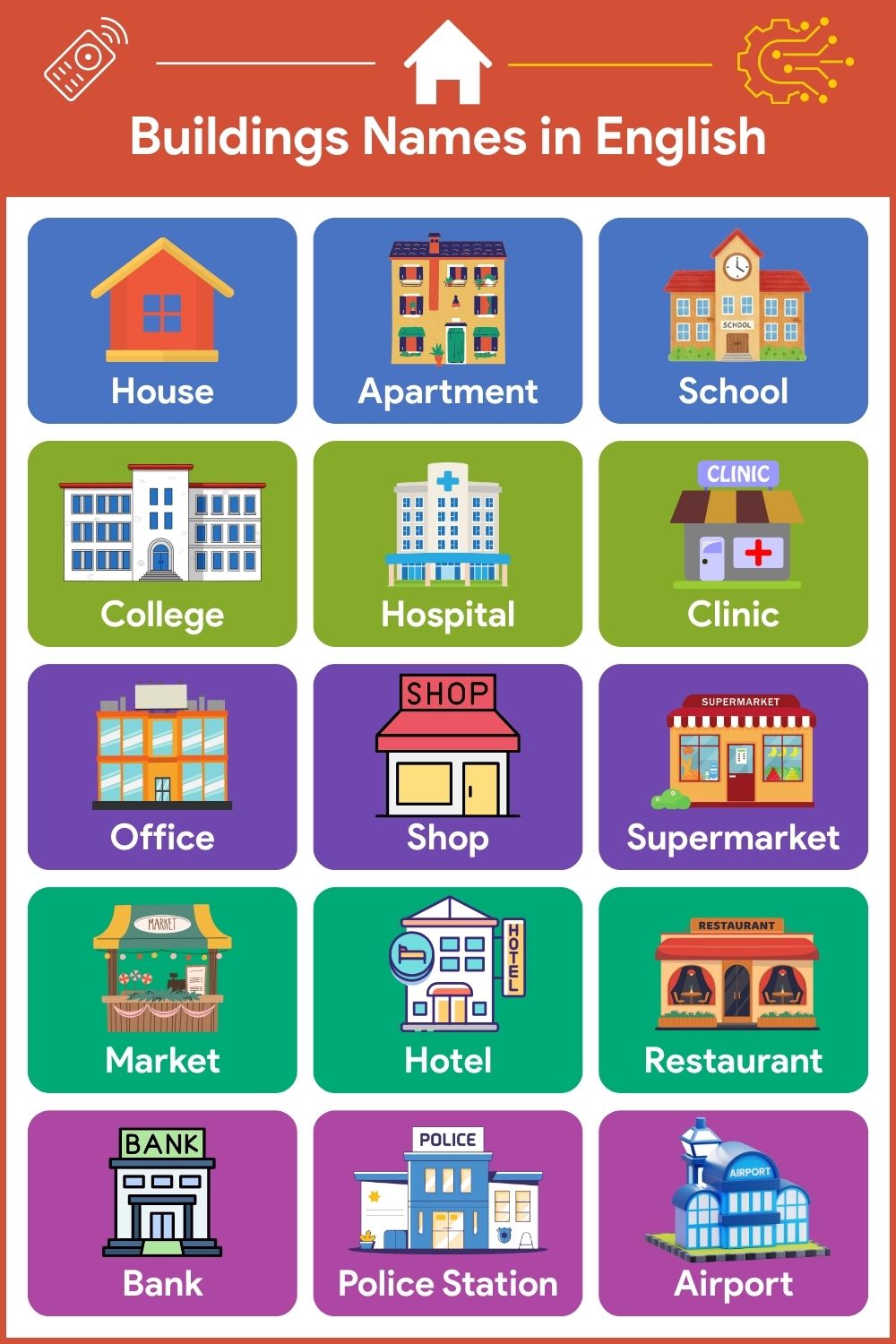
Here’s the list of most common and useful building names in English with their important information and pictures:
- House: a building where people live with their family
- Apartment: a home inside a large residential building
- School: a place where children learn and study
- College: a building for higher education after school
- Hospital: a place where sick or injured people get treatment
- Clinic: a small medical centre for basic care
- Office: a building where people work
- Shop: a place where goods are sold
- Supermarket: a large shop for food and daily items
- Market: an area where many sellers sell products
- Hotel: a place where travellers stay
- Restaurant: a building where meals are prepared and served
- Café: a small place for drinks and light food
- Bank: a building for money and financial services
- Post office: a place for sending letters and parcels
- Police station: a building where police work
- Fire station: a place for fire service vehicles and staff
- Library: a building where books are kept for reading
- Museum: a place that shows history, art, or culture
- Cinema: a building where people watch films
- Shopping centre: a large building with many shops
- Factory: a building where goods are made
- Warehouse: a place where goods are stored
- Airport: a building where people travel by aeroplane
- Railway station: a place where trains arrive and leave
Residential Buildings
These buildings are used for living and staying.
- House: a building for one family
- Home: a place where someone lives
- Apartment: a home inside a big building
- Flat: another word for apartment
- Bungalow: a one-floor house
- Villa: a large and often luxury house
- Cottage: a small house in the countryside
- Duplex: one building with two homes
- Terraced house: houses joined in a row
- Farmhouse: a house on a farm
- Mansion: a very large and rich house
- Hostel: a low-cost place to live or stay
- Dormitory: shared rooms for students
Educational Buildings
These buildings are used for learning and teaching.
- School: a place for children to learn
- Primary school: school for young children
- Secondary school: school for older children
- College: higher education building
- University: place for advanced studies
- Library: building for reading and books
- Training centre: place to learn skills
- Academy: special school for training
Commercial Buildings
These buildings are used for business and trade.
- Office: place where people work
- Shop: place to buy things
- Store: another word for shop
- Market: area with many sellers
- Shopping centre: building with many shops
- Mall: large shopping building
- Supermarket: large food store
- Hotel: place for travellers to stay
- Restaurant: place to eat meals
- Café: small place for drinks and snacks
- Bank: building for money services
- Cinema: place to watch films
Industrial Buildings
These buildings are used for making and storing goods.
- Factory: place where goods are made
- Warehouse: building to store products
- Workshop: place for repair or making items
- Power plant: building that produces electricity
- Mill: building for grinding or making materials
Religious Buildings
These buildings are used for worship and prayer.
- Church: Christian place of worship
- Mosque: Muslim place of worship
- Temple: place of worship in many religions
- Synagogue: Jewish place of worship
- Chapel: small religious building
- Monastery: home for monks
- Convent: home for nuns
Health Buildings
These buildings are used for medical care.
- Hospital: place for serious treatment
- Clinic: small medical centre
- Health centre: place for basic care
- Pharmacy: shop for medicines
- Nursing home: care home for elderly people
Government and Public Buildings
These buildings are used for public services.
- Police station: place for police work
- Fire station: building for fire services
- Post office: place for mail services
- Town hall: local government building
- Court: building for legal cases
- Parliament: place for law-making
- Embassy: official building of a country
- Museum: building to show history and art
Special and Modern Buildings
These buildings have special purposes.
- Airport: place for air travel
- Railway station: place for trains
- Bus station: place for buses
- Stadium: sports and events building
- Arena: indoor sports building
- Theatre: place for live shows
- Exhibition hall: place for displays
- Convention centre: building for meetings
Temporary and Outdoor Structures
These structures are often short-term.
- Tent: temporary cloth shelter
- Hut: small simple house
- Cabin: small wooden house
- Shed: small building for storage
- Garage: building for vehicles
- Barn: building for farm storage
Why Learning Building Names Is Important
Learning building names in English helps students:
- Speak clearly in daily life
- Understand signs and maps
- Improve reading and writing skills
- Build strong vocabulary for exams
Conclusion
Understanding all types of buildings name in English makes communication easier and more confident. With clear categories and simple descriptions, learners can quickly recognise and use these words in real life. This topic is useful for students, travellers, and English learners at every level.
Frequently Asked Questions
What are all the types of buildings?
All types of buildings include residential, commercial, educational, industrial, religious, health, government, recreational, transport, and storage buildings. Each type serves a different daily, social, or work-related purpose.
What are the 5 types of building?
The five main types of buildings are residential (houses, apartments), commercial (shops, offices), educational (schools, colleges), industrial (factories, warehouses), and public (hospitals, police stations). These types are based on how the building is used.
What are the 9 classification of buildings?
The nine common classifications of buildings are residential, educational, institutional, assembly, business, mercantile, industrial, storage, and hazardous buildings. This classification is often used in safety rules and building planning.
What are type 4 buildings?
Type 4 buildings are heavy timber buildings. They use large wooden beams and columns, have thick floors, and are designed to resist fire better than light wooden buildings.
What is the top 10 building in the world?
Some of the most famous buildings in the world include Burj Khalifa, Eiffel Tower, Empire State Building, Big Ben, Colosseum, Taj Mahal, Petronas Towers, Sydney Opera House, Shanghai Tower, and One World Trade Center.
What are the 5 examples of building?
Five common examples of buildings are house, school, hospital, office, and shop. These buildings are part of everyday life and are easy to recognise.
What is the name for a building?
The name for a building depends on its use, such as house for living, school for learning, office for work, hospital for healthcare, and shop for buying goods.
Read More