
Learning English feels much simpler when you know the difference between British English and American English. People in the UK and the USA often use different words for everyday things like cars, apartments, lifts, biscuits, holidays, schools, shops, and clothes. This blog post explains common British vs American words with meanings, examples, and real-life usage.
Many English learners look for phrases such as British vs American vocabulary, UK and US English words, British English word lists, and American English meanings. Learning these vocabulary differences helps students understand books, enjoy films, travel more comfortably, and speak with native English speakers more naturally.
British vs American Words
British vs. American words are vocabulary differences between British English and American English. The meaning stays the same, but the word changes depending on the country.
Example:
- Boot -> Car storage space -> “The bags are in the boot.”
- Trunk -> Car storage space -> “The suitcase is in the trunk.”
100+ British vs American Words List
Below are common British and American English words learners often see in everyday life.
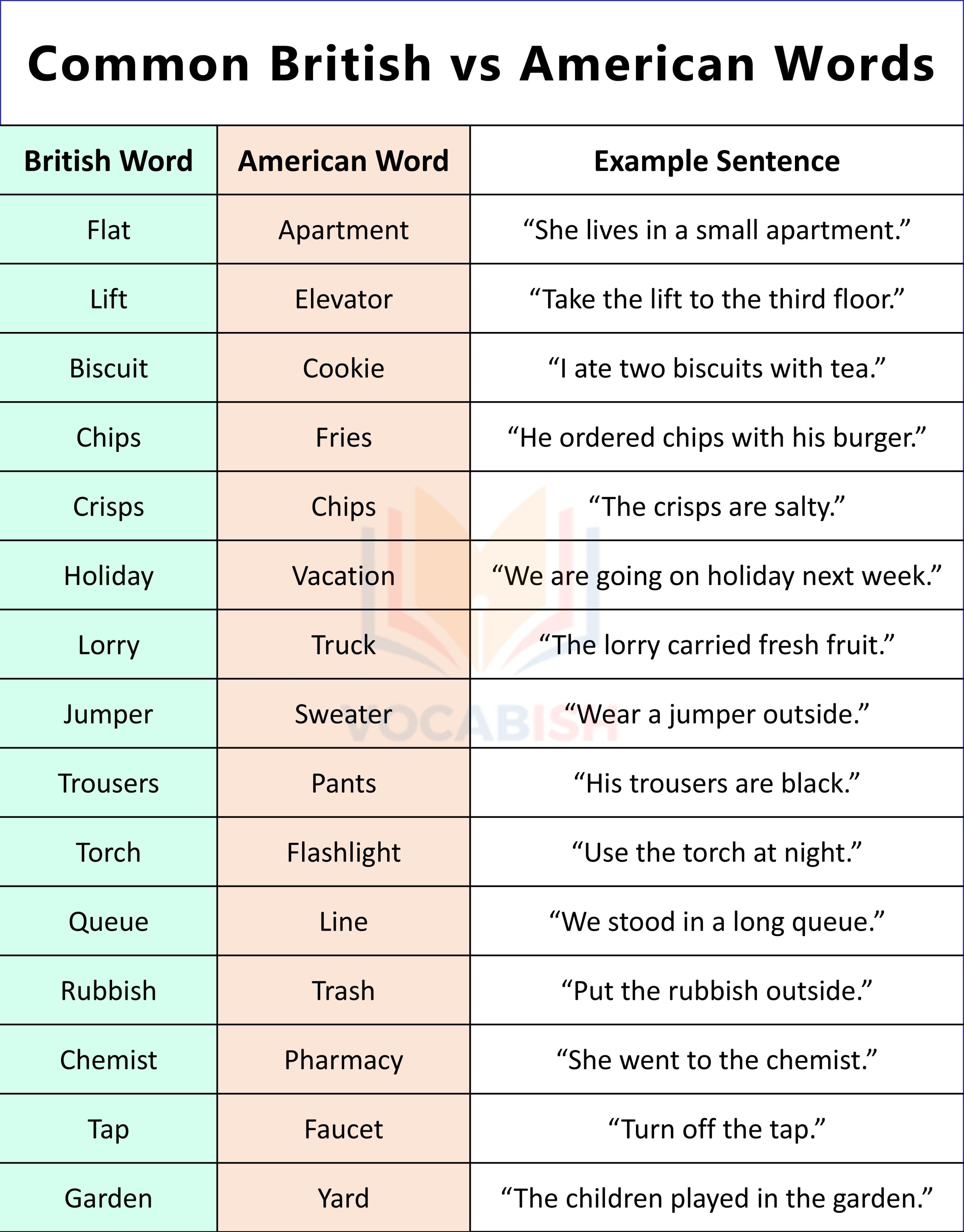
British Word | American Word | Example Sentence |
|---|---|---|
Flat | Apartment | “She lives in a small apartment.” |
Lift | Elevator | “Take the lift to the third floor.” |
Biscuit | Cookie | “I ate two biscuits with tea.” |
Chips | Fries | “He ordered chips with his burger.” |
Crisps | Chips | “The crisps are salty.” |
Holiday | Vacation | “We are going on holiday next week.” |
Lorry | Truck | “The lorry carried fresh fruit.” |
Jumper | Sweater | “Wear a jumper outside.” |
Trousers | Pants | “His trousers are black.” |
Torch | Flashlight | “Use the torch at night.” |
Queue | Line | “We stood in a long queue.” |
Rubbish | Trash | “Put the rubbish outside.” |
Chemist | Pharmacy | “She went to the chemist.” |
Tap | Faucet | “Turn off the tap.” |
Garden | Yard | “The children played in the garden.” |
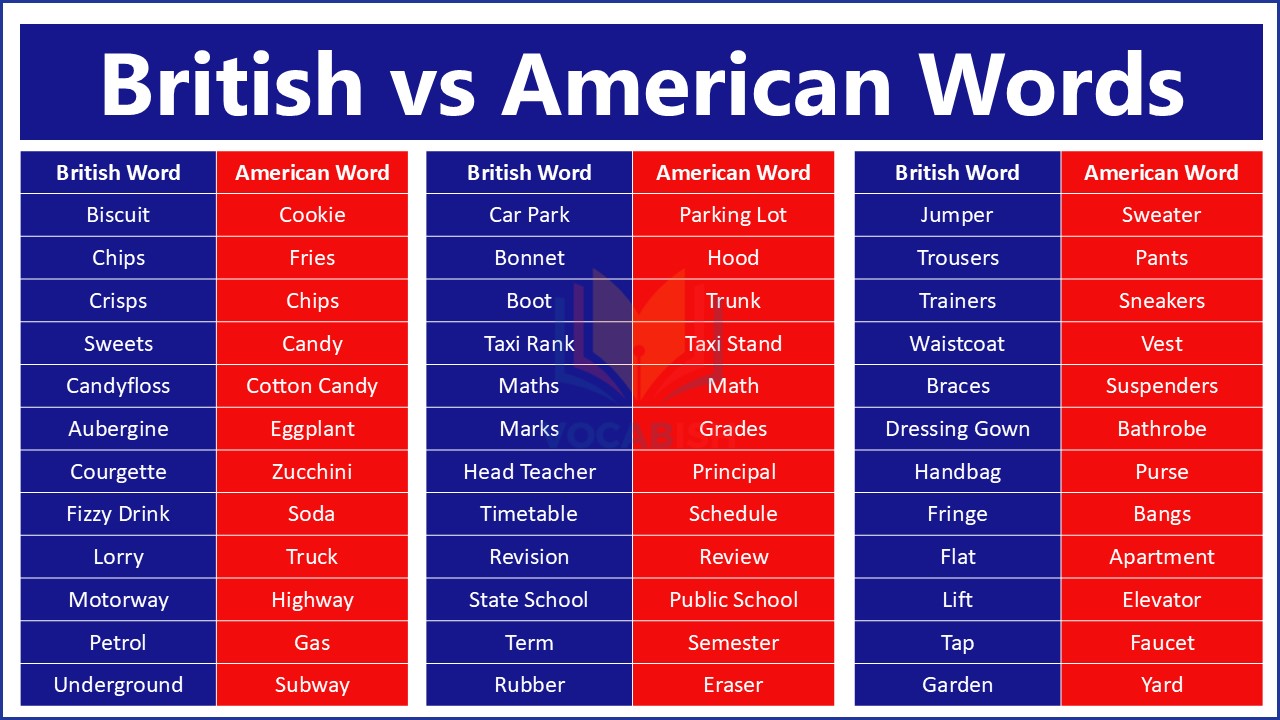
Food Words in British and American English
British Word | American Word | Example Sentence |
|---|---|---|
Biscuit | Cookie | “She ate a chocolate biscuit after lunch.” |
Chips | Fries | “We ordered chips with fish.” |
Crisps | Chips | “The crisps were salty and crunchy.” |
Sweets | Candy | “The children bought sweets from the shop.” |
Candyfloss | Cotton Candy | “He ate pink candyfloss at the fair.” |
Aubergine | Eggplant | “Mum cooked aubergine for dinner.” |
Courgette | Zucchini | “The soup contains fresh courgette.” |
Fizzy Drink | Soda | “She drank a fizzy drink at lunch.” |
Transport Words in British and American English
British Word | American Word | Example Sentence |
|---|---|---|
Lorry | Truck | “The lorry carried heavy boxes.” |
Motorway | Highway | “Cars moved quickly on the motorway.” |
Petrol | Gas | “Dad stopped to buy petrol.” |
Underground | Subway | “We travelled by Underground yesterday.” |
Car Park | Parking Lot | “The car park was full.” |
Bonnet | Hood | “He opened the bonnet carefully.” |
Boot | Trunk | “The bags are inside the boot.” |
Taxi Rank | Taxi Stand | “The taxi rank is outside the station.” |
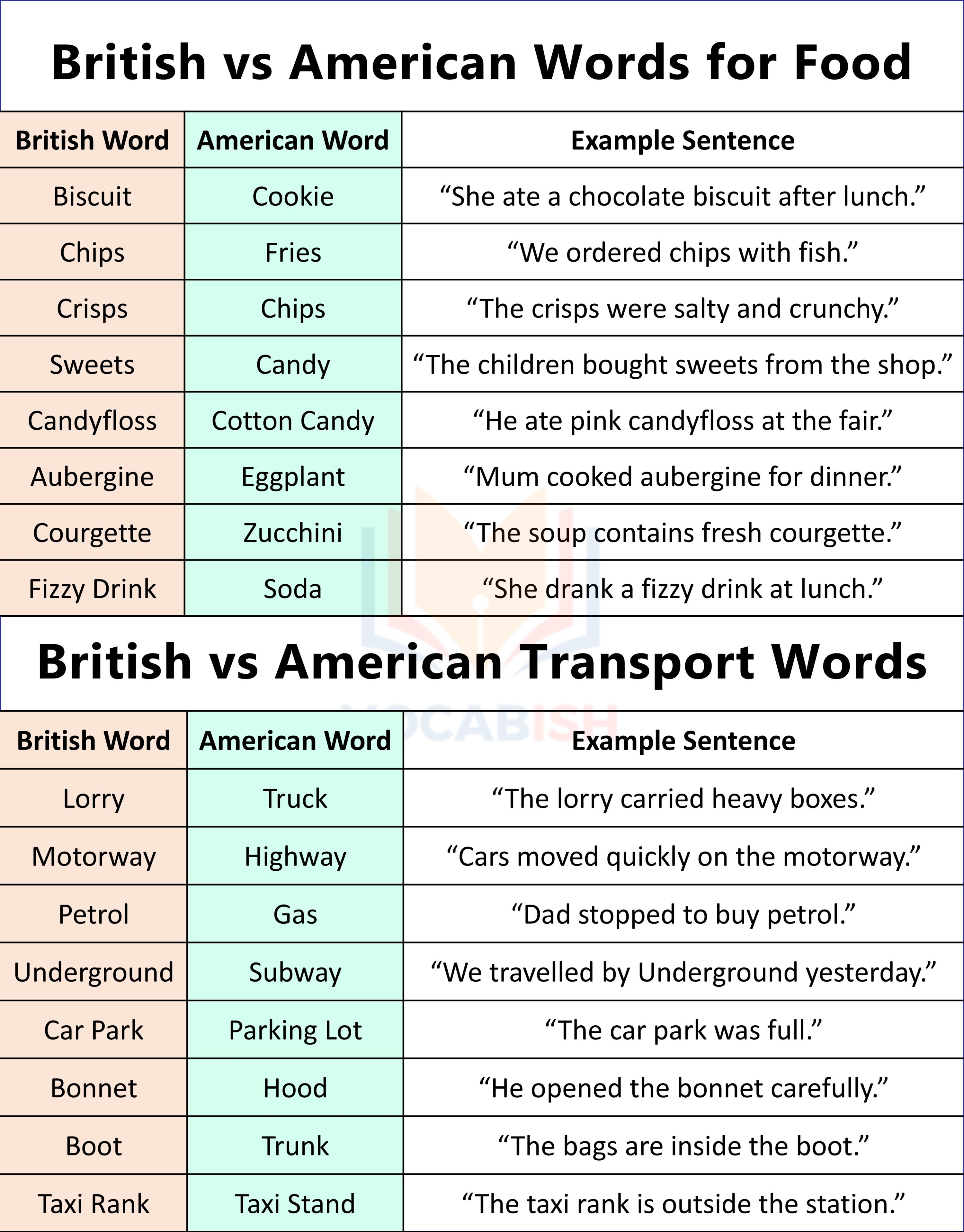
A quick tip to remember this is: British people usually use petrol, while Americans say gas.
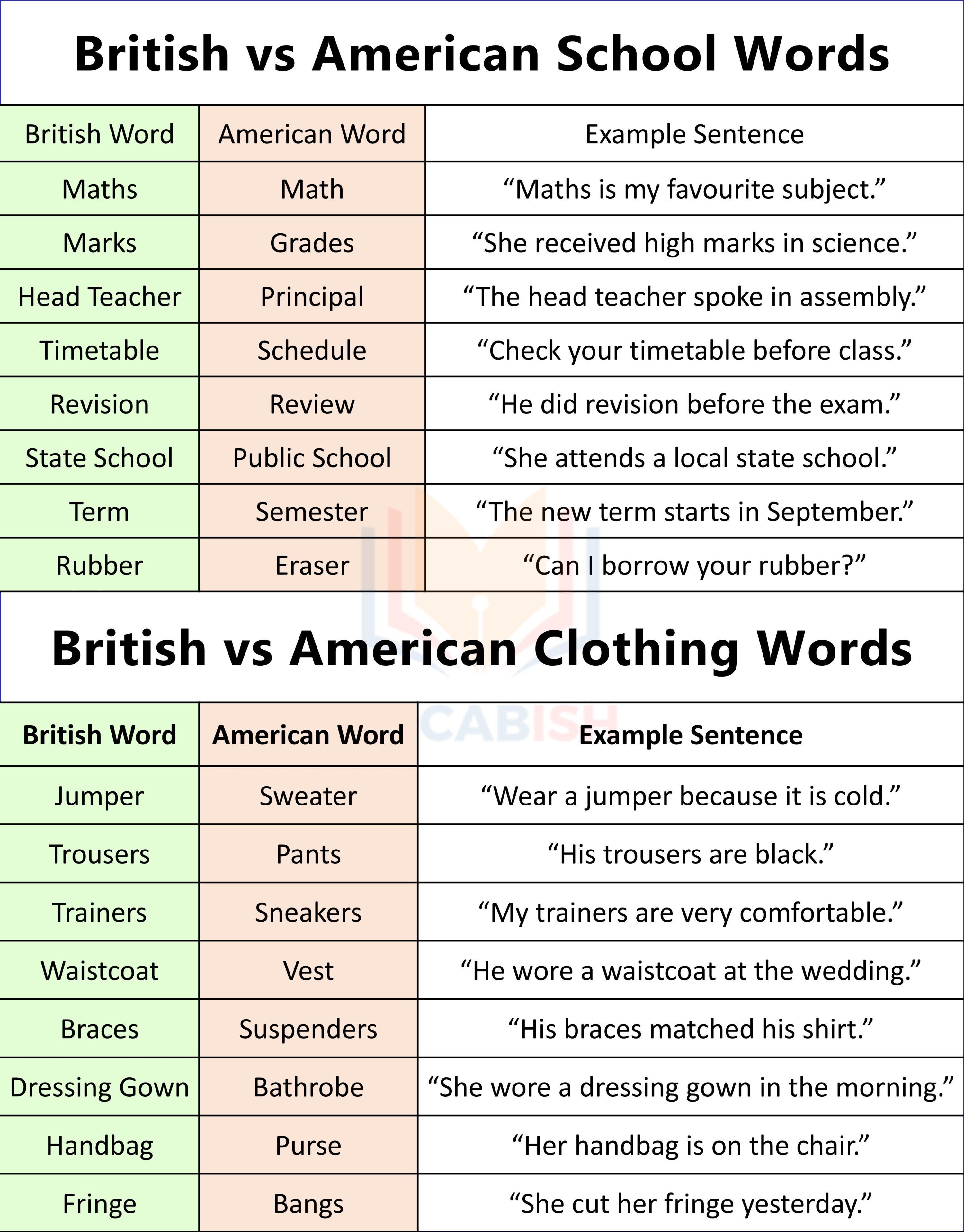
School Vocabulary Differences in British and American English
British Word | American Word | Example Sentence |
|---|---|---|
Maths | Math | “Maths is my favourite subject.” |
Marks | Grades | “She received high marks in science.” |
Head Teacher | Principal | “The head teacher spoke in assembly.” |
Timetable | Schedule | “Check your timetable before class.” |
Revision | Review | “He did revision before the exam.” |
State School | Public School | “She attends a local state school.” |
Term | Semester | “The new term starts in September.” |
Rubber | Eraser | “Can I borrow your rubber?” |
Clothing Terms Used in British and American English
British Word | American Word | Example Sentence |
|---|---|---|
Jumper | Sweater | “Wear a jumper because it is cold.” |
Trousers | Pants | “His trousers are black.” |
Trainers | Sneakers | “My trainers are very comfortable.” |
Waistcoat | Vest | “He wore a waistcoat at the wedding.” |
Braces | Suspenders | “His braces matched his shirt.” |
Dressing Gown | Bathrobe | “She wore a dressing gown in the morning.” |
Handbag | Purse | “Her handbag is on the chair.” |
Fringe | Bangs | “She cut her fringe yesterday.” |
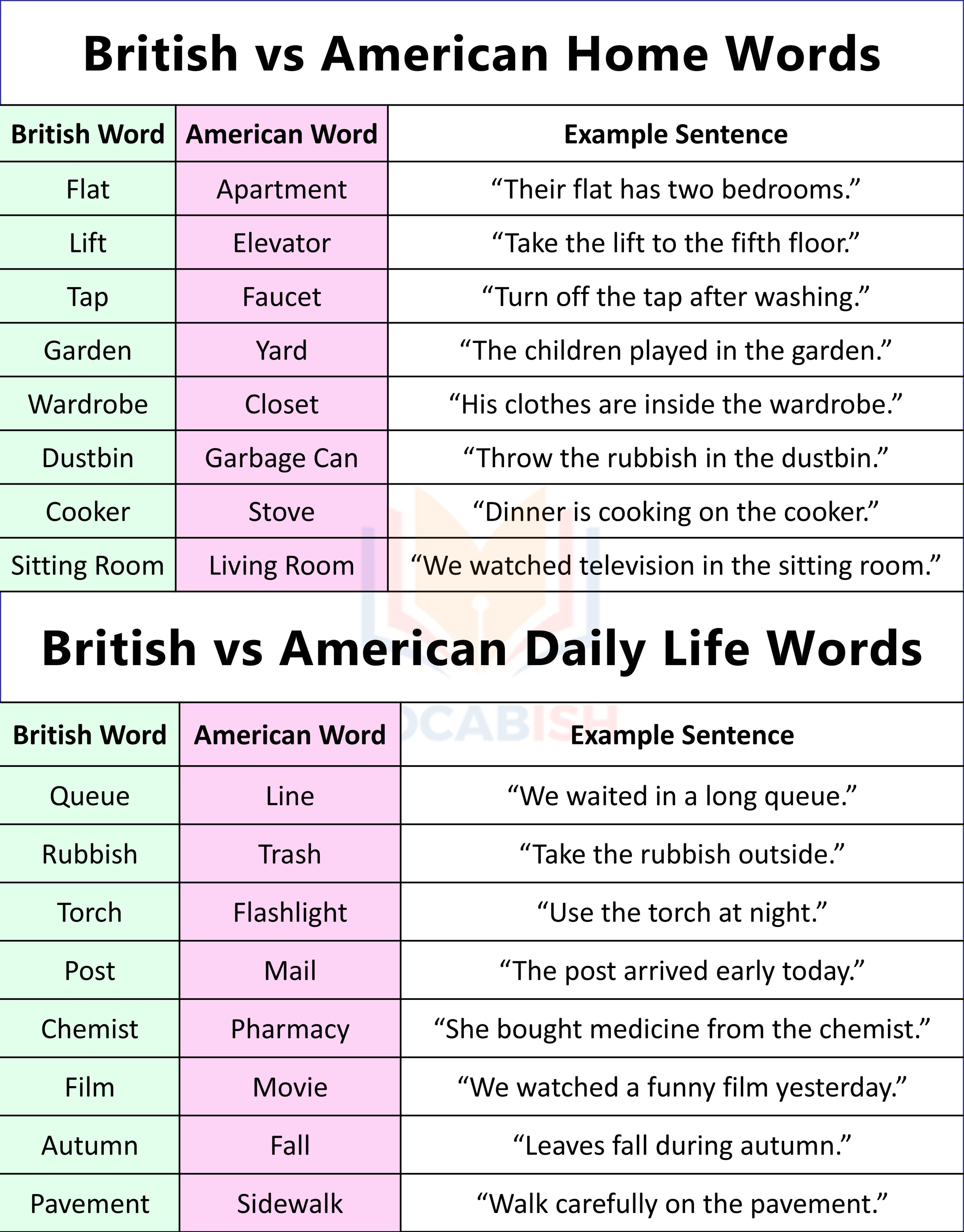
Household Words in British and American English
British Word | American Word | Example Sentence |
|---|---|---|
Flat | Apartment | “Their flat has two bedrooms.” |
Lift | Elevator | “Take the lift to the fifth floor.” |
Tap | Faucet | “Turn off the tap after washing.” |
Garden | Yard | “The children played in the garden.” |
Wardrobe | Closet | “His clothes are inside the wardrobe.” |
Dustbin | Garbage Can | “Throw the rubbish in the dustbin.” |
Cooker | Stove | “Dinner is cooking on the cooker.” |
Sitting Room | Living Room | “We watched television in the sitting room.” |
To avoid mistakes, always check whether your book uses British English or American English vocabulary.
Everyday British and American English Vocabulary
British Word | American Word | Example Sentence |
|---|---|---|
Queue | Line | “We waited in a long queue.” |
Rubbish | Trash | “Take the rubbish outside.” |
Torch | Flashlight | “Use the torch at night.” |
Post | Mail | “The post arrived early today.” |
Chemist | Pharmacy | “She bought medicine from the chemist.” |
Film | Movie | “We watched a funny film yesterday.” |
Autumn | Fall | “Leaves fall during autumn.” |
Pavement | Sidewalk | “Walk carefully on the pavement.” |
British and American Spelling Words
Some words are written differently even though the meaning stays the same. Take a look at these spelling differences in American and British English:
British Spelling | American Spelling |
|---|---|
Colour | Color |
Favourite | Favorite |
Organise | Organize |
Realise | Realize |
Centre | Center |
Theatre | Theater |
Traveller | Traveler |
Jewellery | Jewelry |
Programme | Program |
Catalogue | Catalog |
Defence | Defense |
Licence | License |
Offence | Offense |
Pretence | Pretense |
Analyse | Analyze |
Apologise | Apologize |
Behaviour | Behavior |
Humour | Humor |
Labour | Labor |
Neighbour | Neighbor |
Cheque | Check |
Grey | Gray |
Tyre | Tire |
Mum | Mom |
Pyjamas | Pajamas |
Storey | Story |
Aeroplane | Airplane |
Aluminium | Aluminum |
Maths | Math |
Cosy | Cozy |
British vs American Words Quiz
- What is the American English word for flat?
a) Lift
b) Apartment
c) Queue - In British English, what does holiday mean?
a) Vacation
b) Homework
c) Meeting - Which British word matches the American word truck?
a) Taxi
b) Motorway
c) Lorry - What is the British English word for cookies?
a) Crisps
b) Biscuits
c) Chips - In American English, what does elevator mean in British English?
a) Underground
b) Lift
c) Queue
Answers:
- b) Apartment
- a) Vacation
- c) Lorry
- b) Biscuits
- b) Lift
Download PDF
Why Are British and American Words Different?
British and American English changed over time because of history, travel, culture, and local habits. Both forms are correct and widely used around the world.
- Holiday → “We are going on holiday next week.”
- Vacation → “They planned a summer vacation.”
Should You Learn British or American English?
Both forms are correct English. The best choice depends on your study goals, country, and daily exposure.
- Learn British English if you study for IELTS or follow UK media.
- Learn American English if you watch US movies or plan to work in the USA.
- Try not to mix spellings in formal writing.
Easy Ways to Remember British vs American Words
- Watch British and American TV shows with subtitles.
- Keep a small notebook for new vocabulary.
- Practise using one word pair each day.
- Read simple news websites from both countries.
- Listen carefully to pronunciation changes.
Related Articles: