
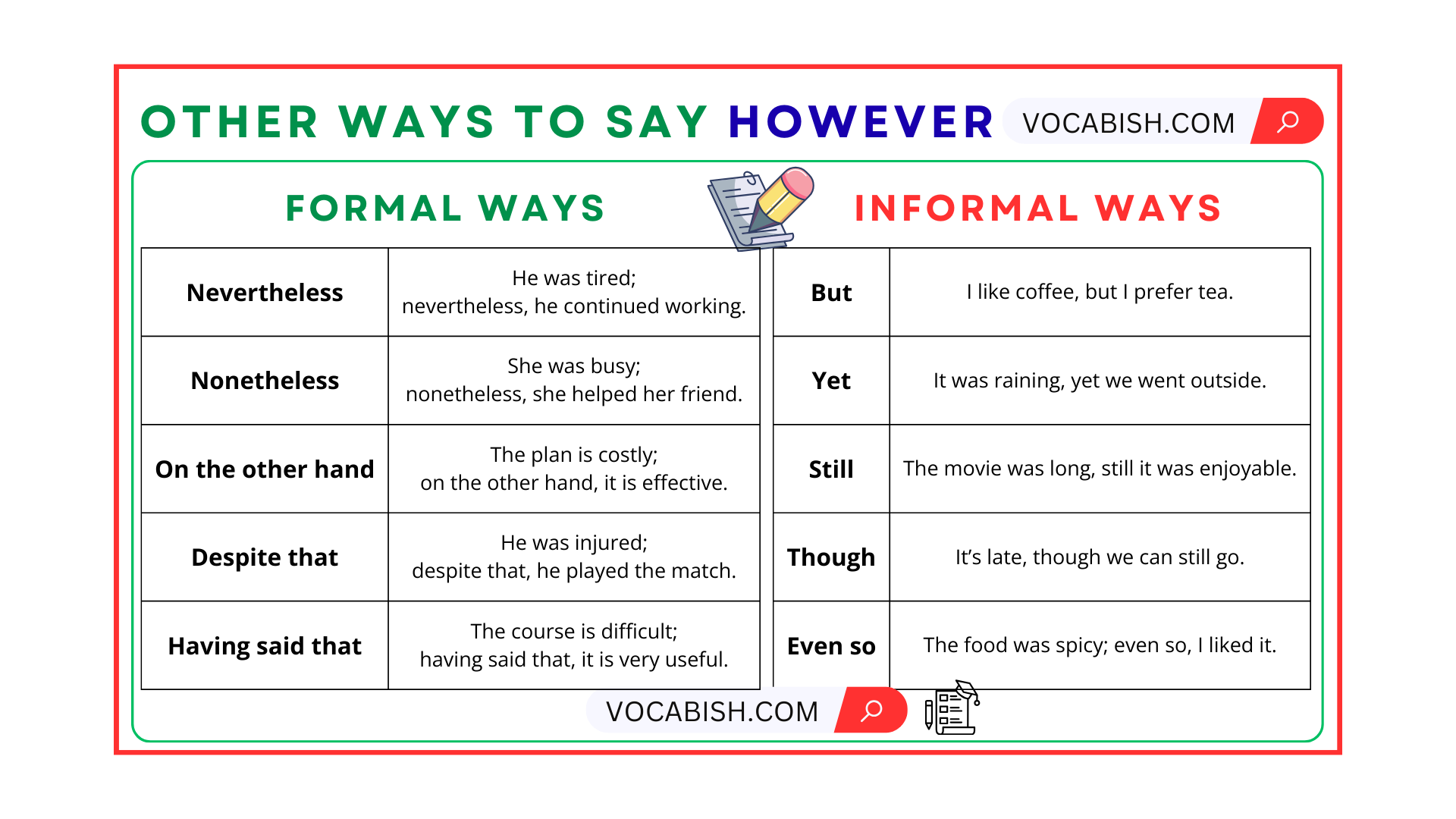
The word “However” is widely used in English, but there are many ways to say it depending on the context. Learning different expressions with examples helps you speak, write, and understand English more naturally. In this blog post, you will explore alternatives to “However” that make your sentences and conversations more smooth and professional. Knowing these phrases improves your communication skills and helps you connect ideas clearly in every situation.
What Does However Mean?
The word however means:
- But / Yet → showing the opposite of what was said.
- In any way → no matter how something happens.
Example: I studied hard; however, I did not pass the test.
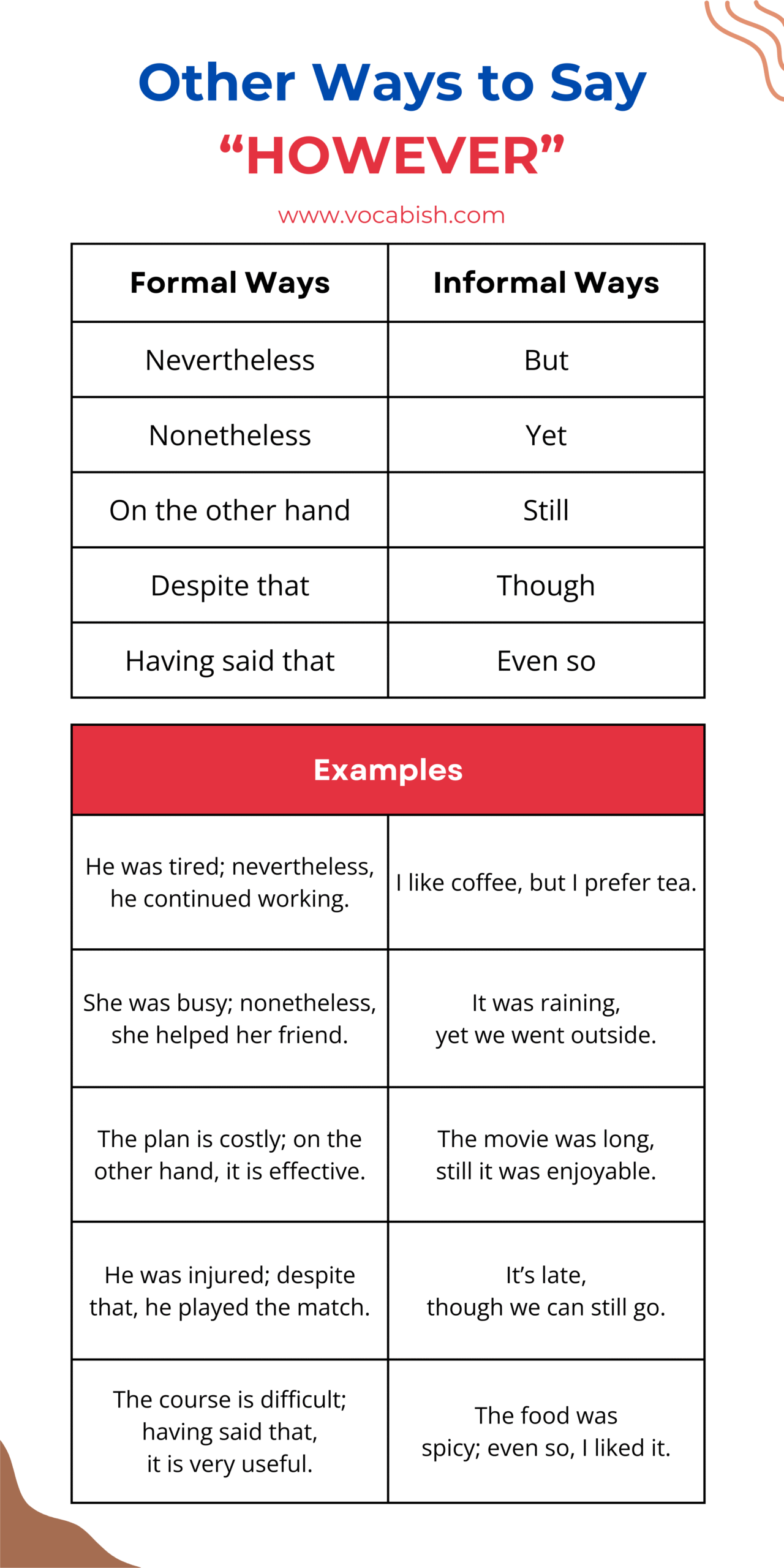
Other Ways to Say However
- But
- Yet
- Still
- Though
- Nevertheless
- Nonetheless
- On the other hand
- Even so
- Despite that
- Having said that
Formal Ways to Say However
These are useful in essays, reports, business English, or academic writing:
| Formal Alternatives | Example Sentence |
|---|---|
| Nevertheless | He was tired; nevertheless, he continued working. |
| Nonetheless | She was busy; nonetheless, she helped her friend. |
| On the other hand | The plan is costly; on the other hand, it is effective. |
| Despite that | He was injured; despite that, he played the match. |
| Having said that | The course is difficult; having said that, it is very useful. |
Informal Ways to Say However
These are better for casual talks, conversations, and friendly writing:
| Informal Alternatives | Example Sentence |
|---|---|
| But | I like coffee, but I prefer tea. |
| Yet | It was raining, yet we went outside. |
| Still | The movie was long, still it was enjoyable. |
| Though | It’s late, though we can still go. |
| Even so | The food was spicy; even so, I liked it. |
Contexts and Usage of However
To Show Contrast
→ I like swimming; however, I don’t like the cold water.
To Add an Opposite Point
→ He is very strict. However, he is also fair.
To Show Exception
→ The book is long. However, it is easy to understand.
To Mean “No Matter How”
→ However hard he tried, he could not win.
Example Sentences with Alternatives
- I was tired, but I finished the work.
- She studied hard; yet she failed the exam.
- It was late; still, we continued talking.
- The job is difficult; nevertheless, he enjoys it.
- I don’t like spicy food; on the other hand, my brother loves it.
FAQs
What does however mean in English?
However means to show contrast or opposite idea, similar to “but” or “nevertheless.” Example: I was sick; however, I went to school.
What are formal alternatives to however?
Formal alternatives include nevertheless, nonetheless, on the other hand, despite that, having said that.
What are informal alternatives to however?
Informal alternatives include but, yet, still, though, even so.
Can however be used in different contexts?
Yes. It can mean “but” for contrast (I like tea; however, I prefer coffee) or “no matter how” (However fast he ran, he was late).
Is however the same as but?
They are similar, but however is more formal and used in writing, while but is common in everyday speech.
Read More