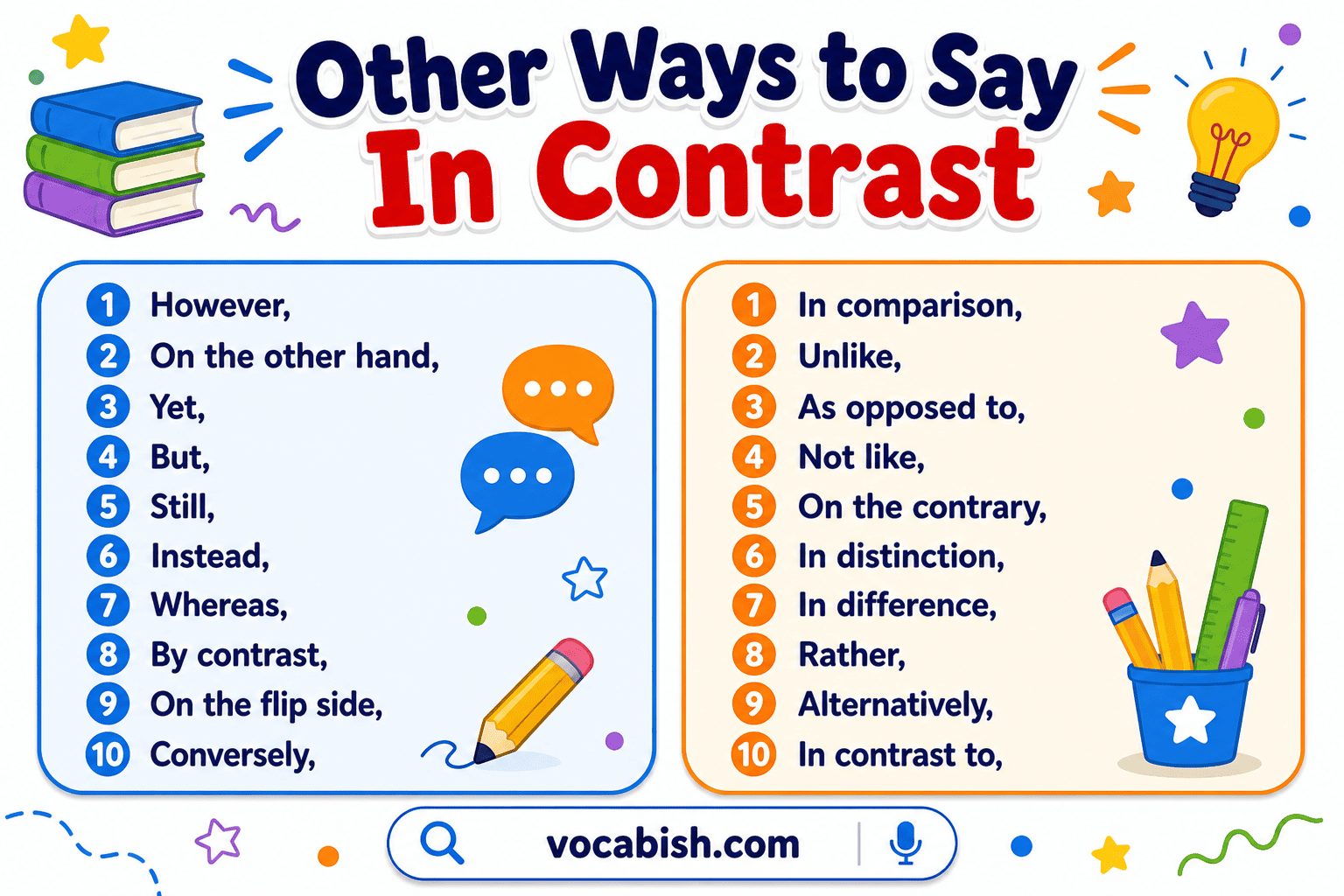

However is a common linking word used to show contrast between two ideas. In this blog post, you will learn different ways to express contrast in English with meanings and examples. These alternatives are useful in speaking and writing when you want to connect ideas smoothly. Knowing them helps you sound more natural and organized. It also improves reading and listening because you can better follow how ideas change in real conversations and texts.
What Does However Mean?
The word however means:
- But / Yet → showing the opposite of what was said.
- In any way → no matter how something happens.
Example: I studied hard; however, I did not pass the test.
Other Ways to Say However
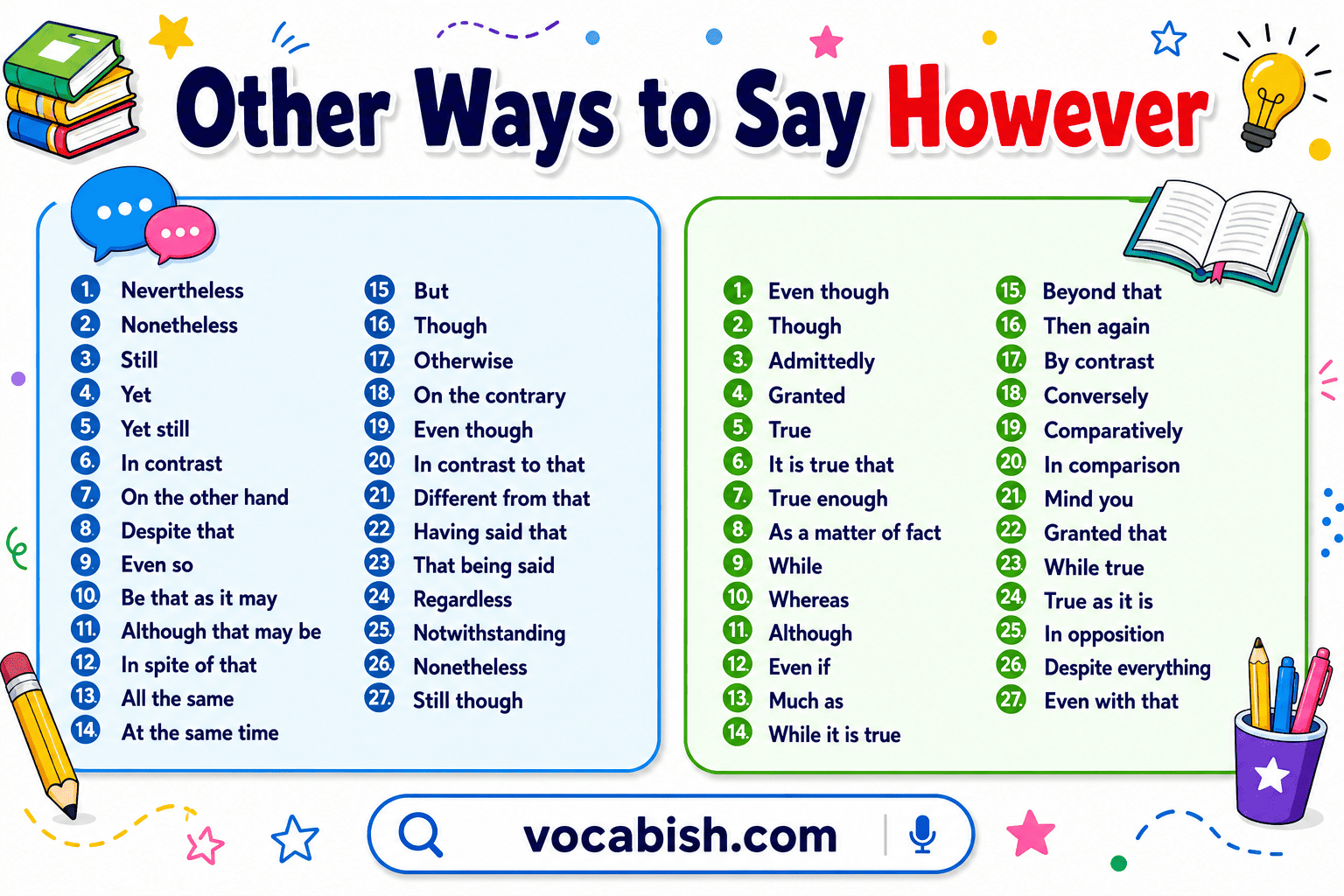
- But
- Yet
- Still
- Though
- Nevertheless
- Nonetheless
- On the other hand
- Even so
- Despite that
- Having said that
Types of Alternatives to “However”
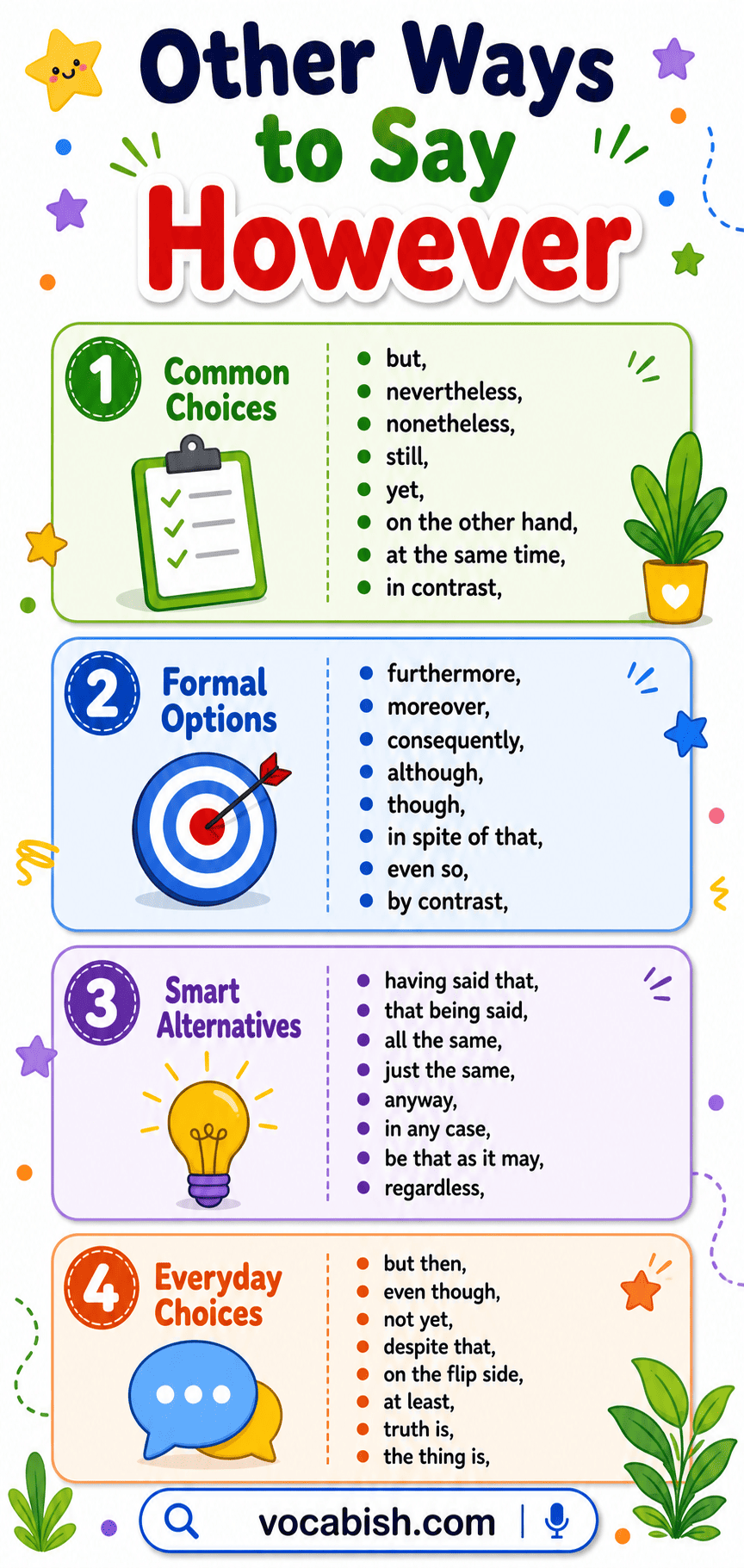
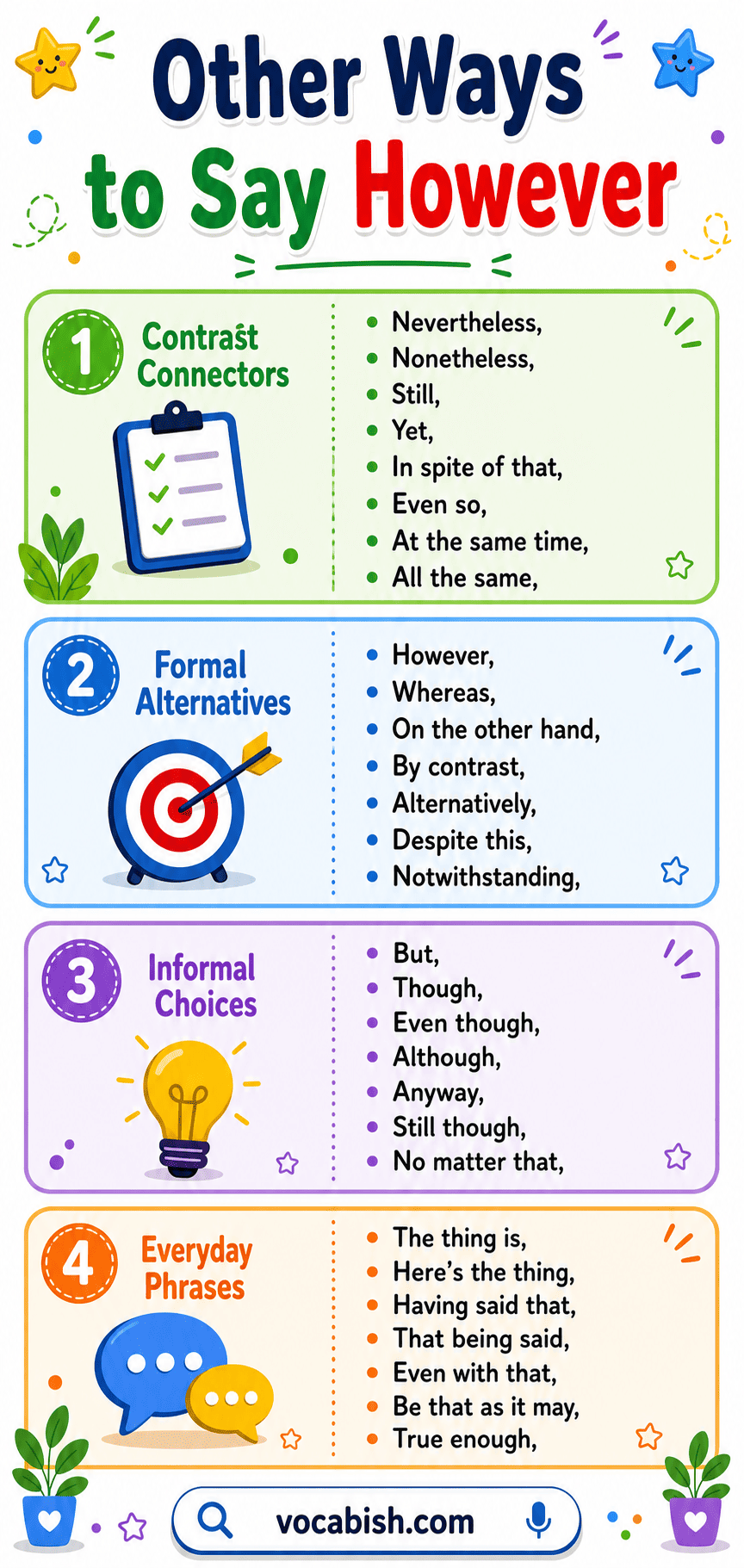
1. Simple Conjunctions
These are easy words often used in everyday speech.
- But
- Yet
- Still
- Though
- Although
- Even though
- Whereas
- While
- Except
- Only
2. Formal Alternatives
These are better for essays or academic writing.
- Nevertheless
- Nonetheless
- However
- On the other hand
- In contrast
- Conversely
- Notwithstanding
- Albeit
- Despite that
- Even so
3. Transitional Phrases
These help connect ideas smoothly.
- At the same time
- In spite of that
- All the same
- Having said that
- That said
- In any case
- On the contrary
- By contrast
- Still and all
- Be that as it may
4. Informal Alternatives
Great for speaking or casual writing.
- But still
- Even then
- Anyway
- Then again
- Just the same
- No matter what
- All the same
- Either way
- Still though
- Yet still
However Alternatives in Sentences
Alternative | Example Sentence |
|---|---|
But | I was tired, but I kept working. |
Yet | She is young, yet very wise. |
Still | It was late; still, he stayed awake. |
Though | I liked it, though it was long. |
Although | Although it rained, we played. |
Even though | Even though he tried, he failed. |
Nevertheless | It was hard; nevertheless, she succeeded. |
Nonetheless | He was tired; nonetheless, he helped. |
On the other hand | I like tea; on the other hand, coffee is stronger. |
In contrast | Cats are quiet; in contrast, dogs are loud. |
Conversely | She is shy; conversely, her brother is outgoing. |
Despite that | He was sick; despite that, he went to school. |
Even so | It was risky; even so, they tried. |
At the same time | It’s fun; at the same time, it’s tiring. |
That said | It’s expensive; that said, it’s worth it. |
All the same | It was cold; all the same, we swam. |
Having said that | It’s useful; having said that, it’s tricky. |
In spite of that | He lost; in spite of that, he smiled. |
On the contrary | I don’t dislike it; on the contrary, I love it. |
By contrast | Summer is hot; by contrast, winter is cold. |
Anyway | It was hard; anyway, we finished it. |
Then again | I want to go; then again, I’m tired. |
Either way | It might rain; either way, we’ll go. |
Yet still | He was weak; yet still, he fought. |
But still | It hurts, but still I try. |
Whereas | He is tall, whereas she is short. |
While | I like apples, while she likes oranges. |
Except | I like all fruits except bananas. |
Only | I would go, only I am busy. |
Albeit | He is kind, albeit strict. |
Notwithstanding | Notwithstanding the rain, we continued. |
Still and all | It was bad; still and all, we laughed. |
Be that as it may | It’s risky; be that as it may, we proceed. |
Even then | He was warned; even then, he ignored it. |
Just the same | It was hard; just the same, we did it. |
No matter what | It’s tough; no matter what, we try. |
In any case | It’s late; in any case, let’s go. |
Regardless | It’s raining; regardless, we leave. |
Still though | It’s simple; still though, it works. |
On the flip side | It’s cheap; on the flip side, it breaks easily. |
Even if | Even if it rains, we’ll go. |
Though still | It’s boring; though still useful. |
Except that | I agree, except that one point. |
While still | While still learning, he improved. |
Yet however | Rare, but used for emphasis |
In contrast to that | It’s fast; in contrast to that, this is slow. |
Against that | Against that idea, I disagree. |
Still yet | Old usage, but shows contrast |
But anyway | It’s fine, but anyway, let’s move on. |
Even though that | Even though that happened, we moved forward. |
Contexts and Usage of However
To Show Contrast
→ I like swimming; however, I don’t like the cold water.
To Add an Opposite Point
→ He is very strict. However, he is also fair.
To Show Exception
→ The book is long. However, it is easy to understand.
To Mean “No Matter How”
→ However hard he tried, he could not win.
FAQs about However
However means to show contrast or opposite idea, similar to “but” or “nevertheless.” Example: I was sick; however, I went to school.
Formal alternatives include nevertheless, nonetheless, on the other hand, despite that, having said that.
Informal alternatives include but, yet, still, though, even so.
Yes. It can mean “but” for contrast (I like tea; however, I prefer coffee) or “no matter how” (However fast he ran, he was late).
They are similar, but however is more formal and used in writing, while but is common in everyday speech.
Related Articles: