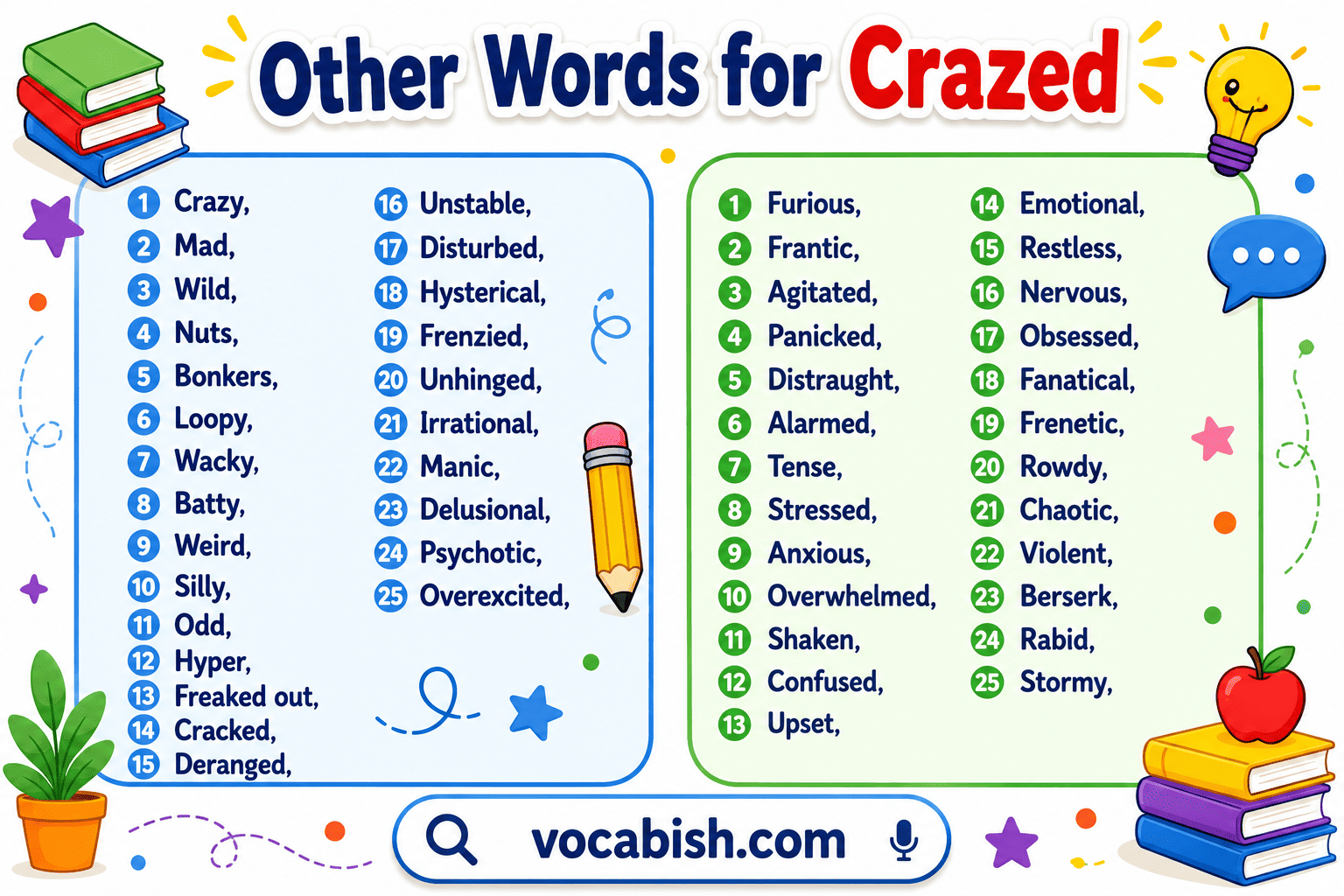

Other words for crazed are English vocabulary words that describe strong emotions, strange behavior, panic, confusion, or excitement in different ways. In this blog post, you will learn how to use these words in speaking, reading, writing, and listening. Many English learners use the same word again and again because they do not know better vocabulary choices. When you understand different synonyms for crazed, your English sounds more natural and meaningful. You will also know how to choose the right word for different situations, emotions, and conversations.
What Are Other Words for Crazed?
Other words for “crazed” are synonyms that have a similar meaning. These words describe a person who acts in a wild, strange, excited, or mentally unstable way.
For example:
- Mad – He looked mad after hearing the bad news.
- Wild – The crowd became wild during the concert.
These words help you express emotions and actions more clearly. Some words are stronger, while others are softer and more polite.
Formal Words for Crazed
Formal synonyms are used in professional writing, books, or serious discussions.
Word | Example Sentence |
|---|---|
Disturbed | The disturbed man shouted loudly. |
Unstable | She seemed emotionally unstable. |
Delirious | He became delirious with fever. |
Irrational | His irrational behavior worried everyone. |
Psychotic | The doctor treated the psychotic patient. |
Frenzied | The fans became frenzied after the win. |
Deranged | The police arrested the deranged criminal. |
Hysterical | She sounded hysterical on the phone. |
Unhinged | His unhinged reaction shocked the class. |
Manic | He entered a manic state. |
Distraught | The distraught mother cried loudly. |
Overwrought | She became overwrought with stress. |
Agitated | The crowd grew agitated quickly. |
Troubled | The troubled teen needed support. |
Delusional | The man appeared delusional. |
Informal Words for Crazed
These words are common in daily conversations.
Word | Example Sentence |
|---|---|
Crazy | That idea sounds crazy. |
Nuts | He went nuts after losing the game. |
Bonkers | The children became bonkers at the party. |
Loopy | She felt loopy after taking medicine. |
Wacky | His wacky jokes made everyone laugh. |
Wild | The crowd went wild. |
Batty | My grandma acts batty sometimes. |
Weird | His weird behavior scared me. |
Freaked out | She freaked out before the test. |
Hyper | The kids became hyper after candy. |
Mad | He got mad very quickly. |
Cracked | That man sounds cracked. |
Silly | Don’t act silly in class. |
Odd | Her odd smile looked strange. |
Messed up | He felt messed up after the accident. |
Professional or Polite Words for Crazed
These are softer and kinder expressions.
Word | Example Sentence |
|---|---|
Emotional | She became emotional during the meeting. |
Stressed | He looked stressed after work. |
Confused | The child seemed confused. |
Upset | She was upset about the result. |
Overexcited | The students became overexcited. |
Tense | He sounded tense during the call. |
Restless | The baby was restless all night. |
Nervous | She felt nervous before speaking. |
Anxious | He became anxious about the exam. |
Shaken | The witness looked shaken. |
Alarmed | Everyone felt alarmed by the noise. |
Frantic | The mother searched frantically. |
Panicked | He panicked during the storm. |
Distracted | She looked distracted in class. |
Overwhelmed | The worker felt overwhelmed. |
Strong Emotional Words for Crazed
These words show intense emotion or behavior.
Word | Example Sentence |
|---|---|
Furious | He became furious after the argument. |
Rabid | The fans were rabid supporters. |
Berserk | The soldier went berserk in battle. |
Frenetic | The office became frenetic before lunch. |
Savage | The crowd turned savage quickly. |
Violent | The violent protest frightened people. |
Explosive | His explosive anger scared everyone. |
Feverish | She worked with feverish energy. |
Obsessed | He became obsessed with the game. |
Fanatical | The fanatical group cheered loudly. |
Maddened | The noise maddened the dog. |
Heated | The discussion became heated. |
Rowdy | The rowdy boys disturbed the class. |
Chaotic | The classroom became chaotic. |
Stormy | His stormy mood upset the family. |
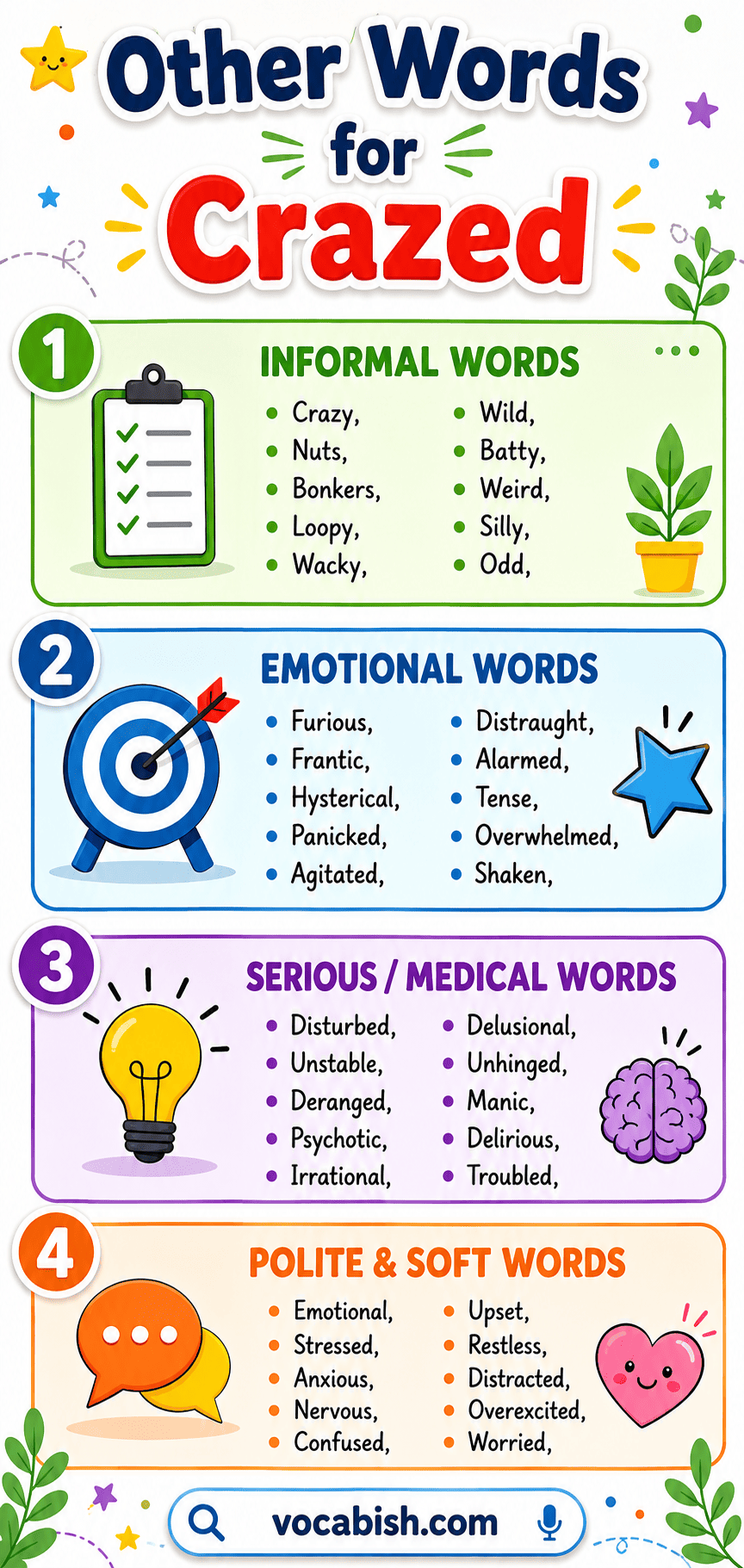
List of Synonyms for Crazed
Common Synonyms
- Crazy
- Mad
- Wild
- Nuts
- Bonkers
- Loopy
- Odd
- Weird
- Batty
- Silly
Emotional Synonyms
- Furious
- Hysterical
- Frantic
- Panicked
- Frenzied
- Agitated
- Distraught
- Alarmed
- Tense
- Overwhelmed
Serious or Medical Synonyms
- Psychotic
- Delusional
- Unstable
- Disturbed
- Deranged
- Irrational
- Unhinged
- Manic
- Delirious
- Troubled
Excited Behavior Words
- Hyper
- Overexcited
- Frenetic
- Feverish
- Restless
- Obsessed
- Fanatical
- Energetic
- Chaotic
- Rowdy
Polite Alternatives
- Upset
- Emotional
- Nervous
- Confused
- Distracted
- Shaken
- Stressed
- Anxious
- Tired
- Worried
FAQs about Other Words for Crazed
Another word for crazed is crazy, wild, frantic, disturbed, or irrational depending on the situation and level of emotion.
Yes, “crazed” usually has a negative meaning because it describes strange, uncontrolled, or mentally unstable behavior.
Polite synonyms for crazed include emotional, stressed, overwhelmed, anxious, or confused because they sound softer and kinder.
Yes, children can use “crazed,” but teachers should explain its meaning carefully and teach polite alternatives too.
“Crazed” describes wild or unstable behavior, while “furious” mainly describes extreme anger or rage.
“Bonkers” is an informal English word mostly used in casual conversations and friendly situations.
Learning synonyms improves vocabulary, writing skills, speaking confidence, and helps students choose suitable words in different situations.
Related Articles:
Conclusion
Learning other words for crazed in English with examples helps you become a stronger speaker and writer. Some synonyms are formal, while others are casual or polite. Therefore, choosing the right word is important for clear communication.
You can now use words like “frantic,” “wild,” “disturbed,” or “anxious” correctly in different situations. Keep practicing with exercises and sentence-building activities to improve your vocabulary every day.