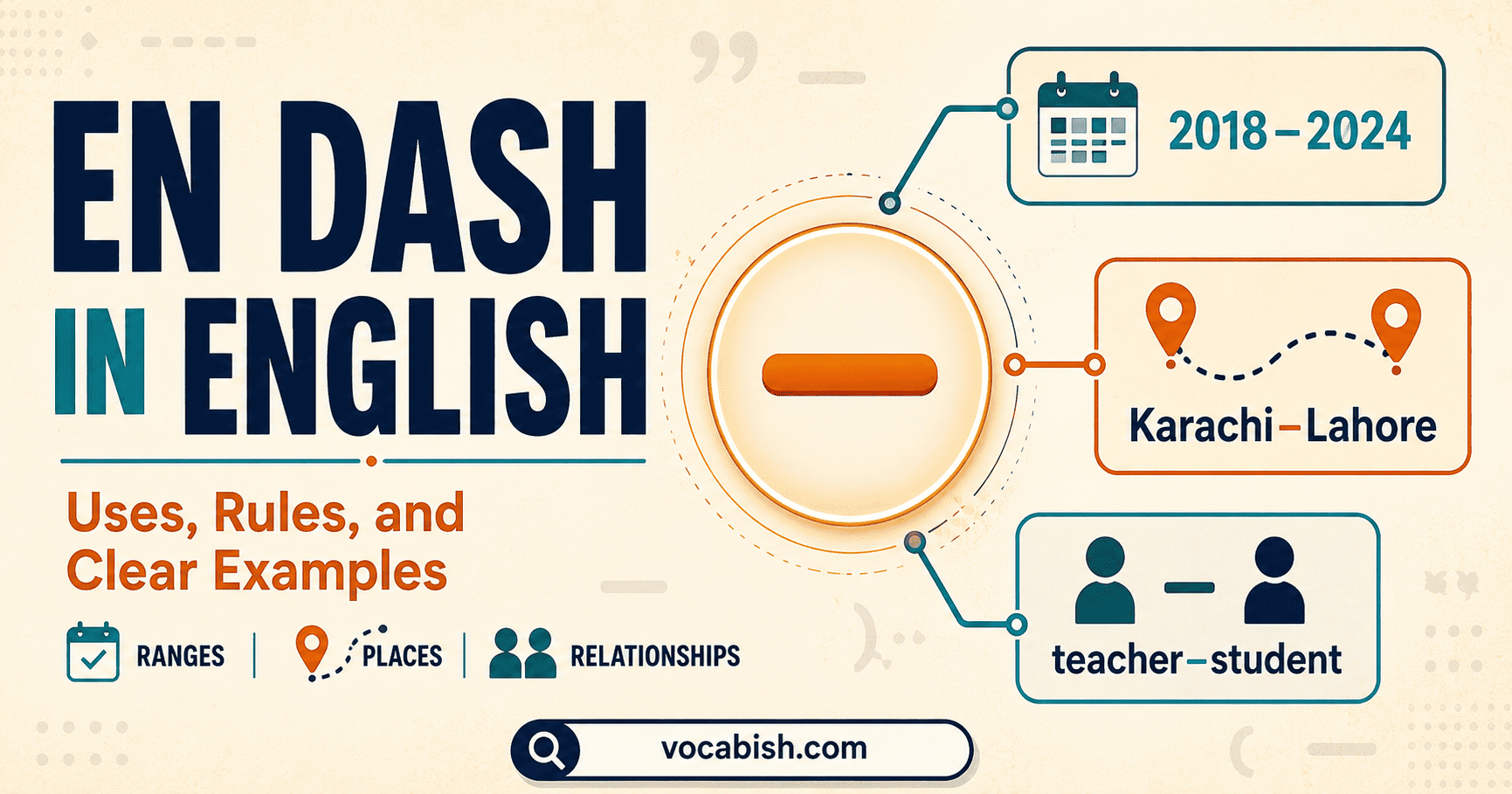
Category - English Grammar
English grammar helps you understand how words work together to form correct sentences. It provides the rules that make speaking, writing, reading, and communication easier to understand.
In this category, you’ll learn important grammar topics such as tenses, parts of speech, sentence structure, modal verbs, clauses, phrases, active and passive voice, and more. Each lesson includes simple explanations and practical examples.
These topics help you avoid common mistakes, build stronger sentences, and express your ideas more clearly. Whether you’re a beginner or improving your English skills, this category will help you use grammar with greater confidence.
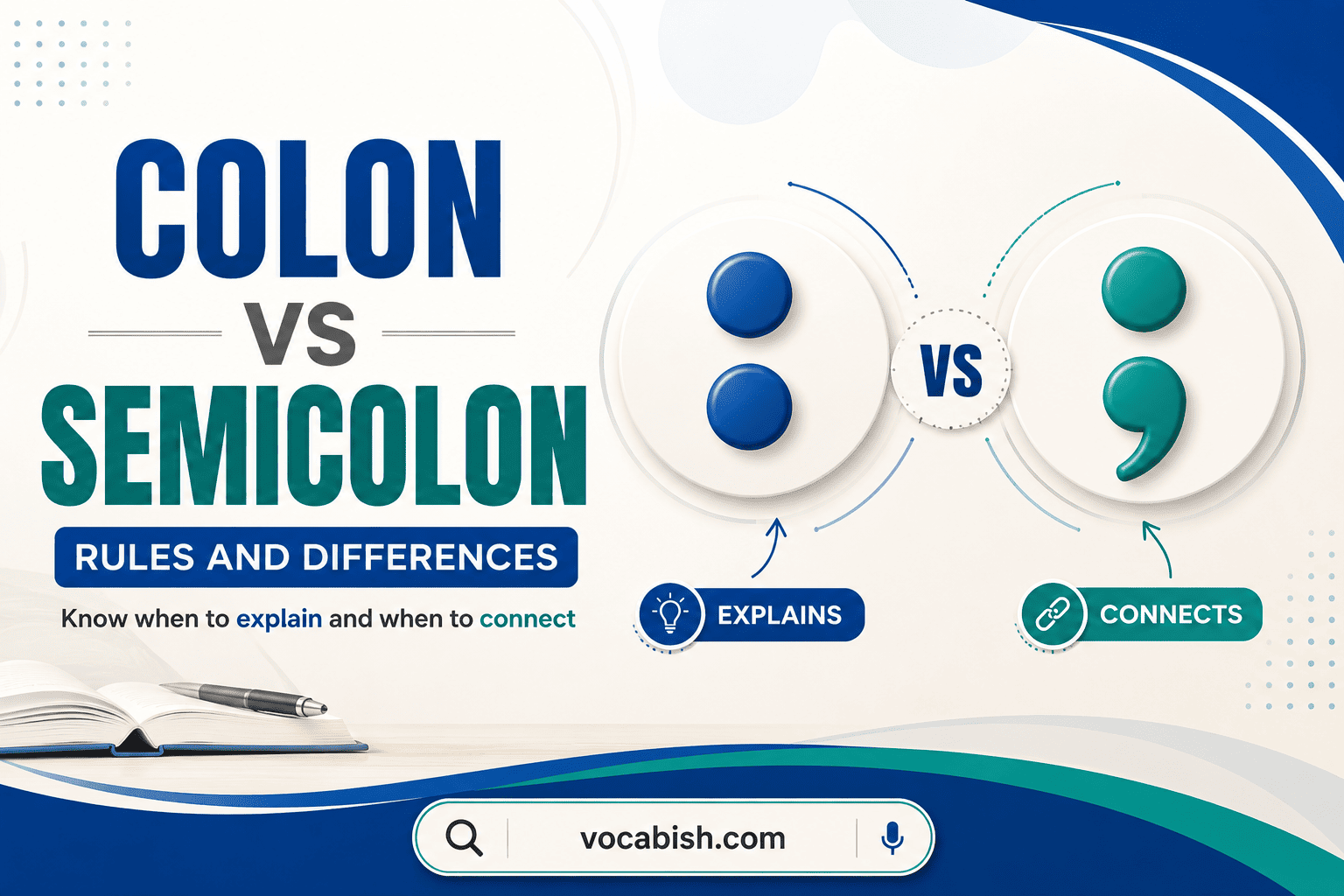
Colon vs Semicolon: Rules and Differences
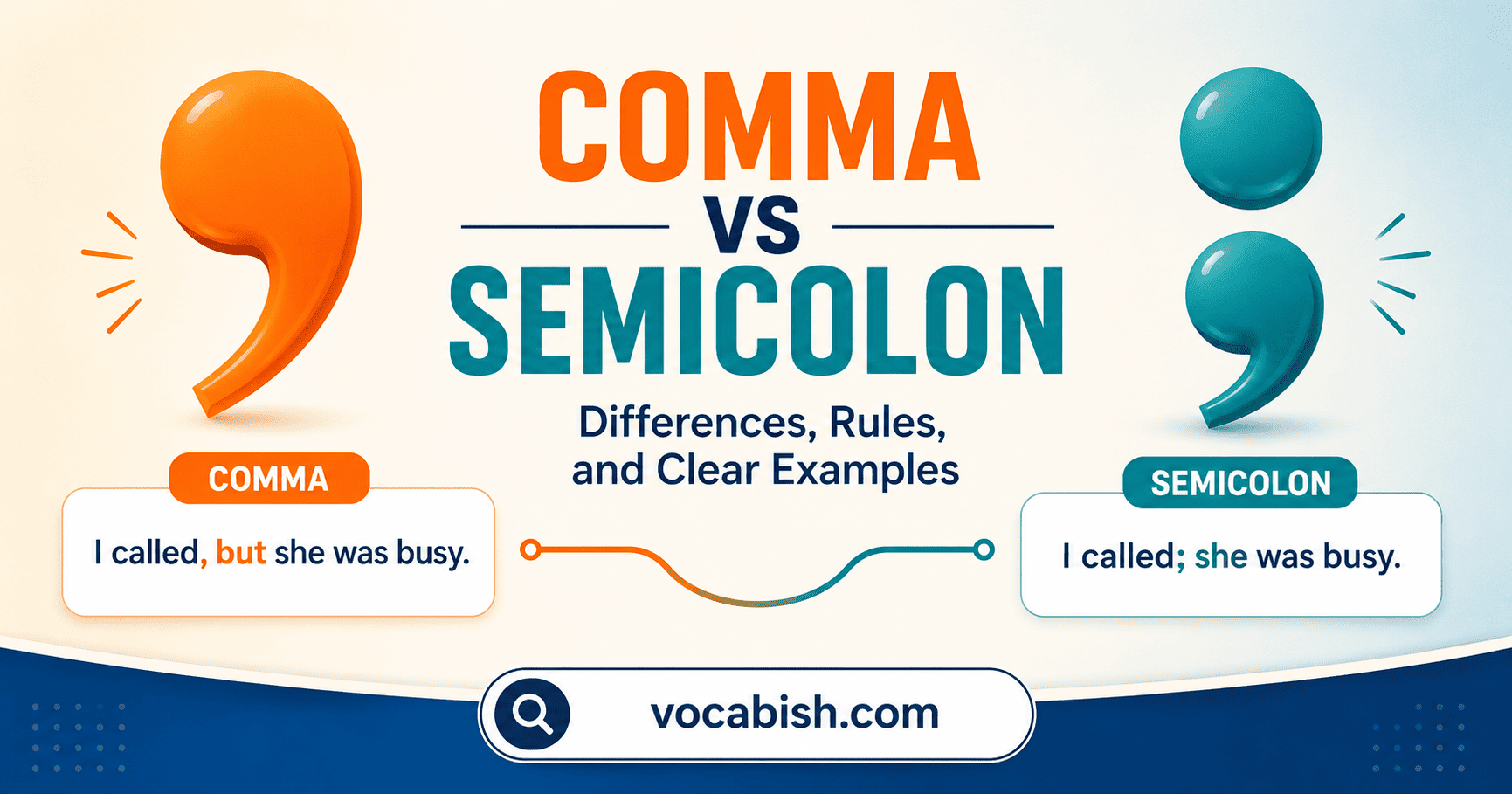
Comma vs Semicolon: Differences and Examples
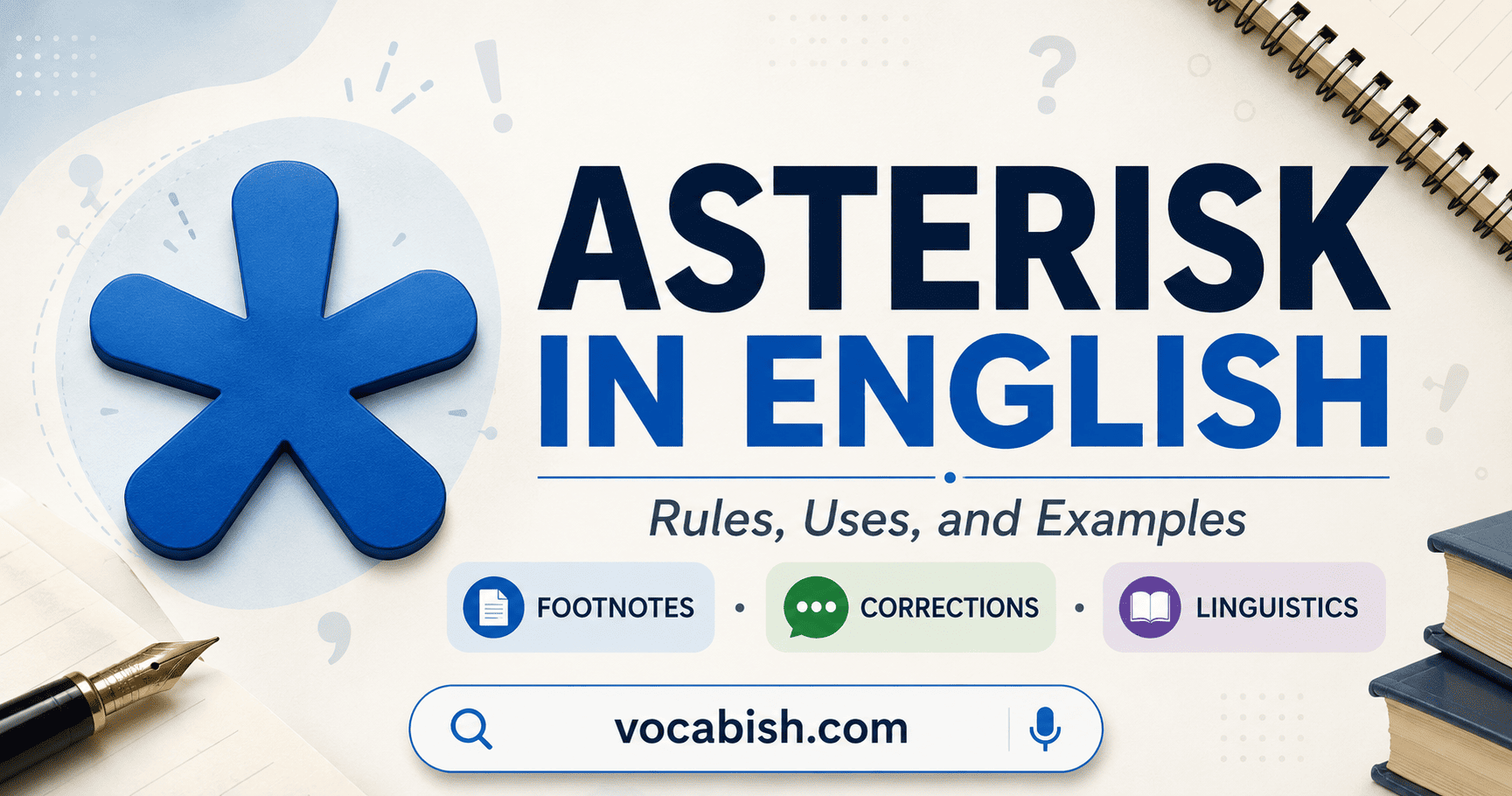
Asterisk in English: Rules, Uses, and Examples
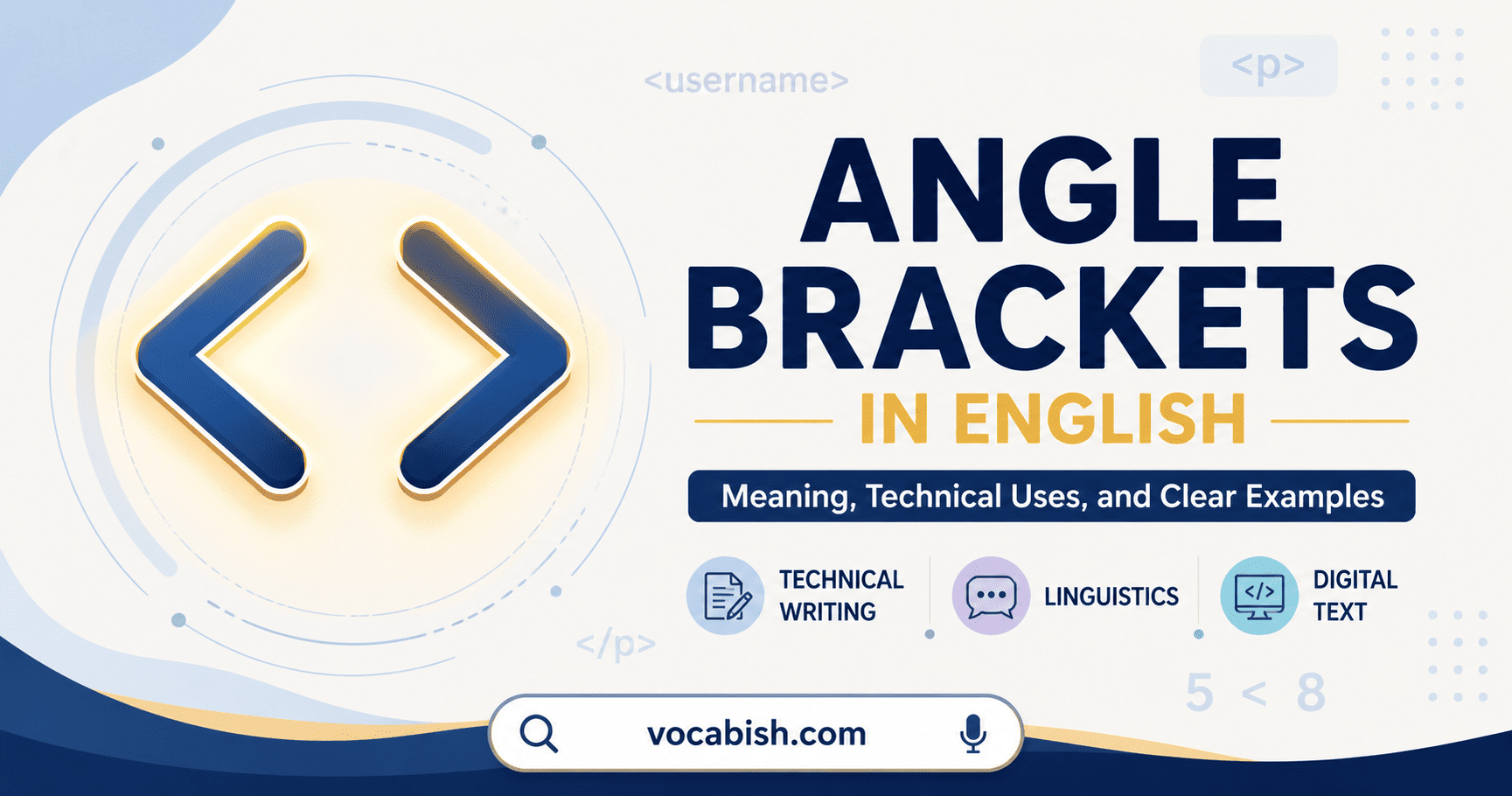
Angle Brackets in English: Meaning and Uses
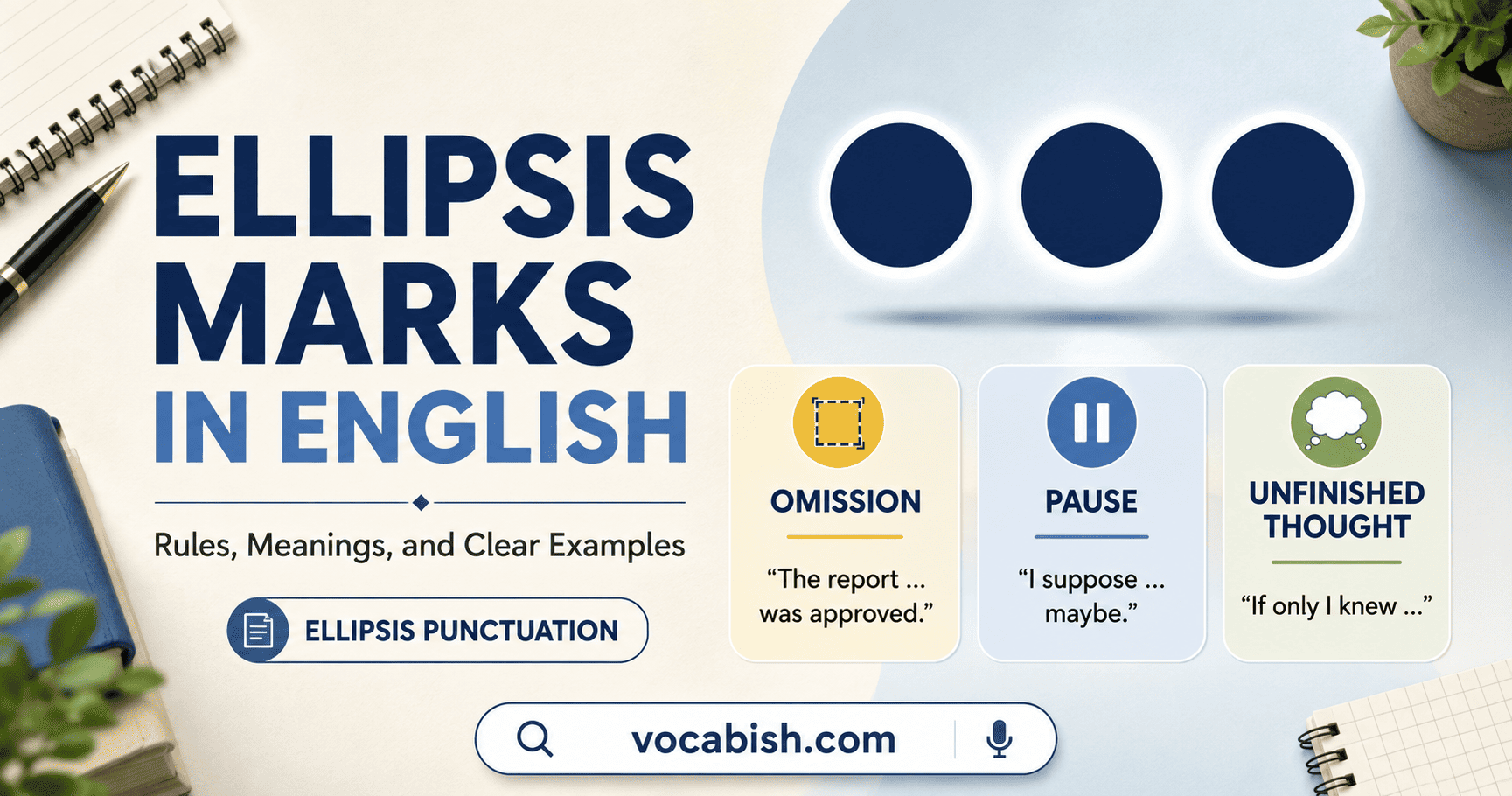
Ellipsis Marks in English: Rules and Examples
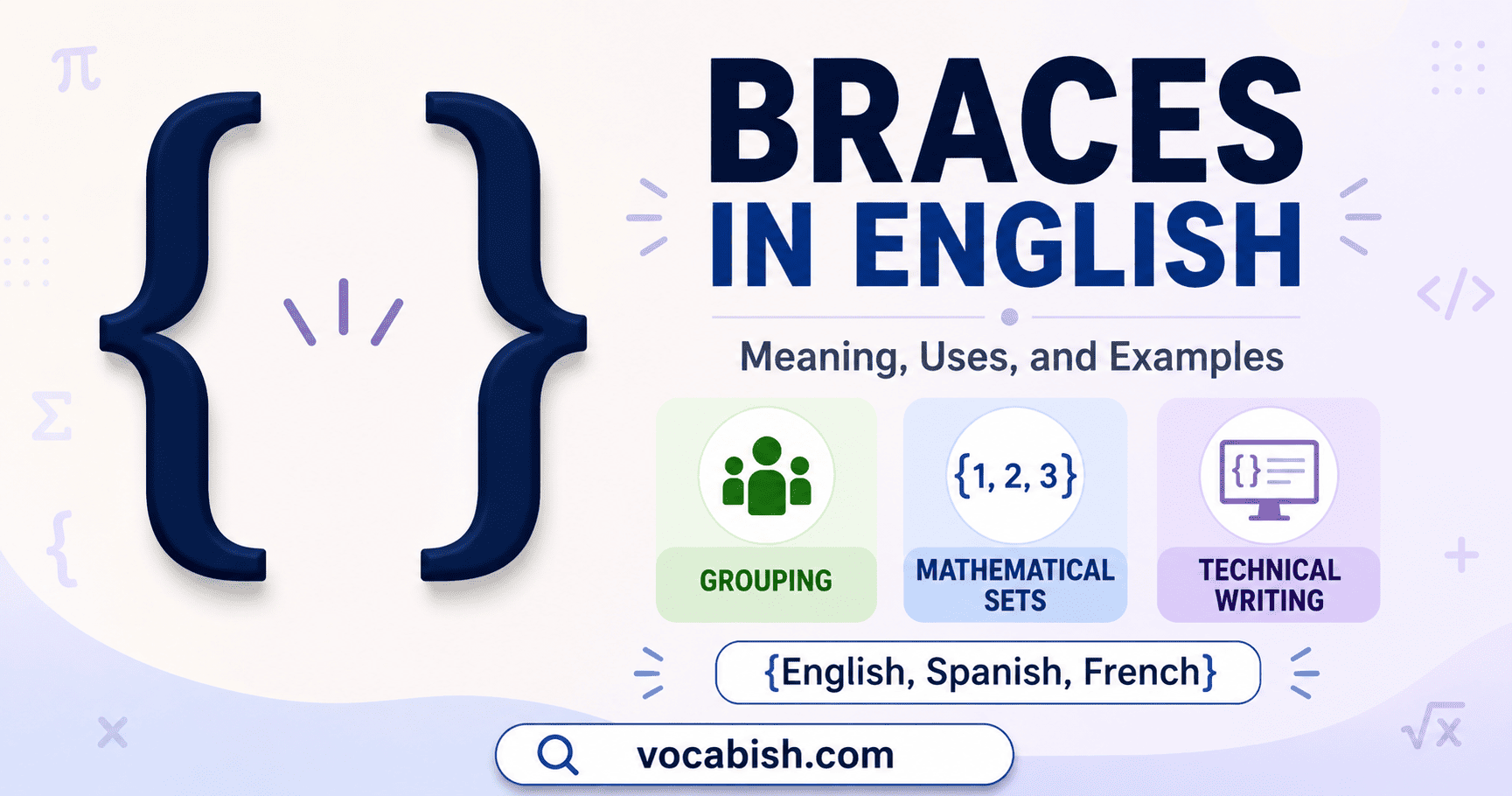
Braces Punctuation in English: Meaning and Uses
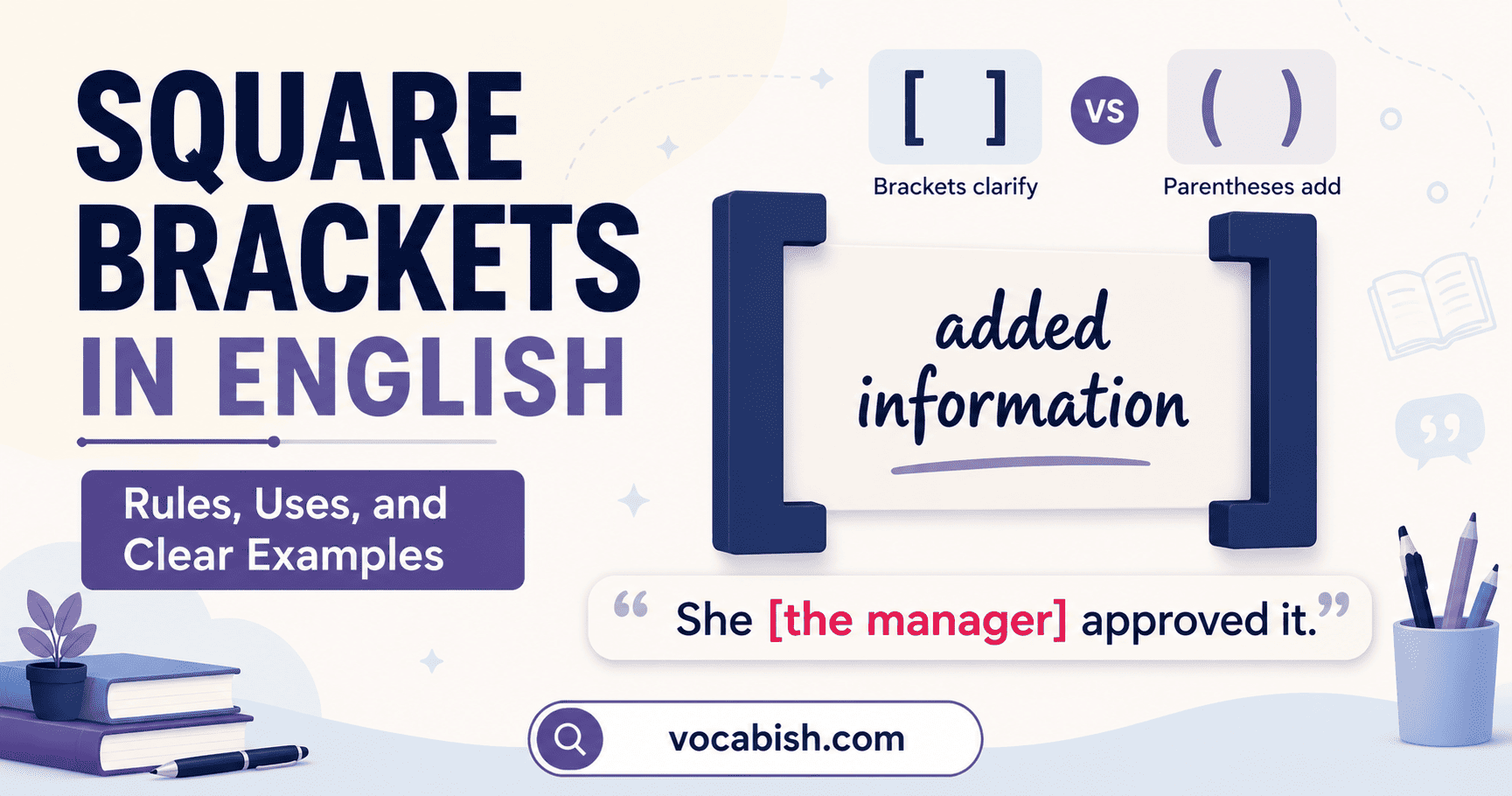
Square Brackets in English: Rules and Uses
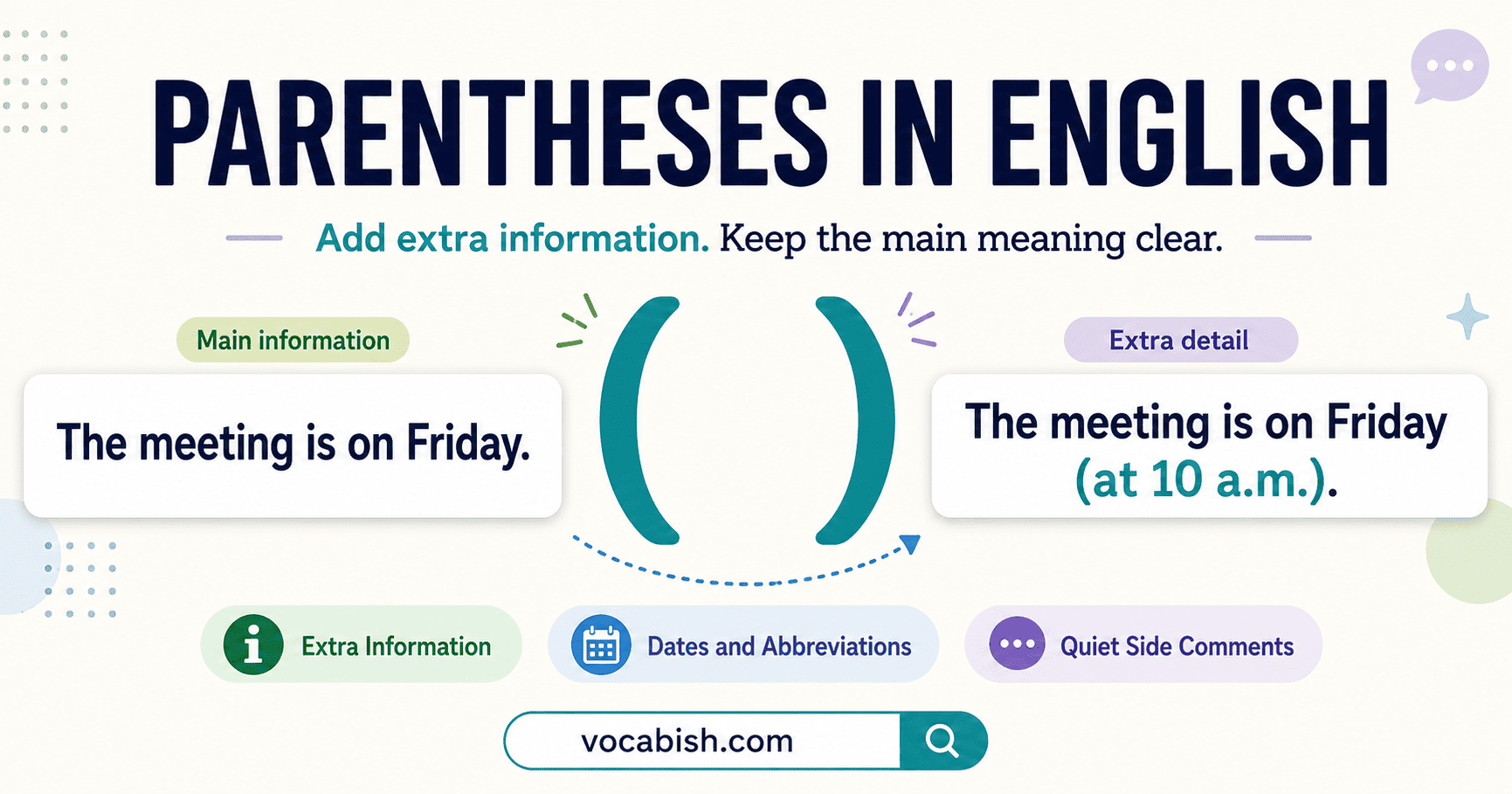
Parentheses in English: Rules and Examples