
In this blog post, you will learn the parts, functions, and diagram of a fishing rod in English. This vocabulary helps you understand the names of each part and how it works while fishing. Learning these words is important for students, hobbyists, and English learners who want to talk about tools and equipment. When you know these terms, you can speak clearly about fishing, read instructions and manuals with better understanding, write accurate descriptions, and follow spoken guidance more easily. Keep reading to build your knowledge and understand how a fishing rod is designed and used.
What is a Fishing Rod?
A fishing rod is a long, flexible stick used to catch fish. It holds the fishing line and helps cast the bait far into the water. Fishing rods are made in different lengths, shapes, and materials. Some rods are for small fish, while others are for large fish in rivers, lakes, or seas.
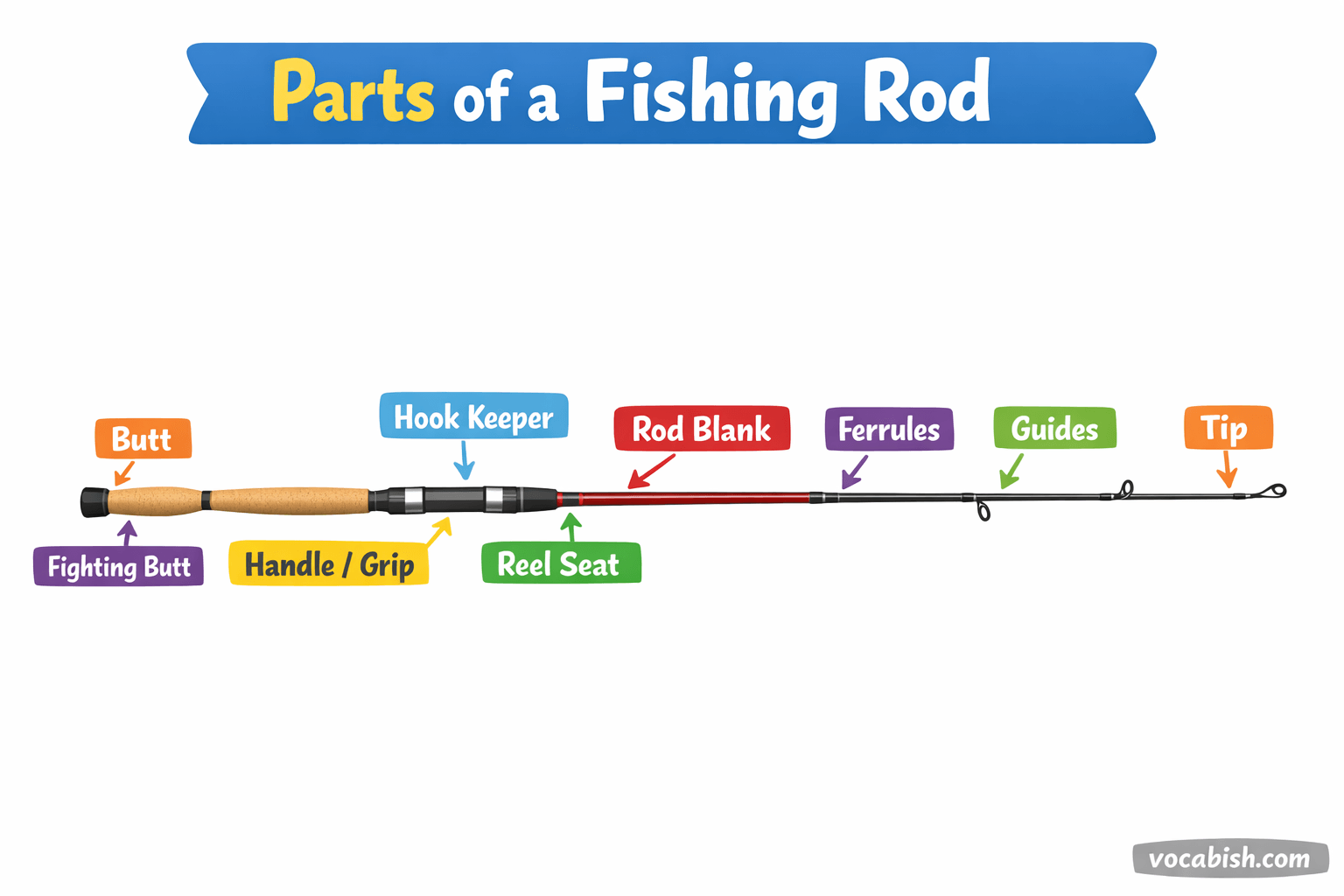
Main Parts of a Fishing Rod
Rod Blank
Rod Blank: The main body of the rod. Made of graphite, fiberglass, or composite materials. It gives the rod strength and flexibility.
Handle
Handle/Grip: The part you hold while fishing. Can be made from cork, foam, or rubber. Provides comfort and control.
Reel Seat
Reel Seat: Where you attach the fishing reel. Keeps the reel secure and stable during casting and reeling.
Guides
Guides/Eyelets: Small rings along the rod blank. They hold and guide the fishing line. Prevent tangling and ensure smooth casting.
Tip
Rod Tip: The thin end of the rod. Very sensitive to fish bites. Helps control movement of the line.
Butt
Rod Butt: The bottom end of the rod. Helps in balancing the rod and gives support during big fish fights.
Ferrules (for multi-piece rods)
Ferrules: Connect sections of multi-piece rods. Provide strength and allow easy transport of the rod.
Additional Parts
Hook Keeper
- Hook Keeper: Small loop near the handle. Used to secure the hook when not fishing.
Fighting Butt
- Fighting Butt: Extra support at the rod end. Helps in fighting large fish with more power.
Grip Types
- Split Grip: Shorter handle for light rods.
- Full Grip: Full-length handle for heavy rods and better leverage.
Fishing Rod Parts with Diagram
Functions of Each Part of a Fishing Rod
- Rod Blank: Provides strength and flexibility.
- Handle/Grip: Offers comfort and control while casting or fighting fish.
- Reel Seat: Holds the reel securely.
- Guides: Ensure smooth line movement.
- Tip: Detects fish bites easily.
- Butt: Adds balance and support.
- Ferrules: Join rod sections without weakening the rod.
- Hook Keeper: Keeps the hook safe when idle.
- Fighting Butt: Helps control large fish.
Conclusion
Understanding the parts of a fishing rod and their functions makes fishing easier and more fun. Every part has a specific role that helps anglers catch fish efficiently. By learning these parts, you can choose the right rod, handle it properly, and improve your fishing skills.
Frequently Asked Questions
What is a rod blank in a fishing rod?
The rod blank is the main body of the fishing rod. It gives strength and flexibility to the rod and supports all other parts.
What is the purpose of the reel seat?
The reel seat holds the fishing reel firmly on the rod. It keeps the reel stable during casting and reeling.
Why are guides important on a fishing rod?
Guides are rings along the rod that guide the fishing line. They help prevent tangles and allow smooth casting.
What does the rod tip do?
The rod tip is the thin, flexible end of the rod. It is sensitive and helps detect fish bites quickly.
What is a hook keeper on a fishing rod?
A hook keeper is a small loop near the handle. It holds the hook safely when the rod is not in use.
What is the function of the rod butt?
The rod butt is the bottom end of the rod. It provides balance and support, especially when catching large fish.
What are ferrules in a fishing rod?
Ferrules connect sections of multi-piece rods. They make the rod easy to assemble and transport while keeping it strong.
Read More